Governance

FSI's research on the origins, character and consequences of government institutions spans continents and academic disciplines. The institute’s senior fellows and their colleagues across Stanford examine the principles of public administration and implementation. Their work focuses on how maternal health care is delivered in rural China, how public action can create wealth and eliminate poverty, and why U.S. immigration reform keeps stalling. 

FSI’s work includes comparative studies of how institutions help resolve policy and societal issues. Scholars aim to clearly define and make sense of the rule of law, examining how it is invoked and applied around the world. 

FSI researchers also investigate government services – trying to understand and measure how they work, whom they serve and how good they are. They assess energy services aimed at helping the poorest people around the world and explore public opinion on torture policies. The Children in Crisis project addresses how child health interventions interact with political reform. Specific research on governance, organizations and security capitalizes on FSI's longstanding interests and looks at how governance and organizational issues affect a nation’s ability to address security and international cooperation.

Authors
News Type
News
Date
Paragraphs

The International Studies Association is proud to announce that Martha Crenshaw, Senior Fellow at the Center for International Security and Cooperation (CISAC) and the Freeman Spogli Institute for International Studies and Professor of Political Science (by courtesy) at Stanford University has been named the 2016 recipient of the International Security Studies Section (ISSS) Distinguished Scholar Award.

Professor Crenshaw is renowned for her work on political terrorism, as one of the first scholars to have approached terrorism as a serious subject of academic inquiry.  Her steady stream of high quality publications – including two books, five edited volumes, and numerous articles – have garnered global respect and attention.  Her work has been funded by such prestigious organizations as the Ford Foundation, Pew, Guggenheim, the National Science Foundation, and the Minerva Initiative.  Dr. Crenshaw has testified before Congress, weighed in on important national policy debates and served on boards and committees in multiple fields.  She was a member of the Committee on Evaluating the Effectiveness of the Global Nuclear Detection Architecture of the National Academies of Science and serves on the editorial boards of International Security, Political Psychology, Security Studies, Dynamics of Asymmetric Conflict, and Terrorism and Political Violence.  She previously served as the President and Councilor of the International Society of Political Psychology (ISPP) and a member of the executive board of Women in International Security.

Dr. Crenshaw taught for many years at Wesleyan, where she was awarded for her teaching excellence.  Many junior scholars have benefited enormously from her generous mentoring and advice, while her career has served as a model to many more scholars in the field.  Through her research, policy work, service, teaching, and mentoring, Professor Crenshaw has indelibly shaped the International Security field.  We hope that you will join us in celebrating her accomplishments at the ISSS panel and reception that will be held in her honor at the annual meeting of the International Studies Association in March 2016, in Atlanta.

In related news, Crenshaw was also elected on July 16, 2015 to the prestigious British Academy – the U.K.’s national academy for the humanities and Social Sciences – as one of 20 new Corresponding Fellows from overseas universities.

Note: This story is used by permission from the International Studies Association

Hero Image
Martha Crenshaw Rod Searcey
All News button
1
-

The United States’ strategy for the storage and disposal of highly radioactive nuclear waste is at a stalemate: spent nuclear fuel accumulates at nuclear power plants, yet there is no long-term, national strategy for spent fuel management and disposal. The Blue Ribbon Commission for America’s Nuclear Future emphasized the urgency of finding a geologic repository, but work on the proposed site -- Yucca Mountain – has stopped, and there is no active program to site a new geologic repository.  The political impasse has overwhelmed thoughtful discussion of technical, regulatory, risk and public policy issues.  

To inform efforts to reset the U.S. nuclear waste program, the Center for International Security and Cooperation, with the support of FSI and the Precourt Institute for Energy, is sponsoring a series of meetings to review and discuss the nuclear waste management strategy in the United States. 

The agenda and prospectus can be downloaded below.

For information related to the first meeting in this series, and relevant materials, please click here.


Reset Conference Documents for meeting no. 2 can be accessed through this link.


Follow-up materials


Back to Home Page

Meeting 2: The Structure and Behavior of a Nuclear Waste Management Organization
Download pdf
Prospectus for Meeting 2 of the Reset of U.S. Nuclear Waste Management Strategy and Policy
Download pdf
Bios of Steering Committee Members
Encina Hall 616 Serra StreetStanford, CA 94305 
Agenda can be downloaded below
Authors
News Type
News
Date
Paragraphs

Before policymakers can combat proliferation of nuclear weapons they need to know how states choose to go about pursuing them, Vipin Narang told a Stanford audience at the Center of International Security and Cooperation.

“I wanted to go back to a more fundamental question which I think hasn’t really been explored by political scientists very much which is about strategies of nuclear proliferation. How do states that are pursuing nuclear weapons go about doing so given the constraints they face both domestically and in the international system?” Narang said, presenting an outline for what will be his second book on nuclear weapons.

Vipin Narang is an Associate Professor of Political Science at MIT and member of MIT’s Security Studies Program. He previously was a junior faculty fellow at CISAC, and he received his bachelor and master degrees from Stanford where he was part of the first class of CISAC Honors students.

Professor of Political Science and CISAC Senior Fellow Scott Sagan was Narang’s undergraduate thesis advisor. This time around Sagan led commentary on Narang’s presentation.

“I was Vipin’s undergraduate thesis advisor and one of the great pleasures of my job is to see former undergraduates do extremely well and experience the transformation of someone being a student of yours to becoming a colleague and friend,” Sagan said.

Current thinking on nuclear proliferation tends to focus on why states pursue nuclear weapons, Narang said. It’s only recently that scholars have started thinking about the process question. Narang hopes to take aim at two overriding assumptions: that pursuers seek a functional nuclear weapon and that they seek to acquire it as quickly as possible.

“I think both of these assumptions may not be accurate and it gives rise to strategic logic of pursuit where we can disaggregate the political strategies of acquisition. States may be pursuing in different ways and pursuing different ends. I think the ‘how’ question is really important because it helps us think about different strategies and points of vulnerabilities in those strategies, and it helps us think about nonproliferation in different ways,” Narang said.

Narang is attempting to build a theoretical model of varieties of political strategies states choose to use to acquire nuclear weapons. Narang sees roughly four types of strategies–hedging, sprinting, sheltered pursuit, and hiding–with some varied sub-categories for each.

Hedging is putting a state in a position of acquiring nuclear weapons, but deferring the decision to weaponize. Sprinting is acquiring a nuclear capability as quickly as possible using any means necessary. Sheltered pursuit is using superpower protection from other states to proliferate. Hiding is maximizing secrecy with the aim of presenting a nuclear weapon as a fait accompli.

States choose a strategy based on whether or not they face an acute security threat, have superpower protection, and have domestic political consensus.

Narang argued that differentiating the types of proliferating strategies can help non-proliferation policymakers. “I think one of the big policy takeaways for this is that a complete roll back may not be a realistic objective, but pushing a state from an active strategy of pursuit to an inactive one can be realistic and can be a win for nonproliferation policy,” he said.

Overall, Narang’s efforts were warmly welcomed and encouraged.

“It’s always great to be back here,” Narang said afterwards. “CISAC is where it started for me. I was in the first honors program group in 2001 and I got into security studies and kept going. So, this is where my career started. It was nice to be back here as a Stanton fellow to finish my first book. It’s one of the few places where science, engineering, and social science are brought together. This where I was trained and it will always be home.”

Hero Image
Castle Romeo Runt Device By Federal government of the United States [Public domain], via Wikimedia Commons
All News button
1
Authors
News Type
News
Date
Paragraphs

Weeks away from a final international accord on Iran’s nuclear program, Stanford scholars are focusing on the technical, political and practical aspects of the pending deal intended to loosen sanctions while restricting Tehran’s ability to build a nuclear weapon.

“In two to three weeks we will have what some pundits are already calling the most revolutionary positive change in Iranian-American relations and others are saying a disastrous policy of appeasement to the Iranian regime,” said Scott Sagan, a senior fellow at the university’s Freeman Spogli Institute for International Studies. Sagan moderated a discussion at the FSI's Center for International Security and Cooperation (CISAC) on Tuesday that included FSI’s Siegfried Hecker and Thomas Fingar, as well as Abbas Milani, director of Stanford’s Iranian Studies.

Hecker, a former director of the Los Alamos National Laboratory, said Iran has developed its civilian nuclear capabilities to concurrently have a nuclear weapon option. However, at this point, they do not yet have nuclear weapons, nor have they produced the fissile materials, plutonium or highly enriched uranium, that would fuel such weapons.

“They’ve demonstrated they can enrich uranium to the levels allowed for civilian applications, but that gives them the capability to produce highly enriched uranium for bombs should they choose to do so,” Hecker said. “If they complete the Arak reactor, they will have the potential for plutonium production, although they have not developed a facility to extract the plutonium. If you look in terms of timelines for making fissile materials, they were somewhere between weeks to a month or two away for making enough fissile material for one bomb at the start of the negotiations in November 2013. The nuclear deal would move that timeline, called the ‘breakout’ time to one year, giving the international community more time to respond.”

Hecker said the technical issues are “secondary to whether Iran actually wants to go ahead and decide to build the bomb.”

He met with Iranian negotiators – including Foreign Minister Mohammad Javad Zarif – in 2013, and said the officials were anxious to reach a deal.

“Zarif told me that the cost of acquiring strategic capabilities will make Iran less safe rather than more safe,” Hecker said.

Fingar, who chaired the National Intelligence Council while also serving as the U.S. deputy director of national intelligence for analysis between 2005 and 2008, stressed the need for strong verification mechanisms if any deal with Iran is going to work.

“Verification can establish some facts but what it means is fundamentally a contextual and political judgment. What is most important? Catching somebody in a technical violation or preserving the overall purpose for which you are conducting verification. Verification requirements are an integral part of the negotiating process,” Fingar said.

That is especially true for Iran, which has proven that it is not trustworthy, he said.

“It did have a military program, it was seeking the bomb. It continues to lie about it. It lied to the European negotiators, to the UN, to the IAEA,” Fingar said. "This history mandates having a rigorous verification capability."

Monitoring is done in three bins, he said. The first, and most important, is the IAEA on-site inspections. The second is that done by other countries’ intelligence services, including those of the other P5 plus 1 countries and Israel. The third bin is the U.S. intelligence community.

“We will learn far more about what Iran is doing from the IAEA inspections than from any other mechanism,” Fingar said.

Milani focused on the politics of the deal inside Iran. Discussion of this political dimension, he said, cannot be understood unless we take into account two critical issues: Recent concerns with the health of Iran’s supreme leader, Ayatollah Ali Khamenei, and the heated battle on who might succeed him; and secondly the rise of ISIS and the fact that they are near Iran’s borders and have repeatedly threatened the country’s Shiites.

The debate in Iran is heated, he said, with many in favor of the agreement and a few opposed to it.

“Part of what is being fought over is what happens after the deal,” he said. “Who can claim victory for the deal? Who can take blame for it? These are profoundly political issues and they are being fought over.”

Milani said that he has never seen any policy issue, in the entire 35-year history of the Islamic Republic, being discussed with as much detail, and with as much ferocity as the nuclear deal.

There are occasional, detailed debates happening in Tehran University and other places Milani said. One side –typically pro-regime hard-liner – argues that this is the worst deal in Iran’s history. Reformists and scholars supporting President Rouhani’s government defend the agreement.

But he said these conservative opponents of the agreement are in the minority. He estimates that they have no more than 7 to 10 million supporters in a country with a population of 75 million. The vast majority of the population wants a deal, he said. The Iranian Revolutionary Guard Corps, which wields more power than any other group, is not all in favor of the deal and has made threats against the government in recent weeks.

Still, the ultimate political obstacle is that the deal must contain language that all actors can sell to their respective constituencies as a victory. And finding a language that passes this political hurdle is every bit as hard as the problems discussed by Hecker and Fingar.

Joshua Alvarez is a freelance writer.

Hero Image
Negotiations About Future of Iran's Nuclear Program
Secretary Kerry Poses for a Photo With P5+1 Leaders and Iranian Foreign Minister Zarif Following Negotiations About Future of Iran's Nuclear Program
State Department
All News button
1
Authors
News Type
News
Date
Paragraphs

As the fifteenth class of CISAC Honors students prepares to receive their hard-earned honors conferrals, members of the sixteenth class are excited to embark on their honors journey.

“I wanted to do this since freshman year,” said Sarah Sadlier, who will be one of twelve members of the 2016 honors class. “One of my friends and mentors was Ryan Mayfield (Class of 2013) who did the honors program and he invited me to watch his thesis presentation and he talked to me about his thesis throughout the year. It seemed like a fun process.”

Aaron Zelinger and Alexa Andaya, who will be joining Sadlier this fall, also became interested in the honors program their freshman year.

“I took PoliSci 104S with CISAC Co-Director Amy Zegart and CISAC Honors Co-Director Martha Crenshaw and I just loved the international exposure that it provided but also how interdisciplinary it was. They pitched CISAC and I knew I wanted to do it. I want to be in an immersive program surrounded by like-minded peers with a professor challenging my ideas,” said Zelinger.

“I wrote a paper on CISAC for a class so I got to know a little about the program and spoke with Martha Crenshaw. I realized how much work and guidance the honors students get and I realized that it’s a unique undergraduate experience and I figured it would be a good way to immerse myself in this topic before I move on to graduate school,” Andaya said.

The other 2016 honors students are Kayla Bonstrom, Abby Fanlo, Chelsea Green, Varun Gupta, Daniel Kilimnik, Ben Mittelberger, Matthew Nussbaum, Jana Persky, and Carolyn Wheatley.

The CISAC Honors program, established in 2000, accepts applications from interested juniors every winter quarter. The program is highly selective, with class sizes usually capped at twelve students. Students from any disciplinary major may apply.

“We look for students with high academic accomplishment, genuine interest in international security, and sufficient commitment, energy, and motivation to research and write a thesis. We also look for a mix of majors and backgrounds,” said Martha Crenshaw, who co-directs the program along with FSI Senior Fellow Coit Blacker.

Honors students begin their immersion in September when they will travel to Washington, D.C. for a two-week Honors College. Crenshaw and Former Ambassador Karl Eikenberry, a CISAC affiliate, will be leading this fall’s Honors College.

“The Honors College provides students a superb exposure to many of the organizations and actors who shape and influence America's national security policies. The experience also helps them begin to develop their thesis as they test their propositions with those with whom they meet and through interactions with the Honors College faculty,” Eikenberry said.

This will be Eikenberry’s third time participating in the Honors College. “Without exaggeration, I look forward to every day of the Honors College. The meetings are extraordinary learning opportunities for students and faculty alike, and I find it rewarding to help contribute to the education of some very talented students. I am especially excited about the visit to the Gettysburg National Park where we will explore the timeless threads of continuity in strategy and warfare with a Civil War historian and veterans of the wars in Iraq and Afghanistan,” he said.

Surprises often happen during students’ time in D.C. For example the class of 2015 met with President Obama advisor and Stanford alumna Valerie Jarrett as well as Admiral Michael Mullen, the former Chair of the Joints Chiefs of Staff. In 2007, honors students in a meeting with Steve Hadley at the National Security Council were surprised when President George W. Bush walked in and invited them into the Oval Office. Students sometimes have a chance to connect with CISAC Honors alums. This year they will meet with Varun Sivaram, Class of 2011, now an expert at the Council on Foreign Relations. Sivaram will introduce the Class of 2016 to a Middle East expert and will also talk about his post-CISAC career trajectory.

The centerpiece of the honors program is the honors thesis. Sadlier’s research focus is on Brazil and its interest in the Middle East and how it sees itself as an emerging power. Zelinger plans on researching how China’s investments in new technology for asymmetric capabilities are a form of deterrence, and, if so, what their strategic outlook looks like with respect to the U.S. Andaya is interested in comparing Al Qaeda with ISIS.

Students are provided individual guidance by thesis advisors and CISAC Honors Teaching Assistant Shiri Krebs. Next year will be her third year serving as T.A.

She meets with students, reads and comments on their drafts, and helps them with their projects and the challenges that come with them. She also teaches sessions on various methodological issues including interviews, surveys, experiments, and bibliographical software.

“I just love helping the students making their intellectual dreams come true,” she said.

Next year’s class is already thinking about how they will realize them. 

Hero Image
honors 2014 jarrett Jay Mallin Photos
All News button
1
Authors
News Type
News
Date
Paragraphs

CISAC's Honors Program in International Studies recently awarded three prizes to some of its students, instead of the traditional two. “At the end of the year we award prizes to three of the thesis writers. It’s always a hard decision to make because they are all really good,” said FSI Senior Fellow and Honors Co-director Martha Crenshaw.

Taylor Grossman, Patrick Cirenza, and Teo Lamiot were awarded the Firestone Medal for Excellence in Undergraduate Research, the William J. Perry Prize, and the John Holland Slusser World Peace Prize, respectively. They presented their work in front of faculty, advisors, and friends at a packed seminar in early June.

The Perry Prize, named after former Defense Secretary and current FSI Senior Fellow William Perry, is awarded to a student for excellence in policy-relevant research in international security studies. Cirenza’s thesis, “An Evaluation of the Analogy between Nuclear and Cyber Deterrence,” examined whether cyber weapons can be accurately understood by comparing them to nuclear weapons.

Image
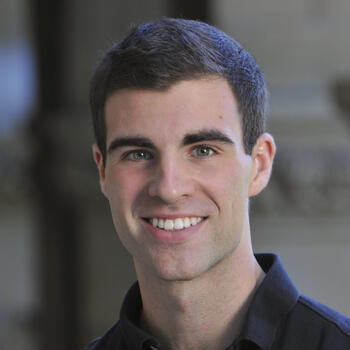
Patrick Cirenza

“My thesis topic definitely evolved over time,” Cirenza said. “I really did not know that much about cyber weapons. I initially wanted to look at non-state actors in cyber space and I asked Professor Scott Sagan about that and he asked what I knew about cyber and the reality was I really did not know anything. But I still really wanted to study it and at the time I was in Condoleezza Rice’s seminar and she suggested examining the analogy between nuclear and cyber weapons, which was being used a lot at the time. I went through several different topics and ultimately landed on deterrence.”

Cirenza was advised by FSI Senior Fellow Coit Blacker, who co-directs the honors program with Crenshaw, and by consulting professor Phil Taubman. Next fall he will attend Cambridge for a one year M.Phil program in international relations. After that he hopes to join the Marine Corps infantry.

“I never wanted a desk job in my twenties and I think it’s the best way to serve my country at this time,” he said.

The newly created Slusser Prize goes to the thesis that best contributes to the development of “permanent world peace.” Lamiot’s thesis, “When Blue Helmets Do Battle: Civilian Protection in the Democratic Republic of the Congo” examined whether the use of force against rebel groups in the DRC by UN peacekeepers had any effect on atrocities committed against civilians. He was advised by FSI Senior Fellow Stephen Stedman, who formerly served as Assistant Secretary-General and Special Advisor to the Secretary-General of the United Nations.

Lamiot started formulating his thesis topic when he was working in the U.S. embassy in the DRC. “I worked in the unit that is tasked with monitoring the conflict in the eastern part of the country. Part of my work was investigating a massacre that had taken place in that region about a month before I arrived in country. The massacre was of interest to the U.S. government because the Congolese and U.N. peacekeeping forces stationed nearby did not respond to the massacre despite knowing that it was going on,” he recounted.

Image
Teo Lamiot

“This sparked my interest and, at first, I wanted to answer the question why do peacekeepers use force in some cases but not in others, but I ultimately decided on answering what happens when they do use force. I’m hoping that my argument that in some cases using force has positive effects and decreases rebel violence against civilians informs these decision-makers on the ground when they are choosing what to do.”

After graduation Lamiot will be on a Center for Democracy, Development, and Rule of Law fellowship in Uganda doing development work. “I’ll likely be working on democratic and political development. I’m trying to learn something about how outside actors can try to bring about these development outcomes in foreign countries.”

The Firestone Medal is a Stanford-wide prize awarded to the top ten percent of all honors theses in social science, science, and engineering. Grossman, who will also graduate with a B.A. Political Science, wrote hers on homeland security and the evolution of terrorism advisory systems. She was advised by CISAC Co-Director Amy Zegart.

“I really wanted to look at effectiveness of communication and intelligence sharing, but in a way that I could actually see government information. That led me to public warning systems for terrorism where there is a lot of public information available. Not a lot has been written on how effective they are, how they operate, or how they have evolved,” Grossman said.

Image
Taylor Grossman

After graduation she plans on joining the Hoover Institution as a research assistant.

“I feel like I majored in CISAC. Ever since I took the class ‘The Face of Battle’ with Professor Scott Sagan and Colonel Joe Felter, I’ve been hooked on international security and the issues CISAC focuses on. I think the honors program has been the defining part of my undergraduate career. It was really rewarding and challenging and I’m glad I did it.”

Grossman and Cirenza were also elected to the Phi Beta Kappa Society in May 2015, as was Geo Saba, a political science major. Phi Beta Kappa is a nationwide society honoring students for the excellence and breadth of their undergraduate scholarly accomplishments.

Additionally, the Stanford Alumni Association (SAA) selected Cirenza, Grossman, and Akshai Baskaran, who majored in chemical engineering, to receive an Award of Excellence. 

Congratulations to all graduates of the Class of 2015: Akshai Baskaran, Patrick Cirenza, Kelsey Dayton, Taylor Grossman, Sean Hiroshima, Annie Kapnick, Sarah Kunis, Teo Lamiot, Austin Lewis, Sam Rebo, Geo Saba, Eliza Thompson, and Adrienne von Schulthess.

Hero Image
Honors Class of 2015
Program co-directors Martha Crenshaw (front) and Coit Blacker (right), along with T.A. Shiri Krebs (far left) are on hand to congratulate the CISAC Honors Class of 2015
Rod Searcey
All News button
1
Subscribe to Governance