Center for International Security and Cooperation

Scroll Down

The Cost of an Incoherent Foreign Policy: Trump’s Iran Imbroglio Undermines U.S. Priorities Everywhere Else

"Washington’s policy today is defined by incoherence: maximalist ends, minimalist means, false assumptions, few allies, all pressure, no diplomacy," writes Brett McGurk in Foreign Affairs. "....Even where the policy has been effective in choking Iran’s economy, it has done so at the cost of aggravating the very allies Washington needs if it is to sustain a competition against great-power rivals."

The Cybersecurity 202: Disinformation threat pushes Doomsday Clock closer to midnight

"Online disinformation campaigns are not just a threat to the 2020 election. They may be a harbinger of the end of the world," writes Joseph Marks, in the Washington Post. Marks interviewed Herb Lin and Christopher Painter for his piece about the Bulletin of Atomic Scientist's Doomsday Clock 2020 announcement, which set the methaphoric clock at 100 seconds to midnight.

Russia Is Updating Their Nuclear Weapons: What Does That Mean for the Rest of Us?

“In the big strategic game, the Russians and Americans have the same reason for modernizing their nuclear forces: they want to maintain parity,” writes Rose Gottemoeller for the Carnegie Endowment for International Peace. “If the two sides have the same number of nuclear warheads deployed, then they will not be tempted to shoot at each other. They also have a reason to avoid an arms race that would entail constantly seeking more nuclear weapons to try to achieve superiority—however temporary. As expensive as nuclear weapons and their delivery vehicles are, parity has kept the costs down by holding the arms race in check.”

Pompeo visited Ukraine. Good. What next?

“Secretary of State Mike Pompeo spent January 31 in Kyiv underscoring American support for Ukraine, including in its struggle against Russian aggression,” writes Steven Pifer for Brookings. “While Pompeo brought no major deliverables, just showing up proved enough for the Ukrainians. The U.S. government should now follow up with steps to strengthen the U.S.-Ukraine relationship, which has been stressed by President Donald Trump’s bid to drag Ukraine’s leadership into U.S. politics.”

Carnegie Council Podcast

Just War, Unjust Soldiers, & American Public Opinion, with Scott D. Sagan 


In this episode, Adam Read-Brown, editor of Ethics & International Affairs, and Scott D. Sagan discuss issues of just war, war crimes, moral licensing, and much more.

Learn More.


Who We Are

The Center for International Security and Cooperation (CISAC) is Stanford University’s hub for researchers tackling some of the world's most pressing security and international cooperation issues.

Founded 30 years ago, CISAC today is building on its historic strengths to seek solutions to the many longstanding and emerging challenges associated with an increasingly complex world. We are guided by our longstanding belief that a commitment to rigorous scholarship, openness to new ideas, and lively intellectual exchange can spur the creation and spread of knowledge to help build a safer world.
Join our mailing list

Stay up to date with Stanford Center for International Security and Cooperation news, events, and more.

Icon showing an open book with a magnifying glass.

Research

CISAC is a unique interdisciplinary nexus that researches and offers solutions to the most pressing security challenges in the world today.

Icon of a mortarboard.

Education

CISAC is educating and training the next generation of thought leaders and policy makers in international security.

Icon showing a human figure connected to a network tree.

Policy

CISAC’s research and policy work offers context and insights to decision-makers in Washington D.C. and throughout the world.

Leadership

fsi_bio

Rodney C. Ewing

Co-director of the Center for International Security and Cooperation, FSI Senior Fellow
close
fsi_bio

Rodney C. Ewing

Co-director of the Center for International Security and Cooperation, FSI Senior Fellow
Professor in Nuclear Security; Professor, Geological Sciences
fsi_bio

Colin Kahl

Co-director of the Center for International Security and Cooperation, FSI Senior Fellow
close
fsi_bio

Colin Kahl

Co-director of the Center for International Security and Cooperation, FSI Senior Fellow
Professor, by courtesy, Political Science
fsi_bio

Harold Trinkunas

Deputy Director
close
fsi_bio

Harold Trinkunas

Deputy Director
Senior Research Scholar
fsi_bio

Andrea Gray

Associate Director for Administration and Finance
close
fsi_bio

Andrea Gray

Associate Director for Administration and Finance

News & Events

  • News
  • Events

Events

Thu Feb 13
Tue Feb 18
12:00 PM - 1:15 PM

Putin or the People? The Surprising Politics of Authoritarianism in Russia

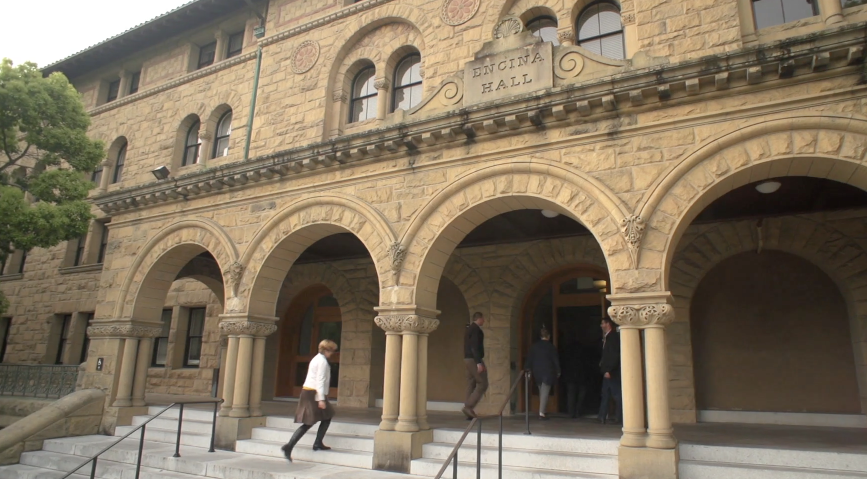
William J. Perry Conference Room, Encina Hall, Second Floor, Central
Tue Feb 18
3:30 PM - 5:00 PM

Defector Militias as Tools of Social Fragmentation: Evidence from Ba‘thist Iraq and Sudan

William J. Perry Conference Room, Encina Hall, Second Floor, Central
Thu Feb 20
3:30 PM - 5:00 PM

Secrecy and Deniability in the Nuclear Realm

William J. Perry Conference Room, Encina Hall, Second Floor, Central
Tue Feb 25
12:00 PM - 1:30 PM

Do Morals Matter?

William J. Perry Conference Room, Encina Hall, Second Floor, Central