FSI scholars produce research aimed at creating a safer world and examing the consequences of security policies on institutions and society. They look at longstanding issues including nuclear nonproliferation and the conflicts between countries like North and South Korea. But their research also examines new and emerging areas that transcend traditional borders – the drug war in Mexico and expanding terrorism networks. FSI researchers look at the changing methods of warfare with a focus on biosecurity and nuclear risk. They tackle cybersecurity with an eye toward privacy concerns and explore the implications of new actors like hackers.
Along with the changing face of conflict, terrorism and crime, FSI researchers study food security. They tackle the global problems of hunger, poverty and environmental degradation by generating knowledge and policy-relevant solutions.
Secretary of Defense Ashton B. Carter praised two Stanford luminaries during his Pentagon policy speech on cybersecurity. He gave the annual Drell Lecture for Stanford’s Center for International Security and Cooperation. The lecture is named for theoretical physicist and arms control expert Sidney Drell, the center’s co-founder, a senior fellow at the Hoover Institution and former director of the SLAC National Accelerator Laboratory. Drell and former Secretary of Defense William J. Perry – a FSI senior fellow and consulting professor at CISAC – were both mentors to Carter. Drell could not attend due to illness and Perry was in the audience. Here are the comments Carter made about the two men who had such a significant impact on his life:
Thank you, Dr. Hennessy, for that introduction. And thanks to all my many friends and colleagues here at Stanford for the opportunity to be with you today. It’s a special privilege for me to give the Sidney Drell Lecture, and I need to tell you why.
I began my career in elementary particle physics, and the classic textbook in relativistic quantum field theory was Bjorken and Drell, entitled Relativistic Quantum Fields, which described the first of what are known as gauge field theories, namely quantum electrodynamics. Here is my copy of Bjorken and Drell, with my hand marking in the margins.
For my doctorate in theoretical physics, I worked on quantum chromodynamics, a gauge field theory of the force by which quarks are held together to make sub-nuclear particles. And at Oxford University’s department of theoretical physics, the external thesis examiner for my doctorate was none other than Sidney Drell.
When I visited the Stanford Linear Accelerator Center in subsequent years as a post-doc, I remember sitting on the porch of the rambling ranch house right here on the Stanford campus that Sid and Harriet Drell lived in. As post-docs tend to do, I would hang around their house at dinnertime hoping that Harriet would invite me in to dinner, which she usually did. Sometimes their daughter Persis would be there, who is now, of course, the dean of engineering here at Stanford University.
A few years later, Sid was assisting the assembly of a team of scientists for the U.S. Congress on a topic that preoccupied Cold War Washington at the time: how to base the ten-warhead MX intercontinental ballistic missile so that it could not be destroyed in a first strike by 3,000 equivalent megatons of Soviet throw-weight atop their SS-18 missile. He recommended that I join this team. Sid Drell as an inspiration to all those who worked in those years to control the danger of nuclear weapons. This was the beginning of my involvement in national security affairs.
About that time, I got to meet then-Under Secretary of Defense in charge of technology and procurement for the Department of Defense. He impressed me with how lucid and logical he was, and how well he applied technical thinking to national security problems. That Under Secretary was of course William Perry, who is also present here today, and who later because Deputy Secretary of Defense and finally Secretary of Defense in a progression that I have followed some 20 years later. Bill has been a major figure in my life, including standing in for my father at my wedding.
So I thank both Sid Drell and Bill Perry, and many, many other colleagues and friends here at CISAC, at the Freeman Spogli Institute, at the hoover Institution, and in the engineering faculty. I especially thank everyone for their warm welcome for me as a visitor earlier this academic year. Not quite two months into it, on a fateful Monday morning in November, though, duty called. And I found myself nominated by President Obama to be Secretary of Defense.
In the third annual Nancy Bernkopf Tucker Memorial Lecture on U.S.-East Asia Relations, Thomas Fingar, Oksenberg-Rohlen Distinguished Fellow in the Freeman Spogli Institute for International Studies at Stanford, former deputy director of national intelligence for analysis and former chairman of the National Intelligence Council, discusses U.S. policy toward China. The speech titled "The United States and China: Same Bed, Different Dreams, Shared Destiny" was delivered at The Wilson Center in Washington, D.C., on April 20, 2015. Links to English and Chinese versions are listed below.
A sustainable future is within reach, but it won’t prevent the world from experiencing the potentially catastrophic environmental and political consequences of climate change and environmental degradation, former Secretary of Energy Steven Chu told a Stanford audience.
Chu, who shared the 1997 Nobel Prize in Physics and served as the energy secretary under President Barack Obama from 2009 to 2013, held a seminar at CISAC on Tuesday on climate change, sustainability and security.
The consequences of the damage wrought by unsustainable resource depletion and air pollution will manifest in a hotter, more dangerous world, said the Stanford physics professor.
Average global temperatures have skyrocketed past normal levels since the Industrial Revolution and have plateaued in the last few months at the highest points in history. Chu said the plateau is likely due to it taking a long time for the lower depths of the oceans to warm up.
“There is a built-in time delay between committing damage, which we’ve already done, and feeling the true consequences. All we can say is that temperatures are likely to climb again, we just don’t know when – could be 50 to 100 years – and by how much,” said Chu.
Even if the world were to stop using coal, oil, and natural gas today, he said, it would not stop the oncoming consequences. “It’s like a long-time chain-smoker who stops smoking. Stopping does not necessarily prevent the occurrence of lung cancer.”
Chu said the battle between scientists and the tobacco industry in the 20th century is analogous to today’s conflict between scientists and the energy industries.
“A lot of what you hear from the incumbent energy industries and their representatives are the same kinds of arguments that the tobacco industry made when the science showing the harm cigarettes caused came out,” said Chu.
Ironically, the same science showing the damage cigarettes cause to health can be used to demonstrate the hazards of air pollution today.
Chu noted that a recent study found that for every 10 micrograms of pollution per cubic meter, the chances of contracting lung cancer increases 36 percent. This lends alarming perspective to pollution in places such as China and India.
“The average level of air pollution was 194 micrograms per cubic meter. So it’s possible that breathing the average air in Beijing is equivalent to smoking a pack of cigarettes a day,” he said. “Even if it’s a third of that, it’s still really bad. But again, there is going to be a lag time between now and a possible rash of deaths by lung cancer.
In addition to causing large-scale health crises, global warming and environmental degradation may exacerbate, or even cause, potential conflicts between countries.
“I think water insecurity concerns me more than even rising sea levels,” said Chu, noting that today’s conflicts in the Middle East and North Africa are exacerbated by water insecurity.
“India is already nervous that China will direct water runoff from the Himalayas to water-starved Northern China and away from India or Bangladesh, which are also water-starved,” he said. “India is also concerned that millions of Bangladeshis could become environmental refugees and start streaming into India.”
Chu recalled that when he was energy secretary, one of his biggest climate-change allies was the Department of Defense
“They will be the ones called on to help with those stresses and they see serious geopolitical risks due to climate change,” he said.
Despite the dangers ahead, Chu is optimistic about great strides in sustainable technology.
Chu and some of his colleagues studied a phenomenon that may bode well for creating a more environmentally friendly economy: putting efficiency standards on electronic appliances, which eventually could lead to a decline in the cost of appliances.
In addition to economical energy standards, new and cheaper green energy technology is within sight. Chu is working with Stanford Professor Yi Cui on creating a lithium-sulfur battery that may be significantly lighter than the current electric batteries used by cars such as Tesla and charge 200 miles in 10 minutes.
Additionally, wind energy is set to become cheaper than natural gas. Chu said that in the Midwest, where the wind is best and cheapest, contracts are selling anywhere between 2.5 and 3 cents per kilowatt-hour. If you build a new natural gas plant, it would be about 5 cents per kilowatt-hour.
“To be fair, wind does have the benefit of a production tax credit and if you take that away, wind would be somewhere around 5.5 cents per kilowatt-hour. But I think within the next dozen years wind will, on its own, be cheaper than natural gas,” he said.
Solar is even more surprising, said Chu. In July 2008, contracts were going for 18 to 20 cents per kilowatt-hour. In Texas in 2014, two contracts were signed one for 5 cents and the other for 4.8 cents per kilowatt-hour. Solar has the advantage of being scalable and the amount of solar resources available around the world is substantial.
“There’s plenty of solar energy available to power the entire world several times over,” he said.
Nonetheless, public policy nudges are still needed.
“There is still no serious discussion in the U.S. about creating a national grid with long distance transmission lines, which will be necessary for a sustainable future. But before that can happen, the campaign by incumbent industries to discredit and doubt climate science has to be defeated.”
Abstract: Today’s international relations are plagued by anxieties about the nuclear state and the state of being nuclear. But exactly what does it mean for a nation, a technology, a substance, or a workplace to be “nuclear”? How, and to whom, does the designation “nuclear” matter? Considering these questions from African vantage points shifts our paradigm for understanding the global nuclear order. In any given year of the Cold War, African mines supplied 20%–50% of the Western world’s uranium ore. As both political object and material substance, African ore shaped global conceptions and meanings of the “nuclear,” with enduring consequences for the legal and illegal circulation of radioactive materials, the global institutions and treaties governing nuclear weapons and atomic energy, and the lives and health of workers. This talk explores those consequences, drawing on historical and contemporary examples from Niger and South Africa. The view from Africa offers scholars and policymakers fresh perspectives on issues including global nuclear governance, export controls, pricing mechanisms, and occupational health regulation
About the Speaker: Gabrielle Hecht is professor of history at the University of Michigan, where she also directs the Program in Science, Technology, and Society. Her publications include two books on history and policy in the nuclear age. Being Nuclear: Africans and the Global Uranium Trade (MIT Press, 2012) offers new perspectives on the global nuclear order. The Radiance of France: Nuclear Power and National Identity (MIT Press, 1998, 2nd edition, 2009) explores how the French embedded nuclear policy in reactor technology. It received awards from the American Historical Association and the Society for the History of Technology. Hecht was appointed by ministerial decree to the scientific advisory board for France’s national radioactive waste management agency, ANDRA. She also serves on the advisory board for AGORAS, an interdisciplinary collaboration between academic and industry researchers to improve safety governance in French nuclear installations. She recently advised the U.S. Senate Committee on Investigations on the history of the uranium market, for its report on Wall Street Bank Involvement with Physical Commodities. Hecht’s work has been funded by the National Science Foundation, the National Endowment for the Humanities, the American Council for Learned Societies, and the South African and Dutch national research foundations, among others. Hecht holds a Ph.D. in history and sociology of science from the University of Pennsylvania.
Encina Hall (2nd floor)
Gabrielle Hecht
Professor of History
Speaker
University of Michigan
The conference is designed to illustrate the scope and variety of the security challenges we face and I commend both the organizers and the presenters. I have learned much and am confident you have as well. Others have addressed specific challenges; my assignment is to provide a big picture perspective that will provide context and a framework for understanding the nature of the world we live in and the types of challenges we face.
Toward that end, I will organize my remarks around three interrelated questions:
Why do we characterize the world and our present era as turbulent?
Why do we consider the security challenges we face to be different, and perhaps more dangerous, than those confronted by previous generations of Americans?
And finally, which of the many perceived and proclaimed security challenges are most important, and what should we do about them?
Each of these questions warrants an entire lecture—or conference—but you don’t have that much time so I hope you will allow me to discuss them in highly abbreviated fashion. We can dig deeper in the question and answer period if you wish [...]
Much has happened in the three years since the FAA Modernization and Reform Act of 2012 (FMRA) was signed into law. Under the FMRA, the FAA was directed to “develop and implement operational and certification requirements for the operation of public unmanned aircraft systems in the national airspace system” by the end of 2015. In addition, the FAA was directed to “provide for the safe integration of civil unmanned aircraft systems into the national airspace system as soon as practicable, but not later than” the end of September 2015. CISAC affiliate John Villasenor gives testimony before the Senate Committee on Commerce, Science, and Transportation Subcommittee on Aviation Operations, Safety, and Security about key considerations of safety, innovation, economic impact and privacy when it comes to drones.
Retired Army Lt. Gen. Karl Eikenberry stood before a team of soldiers preparing to deploy to Afghanistan. Their mission would be quite different from the ones he led in the South Asian country during the height of the war.
The officers of the U.S. Army’s 3rd Bridge Combat Team, 101st Airborne Division, in Fort Campbell, Ky., would soon be leading a team of about 2,000 soldiers to provide operational support and advise Afghan national forces as the U.S.-led Coalition forces withdraw and the country takes over the battle against the Taliban.
“I spoke to them about the history of the U.S. diplomatic, development and military activities in Afghanistan since 9/11,” said Eikenberry, now the William J. Perry Fellow in International Security at the Center for International Security and Cooperation.
Eikenberry was a military commander in Afghanistan from 2002-2003 and then again from 2005-2009. He would later serve as U.S. ambassador to Kabul from 2009 to 2011.
Col. J.B. Vowell, a former CISAC Senior Military Fellow (2012-2013), was leading the brigade, which deployed in late January for a nine-month tour. He had invited Eikenberry to speak to his troops, having met him while he was at Stanford.
The mission of his tour is to advise and protect advisors and, if necessary, support Afghan forces in extreme combat situations. Though a brigade typically has 5,000 soldiers, Vowell’s smaller, tailored team is a sharp departure from previous missions.
Former CISAC military fellow and U.S. Army Col. J.B. Vowell, left, and Ret. U.S. Army Lt. Gen. Karl Eikenberry, at Fort Campbell, Ky., on Jan. 13, 2015.
“So they’ve had to think hard about not only their advisory role, but also who they will protect their own forces with, and what to do if they are called upon to support Afghan forces in an exceptionally dire situation,” said Eikenberry.
These types of operations are part of the central challenges facing the U.S. military today, Eikenberry said, adding that Vowell’s time as a senior military fellow at CISAC helped prepare him for his mission.
“The resources available at FSI help prepare officers for these challenges,” said Eikenberry, who is also an affiliate of FSI's Center on Democracy Development and the Rule of Law. “CISAC does very sophisticated studies in contemporary security problems; CDDRL does very interesting work in the development of political institutions in difficult environments. These are resources military fellows can draw upon.”
Military Fellow Program launched in 2009
When former Secretary of Defense William J. Perry returned to Stanford after his service in Washington, he and current Secretary of Defense Ashton Carter started the Preventative Defense Project at Harvard and Stanford. The project focuses on forging nongovernmental, Track II security partnerships with Russia and its neighbors, engaging China and addressing the lethal legacy of Cold War weapons of mass destruction.
Deborah Gordon, executive director of the project and manager of the military fellows program, said Perry believed that bringing in acting military officers to learn more about strategic defense policy would aid the mission to prevent future threats to global security.
“Perry started asking the various heads of the military services to allow a fellow to come to CISAC and be more broadly engaged in the university,” she said.
The Freeman-Spogli Institute for International Studies (FSI), the umbrella organization for CISAC and other research centers, hosted its first senior military fellow in 2009. FSI now hosts five, three from the Air Force and two from the Army. Fellows go through a rigorous selection process and attend Stanford for one year to conduct research.
CISAC Senior Research Scholar and retired U.S. Army Col. Joseph Felter helped secure the Army officers for the first fellowships. He had attended Stanford as an active duty officer from 2002-2005 and has a Ph.D. in political science from the university.
“When I came back to do a War College fellowship from 08-09, the only sponsored spots were at Hoover,” he said, referring to the Hoover Institution at Stanford. “It’s a great institution but it struck me as a bit insulated from the rest of the campus. With the support of the Army War College I volunteered to take the lead on putting together a proposal.”
He persuaded the War College that there was demand for fellows and they approved the establishment of two new fellowships at CISAC. Felter, Gordon and others at CISAC knew that civilian scholars and students at the university would in turn benefit from interacting with active-duty officers for their perspective on the U.S. military around the world.
Among the first fellows were Viet Luong, who is now a one-star general and deputy commander of the 1st Cavalry Division, and Charlie Miller, who is working directly for Chairman of the Joint Chiefs of Staff General Martin Dempsey as his senior advisor.
Former CISAC Military Fellow Viet Luong, now a one-star general, teaches a simulation class during his 2011-2012 fellowship.
In addition to meeting current and former government and military leaders and conducting research, fellows participate in Stanford classrooms and seminars.
Army Lt. Col. Dennis Heaney is a senior military fellow at CISAC this academic year. His research focuses on the strategic policy of the Regionally Aligned Forces (RAF), soldiers from all units of the U.S. Armed Forces that support combatant commands.
Heaney is working to delineate out the costs of altering the role of conventional forces - traditionally trained to fight against other national militaries - to fight unconventional wars that are not restricted to any particular geographic zone.
“The real dilemma is conventional Army forces are made for land warfare against other forces. They are not really cut out for irregular warfare,” Heaney said of the RAF. “When you try to do regional engagement it takes you away from your main mission. I may help you, but there is an opportunity cost. Trying to prepare for both regular and irregular warfare takes away from each one. It’s kind of a zero-sum game. So I’m trying to critique that and make recommendations.”
Heaney has been in the Army for 24 years. He started out in the infantry as an officer and then entered the Special Forces in 1997. He is likely to deploy to Afghanistan with the Special Operations Joint Task Force after he completes his fellowship.
“The biggest benefit of being a fellow at Stanford is exposure to high-level folks like Karl Eikenberry, Gen. James Mattis at Hoover, Adm. James Ellis, and former Defense Secretaries William Perry and George Schultz, as well as current Secretary of Defense Ash Carter when he was here for a short time,” Heaney said.
Carter was a visiting scholar at FSI last year, until he became the nation’s 25th secretary of defense in February.
Heaney participated in CISAC’s signature class, “International Security in a Changing World,” playing the role of military commander during simulations that are the hallmark of the class.
“One simulation was about deciding between ground or air options for a high-value target in Afghanistan,” Heaney said. “Last week we did a simulation about the Islamic State and what options exist.”
Even after they leave, military fellows maintain close ties to Stanford.
Eikenberry is slated to teach a course next term about America’s post-9/11 intervention in Afghanistan.
“I’m hopeful that we’ll be able to Skype-in to Col. Vowell’s headquarters,” he said. “I think it would be powerful for the students, after reading essay after essay about the Afghanistan intervention, to actually talk to one of our military leaders currently operating there on the ground.”
There is an effort underway to expand the military fellows program beyond FSI.
“We envision a future where military fellows can embed in the professional schools, like law and business, or in departments like engineering and political science – and even private tech companies like Google and Palantir,” Gordon said. “We want to engage Stanford and Silicon Valley in helping solve our national security problems.”
Joshua Alvarez was a CISAC Honors Student in the 2011-2012 academic year.
Hero Image
Former CISAC military fellow and U.S. Army Col. J.B. Vowell, left, and Ret. U.S. Army Lt. Gen. Karl Eikenberry, at Fort Campbell, Ky., on Jan. 13, 2015.
Abstract: Scholars know quite a lot about U.S. nuclear war planning from the end of World War II to the end of the Cold War. We know a great deal about how nuclear deterrence was and is supposed to work. We know much less about how officers and others understood the circumstances and consequences if deterrence had failed and these plans had been used in war. What was it like to make very specific and workable plans for a war that, in President Ronald Reagan’s words, “cannot be won and must never be fought”—but nonetheless—might have been fought? This is a problem of understanding how organizations build complex technical and logistical routines, and how people in these organizations understood and made sense of the possibility that in some circumstances, nuclear weapons would be used. How did war planners imagine the circumstances? The scenarios of what might ensue? The consequences? It is one thing to say the whole situation was a paradox, or a conundrum; it is another to understand the many meanings of this situation for those involved. Explanation hinges on how people in organizations make plans, develop scenarios, and tell stories.
About the Speaker: Lynn Eden is Associate Director for Research at the Center for International Security and Cooperation, Freeman Spogli Institute for International Studies, Stanford University. Eden received her Ph.D. in sociology from the University of Michigan, held several pre- and post-doctoral fellowships, and taught in the history department at Carnegie Mellon before coming to Stanford.
In the area of international security, Eden has focused on U.S. foreign and military policy, arms control, the social construction of science and technology, and organizational issues regarding nuclear policy and homeland security. She co-edited, with Steven E. Miller, Nuclear Arguments: Understanding the Strategic Nuclear Arms and Arms Control Debates (Ithaca, N.Y.: Cornell University Press, 1989). She was an editor of The Oxford Companion to American Military History (New York: Oxford University Press, 2000), which takes a social and cultural perspective on war and peace in U.S. history. That volume was chosen as a Main Selection of the History Book Club.
Eden's book Whole World on Fire: Organizations, Knowledge, and Nuclear Weapons Devastation (Ithaca: Cornell University Press, 2004; New Delhi: Manas Publications, 2004) explores how and why the U.S. government--from World War II to the present--has greatly underestimated the damage caused by nuclear weapons by failing to predict damage from firestorms. It shows how well-funded and highly professional organizations, by focusing on what they do well and systematically excluding what they don't, may build a poor representation of the world--a self-reinforcing fallacy that can have serious consequences, from the sinking of the Titanic to not predicting the vulnerability of the World Trade Center to burning jet fuel. Whole World on Fire won the American Sociological Association's 2004 Robert K. Merton Award for best book in science, knowledge, and technology.
Eden has also written on life in small-town America. Her first book, Crisis in Watertown (Ann Arbor: University of Michigan Press, 1972), was her college senior thesis; it was a finalist for a National Book Award in 1973. Her second book, Witness in Philadelphia, with Florence Mars (Baton Rouge: Louisiana State University Press, 1977), about the murders of civil rights workers Schwerner, Chaney, and Goodman in the summer of 1964, was a Book of the Month Club Alternate Selection.
Lynn Eden is a Senior Research Scholar Emeritus. She was a Senior Research Scholar at Stanford University's Center for International Security and Cooperation until January 2016, as well as was Associate Director for Research. Eden received her Ph.D. in sociology from the University of Michigan, held several pre- and post-doctoral fellowships, and taught in the history department at Carnegie Mellon before coming to Stanford.
In the area of international security, Eden has focused on U.S. foreign and military policy, arms control, the social construction of science and technology, and organizational issues regarding nuclear policy and homeland security. She co-edited, with Steven E. Miller, Nuclear Arguments: Understanding the Strategic Nuclear Arms and Arms Control Debates (Ithaca, N.Y.: Cornell University Press, 1989). She was an editor of The Oxford Companion to American Military History (New York: Oxford University Press, 2000), which takes a social and cultural perspective on war and peace in U.S. history. That volume was chosen as a Main Selection of the History Book Club.
Eden's book Whole World on Fire: Organizations, Knowledge, and Nuclear Weapons Devastation (Ithaca: Cornell University Press, 2004; New Delhi: Manas Publications, 2004) explores how and why the U.S. government--from World War II to the present--has greatly underestimated the damage caused by nuclear weapons by failing to predict damage from firestorms. It shows how well-funded and highly professional organizations, by focusing on what they do well and systematically excluding what they don't, may build a poor representation of the world--a self-reinforcing fallacy that can have serious consequences, from the sinking of the Titanic to not predicting the vulnerability of the World Trade Center to burning jet fuel. Whole World on Fire won the American Sociological Association's 2004 Robert K. Merton Award for best book in science, knowledge, and technology.
Eden has also written on life in small-town America. Her first book, Crisis in Watertown (Ann Arbor: University of Michigan Press, 1972), was her college senior thesis; it was a finalist for a National Book Award in 1973. Her second book, Witness in Philadelphia, with Florence Mars (Baton Rouge: Louisiana State University Press, 1977), about the murders of civil rights workers Schwerner, Chaney, and Goodman in the summer of 1964, was a Book of the Month Club Alternate Selection.
Abstract: The Cold War rivalry between the United States and the Soviet Union lasted for much of the second half of the 20th Century. While the superpowers never engaged directly in full-scale armed combat, a nuclear arms race became the centerpiece of a doctrine of mutually assured destruction, and prompted a mass production of plutonium, and the designing, building, and testing of large numbers of nuclear weapons. In more than 50 years of operation, the Cold War battlefields created over 100 metric tons of plutonium, produced tens of thousands of nuclear warheads, oversaw more than 1000 detonations, and left behind a legacy of contaminated facilities, soils, and ground water.
The extent of long-term adverse health effects will depend on the mobility of plutonium and other actinides in the environment and on our ability to develop cost-effective scientific methods of removing or isolating actinides from the environment. Studying the complex chemistry of plutonium and the actinides in the environment is one of the most important technological challenges, and one of the greatest scientific challenges in actinide science today.
I will summarize our current understanding of actinide chemistry in the environment, and how that understanding was used in the decontamination and decommissioning of the Rocky Flats Site, where plutonium triggers for U.S. nuclear weapons were manufactured. At Rocky Flats, synchrotron radiation measurements made at the Stanford Synchrotron Radiation Laboratory were developed into a science-based decision-making tool that saved billions of dollars by focusing Site-directed efforts in the correct areas, and aided the most extensive cleanup in the history of Superfund legislation to finish one year ahead of schedule, ultimately resulting in billions of dollars in taxpayer savings.
About the Speaker: David L. Clark received a B.S. in chemistry in 1982 from the University of Washington, and a Ph.D. in inorganic chemistry in 1986 from Indiana University. His thesis work received the American Chemical Society’s Nobel Laureate Signature Award for the best chemistry Ph.D. thesis in the United States. Clark was a postdoctoral fellow at the University of Oxford before joining Los Alamos National Laboratory as a J. Robert Oppenheimer Fellow in 1988. He became a Technical Staff Member in the Isotope and Nuclear Chemistry Division in 1989. Since then he has held various leadership positions at the Laboratory, including program management for nuclear weapons and Office of Science programs, and Director of the Glenn T. Seaborg Institute for Transactinium Science between 1997-2009. He has served the DOE as a technical advisor for environmental stewardship including the Rocky Flats cleanup and closure (1995-2005), closure of High Level Waste tanks at the Savannah River Site (2011), and as a technical advisor to the DOE High Level Waste Corporate Board (2009-2011). He is currently the Program Director for the National Security Education Center at Los Alamos, a Fellow of the American Association for the Advancement of Science, a Laboratory Fellow, and Leader of the Plutonium Science and Research Strategy for Los Alamos. His research interests are in the molecular and electronic structure of actinide materials, applications of synchrotron radiation to actinide science, behavior of actinide and fission products in the environment, and in the aging effects of nuclear weapons materials. He is an international authority on the chemistry and physics of plutonium, and has published over 150 peer-reviewed publications, encyclopedia and book chapters.
Actinide Chemistry and The Battlefields of the Cold War
Abstract: Any given computer or network runs code from an enormous number of sources, including the producer of the operating system, the hardware, built-in and user-installed applications, websites, and the user herself. Computers may also run code injected by remote attackers of various sorts including autonomous viruses, individual hackers and state-backed organizations. What happens when the authors of these various software components have different objectives for the behavior of that single computer or network?
This talk will propose a simple theory that predicts which of these contestants will tend to win in different kinds of computer security contests, including the robustness of encrypted communications; the control of cloud-based and distributed computing systems; and some hypothetical future applications to the security of AI systems.
About the Speaker: Peter Eckersley is Technology Projects Director at the Electronic Frontier Foundation. He leads a team of technologists who do both coding and policy work to strengthen Internet security, privacy, and innovation.
Peter holds a PhD in computer science and law from the University of Melbourne. His doctoral research was on digital copyright and the alternatives, including the computer security dimensions of copyright policy.
Encina Hall (2nd floor)
Peter Eckersley
Technology Projects Director
Speaker
Electronic Frontier Foundation


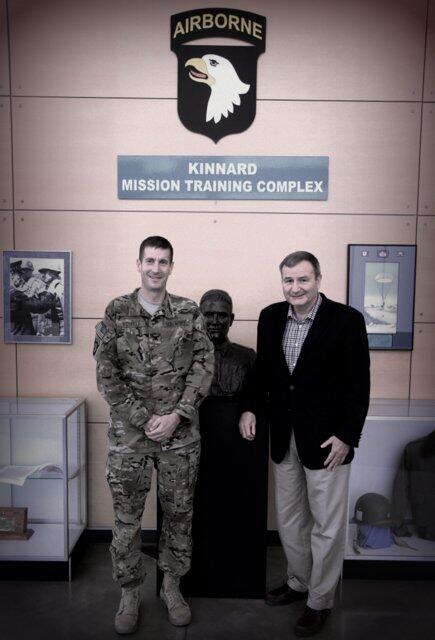 Former CISAC military fellow and U.S. Army Col. J.B. Vowell, left, and Ret. U.S. Army Lt. Gen. Karl Eikenberry, at Fort Campbell, Ky., on Jan. 13, 2015.
 Former CISAC Military Fellow Viet Luong, now a one-star general, teaches a simulation class during his 2011-2012 fellowship.

