Security

FSI scholars produce research aimed at creating a safer world and examing the consequences of security policies on institutions and society. They look at longstanding issues including nuclear nonproliferation and the conflicts between countries like North and South Korea. But their research also examines new and emerging areas that transcend traditional borders – the drug war in Mexico and expanding terrorism networks. FSI researchers look at the changing methods of warfare with a focus on biosecurity and nuclear risk. They tackle cybersecurity with an eye toward privacy concerns and explore the implications of new actors like hackers.

Along with the changing face of conflict, terrorism and crime, FSI researchers study food security. They tackle the global problems of hunger, poverty and environmental degradation by generating knowledge and policy-relevant solutions. 

Authors
News Type
News
Date
Paragraphs

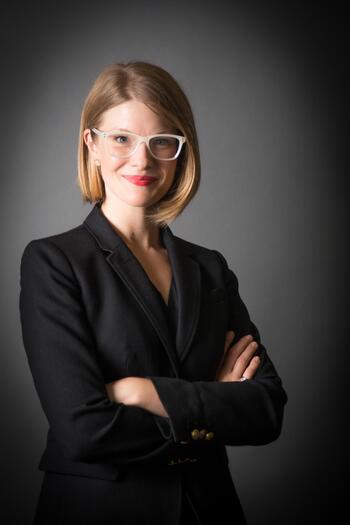
The International Studies Association is proud to announce that Martha Crenshaw, Senior Fellow at the Center for International Security and Cooperation (CISAC) and the Freeman Spogli Institute for International Studies and Professor of Political Science (by courtesy) at Stanford University has been named the 2016 recipient of the International Security Studies Section (ISSS) Distinguished Scholar Award.

Professor Crenshaw is renowned for her work on political terrorism, as one of the first scholars to have approached terrorism as a serious subject of academic inquiry.  Her steady stream of high quality publications – including two books, five edited volumes, and numerous articles – have garnered global respect and attention.  Her work has been funded by such prestigious organizations as the Ford Foundation, Pew, Guggenheim, the National Science Foundation, and the Minerva Initiative.  Dr. Crenshaw has testified before Congress, weighed in on important national policy debates and served on boards and committees in multiple fields.  She was a member of the Committee on Evaluating the Effectiveness of the Global Nuclear Detection Architecture of the National Academies of Science and serves on the editorial boards of International Security, Political Psychology, Security Studies, Dynamics of Asymmetric Conflict, and Terrorism and Political Violence.  She previously served as the President and Councilor of the International Society of Political Psychology (ISPP) and a member of the executive board of Women in International Security.

Dr. Crenshaw taught for many years at Wesleyan, where she was awarded for her teaching excellence.  Many junior scholars have benefited enormously from her generous mentoring and advice, while her career has served as a model to many more scholars in the field.  Through her research, policy work, service, teaching, and mentoring, Professor Crenshaw has indelibly shaped the International Security field.  We hope that you will join us in celebrating her accomplishments at the ISSS panel and reception that will be held in her honor at the annual meeting of the International Studies Association in March 2016, in Atlanta.

In related news, Crenshaw was also elected on July 16, 2015 to the prestigious British Academy – the U.K.’s national academy for the humanities and Social Sciences – as one of 20 new Corresponding Fellows from overseas universities.

Note: This story is used by permission from the International Studies Association

Hero Image
Martha Crenshaw Rod Searcey
All News button
1
-

The United States’ strategy for the storage and disposal of highly radioactive nuclear waste is at a stalemate: spent nuclear fuel accumulates at nuclear power plants, yet there is no long-term, national strategy for spent fuel management and disposal. The Blue Ribbon Commission for America’s Nuclear Future emphasized the urgency of finding a geologic repository, but work on the proposed site -- Yucca Mountain – has stopped, and there is no active program to site a new geologic repository.  The political impasse has overwhelmed thoughtful discussion of technical, regulatory, risk and public policy issues.  

To inform efforts to reset the U.S. nuclear waste program, the Center for International Security and Cooperation, with the support of FSI and the Precourt Institute for Energy, is sponsoring a series of meetings to review and discuss the nuclear waste management strategy in the United States. 

The agenda and prospectus can be downloaded below.

For information related to the first meeting in this series, and relevant materials, please click here.


Reset Conference Documents for meeting no. 2 can be accessed through this link.


Follow-up materials


Back to Home Page

Meeting 2: The Structure and Behavior of a Nuclear Waste Management Organization
Download pdf
Prospectus for Meeting 2 of the Reset of U.S. Nuclear Waste Management Strategy and Policy
Download pdf
Bios of Steering Committee Members
Encina Hall 616 Serra StreetStanford, CA 94305 
Agenda can be downloaded below
Authors
News Type
News
Date
Paragraphs

Bioengineering researchers have recently constructed the final steps required to engineer yeast to manufacture opiates, including morphine and other medical drugs, from glucose, drawing significant interest, and concern, from the media and academics in the science and policy fields, including at the Center for International Security and Cooperation (CISAC).  

“Researchers are getting better at building biology based platforms to create a wide variety of compounds that are difficult, inefficient, or sometimes impossible to create by other means,” Dr. Megan J. Palmer told National Public Radio in the weekly Science Friday segment.

She highlighted how these platforms can enable production of potentially safer, cheaper and more effective drugs. “But one significant concern is if we create the full pathway to go from glucose to this intermediate and then all the way to things like morphine, this could feed into illicit markets and bolster new illicit markets.”

Image
Palmer is a William J. Perry Fellow in International Security at CISAC whose work focuses on developing best practices and policies for responsibly advancing biotechnology.

The media this week has focused on comments by researchers who pointed out that the modified yeast could be used to manufacture heroin, a synthesized version of morphine. The prospect of “home-brewed heroin” has been prominently featured in news coverage.

There are significant concerns, says Palmer, but she cautioned that focusing solely on that possibility could lead to bad policy outcomes.

“There is a big opportunity for researchers, policy makers, and industry to work together to figure out what controls they can put in,” she said in a separate interview. “We have time to get ahead of this problem. We now have choices in how we build and regulate the technology. The challenge for regulatory and technical communities will be to avoid reactive quick fixes. It’s encouraging to see researchers engaging in these issues early on.”

The challenge will be to find ways for researchers, law enforcers, and policy experts to work together to build safeguards into the biology itself as well as into organizations and institutions. 

“We really need to think about security as a design principle,” Palmer said. She hopes to foster thoughtful and rigorous analysis of how the design of biotechnology impacts future governance options.

“This issue highlights beautifully the nexus between public policy and science and technology, which is where CISAC has already, and will continue to make important contributions,” said CISAC Co-Director David Relman. Dr. Relman is also the Thomas C. and Joan M. Merigan Professor in the Departments of Medicine, and of Microbiology and Immunology at Stanford University. 

CISAC recently hosted a seminar led by Stanford’s Dr. Christina Smolke that discussed technology advances that are resulting in alternative supply chains for drugs, with particular attention to opiates.

Dr. Smolke is also troubled by the over-emphasis of the risks associated with the potential technology. “I believe it’s inflammatory, biased, and not grounded in an accurate representation of the technology. However, the commentary focuses on the risks of the supply chain and proposes regulations/governance for such a technology, without implementing a process to engage various parties in discussions to thoughtfully assess risks, opportunities, and regulatory needs in this context.”

“I think we need to frame this issue in the context of the larger systemic challenges involving the rearrangements of supply chains enabled through bio-manufacturing and how we spread responsible norms and practices,” Palmer said. “We need to think about governance options in terms of human capacities and technical capacities. What safeguards can we engineer into our technologies, and in turn what safeguards can we build into our organizations and institutions?”

Hero Image
Yeast culture
All News button
1
An Evaluation of the Analogy Between Nuclear and Cyber Deterrence
Download pdf


CISAC Honors Students Prize-Winning Presentations

Encina Hall, 2nd floor

616 Serra Street

Stanford University

Patrick Cirenza CISAC Honors Student Speaker CISAC Honors Program in International Security Studies
Taylor Grossman CISAC Honors Student Speaker CISAC Honors Program in International Security Studies
Teo Lamiot CISAC Honors Student Speaker CISAC Honors Program in International Security Studies
Seminars
Date Label
-

The video recording of this event can be watched on YouTube: https://www.youtube.com/watch?v=j57OuqbtD9Q&feature=youtu.be

In an age of terrorism, where should a democratic society draw the line on government surveillance? Edward Snowden’s explosive disclosures about the National Security Agency’s intelligence-collection operations have ignited an intense debate about the appropriate balance between security and liberty in America. In a special series this year, nationally prominent experts will explore the critical issues raised by the NSA’s activities, including their impact on our security, privacy, and civil liberties. This timely series will address one of the most challenging questions the nation faces today as it tries to strike the right balance between safety and liberty. The Security Conundrum will look behind and beyond the headlines, examining the history and implementation of the NSA operations, the legal questions generated by them, the media’s role in revealing them, and the responsibility of Congress to oversee them. It will also address the NSA’s uneasy and evolving relationship with Silicon Valley. Each session in the series is designed to explore these issues from a different vantage point. The guest speakers, in conversation with Stanford scholars, will probe the problems, explain the political, legal, and technological contours of the NSA actions, and outline ways to preserve the nation’s security without sacrificing our freedoms. 


An Evening with U.S. Senator Dianne Feinstein

Senator Dianne Feinstein has been at the vortex of the debate about Edward Snowden’s disclosures since he exposed an array of National Security Agency surveillance programs in 2013. As chair of the Senate Select Committee on Intelligence from 2009-2014, and now the ranking minority member, Senator Feinstein has tried to help the nation strike the appropriate balance between security and liberty as she and her Senate colleagues examined NSA practices in light of the Snowden materials. She also played a leading role in the Senate investigation of the Central Intelligence Agency detention and interrogation program following the terrorist attacks of Sept. 11, 2001. Senator Feinstein pressed to make the Senate report public. Some parts of the study were released in December 2014. A California Democrat and Stanford graduate, she has served in the Senate since 1993.

In her May 28 appearance at Stanford, Senator Feinstein will discuss the Congressional role in overseeing America’s intelligence agencies, including the NSA and CIA, and establishing the laws that govern their operations. The format for her appearance will be a colloquy with Philip Taubman, a consulting professor at Stanford’s Center for International Security and Cooperation and former Washington bureau chief of The New York Times. 

To register for a free ticket, please follow this link.

The Security Conundrum is co-sponsored by Stanford’s Freeman Spogli Institute for International Studies, the Center for International Security and Cooperation,the Hoover Institution, Stanford Continuing Studies, Stanford in Government, and the Stanford Law School.

CEMEX Auditorium

Knight Management Center

641 Knight Way, Stanford University

Dianne Feinstein U.S. Senator from California Speaker United States Senate
0
Affiliate
Taubman_Phil.jpg

Philip Taubman is affiliated with the Center for International Security and Cooperation at Stanford University. Before joining CISAC in 2008, Mr. Taubman worked at the New York Times as a reporter and editor for nearly 30 years, specializing in national security issues, including United States diplomacy, and intelligence and defense policy and operations. He served as Moscow bureau chief and Washington bureau chief, among other posts. He is author of Secret Empire: Eisenhower, the CIA, and the Hidden Story of America's Space Espionage (2003), The Partnership: Five Cold Warriors and Their Quest to Ban the Bomb (2012),  In the Nation's Service: The Life and Times of George P. Shultz (2023), as well as co-author (with his brother, William Taubman) of McNamara at War: A New History (2025).

Date Label
Philip Taubman Journalist Moderator CISAC
Lectures
Authors
News Type
News
Date
Paragraphs

It’s been 29 years since the Chernobyl nuclear disaster, but two nuclear security experts affiliated with the Center for International Security and Cooperation (CISAC) say there are still lessons to be learned from the worst nuclear accident of the 20th century.

In a new book by Sonja Schmid, the former CISAC science fellow argues that the consensus in the West about the cause of the disaster – that it was an inevitable result of a deeply flawed, backward Soviet system –  has precluded Western nuclear industries and policymakers from meaningfully incorporating the Soviet experience into their own practices.

The book, “Producing Power: The Pre-Chernobyl History of the Soviet Nuclear Industry”, is being praised by leading experts in the nuclear security field, including Freeman-Spogli Institute (FSI) Senior Fellow David Holloway who wrote: "[Schmid's] argument that the Soviet experience has to be incorporated into our broader understanding of the nuclear industry is both convincing and important."

Schmid was a social science research associate at Stanford University, a science fellow at CISAC, and a lecturer in the Program in Science, Technology and Society (STS) at Stanford from 2005-2007. She is now an assistant professor in Virginia Tech’s STS Department.

Schmid credits CISAC with providing resources crucial to the conception, research, and completion of “Producing Power,” including multiple travel grants to conduct research for the book, help with editing preliminary drafts, and a final book edit.

Schmid also tapped CISAC’s stable of nuclear experts. Along with Holloway, CISAC Associate Director for Research Lynn Eden mentored and supported her project. Siegfried Hecker, an FSI senior fellow, connected her with multiple Russian interviewees.

“Mentoring Sonja was a great pleasure. She came to CISAC with deep insight about the close connection between Soviet state bureaucracies and the reactor design choices that those bureaucrats made. It was an amazingly interesting and ambitious project,” Eden said.

“CISAC is a scholarly community that encourages and supports outstanding research and writing that is in some way policy-relevant,” she said. “For our pre- and post-doctoral fellows especially, we want to encourage them and help them to think deeply and/or broadly about a question that affects people’s lives, and to write clearly about it.”

Edward Geist, a MacArthur Nuclear Security Fellow at CISAC, said Schmid’s book is the first to grapple with the institutional history of Soviet nuclear power.

“The traditional accounts have tended to organize events around a ‘what went wrong’ narrative,” said Geist, whose article “Political Fallout: The Failure of the Emergency Management at Chernobyl”, appeared in the spring issue of Slavic Review. ”There’s a school of thought that emerged in the Soviet Union and was readily picked up abroad that says the Chernobyl disaster was the ultimate example of everything that was wrong with the Soviet Union,” Geist said.

This worries Geist, who specializes in nuclear power, Soviet history, and emergency management.

“As a result of having lived through the worst, Russian and Ukrainian nuclear energy industry leaders, to my mind, actually have a more realistic mindset regarding the hazards of nuclear energy than their Western counterparts,” Geist said.  “While a catastrophic nuclear accident in the United States is really unlikely, the nuclear industry claims to have made nuclear power safe through superior methods and procedures–and that attitude can forestall effective emergency planning.”

The Chernobyl disaster hurt popular trust in nuclear energy, including in the United States. The still-popular narrative that Chernobyl was a problem purely of Soviet making was spun by representatives of nuclear industries in other countries to protect their interests from popular backlash.

By detailing the decision processes and procedures behind the Soviet Union’s nuclear reactor choice, design and commercialization, Schmid aims to show that the Soviet process was rational and the product of expert input rather than an irrational byproduct of the Communist regime. Chernobyl, in short, was an accident of history rather than a byproduct of an illegitimate system and should therefore be studied by members of the Western nuclear industry and policymakers.

“The Western nuclear field has more to learn from the Soviet experience than they care to admit. The bureaucratic practices of the Soviets are not really that unique to them and can be repeated by our bureaucracies,” said Geist.

The 2011 Fukushima nuclear disaster in Japan was a case in point. Fukushima’s reactors were designed and built by Americans.

It’s Schmid’s hope that by putting Chernobyl in the context of what was a sophisticated nuclear energy bureaucracy that had many more successes than failures, much like its American counterpart, that lessons of caution can be drawn by the latter.

“What Chernobyl has demonstrated (and Fukushima has only confirmed),” writes Schmid, “is that organizing a civilian nuclear industry remains at best a high-stakes process of trial and error.”

Geist, with an eye on his field of emergency management, agrees.

“The lesson from Chernobyl and Fukushima is accidents happen no matter what procedures or levels of sophistication, but accidents need not be catastrophes if you’re willing to learn from others’ errors and incorporate them into planning.”

Hero Image
chornobyl dsc 0181 26
All News button
1
Subscribe to Security