-

Abstract: To drastically reduce emissions of greenhouse gases and expand energy access, nuclear energy may play a significant role in decarbonizing electrical grids. To the extent that this expansion involves developing new and advanced nuclear fuel cycle technologies, concerns about nonproliferation concurrently grow. To address at least one nonproliferation concern, a safeguards assessment was conducted on a conceptual nuclear waste processing technology, called pyroprocessing, using a traditional safeguards technique, called the neutron balance method. The safeguards assessment revealed that the fundamental requirements needed for the neutron balance method to work were not always observed. The diversion scenario modeled resulted in the undetected diversion of several kilograms of plutonium. The assessment found that traditional safeguards assumptions and techniques might not be adequate to meet nuclear material accountancy requirements. New approaches developed from fundamental research are needed to ensure new facilities are only being used for peaceful purposes.


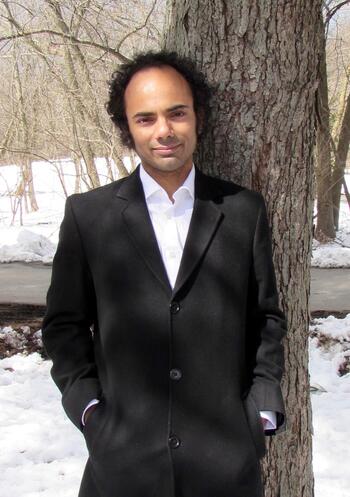
Speaker's Biography: Chantell Murphy is a Nuclear Security Postdoctoral Fellow at CISAC. Chantell Murphy earned her PhD in nuclear engineering from the University of New Mexico in 2018 and holds a MS in health physics from Georgetown University and a BS in physics from Florida State University.

Chantell Murphy worked as a graduate research assistant at Los Alamos National Laboratory supporting the nuclear engineering and nonproliferation division (NEN-5) and worked in the national security office (NSO). During her time at LANL Ms. Murphy investigated safeguards approaches for pyroprocessing facilities and helped develop an acquisition path analysis software tool called APAT for the International Atomic Energy Agency (IAEA). Ms. Murphy worked on safeguards approaches for advanced reactor designs like thorium fueled reactors, worked on knowledge retention issues for future warhead verification campaigns, and participated in and gave talks at several international safeguards and nuclear policy related workshops around the US and in Europe. Ms. Murphy also worked as a visiting scientist at the Forschungszentrum Jülich in Germany for three months developing the IAEA’s state level approach and acquisition path analysis with the Nuclear Waste Management and Reactor Safety group in the Institute of Energy and Climate Research.

Chantell Murphy’s previous experience also includes an internship at the Managing the Atom project at the Belfer Center for Science and International Affairs and work for the Congressional Commission on the Strategic Posture of the United States.

Chantell Murphy Nuclear Security Postdoctoal Fellow CISAC, Stanford University
Seminars
-
 
Abstract: 
Why were Western expectations about how Russia would develop after the Soviet collapse so misplaced? How has Putin's Russia, with a GDP less than that of Italy, managed to reassert itself so effectively on the world stage? And how should the West respond to Russia going forward? Angela Stent will discuss her new book, focusing on how Russia's relations with Europe have evolved and how Europe-- caught between Putin's Russia and Trump's America--is reassessing its options.
 
Speaker's Biography:

Angela Stent is Professor of Government and Foreign Service at Georgetown University and directs its Center for Eurasian, Russian and East European Studies. She has also served in the State Department’s Office of Policy Planning and as National Intelligence Officer for Russia and Eurasia at the National Intelligence Council. She is the author of Russia and Germany Reborn: Unification, the Soviet Collapse and the New Europe; The Limits of Partnership: U.S-Russian Relations in the Twenty-First Century and Putin’s World: Russia Against the West and with the Rest.


Angela Stent Professor of Government and Foreign Service Georgetown University
Seminars
-

Abstract: Ambassador Koster will address the following political-military issues during his lecture. How has the security environment in Europe evolved since 2014, with growing instability and insecurity in the North Africa and the Middle East, and an assertive Russia in the East? How has Europe and NATO reacted to these challenges? Policies, structures and capabilities have been adapted, but will it be enough to restore peace and stability in Europe ? How will the demise of the arms control architecture affect all of this in the years to come?


Speaker's Biography: Ambassador Timo S. Koster is a career diplomat at the Dutch Ministry of Foreign Affairs. As of November 2018, Mr. Koster assumed his position as Ambassador-at-large for Security Policy & Cyber. Prior to this, since 2012, he was Director for Defence Policy and Capabilities at NATO HQ in Brussels.

After finishing his law degree at the University of Amsterdam, Ambassador Koster joined the diplomatic academy of the Ministry of Foreign Affairs of the Netherlands in 1991. His first appointment was at the Royal Netherlands Embassy in Nairobi, Kenya. Back in The Hague from 1994, he served in several positions within the Ministry, including a stint as Private Secretary to the Minister for European Affairs, before moving to the Royal Netherlands Embassy in London, as Head of Economic Department, between 1998 and 2001.

In 2001, Ambassador Koster became Acting Director for European Integration at the Ministry of Economic Affairs, after which he served as a Project Director at the Ministry for Foreign Affairs. In 2003 Mr. Koster was appointed Deputy Ambassador at the Royal Netherlands Embassy in Athens, Greece. In 2008 he moved to Brussels where he served as Defence Advisor at the Netherlands Permanent Representation to NATO until 2012 when he moved to the position of Director Defence Policy & Capabilities in the NATO International Staff.

Ambassador Koster is affiliated to the Atlantic Council Washington DC as a non-resident Ambassadorial Fellow at the Brent Scowcroft Centre for International Strategy and Security.

Timo S. Koster is married with two sons and two daughters.

Timo Koster Career Diplomat Dutch Ministry of Foreign Affairs
Seminars
-

Abstract: Successful use of bots and trolls as tools of its expansionist foreign policy demonstrated the Russian government's superior capability in computational propaganda. Yet the main area of application for these tools remains inside Russia: to prop up Vladimir Putin's approval ratings and deny his opponents an opportunity to reach potential voters. In this paper, we use supervised machine learning algorithms for bot detection and sentiment analysis to do a first systematic survey of bot activity in the Russian segment of Twitter. We discover a high yet fluctuating volume of bot communication and presence of both pro- and anti-government as well as neutral bots. We also identify sources of information they spread and formulate testable hypotheses about the political strategy behind bots deployment. Finally, we discuss the implications of autocrats' reliance on domestic computational propaganda for the response to their activities abroad.


Speaker's Biography: Sergey Sanovich received his Ph.D. in Politics at NYU. He studies how autocrats use the power of persuasion to come to, and stay in, office. His ongoing research is focused on online censorship and propaganda by authoritarian regimes; elections and partisanship in electoral autocracies; and personalization of politics in both autocratic and democratic countries. To conduct his research, Sergey collects big data from social media, digitalizes archival documents, and runs field and survey experiments both online and offline.

Sergey Sanovich Cyber Fellow CISAC, Stanford University
Seminars
-

Abstract: My research investigates the formal institutionalization of inter-governmental cooperation among the three major Northeast Asian powers – China, Japan, and the Republic of Korea—in the face of a continued North Korean threat. How much of a shadow, if any, has North Korea’s nuclear weapons cast over the development of multilateralism in the region? Since 1999, the Northeast Asian region has seen intensifying institutionalization of cooperation among its major powers. In a region where the realist logic of state-centric nationalism, sovereignty, and balance of power still prevails, this new development of trilateral cooperation among the former and potential adversaries deserves serious scholarly investigation. What started as economic and functional cooperation, trilateral cooperation has since been substantially expanded to include political and security agendas at the highest level of government. What explains the emergence and endurance of trilateral cooperation and to what extent has containing the North Korean nuclear crisis shaped its institutional trajectory and outcomes? By examining the evolution of trilateral cooperation, I address some critical gaps in our understanding of formal institution building and the economic-security nexus in one of the most dynamic regions in the world.


Speaker's Biography: Yeajin Yoon is a 2018-2019 MacArthur Nuclear Security Pre-doctoral Fellow at CISAC and a doctoral candidate in the Blavatnik School of Government at the University of Oxford. Her dissertation examines the evolution of trilateral cooperation among the most militarily and economically dominant states in Northeast Asia, namely, China, Japan and the Republic of Korea, and considers when and how their relations become implicated in the North Korean nuclear crisis.


Prior to entering academia, Yeajin travelled extensively across Asia and worked with national governments, international organisations, and NGOs in the region. She led the development of the inaugural issue of the 'Oxford Government Review’ and helped facilitate a Track II dialogue on wartime history issues in Asia at Stanford University. Previously, she worked as a founding member of the Trilateral Cooperation Secretariat, the official intergovernmental organisation for China, Japan, and the Republic of Korea and managed a development fund focused on the ASEAN region at the Korean Foreign Ministry.


Yeajin received a Bachelor of Arts in Political Science with Honors from Stanford University and a Master of Public Policy degree from Oxford University.

Yeajin Yoon MacArthur Nuclear Security Pre-doctoral Fellow CISAC, Stanford University
Seminars
-

Click here to RSVP


Abstract:  As Russian President Vladimir Putin pursues a more assertive policy toward the West, one of his primary grievances is that NATO enlarged despite 1990 assurances to the contrary.  At the end of the Cold War, did Washington in fact promise Moscow that it would refrain from expanding NATO eastward?  Russia says yes; the US says no; what does the evidence say?  Professor Sarotte, a historian, has conducted archival research and interviews on this topic in the US, Russia, Germany, Britain, and France. In this lecture, she will draw on both her previous publications and on newer declassifications to re-examine this controversy and its legacy for NATO expansion – even as President Donald Trump raises the possibility of a NATO contraction through US withdrawal.


Speaker's Biography:  Mary Elise Sarotte is the Marie-Josée and Henry R. Kravis Distinguished Professor of Historical Studies at the Johns Hopkins School of Advanced International Studies in Washington DC.  Her five books include The Collapse: The Accidental Opening of the Berlin Wall and 1989: The Struggle to Create Post-Cold War Europe, both of which were named Financial Times Books of the Year, along with receiving other awards and commendations.  Sarotte earned her AB in History and Science at Harvard University and her PhD in History at Yale University.  After graduate school, she served as a White House Fellow and subsequently joined the faculty of the University of Cambridge.  Sarotte received tenure at Cambridge in 2004 and returned to the United States to teach at University of Southern California as the Dean's Professor of History before moving to Hopkins.  Sarotte is a former Humboldt Scholar, a former member of the Institute for Advanced Study in Princeton, a research associate of Harvard's Center for European Studies, and a member of the Council on Foreign Relations.  She is currently writing a book on NATO expansion; it is based (among other sources) on formerly secret Defense Department, State Department, and White House documents which she has declassified though Freedom of Information appeals.

Mary Sarotte Johns Hopkins School of Advanced International Studies
Seminars
-

Abstract: How do nuclear-armed states coerce their adversaries in wars with limited aims without using nuclear weapons? I develop a theory of strategic substitution to explain why states use space, cyber and conventional missile weapons instead of nuclear weapons to maximize leverage against their adversaries. I also explain how they select space, cyber, and conventional missile force postures, defined as weapons and plans for using them. Threats to use space, cyber and conventional missile weapons are more credible sources of strategic leverage against adversaries in wars that do not threaten a state’s survival. I demonstrate the plausibility of the theory using China’s cyber force posture. China developed space, cyber and conventional missile weapons to solve a common problem: giving Beijing the leverage it could not gain from its nuclear weapons in a future war over Taiwanese independence involving the United States. Using original Chinese-language written sources and interviews conducted during extensive fieldwork, I show that Chinese leaders pursued cyber weapons to maximize their strategic leverage after the United States bombed the Chinese Embassy in Belgrade in 1999. As China’s vulnerability to cyber attacks grew during the 2000s, its appetite for risk in using cyber weapons declined, resulting in a change to its military cyber force posture in 2014.

Speaker Bio: Fiona Cunningham is a Post-Doctoral Fellow at CISAC. Her research interests lie at the intersection of technology and conflict, with an empirical focus on China. She received her PhD in September 2018 from the Department of Political Science at the Massachusetts Institute of Technology (MIT), where she was a member of the Security Studies Program. Her dissertation explained China’s development of space, cyber and conventional missile force postures as substitutes for using nuclear weapons to coerce adversaries. Her research is based on extensive fieldwork, including a year-long dissertation research fellowship at the Renmin University of China, Beijing, in 2015-6. She was a Pre-Doctoral Fellow in the Cyber Security Project at the Belfer Center for Science and International Affairs at the Kennedy School of Government, Harvard University, in 2017-8. Fiona’s research has been supported by the Smith Richardson Foundation, China Confucius Studies Program, and the MIT Center for International Studies. Her research on China's nuclear strategy has been published in the quarterly journal, International Security. Fiona holds a Bachelor of Arts in Politics and International Relations from the University of New South Wales and a Bachelor of Laws from the University of Sydney, both with first-class honors. She was a research associate at the Lowy Institute for International Policy in Sydney from 2009 until 2012, where she focused on extended nuclear deterrence in East Asia and nuclear nonproliferation. Fiona speaks Mandarin Chinese and French.

Fiona Cunningham Postdoctoral Fellow CISAC, Stanford University
Seminars
-

Abstract: Existing international relations scholarship on human rights focuses on international law and transnational advocacy to the exclusion of "human rights diplomacy" (HRD)---efforts by government officials to engage publicly and privately with their foreign counterparts---because diplomacy is often not publicly observable. We exploit an opportunity to assess the effectiveness of HRD: a campaign coordinated by the U.S. government to free twenty female political prisoners called #Freethe20. Our analysis of release outcomes for #Freethe20 women compared to two control groups (a longer list of women considered by the State Department for the campaign and a list of women imprisoned simultaneously in the same target countries) suggests the campaign was highly effective. While #Freethe20 was public-facing, we find little evidence that "naming and shaming" alone drove releases. Drawing on in-depth interviews with U.S. officials, we argue that foreign governments were most responsive when public pressure was matched with private, coercive diplomacy.  


Speaker Bio: Jeremy M. Weinstein is a Professor of Political Science and Senior Fellow at the Freeman Spogli Institute for International Studies. He is also a non-resident fellow at the Center for Global Development in Washington, D.C.

His research focuses on civil wars and political violence; ethnic politics and the political economy of development; and democracy, accountability, and political change. He is the author of Inside Rebellion: The Politics of Insurgent Violence (Cambridge University Press), which received the William Riker Prize for the best book on political economy. He is also the co-author of Coethnicity: Diversity and the Dilemmas of Collective Action (Russell Sage Foundation), which received the Gregory Luebbert Award for the best book in comparative politics. He has published articles in the American Political Science Review, American Journal of Political Science, Annual Review of Political Science, Journal of Conflict Resolution, Foreign Affairs, Foreign Policy, Journal of Democracy, World Policy Journal, and the SAIS Review.

Weinstein received the International Studies Association’s Karl Deutsch Award in 2013. The award is given to a scholar younger than 40 or within 10 years of earning a Ph.D. who has made the most significant contribution to the study of international relations. He also received the Dean’s Award for Distinguished Teaching at Stanford in 2007.

He has also worked at the highest levels of government on major foreign policy and national security challenges, engaging in both global diplomacy and national policy-making. Between 2013 and 2015, Weinstein served as the Deputy to the U.S. Ambassador to the United Nations and before that as the Chief of Staff at the U.S. Mission to the United Nations. As Deputy, Weinstein was a standing member of the National Security Council Deputies’ Committee – the sub-cabinet policy committee with primary responsibility for advising the National Security Council, the Cabinet, and the President on the full range of foreign policy issues, including global counterterrorism, nonproliferation, U.S. policy in the Middle East, the strategic rebalance to Asia, cyber threats, among a wide variety of other issues.

During President Obama’s first term, he served as Director for Development and Democracy on the National Security Council staff at the White House between 2009 and 2011. In this capacity, he played a key role in the National Security Council’s work on global development, democracy and human rights, and anti-corruption, with a global portfolio. Before joining the White House staff, Weinstein served as an advisor to the Obama campaign and, during the transition, as a member of the National Security Policy Working Group and the Foreign Assistance Agency Review Team.

Weinstein obtained a BA with high honors from Swarthmore College, and an MA and PhD in political economy and government from Harvard University. He is a member of the Council on Foreign Relations and serves on a number of non-profit boards and advisory groups.

Jeremy Weinstein Senior Fellow at the Freeman Spogli Institute for International Studies Professor of Political Science Stanford University
Seminars
-
Abstract: A Syria Divided:  International rhetoric has evolved to accept Bashar al-Assad's continuance in power, at least for the time being.  And yet, there is a growing recognition among many Syrians and some in the international community that the Assad regime’s center is decaying, and it is incapable of regaining control over all parts of Syria.  Rather than accept Assad's control as a fait accompli, the international community should focus its political capital on those parts of Syria with room for democratic growth.  For this discussion, Shaikh will draw on an extensive series of track II Syrian dialogues.
 
Speaker Bio: Salman Shaikh is the Founder and CEO of The Shaikh Group (TSG). Before establishing TSG, he was the director of the Brookings Institution's Doha Center, where his research focused on conflict resolution, domestic policy, and geopolitics of the Middle East, with a particular focus on the Levant (particularly Syria, Lebanon, and Iraq) and the Gulf Cooperation Council (GCC) states. Shaikh has extensive experience working the United Nations in a number of offices, including as Special Assistant, Middle East and Asia in the Office of the Undersecretary-General for Political Affairs, Political Advisor to the Secretary-General's Personal Representative for Lebanon during the 2006 war, Special Assistant to the Special Coordinator to the Middle East Peace Process, and Programme Officer for the Special Representative for Children in Armed Conflict. Shaikh also served as Director for policy and research in the private office of Her Highness Sheikha Moza bin Nasser al-Missned, the Consort of the former Emir of the State of Qatar. Shaikh is a respected commentator and policy adviser on the Middle East. He has been featured in key publications and broadcasters, including CNN, BBC, Sky New, Al Jazeera, and NBC, and he has published commentaries with Foreign Policy, The New York Times, The Daily Beast, The Christian Science Monitor, and elsewhere.

Salman Shaikh CEO The Shaikh Group
Seminars
-

*This event is co-sponsored with the Hamid and Christina Moghadam Program in Iranian Studies.


Jason Rezaian discusses his new book, Prisoner: My 544 Days in an Iranian Prison, with Brett McGurk, the former Special Envoy to Defeat ISIS. Rezaian was the Washington Post’s Tehran bureau chief when he was imprisoned and McGurk led 14 months of secret negotiations with Iran that helped free him in 2016.


Jason Rezaian is one of the few Western journalists to have been based in Tehran in recent years. From 2009 until his arrest in 2014 he covered stories that tried to explain Iran to a general American audience, first as a freelancer for a variety of outlets and later as The Washington Post’s Tehran bureau chief.

He reported on two presidential elections, Iran’s nuclear negotiations with global powers, the effects of one of the most punitive sanctions regimes in modern times and environmental issues. In between those momentous topics he told the stories of everyday Iranians which sought to make them more accessible to readers, reporting on Iran’s small community of baseball players, the quest for the best high end hamburger in Tehran, and a clinic for female drug addicts.

In July of 2014 Rezaian and his wife were detained in their home and he went on to spend 545 in Tehran’s Evin prison, released on the same day that the historic nuclear deal between Iran and world powers was implemented. 


Brett McGurk is joining Stanford University’s Freeman Spogli Institute for International Studies as the Frank E. and Arthur W. Payne Distinguished Lecturer.

McGurk recently served as special presidential envoy for the Global Coalition to Defeat ISIS at the U.S. Department of State. He helped build and then led the coalition of seventy-five countries and four international organizations and was responsible for coordinating all aspects of U.S. policy in the campaign against the Islamic State in Iraq, Syria, and globally.

McGurk previously served in senior positions in the George W. Bush and Barack Obama administrations, including as Special Assistant to President Bush and Senior Director for Iraq and Afghanistan, and then as Deputy Assistant Secretary of State for Iraq and Iran and Special Presidential Envoy for the U.S. campaign against the Islamic State under Obama.

McGurk has led some of the most sensitive diplomatic missions in the Middle East over the last decade, including negotiations with partners and adversaries to advance U.S. interests. In 2015 and 2016, McGurk led 14 months of secret negotiations with Iran to secure the release of Washington Post reporter Jason Rezain, U.S. Marine Amir Hekmati, and Pastor Saad Abadini, as well as three other American citizens.


Hauck Auditorium, David & Joan Traitel Building, Hoover Institution

435 Lasuen Mall, Stanford University

Jason Rezaian Iranian-American journalist
Seminars
Subscribe to Seminars