-

Seminar Recording: https://youtu.be/nTFLMMdK9Zc


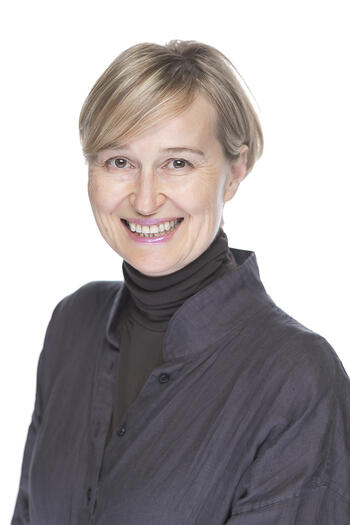
Abstract: What is Putin up to? In this lecture, Taylor argues that Russian foreign policy is best understood as a product of both Russian power and purpose. Purpose is understood as the worldview and mentality of Team Putin, which Taylor has defined as “The Code of Putinism” (as elaborated in his 2018 book of that name). Power and purpose combined produce a foreign policy strategy driven by Russia’s consistent attempts to “punch above its weight.” The disjuncture between this Russian mentality and foreign policy strategy and traditional US approaches to world politics explain the current low point in US-Russian relations.


Speaker's Biography:

Brian Taylor Brian Taylor
Brian Taylor is Professor and Chair of Political Science in the Maxwell School at Syracuse University. Taylor is the author of three books on Russian politics: The Code of Putinism (Oxford University Press, 2018); State Building in Putin’s Russia: Policing and Coercion after Communism (Cambridge University Press, 2011); and Politics and the Russian Army: Civil-Military Relations, 1689-2000 (Cambridge University Press, 2003). He received his B.A. from the University of Iowa, an M.Sc. from the London School of Economics and Political Science, and a Ph.D. from the Massachusetts Institute of Technology.   

Brian Taylor Professor and Chair of Political Science Syracuse University
Seminars
-

Abstract: We have learned a great deal about Iraq since the fateful decision to invade the country in 2003. Given academic research on Iraqi society and politics over the past 16 years and hard won lessons from U.S. intervention in Iraq, what what are the lessons learned for contemporary U.S. policymakers? And, crucially, what role should Iraq play in current U.S. foreign policy and its regional strategy toward the Middle East?


Seminar Recording: https://youtu.be/4OBQOshr-gs


Speakers:

Colin H. Kahl Co-director of the Center for International Security and Cooperation, the inaugural Steven C. Házy Senior Fellow at the Freeman Spogli Institute for International Studies, and a Professor, by courtesy, in the Department of Political Science at Stanford University.

Brett McGurk Frank E. and Arthur W. Payne Distinguished Lecturer at the Freeman Spogli Institute and Center for Security and Cooperation at Stanford University.

With moderator: Lisa Blaydes
Professor of Political Science at Stanford University and a Senior Fellow at the Freeman Spogli Institute for International Studies


Speaker's Biography: 

Image
colin kahl
Colin H. Kahl is co-director of the Center for International Security and Cooperation, the inaugural Steven C. Házy Senior Fellow at the Freeman Spogli Institute for International Studies, and a Professor, by courtesy, in the Department of Political Science at Stanford University. He is also a Strategic Consultant to the Penn Biden Center for Diplomacy and Global Engagement.

From October 2014 to January 2017, he was Deputy Assistant to the President and National Security Advisor to the Vice President. In that position, he served as a senior advisor to President Obama and Vice President Biden on all matters related to U.S. foreign policy and national security affairs, and represented the Office of the Vice President as a standing member of the National Security Council Deputies’ Committee. From February 2009 to December 2011, Dr. Kahl was the Deputy Assistant Secretary of Defense for the Middle East at the Pentagon. In this capacity, he served as the senior policy advisor to the Secretary of Defense for Egypt, Iran, Iraq, Israel and the Palestinian territories, Saudi Arabia, Syria, Yemen, and six other countries in the Levant and Persian Gulf region. In June 2011, he was awarded the Secretary of Defense Medal for Outstanding Public Service by Secretary Robert Gates. 

From 2007 to 2017 (when not serving in the U.S. government), Dr. Kahl was an assistant and associate professor in the Security Studies Program at Georgetown University's Edmund A. Walsh School of Foreign Service. From 2007 to 2009 and 2012 to 2014, he was also a Senior Fellow at the Center for a New American Security (CNAS), a nonpartisan Washington, DC-based think tank. From 2000 to 2007, he was an assistant professor of political science at the University of Minnesota. In 2005-2006, Dr. Kahl took leave from the University of Minnesota to serve as a Council on Foreign Relations International Affairs Fellow in the Office of the Secretary of Defense, where he worked on issues related to counterinsurgency, counterterrorism, and responses to failed states. In 1997-1998, he was a National Security Fellow at the John M. Olin Institute for Strategic Studies at Harvard University.

Current research projects include a book analyzing American grand strategy in the Middle East in the post-9/11 era. A second research project focuses on the implications of emerging technologies on strategic stability.

He has published numerous articles on international security and U.S. foreign and defense policy in Foreign Affairs, Foreign Policy, International Security, the Los Angeles Times, Middle East Policy, the National Interest, the New Republic, the New York Times, Politico, the Washington Post, and the Washington Quarterly, as well as several reports for CNAS.

His previous research analyzed the causes and consequences of violent civil and ethnic conflict in developing countries, focusing particular attention on the demographic and natural resource dimensions of these conflicts. His book on the subject, States, Scarcity, and Civil Strife in the Developing World, was published by Princeton University Press in 2006, and related articles and chapters have appeared in International Security, the Journal of International Affairs, and various edited volumes.

Dr. Kahl received his B.A. in political science from the University of Michigan (1993) and his Ph.D. in political science from Columbia University (2000).


Image
mcgurk brett holden   official dos photo copy
Brett McGurk is the Frank E. and Arthur W. Payne Distinguished Lecturer at the Freeman Spogli Institute and Center for Security and Cooperation at Stanford University.

McGurk’s research interests center on national security strategy, diplomacy, and decision-making in wartime.  He is particularly interested in the lessons learned over the presidencies of George W. Bush, Barack Obama, and Donald Trump regarding the importance of process in informing presidential decisions and the alignment of ends and means in national security doctrine and strategy.  At Stanford, he will be working on a book project incorporating these themes and teaching a graduate level seminar on presidential decision-making beginning in the fall of 2019.  He is also a frequent commentator on national security events in leading publications and as an NBC News Senior Foreign Affairs Analyst. 

Before coming to Stanford, McGurk served as Special Presidential Envoy for the Global Coalition to Defeat ISIS at the U.S. Department of State, helping to build and then lead the coalition of seventy-five countries and four international organizations in the global campaign against the ISIS terrorist network.  McGurk was also responsible for coordinating all aspects of U.S. policy in the campaign against ISIS in Iraq, Syria, and globally.

McGurk previously served in senior positions in the George W. Bush and Barack Obama administrations, including as Special Assistant to President Bush and Senior Director for Iraq and Afghanistan, and then as Deputy Assistant Secretary of State for Iraq and Iran and Special Presidential Envoy for the U.S. campaign against the Islamic State under Obama.

McGurk has led some of the most sensitive diplomatic missions in the Middle East over the last decade. His most recent assignment established one of the largest coalitions in history to prosecute the counter-ISIS campaign. He was a frequent visitor to the battlefields in both Iraq and Syria to help integrate military and civilian components of the war plan. He also led talks with Russia over the Syria conflict under both the Trump and Obama administrations, initiated back-channel diplomacy to reopen ties between Iraq and Saudi Arabia, and facilitated the formation of the last two Iraqi governments following contested elections in 2014 and 2018.

In 2015 and 2016, McGurk led fourteen months of secret negotiations with Iran to secure the release of Washington Post reporter Jason Rezain, U.S. Marine Amir Hekmati, and Pastor Saad Abadini, as well as three other American citizens.

During his time at the State Department, McGurk received multiple awards, including the Distinguished Honor Award and the Distinguished Service Award, the highest department awards for exceptional service in Washington and overseas assignments.

McGurk is also a nonresident senior fellow in the Middle East Program at the Carnegie Endowment for International Peace.

McGurk received his JD from Columbia University and his BA from the University of Connecticut Honors Program.  He served as a law clerk to Chief Justice William H. Rehnquist on the U.S. Supreme Court, Judge Denis Jacobs on the U.S. Court of Appeals for the 2d Circuit, and Judge Gerard E. Lynch on the U.S. District Court for the Southern District of New York.


Colin Kahl Stanford University
Brett McGurk Stanford University
Seminars
-

Abstract: Russia’s challenge to the West includes information operations (e.g., disinformation, political propaganda, and other forms of online manipulation) aimed at destabilizing the common ground that democratic societies in Europe and the United States need in order to govern themselves.  Kate Starbird will describe two case studies of online information operations connected to Russia’s media/intelligence apparatus:  interference in the 2016 U.S. election and the campaign against the “White Helmets” in Syria.  She argues that defending against Russian online information operations will require a more nuanced understanding of the problem, in particular, moving beyond focusing on “bots” and “trolls” to looking at the collaborative nature of disinformation campaigns that target, infiltrate, shape, and leverage online communities—communities which may not recognize their role in these campaigns. 


Seminar Recording: https://youtu.be/lF4M11FkEKY


Speaker's Biography:

Image
thumbnail new headshot tom reese small
Kate Starbird is an Associate Professor at the Department of Human Centered Design & Engineering (HCDE) at the University of Washington (UW). Starbird’s research is situated within human-computer interaction (HCI) and the emerging field of crisis informatics—the study of the how information-communication technologies (ICTs) are used during crisis events. One aspect of her research focuses on how online rumors spread during natural disasters and man-made crisis events. More recently, she has begun to focus on disinformation and other forms of strategic information operations online. Starbird earned her PhD from the University of Colorado at Boulder in Technology, Media and Society and holds a BS in Computer Science from Stanford University.

Kate Starbird University of Washington
Seminars
-

Seminar recording: https://youtu.be/fYUK-ALGqAE


Abstract:  Russian influence operations during the 2016 US elections, and the investigations that followed, revealed the broad scope of Russian political warfare against Western democracies. Since then, Russian operations have targeted the UK, France, Germany, Ukraine, and others. Other state and non-state actors, motivated by politics or profit, have also learned and adapted the Kremlin’s tool-kit. With the 2020 elections a year away, what have we learned about foreign information operations? How has the transatlantic community responded and what are the threats we are likely to face?  Drawing on extensive research on transatlantic relations, disinformation, and Russian foreign policy, Dr. Polyakova will discuss the state of policy options to address disinformation, analyze Russian intentions, and highlight emerging threats.


Speaker’s Biography:

Image
alina polyakova
Alina Polyakova is the founding director of the Project on Global Democracy and Emerging Technology and a fellow in the Center on the United States and Europe at the Brookings Institution, where she leads the Foreign Policy program’s Democracy Working Group. She is also adjunct professor of European studies at the Paul H. Nitze School of Advanced International Studies (SAIS) at Johns Hopkins University. Her work examines Russian political warfare, European populism, digital authoritarianism, and the implications of emerging technologies to democracies. Polyakova's book, "The Dark Side of European Integration" (Ibidem-Verlag and Columbia University Press, 2015) analyzed the rise of far-right political parties in Europe.  She holds a master’s and doctorate from the University of California, Berkeley, and a bachelor's in economics and sociology with highest honors from Emory University. 

Alina Polyakova Director, Project on Global Democracy and Emerging Technology The Brookings Institution
Seminars
-

This event is co-sponsored by the Center for Russian, East European and Eurasian Studies


Seminar recording: https://youtu.be/WWP-FueMOJ8


Abstract: Russia’s ability to challenge Europe and the West will depend in no small measure on the performance of its economy. Dr. Anders Åslund will discuss his book, Russia’s Crony Capitalism. The Path from Market Economy to Kleptocracy. The book explores how Vladimir Putin has consolidated his rule over Russia, including by appointing close associates as heads of state enterprises and securing control of the Federal Security Service and judiciary, enriching his business friends from Saint Petersburg in the process with preferential government deals. Thus, Putin has created a super wealthy and loyal plutocracy that owes its existence to his brand of authoritarianism. Dr. Åslund assesses Putin’s personal wealth and discusses what this system means for Russia and Russian power.


Speaker's Biography: 

Image
anders aslund 2016 11 2
Anders Åslund is a senior fellow at the Atlantic Council and an adjunct professor at Georgetown University. He is a leading specialist on East European and post-Soviet economies and the author of 15 books, most recently Russia’s Crony Capitalism: The Path from Market Economy to Kleptocracy.  Dr. Åslund has worked as an economic adviser to several governments, including the Russian and Ukrainian governments.  He has also been a professor at the Stockholm School of Economics and was the founding director of the Stockholm Institute of Transition Economics. He earned his Ph.D. from the University of Oxford.

Anders Åslund Adjunct professor at Georgetown University’s School of Foreign Service Georgetown University
Seminars
-

Seminar Recording: https://youtu.be/ZVHEqY1_3w8


Abstract: Before the CCP came to power, China lay broken. Today it is a force on the global stage, but its leaders remain haunted by the past. Sulmaan Khan will tell the story of the grand strategies pursued by China’s paramount leaders: the shrewd, dangerous Mao Zedong, who made the country whole and kept it so; the caustic, impatient Deng Xiaoping who dragged the country into the modern world; Jiang Zemin and Hu Jintao who served as cautious custodians of Deng’s legacy; and Xi Jinping who combines assertiveness with insecurity. For all their considerable costs, China’s grand strategies have been largely successful. But whether or not they can meet the challenges of the twenty-first century remains to be seen.   


Speaker's Biography:

Image
khan full length dust jacket3
Sulmaan Wasif Khan teaches international history and Chinese foreign relations at the Fletcher School, Tufts University, where he also directs the Water and Oceans Program at the Center for International Environment and Resource Policy. He is the author of Haunted by Chaos: China’s Grand Strategy from Mao Zedong to Xi Jinping (Harvard University Press: 2018), which was named a top book of 2018 by The American Interest, and Muslim, Trader, Nomad, Spy: China’s Cold War and the People of the Tibetan Borderlands (University of North Carolina Press: 2015). He has written for The Economist, Foreign Affairs, The American Interest, and YaleEnvironment360, among others, on topics ranging from Burmese Muslims to dolphin migration through the Bosphorus. He received his Ph.D. in History from Yale University in 2012.  


Sulmaan Khan Assistant Professor of International History and Chinese Foreign Relations Tufts University
Seminars
-

Abstract: Sound strategy requires alignment of ends, ways, and means. A significant gap in ends (the objectives to be achieved) and means (the resources to be applied towards that objective) result in risk and likely policy failure. Few policies over the last decade have had a wider gap between ends and means than Syria. Declared U.S. objectives – “Assad must go” – were not matched by the resources for achieving that objective nor considered thought as to how it might realistically be achieved. This situation has worsened in the Trump administration as the declared objectives have increased but the available resources and political commitment have decreased. McGurk will discuss Syria policy across both administrations based on his own experience leading the U.S. response to ISIS. He has traveled to Syria extensively and calls for an urgent realignment of ends and means to drawn down risk to the United States. The lessons to be drawn are then applied to other foreign policy challenges and offer a ready formula for assessing the declared objectives of U.S. policy.  The talk will be based on McGurk’s recent article in the May/June issue of Foreign Affairs magazine.


Speaker's Biography: Brett McGurk is the Frank E. and Arthur W. Payne Distinguished Lecturer at the Freeman Spogli Institute and Center for Security and Cooperation at Stanford University.


McGurk’s research interests center on national security strategy, diplomacy, and decision-making in wartime.  He is particularly interested in the lessons learned over the presidencies of George W. Bush, Barack Obama, and Donald Trump regarding the importance of process in informing presidential decisions and the alignment of ends and means in national security doctrine and strategy.  At Stanford, he will be working on a book project incorporating these themes and teaching a graduate level seminar on presidential decision-making beginning in the fall of 2019.  He is also a frequent commentator on national security events in leading publications and as an NBC News Senior Foreign Affairs Analyst. 


Before coming to Stanford, McGurk served as Special Presidential Envoy for the Global Coalition to Defeat ISIS at the U.S. Department of State, helping to build and then lead the coalition of seventy-five countries and four international organizations in the global campaign against the ISIS terrorist network.  McGurk was also responsible for coordinating all aspects of U.S. policy in the campaign against ISIS in Iraq, Syria, and globally.


McGurk previously served in senior positions in the George W. Bush and Barack Obama administrations, including as Special Assistant to President Bush and Senior Director for Iraq and Afghanistan, and then as Deputy Assistant Secretary of State for Iraq and Iran and Special Presidential Envoy for the U.S. campaign against the Islamic State under Obama.


McGurk has led some of the most sensitive diplomatic missions in the Middle East over the last decade. His most recent assignment established one of the largest coalitions in history to prosecute the counter-ISIS campaign. He was a frequent visitor to the battlefields in both Iraq and Syria to help integrate military and civilian components of the war plan. He also led talks with Russia over the Syria conflict under both the Trump and Obama administrations, initiated back-channel diplomacy to reopen ties between Iraq and Saudi Arabia, and facilitated the formation of the last two Iraqi governments following contested elections in 2014 and 2018.


In 2015 and 2016, McGurk led fourteen months of secret negotiations with Iran to secure the release of Washington Post reporter Jason Rezain, U.S. Marine Amir Hekmati, and Pastor Saad Abadini, as well as three other American citizens.


During his time at the State Department, McGurk received multiple awards, including the Distinguished Honor Award and the Distinguished Service Award, the highest department awards for exceptional service in Washington and overseas assignments.


McGurk is also a nonresident senior fellow in the Middle East Program at the Carnegie Endowment for International Peace.


McGurk received his JD from Columbia University and his BA from the University of Connecticut Honors Program.  He served as a law clerk to Chief Justice William H. Rehnquist on the U.S. Supreme Court, Judge Denis Jacobs on the U.S. Court of Appeals for the 2d Circuit, and Judge Gerard E. Lynch on the U.S. District Court for the Southern District of New York.

Brett McGurk Payne Distinguished Lecturer Center for International Security and Cooperation
Seminars
-

Seminar recording: https://youtu.be/NUJqthUIGiU


Abstract: Did the Cold War of the 1980s nearly turn hot? Much has been made of NATO’s November 1983 Able Archer 83 command post exercise, which the literature typically casts as having nearly precipitated a nuclear war. Warsaw Pact policy-makers, according to the conventional wisdom, suspected that the exercise was more than just a rehearsal of nuclear escalation and concluded that a surprise nuclear attack was imminent, nearly launching a preemptive strike of their own. This article overturns this narrative using new, international evidence from the political, military, and intelligence archives of the Eastern bloc. First, it shows that the much-touted Warsaw Pact intelligence effort to assess Western intentions and capabilities, Project RIaN, which supposedly triggered Eastern fears of a surprise attack was nowhere near operational at the time of Able Archer 83. Second, it presents an account of the East’s sanguine observations of Able Archer 83 disproving accounts which allege that the exercise nearly escalated to nuclear war. In doing so, it advances debates not only in the historiography of the late Cold War, but also pertaining to the stability of the nuclear peace and the role of perception and misperception in policy-making.


Speaker's Biography:

Image
miles headshot cisac
Simon Miles is Assistant Professor of Public Policy and Slavic and Eurasian Studies at Duke University’s Sanford School of Public Policy. He teaches and researches US grand strategy, nuclear weapons, and Cold War international history. Simon is the author of Engaging the ‘Evil Empire’: US-Soviet Relations, 1980–1985, forthcoming from Cornell University Press; and he is beginning a new monograph, On Guard for Peace and Socialism: The Warsaw Pact, 1955–1991, an international history of the Cold War–era military alliance.

Simon Miles Assistant Professor of Public Policy and Slavic and Eurasian Studies Duke University’s Sanford School of Public Policy
Seminars
-

Abstract: President Trump may talk about the Middle East differently than Obama did. But the two seem to share the view that the United States is too involved in the region and should devote fewer resources and less time to it. The reduced appetite for U.S. engagement in the region reflects, not an ideological predilection or an idiosyncrasy of these two presidents, but a deeper change in both regional dynamics and broader U.S. interests. Despite this, the United States exists in a kind of Middle Eastern purgatory—too distracted by regional crises to pivot to other global priorities but not invested enough to move the region in a better direction. This worst-of-both-worlds approach exacts a heavy price. It sows uncertainty among Washington’s Middle Eastern partners, which encourages them to act in risky and aggressive ways. It deepens the American public’s frustration with the region’s endless turmoil, as well as with U.S. efforts to address it. It diverts resources that could otherwise be devoted to confronting a rising China and a revanchist Russia. And all the while, by remaining unclear about the limits of its commitments, the United States risks getting dragged into yet another Middle Eastern conflict. 

 
It is time for Washington to put an end to wishful thinking about its ability to establish order on its own terms or to transform self-interested and shortsighted regional partners into reliable allies—at least without incurring enormous costs and long-term commitments. That means making some ugly choices to craft a strategy that will protect the most important U.S. interests in the region, without sending the United States back into purgatory. Karlin and Wittes will outline the choices before the next U.S. president and their view of a realistic, sustainable strategy for the United States in the Middle East. 
 
Tamara Wittes' Biography: Tamara Cofman Wittes is a senior fellow in the Center for Middle East Policy at Brookings. Wittes served as deputy assistant secretary of state for Near Eastern affairs from November of 2009 to January 2012, coordinating U.S. policy on democracy and human rights in the Middle East during the Arab uprisings. Wittes also oversaw the Middle East Partnership Initiative and served as deputy special coordinator for Middle East transitions.


Wittes is a co-host of Rational Security, a weekly podcast on foreign policy and national security issues. She writes on U.S. Middle East policy, regional conflict and conflict resolution, the challenges of global democracy, and the future of Arab governance. Her current research is for a forthcoming book, Our SOBs, on the tangled history of America’s ties to autocratic allies.


Wittes joined Brookings in December of 2003. Previously, she served as a Middle East specialist at the U.S. Institute of Peace and director of programs at the Middle East Institute in Washington. She has also taught courses in international relations and security studies at Georgetown University. Wittes was one of the first recipients of the Rabin-Peres Peace Award, established by President Bill Clinton in 1997.


Wittes is the author of "Freedom’s Unsteady March: America’s Role in Building Arab Democracy" (Brookings Institution Press, 2008) and the editor of "How Israelis and Palestinians Negotiate: A Cross-Cultural Analysis of the Oslo Peace Process" (USIP, 2005). She holds a bachelor's in Judaic and Near Eastern studies from Oberlin College, and a master's and doctorate in government from Georgetown University. She serves on the board of the National Democratic Institute, as well as the advisory board of the Israel Institute, and is a member of the Council on Foreign Relations and Women in International Security.


Mara Karlin's Biography: Mara Karlin, PhD, is Director of Strategic Studies at Johns Hopkins University’s School of Advanced International Studies (SAIS). She is also an Associate Professor at SAIS and a nonresident senior fellow at The Brookings Institution. Karlin has served in national security roles for five U.S. secretaries of defense, advising on policies spanning strategic planning, defense budgeting, future wars and the evolving security environment, and regional affairs involving the Middle East, Europe, and Asia. Most recently, she served as the deputy assistant secretary of defense for strategy and force development.  Karlin has been awarded Department of Defense Medals for Meritorious and Outstanding Public Service, among others. She is the author of Building Militaries in Fragile States: Challenges for the United States (University of Pennsylvania Press; 2018).

Tamara Wittes Senior fellow, Center for Middle East Policy Brookings
Mara Karlin Senior fellow,Center for 21st Century Security and Intelligence SAIS and Brookings
Seminars
-

Abstract: In efforts to halt the Syrian government’s use of chemical weapons (CW) in that country’s civil war the United States and other outside powers applied coercive strategies, in both a deterrent and compellent mode. Outcomes varied: compellence achieved a partial success in getting Syria to give up much of its chemical stockpile, but there were multiple deterrence failures. This paper examines this record to draw lessons about factors associated with the effectiveness of coercion. Its analysis points to the interplay of three factors: credibility, motivation, and assurance. Regarding credibility, the case demonstrates that threats fulfilling many of the traditional criteria for establishing credibility can still fail. In Syria, this is partly because there were ambiguities in the scope of what was covered by deterrent warnings and partly because other factors also affect coercive outcomes. In the Syria case two additional factors were especially important. First, the domestic political motivations of the target affect whether external threats provide coercive leverage. In this case Syrian President Assad’s concern with regime survival led him to perceive the value of CW use as outweighing the likely costs even if outside powers followed through on retaliatory threats. Second, where regime survival is a concern, it is vital to pair coercive threats with appropriate assurances. Here, the case suggests that it is possible not only to provide too little assurance, but also too much. Whereas the Obama administration found it hard to offer credible assurances to Assad, the Trump administration initially conveyed assurances that were too robust, creating a sense that Syria could use CW with impunity. This analysis suggests there may have been a potentially viable path to effective coercion of the Assad regime, but the path would have involved intense tradeoffs that largely prevented decision makers from embracing it. Decision makers and outside commentators alike turned instead to a familiar schema that implies credibility is established by demonstrating a willingness to impose costs using airpower – a script that can be labeled the “resolve plus bombs” formula. Despite the frequent tendency to equate coercion with the threat or limited use of air strikes, this approach was not sufficient to change Syria’s calculations regarding chemical arms.


Speaker's Biography: Jeff Knopf is a professor at the Middlebury Institute of International Studies (MIIS) in Monterey, California, where he serves as chair of the M.A. program in Nonproliferation and Terrorism Studies and a senior research associate with the Center for Nonproliferation Studies (CNS). He is on sabbatical for the 2018-19 academic year and is spending the year as a visiting scholar at CISAC. This is his second stint at CISAC. Dr. Knopf received his Ph.D. in Political Science from Stanford and was previously a pre-doctoral fellow at CISAC in the days when it was still located in the old Galvez House. His most recently completed project is a forthcoming book volume he co-edited on Behavioral Economics and Nuclear Weapons. While at CISAC, Dr. Knopf will primarily be working on a project titled “Coercing Syria on Chemical Weapons.” This project examines efforts by the United States and other countries to apply deterrent and compellent strategies in attempts to stop the Syrian government from using chemical weapons and to dismantle its chemical arsenal. Dr. Knopf will also be working on a paper that explores cognitive aspects of the nuclear taboo.

Jeffrey Knopf Professor Middlebury Institute of International Studies (MIIS)
Seminars
Subscribe to Seminars