error

  • Could not retrieve the oEmbed resource.
Authors
News Type
News
Date
Paragraphs

Today’s landmark deal between six world powers and Iran, which would limit Iran’s nuclear program in exchange for lifting economic sanctions, was an important step toward stopping Iran from building a nuclear bomb.

However, the key challenge for the international community will be making sure Iran keeps its part of the bargain, according to Stanford experts.

“Both sides have made a series of compromises that will help Iran’s economy in exchange for constraining its nuclear capabilities – and that’s a deal worth making, in my view,” said Scott Sagan, the Caroline S.G. Munro professor of political science and senior fellow at the Center for International Security and Cooperation.

“Iran will still have a technical capability to develop nuclear weapons, given the technology and materials that they have, but under this deal it will both take them a much longer period of time and would require them to take actions that would be easily discerned by the International Atomic Energy Agency, so it constrains their break-out capabilities in important ways.”

[[{"fid":"219719","view_mode":"crop_870xauto","fields":{"format":"crop_870xauto","field_file_image_description[und][0][value]":"","field_file_image_alt_text[und][0][value]":"","field_file_image_title_text[und][0][value]":"Final plenary session at the United Nations Office in Vienna, Austria. Photo credit: U.S. State Department","field_credit[und][0][value]":"","field_caption[und][0][value]":"","field_related_image_aspect[und][0][value]":"","thumbnails":"crop_870xauto","pp_lightbox":false,"pp_description":false},"type":"media","attributes":{"title":"Final plenary session at the United Nations Office in Vienna, Austria. Photo credit: U.S. State Department","width":"870","style":"width: 400px; height: 266px; float: right; margin-left: 15px","class":"media-element file-crop-870xauto"}}]]The U.S.-led negotiations also included fellow United Nations Security Council members Britain, China, France, and Russia, as well as Germany – a group known collectively as as the "P5+1."

Sig Hecker, former Los Alamos National Laboratory director and senior fellow at Stanford’s Center for International Security and Cooperation, said the nuclear deal was “hard-won and is better than any other reasonably achievable alternative.”

“Iran agreed to considerably greater restrictions on its program than what I thought was possible before the Joint Plan of Action was signed in November 2013,” said Hecker.

Abbas Milani, director of Iranian studies at Stanford and an affiliate at the Center for Democracy Development and the Rule of Law, called it the “least bad deal” for both Iran and the international community.

“Nobody gets everything they want,” Milani said. “Every side gets some of what they want.”

Under the deal, Iran would be allowed to continue to enrich uranium for peaceful purposes in its energy and health industries.

But it would have to reduce the number of its centrifuges from 19,000 to 6,000, and cut its stockpile of low enriched uranium down from more than 20 thousand pounds to about 660 pounds.

“Reducing that stockpile actually lengthens the breakout time more than any other measure,” said Hecker.

These limits were designed to increase the “breakout time” it would take for Iran to produce enough fissile material to make a nuclear weapon from the current two to three months, to one year over a period of the next 10 years.

The agreement still faces a series of political hurdles before it gets implemented, and will face tough scrutiny from a Republican-controlled U.S. Congress, as well as the parliaments of European countries that were parties to the talks.

“I think it’s going to be hard for the U.S. Congress and [European] parliaments to kill the deal and be perceived as the ones who would rather have a war than give diplomacy a chance,” said Thomas Fingar, distinguished fellow at the Freeman Spogli Institute for International Studies.

[[{"fid":"219720","view_mode":"crop_870xauto","fields":{"format":"crop_870xauto","field_file_image_description[und][0][value]":"","field_file_image_alt_text[und][0][value]":"","field_file_image_title_text[und][0][value]":"The Iranian delegation attend the final plenary session in Vienna, Austria. Photo credit: U.S. State Department","field_credit[und][0][value]":"","field_caption[und][0][value]":"","field_related_image_aspect[und][0][value]":"","thumbnails":"crop_870xauto","pp_lightbox":false,"pp_description":false},"type":"media","attributes":{"title":"The Iranian delegation attend the final plenary session in Vienna, Austria. Photo credit: U.S. State Department","width":"870","style":"width: 400px; height: 268px; float: right; margin-left: 15px","class":"media-element file-crop-870xauto"}}]]If the deal survives the inevitable political challenges, inspectors from the International Atomic Energy Agency will be responsible for confirming that Iran is living up to its obligations.

“The key is going to be the effectiveness of the verification procedures and IAEA access,” Fingar said.

“There’s an element of trust, but a far more important part is the rigorous verification protocols.”

As soon as the IAEA confirms that Iran is abiding by the terms of the agreement, economic sanctions can be lifted.

Sagan warned that the international community should not be surprised if Iran pushed the limits of the agreement, and should be ready to reimpose economic sanctions if Iran violated the deal.

“We should anticipate that Iranian opponents to the agreement will try to stretch it and do things that are potential violations and that we have to call them on that, and not treat every problem that we see as unexpected,” said Sagan.

“We should anticipate such problems and be ready, if necessary, to reimpose sanctions. Having the ability to reimpose sanctions is the best way to deter the Iranians from engaging in such violations.”

But Hecker said the international community should focus on incentivizing Iran.

“The best hope is to make the civilian nuclear path so appealing – and then successful – that Tehran will not want to risk the political and economic consequences of that success by pursuing the bomb option,” he said.

Image
19067549804 85591212aa o
The negotiations were a diplomatic balancing act, with serious consequences for both sides of the negotiations if they failed to reach an agreement.

Iran faced the threat of military action if it continued to press forward with its nuclear program.

While Russia and China had both signaled that they were likely to abandon the sanctions regime if talks fell apart.

One of the key challenges to reaching an agreement was “finding a language that would allow both parties to declare victory”, according to Milani.

“Iran has clearly made some very substantive concessions, but Iran has also been allowed to keep enough of its infrastructure so that it can declare at least partial victory for the domestic political audience."

Now the scramble is on in Tehran to claim credit for the deal.

Reformists, led by current Iranian President Hassan Rouhani and former president Akbar Hashemi Rafsanjani, hope it will strengthen their hand as they head into the next election.

On the other side of the political spectrum, conservatives believe it could give them the edge in the battle to succeed Ayatollah Ali Khamenei as Iran’s Supreme Leader.

“They understand that whoever gets the credit for this will be in a much better position to determine the future leadership and future direction of Iran’s foreign policy,” said Milani.

It’s too early to tell what impact the agreement might have on Iran’s foreign policy, which is often at odds with U.S. interests in hot spots like Iraq, Syria, Yemen and Afghanistan. But Sagan said today’s deal was an important step in making sure that future conflicts with Iran don’t go nuclear.

“Hopefully those disagreements will be played out without the shadow of nuclear weapons hanging over the future, and that’s a good thing.”

Hero Image
19663913956 8ed26a22fe o
U.S. Secretary of State John Kerry speaks with Hossein Fereydoun, the brother of Iranian President Hassan Rouhani, and Iranian Foreign Minister Javad Zarif before announcing a historic nuclear agreement to reporters in Vienna, Austria.
U.S. State Department
All News button
1
-
Participant youth, Wallace and Wellington, overlooking the city from their community.
CONFERENCE OVERVIEW

The heavy presence of youth and young adults in the world of criminality is an issue that has been gaining increasingly more attention in the agendas of policymakers and politicians in developing and developed nations. With scarce options for a quality education, prospects for gainful employment and the possibility for future economic sustainability, on a daily basis, young individuals from poor communities throughout Latin American and U.S. cities are exposed to a violent environment with easily accessed - and often attractive - gateways into the world of criminality. From casual affiliation to gangs in schools and neighborhoods in Southern California, to full-time armed participation in international drug cartels in Juarez and drug factions in Rio de Janeiro favelas, youth are the biggest target – and victims – of violence.

In attempts to shed light to this very complex and fundamental issue that is claiming thousand of lives every year and deteriorating the social fabric across cities, the Program on Poverty and Governance (PovGov) at Stanford Center on Democracy, Development, and the Rule of Law (CDDRL) in conjunction with the Center for Latin American Studies, The Bill Lane Center for the America West, The Mexico Initiative at FSI, and The Center on International Security and Cooperation, will hold a two-day conference to discuss the dimensions of youth and criminal violence in Latin American and U.S. cities and share pathways to hope.

Ranging from grassroots initiatives to widespread government policies, the conference will develop on various established development actions and programs aimed at providing educational, work, and entrepreneurial opportunities for youth in territories impacted by poverty, criminality and violence in the U.S. and Latin America. We will gather activists and practitioners from grassroots civil society organizations, community leaders, educators, professionals from international development platforms, policy-makers, politicians, scholars - as well as some of the very individuals participating in these programs - to discuss the many challenges faced by the youth population in these different locations and to share innovative and inspirational initiatives to generate opportunities and foster change.                                                        

At PovGov, we believe in the importance of creating an environment where actors with different backgrounds across sectors, disciplines, realities and environments can come together to share their first-hand experiences, challenges and aspirations. We hope this wide-reaching and multiplayer conference can enrich the discussion around the formulation of policies and development strategies to benefit the youth in places of violence and better inform the work moving forward.    


Conference Materials

Conference Agenda

Descriptions of Panels and Talks

Speaker Bios


Agenda

Tuesday, April 28th 2015

8:40 – 9:00: Welcoming Remarks

·      Beatriz Magaloni, Director, PovGov, Stanford University.

·      Larry Diamond, Director, CDDRL, Stanford University.

·      Rodolfo Dirzo, Director, Center for Latin America Studies, Stanford University.


 9:00 – 10:30

Panel 1. Youth Violence: Risk Factors and Consequences

·      Beatriz Magaloni, Director, PovGov, Stanford University.

·      Brenda Jarillo, Post-Doctoral Fellow, PovGov, Stanford University.

·      Monica Valdez González, Director of Research and Studies, IMJUVE, Mexico.

Discussant: Francis Fukuyama, Director, Program on Governance, Stanford University.


10:40 – 11:40

Keynote Speaker

The Agenda for Youth Violence Prevention in Brazil: Where We Are Now and Where We Are Heading

Angela Guimarães, Brazil’s Sub-Secretary of Youth and President of the National Council on Youth (CONJUVE)


11:50 – 12:50: Lunch


1:00 – 2:30

Panel 2. Initiatives for At-risk Youth in Rio Favelas

·      Eliana de Sousa e Silva, Director, Redes de Desenvolvimento da Maré, Rio de Janeiro, Brazil.

·      Jailson de Sousa e Silva, Director, Observatório de Favelas, Rio de Janeiro, Brazil.

·      Ivana Bentes, National Secretary of Citizenship and Cultural Diversity, Brazil.

Discussant: Larry Diamond, Director, CDDRL, Stanford University.


(10-minute break)


2:40 – 4:10

Panel 3. Reducing Youth Gang Activity and Violence in the U.S.

·      Amy Crawford, Deputy Director, Center for Crime Prevention and Control, John Jay College of Criminal Justice in New York.

·      Lateefah Simon, Director, California’s Future Initiative at Rosenberg Foundation, San Francisco, California.

·      Christa Gannon, Founder and Director, Fresh Lifelines for Youth, San Mateo and Santa Clara, California.

Discussant: Bruce Cain, Director, Bill Lane Institute for the American West, Stanford University.


4:15 – 5:00: Closing Event of the Day

Stanford International Crime and Violence Lab announcement; cooperation agreement ceremony; photography exposition from Observatório de Favelas (“People’s Images” project).

·      Beatriz Magaloni, Stanford University.

·      Alberto Diaz-Cayeros, Stanford University.

(Adjourn)


Wednesday, April 29th 2015

9:00- 10:30

Panel 4. Evaluating Effective Interventions for Youth

·      Jorja Leap, Adjunct Professor, Department of Social Welfare; Director, Health and Social Justice Partnership, UCLA.

·      Gustavo Robles, Pre-Doctoral Fellow, PovGov, Stanford University.

·      Felix Lucero, The Prison University Project, California, U.S.

Facilitator: Martin Carnoy, Professor, Graduate School of Education, Stanford University. 


10:40 – 1:00

Panel 5. The “Network for Youth Agency” Experience


Sector 5.1. Instruments to Make a Difference

·      Veruska Delfino, Production Coordinator, Agência de Redes Para Juventude.

·      Ana Paula Lisboa, Methodology Coordinator, Agência de Redes Para Juventude.

·      Elaine Rosa, Former Participant and Entrepreneur, Agência de Redes Para Juventude.

Discussant: Stephen Commins, Lecturer in Urban Planning and Associate Director for Global Public Affairs at the Luskin School of Public Affairs, UCLA.


Section 5.2. World Exchange of Methodologies

·      Marcus Faustini, Director and Founder, Agência de Redes Para Juventude, Rio de Janeiro, Brazil.

·      Paul Heritage, Professor, Queen Mary University of London, UK.

·      Liz Moreton, Battersea Arts Centre, London, UK.

·      Suzie Henderson, Contact Theatre, Manchester, UK.

Discussant: Stephen Commins, Lecturer in Urban Planning and Associate Director for Global Public Affairs at the Luskin School of Public Affairs, UCLA.


1:00 – 2:00: Lunch


2:10 – 3:10

Keynote Speaker

Applied Social Research: Youth and Gangs in Mexico City

Hector Castillo BerthierFounder and Director, Circo Volador, Mexico


3:55 - 4:35

Panel 6. Victims and Perpetrators of Violence: Redirecting Youth in Mexican Prisons

·      Carlos Cruz, Founder and Director, Cauce Ciudadano, Mexico.

·      Ana Laura Magaloni, Professor of Law, Center for Research and Teaching in Economics (CIDE), Mexico.

·      Humberto Padgett, Journalist, Mexico.

·      Antonio Cervantes, Producer, Mexico.

Discussant: Alberto Diaz-Cayeros, Senior Fellow, FSI, Stanford University.


4:40– 6:00

Panel 7: Youth Experiences: Sharing Lives, Practices and Knowledge

·     Emanuelle Gomes Pereira Mallete, Agência de Redes Para Juventude and Pontão de Cultura, Sepetiba, Rio de Janeiro, Brazil.

.     Mariluce Mariá de Souza, Social Enterpreneur and Activist, Complexo do Alemão, Rio de Janeiro, Brazil.

·     Francisco Valdean Alves dos Santos, Observatório de Favelas, Complexo da Maré, Rio de Janeiro, Brazil.

·     Valnei Succo, Observatório de Favelas, Rocha Miranda, Rio de Janeiro, Brazil.

·     Christian Paronable, Fresh Lifelines for Youth, California.

·     Alma Yureni Esqueda Garcia, Cauce Ciudadano, Morelos, Mexico.

Facilitator: Izabela Moi, John S. Knight Journalism Fellow, Stanford University.


6:00 – Closing Remarks and Final reception

·       Beatriz Magaloni, Director, PovGov, Stanford University.


WE THANK YOU FOR YOUR PARTICIPATION.


[[{"fid":"218742","view_mode":"crop_870xauto","fields":{"format":"crop_870xauto","field_file_image_description[und][0][value]":"","field_file_image_alt_text[und][0][value]":"","field_file_image_title_text[und][0][value]":"","field_credit[und][0][value]":"","field_caption[und][0][value]":"","field_related_image_aspect[und][0][value]":"","thumbnails":"crop_870xauto","pp_lightbox":false,"pp_description":false},"type":"media","attributes":{"height":1345,"width":870,"class":"media-element file-crop-870xauto"}}]]
Panel Descriptions
Download pdf
Conference Agenda
Download pdf
Speaker Bios
Download pdf
Conferences
Date Label
-

At the NATO Summit in Wales in September 2014, NATO leaders were clear about the security challenges on the Alliance’s borders. In the East, Russia’s actions threaten our vision of a Europe that is whole, free and at peace.  On the Alliance’s southeastern border, ISIL’s campaign of terror poses a threat to the stability of the Middle East and beyond.  To the south, across the Mediterranean, Libya is becoming increasingly unstable. As the Alliance continues to confront theses current and emerging threats, one thing is clear as we prepare for the 2016 Summit in Warsaw: NATO will adapt, just as it has throughout its 65-year history.

Image
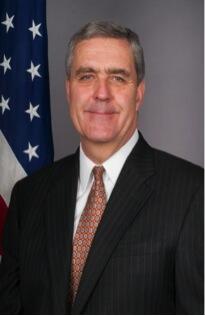
Douglas Lute, Ambassador of the United States to NATO


In August 2013, Douglas E. Lute was sworn-in as the Ambassador of the United States to the North Atlantic Treaty Organization (NATO).  From 2007 to 2013, Lute served at the White House under Presidents Bush and Obama, first as the Assistant to the President and Deputy National Security Advisor for Iraq and Afghanistan, and more recently as the Deputy Assistant to the President focusing on Afghanistan, Pakistan and India.  In 2010, AMB Lute retired from the U.S. Army as a Lieutenant General after 35 years on active duty.  Prior to the White House, he served as the Director of Operations on the Joint Staff, overseeing U.S. military operations worldwide. He served multiple tours in NATO commands including duty in Germany during the Cold War and commanding U.S. forces in Kosovo.  He holds degrees from the United States Military Academy and Harvard University.

A light lunch will be provided.  Please plan to arrive by 11:30am to allow time to check in at the registration desk, pick up your lunch and be seated by 12:00 noon.

Co-sponsored by The Europe Center, the Freeman Spogli Institute for International Studies, the Center for International Security and Cooperation and the Center for Russian, East European and Eurasian Studies.


Douglas Lute United States Ambassador to NATO Speaker
Lectures
-

The United States’ strategy for the storage and disposal of highly radioactive nuclear waste is at a stalemate: spent nuclear fuel accumulates at nuclear power plants, yet there is no long-term, national strategy for spent fuel management and disposal. A federal commission emphasized the urgency of finding a geologic repository, but work on the proposed site -- Yucca Mountain – has stopped and its fate is unclear.  The political impasse has overwhelmed meaningful discussion of technical, risk management and other policy questions.  


To inform efforts to reset the U.S. nuclear waste program, CISAC, with the support of FSI and the Precourt Institute for Energy, has convened a group of international experts to examine nuclear waste management strategies with fresh eyes. 


Speakers include: 

  • Sally Benson – Precourt Institute and Energy Resources Engineering, Stanford University
  • Peter Davies – Nuclear Energy and Fuel Cycle Programs, Sandia National Laboratories
  • Saida Laârouchi Engström – Strategy and Program, SKB, Sweden
  • Rod Ewing – CISAC and School of Earth Sciences, Stanford University
  • Bernd Grambow – Ecole des Mines de Nantes and SUBATECH Laboratory, France
  • Daniel Metlay – U.S. Nuclear Waste Technical Review Board
  • Mark Peters –Energy & Global Security Directorate, Argonne National Laboratory
  • Christophe Poinssot - French Atomic and Alternatives Energy Commission and the National Institute of Nuclear Science and Technology
  • Chris Whipple – ENVIRON


Follow-Up Materials


Back to Home Page

Agenda for Reset Meeting #1
Download pdf
Background & Agenda for Reset Nuclear Waste Policy - Meeting 1
Download pdf
Bios of Steering Committee Members

CISAC Central Conference Room

Encina Hall

616 Serra Street,

Stanford, CA 94305

0
Affiliate
betsy_cooper_headshot.png

Betsy Cooper is the founding Director of the Aspen Policy Academy. A cybersecurity expert, Dr. Cooper joined the Aspen Institute after serving as the Executive Director of the Berkeley Center for Long-Term Cybersecurity at the University of California, Berkeley. 

Previously, Dr. Cooper served at the U.S. Department of Homeland Security as an attorney advisor to the Deputy General Counsel and as a policy counselor in the Office of Policy. She has worked for over a decade in homeland security consulting, managing projects for Atlantic Philanthropies in Dublin, the Prime Minister’s Strategy Unit in London, and the World Bank, and other organizations. 

In addition, Dr. Cooper has clerked for Berkeley Law professor and Judge William Fletcher on the Ninth Circuit Court of Appeals. She completed a postdoctoral fellowship at Stanford’s Center for International Security and Cooperation (where she currently is a nonresident affiliate), as well as a Yale Public Interest Fellowship. Dr. Cooper has written more than twenty manuscripts and articles on U.S. and European homeland security policy. She is also a Senior Advisor at Albright Stonebridge Group. 

Dr. Cooper earned a J.D. from Yale University, a D.Phil. in Politics from Oxford University, an M.Sc. in Forced Migration from Oxford University, and a B.A. in Industrial and Labor Relations from Cornell University. She speaks advanced French. She is based in the San Francisco Bay Area.

Date Label
Authors
News Type
Q&As
Date
Paragraphs

(Updated Nov. 7, 2014)

The Centers for Disease Control and Prevention reported on Nov. 4 that the death toll from the Ebola outbreak in West Africa has risen to above 4,960 and that an estimated 8,168 people, mostly in Liberia, Sierra Leone and Guinea, have contracted the virus since March. It is the largest and most severe outbreak of the Ebola virus since it was first detected four decades ago. All but nine of the deaths were in those three countries; eight were in Nigeria and one patient died in the United States.

The CDC in October proclaimed that in the worst-case scenario, Sierra Leone and Liberia could have 1.4 million cases by Jan. 20, 2015, if the disease keeps spreading without immediate and immense intervention to contain the virus.

Two American aid workers infected with Ebola while working in West Africa were transported to a containment unit at Emory University in Atlanta for treatment, raising public fears about international spread of the highly virulent virus that has no known cure. The two were released from the hospital after being the first humans to receive an experimental Ebola drug called ZMapp. Another man who recently helped an Ebola victim in Liberia traveled to Texas and died in a Dallas hospital. Two of the nurses who treated him caught the virus as well, but have been released from the hospital. Some states have struggled with the moral 

We ask CISAC biosecurity experts David Relman and Megan Palmer to answer several questions about Ebola and the public health concerns and policy implications. Relman is the co-director of the Center for International Security and Cooperation who has served on several federal committees investigating biosecurity matters. He is the Thomas C. and Joan M. Merigan Professor in the Departments of Medicine and of Microbiology and Immunology at Stanford University School of Medicine, and Past-President of the Infectious Diseases Society of America.

Palmer is the William J. Perry Fellow in International Security at CISAC and a Researcher at the UC Berkeley Center for Quantitative Biosciences (QB3), and served as Deputy Director of Policy & Practices for the Multi-University NSF Synthetic Biology Engineering Research Center (SynBERC).

The two of them have answered the questions together.

What is Ebola and how dangerous is it compared to other diseases?

Ebola is an acute viral infectious disease, often associated with severe hemorrhagic fever. While initial symptoms are flu-like, they can rapidly progress, and include vomiting, reduced ability to regulate immune responses and other physiological processes, sometimes leading to internal and external bleeding. The disease has an incubation period that can last up to 21 days, but patients typically become ill four to nine days after infection, and die about seven to ten days later. Fatality rates for the current Ebola outbreak are nearing 60% (according to the CDC), while past outbreaks in the Republic of Congo have seen rates as high as 90%. This outbreak to date has resulted in nearly 1,000 deaths, more than any previous Ebola outbreak.

Ebola virus is believed to reside in animals such as fruit bats where it does not cause disease, but is then transmitted to and among humans and other primates, in whom disease typically does occur. The route by which the virus crosses between species remains largely unknown. People become infectious once they become symptomatic. Ebola is transmitted via blood or bodily fluid, but can persist outside the body for a couple days. Infection can occur through unprotected contact with the sick, but also when contaminated equipment such as needles cut through healthcare workers’ protective gear, and also through contact with infected individuals postmortem.

David Relman
Photo Credit: Rod Searcey

Ebola’s horrific symptoms provoke public fear, and it becomes easy to lose perspective on the relative spread and toll of this outbreak. Ebola is relatively difficult to transmit. This means the latest Ebola outbreak is still small in comparison to the hundreds of thousands of people killed each year via more easily transmitted airborne influenza strains and other diseases such as malaria and tuberculosis. It’s important that we not lose sight of more chronic, but less headline-grabbing diseases that will be pervasive, insidious long-standing challenges for Africa and elsewhere.

Is there a vaccine or cure?

There is no vaccine for Ebola and no tried-and-true cure. Health workers can only give supportive care to patients and try to stop the spread to new victims.

Several experimental therapies for Ebola are under development. One receiving attention is ZMapp, a mix of antibodies produced by mice exposed to the virus that have been adapted to improve their human compatibility. Limited tests in primates show early promise, but the drug had not been tried on humans -- until now. Two Americans transported back to the U.S. from West Africa received the experimental therapy. While the two seem to be improving, it isn’t clear that ZMapp was responsible; another issue is that ZMapp and other potential therapies have not been cleared by the FDA for wider use in humans.

The process for approval, and who gets priority access to such drugs, are complex policy issues. The WHO will be convening leaders and medical ethicists next week to discuss how to develop and distribute experimental therapies. This is not a simple task; many factors need to be taken into consideration and balanced with limited information to guide decisions.

Successful or not, and despite any approval, it’s still uncertain whether enough of such drugs could even be produced quickly enough to respond to this particular outbreak, and if not - whether they’d be effective in a future outbreak.


You can listen to Relman in this KQED Public Radio talk show.

Relman joins other experts in a Stanford panel on Ebola


Why has this Ebola outbreak involved so many more people, and spread to a wider geographic area,  than previous outbreaks?

This is an evolving investigation and many potential contributing factors are being examined by scientists racing to collect information that can help them get ahead of the outbreak.

One factor is population density. This latest outbreak spread early into denser population areas within Liberia and Sierra Leone, rather than remain confined to isolated villages, as in earlier outbreaks in Central Africa. With a greater number of people being exposed within a smaller geographic area, the likelihood of transmission increases. Of particular concern is the prospect that the virus might take hold in Lagos, Nigeria, where a handful of cases have been recently identified. If this were to spread in Lagos, Africa’s most populous city, the death toll would likely increase dramatically.   

Another factor is the ability of affected regions to mount an effective public health response. This outbreak is occurring in three of the poorest African countries: Sierra Leone, Liberia, and Guinea. Civil wars have likely contributed to degradation of an already relatively poor public health infrastructure. This is also the first Ebola outbreak in the region, and the inexperience of local authorities can delay responses and fuel fearful community responses, undermining the ability to deal with the outbreak early when it’s more easily contained.

Cultural practices around the care of the sick and the dead can also fuel progression of an outbreak. In some parts of Western Africa, washing deceased relatives is commonplace. Customs like these increase the likelihood of the infection spreading through proximity between infected individuals and their family members

Image
screen shot 2014 08 26 at 1 35 36 pm


What can be done to curtail the outbreak?

Isolation and quarantine are key to fighting the spread of Ebola. Isolation involves removing infected individuals from the general population to prevent the spread of disease. Quarantine, however, involves removing uninfected or potentially infected individuals from the general population to limit the spread of disease.

Thus far, the strategy to fight Ebola is dependent on isolating infected patients. Unsurprisingly, isolation efforts have proven hard to enforce. Some families, faced with the prospect of being confined to their homes, have denied the existence of Ebola in their localities, or refuted doctors who claim that one of their family members is sick. This is not unique to Africa; Americans had violent reactions to quarantine during the spread of smallpox. Some regions are now taking more extreme measures: Sierra Leone has deployed its army to enforce isolation at clinics and infected families’ homes, but this also risks civil unrest.

These tensions underscore the necessity of improved education and enforcement mechanisms within public health strategies. Response measures involve fundamental tradeoffs between liberty and safety. Because negotiations occur through complex local, national and international processes, one of the biggest risks is that decisions don’t keep pace with disease spread.

It’s important that we not lose sight of more chronic, but less headline-grabbing diseases that will be pervasive, insidious long-standing challenges for Africa and elsewhere."

How likely is it that the disease will spread into and within the United States?

Currently, airports in Liberia, Sierra Leone, and Guinea are screening all outbound passengers for Ebola symptoms such as fever. This includes asking passengers to complete healthcare questionnaires. However, it is difficult to reliably know who has been infected until they are symptomatic. Individuals could theoretically board a plane before they show symptoms, but develop them upon landing in the United States or elsewhere. This makes containing Ebola difficult, but not impossible.

If the virus were to enter the United States, it would be easier to contain and harder to spread. This virus does not transmit that easily to other humans, especially in settings with good infection control and isolation.

As viruses spread, the chances of genetic variation increase. Yet despite all the concerns from the current outbreak, Ebola is relatively bad at spreading in comparison to respiratory viral diseases such as influenza or measles. The likelihood of a pandemic Ebola virus in the near future seems slim as long as it cannot be transmitted via air.  While it’s possible that the Ebola virus could evolve, there is little evidence to suggest major genetic adaptations at this time.

What are some broader lessons about the dynamics and ecology of emerging infectious diseases that can help prevent or respond to outbreaks now and in the future?

These latest outbreaks remind us that potential pathogens are circulating, replicating and evolving in the environment all the time, and human action can have an immense impact on the emergence and spread of infectious disease.

We are starting to see common factors that may be contributing to the frequency and severity of outbreaks. Increasing human intrusion into zoonotic disease reservoir habitats and natural ecosystems, increasing imbalance and instability at the human-animal-vector interface, and more human population displacement all are likely to increase the chance of outbreaks like Ebola.

Megan Palmer
Photo Credit: Rod Searcey

The epicenter of this latest outbreak was Guéckédou, a village near the Guinean Forest Region. The forest there has been routinely exploited, logged, and neglected over the years, leading to an abysmal ecological status quo. This, in combination with the influx of refugees from conflicts in Guinea, Liberia, Sierra Leone, and Cote d’Ivoire, has compounded the ecological issues in the area, potentially facilitating the spread of Ebola. There seems to be a strong relationship between ecological health and the spread of disease, and this latest outbreak is no exception.

While forensic analyses are ongoing, unregulated food and animal trade in general is also a key factor in the spread of infectious diseases across large geographic regions. Some studies suggest that trade of primates, including great apes, and other animals such as bats, may be responsible for transit of this Ebola strain from Central to Western Africa.

What are some of the other political and security implications of the outbreak and response?

Disease outbreaks can catalyze longer-term political and security issues in addition to more acute tensions.

There are complex international politics involved in emergency response and preparedness. Disease outbreaks often occur in poor regions, and demand help from more wealthy regions. The nature of the response reflects many factors - technical, social, political, legal and economic. Leaders often lack the expertise to take all these factors into account. It is an ongoing challenge to adapt our governance processes to be more reliable and move from damage control to planning. Organizations like the World Health Organization can provide guidance, but more resources and expertise are needed to get ahead of future disasters.

When help is provided, there is often mistrust of non-local workers, who can even be seen as sources of the disease. At a political level, distrust has been fueled by disguising political missions as health interventions, as was the case with the effort that led to the locating of Osama Bin Laden.

There are other security implications of this latest epidemic. This outbreak has led to a dramatic increase in the availability of Ebola virus in unsecured locations across West Africa, as well as to a growing number of labs across the world studying the disease. The immediate need to study the disease and develop beneficial interventions needs to be coupled to considerations of safety and security. From a safety standpoint, a rise in the handling of Ebola samples risks accidental transmission. From a security standpoint, those who wish to cause harm with this virus could acquire it from bodies, graves and other natural sources in the affected region. Both of these risks demand attention and efforts at mitigation.

Hero Image
ebola image final
All News button
1
News Type
Commentary
Date
Paragraphs

The first Tonkin Gulf incident occurred exactly 50 years ago this week, giving the United States government the legal basis for the Vietnam War. But as CISAC Affiliated Faculty Member $people1% notes in this Huffington Post commentary, there has been little coverage of the anniversary in the media.

"Given that the war cost 58,000 American lives and somewhere between 1,000,000 and 3,000,000 Vietnamese, and each of its major rationales was later shown to be false, the nation's lack of memory is stunning, and dangerous," Hellman writes.


Hero Image
screen shot 2014 08 23 at 8 10 03 pm
All News button
1
News Type
News
Date
Paragraphs

Karl Eikenberry, a William J. Perry Fellow in International Security at CISAC and Shorenstein APARC Distinguished Fellow in the Freeman Spogli Institute, says we mustn’t assume that tensions between China, a rising power, and the United States, a status quo power, will lead to conflict, in American Review.

He says the Thucydides Trap, a term derived from the Athens-Sparta dynamic which eventually lead to conflict more than 2,400 years ago, would be largely misapplied if used to describe the current context of U.S.-China relations.

“While it is generally true that struggles between rising and status quo powers historically have led to war, the various cases of the past – and Athens-Sparta in particular – are quite different from each other and certainly from today’s rivalry between the United States and China,” Eikenberry writes.

While the future of U.S.-China relations is uncertain, and if mismanaged, could lead to conflict, analysts in both countries would be unwise to assume a re-enactment of the Peloponnesian War.

His essay can be found on American Review online. A Stanford Report news release on 20 August covered his essay.

Hero Image
xiobama flickr whitehouse Flickr/White House - Pete Souza
All News button
1
News Type
News
Date
Paragraphs

Jonathan Hunt, a postdoctoral MacArthur Nuclear Security Fellow at CISAC, writes in this commentary in The National Interest that the secret history of Cold War détente offers a case study in how back-channel discussions at multilateral talks might help the United States and Iran resolve their differences.

U.S. Secretary of State John Kerry and foreign ministers from the six-nation group negotiating a nuclear agreement with Iran will resume talks in Vienna this weekend. The foreign ministers are trying to forge a a comprehensive nuclear deal by a July 20 deadline.

“The annals of nuclear diplomacy between the United States and the Soviet Union might afford a useful case study from which American and Iranian leaders could learn,” writes Hunt, who has a Ph.D. in History and wrote his dissertation on nuclear internationalism during the Cold War.

“In contrast to the conventional wisdom that Nixon and Kissinger masterminded Soviet-American détente, those who brokered the Nuclear Nonproliferation Treaty (NPT) during the presidency of Lyndon Baines Johnson in fact laid the groundwork for superpower cooperation,” he writes. 


Hero Image
cold war globe
All News button
1
Subscribe to North America