-

The world is experiencing an unprecedented period of geopolitical change and technological disruption. How should we rethink U.S. national security and defense in an era of intensifying great power competition? What principles should guide US policy and presidents in the future?


Drell Lecture Recording: https://youtu.be/y8a307Sttjc


Drell Lecture Transcript: Click here to view


Speaker's Biography: Michèle Flournoy is Co-Founder and Managing Partner of WestExec Advisors, and former Co- Founder and Chief Executive Officer of the Center for a New American Security (CNAS), where she currently serves on the board.

Michèle served as the Under Secretary of Defense for Policy from February 2009 to February 2012. She was the principal advisor to the Secretary of Defense in the formulation of national security and defense policy, oversight of military plans and operations, and in National Security Council deliberations.

Michèle is a former member of the President’s Intelligence Advisory Board, the CIA Director’s External Advisory Board, and the Defense Policy Board. She’s currently a member of the Council on Foreign Relations and the Aspen Strategy Group, is a Senior Fellow at Harvard’s Belfer Center for Science and International Affairs, and sits on the Honorary Advisory Committee of The Leadership Council for Women in National Security. Michèle serves on the boards of Booz Allen Hamilton, Amida Technology Solutions, The Mission Continues, Spirit of America, CARE, the U.S. Naval Academy Foundation.


Hauck Auditorium, David and Joan Traitel Building of Hoover Institution435 Lasuen Mall, Stanford, CA, 94305
Michèle Flournoy Co-Founder and Managing Partner WestExec Advisors
-
Abstract: Russia is a major energy exporter and has used those exports to advance its geopolitical goals. Based on her book "The New Geopolitics of Natural Gas” (Harvard UP, 2017), Dr. Agnia Grigas will discuss the recent transformation in global energy markets and the resulting shift in the geopolitics of energy, specifically relations between key producing and competing states such as Russia and the United States, and key consuming regions such as Europe and developing Asia. Focusing on natural gas, Dr. Grigas will address Russia’s energy challenge to European security and steps the United States can and should take to mitigate this challenge.
 
Seminar Recording: https://youtu.be/EImxZfGJN9o
 
Speaker Biography: 
 
Image
Dr. Agnia Grigas is a strategic advisor on energy and geopolitical economy for US government institutions and multinational corporations. She is the author of three acclaimed books: "The New Geopolitics of Natural Gas,"​  "​Beyond Crimea: The New Russian Empire,"​ and "The Politics of Energy and Memory between the Baltic States and Russia."  She serves as nonresident Senior Fellow at the Atlantic Council, Associate at Argonne National Laboratory and advisory board member for the McKinnon Center for Global Affairs at Occidental College, the Vilnius Institute for Policy Analysis and LITGAS.  She holds a Master’s and Doctorate in International Relations from the University of Oxford and a BA in Economics and Political Science from Columbia University. Follow via: @AgniaGrigas & grigas.net


Agnia Grigas Strategic Advisor
Authors
News Type
Q&As
Date
Paragraphs

Brett McGurk, the former Special Presidential Envoy for the Global Coalition to Counter ISIL, has had a busy summer. Between working on a new book contract, travelling to international security conferences on two continents and prepping for his upcoming class — “Presidential Decision-Making in Wartime” — which will be taught this fall at Stanford, the Payne Distinguished Lecturer at the Center for International Security and Cooperation sat down with the Freeman Spogli Institute to reflect on what he’s learned about Middle Eastern politics this summer.

FSI: You recently attended a number of conferences focused on international security. Tell us a little about where you’ve been and the conferences you participated in.

Sure. I was recently at a conference in Beijing sponsored by the Carnegie Foundation for International Peace that focused on China in the Middle East. This was a good opportunity to reconnect with former officials and experts on China and also to discuss with Chinese officials and academics how Beijing views its emerging role in the Middle East region. This is an important topic, and we intend to develop it further here at Stanford FSI through a combination program with CISAC and the Shorenstein Asia-Pacific Research Center. I recently published an article in the Atlantic on some of the themes from Beijing.

I also attended the Oslo Forum in Norway, which brings together top diplomats from around the world engaged in mediating the most difficult conflicts. UN envoys from Syria and Libya, for example, participate, as do leaders working on Yemen and other seemingly intractable crises. The main takeaway from that important conference was that there is a window of opportunity right now for active U.S. diplomacy to help de-escalate what are in effect proxy wars between regional powers. Libya is increasingly a conflict between long-time U.S. allies, with Turkey and Qatar on one side and UAE and Egypt on the other side. Yemen is a humanitarian catastrophe and UN mediation has opened the door to ceasefires and a path for winding down the war, which some of our key allies now support. 

Iran and extremists like al Qaeda and ISIS take advantage of proxy wars and vacuums – so it’s in our interests both from a humanitarian, geostrategic, and national security perspective to use diplomacy and other tools to end these conflicts. That was the focus of the Norway meetings.

In spectacular #Oslo today for the 2019 #OsloForum. Look forward to reconnecting with former counterparts and friends from around the globe, many trying largely on their own to mediate some of the world’s most intractable conflicts. @NorwayMFA pic.twitter.com/0DmTY7swW6

— Brett McGurk (@brett_mcgurk) June 18, 2019

To what extent did the U.S. participate in the Oslo Forum?

I was struck that the United States was largely absent. There were no U.S. officials at the Forum, for the first time as I can recall, and total lack of clarity on U.S. goals and objectives. On Syria, the top UN Envoy, Geir Pederson, attended as did a number of parties to the Syrian conflict, including from the Syrian Democratic Forces, which played a key role in defeating ISIS. 

There is some hope that Syria is approaching a stage for a meaningful political settlement; I’ve expressed some skepticism on that, again, due largely to questionable U.S. intent and commitment and the facts on the ground and in the region, which leave Washington with few good options. The sooner we acknowledge that reality the better because the situation can still get much worse. My recent article in Foreign Affairs delves into those issues in some detail.

You were at the Herzliya Conference in Israel. Did Iran’s nuclear program dominate the agenda? What else was top of mind for the conference organizers, presenters, and people in attendance?

Yes, I attended the annual security conference sponsored by Israel’s Institute for Policy and Strategy. It’s become a go-to event for assessing the direction of Middle East politics and Israeli policies in a difficult part of the world. I used to attend as a sitting official and it was great to be there as a private citizen.

Flying from San Francisco to Tel Aviv for the annual @HerzliyaConf which has become a go-to event for thinkers and practitioners on the Middle East. Look forward to reconnecting with former colleagues and new friends. @FSIStanford @CarnegieMEC pic.twitter.com/0se7WvGCG1

— Brett McGurk (@brett_mcgurk) June 28, 2019

Much of the focus this year, of course, was on Iran – but also on the internal situation inside Israel, President Donald Trump’s much-delayed Middle East peace plan, and the rift I mentioned earlier between Egypt, Saudi Arabia, and UAE on one side, with Turkey and Qatar on the other side. 

There was also an open question and significant discussion over whether current U.S. policies are worsening tensions in the region. Much of that will depend on whether the core White House assumption driving its Iran policy is correct. That assumption holds that maximum pressure against Iran will force Iran back to the negotiating table that Trump himself left and result in a better nuclear deal and more responsible Iranian behavior in the region. If that assumption is false, and Iran reacts to unilateral American pressure by forging stronger ties with China and Russia, restarting its illicit nuclear activities, and increasing its malign behavior in the region – then U.S. policy may have precisely the opposite effect than its stated intent. That would require Trump to either double down on pressure, to include military pressure, or back down from what is now a zero-sum bargaining position. 


For more on Brett McGurk’s policy recommendations on Iranian nuclear ambitions, read his Op-Ed in Bloomberg News.

On stated U.S. intent, there was also quite a bit of discussion about U.S. objectives, given that Trump says one thing and his national security team says something else, often within the same 24-hour time span.  This uncertainty, I would argue, is breeding more instability, not less.

There was an interesting “war game” conducted at the Herziliya Conference, which simulated direct negotiations between U.S. and Iranian officials. The game ended without producing an agreement. What do you make of that?

I participated in that war game. Having confronted the Iranians from the shadows and in direct face-to-face negotiations, I would say this simulation was fairly accurate and its findings important. My first conclusion was that it’s highly unlikely the Iranians are going to return to the table under the current circumstances and without some up-front concession (such as reinstating some waivers to allow limited export of oil) by the Trump administration.  Nobody likes that answer, but it’s a realistic assessment of Iranian decision-making and important if the U.S. objective is truly – as Trump says – to get back to the negotiating table for a better nuclear deal. 

I read recently that the Emir of Qatar, who visited Trump in the Oval Office in mid-July, told the president the same thing.  So even our close friends in the region have this assessment. It means, if you want to get back to the negotiating table, then you need to create a pretext with some up-front steps, to be taken both from Washington and from Tehran.  A creative package, for example, might offer some limited sanctions relief and also demand release of Americans held in Iranian prisons. Absent something like that, relying on pressure alone, there are unlikely to be any talks.

How did the simulated negotiations between the U.S. and Iran unfold?

Presuming you get to the stage of talks, which was the focus of the simulation, the position of the two sides are irreconcilable. Iran was willing to consider some amendments to the Joint Comprehensive Plan of Action – but from the U.S. side, that was insufficient. We demanded, as Secretary of State Mike Pompeo has demanded, a total abandonment of Iran’s enrichment program, defunding proxy militias throughout the region, cabining the ballistic missile program, and other measures. The talks totally broke down after a number of rounds, and risks of a conflict increased significantly. It’s better to have no talks than ill-prepared talks where the U.S. is not even clear on what it’s hoping to achieve or has demands that are known non-starters.

The only silver lining was that if the goal is a strengthened nuclear deal that truly blocks Iran’s path to a weapon in perpetuity, while allowing a civilian program, then it’s achievable. Trump has said that’s the goal. If so, there is a path. But that’s a far more limited goal than what has been discussed by his national security team. The more ambitious objectives are unlikely to be met, and without a realistic objective, the talks themselves are unlikely to get off the ground.

A more comprehensive approach for Iran: 1) Naval coalition to protect shipping; 2) On-ramp to strengthen nuke deal; 3) Diplomacy to de-escalate proxy wars; 4) Treat Iranian people as allies (end travel ban); 5) Keep focus on ISIS: don't leave Iraq/Syria. https://t.co/BBNVtbLEhn

— Brett McGurk (@brett_mcgurk) June 26, 2019

Have you participated in “war games” like this one before?

I don’t like the phrase “war game” because it suggests something trite like a game or reenactment; in fact, simulations like this are among the best tools we have to predict the future and prepare for contingencies in foreign policy. Even with all the tools and information available to a policy-maker at the most senior level, humans can’t predict the future. Well-run simulations alert you to policy adjustments that may be necessary. We used them quite a bit during the campaign to defeat ISIS and to good effect. A famous war game, SIGMA II, run out of the Pentagon in 1965 predicted perfectly what would happen if the U.S. pursued its graduated pressure campaign against North Vietnam – a quagmire that sucked in multiple U.S. divisions.

So these simulations are important. I hope the administration is conducting them on Iran, though I tend to doubt they are, at least not at the highest levels. Sound foreign policy depends on setting clear and achievable objectives, marshaling the resources for achieving them, and regularly testing assumptions to make adjustments as circumstances warrant.

I recently published an essay in Foreign Affairs on the misalignment of ends and means with respect to Trump’s foreign policies in Syria, Venezuela, and Iran. That’s generally a recipe for either a failed policy or unintended consequences that box presidents into decisions they don’t want to make: either double down on resources or ratchet back objectives.

Did you have a chance to reconnect with old friends from your many years as a U.S. diplomat in the Middle East?

I did, and I also caught up with a number of former colleagues still serving in the Trump administration. They are a dedicated group and doing all they can under difficult circumstances. I could not hide my enthusiasm for being out of Washington and out here at Stanford. Stanford is just an incredible place to think deeply and differently about the issues now confronting our nation and the world.

You start teaching in the Ford Dorsey Master’s in International Policy program in the fall quarter.  Can you tell us a bit about your course?

Sure. In the fall I will teach “Presidential Decision-Making in Wartime.” It’s a course about how the most consequential decisions – war and peace – are made in reality, particularly since 9/11. We will dive into the essential laws of strategy such as setting clear objectives, aligning ends, ways, and means, and what happens when those essential laws are ignored. I hope it will give students the tools to ask the right questions if they are ever in the Situation Room with a chance to influence the course of history for the better. 

Most debacles have this same basic flaw of ignoring what I call the iron law of strategy and alignment of ends, ways, and means. Even for students not heading towards a national security career, the tools and elements of strategic thinking are broadly applicable. 


Hero Image
brett
Former Special Presidential Envoy for the Global Coalition to Counter ISIL Brett McGurk at the 2019 Oslo Forum in Norway. Photo: Oslo Forum
All News button
1
Authors
News Type
Commentary
Date
Paragraphs

China is making a risky bet in the Middle East. By focusing on economic development and adhering to the principle of noninterference in internal affairs, Beijing believes it can deepen relations with countries that are otherwise nearly at war with one another—all the while avoiding any significant role in the political affairs of the region. This is likely to prove naive, particularly if U.S. allies begin to stand up for their interests.

In meetings I attended earlier this month in Beijing on China’s position in the Middle East, sponsored by the Carnegie-Tsinghua Center, Chinese officials, academics, and business leaders expressed a common view that China can avoid political entanglement by promoting development from Tehran to Tel Aviv. China may soon find, however, that its purely transactional approach is unsustainable in this intractable region—placing its own investments at risk and opening new opportunities for the United States.

Over the past three years, China has charted an ambitious future in the Middle East by forging “comprehensive strategic partnerships” with Iran, the United Arab Emirates, Saudi Arabia, and Egypt. This is the highest level of diplomatic relations China can provide, and Beijing believes these four countries anchor a neutral position that will prove more stable over the long term than that of the United States. China has also made massive investments in infrastructure throughout the region, including in Israel, where China is now the second-largest trading partner behind the United States.

China’s interests in the Middle East are both structural and strategic. Structurally, China needs the natural resources of the region, whereas the United States—now the world’s largest oil producer—does not. China is also seeking new markets to absorb its excess industrial capacity, and sees the Middle East poised for growth after decades of wars, woeful infrastructure, and popular discontent. Strategically, together with Russia, China is taking advantage of the uncertainty produced by ever-shifting U.S. policies, including zero-sum prescriptions for Iran and Syria that are unlikely to produce desired outcomes anytime soon. Regional governments in turn have welcomed China’s embrace, and its offer of investment without pressure to politically reform or respect human rights.

China’s President Xi Jinping previewed this more assertive Middle East strategy in a landmark address in Cairo three years ago. There, he declared that China does not seek a “sphere of influence” in the region—even while sinking nearly $100 billion in investments there through ports, roads, and rail projects. He alleged China rejects “proxy” contests—even while concluding a strategic partnership with Iran, the main sponsor of proxies in the region. And he warned against “all forms of discrimination and prejudice against any specific ethnic group and religion”—even while reportedly forcing 1 million Muslims into reeducation camps in China’s Xinjiang province.

Such contradictions can be maintained only so long as traditional U.S. allies in the region now welcoming Chinese investment allow them to be maintained. These U.S. allies do not shy from asserting their broader interests with Washington or expressing disagreement where policies diverge, and it is time they do the same with Beijing.

As the United States questions Chinese investment and intentions, particularly in the areas of technology and ports such as Israel’s Haifa, it can also challenge traditional allies as to whether they are granting China a free ride on what remains a largely U.S.-led security architecture. Such an arrangement should be as unacceptable to American partners in the region as it is to Washington. At the very least, these partners, together with Washington, can demand that Beijing utilize its emerging influence—particularly with Tehran and Damascus—to pursue measures that promote longer-term stability.

Read the rest at The Atlantic.

Hero Image
mcgurk brett holden   official dos photo copy
All News button
1
-

Abstract: President Trump may talk about the Middle East differently than Obama did. But the two seem to share the view that the United States is too involved in the region and should devote fewer resources and less time to it. The reduced appetite for U.S. engagement in the region reflects, not an ideological predilection or an idiosyncrasy of these two presidents, but a deeper change in both regional dynamics and broader U.S. interests. Despite this, the United States exists in a kind of Middle Eastern purgatory—too distracted by regional crises to pivot to other global priorities but not invested enough to move the region in a better direction. This worst-of-both-worlds approach exacts a heavy price. It sows uncertainty among Washington’s Middle Eastern partners, which encourages them to act in risky and aggressive ways. It deepens the American public’s frustration with the region’s endless turmoil, as well as with U.S. efforts to address it. It diverts resources that could otherwise be devoted to confronting a rising China and a revanchist Russia. And all the while, by remaining unclear about the limits of its commitments, the United States risks getting dragged into yet another Middle Eastern conflict. 

 
It is time for Washington to put an end to wishful thinking about its ability to establish order on its own terms or to transform self-interested and shortsighted regional partners into reliable allies—at least without incurring enormous costs and long-term commitments. That means making some ugly choices to craft a strategy that will protect the most important U.S. interests in the region, without sending the United States back into purgatory. Karlin and Wittes will outline the choices before the next U.S. president and their view of a realistic, sustainable strategy for the United States in the Middle East. 
 
Tamara Wittes' Biography: Tamara Cofman Wittes is a senior fellow in the Center for Middle East Policy at Brookings. Wittes served as deputy assistant secretary of state for Near Eastern affairs from November of 2009 to January 2012, coordinating U.S. policy on democracy and human rights in the Middle East during the Arab uprisings. Wittes also oversaw the Middle East Partnership Initiative and served as deputy special coordinator for Middle East transitions.


Wittes is a co-host of Rational Security, a weekly podcast on foreign policy and national security issues. She writes on U.S. Middle East policy, regional conflict and conflict resolution, the challenges of global democracy, and the future of Arab governance. Her current research is for a forthcoming book, Our SOBs, on the tangled history of America’s ties to autocratic allies.


Wittes joined Brookings in December of 2003. Previously, she served as a Middle East specialist at the U.S. Institute of Peace and director of programs at the Middle East Institute in Washington. She has also taught courses in international relations and security studies at Georgetown University. Wittes was one of the first recipients of the Rabin-Peres Peace Award, established by President Bill Clinton in 1997.


Wittes is the author of "Freedom’s Unsteady March: America’s Role in Building Arab Democracy" (Brookings Institution Press, 2008) and the editor of "How Israelis and Palestinians Negotiate: A Cross-Cultural Analysis of the Oslo Peace Process" (USIP, 2005). She holds a bachelor's in Judaic and Near Eastern studies from Oberlin College, and a master's and doctorate in government from Georgetown University. She serves on the board of the National Democratic Institute, as well as the advisory board of the Israel Institute, and is a member of the Council on Foreign Relations and Women in International Security.


Mara Karlin's Biography: Mara Karlin, PhD, is Director of Strategic Studies at Johns Hopkins University’s School of Advanced International Studies (SAIS). She is also an Associate Professor at SAIS and a nonresident senior fellow at The Brookings Institution. Karlin has served in national security roles for five U.S. secretaries of defense, advising on policies spanning strategic planning, defense budgeting, future wars and the evolving security environment, and regional affairs involving the Middle East, Europe, and Asia. Most recently, she served as the deputy assistant secretary of defense for strategy and force development.  Karlin has been awarded Department of Defense Medals for Meritorious and Outstanding Public Service, among others. She is the author of Building Militaries in Fragile States: Challenges for the United States (University of Pennsylvania Press; 2018).

Tamara Wittes Senior fellow, Center for Middle East Policy Brookings
Mara Karlin Senior fellow,Center for 21st Century Security and Intelligence SAIS and Brookings
Seminars
-

Militaries around the world are racing to build robotic systems with increasing autonomy. What will happen when a Predator drone has as much autonomy as a Google car? Should machines be given the power to make life and death decisions in war? Paul Scharre, a former Army Ranger and Pentagon official, will talk on his new book, Army of None: Autonomous Weapons and the Future of War. Army of None was named one of Bill Gates’ Top 5 Books of 2018. Scharre will explore the technology behind autonomous weapons and the legal, moral, ethical, and strategic dimensions of this evolving technology. Paul Scharre is a Senior Fellow and Director of the Technology and National Security Program at the Center for a New American Security.   


Drell Lecture Recording: https://youtu.be/ldvDjU1C4Qs


Drell Lecture Transcript: NA


Paul's Biography: Paul Scharre is a Senior Fellow and Director of the Technology and National Security Program at the Center for a New American Security. He is author of Army of None: Autonomous Weapons and the Future of War. Mr. Scharre formerly worked in the Office of the Secretary of Defense (OSD) where he played a leading role in establishing policies on emerging weapons technologies. He led the working group that drafted DOD Directive 3000.09, establishing DOD’s policy on autonomy in weapon systems. He is a former infantryman in the Army’s 75th Ranger Regiment and completed multiple tours to Iraq and Afghanistan.


Radha's Biography: Radha Iyengar is the head of Product Policy Research at Facebook and an adjunct economist at the RAND Corporation. Previously, she served in senior staff positions at the White House National Security Council, Department of Defense, and Department of Energy. Over the course of her government service, she was instrumental in executive actions on sexual assault and suicide prevention, budget and policy related to nuclear and energy infrastructure security and resilience, and security assistance and counterterrorism efforts in the the Middle East and North Africa. Her research has covered empirical evaluations of policies aimed at reducing violence including criminal violence, sexual assault, terrorist behavior, and sexual and intimate partner violence. 


Jeremy's Biography: Jeremy is a Professor of Political Science and Senior Fellow at the Freeman Spogli Institute for International Studies. He is also a non-resident fellow at the Center for Global Development in Washington, D.C. His research focuses on civil wars and political violence; ethnic politics and the political economy of development; and democracy, accountability, and political change. He is the author of Inside Rebellion: The Politics of Insurgent Violence (Cambridge University Press), which received the William Riker Prize for the best book on political economy. He is also the co-author of Coethnicity: Diversity and the Dilemmas of Collective Action (Russell Sage Foundation), which received the Gregory Luebbert Award for the best book in comparative politics. He has published articles in the American Political Science Review, American Journal of Political Science, Annual Review of Political Science, Journal of Conflict Resolution, Foreign Affairs, Foreign Policy, Journal of Democracy, World Policy Journal, and the SAIS Review.


Stanford University CEMEX Auditorium (655 Knight Way, Stanford, CA 94305)

Paul Scharre Senior Fellow and Director, Technology and National Security Program Center for a New American Security
Lectures
News Type
News
Date
Paragraphs
 
 
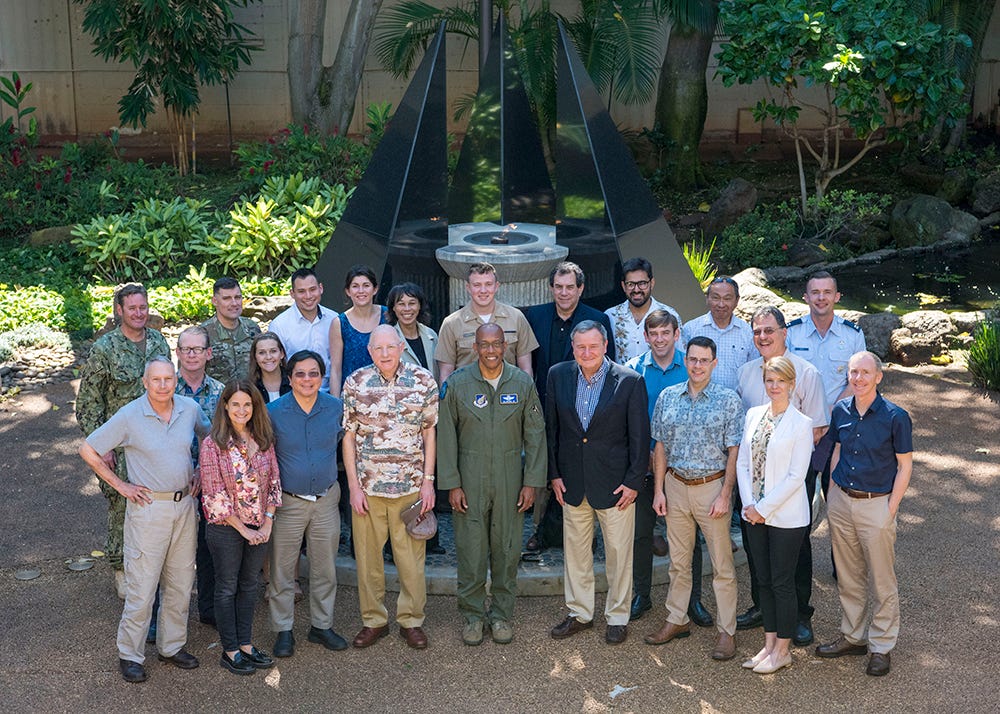
A group of 20 faculty and fellows participate in an orientation visit to Indo-Pacific Command headquarters, Honolulu, Hawaii, February 21–22, 2019, organized and sponsored by the U.S.-Asia Security Initiative. Photo courtesy of the U.S.-Asia Security Initiative

A group of 20 faculty and fellows participate in an orientation visit to Indo-Pacific Command headquarters, Honolulu, Hawaii, February 21–22, 2019, organized and sponsored by the U.S.-Asia Security Initiative. Photo courtesy of the U.S.-Asia Security Initiative

On February 21–22, faculty and fellows from Stanford University traveled to Oahu, Hawaii for an orientation visit at the United States Indo-Pacific Command (INDOPACOM), the U.S. military command responsible for the conduct of the U.S. military’s missions throughout the Indian and Pacific Oceans, and Asia.

The visit brought together scholars and researchers from Stanford, the Massachusetts Institute of Technology, the Council on Foreign Relations, and Macquarie University, Australia. Organized by the U.S.-Asia Security Initiative (USASI) and the Shorenstein Asia-Pacific Research Center at the Freeman Spogli Institute for International Studies (FSI), the visit included meetings with the commanders and staffs of INDOPACOM and five of its subordinate commands (U.S. Army Pacific, U.S. Pacific Fleet, U.S. Air Forces Pacific, U.S. Marine Forces Pacific, and U.S. Special Operations Command Pacific), and a tour of Arleigh Burke-class Aegis destroyer USS John Paul Jones (DDG-52).

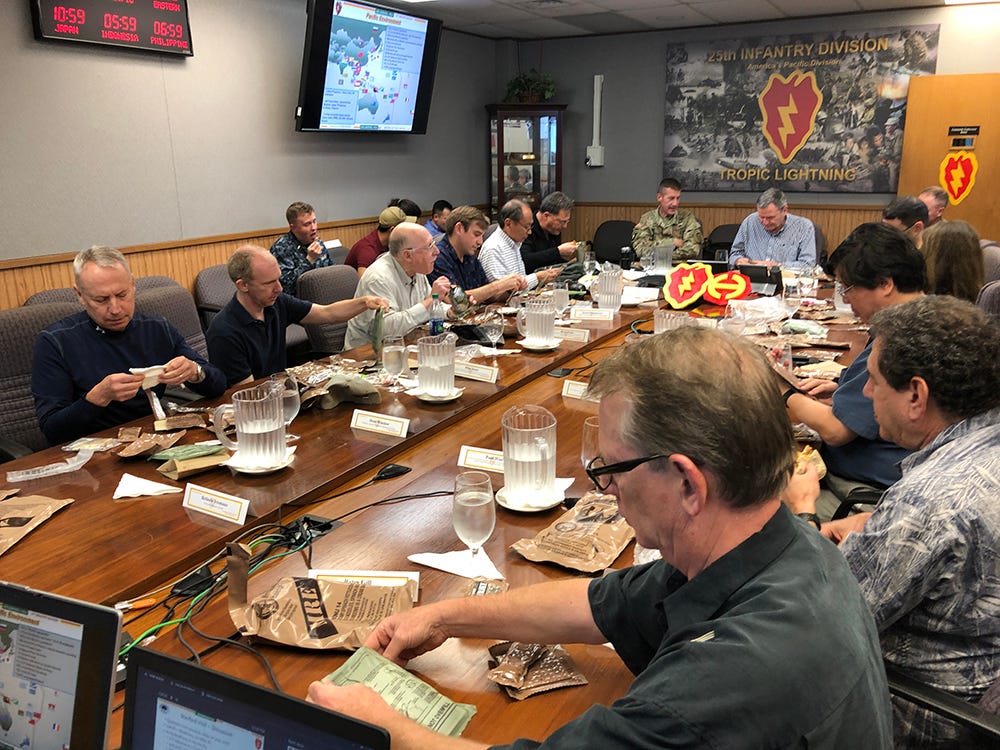
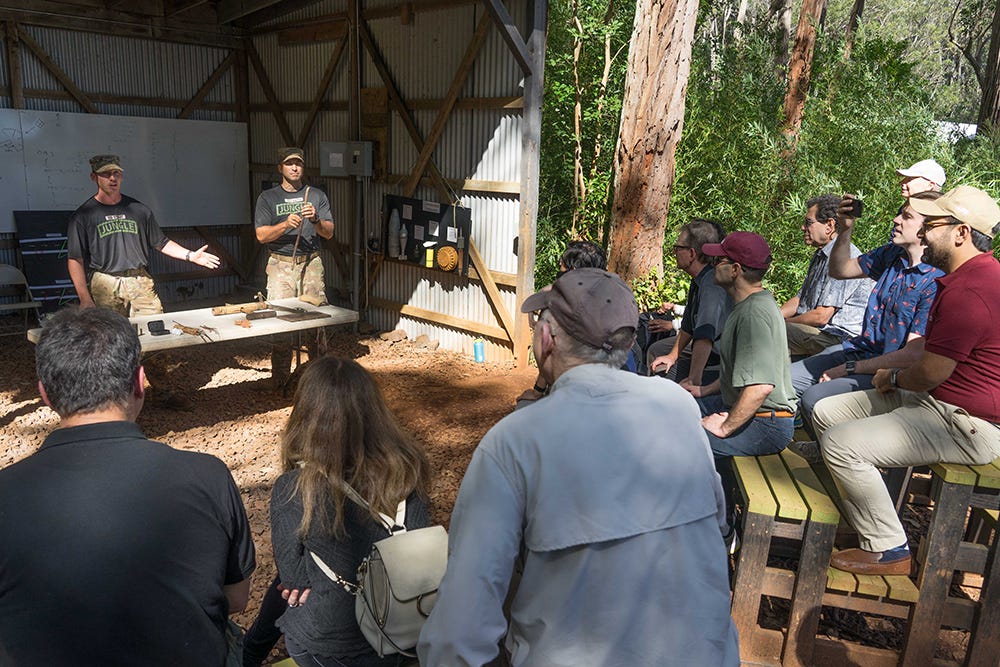
The visitors also interacted with the U.S. Army’s 25th Infantry Division’s leadership and the unit’s Jungle Training Center. The busy itinerary provided the group a superb opportunity to learn about INDOPACOM’s and its subordinate units’ threat assessments, capabilities, doctrine, regional partnerships, and readiness challenges.

These trips offer great access to America’s armed forces to those whose research focuses on or relates to national security issues, says Karl Eikenberry.

Karl Eikenberry, Director of the U.S.-Asia Security Initiative (USASI), a former U.S. ambassador to Afghanistan and himself a retired U.S. Army lieutenant general said: “USASI has over the past five years organized annual trips to U.S. military commands for Stanford FSI faculty and fellows. These trips offer great access to America’s armed forces to those whose research focuses on or relates to national security issues. The insights gained inform analysis, while the host organizations gain fresh perspectives different from those found within their commands.”

 
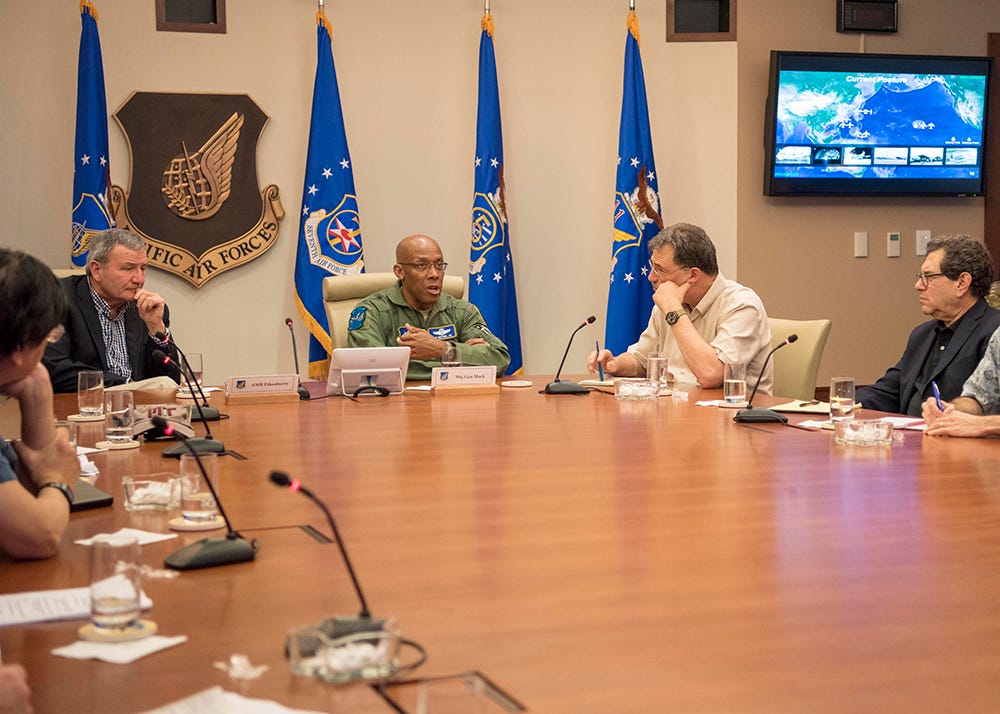
general speaks at a table
Photo courtesy of the U.S.-Asia Security Initiative

Discussions began on February 21st at Camp H.M. Smith, the Headquarters of INDOPACOM. Brigadier General Jonathan Braga, U.S. Army, SOCPAC Commander and his staff discussed his command’s unique capabilities and roles in both conventional and counterterrorist/counterinsurgency warfare operations. Major General Michael Minihan, U.S. Air Force, INDOPACOM Chief of Staff, then hosted a wide-ranging session on his organization’s implementation of the National Security Strategy and National Defense Strategy at a time of dynamic change within the region.

 
Table of attendees
Photo courtesy of Timothy R. Mungie

This was followed by a working lunch at the INDOPACOM Flag Mess with key staff members of MARFORPAC who explained U.S. Marine force posture and contingency missions throughout the Pacific Region. The Stanford group then proceeded to Hickam Field and met with General Charles Brown, Commander, PACAF, and his Deputy Commander, Major General Russell Mack. General Brown detailed the critical role played by airlift and airpower in the vast Indo-Pacific region, and the development of new concepts for the employment of U.S. Air Force capabilities in joint (inter-service) and combined (inter-allied) operations.

 
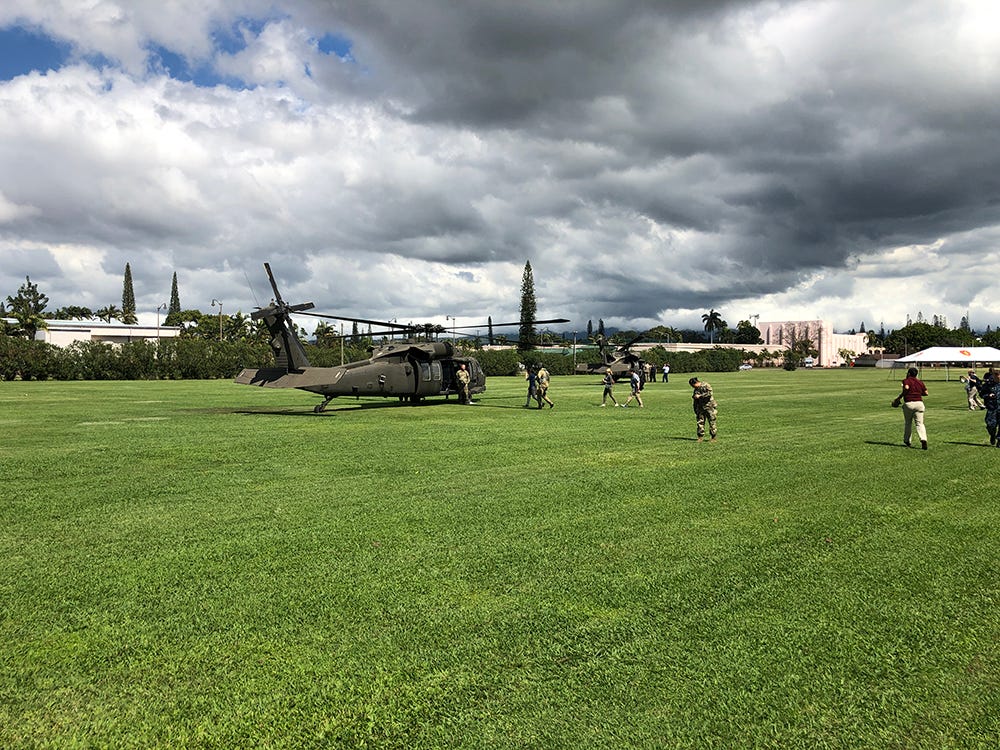
Helicopter parked in a field
Photo courtesy of Timothy R. Mungie

The visiting faculty and fellows then transited to Pearl Harbor for a tour of USS John Paul Jones led by Commanding Officer, Commander Jesse Mink, United States Navy, and Executive Officer, Commander Robert Watts, USN. Noteworthy was the destroyer’s sophisticated integrated air, surface, and underseas warfare systems, and the emphasis placed on resilience in high-end combat situations. Following the ship tour, the group attended a PACFLT command briefing chaired by the Commander, Admiral John Aquilino.

The dialogue made clear PACFLT’s emphasis on a holistic approach to deterrence and decisive operations, with an eye on future requirements. The first day of the trip ended with a working reception at the historic “Nimitz House” hosted by Admiral Aquilino, offering the attendees a chance to engage in conversations with the Commander and his staff.

The second day of the trip began with an introduction to the Daniel K. Inouye Asia-Pacific Center for Security Studies (APCSS), followed by expert presentations and breakout sessions on select topics including the Chinese One Belt One Road plan, the security of Taiwan, pandemic threats in the Indo-Pacific region, and cyber operations. The Stanford team then traveled to Fort Shafter for a meeting with Brigadier General Pete Andrysiak, U.S. Army and Chief of Staff, USARPAC. BG Andrysiak and the USARPAC staff elaborated on the evolving U.S. Army’s regional doctrine and extensive partnership activities.

A highlight of the group’s time in Oahu came with a visit to the U.S. Army’s 25th Infantry Division at Schofield Barracks, and the 25th ID Jungle Training center via UH-60 Blackhawk Helicopters. There Brigadier General J.B. Vowell, Assistant Division Commander, 25th Infantry Division and U.S. Army Hawaii (himself a former FSI Senior Military Fellow), discussed the division’s extensive missions throughout the region, including in the Korean Peninsula.

 
Atendees listen to a presenter
Photo courtesy of Francis Fukuyama

Faculty and fellows were also able to “get their boots (or at least tennis shoes) muddy” in the U.S. Army’s rugged training area in northern Oahu, with highly skilled soldiers demonstrating jungle warfare tactics and techniques. The trip ended with the participants hosting a reception at the Hale Koa Hotel Warriors Lounge for their many hosts over the past two days.

The trip to INDOPACOM Headquarters provided a rare opportunity for participants to talk directly with senior U.S. military leaders in the most important region of the world and to gain a better understanding of their perspectives and the many challenges that they are addressing. Faculty and fellows interacted with junior leaders at the tactical level, helping them gain an appreciation of the ethos of those serving at the cutting edge. The hosts all commented on the benefit of learning the views of scholars, many of whom have spent their academic careers writing about national security issues.

The trip provided fascinating insights into how the U.S. military views the rapidly evolving national security challenges in the Indo-Pacific region, says Larry Diamond.

“The trip provided fascinating insights into how the U.S. military views the rapidly evolving national security challenges in the Indo-Pacific region, and how it is organized to defend against the threats. You can read about much of this in the media and the journals, but there is just no substitute for being there, seeing our facilities on the ground, and engaging directly with the remarkable men and women (and one thing that struck me is that there are quite a number of women) who are responsible for our defense,” said Larry Diamond, senior fellow at the Hoover Institution and at the Center on Democracy, Development & the Rule of Law (CDDRL) at FSI.

FSI scholars particularly valued the opportunity to connect one-on-one.

“It was invaluable to meet and hear directly from the individuals and organizations who are working so hard to ensure our security,” said Center for International Security and Cooperation (CISAC) Senior Research Scholar Megan Palmer. For CISAC Pre-doctoral Fellow Erik Lin-Greenberg, “the opportunity to interact with decision-makers from tactical to strategic levels was incredibly valuable and helped inform my own research.”

Hero Image
pacaf hq photo Courtesy US-Asia Security Initiative
All News button
1
-

Abstract: Multilateral conferences are the bread-and-butter of international politics. In such settings, countries may pursue their interests individually, but most of the time they prefer to act through coalitions. Such coalitions are overlapping, creating a network structure. States build and utilize networks to get agenda items pushed through or to block unfavorable ones. While sometimes they are formed on the basis of formal institutions (such as the NAM or the EU), frequently their membership is based on either ad hoc cooperation, or existing informal bodies (such as the NSG, New Agenda Coalition, or Zangger Committee). The attention to such networks is, however, still in its infancy. This paper looks at how state networks within one of the most important recurring diplomatic conferences – the quinquennial NPT Review Conference – develop and transform over time. By doing so, the paper maps the existing networks, and explains their transformation as an instrument of global governance.


Speaker Bio: Michal Onderco is a Junior Faculty Fellow at CISAC (2018-2019), and his research focuses on politics of multilateral nuclear diplomacy. His current project tries to understand how states build coalitions in multilateral diplomacy, and why are some coalitions more successful than others.

Michal is currently on leave from Erasmus University Rotterdam, where he is Assistant Professor of International Relations. Previously, he was a Max Weber Fellow at the European University Institute, Fulbright Visiting Researcher at Columbia University in New York, and a short-term Stanton Fellow at Fundação Getúlio Vargas in São Paulo. He received his LLM in Law and Politics of International Security and PhD in Political Science from Vrije Universiteit Amsterdam. His earlier work was published in International Studies Quarterly, European Journal of Political Research, Cooperation & Conflict, The Nonproliferation Review, and European Political Science Review.

Michal Onderco MacArthur Junior Faculty Fellow CISAC, Stanford University
Authors
Siegfried S. Hecker
News Type
Q&As
Date
Paragraphs

In May 2018, Stanford Center for International Security and Cooperation (CISAC) scholars Siegfried Hecker, Robert Carlin, and Elliot Serbin released an in-depth report analyzing the nuclear history of North Korea between 1992 and 2017 alongside a historical research-based “roadmap” for denuclearization.

Since then, tensions between North Korea and South Korea have thawed. United States President Trump met with Kim Jong-un in Singapore in June, and another U.S.-North Korea summit is planned for later this month.

Today, the CISAC researchers release a 2018 update to their report, chronicling and analyzing historic developments in North Korea over the past year. In this Q&A with Katy Gabel Chui, CISAC Senior Fellow and former Director of the Los Alamos National Laboratory Siegfried Hecker shares what the team learned:

Your research demonstrates that South Korean, North Korean, and U.S. efforts in 2018 were able to lower tensions and the threat of war on the Korean Peninsula. How? What actions were most effective toward this end?

At the end of 2017, the Moon Jae-in administration in South Korea made secret overtures to the Kim Jong-un regime. Kim Jong-un responded positively in his 2018 New Year Speech, proposing to send North Korean athletes to the South as part of a joint delegation for the 2018 Winter Olympics in Seoul.  He also initiated serious diplomatic overtures to Washington. These efforts led to the North/South Summit in April and the historic Singapore Summit in June.

Yet, in spite of these positive initiatives, you did not rate U.S. and North Korean diplomacy at your highest level, why is that?

We stopped one level short for both (a G2 instead of a G3) because progress in talks that followed the summit quickly hit a wall when the US side called for the North to produce a full declaration of its nuclear weapons program, to which Pyongyang responded angrily. The rest of the year was up and down. Nevertheless, the Singapore Summit took the critical step away from the brink of war. The North and South also continued to make remarkable progress toward reconciliation with two more presidential summits.

Most of the focus in the U.S. has been on an apparent failure of North Korea to denuclearize. But you note in your research that the Singapore summit pledged normalization and denuclearization. Why has progress stalled?

First, denuclearization is a poorly defined concept. We should focus on the elimination of the North’s nuclear weapons, the means of production and means of delivery. Second, Washington has so far not taken steps toward normalization. It has insisted on maintaining maximum pressure and sanctions, which Pyongyang considers incompatible with normalization.

Nevertheless, you claim that the threat posed by North Korea was substantially reduced. What about the North’s nuclear capabilities – were these reduced in 2018?

The diplomatic initiatives have greatly reduced the threat. Our study, which looks at the details of how the capabilities have changed in 2018, concludes that the rapid escalation of overall capabilities in 2017 and prior years was halted and in some cases rolled back.

But your research also shows North Korea continued to operate its nuclear weapons complex in 2018, and that it is still producing plutonium and highly enriched uranium.

We are not surprised that North Korea has not halted its fissile materials production in absence of formal negotiations. Our analysis of open-source satellite imagery of the Yongbyon complex led us to estimate they may have added sufficient plutonium and highly enriched uranium for an additional 5 to 7 nuclear weapons on top of our 2017 estimate of approximately 30 weapons.

There have also been reports that it has continued to maintain, produce, and deploy its land-based ballistic missiles. These activities don’t look like the North is denuclearizing.

In our study, we look at the three requisites for a nuclear arsenal – fissile materials, weaponization (that is design, build, and test), and delivery. The North did continue to produce fissile materials. But it took the remarkable step to end nuclear testing and long-range missile testing at a time during which North Korea had been rapidly increasing the sophistication of its nuclear weapons and missiles and their destructive power and reach. Therefore, we conclude that the North not only halted that rapid advance but also rolled back the threat we judged the North’s nuclear and missile programs to pose in 2017.

It sounds like there is a long way to go to denuclearize. In May of last year, you released a framework for denuclearization of North Korea based around a “halt, roll back and eliminate” process. Where does North Korea stand, if anywhere, in that process today?

Our color charts track the progress. Contrary to what we have heard in the media, North Korea has actually halted and rolled back some nuclear activities, with the most important being the end of nuclear and missile testing, which in turn, has significant consequences. In fact, in 2018 it did not flight test missiles of any range. However, the road to final elimination will be long and difficult, especially because of the serious trust deficit between Washington and Pyongyang. We suggested a 10-year time frame last year.

Haven’t you also suggested a way to speed up that process?

Yes, we propose that North Korea, South Korea, and the U.S. explore cooperative efforts to demilitarize North Korea’s nuclear and missile programs and convert them to civilian nuclear and space programs. Such cooperation has the potential of accelerating the elimination of nuclear weapons and nuclear weapons program. It will, in the long term, also greatly improve the prospects of adequate verification.

How do you get North Korea to go along with any of these ideas?

That’s the job of our negotiators. When Special Representative Stephen Biegun was here at Stanford recently, he showed a lot of flexibility to have the U.S. phase denuclearization with normalization. I think that’s what it will take. But a lot of hard work lies ahead.

Full Report: A Comprehensive History of North Korea's Nuclear Program: 2018 Update

Hero Image
hecker2 1
All News button
1
-


EMERGING ISSUES IN CONTEMPORARY ASIA

A Special Seminar Series


RSVP required by February 12, 2019 to: https://goo.gl/forms/h9RRcz4vR9Ybn5cQ2

VALID STANFORD ID CARD MUST BE PRESENTED UPON ARRIVAL


ABSTRACT: Diplomacy plays a critical role in the management and resolution of armed conflict in the international system. After a war breaks out, decision makers see the opening of talks as a constructive step in the conflict’s resolution — dialogue allows for belligerents to broker deals and coordinate the logistics of war termination. However, in modern warfare, states almost always fight initially for period of time without engaging in talks. What factors explain whether states are willing to talk to their enemy while fighting and when might their diplomatic postures change? “Talking to the Enemy” presents a framework to explain variation in countries’ approaches to wartime diplomacy, focusing on the costs of talks and how states mitigate these costs to get to the negotiating table. I test this framework with respect to Chinese decision making in the Korean and Sino-Indian Wars — one in which China was against talks for nine months before opening up and the latter in which China actively pursued talks throughout the whole conflict. The findings have significant implications for crisis management and conflict resolution in U.S.-China relations.  

Image
Oriana Mastro
PROFILE: Oriana Skylar Mastro is an assistant professor of security studies at the Edmund A. Walsh School of Foreign Service at Georgetown University where her research focuses on Chinese military and security policy, Asia-Pacific security issues, war termination, and coercive diplomacy. Dr. Mastro is also a 2017-2019 Jeane Kirkpatrick Scholar at the American Enterprise Institute (AEI) where she is working on a book about China’s challenge to U.S. primacy. Mastro continues to serve in the United States Air Force Reserve for which she works as a Senior China Analyst at the Pentagon. For her contributions to U.S. strategy in Asia, she won the Individual Reservist of the Year Award in 2016. She has published widely, including in Foreign Affairs, International Security, International Studies Review, Journal of Strategic Studies, The Washington Quarterly, The National Interest, Survival, and Asian Security, and is the author of The Costs of Conversation: Obstacles to Peace Talks in Wartime, (Cornell University Press, 2019). She holds a BA in East Asian Studies from Stanford University and an MA.and PhD in Politics from Princeton University. Her publications and other commentary can be found on twitter @osmastro and www.orianaskylarmastro.com.  


Oriana Mastro Assistant Professor of Security Studies Edmund A. Walsh School of Foreign Service, Georgetown University
Seminars
Subscribe to Asia-Pacific