-

Abstract: Materials used in key components of nuclear power reactors, such as the fuel cladding and the pressure vessel, provide shields for the release of highly radioactive isotopes generated in the nuclear fuel to the environment, thus their reliability is an important issue in the safety evaluation.  The accident that occurred at the Fukushima Daiichi in 2011 demonstrated that materials that are considered reliable during normal operating conditions will fail in an extreme accident condition. Subsequently, there has been an international effort on developing materials for Accident Tolerant Fuels (ATF). In addition, the development of new generation of nuclear reactors also calls for new materials that may withstand higher temperatures, higher radiation doses and with better performance under severe corrosive conditions.  This talk will outline the challenges and status for such developments using recent data from the authors’ own research group as examples.  Also, since China is building the most nuclear reactors now and “a nuclear accident anywhere of the world will be an accident of everywhere of the world”, the importance and challenges of collaborating with the Chinese in this area will be discussed. 

Bio: Dr. Lumin Wang is a professor of nuclear engineering, and materials science & engineering at the University of Michigan-Ann Arbor (UM). He came to the US from China in 1982, and received his MS and PhD degrees in Material Science from the University of Wisconsin-Madison in 1984 and 1988, respectively. He worked as a post-doctoral fellow at Argonne National Laboratory and a research scientist at the University of New Mexico before joining the faculty of UM in 1997.  His research has focused on the study of radiation effects of materials using ion beams and transmission electron microscopy. He served as the director of Electron Microbeam Analysis Laboratory, a campus-wide material characterization center at UM between 2005 and 2010. Dr. Wang has published more than 400 papers in research journals and delivered more than 100 invited talks internationally. He has been a member of the International Committee of the American Nuclear Society and an adjunct chair professor of Xiamen University of China since 2011. He has taken more than 100 UM students to China to observe the construction of nuclear reactors during the last 8 summers.


Professor
Lumin Wang Professor, College of Engineering University of Michigan
Paragraphs

More than a century after citizen armies became an international norm, nearly two dozen states actively recruit foreigners into their militaries. Why do these states skirt the strong citizen-soldier norm and continue to welcome foreigners? To explain this practice, we first identify two puzzles associated with foreign recruitment. The first is practical: foreign recruits pose loyalty, logistical, and organizational challenges that domestic soldiers do not. The second is normative: noncitizen soldiers lie in a normative gray zone, permitted under the letter of international law but in tension with the spirit of international norms against mercenary armies. Next, we survey foreign military recruitment programs around the world and sort them into three broad types of programs, each with its own primary motivation: importing expertise, importing labor, and bolstering international bonds. We explain these categories and explore three exemplary cases in depth: Australia, Bahrain, and Israel. Our findings suggest that foreign recruitment can affect a state’s military operations by allowing militaries to rapidly develop advanced capabilities, by reducing the political risk associated with the use of force, and by expanding a state’s influence among former colonial and diaspora populations.

All Publications button
1
Publication Date
Journal Publisher
Security Studies
0
painter.jpg

Christopher Painter is a globally recognized leader on cyber policy, cyber diplomacy, cybersecurity and combatting cybercrime. He has been at the vanguard of cyber issues for over 30 years, first as a federal prosecutor handling some of the most high-profile cyber cases in the U.S., then as a senior official at the U.S. Department of Justice, the FBI, the White House National Security Council and, finally, as the world’s first cyber diplomat at the U.S. Department of State. Among many other things, Chris is a founder of The Cyber Policy Group, has served as the President of the Global Forum on Cyber Expertise Foundation, serves on the board of the Center for Internet Security and the Public Sector Advisory Board for Palo Alto Networks and was a commissioner on the Global Commission for the Stability of Cyberspace. He is a frequent speaker on cyber issues, frequently is interviewed and quoted in the media and has testified on numerous occasions to U.S. Congressional committees. He has received a number of awards and honors including Japan’s Order of the Rising Sun, Estonia's Order of Terra Mariana, RSA Security Conference's Public Policy Award, the Attorney General’s Award for Exceptional Service and was named the Bartles World Affairs Fellow at Cornell University. He received his B.A. from Cornell University and J.D. from Stanford Law School.

Affiliate
Date Label
-

Abstract: China's economic growth over the last thirty years has positioned it to project political and economic power across the world.  In 2013, Chinese President Xi Jinping officially launched the “One Belt, One Road” Initiative, later re-branded as the Belt and Road Initiative (BRI), with the goal of economically connecting China to the countries of the Greater Middle East through a new infrastructural network of roads and maritime ports. The Chinese government has reportedly already spent $250 billion on these projects and will spend up to $1 trillion more in the next decade, much of it in Muslim-majority countries.  This project seeks to answer a number of questions about the economic, political and cultural implications of the BRI.  What does the potential rise of a global trading bloc dominated by the authoritarian regimes of China and the Greater Middle East mean for the liberal economic order?  How will the BRI impact the advancement of human rights in the Greater Middle East?  What types of political tensions might arise between China and BRI target countries because of Chinese state economic investments?  And how is a “rising China” viewed by the citizenries of countries in the Greater Middle East?  


Bio: Lisa Blaydes is a Professor of Political Science at Stanford University.  She is the author of Elections and Distributive Politics in Mubarak’s Egypt (Cambridge University Press, 2011).  Professor Blaydes received the 2009 Gabriel Almond Award for best dissertation in the field of comparative politics from the American Political Science Association for this project.  Her articles have appeared in the American Political Science Review, International Studies Quarterly, International Organization, Journal of Theoretical Politics, Middle East Journal, and World Politics. During the 2008-2009 and 2009-2010 academic years, Professor Blaydes was an Academy Scholar at the Harvard Academy for International and Area Studies.  She holds degrees in Political Science (PhD) from the University of California, Los Angeles and International Relations (BA, MA) from Johns Hopkins University.


Lisa Blaydes Professor of Political Science Stanford University
Seminars
Authors
Siegfried S. Hecker
News Type
Commentary
Date
Paragraphs

My reply to the frequently asked question if Kim Jong Un will ever give up North Korea’s nuclear weapons is, “I don’t know, and most likely he doesn’t know either. But it is time to find out.” However, insisting that Kim Jong Un give a full declaration of his nuclear program up front will not work. It will breed more suspicion instead of building the trust necessary for the North to denuclearize, a process that will extend beyond the 2020 US presidential election.

However, the time it will take to get to the endpoint should not obscure the progress that has already been made. Since this spring, Kim Jong Un has taken significant steps to reduce the nuclear threat North Korea poses. He has declared an end to nuclear testing and closed the nuclear test tunnels by setting off explosive charges inside the test tunnel complex. He also declared an end to testing intermediate- and long-range missiles including intercontinental ballistic missiles (ICBMs). I consider these as two of the most important steps toward reducing the threat North Korea poses and as significant steps on the path to denuclearization.

Whereas the North still poses a nuclear threat to Japan and South Korea as well as US military forces and citizens in the region, the threat to the United States has been markedly reduced. In my opinion, North Korea needs more nuclear and ICBM tests to be able to reach the United States with a nuclear-tipped missile. Freezing the sophistication of the program is a necessary precursor to rolling it back in a step-by-step process.

At the September 2018 inter-Korean summit in Pyongyang, Kim also told President Moon that he would commit to dismantling the Yongbyon nuclear complex if the US takes commensurate measures—unspecified, at least in public. The Yongbyon complex is the heart of North Korea’s nuclear program. Shutting it down and dismantling it would be a very big deal because it would stop plutonium and tritium production (for hydrogen bombs) and significantly disrupt highly enriched uranium production.

Yet, Kim’s actions have been widely dismissed as insignificant or insincere by both the left and the right of the American political spectrum. In many of these quarters, the sincerity of Kim’s denuclearization promise is judged by whether or not he is willing to provide a full and complete declaration and to agree on adequate verification measures. But Kim’s willingness to provide a full declaration at this early stage tells us little about his willingness to denuclearize. Moreover, I maintain that insisting on this approach is a dead end, certainly as long as Washington continues to apply “maximum pressure” instead of moving to implement the steps on normalizing relations that President Trump agreed to in the June Singapore statement.

A full declaration is a dead end because it is tantamount to surrender, and Kim has not surrendered, nor will he. A complete account of North Korea’s nuclear weapons, materials, and facilities would, in Kim’s view, likely be far too risky in that it would essentially provide a targeting list for US military planners and seal the inevitable end of the nuclear program and possibly his regime.

Furthermore, a declaration must be accompanied by a robust verification protocol. That, in turn, must allow inspections and a full accounting of all past activities such as production and procurement records as well as export activities. And, once all these activities are complete, an inspection protocol must provide assurances that activities that could support a weapons program are not being reconstituted. This would be a contentious and drawn-out affair.

It is inconceivable that the North would declare all of its nuclear weapons, their location, and allow inspections of the weapons or of their disassembly up front. But in addition to the weapons themselves, a nuclear weapon program consists of three interlocking elements: 1) the nuclear bomb fuel, which depending on the type of bomb includes plutonium, highly enriched uranium (HEU), and forms of heavy hydrogen—deuterium and tritium; 2) weaponization—that is, designing, building and testing weapons, and; 3) delivery systems, which in the case of North Korea appear to be missiles, although airplane or ship delivery cannot be ruled out. Each of these elements involves dozens of sites, hundreds of buildings, and several thousand people.

Let me give an example of what is involved just for verification of plutonium inventories and means of production. Plutonium is produced in reactors by the fission of uranium fuel. We estimate that most of the North’s plutonium has been produced in its 5 MWe (electric) gas-graphite reactor at the Yongbyon complex. A complete declaration must provide for the entire operations history (along with its design and operational characteristics) going back to its initial operation in 1986 to correctly estimate how much plutonium was produced.

In addition, North Korea has operated the Soviet-supplied IRT-2000 research reactor at the Yongbyon site since 1967. Although little plutonium has likely been produced there, this would have to be verified by providing the complete operating history along with performance characteristics since its initial operation. North Korea has also constructed an experimental light water reactor (ELWR) that is likely not yet operational. Its status would have to be checked to see if it was configured to favor weapon-grade plutonium production. Finally, North Korea began to build but never completed 50 MWe and 200 MWe gas-graphite reactors, whose construction operations were stopped by the Agreed Framework in 1994. Their status would have to be verified.

The 5 MWe reactor fuel consists of natural uranium metal alloy fuel elements. Tracking the entire history of fuel fabrication would be an important verification step for plutonium production. It starts with uranium ore mining, milling and conversion to uranium oxide. This is followed by a few additional steps to produce the uranium metal that is formed into fuel elements for the reactor to produce plutonium. Some of these same steps would also be used, but then complemented by turning the uranium into a compound that serves as the precursor gas (uranium hexafluoride) for centrifuge enrichment to produce low enriched uranium for light water reactors or highly enriched uranium for bombs.

A complete and accurate accounting of fuel produced would also likely show a discrepancy that indicates that more fuel was produced at Yongbyon than was consumed. The difference could be accounted for by the fuel that North Korea produced for the gas-graphite reactor it built in Syria, a project that was terminated by Israel’s air raid on the Al Kibar site in September 2007. North Korea is unlikely to acknowledge the illicit construction of the Syrian reactor as part of its own plutonium declaration.

Once produced in the reactor, plutonium has to be extracted from the used or spent fuel after a sufficient period of time that allows the spent fuel to cool thermally and radioactively. The extraction or separations process is accomplished in a reprocessing facility using mechanical and chemical methods. The North’s reprocessing facility became operational in the early 1990s. All of its operations records would have to be examined and verified. In addition, it is likely that some small amount of plutonium that may have been produced in the IRT-2000 reactor was separated in the hot cell facilities in that complex. Its records would have to be examined and verified.

After plutonium is separated, it must be purified, alloyed, cast and machined into final bomb components. Each of these steps generates residue and waste streams that must be monitored and assessed for their plutonium content. Based on my visits to Yongbyon and discussions with the North’s technical staff, I believe that the steps beginning with delivery of yellowcake to Yongbyon (from the uranium mining and milling sites), plus all steps for fuel fabrication, reactor production of plutonium, spent fuel cooling, reprocessing, plutonium purification and alloying into metal ingots are conducted at Yongbyon.

During my visits to Yongbyon, I was told that the plutonium ingots are then taken off site (of an undeclared location) in which the plutonium is cast into bomb components—which would then be followed by machining and assembling into pits, the plutonium cores of the weapons. In 2010, I was also told that all plutonium residues and wastes from reprocessing and plutonium metal preparation were still stored at Yongbyon (under questionable safety conditions). Very little had been done to prepare the spent fuel waste for final disposition. This is likely still the case and, hence, most of the reprocessing facility must remain operational after the rest of Yongbyon is shut down in order to prepare the hazardous waste for safe, long-term disposition. This will also complicate the plutonium inventory verification.

A complete declaration must also include how much plutonium was used during underground testing. In addition to the six known tests at Punggye-ri, North Korea also claims to have conducted “subcritical” experiments (stopping just short of a nuclear detonation), which I consider to be unlikely. If it did, however, North Korea would have to declare the amount of plutonium used and its current state, particularly since such experiments could leave plutonium in a usable form unlike the case for nuclear detonations. To verify the nuclear test history of plutonium, as well as for highly enriched uranium, it would be necessary to provide information or allow drill-back inspections into the test tunnels at Punggye-ri to ascertain the type and amount of nuclear material used in the test.

To complicate matters even further, if one or more of the North’s test devices failed to produce a nuclear explosion, then plutonium (or HEU) could still be resident in the tunnels. Both the United States and Russia experienced such test failures. This is also possibly the case for North Korea because there is still some uncertainty as to whether or not a nuclear test was conducted in May 2010 when a faint seismic signal was observed from the test area. For the most part, the jury is still out on that event, but the North would now have to allow inspections and verification.

It should be apparent that the declaration plus commensurate verification of the amount of plutonium North Korea possesses, which I believe is only between 20 and 40 kilograms, will be an enormous job. I cannot see it being accomplished in the current adversarial environment and certainly not within the timeframe that has been specified by the US government.

A similar sequence of declarations, inspections, and verification measures would have to be developed for the other bomb fuels, namely HEU and the hydrogen isotopes, deuterium and tritium. Verification of HEU inventories and means of production will be particularly contentious because very little is known about the centrifuge facility at the Yongbyon site. As far as we know, my Stanford colleagues and I are the only foreigners to have seen that facility, and then only in a hurried walk-through in 2010. In addition, there exists at least one other covert centrifuge site.

The situation is even more problematic for the second element of the North’s nuclear program, that of weaponization, which includes bomb design, production, and testing because we know nothing about these activities or where they are performed. Although we have some information regarding the nuclear test site at which six nuclear tests were conducted, we do not know if there are other tunnel complexes that have been prepared for testing.

The third element includes all of the North’s missiles and its production, storage and launch sites and complexes. These will also represent a major challenge for complete and correct declarations, inspections and verification.

Once all of the elements have been declared and the dismantling begins, then the focus will have to change to verifying the dismantlement and assessing the potential reversibility of these actions—a challenge that is not only difficult, but one that must be ongoing.

Verification was one of the sticking points during the 2007-2008 diplomatic initiative pursued late in the George W. Bush administration. In 2008, the North turned over copies of 18,000 pages of operating records of the reactor and reprocessing facilities in Yongbyon. The veracity of that disclosure has never been established because diplomatic efforts fell apart when the United States insisted on more declarations up front and North Korea accused Washington of having moved the goal posts. That declaration constituted only a small part of what I outlined above as being necessary for a full accounting of plutonium, not to mention the other components of North Korea’s nuclear program. That was 10 years ago, and much has happened since to make future declarations and verification much more problematic.

At this time, the level of trust between Pyongyang and Washington required for North Korea to agree to a full, verifiable declaration up front does not exist. Hence, my colleagues Robert Carlin and Elliot Serbin and I have suggested a different approach. Negotiations should begin with an agreed end state: North Korea without nuclear weapons or a nuclear weapon program. Civilian nuclear and space programs would remain open for negotiation and possible cooperation. But all facilities and activities that have direct nuclear weapons applicability must eventually be eliminated.

Rather than insisting on a full declaration up front, the two sides should first agree to have the North take significant steps that reduce the nuclear threat it poses in return for commensurate movements toward normalization—the details of which would have to be worked out during negotiations. A good next step for the North would be the destruction of the 5 MWe plutonium production reactor, which would be part of the package that Kim proposed to Moon at the Pyongyang Summit. If these actions are matched by US steps toward normalization as pledged in the Singapore statement, they will serve to build the trust required for the North to initiate a phased declaration process that initially covers operations in Yongbyon and eventually includes the entire nuclear program discussed above.

Unfortunately, the strategic opening created by the Singapore and North-South summits has not been followed by such tactical steps to get the negotiation process off the ground. The North and the South are ready to create a commonly acceptable path forward, but we have the worst of environments in Washington. The Trump team claims progress is being made but insists on maintaining maximum pressure. The North’s Foreign Ministry has pointed outthat the “improvement of relations and sanctions are incompatible.” Also, most US North Korea watchers are either wedded to old think that you can’t negotiate with Pyongyang or they are determined to prove President Trump’s claims on North Korea wrong.

With nuclear tensions on the Korean Peninsula dramatically reduced, it is time to find out if Kim’s drive to improve the economy will eventually lead to denuclearization. He may determine that his nuclear arsenal poses a significant hindrance to economic development that outweighs the putative benefits it confers. Washington and Seoul should work together to encourage rather than inhibit this potential shift.


Hero Image
hecker2
All News button
1
Authors
Asfandyar Mir
News Type
Commentary
Date
Paragraphs

Many analystspractitioners, and scholars are skeptical of the efficacy of drone strikes for counterterrorism, suggesting that they provide short-term gains at best and are counterproductive at worst. However, despite how widespread these views are, reliable evidence on the consequences of drone strikes remains limited. My research on drone warfare and U.S. counterterrorism—some of which was recently published in International Security—addresses this issue by examining the U.S. drone war in Pakistan from 2004 to 2014. Contrary to the skeptics, I find that drone strikes in Pakistan were effective in degrading the targeted armed groups. And, troublingly, they succeeded in doing so even though they harmed civilians.


Three Key Findings

I have conducted research in Pakistan and the United States over the last few years, gathering new qualitative data on the politics of the war and its effects on the two main targets, al-Qaeda and the Pakistan Taliban. I have also evaluated detailed quantitative data on drone strikes and violence by al-Qaeda and the Pakistan Taliban. This research offers three important findings.

First, the U.S. drone war was damaging for the organizational trajectories of al-Qaeda and the Pakistan Taliban. I found that after the United States surged its surveillance and targeting capabilities in 2008, both groups suffered increasing setbacks; they lost bases, their operational capabilities were reduced, their ranks were checked by growing numbers of desertions, and the organizations fractured politically. These effects appear to have persisted until 2014. In a related paper, my University of Michigan colleague Dylan Moore and I show that during the drone program in the Waziristan region, violence by the two groups fell substantially.

Second, the U.S. drone war disrupted al-Qaeda and the Pakistan Taliban not just by killing their leaders and specialized rank-and-file members, but also by heightening the perceived risk of being targeted. Across a variety of empirical materials, including some collected through fieldwork, I found that both groups were direly constrained by the fear—a constant sense of anticipation—of drone strikes, which crippled routine movement and communication. In addition, leaders and rank-and-file jihadis regularly viewed each other with the suspicion of being spies for the drone program, which contributed to their organizational fragmentation.

Third, the notion of increased recruitment for al-Qaeda and the Pakistan Taliban due to civilian harm in drone strikes is questionable. In the local battlefield, I did not find evidence of any tangible increase in recruitment. Interviews with some surviving mid-level members of al-Qaeda and the Pakistan Taliban negated the impression that the groups benefited from a stream of angry recruits. Instead, a recurring theme was that they experienced desertions and manpower shortages because of the stress of operating under drones. To the extent that new recruits were available, both groups struggled to integrate them in their organizations because of the fear that they might be spies for the drone program.


Beyond Pakistan?

The U.S. drone war in Pakistan is a crucial case of U.S. counterterrorism policy, but it is one of many other campaigns. The U.S. government is waging such campaigns in Yemen and Somalia, and considering an expansion in the Sahara. In my work, I identify two factors which are important for the dynamics evident in Pakistan to hold generally.

First, the United States must have extensive knowledge of the civilian population where the armed group is based. The counterterrorism force needs such knowledge to generate intelligence leads on their targets, who are often hiding within the civilian population. This comes from detailed population data sharing by local partners, large-scale communication interception, and pattern-of-life analysis of target regions from sophisticated drones.

Second, the United States must be able to exploit available intelligence leads in a timely manner. As members of targeted armed groups consistently try to escape detection, most intelligence has a limited shelf life. The capability to act quickly depends on the bureaucratic capacity to process intelligence, decentralized decision-making for targeting, and rapid-strike capabilities like armed drones.

In Pakistan, the United States met these criteria with an abundance of technology and high-quality local partner cooperation. Starting in 2008, the United States mobilized a large fleet of drones and surveillance technologies to develop granular knowledge of the civilian population in the targeted regions. Despite deep political rifts on the conflict in Afghanistan, the Central Intelligence Agency obtained extensive covert support from Pakistani intelligence against al-Qaeda and the Pakistan Taliban, which enabled it to regularly locate targets. With ample targeting authority and armed drones operating from nearby bases, U.S. forces were able to exploit available leads.

In Yemen, however, the United States has struggled to develop knowledge of the civilian population and act on available intelligence. My interviews with U.S. officials and a leaked government document suggest that, until 2013, U.S. forces did not sustain aerial surveillance of targeted regions, the Yemeni state’s capacity in support of operations remained poor, and the targeting rules were stringent.


Implications for U.S. Counterterrorism Policy

The U.S. government’s preference for drone strikes is motivated by the desire to prevent attacks against the American homeland. My research suggests that the drone program has the potential to inflict enough damage on the targeted armed groups to upset their ability to plot and organize attacks in the United States.

The United States also deploys drone strikes to manage jihadi threats to allied regimes. In such cases, the political value of strikes depends, in part, on the capability of the local partner. An effective drone deployment can go a long way in providing a necessary condition for restoring order. But the local partner must ultimately step up to consolidate state control.

For example, President Obama’s drone policy degraded al-Qaeda and the Pakistan Taliban, securing the American homeland and substantially reducing the threat to the nuclear-armed Pakistani state. The Obama administration’s policy was sufficient because the Pakistani state was relatively capable and could build on the gains made by U.S. counterterrorism strikes. Indeed, Pakistan’s ground operations, although contentiously timed, consolidated those gains.

In contrast, in today’s Afghanistan, the U.S. government cannot rely on instruments of counterterrorism alone. U.S. officials realize that just degrading the Afghan Taliban and the Islamic State is unlikely to stabilize the country. The Afghan government remains so weak that it will struggle to consolidate territorial control even after substantial degradation of its armed foes.

Finally, a key limitation of counterterrorism strikes is that they cannot alleviate the ideological appeal of jihadi actors like al-Qaeda and the Islamic State. Strikes cannot substitute for efforts at countering online jihadi propaganda and de-radicalization. Thus, they should not be seen as a silver bullet that can defeat armed groups operating from safe havens and weak states.


Civilian Protection and Drone Strikes

Civilian harm in U.S. counterterrorism remains a vital challenge. While moral objections to civilian casualties are a powerful reason to reconsider drone operations, my research suggests that strategic concerns, like a surge in local violence or increased recruitment of targeted organizations, are not. In Pakistan, for example, drone strikes harmed civilians while also undermining al-Qaeda and Pakistan Taliban. Similarly, the U.S.-led counter-ISIL campaign in Iraq and Syria was very difficult for the civilian population, and yet also inflicted losses on the Islamic State.

If civilian casualties do not affect the strategic outcomes of counterterrorism campaigns, then the U.S. government must be convinced to protect civilians for purely moral reasons. How responsive might the U.S. government be to such appeals? It is unclear. The Obama administration was not transparent about the use of drone strikes. Under President Trump, the lack of transparency has worsened. Concerned policymakers and human rights activists must continue to push the U.S. government to be more transparent and to protect civilians caught up in counterterrorism campaigns.


Hero Image
asfandyar mir 2
All News button
1
Authors
News Type
News
Date
Paragraphs


The two-day forum, part of a project of the American Academy of Arts and Sciences, led by the Freeman Spogli Institute’s Karl Eikenberry and Stephen Krasner, gathered experts to examine trends in civil wars and solutions moving forward.   


Image
Attendees at a two-day forum, part of a project of the American Academy of Arts and Sciences

The Council on Foreign Relations presently tracks six countries in a state of civil war, including three (South Sudan, Afghanistan, and Yemen) where the situation is currently worsening. Furthermore, three states (Central African Republic, Myanmar, and Nigeria) are experiencing sectarian violence with the potential to become larger conflicts. With two months still remaining in 2018, the combined fatalities in Afghanistan, Syria, and Yemen alone is fast approaching 100,000 for the year.

It was against this backdrop that Shorenstein APARC’s U.S.-Asia Security Initiative (USASI), the American Academy of Arts and Sciences (AAAS), and the School for International Studies at Peking University recently co-hosted the security workshop “Civil Wars, Intrastate Violence, and International Responses.” Held in Beijing, on October 22-23, the workshop brought together thirty-five U.S. and international experts to gain a wider perspective on intrastate violence and consider the possibilities for, and limits of, intervention. The workshop is the latest activity of the AAAS project on Civil Wars, Violence, and International Responses, chaired by Ambassador Karl Eikenberry, director of USASI, and by Stephen Krasner, senior fellow at the Freeman Spogli Institute for International Studies (FSI) and professor of international relations.

“Some of the major discussion topics included the appropriate political and economic development models to apply to fragile states recovering from internal conflict, justifications for intervention, and the likely impact of great power competition on the future treatment of civil wars." - Karl Eikenberry

Workshop participants included academics and professionals with expertise in political science, global health, diplomacy, refugee field work, United Nations, and the military. Countries represented at the table included the United States, Ethiopia, France, and China. Throughout the two-day session, they examined three crucial questions: What is the scope of intrastate conflicts and civil wars, and to what extent is it attributable to domestic or international factors? What types of threats to global security emanate from state civil wars? What policy options are available to regional powers and the international community to deal with such threats?


Image
USASI Director Karl Eikenberry addresses one of the sessions

USASI Director Karl Eikenberry addresses one of the sessions

China’s Emerging Role in Addressing Intrastate Violence

The workshop’s timing and location was prescient. Over the past two decades, China’s global exposure–through trade, investment, and financing–has increased dramatically. Coupled with a growing number of its citizens living abroad, China’s equity in other states has reached the point where it has a direct interest in those experiencing or are at risk of political instability and internal violence. Indeed, through its ambitious Belt and Road Initiative, China has the opportunity to help stabilize fragile states by stimulating economic development.

“The workshop revealed, at least for me, that China is backing away from its absolute defense of sovereignty and non-intervention,” said Stephen Krasner. “As Chinese interests have expanded around the world, and as both its investments and the number of its citizens living abroad have increased, the Chinese have become more concerned with political conditions in weakly governed countries.”

With China’s growing policy and academic interests in addressing civil wars and intrastate violence, as well as its higher international profile in places like United Nations peacekeeping operations, the Beijing event provided an excellent opportunity for Chinese experts to exchange views with their international colleagues.

Paul H. Wise, MD, MPH; Senior Fellow at Stanford Health Policy

Paul H. Wise, MD, MPH; Senior Fellow at Stanford Health Policy

Where We are Today, Where We Go Tomorrow

The Beijing workshop was arranged into four sessions, with themes focusing on trends in intrastate violence, the threats it poses to international security, the limits of intervention, and advice to policymakers.

Each panel included presentations of prepared papers, moderator comments, and an open discussion by all participants. A fifth and final session provided an opportunity to summarize the preceding discussions. The workshop then closed out with an open conversation, where participants offered insight and policy recommendations developed over the preceding two days of dialogue.

Image
Martha Crenshaw seated at round table
“The workshop,” observed Martha Crenshaw (shown above), a Senior Fellow at FSI, “was a unique opportunity to exchange views with Chinese colleagues on the subject of civil conflict in the contemporary world. A valuable learning experience for all of us."

The "Civil Wars, Intrastate Violence, and International Responses” workshop marks the second phase of the AAAS project by the same name that launched in 2015. The first phase of the project culminated in the publication of 28 essays across two volumes of the AAAS quarterly journal Dædalus. The ongoing second phase consists of a series of roundtables and workshops in which project participants engage with academics and with government and international organization officials to build a larger conceptual understanding of the threats posed by the collapse of state authority associated with civil wars, and to contribute to current policymaking. Project activities have included meetings with the United Nations leadership and staff; academic activities in the United States; sessions with the U.S. executive and legislative branches; and a visit to Nigeria.

Throughout the workshop, Chatham House Rule of non-attribution applied to all dialogue. A workshop report will be published by the co-hosts in early 2019.

The U.S.-Asia Security Initiative is part of Stanford University’s Walter H. Shorenstein Asia-Pacific Research Center (APARC). Led by former U.S. Ambassador and Lieutenant General (Retired) Karl Eikenberry, USASI seeks to further research, education, and policy relevant dialogues at Stanford University on contemporary Asia-Pacific security issues.

March 1, 2019 update: the workshop report is now available online. Download the report >> 

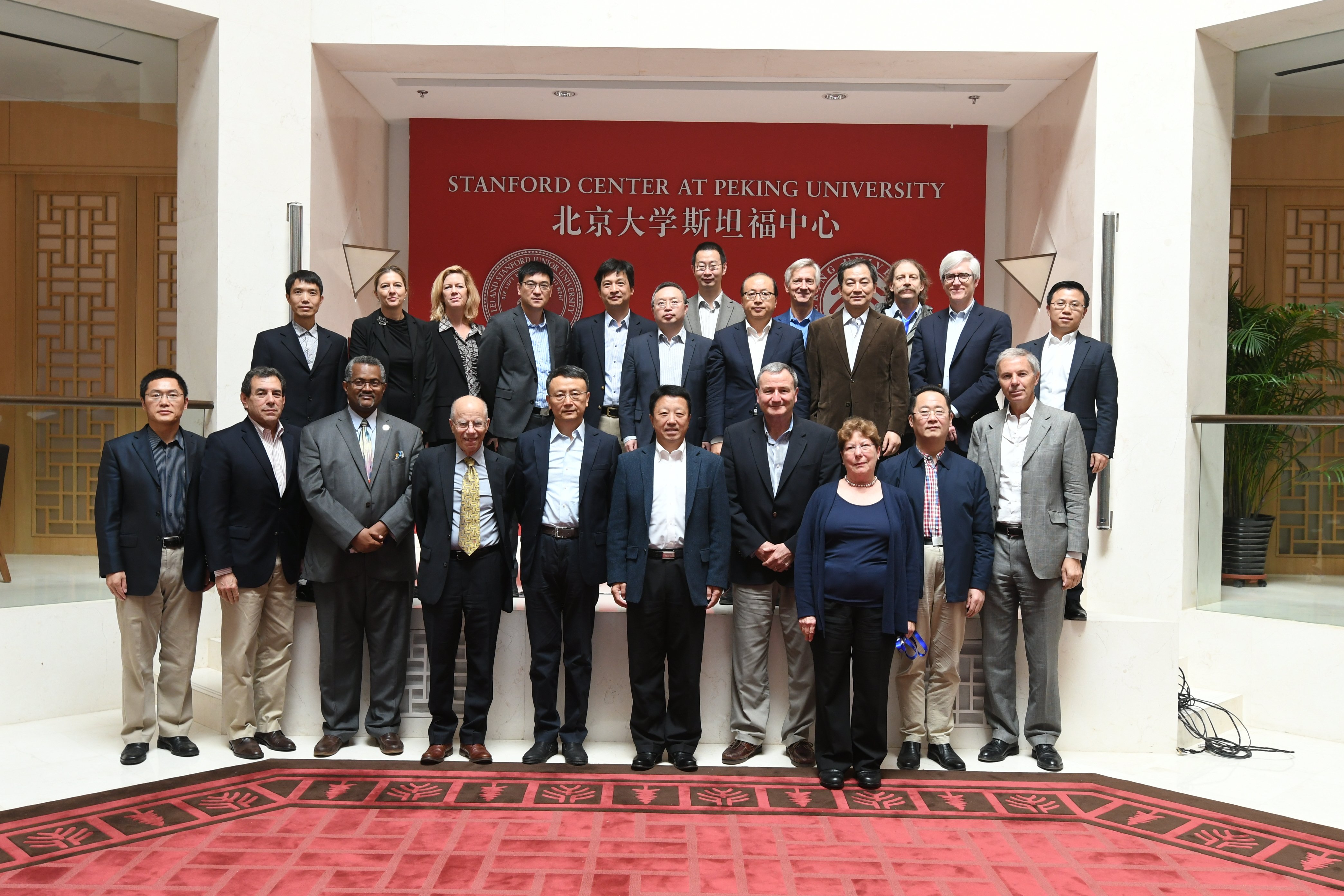
Group photo of Participants in the “Civil Wars, Intrastate Violence, and International Responses” workshop

Participants in the “Civil Wars, Intrastate Violence, and International Responses” workshop

Hero Image
Karl Eikeberry at Civil Wars, Intrastate Violence, and International Response Workshop
All News button
1
0
jeffrey_knopf.jpg

Jeff Knopf is a professor at the Middlebury Institute of International Studies (MIIS) in Monterey, California, where he serves as chair of the M.A. program in Nonproliferation and Terrorism Studies and a senior research associate with the Center for Nonproliferation Studies (CNS). While on sabbatical for the 2018-19 academic year he spent the year as a visiting scholar at CISAC. Dr. Knopf received his Ph.D. in Political Science from Stanford and was previously a pre-doctoral fellow at CISAC. His most recently completed project is a book volume he co-edited on Behavioral Economics and Nuclear Weapons. Dr. Knopf current research primarily involves a project titled “Coercing Syria on Chemical Weapons.” This project examines efforts by the United States and other countries to apply deterrent and compellent strategies in attempts to stop the Syrian government from using chemical weapons and to force it to dismantle its chemical arsenal.

Affiliate at the Center for International Security and Cooperation
CV
Date Label
0
chantell_murphy.jpg PhD

Chantell Murphy is a Program Manager and Technical Specialist at the Y-12 National Security Complex, where she works at the intersection of nuclear technology and nonproliferation. Her work examines the responsible integration of artificial intelligence into sensitive fields such as nuclear safeguards, with an emphasis on ethics, transparency, and governance. She has contributed to international discussions at the International Atomic Energy Agency (IAEA), influencing long-term objectives for the ethical adoption of AI in safeguards. In addition, Chantell founded Atomsphere, a community engagement lab designed to foster public dialogue on the societal impacts of emerging technologies.

Affiliate
Date Label
0
hyun-binn_cho_2.jpg Ph.D.

Hyun-Binn Cho is an Associate Professor in the Department of Political Science at The College of New Jersey. His research interests are in international security, nuclear security, and security in East Asia, with a regional focus on China and the Korean peninsula.

Cho’s research is published in Security Studies, Journal of Conflict Resolution, British Journal of Politics and International Relations, International Relations of the Asia-Pacific, and Washington Quarterly. He has also been a fellow at Harvard University's Belfer Center for Science and International Affairs, Stanford University's Center for International Security and Cooperation, and George Washington University's Institute for Security and Conflict Studies. He received his Ph.D. in Political Science from the University of Pennsylvania.

Affiliate
CV
Date Label
Subscribe to Asia-Pacific