Governance

FSI's research on the origins, character and consequences of government institutions spans continents and academic disciplines. The institute’s senior fellows and their colleagues across Stanford examine the principles of public administration and implementation. Their work focuses on how maternal health care is delivered in rural China, how public action can create wealth and eliminate poverty, and why U.S. immigration reform keeps stalling. 

FSI’s work includes comparative studies of how institutions help resolve policy and societal issues. Scholars aim to clearly define and make sense of the rule of law, examining how it is invoked and applied around the world. 

FSI researchers also investigate government services – trying to understand and measure how they work, whom they serve and how good they are. They assess energy services aimed at helping the poorest people around the world and explore public opinion on torture policies. The Children in Crisis project addresses how child health interventions interact with political reform. Specific research on governance, organizations and security capitalizes on FSI's longstanding interests and looks at how governance and organizational issues affect a nation’s ability to address security and international cooperation.

The CISAC Research Seminar Series features speakers that present on topics related to international security and their policy implications. The purpose is to encourage interchange between the scientific and non-scientific communities at CISAC and within Stanford, to further CISAC’s goals of educating students and the public, conducting good scholarly research and influencing policy.

Authors
News Type
News
Date
Paragraphs


The two-day forum, part of a project of the American Academy of Arts and Sciences, led by the Freeman Spogli Institute’s Karl Eikenberry and Stephen Krasner, gathered experts to examine trends in civil wars and solutions moving forward.   


Image
Attendees at a two-day forum, part of a project of the American Academy of Arts and Sciences

The Council on Foreign Relations presently tracks six countries in a state of civil war, including three (South Sudan, Afghanistan, and Yemen) where the situation is currently worsening. Furthermore, three states (Central African Republic, Myanmar, and Nigeria) are experiencing sectarian violence with the potential to become larger conflicts. With two months still remaining in 2018, the combined fatalities in Afghanistan, Syria, and Yemen alone is fast approaching 100,000 for the year.

It was against this backdrop that Shorenstein APARC’s U.S.-Asia Security Initiative (USASI), the American Academy of Arts and Sciences (AAAS), and the School for International Studies at Peking University recently co-hosted the security workshop “Civil Wars, Intrastate Violence, and International Responses.” Held in Beijing, on October 22-23, the workshop brought together thirty-five U.S. and international experts to gain a wider perspective on intrastate violence and consider the possibilities for, and limits of, intervention. The workshop is the latest activity of the AAAS project on Civil Wars, Violence, and International Responses, chaired by Ambassador Karl Eikenberry, director of USASI, and by Stephen Krasner, senior fellow at the Freeman Spogli Institute for International Studies (FSI) and professor of international relations.

“Some of the major discussion topics included the appropriate political and economic development models to apply to fragile states recovering from internal conflict, justifications for intervention, and the likely impact of great power competition on the future treatment of civil wars." - Karl Eikenberry

Workshop participants included academics and professionals with expertise in political science, global health, diplomacy, refugee field work, United Nations, and the military. Countries represented at the table included the United States, Ethiopia, France, and China. Throughout the two-day session, they examined three crucial questions: What is the scope of intrastate conflicts and civil wars, and to what extent is it attributable to domestic or international factors? What types of threats to global security emanate from state civil wars? What policy options are available to regional powers and the international community to deal with such threats?


Image
USASI Director Karl Eikenberry addresses one of the sessions

USASI Director Karl Eikenberry addresses one of the sessions

China’s Emerging Role in Addressing Intrastate Violence

The workshop’s timing and location was prescient. Over the past two decades, China’s global exposure–through trade, investment, and financing–has increased dramatically. Coupled with a growing number of its citizens living abroad, China’s equity in other states has reached the point where it has a direct interest in those experiencing or are at risk of political instability and internal violence. Indeed, through its ambitious Belt and Road Initiative, China has the opportunity to help stabilize fragile states by stimulating economic development.

“The workshop revealed, at least for me, that China is backing away from its absolute defense of sovereignty and non-intervention,” said Stephen Krasner. “As Chinese interests have expanded around the world, and as both its investments and the number of its citizens living abroad have increased, the Chinese have become more concerned with political conditions in weakly governed countries.”

With China’s growing policy and academic interests in addressing civil wars and intrastate violence, as well as its higher international profile in places like United Nations peacekeeping operations, the Beijing event provided an excellent opportunity for Chinese experts to exchange views with their international colleagues.

Paul H. Wise, MD, MPH; Senior Fellow at Stanford Health Policy

Paul H. Wise, MD, MPH; Senior Fellow at Stanford Health Policy

Where We are Today, Where We Go Tomorrow

The Beijing workshop was arranged into four sessions, with themes focusing on trends in intrastate violence, the threats it poses to international security, the limits of intervention, and advice to policymakers.

Each panel included presentations of prepared papers, moderator comments, and an open discussion by all participants. A fifth and final session provided an opportunity to summarize the preceding discussions. The workshop then closed out with an open conversation, where participants offered insight and policy recommendations developed over the preceding two days of dialogue.

Image
Martha Crenshaw seated at round table
“The workshop,” observed Martha Crenshaw (shown above), a Senior Fellow at FSI, “was a unique opportunity to exchange views with Chinese colleagues on the subject of civil conflict in the contemporary world. A valuable learning experience for all of us."

The "Civil Wars, Intrastate Violence, and International Responses” workshop marks the second phase of the AAAS project by the same name that launched in 2015. The first phase of the project culminated in the publication of 28 essays across two volumes of the AAAS quarterly journal Dædalus. The ongoing second phase consists of a series of roundtables and workshops in which project participants engage with academics and with government and international organization officials to build a larger conceptual understanding of the threats posed by the collapse of state authority associated with civil wars, and to contribute to current policymaking. Project activities have included meetings with the United Nations leadership and staff; academic activities in the United States; sessions with the U.S. executive and legislative branches; and a visit to Nigeria.

Throughout the workshop, Chatham House Rule of non-attribution applied to all dialogue. A workshop report will be published by the co-hosts in early 2019.

The U.S.-Asia Security Initiative is part of Stanford University’s Walter H. Shorenstein Asia-Pacific Research Center (APARC). Led by former U.S. Ambassador and Lieutenant General (Retired) Karl Eikenberry, USASI seeks to further research, education, and policy relevant dialogues at Stanford University on contemporary Asia-Pacific security issues.

March 1, 2019 update: the workshop report is now available online. Download the report >> 
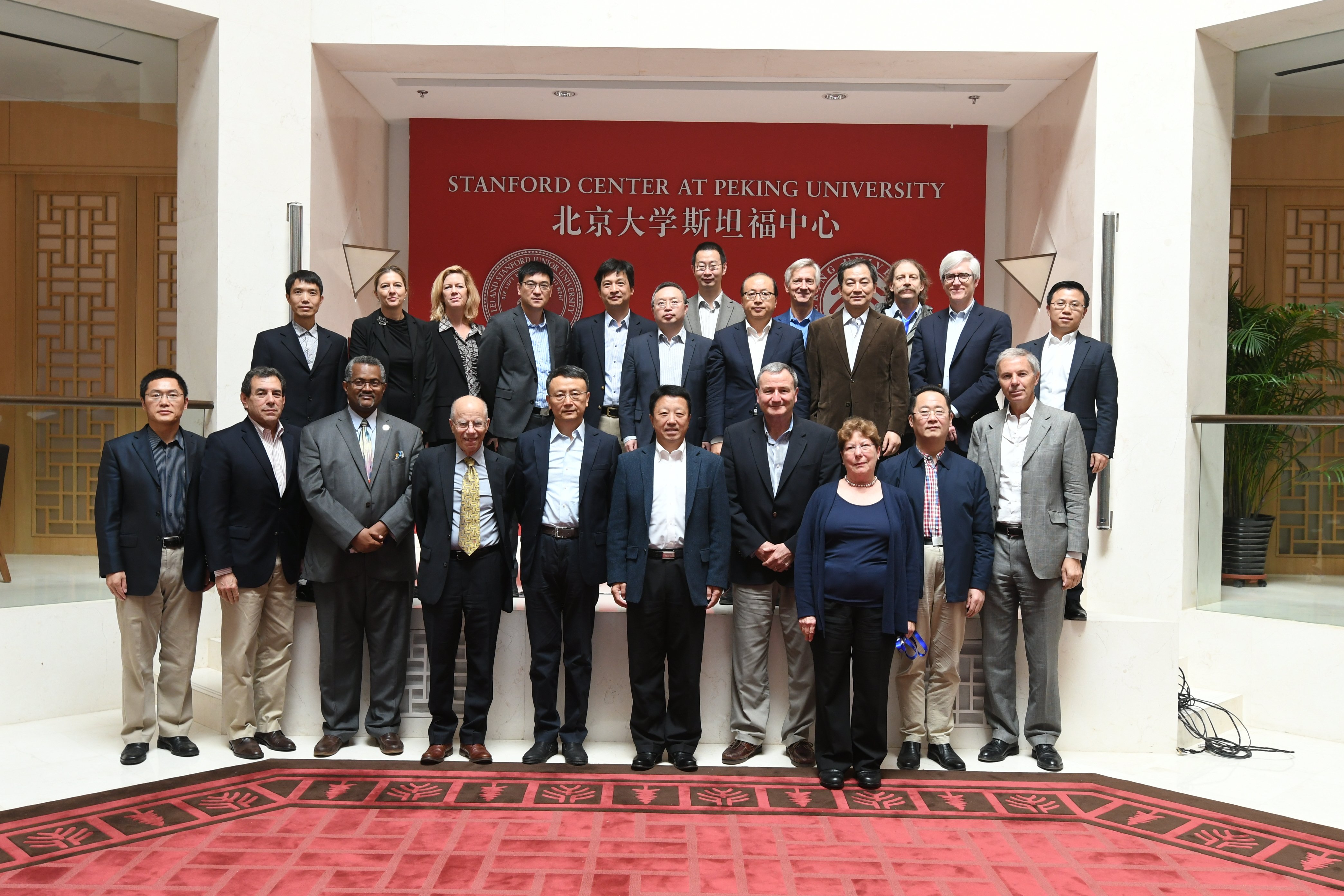
Group photo of Participants in the “Civil Wars, Intrastate Violence, and International Responses” workshop

Participants in the “Civil Wars, Intrastate Violence, and International Responses” workshop

Hero Image
Karl Eikeberry at Civil Wars, Intrastate Violence, and International Response Workshop
All News button
1
Paragraphs

Abstract: There is a growing interest in the use of offensive cyber capabilities (OCC) among states. Despite the growing interest in these capabilities, little is still known about the nature of OCC as a tool of the state. This research therefore aims to understand if (and how) offensive cyber capabilities have the potential to change the role of military power. Drawing on a wide range of cases, we argue that these capabilities can alter the manner in which states use their military power strategically in at least four ways. OCC are not particularly effective in deterring adversary military action, except when threatened to be used by states with a credible reputation. However, they do have value in compellence. Unlike conventional capabilities, the effects of offensive cyber operations do not necessarily have to be exposed publicly, which means the compelled party can back down post-action without losing face thus deescalating conflict. The potential to control the reversibility of effect of an OCC by the attacker may also encourage compliance. OCC also contribute to the use of force for defensive purposes, as it could provide both a preemptive as well as preventive strike option. Finally, its symbolic value as a ‘prestige weapon’ to enhance ‘swaggering’ remains unclear, due to its largely non-material ontology and transitory nature.

All Publications button
1
Publication Type
Annual Reports
Publication Date
Journal Publisher
NATO CCD COE Publications: Tallinn
Authors
Max Smeets
Paragraphs

Abstract: The paper deals with the challenges of energy access, efficiency and security as essential conditions to improve people's living in the Southern African region. It supports energy policies by providing material for an integrated assessment of alternative energy systems at national level. Taking the example of Namibia, the paper applies the Multi-Scale Integrated Analysis of Societal and Ecosystem Metabolism (MuSIASEM) approach to assess the energy systems and scenarios. Using historical data from 2000 through 2013, the authors initially characterize energy supply and demand conditions of Namibia. Subsequently they conducted simulation analyses to find out a desirable energy policy to promote energy access in Namibia through 2030 under various environmental and societal constraints. The simulation results reveal that sustainable energy access in remote areas can be better achieved by small-scale distributed renewable energy systems rather than by large-scale energy technologies. Moreover, the study shows that energy policies should adopt a broader perspective to face the challenges of sustainable energy access in countries of the Southern African region by designing alternative development pathways rather than focusing on implementing new energy technologies.

All Publications button
1
Publication Type
Journal Articles
Publication Date
Journal Publisher
Energy Policy
Authors
François Diaz-Maurin
Authors
News Type
News
Date
Paragraphs

Like a lot of people, Colin Kahl long thought of Washington, D.C. as the place to be when it comes to matters of international security. Today, Kahl, who served as national security adviser to former Vice President Joseph Biden, has a different opinion.

"A lot of the most cutting-edge policy questions and international security challenges of this century are, in a strange way, west coast issues," said Kahl, who took over as co-director of social sciences for Stanford's Center for International Security and Cooperation (CISAC) in early September. He points to the role of technology in reshaping the global balance of power, the increasing importance of the Asia-Pacific region to the U.S. economy and security, and the country's changing demographics.

Kahl is one of three new directors at research centers run by The Freeman Spogli Institute for International Studies (FSI). Also in September, Anna Grzymala-Busse took over as director of The Europe Center (TEC) and David Lobell became the Gloria and Richard Kushel Director of the Center on Food Security and the Environment (FSE).

In separate interviews, the incoming directors outlined goals that differed in substance, but had similar objectives: to focus on issues that have historically been important to their centers while advancing work on new and emerging challenges. All three also talked about further leveraging Stanford's interdisciplinary approach to education and research.

"The centers within FSI all address research and policy challenges that are constantly changing," said Lobell, a professor of earth system science who joined FSE in 2008, three years after it was formed. "As part of FSI, we have unique opportunities to better understand the interplay of our specific area within the broader context of international security."

Michael McFaul, FSI's director, said the new leaders take over at an exciting time for their respective centers — and for FSI.

"Coming into a new academic year, I am excited about the tremendous momentum within FSI and its six research centers," said McFaul, who is also the Ken Olivier and Angela Nomellini Professor of International Studies. "Our ability to generate interdisciplinary, policy-oriented research, to teach and train tomorrow's leaders, and to engage policymakers has never been stronger."

Big Data & Food

As FSE's director and a researcher himself, Lobell says he's excited about the potential for technology to solve longstanding questions surrounding food security and world hunger. Satellite imagery of small-scale farming around the globe, for instance, is rapidly advancing efforts to improve crop productivity. "Historically it's been really hard to get good data," said Lobell, whose recent projects include using machine learning to identify poverty zones in rural Africa and map yields of smallholder farms in Kenya. 

"The measurement possibilities from new and different data technologies are going to be really important going forward," said Lobell, who is also looking to add expertise in water management and micronutrients, either by funding new graduate fellowships or hiring new faculty.

Europe and Beyond

For her part, Grzymala-Busse's primary goals at The Europe Center are to develop its international intellectual networks and strengthen its long-term institutional footing. "I am excited to build on our existing strengths and bring together even more historians, anthropologists, economists, and sociologists," said Grzymala-Busse, who joined Stanford faculty in 2016 and teaches political science and international studies. "Europe is ground zero for a lot of what's happening in the world, whether the rise of populism or the economic crises, and you can’t understand these developments without understanding the history, cultures, and economics of the region."

A Third Nuclear Revolution

For CISAC, international security is no longer just about nuclear security, says Kahl, who is one of two co-directors at the center; Rodney Ewing serves as the center's co-director of science and engineering, while Kahl oversees the social sciences.

Kahl says that nuclear weapons will remain a key focus for the center as North Korea, Iran, Russia, and China move to build or modernize arsenals. But, the center will also look at emerging technologies that are becoming serious threats. He cites as examples the rapid rise of cyberattacks, pandemics and biological weapons, and artificial intelligence and machine learning.

"My plan is to ensure that Stanford continues to play a profound leadership role in the most critical security issues facing the world today," said Kahl, who came to Stanford last year as the inaugural Steven C. Házy Senior Fellow, an endowed faculty chair at FSI.

Said McFaul, "We welcome three remarkable individuals with the skills and vision to guide their respective centers into the future."

All News button
1
0
rsd25_073_0249a.jpg

Steven Pifer is an affiliate of the Center for International Security and Cooperation as well as a non-resident senior fellow with the Brookings Institution.  He was a William J. Perry Fellow at the center from 2018-2022 and a fellow at the Robert Bosch Academy in Berlin from January-May 2021.

Pifer’s research focuses on nuclear arms control, Ukraine, Russia and European security. He has offered commentary on these issues on National Public Radio, PBS NewsHour, CNN and BBC, and his articles have been published in a wide variety of outlets.  He is the author of The Eagle and the Trident: U.S.-Ukraine Relations in Turbulent Times (Brookings Institution Press, 2017), and co-author of The Opportunity: Next Steps in Reducing Nuclear Arms (Brookings Institution Press, 2012).

A retired Foreign Service officer, Pifer’s more than 25 years with the State Department focused on U.S. relations with the former Soviet Union and Europe, as well as arms control and security issues.  He served as deputy assistant secretary of state in the Bureau of European and Eurasian Affairs with responsibilities for Russia and Ukraine, ambassador to Ukraine, and special assistant to the president and senior director for Russia, Ukraine and Eurasia on the National Security Council.  In addition to Ukraine, he served at the U.S. embassies in Warsaw, Moscow and London as well as with the U.S. delegation to the negotiation on intermediate-range nuclear forces in Geneva.  From 2000 to 2001, he was a visiting scholar at Stanford’s Institute for International Studies, and he was a resident scholar at the Brookings Institution from 2008 to 2017.

Pifer is a 1976 graduate of Stanford University with a bachelor’s in economics.


Affiliate, CISAC
Affiliate, The Europe Center
Date Label
-

Abstract: On March 11, 2011, an enormous earthquake triggered a 50-foot tsunami, inundating the six-unit Fukushima Daiichi nuclear plant in northeastern Japan. The flood caused damage to the plant’s electrical systems far beyond what the plant’s owner or government regulators had ever anticipated. Ultimately, three reactors suffered core melt accidents and released substantial quantities of radioactive materials into the environment. After the accident, Japan and many other countries sought to identify the root causes of Fukushima and take steps to reduce the risk of future accidents. In the U.S., a Nuclear Regulatory Commission (NRC) task force identified multiple deficiencies in its regulations and made twelve recommendations to strengthen safety requirements. However, due in part to nuclear industry lobbying, the NRC rejected most of the task force recommendations and adopted only weakened versions of the remaining ones. Today, as Fukushima becomes a distant memory, the NRC is implementing a “transformation” initiative that could actually weaken critical safety requirements. This talk will discuss the lessons of the accident for nuclear safety, and the extent to which the NRC’s post-Fukushima actions adequately address them.


Speaker Bio: Edwin Lyman is the Acting Director of the Nuclear Safety Project and Senior Scientist of the Global Security Program. His research focuses on nuclear proliferation, nuclear terrorism, and nuclear power safety and security. Dr. Lyman is a co-author of  Fukushima: The Story of a Nuclear Disaster (New Press, 2014). In 2018, Dr. Lyman was awarded the Leo Szilard Lectureship Award from the American Physical Society.

Before joining UCS, Dr. Lyman was president of the Nuclear Control Institute. From 1992 to 1995, he was a postdoctoral research associate at Princeton University’s Center for Energy and Environmental Studies. He earned a PhD in physics from Cornell University in 1992.

Edwin Lyman Acting Director of the Nuclear Safety Project and Senior Scientist Global Security Program
Seminars
-

Click here to RSVP

Abstract: In 1992, the United States stood at the pinnacle of world power and Americans were confident that a new era of peace and prosperity was at hand. Twenty-five years later, those hopes have been dashed. Relations with Russia and China have soured, the European Union is wobbling, democracy is in retreat, and the United States is stuck in costly and pointless wars.

The root of this dismal record is the foreign policy elite’s stubborn commitment to a strategy of “liberal hegemony.” Since the end of the Cold War, Republicans and Democrats alike have tried to use U.S. power to spread democracy, and other liberal values around the world. This strategy was doomed to fail, but its proponents elite were never held accountable and kept repeating the same mistakes. 

Donald Trump won the presidency promising to end these misguided policies, but his erratic style of governing and flawed grasp of world politics have made a bad situation worse. The best alternative is a return to a strategy of “offshore balancing,” eschewing regime change, nation-building, and other forms of global social engineering.  This long-overdue shift will require creating a foreign policy elite with a more realistic view of American power. 


Speaker Bio: Stephen M. Walt is Robert and Renée Belfer Professor of International Affairs at the Harvard Kennedy School. He is a contributing editor at Foreign Policy, co-editor of the Cornell Studies in Security Affairs, and was elected a Fellow of the American Academy of Arts and Sciences in May 200.  He received the ISA’s Distinguished Senior Scholar award in 2014.  His writings include The Origins of Alliances (1987) Revolution and War (1996), Taming American Power: The Global Response to U.S. Primacy, and The Israel Lobby and U.S. Foreign Policy (co-authored with John J. Mearsheimer, 2007).  His latest book is The Hell of Good Intentions: America’s Foreign Policy Elite and the Decline of U.S. Primacy (2018).

Stephen Walt Robert and Renee Belfer Professor of International Affairs Harvard Kennedy School
Seminars
-

Abstract: Australia is dealing with nuclear waste disposal issues on two separate fronts.  In 2015, South Australia began to consider expanding their role in the nuclear fuel cycle as a way to leverage their nuclear expertise, based on their extensive uranium mining.  A Royal Commission proposed consideration of the development of a deep geologic repository for high-level radioactive waste from international sources (since Australia has none).  In 2016 Premier Jay Weatherill decided against an international repository after a community-based consultation process also opposed it.  At the same time, the Commonwealth of Australia has revived its search for a low-level radioactive waste disposal site and a storage facility for intermediate-level waste. Again, South Australia is in play, with three sites volunteering their land for further consideration.  As a result, a siting process is ongoing in Kimba and Barndioota, South Australia, with sides both strongly for and adamantly against development of a low-level waste facility in their community.  Both nuclear waste situations have informed and affected the other, but it’s not clear that South Australia is ready to host nuclear waste any time soon in the near future.


Speaker Bio: Allison M. Macfarlane is Professor of Science and Technology Policy at George Washington University and Director of the Center for International Science and Technology Policy at the University’s Elliott School of International Affairs. She recently served as Chairman of the U.S. Nuclear Regulatory Commission from July, 2012 until December, 2014. As Chairman, Dr. Macfarlane had ultimate responsibility for the safety of all U.S. commercial nuclear reactors, for the regulation of medical radiation and nuclear waste in the U.S., and for representing the U.S. in negotiations with international nuclear regulators. She was nominated by President Obama and confirmed by the Senate. She was the agency’s 15th Chairman, its 3rd woman chair, and the only person with a background in geology to serve on the Commission.

Dr. Macfarlane holds a doctorate in geology from the Massachusetts Institute of Technology and a bachelor's of science degree in geology from the University of Rochester. During her academic career, she held fellowships at Radcliffe College, MIT, Stanford, and Harvard Universities. She has been on the faculty at Georgia Tech in Earth Science and International Affairs and at George Mason University in Environmental Science and Policy.

From 2010 to 2012 she served on the Blue Ribbon Commission on America's Nuclear Future, created by the Obama Administration to make recommendations about a national strategy for dealing with the nation's high-level nuclear waste. She has served on National Academy of Sciences panels on nuclear energy and nuclear weapons issues. Dr. Macfarlane has also chaired the Science and Security Board of the Bulletin of Atomic Scientists, the folks who set the “doomsday clock.”

Her research has focused on environmental policy and international security issues associated with nuclear energy. Her expertise is in nuclear waste disposal, nuclear energy, regulatory issues, and science and technology policy. As Chairman of the Nuclear Regulatory Commission, she pushed for a more open dialogue with the public, for greater engagement with international nuclear regulators and, following the Fukushima accident, for stricter safety protocols at U.S. nuclear reactors. She also advocated for a more family-friendly workplace.  She has spoken on a wide range of topics, from women and science to nuclear policy and regulatory politics.

In 2006, MIT Press published a book she co-edited, Uncertainty Underground: Yucca Mountain and the Nation's High-Level Nuclear Waste, which explored technical issues at the proposed waste disposal facility at Yucca Mountain, Nevada. Dr. Macfarlane has published extensively in academia and her work has appeared in Science, Nature, American Scientist, The Bulletin of Atomic Scientists, and Environment Magazine.


Allison Macfarlane Director, Center for International Science and Technology Policy Elliot School of International Affairs, George Washington University
Seminars
-

Abstract: Why are some rebel groups able to seamlessly transition into political parties on the heels of war while others revert to violence or die trying? Drawing on insights from organizational sociology, I argue that the answer lies in the previously unacknowledged diversity of rebel organizational structures during war. I identify three wartime domains that I call "proto-party" structures: shadow governance, political messaging, and social service wings. I demonstrate that these structures---by mirroring the key components of political party organizations---provide insurgencies with two decisive advantages when attempting to transition into a party: (1) relevant experience that translates into the political arena, and (2) an easier path to transition by repurposing existing structures rather than building a party from scratch. I test this theory using a combination of statistical analysis on a novel dataset and process tracing the FMLN's transformation in El Salvador. 

Speaker Bio: Sherry Zaks is currently a postdoctoral fellow at the Center for International Security and Cooperation. She received her Ph.D. from the University of California, Berkeley in 2017. Next year, she’ll be joining the faculty of the University of Southern California as an Assistant Professor of Comparative Politics. Sherry’s book project and current substantive work examine the conditions under which rebel groups transition into political parties in the aftermath of civil war. Drawing on theoretical tools from organizational sociology, she models rebel-to-party transformation as a process of organizational resilience and adaptation. The dissertation on which the book project is based was recently awarded the prize for best dissertation in peace science by the United States Institute of Peace. Sherry also works on political methodology with a focus on refining tools for qualitative inference and developing rigorous standards for dataset construction and evaluation. Her work has appeared in Comparative Politics and Political Analysis.

Sherry Zaks Carnegie Post-doctoral Fellow CISAC, Stanford University
Seminars
Subscribe to Governance