
Steven Pifer
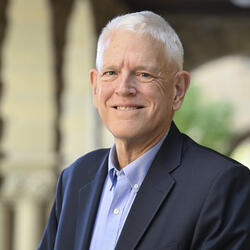
Biography
Steven Pifer is an affiliate of the Center for International Security and Cooperation as well as a non-resident senior fellow with the Brookings Institution. He was a William J. Perry Fellow at the center from 2018-2022 and a fellow at the Robert Bosch Academy in Berlin from January-May 2021.
Pifer’s research focuses on nuclear arms control, Ukraine, Russia and European security. He has offered commentary on these issues on National Public Radio, PBS NewsHour, CNN and BBC, and his articles have been published in a wide variety of outlets. He is the author of The Eagle and the Trident: U.S.-Ukraine Relations in Turbulent Times (Brookings Institution Press, 2017), and co-author of The Opportunity: Next Steps in Reducing Nuclear Arms (Brookings Institution Press, 2012).
A retired Foreign Service officer, Pifer’s more than 25 years with the State Department focused on U.S. relations with the former Soviet Union and Europe, as well as arms control and security issues. He served as deputy assistant secretary of state in the Bureau of European and Eurasian Affairs with responsibilities for Russia and Ukraine, ambassador to Ukraine, and special assistant to the president and senior director for Russia, Ukraine and Eurasia on the National Security Council. In addition to Ukraine, he served at the U.S. embassies in Warsaw, Moscow and London as well as with the U.S. delegation to the negotiation on intermediate-range nuclear forces in Geneva. From 2000 to 2001, he was a visiting scholar at Stanford’s Institute for International Studies, and he was a resident scholar at the Brookings Institution from 2008 to 2017.
Pifer is a 1976 graduate of Stanford University with a bachelor’s in economics.


