Governance

FSI's research on the origins, character and consequences of government institutions spans continents and academic disciplines. The institute’s senior fellows and their colleagues across Stanford examine the principles of public administration and implementation. Their work focuses on how maternal health care is delivered in rural China, how public action can create wealth and eliminate poverty, and why U.S. immigration reform keeps stalling. 

FSI’s work includes comparative studies of how institutions help resolve policy and societal issues. Scholars aim to clearly define and make sense of the rule of law, examining how it is invoked and applied around the world. 

FSI researchers also investigate government services – trying to understand and measure how they work, whom they serve and how good they are. They assess energy services aimed at helping the poorest people around the world and explore public opinion on torture policies. The Children in Crisis project addresses how child health interventions interact with political reform. Specific research on governance, organizations and security capitalizes on FSI's longstanding interests and looks at how governance and organizational issues affect a nation’s ability to address security and international cooperation.

Authors
Steven Pifer
News Type
News
Date
Paragraphs

Over the past two weeks, a CIA whistleblower’s complaint, a White House record of a July 25 telephone conversation between President Donald Trump and Ukrainian President Volodymyr Zelensky, and texts exchanged by American diplomats have dominated the news and raised questions about the president’s handling of policy toward Ukraine. Here are five observations: SECOND PARAGRAPH First, President Trump was not doing the nation’s business on July 25. Trump has described the call as “perfect,” but the memorandum of conversation shows that he did not seek to advance U.S. interests. He did not ask Zelensky about progress in ending Russia’s war against Ukraine. He did not propose steps to facilitate more American trade. He did not raise how U.S. liquified natural gas might strengthen Ukraine’s energy security (something of interest to Secretary of Energy Rick Perry, whom Trump now says instigated a call that he did not want to make).


Read the Rest at FSI's Medium.com

Hero Image
1 ko0np fki10kqdrpodcpug
All News button
1
Authors
Steven Pifer
News Type
News
Date
Paragraphs

CISAC’s Steven Pifer, former U.S. Ambassador to the Ukraine, looks at the dueling US foreign policies toward Ukraine – one aimed at U.S. national interests, the other at President Donald Trump’s reelection – and the risk that poses for Ukraine. “Ukrainian President Volodymyr Zelenskiy and Kyiv should take care, lest their country become a political football in America’s domestic politics,” writes Pifer in a piece for Brookings. Read the rest at Brookings.edu.


Read More


Hero Image
steven pifer
All News button
1
-

CISAC will be canceling all public events and seminars until at least April 5th due to the ongoing developments associated with COVID-19.

------------------------------------------------------------------------------------------------------------------------------------------------------


About this Event: Somatic (i.e. non-heritable) genome editing is already in clinical trials for the treatment of diseases ranging from certain cancers to sickle cell anemia.  But public fascination has largely focused on germline editing, especially with the startling late 2018 announcement that human embryos had been edited and then used for a pregnancy resulting in two live-born girls.  This talk will highlight key scientific and political responses since that announcement, and offer insights into ongoing debates and ongoing work by international commissions looking at whether there are any conditions under which such experiments could be done responsibly in the future.


About the Speaker:

R. Alta Charo, J.D., is a 2019-2020 Berggruen Fellow at the Stanford Center for Advanced Study in the Behavioral Sciences and the Warren P. Knowles Professor of Law and Bioethics at the University of Wisconsin.  She was co-chair of the National Academies’ 2017 report on human genome editing, and a member of the organizing committee for the 2019 international summit on genome editing in Hong Kong.  At present, she serves on the  World Health Organization committee developing global governance standards for genome editing, and on the steering committee of the International Society for Stem Cell Research effort to revise and expand ethical guidelines for research and development of both heritable and non-heritable human genome editing.


Alta Charo Professor of Law University of Wisconsin, and Stanford Center for Advanced Study in the Behavioral Sciences
Seminars
-

Click here to RSVP


Livestream: This event will not be live-streamed or recorded.


Abstract: The West’s sanctions regime on Russia is unprecedented. Russia is the largest economy ever to be subject to major sanctions. And for the first time, the West is now the major constraint on Russia’s participation in the global economy. This experience is driving adaptation and innovation in both Russian public policy and Western sanctions practice.

What do Russian sanctions reveal about both Russia and sanctions? What count as good and bad tests of sanctions’ efficacy? What implications do sanctions hold for Russia’s domestic evolution and its relationship with the West?


Speaker's Biography:

Image
headshot colour 04 19
Nigel Gould-Davies is an Associate Fellow at the Royal Institute of International Affairs (Chatham House). He teaches at Mahidol University International College in Thailand.

Nigel taught at Oxford University before joining the British Foreign Office, where his roles included Ambassador to Belarus. From 2010-14 he was Vice President, Policy and Corporate Affairs for BG Group in Asia.

He is the author of Tectonic Politics: Global Political Risk in an Age of Transformation (Brookings Institution, 2019). He received his B.A. and M.Phil. from Oxford and his Ph.D. from Harvard.


Nigel Gould-Davies Associate Fellow at the Royal Institute of International Affairs Chatham House
Seminars
-

Abstract: In 2013, the Obama Administration’s “Nuclear Employment Strategy” guidance announced that all war plans and operations would be “consistent with the fundamental principles of the Law of Armed Conflict” (LOAC). The Trump Administration’s 2018 Nuclear Posture Review repeated this commitment. The literature on nuclear strategy and deterrence in political science however, has either ignored these legal requirements or misunderstood them. The legal literature on nuclear weapons, however, has largely ignored the technical revolution regarding improved accuracy and lower-yield nuclear weapons and the different strategic contexts in which the U.S. might contemplate nuclear use. This paper analyzes how proper application of the Law of Armed Conflict should constrain U.S. nuclear doctrine and war planning and how knowledge of strategic considerations is fundamental to proper legal analysis. We argue that the principle of proportionality can permit “counter-force” targeting— most clearly when such attacks can prevent or significantly reduce the expected damage to U.S. and allied populations with lower foreign collateral damage. We also argue that the legal requirement to take “feasible precautions” to protect non-combatants means the U.S. must use conventional weapons or the lowest yield nuclear weapons possible in any counterforce attack. Finally, we contend that the prohibition against deliberate targeting of civilians has gained the status of customary international law and that the U.S. government should therefore reverse its traditional position and reject the doctrine of “belligerent reprisal” against foreign civilians. This prohibition means that it is illegal for the United States, contrary to what is implied in the 2018 NPR and explicitly maintained by prominent U.S. Air Force lawyers, to either intentionally target civilians in reprisal to a strike against U.S. or allied civilians, or launch attacks against legitimate military targets if the intent to is cause incidental civilian harm.


Speaker's Biography:

Image
sagan scott 2012 photo
Scott D. Sagan is the Caroline S.G. Munro Professor of Political Science, the Mimi and Peter Haas University Fellow in Undergraduate Education, and Senior Fellow at the Center for International Security and Cooperation and the Freeman Spogli Institute at Stanford University. He also serves as Chairman of the American Academy of Arts and Sciences’ Committee on International Security Studies. Before joining the Stanford faculty, Sagan was a lecturer in the Department of Government at Harvard University and served as special assistant to the director of the Organization of the Joint Chiefs of Staff in the Pentagon. Sagan has also served as a consultant to the office of the Secretary of Defense and at the Sandia National Laboratory and the Los Alamos National Laboratory. 

Sagan is the author of Moving Targets: Nuclear Strategy and National Security (Princeton University Press, 1989); The Limits of Safety: Organizations, Accidents, and Nuclear Weapons (Princeton University Press, 1993); and, with co-author Kenneth N. Waltz, The Spread of Nuclear Weapons: An Enduring Debate (W.W. Norton, 2012). He is the co-editor of Learning from a Disaster: Improving Nuclear Safety and Security after Fukushima (Stanford University Press, 2016) with Edward D. Blandford and co-editor of Insider Threats (Cornell University Press, 2017) with Matthew Bunn. Sagan was also the guest editor of a two-volume special issue of Daedalus: Ethics, Technology, and War (Fall 2016) and The Changing Rules of War (Winter 2017).

Recent publications include “Armed and Dangerous: When Dictators Get the Bomb” in Foreign Affairs (November/December 2018); “Not Just a War Theory: American Public Opinion on Ethics in Combat” with Benjamin A. Valentino in International Studies Quarterly (Fall 2018); The Korean Missile Crisis” in Foreign Affairs (November/December 2017); “Revisiting Hiroshima in Iran: What Americans Really Think About Using Nuclear Weapons and Killing Noncombatants” with Benjamin A. Valentino in International Security (Summer 2017); and “Atomic Aversion: Experimental Evidence on Taboos, Traditions, and the Non-Use of Nuclear Weapons” with Daryl G. Press and Benjamin A. Valentino in the American Political Science Review (February 2013).

In 2018, Sagan received the Andrew Carnegie Fellowship from the Carnegie Corporation of New York. In 2017, he received the International Studies Association’s Susan Strange Award which recognizes the scholar whose “singular intellect, assertiveness, and insight most challenge conventional wisdom and intellectual and organizational complacency" in the international studies community. Sagan was also the recipient of the National Academy of Sciences William and Katherine Estes Award in 2015, for his work addressing the risks of nuclear weapons and the causes of nuclear proliferation. The award, which is granted triennially, recognizes “research in any field of cognitive or behavioral science that advances understanding of issues relating to the risk of nuclear war.” In 2013, Sagan received the International Studies Association's International Security Studies Section Distinguished Scholar Award. He has also won four teaching awards: Stanford’s 1998-99 Dean’s Award for Distinguished Teaching; Stanford's 1996 Hoagland Prize for Undergraduate Teaching; the International Studies Association’s 2008 Innovative Teaching Award; and the Monterey Institute for International Studies’ Nonproliferation Education Award in 2009.


Image
weiner allen
Allen S. Weiner, JD ’89, is an international legal scholar with expertise in such wide-ranging fields as international and national security law, the law of war, international conflict resolution, and international criminal law (including transitional justice). His scholarship focuses on international law and the response to the contemporary security threats of international terrorism, the proliferation of weapons of mass destruction, and situations of widespread humanitarian atrocities. He also explores assertions by states of “war powers” under international law, domestic law, and just war theory in the context of asymmetric armed conflicts between states and nonstate armed groups and the response to terrorism. In the realm of international conflict resolution, his highly multidisciplinary work analyzes the barriers to resolving violent political conflicts, with a particular focus on the Israeli-Palestinian conflict. Weiner’s scholarship is deeply informed by experience; he practiced international law in the U.S. Department of State for more than a decade advising government policymakers, negotiating international agreements, and representing the United States in litigation before the International Criminal Tribunal for the former Yugoslavia, the International Court of Justice, and the Iran-United States Claims Tribunal.

Senior Lecturer Weiner is director of the Stanford Program in International and Comparative Law and co-director of the Stanford Center on International Conflict and Negotiation. Before joining the Stanford Law School faculty in 2003, Weiner served as legal counselor to the U.S. Embassy in The Hague and attorney adviser in the Office of the Legal Adviser of the U.S. Department of State. He was a law clerk to Judge John Steadman of the District of Columbia Court of Appeals.


Scott Sagan Professor of Political Science Stanford University
Allen Weiner Stanford University
Seminars
Paragraphs

About the Author: Marc Goodman has spent a career in law enforcement and technology. He was appointed futurist-in-residence with the FBI, worked as a senior adviser to Interpol, and served as a street police officer. As the founder of the Future Crimes Institute and the Chair for Policy, Law, and Ethics at Silicon Valley’s Singularity University, he continues to investigate the intriguing and often terrifying intersection of science and security, uncovering nascent threats and combating the darker sides of technology.

Read an Excerpt

CHAPTER 1
 
 
Connected, Dependent and Vulnerable


Technology…is a queer thing; it brings you great gifts with one hand and it stabs you in the back with the other.
-- CHARLES PERCY SNOW


Mat Honan’s life looked pretty good on-screen: in one tab of his browser were pictures of his new baby girl; in another streamed the tweets from his thousands of Twitter followers. As a reporter for Wired magazine in San Francisco, he was living an urbane and connected life and was as up-to-date on technology as anyone. Still, he had no idea his entire digital world could be erased in just a few keystrokes. Then, one August day, it was. His photographs, e-mails, and much more all fell into the hands of a hacker. Stolen in just minutes by a teenager halfway around the world. Honan was an easy target. We all are.
Honan recalls the afternoon when everything fell apart. He was play- ing on the floor with his infant daughter when suddenly his iPhone pow- ered down. Perhaps the battery had died. He was expecting an important call, so he plugged the phone into the outlet and rebooted. Rather than the usual start-up screen and apps, he saw a large white Apple logo and a mul- tilingual welcome screen inviting him to set up his new phone. How odd.
Honan wasn’t especially worried: he backed up his iPhone every night. His next step was perfectly obvious—log in to iCloud and restore the phone and its data. Upon logging in to his Apple account, he was informed that his password, the one he was sure was correct, had been deemed wrong by the iCloud gods. Honan, an astute reporter for the world’s preeminent technology magazine, had yet another trick up his sleeve. He would merely connect the iPhone to his laptop and restore his data from the hard drive on his local computer. What happened next made his heart sink.
As Honan powered up his Mac, he was greeted with a message from Apple’s calendar program advising him his Gmail password was incor- rect. Immediately thereafter, the face of his laptop—its beautiful screen— turned ashen gray and quit, as if it had died. The only thing visible on the screen was a prompt: please enter your four-digit password. Honan knew he had never set a password.
Honan ultimately learned that a hacker had gained access to his iCloud account, then used Apple’s handy “find my phone” feature to locate all of the electronic devices in Honan’s world. One by one, they were nuked. The hacker issued the “remote wipe” command, thereby erasing all of the data Honan had spent a lifetime accumulating. The first to fall was his iPhone, then his iPad. Last, but certainly not least, was his MacBook. In an instant, all of his data, including every baby picture he had taken during his daugh- ter’s first year of life, were destroyed. Gone too were the priceless photo- graphic memories of his relatives who had long since died, vanquished into the ether by parties unknown.
Next to be obliterated was Honan’s Google account. In the blink of an eye, the eight years of carefully curated Gmail messages were lost. Work conversations, notes, reminders, and memories wiped away with a click of a mouse. Finally, the hacker turned his intention to his ultimate target: Honan’s Twitter handle, @Mat. Not only was the account taken over, but the attacker used it to send racist and homophobic rants in Honan’s name to his thousands of followers.
In the aftermath of the online onslaught, Honan used his skills as an investigative reporter to piece together what had happened. He phoned Apple tech support in an effort to reclaim his iCloud account. After more than ninety minutes on the phone, Honan learned that “he” had just called thirty minutes prior to request his password be reset. As it turns out, the only information anybody needed to change Honan’s password was his billing address and the last four digits of his credit card number. Honan’s address was readily available on the Whois Internet domain record he had created when he built his personal Web site. Even if it hadn’t been, dozens of online services such as WhitePages.com and Spokeo would have pro- vided it for free.
To ascertain the last four digits of Honan’s credit card, the hacker guessed that Honan (like most of us) had an account on Amazon.com. He was correct. Armed with Honan’s full name and his e-mail and mailing addresses, the culprit contacted Amazon and successfully manipulated a customer service rep so as to gain access to the required last four credit card digits. Those simple steps and nothing more turned Honan’s life upside down. Although it didn’t happen in this case, the hacker could have just as easily used the very same information to access and pilfer Honan’s online bank and brokerage accounts.
The teenager who eventually came forward to take credit for the attack—Phobia, as he was known in hacking circles—claimed he was out to expose the vast security vulnerabilities of the Internet services we’ve come to rely on every day. Point made. Honan created a new Twitter account to communicate with his attacker. Phobia, using the @Mat account, agreed to follow Honan’s new account, and now the two could direct message each other. Honan asked Phobia the single question that was burning on his mind: Why? Why would you do this to me? As it turns out, the near decade of lost data and memories was merely collateral damage.
Phobia’s reply was chilling: “I honestly didn’t have any heat towards you . . . I just liked your [Twitter] username.” That was it. That’s all it was ever about—a prized three-letter Twitter handle. A hacker thousands of miles away liked it and simply wanted it for himself.
The thought that somebody with no “heat” toward you can obliterate your digital life in a few keystrokes is absurd. When Honan’s story appeared on the cover of Wired in December 2012, it garnered considerable atten- tion . . . for a minute or two. A debate on how to better secure our every- day technologie ensued but, like so many Internet discussions, ultimately flamed out. Precious little has changed since Honan’s trials and tribula- tions. We are still every bit as vulnerable as Honan was then—and even more so as we ratchet up our dependency on hackable mobile and cloud- based applications.
As with most of us, Honan’s various accounts were linked to one another in a self-referential web of purported digital trust: the same credit card number on an Apple profile and an Amazon account; an iCloud e-mail address that points back to Gmail. Each had information in common, including log-on credentials, credit card numbers, and passwords with all the data connected back to the same person. Honan’s security protections amounted to nothing more than a digital Maginot Line—an overlapping house of cards that came tumbling down with the slightest pressure. All or most of the information needed to destroy his digital life, or yours, is readily available online to anybody who is the least bit devious or creative.


Progress and Peril in a Connected World
 
In a few years’ time, with very little self-reflection, we’ve sprinted headlong from merely searching Google to relying on it for directions, calendars, address books, video, entertainment, voice mail, and telephone calls. One billion of us have posted our most intimate details on Facebook and will- ingly provided social networking graphs of our friends, family, and co- workers. We’ve downloaded billions of apps, and we rely on them to help us accomplish everything from banking and cooking to archiving baby pictures. We connect to the Internet via our laptops, mobile phones, iPads, TiVos, cable boxes, PS3s, Blu-rays, Nintendos, HDTVs, Rokus, Xboxes, and Apple TVs.
The positive aspects of this technological evolution are manifest. Over the past hundred years, rapid advances in medical science mean that the average human life span has more than doubled and child mortality has plummeted by a factor of ten. Average per capita income adjusted for infla- tion around the world has tripled. Access to a high-quality education, so elusive to many for so long, is free today via Web sites such as the Khan Academy. And the mobile phone is singularly credited with leading to bil- lions upon billions of dollars in direct economic development in nations around the globe.
The interconnectivity the Internet provides through its fundamental architecture means that disparate peoples from around the world can be brought together as never before. A woman in Chicago can play Words with Friends with a total stranger in the Netherlands. A physician in Bangalore, India, can remotely read and interpret the X-ray results of a patient in Boca Raton, Florida. A farmer in South Africa can use his mobile phone to access the same crop data as a PhD candidate at MIT. This interconnect- edness is one of the Internet’s greatest strengths, and as it grows in size, so too does the global network’s power and utility. There is much to celebrate in our modern technological world.
While the advantages of the online world are well documented and frequently highlighted by those in the tech industry, there is also a down- side to all of this interconnectivity.
Our electrical grids, air traffic control networks, fire department dis- patch systems, and even the elevators at work are all critically dependent on computers. Each day, we plug more and more of our daily lives into the global information grid without pausing to ask what it all means. Mat Honan found out the hard way, as have thousands of others. But what should happen if and when the technological trappings of our modern society—the foundational tools upon which we are utterly dependent—all go away? What is humanity’s backup plan? In fact, none exists.

All Publications button
1
Publication Type
Books
Publication Date
Journal Publisher
Penguin Random House LLC
Authors
-

*Due to space constraints, space is limited. If you have RSVP'd for this event and can no longer attend, please notify Emilie Silva (emilieds@stanford.edu).


Agenda

8:30 a.m. - 9:00 a.m.      Light pastries 


9:00 a.m. - 9:15 a.m.        Introductions


9:15 a.m. - 10:45 a.m.       The Historical Evolution of the Iraqi State

Moderator: David Patel, Brandeis University Crown Center

Panelists: Lisa Blaydes, Stanford University; Michael Brill, Princeton University; Alissa Walter, Seattle Pacific University


10:45 a.m.  - 11:00 a.m.     Break


11:00 a.m. - 12:30 p.m.     Iraqi Politics and the State

Video recording: https://youtu.be/LyXS3nbeJqM

Moderator: Marc Lynch, George Washington University

Panelists: Maria Fantappie, International Crisis Group; Samuel Helfont, Naval Postgraduate School; David Patel, Brandeis University Crown Center


Speaker Biographies

Lisa Blaydes is an Associate Professor of Political Science at Stanford University.  She is the author of Elections and Distributive Politics in Mubarak’s Egypt (Cambridge University Press, 2011).  Professor Blaydes received the 2009 Gabriel Almond Award for best dissertation in the field of comparative politics from the American Political Science Association for this project.  Her articles have appeared in the American Political Science Review, International Studies Quarterly, International Organization, Journal of Theoretical Politics, Middle East Journal, and World Politics. During the 2008-2009 and 2009-2010 academic years, Professor Blaydes was an Academy Scholar at the Harvard Academy for International and Area Studies.  She holds degrees in Political Science (PhD) from the University of California, Los Angeles and International Relations (BA, MA) from Johns Hopkins University.


Michael Brill a doctoral student in the Department of Near Eastern Studies at Princeton University, where he focuses his research on modern Iraq, investigating the Sunni Islamist opposition to the Baʿth regime and the history of Iraq’s Salafi movement. 

He previously obtained his MA in Arab Studies from Georgetown University and BA at Westfield State University. He previously obtained his MA in Arab Studies from Georgetown University and BA in History and Political Science at Westfield State University. He received two summer Critical Language Scholarships (CLS), studying Arabic in Muscat, Oman and Amman, Jordan, followed by a full-year fellowship in the Center for Arabic Study Abroad (CASA) program in Amman, Jordan.


Maria Fantappie is Senior Adviser at the International Crisis Group. Maria first joined Crisis Group in 2012.  In 2018, she was seconded by the Italian Ministry of Foreign Affairs to the EU mission in Iraq where she advised the Office of the National Security Advisor (ONSA) on the implementation of the security sector reform program with special focus on Iraq’s national security legislation.

Before joining Crisis Group, Maria was a Visiting Scholar at the Carnegie Middle East Center in Beirut and associate researcher at the Institut français du Proche-Orient (IFPO). She has taught at American University of Iraq in Suleimani and Sciences Po Paris. Maria completed her PhD at King’s College London, Department of War Studies, and earned an MA and MPhil with distinction from Sciences Po Paris, Department of Middle Eastern Studies.


Samuel Helfont is an Assistant Professor of Strategy and Policy in the Naval War College program at the Naval Postgraduate School in Monterey, California. He is also an Affiliate Scholar in the Abbasi Program in Islamic Studies at Stanford University and a Senior Fellow at the Foreign Policy Research Institute in Philadelphia. His research focuses on international history and politics in the Middle East, especially Iraq and the Iraq Wars. He is the author of Compulsion in Religion: Saddam Hussein, Islam, and the Roots of Insurgencies in Iraq (Oxford University Press, 2018). His work has been published by Foreign AffairsThe International History ReviewThe Middle East JournalOrbisThe New RepublicThe American InterestWar on the Rocks,  and the Moshe Dayan Center at Tel Aviv University among several other outlets.

Helfont holds a PhD and MA in Near Eastern Studies from Princeton University. Prior to moving to Monterey, he completed a three year post-doctoral lectureship at the University of Pennsylvania. He has served as a Visiting Assistant Professor at Haverford College, and was the recipient of US Scholar Research Support Fellowship from the Hoover Library and Archives at Stanford University. He is a veteran of the Iraq War.


Colin H. Kahl is co-director of the Center for International Security and Cooperation, the inaugural Steven C. Házy Senior Fellow at the Freeman Spogli Institute for International Studies, and a Professor, by courtesy, in the Department of Political Science at Stanford University. He is also a Strategic Consultant to the Penn Biden Center for Diplomacy and Global Engagement.

From October 2014 to January 2017, he was Deputy Assistant to the President and National Security Advisor to the Vice President. In that position, he served as a senior advisor to President Obama and Vice President Biden on all matters related to U.S. foreign policy and national security affairs, and represented the Office of the Vice President as a standing member of the National Security Council Deputies’ Committee. From February 2009 to December 2011, Dr. Kahl was the Deputy Assistant Secretary of Defense for the Middle East at the Pentagon. In this capacity, he served as the senior policy advisor to the Secretary of Defense for Egypt, Iran, Iraq, Israel and the Palestinian territories, Saudi Arabia, Syria, Yemen, and six other countries in the Levant and Persian Gulf region. In June 2011, he was awarded the Secretary of Defense Medal for Outstanding Public Service by Secretary Robert Gates.

From 2007 to 2017 (when not serving in the U.S. government), Dr. Kahl was an assistant and associate professor in the Security Studies Program at Georgetown University's Edmund A. Walsh School of Foreign Service. From 2007 to 2009 and 2012 to 2014, he was also a Senior Fellow at the Center for a New American Security (CNAS), a nonpartisan Washington, DC-based think tank. From 2000 to 2007, he was an assistant professor of political science at the University of Minnesota. In 2005-2006, Dr. Kahl took leave from the University of Minnesota to serve as a Council on Foreign Relations International Affairs Fellow in the Office of the Secretary of Defense, where he worked on issues related to counterinsurgency, counterterrorism, and responses to failed states. In 1997-1998, he was a National Security Fellow at the John M. Olin Institute for Strategic Studies at Harvard University.

Current research projects include a book analyzing American grand strategy in the Middle East in the post-9/11 era. A second research project focuses on the implications of emerging technologies on strategic stability.

He has published numerous articles on international security and U.S. foreign and defense policy in Foreign Affairs, Foreign Policy, International Security, the Los Angeles Times, Middle East Policy, the National Interest, the New Republic, the New York Times, Politico, the Washington Post, and the Washington Quarterly, as well as several reports for CNAS.

His previous research analyzed the causes and consequences of violent civil and ethnic conflict in developing countries, focusing particular attention on the demographic and natural resource dimensions of these conflicts. His book on the subject, States, Scarcity, and Civil Strife in the Developing World, was published by Princeton University Press in 2006, and related articles and chapters have appeared in International Security, the Journal of International Affairs, and various edited volumes.

Dr. Kahl received his B.A. in political science from the University of Michigan (1993) and his Ph.D. in political science from Columbia University (2000).


Marc Lynch is a professor of political science and international affairs at the George Washington University and director of the Project on Middle East Political Science. He served as the director of the Institute for Middle East Studies at GW from 2009-2015. Lynch is also a nonresident senior associate at the Carnegie Endowment for International Peace and a contributing editor at The Monkey Cage blog for the Washington Post. He is the co-director of the Blogs and Bullets project at the United States Institute of Peace. In 2016, he was named an Andrew Carnegie Fellow.

He is the author of The New Arab Wars: Anarchy and Uprising in the Middle East, (2016), The Arab Uprising: The Unfinished Revolutions of the New Middle East (2012), Voices of the New Arab Public: Al Jazeera, Iraq, and Middle East Politics Today (2006), and State Interests and Public Spheres: The International Politics of Jordan’s Identity (1999) and edited The Arab Uprisings Explained: The New Contentious Politics of the Middle East, (2014).

Lynch blogged as Abu Aardvark for seven years before joining Foreign Policy as a blogger and columnist. In 2010 Lynch, launched the Middle East Channel on Foreign Policy, which he edited until March 2014. He can now be found online at The Monkey Cage.


Brett McGurk is the Frank E. and Arthur W. Payne Distinguished Lecturer at the Freeman Spogli Institute and Center for Security and Cooperation at Stanford University.

McGurk’s research interests center on national security strategy, diplomacy, and decision-making in wartime.  He is particularly interested in the lessons learned over the presidencies of George W. Bush, Barack Obama, and Donald Trump regarding the importance of process in informing presidential decisions and the alignment of ends and means in national security doctrine and strategy.  At Stanford, he will be working on a book project incorporating these themes and teaching a graduate level seminar on presidential decision-making beginning in the fall of 2019.  He is also a frequent commentator on national security events in leading publications and as an NBC News Senior Foreign Affairs Analyst.

Before coming to Stanford, McGurk served as Special Presidential Envoy for the Global Coalition to Defeat ISIS at the U.S. Department of State, helping to build and then lead the coalition of seventy-five countries and four international organizations in the global campaign against the ISIS terrorist network.  McGurk was also responsible for coordinating all aspects of U.S. policy in the campaign against ISIS in Iraq, Syria, and globally.

McGurk previously served in senior positions in the George W. Bush and Barack Obama administrations, including as Special Assistant to President Bush and Senior Director for Iraq and Afghanistan, and then as Deputy Assistant Secretary of State for Iraq and Iran and Special Presidential Envoy for the U.S. campaign against the Islamic State under Obama.

McGurk has led some of the most sensitive diplomatic missions in the Middle East over the last decade. His most recent assignment established one of the largest coalitions in history to prosecute the counter-ISIS campaign. He was a frequent visitor to the battlefields in both Iraq and Syria to help integrate military and civilian components of the war plan. He also led talks with Russia over the Syria conflict under both the Trump and Obama administrations, initiated back-channel diplomacy to reopen ties between Iraq and Saudi Arabia, and facilitated the formation of the last two Iraqi governments following contested elections in 2014 and 2018.

In 2015 and 2016, McGurk led fourteen months of secret negotiations with Iran to secure the release of Washington Post reporter Jason Rezain, U.S. Marine Amir Hekmati, and Pastor Saad Abadini, as well as three other American citizens.

During his time at the State Department, McGurk received multiple awards, including the Distinguished Honor Award and the Distinguished Service Award, the highest department awards for exceptional service in Washington and overseas assignments.

McGurk is also a nonresident senior fellow in the Middle East Program at the Carnegie Endowment for International Peace.

McGurk received his JD from Columbia University and his BA from the University of Connecticut Honors Program.  He served as a law clerk to Chief Justice William H. Rehnquist on the U.S. Supreme Court, Judge Denis Jacobs on the U.S. Court of Appeals for the 2d Circuit, and Judge Gerard E. Lynch on the U.S. District Court for the Southern District of New York.


David Siddhartha Patel is the Associate Director for Research at the Brandeis University Crown Center for Middle East Studies. Patel’s research focuses on religious authority, social order, and identity in the contemporary Arab world. He conducted independent field research in Iraq on the role of mosques and clerical networks in generating order after state collapse, and his book, Order Out of Chaos: Islam, Information, and Social Order in Iraq, is being prepared for publication by Cornell University Press. Patel has also recently written about the Jordanian Muslim Brotherhood; ISIS in Iraq; and dead states in the Middle East. He teaches courses on Middle Eastern politics, research design, and GIS and spatial aspects of politics. Before joining the Crown Center, Patel was an assistant professor of government at Cornell University. Patel received his BA from Duke University in economics and political science and his PhD from Stanford University in political science. He studied Arabic in Lebanon, Yemen, Morocco, and Jordan.


Seminars
-

Livestream: This event will not be live-streamed or recorded.


Abstract: This study brings together social identity theory and the literature on ontological security in international relations to highlight the role of leadership processes for group formation and authoritarian legitimation. Together, these theories allow for exploring the conditions that increase the potency of identity-based politics and the specific ways political entrepreneurs can mobilize this political tool. Ontological insecurity, as I argue and show, is a condition that political entrepreneurs use and manipulate to gain political support and legitimate their rule. I illustrate this argument by looking into ‘late Putinism’ as an example of collective identity-driven politics. This study relies on an original nationwide survey experiment conducted in November 2017 in Russia to demonstrate the extent of the Russian society’s vulnerability and receptivity to insecure identity narratives. The data also allows us to start a discussion on the potential factors responsible for societal differentiation on this issue.


Speaker's Biography:

Gulnaz Sharafutdinova Gulnaz Sharafutdinova
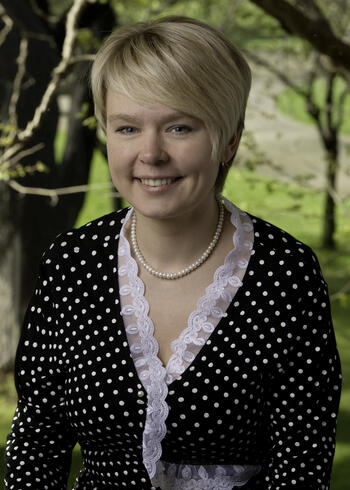
Gulnaz Sharafutdinova, a Reader in Russian Politics at King’s College London, is the author of Political Consequences of Crony Capitalism Inside Russia (University of Notre Dame Press, 2011) and the forthcoming monograph Through The Looking Glass: Putin’s Leadership and Russia’s Insecure Identity (Oxford University Press, 2020)Gulnaz has written numerous articles on Russian regional political economy, state-business relations, and corruption in Russia. She has published an edited volume, Soviet Society in the Era of Late Socialism, 1964-1985 (2012) and has been working on bringing social psychological approaches to understanding collective identity issues and the nature of Putinism in Russia.


Gulnaz Sharafutdinova Reader in Russian Politics King’s College London
Seminars
-

Livestream: This event will not be live-streamed or recorded.


Abstract: Despite a lull after the fall of the Soviet Union, grassroots activism in Russia is on the rise. The protests for free elections that swept across Russia in the summer of 2019 may have captured international headlines, but many other Russian grassroots groups have been actively organizing over the last decade. What types of civic movements exist in today’s Russia? What are the risks that civic activists face? How do they interact with the state or state-protected interest groups? Finally, what role could grassroots groups play in democratizing Russia? Russian activist Evgeniya Chirikova will shed light on these questions through her personal experience as an environmental activist and as a coordinator of Activatica.org, an online news platform covering grassroots activism across Russia.


Speaker's Biography:

Image
2012europe 111
Evgeniya Chirikova is a Russian environmental activist, primarily known for opposing the building of a motorway through the Khimki forest near Moscow. She also played a prominent role in the 2011-2012 Russian protests following disputed parliamentary elections in Russia. In March 2011, she received the Woman of Courage Award, handed over by US Vice President Joe Biden. In 2012, she was a winner of the Goldman Environmental Prize. In November 2012, Foren Policy named Chirikova one of its 2012 Top 100 Global Thinkers. In 2015 Chirikova organized the portal activatica.org, and she is currently organizing media support for grassroots groups.

Evgeniya Chirikova Russian Environmental Activist
Seminars
-

Seminar Recording: https://youtu.be/nTFLMMdK9Zc


Abstract: What is Putin up to? In this lecture, Taylor argues that Russian foreign policy is best understood as a product of both Russian power and purpose. Purpose is understood as the worldview and mentality of Team Putin, which Taylor has defined as “The Code of Putinism” (as elaborated in his 2018 book of that name). Power and purpose combined produce a foreign policy strategy driven by Russia’s consistent attempts to “punch above its weight.” The disjuncture between this Russian mentality and foreign policy strategy and traditional US approaches to world politics explain the current low point in US-Russian relations.


Speaker's Biography:

Brian Taylor Brian Taylor
Brian Taylor is Professor and Chair of Political Science in the Maxwell School at Syracuse University. Taylor is the author of three books on Russian politics: The Code of Putinism (Oxford University Press, 2018); State Building in Putin’s Russia: Policing and Coercion after Communism (Cambridge University Press, 2011); and Politics and the Russian Army: Civil-Military Relations, 1689-2000 (Cambridge University Press, 2003). He received his B.A. from the University of Iowa, an M.Sc. from the London School of Economics and Political Science, and a Ph.D. from the Massachusetts Institute of Technology.   

Brian Taylor Professor and Chair of Political Science Syracuse University
Seminars
Subscribe to Governance