Security

FSI scholars produce research aimed at creating a safer world and examing the consequences of security policies on institutions and society. They look at longstanding issues including nuclear nonproliferation and the conflicts between countries like North and South Korea. But their research also examines new and emerging areas that transcend traditional borders – the drug war in Mexico and expanding terrorism networks. FSI researchers look at the changing methods of warfare with a focus on biosecurity and nuclear risk. They tackle cybersecurity with an eye toward privacy concerns and explore the implications of new actors like hackers.

Along with the changing face of conflict, terrorism and crime, FSI researchers study food security. They tackle the global problems of hunger, poverty and environmental degradation by generating knowledge and policy-relevant solutions. 

Authors
Steven Pifer
News Type
Commentary
Date
Paragraphs

This article originally appeared at Brookings.


Ukraine is halfway through a presidential election: The first round took place on March 31, and the run-off is coming up on April 21. At the annual Kyiv Security Forum and in other conversations in Kyiv last week, I had the opportunity to catch up on the latest developments in Ukraine, and came away with five key observations.

UKRAINE AGAIN SCORES A DEMOCRATIC ELECTION

Ukraine pulled off the March 31 election with no major hitch. Voting and ballot-counting proceeded smoothly. The Central Election Commission’s vote tallies corresponded with exit poll results and a non-governmental parallel count. The International Election Observer Mission (IEOM) released a preliminary assessment that noted some problems but termed the election competitive, reported that candidates campaigned freely, and said that the electorate had a broad choice.

The fact that Ukraine held a free, competitive presidential election should come as no surprise. The previous four presidential votes—the third round of the 2004 election (after the Supreme Court ordered a rerun of the run-off following the Orange Revolution), the general and run-off rounds of the 2010 election, and the 2014 election after the Maidan Revolution—all earned free, fair, and competitive assessments. Another indicator of a free and fair election: While he made it to the run-off, incumbent President Petro Poroshenko came in a distant second.

Sadly, Ukraine’s democratic experience remains a relative rarity in the post-Soviet space. Showing no sense of irony, Russian media cherry-picked criticisms from the IEOM’s assessment to disparage the overall election, yet that election contrasted markedly with the Russian presidential election in 2018. Indeed, in early March, few Ukrainians could say with certainty which two candidates would make it to the run-off; most Russians could have said with certainty who would win their 2018 presidential election as early as 2013.

BARRING A MIRACLE, IT WILL BE PRESIDENT ZELENSKY

TV comedian Volodymyr Zelensky won the first round, capturing 30.24 percent of the popular vote to Poroshenko’s 15.95 percent. Pre-election polls projected a Zelensky win (the question was who would face him in the run-off). His rise since announcing his candidacy in late December is striking. Six or eight months ago, pundits projected a run-off between Poroshenko and former Prime Minister Yuliya Tymoshenko, who came in third.

Poroshenko received more bad news on April 11, with the release of the first polls regarding the run-off. One showed Zelensky ahead 51 percent to 21 percent, with an even bigger lead of 61 percent to 24 percent among those likely to vote. A second poll of those likely to vote gave Zelensky a yet wider margin: 71 percent to 24 percent. Those numbers pose a daunting challenge for the incumbent, who appears competitive only in western Ukraine.

Poroshenko deserves credit for overseeing some impressive reforms, and he has had to cope with a low-intensity war with Russia. Reforms, however, slowed after 2016. Voters felt that Poroshenko had not done enough to fight corruption or challenge the outsized political and economic influence of the country’s oligarchs. He also suffered from an under-performing economy. The electorate wanted change.

It is difficult to see how Poroshenko can turn things around in the short time before Sunday’s run-off, though a few still believe he has a chance. They argue the electorate emotionally cast a protest vote but now must ask who really should lead the country: Poroshenko or a political neophyte.

The president’s campaign has gone negative, seeking to portray the run-off as a choice between Poroshenko and Vladimir Putin. That appears to be having little impact. On the evening of April 11, the president crashed a TV talk show on a pro-Zelensky network and had a brief, bitter telephone exchange with his rival. The episode carried a whiff of desperation. Poroshenko says he wants to debate Zelensky, but the two cannot agree on details. Zelensky did not show up at Poroshenko’s proposed debate on April 14, and the president says he will not turn up at Zelensky’s proposed venue on April 19.

WHO IS ZELENSKY?

Ukrainians and Western diplomats are trying to figure out what a Zelensky presidency would mean. One senior Ukrainian official’s comment—the comedian “is talented and smart, but how will he govern if he wins?”—reflects the views of many.

On television, Zelensky plays a common man thrust unexpectedly into the presidency, where he wages war against the ills that trouble Ukraine. The show is called Sluha Narodu (Servant of the People). During the campaign, Zelensky gave few interviews, held no campaign rallies, and did not lay out positions in any detail, instead letting his television persona define his image.

Zelensky has described in generalities a readiness to negotiate with Putin but with the goal of recovering all Russian-occupied territories; support for joining the European Union and NATO; and a desire to end corruption and fully liberalize the economy. His supporters—who include several noted reformers—describe a Russia-wary, pro-Western candidate who will put fighting corruption at the top of his agenda. Some suggest Zelensky would take a hard line with the International Monetary Fund (IMF) and its conditions. That could prove tricky. Ukraine needs financing, and no bank matches IMF rates.

Other Ukrainians hold a darker view of a Zelensky presidency. They express concern about his links to Ihor Kolomoisky, an oligarch who owns the network that broadcasts Sluha Narodu. Kolomoisky now resides in Israel after his bank, the largest in Ukraine, was taken over by Ukraine’s central bank following charges of financial improprieties. Critics question Zelensky’s lack of political experience, his ability to deal with Putin, and his commitment to a pro-Western course.

Zelensky reportedly this week will name key members of his team, including the foreign and defense ministers, chief of the general staff, head of the Security Service of Ukraine and procurator general. That could provide indications as to his planned direction.

A debate would provide Zelensky the venue to further define his prospective presidency and allow the country’s voters an opportunity to compare and contrast the positions of the run-off candidates. But a debate likely is not in the cards. Zelensky easily bested his opponents in the first round by avoiding specifics; why change a winning strategy now?

THE RUSSIANS—THE DOG THAT DIDN’T BARK?

Many expected the Russians, who used force to seize and illegally annex Crimea in 2014 and then fostered a simmering conflict in the eastern region of Donbas, to interfere in Ukraine’s election. They undoubtedly did—but with little apparent effect.

Ukrainian officials say Russian hackers had probed the Central Election Commission’s systems but without success. One noted that the Russians seemed more focused on general destabilization of the country rather than the election.

The Kremlin has made clear it wants Poroshenko to be a one-term president. Beyond that, however, Russian officials have taken care not to endorse a particular candidate, perhaps understanding that a “Russian favorite” tag would not prove helpful. Yuriy Boyko, head of the Opposition Bloc—the closest thing in Ukraine to a pro-Russian party—visited Moscow on the eve of the election and returned with a plan to obtain cheaper gas. That might have helped him in the eastern part of the country, from where most of his votes came. He did better than expected but still finished fourth.

The fact that part of Donbas remains occupied by Russian and Russian proxy forces severely hampers the election prospects for someone such as Boyko. The population there, which historically has favored close relations with Russia, could not vote. Nor could the population of Crimea, the only part of Ukraine in which ethnic Russians constitute a majority.

IT’S NOT OVER UNTIL IT’S OVER

Ukrainians will know their next president late on April 21, though the official vote may take a week to report. The winner will be inaugurated no later than 30 days after the Central Election Commission announces the official result. But another national ballot looms on October 27: the Rada (parliament) elections.

The majority coalition that emerges after the new Rada is seated will select the prime minister. Zelensky, if he becomes president, will need to build his political party—named, not coincidentally, Sluha Narodu—to secure a large bloc in the Rada. That matters, as executive power in Ukraine is bifurcated, with the prime minister choosing most of the cabinet. Other parties could see defections from their ranks if Sluha Narodu builds steam, but speculation has already begun about the kind of opposition might emerge.

Some see a possibility that Zelensky might try to force snap elections in order to translate a big win on April 21 into a quick Rada win for Sluha Narodu. However, that does not appear legally possible. The Rada cannot be dismissed within six months of the end of its term. That clock starts ticking in late May, and procedural rules would not allow a newly inaugurated president time to call an early election before the six-month period began.

Politics in Ukraine have never been easy or straightforward, and they have at several points taken radical turns. The country may be entering one such period now. How Zelensky—assuming he wins on Sunday—takes on presidential responsibilities and manages the complex politics that follow will matter greatly for Ukraine’s ability to continue its reform path, deepen integration with Europe, secure peace, and regain occupied territories…all despite Russian efforts to return it to Moscow’s orbit.


Hero Image
steven pifer 0
All News button
1
Authors
News Type
News
Date
Paragraphs

The Center for International Security and Cooperation (CISAC) is pleased to announce the selection of its pre-and postdoctoral fellows for the 2019-20 academic year. They will begin their appointments at Stanford in the coming Autumn quarter.

CISAC fellows spend the academic year engaged in research and writing and are expected to participate in seminars and to interact and collaborate with leading faculty and researchers.

Natural scientists have the opportunity to conduct research on the scientific and technical aspects of security topics, as well as to work in collaboration with faculty members. The CISAC fellowship provides an unparalleled opportunity for scholars and professionals to explore complex international problems and innovative solutions in a collegial and collaborative environment.

Meet our incoming scholars:


Image
shazeda ahmed
Shazeda Ahmed

LinkedIn

Shazeda Ahmed is a Ph.D. student at the University of California, Berkeley who researches how tech firms and the Chinese government are collaboratively constructing the country's social credit system. She will be joining CISAC and the Stanford Institute for Human-Centered Artificial Intelligence in Fall 2019 as a pre-doctoral Fellow. Shazeda has worked as a researcher for the Citizen Lab, the Mercator Institute for China Studies, and the Ranking Digital Rights corporate transparency review by New America. In the 2018-19 academic year she was a Fulbright fellow at Peking University's law school.


Image
ahmer arif
Ahmer Arif

Website
LinkedIn

Ahmer Arif will be a Postdoctoral Fellow at CISAC and the Stanford Internet Observatory in the Spring 2020.  He is currently completing his PhD at the University of Washington’s department of Human Centered Design & Engineering. His research falls at the intersection of computer science and social science and is situated within the fields of Human-Computer Interaction (HCI) and the emerging field of Crisis Informatics. Using a combination of empirical methods, including qualitative, computational and network analysis, he examines small group and large-scale interactions in online settings within contexts of mass disruption like terrorist attacks and civil wars. A major focus of his work has been to examine how different groups use communication technologies like social media to spread, shape and confront problematically inaccurate or deceptive information in these settings. His work touches on broader questions about the intersection of technology and society—particularly around how we might use and shape our tools for cooperative civic purposes to reliably and effectively promote human flourishing. He is an international student from Pakistan with a background in Computer Science and English Literature. Outside of academia, he’s had the good fortune to work as a researcher and consultant with several large organizations like Facebook, Yahoo!, The World Bank and the UNDP.


Image
nandita balakrishnan
Nandita Balakrishnan

Twitter
Website
LinkedIn

Nandita Balakrishnan will be a Pre-doctoral Fellow at CISAC in 2019-2020. Her research focuses on issues pertaining to international security and political violence with a substantive focus on civil-military relations. She is a PhD Candidate in Political Science at Stanford University where her dissertation is on the international and domestic factors that explain the global decline of military coups d’etat. She has been a Satre Family Fellow (under the Stanford Interdisciplinary Graduate Fellowship) since 2017 and is also currently a New Era Fellow with the Bridging the Gap Project. Her work has been supported by the Europe Center. Nandita holds Bachelors of Arts in both International Studies (highest honors) and Economics from Emory University where she was awarded the Elliot Levitas Award for the most outstanding student in political science. 


Image
lauren borja
Lauren Borja

Twitter
LinkedIn
Website

Lauren Borja will be a MacArthur Nuclear Security Postdoctoral Fellow at the CISAC in 2019-2020, where her research will focus on the cyber insider threat to the U.S. nuclear arsenal. She is broadly interested in the effect of new technology on nuclear security issues, leveraging her technical skills as a scientist to inform and contribute to the issues in nuclear policy. She received her Ph.D. from the University of California, Berkeley, where she constructed an ultrafast laser apparatus for studying fundamental interactions inside semiconductor materials with unprecedented resolution. Lauren completed her Ph.D. in December 2016 and is currently a Simons Foundation Postdoctoral Research Fellow at the University of British Columbia, where she studies nuclear disarmament and risk. She has authored articles on the Nuclear Ban Treaty, nuclear false alarms, and cybersecurity risks in the nuclear arsenal that have appeared in the Vancouver Sun, American Physical Society’s Physics and Society newsletter, and Bulletin of the Atomic Scientists.


Image
daniel bush
Daniel Bush

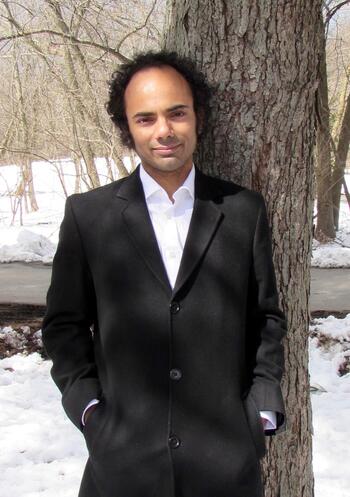
Daniel received his Ph.D. from Stanford’s Slavic Department in 2018, where he wrote a dissertation examining aesthetic strategies and truth claims in Soviet literature and film about the Second World War. He will join CISAC as a Stanford Internet Observatory Fellow, and his current research projects focus on social-media use in contemporary Russian politics and on Russian anarchist movements of the nineteenth century.


Image
melissa carlson
Melissa Carlson

Website
LinkedIn

Melissa Carlson is a PhD candidate in the Department of Political Science at U.C. Berkeley, specializing in international relations, comparative politics, and methodology. She will join CISAC in 2019-2020 as a Middle East Initiative Pre-doctoral Fellow. Broadly, her research examines the dynamics of military partnerships between state governments and foreign militant groups. Melissa's dissertation develops an organizational theory of third-party provision of support: when foreign militant groups and state armed forces share similar organizational characteristics, they are more likely to form joint commands, carry out joint attacks, and provide each other with advanced weapons systems.  Melissa's other research interests focus on factors that influence informal cooperation between states, and on how refugee perceptions of host communities, host governments, and aid organizations influence refugee decision-making. Prior to beginning her PhD at U.C. Berkeley, Melissa worked as Public Information consultant for the International Organization for Migration, Iraq Mission in Jordan and Iraqi Kurdistan. Melissa has a M.A. in Political Science from U.C. Berkeley, and a B.A. in International Relations and Politics, Philosophy, and Economics from Claremont McKenna College.


Image
debak das
Debak Das

Twitter
LinkedIn
Website

Debak Das will be a MacArthur Nuclear Security Pre-doctoral Fellow at CISAC in 2019-2020. He is a PhD candidate in Political Science at the Department of Government, Cornell University. His doctoral dissertation examines how regional powers build their nuclear force structures. This research is based on extensive fieldwork in India, the United Kingdom, and France. Debak is also interested in historical archives, public opinion and foreign policy, and South Asian politics. His research has been supported by the Judith Reppy Institute for Peace and Conflict Studies, the Wilson Center, Cornell University’s Graduate School, the Cornell Institute for European Studies, and the Chateaubriand Fellowship in Humanities and Social Sciences. Debak received his M.Phil in Diplomacy and Disarmament, and his M.A. in Politics and International Relations from Jawaharlal Nehru University, New Delhi. He also holds a B.A. (Honors) in History from Presidency College, Kolkata. Debak has formerly held research positions at Institute of Peace and Conflict Studies and the Centre for Dialogue and Reconciliation, New Delhi. His prior work includes organizing extensive Track II Dialogues between India and Pakistan specifically on nuclear and other related security issues. 


Image
colin garvey
Colin Garvey

Twitter
Website
LinkedIn

Colin Garvey will be joining CISAC and the Stanford Institute for Human-Centered Artificial Intelligence in Fall 2019 as a Postdoctoral Fellow. He studies the history and political economy of artificial intelligence (AI), among other things, with a comparative focus on Japan. He is currently a PhD Candidate and Humanities, Arts, and Social Sciences Fellow in the Science and Technology Studies Department at Rensselaer Polytechnic Institute (RPI). His dissertation “Averting AI Catastrophe, Together: On the Democratic Governance of Epochal Technologies,” challenges utopian/dystopian thinking about AI by explaining how more democratic governance of the technology is not only necessary to avert catastrophe, but also to steer AI R&D more safely, fairly, and wisely. He won Best Early Career Paper at the 2017 meeting of the Society for the History of Technology for “Broken Promises & Empty Threats: The Evolution of AI in America, 1956-1996.” His research article on the history and political economy of Japanese AI, “An Alternative to Neoliberal Modernity: The ‘Threat’ of the Japanese Fifth Generation Computer Systems Project,” will be published in a forthcoming special issue of Pacific Historical Review. His work has been supported by the National Science Foundation (NSF). In addition to an MS in STS from RPI, Colin double-majored in Japanese and Media Studies at Vassar College. Before starting graduate school, Colin spent several years teaching in Japan, where he became a Zen Buddhist monk. Colin is fluent in Japanese and freelances as a translator of Japanese books and scientific articles.


Image
melissa griffith
Melissa Griffith

Twitter
LinkedIn
Website

Melissa K. Griffith will join CISAC as a Cybersecurity Pre-doctoral Fellow. Melissa is a Ph.D. Candidate in Political Science at the University of California, Berkeley and an affiliated researcher at the Center for Long-Term Cybersecurity (CLTC). Her researches lie at the intersection of security and technology, with a focus on national defense. Griffith's dissertation examines how pre-existing models for kinetic national defense (air, land, and sea) effects the subsequent organization and efficacy of national cyber-defense efforts. By focusing specifically on how a subset of relatively small yet successful states, the Mice that Roar, have pursued national cyber-defense, her research challenges two prevailing assumptions in security studies and cyber conflict scholarship: (1) that larger states with more resources will be better positioned to provide national defense for their populations and (2) that national cyber-defense, as a central task of states, represents a significant departure from the core requirements of national defense in the domains of air, land, and sea (i.e. that it represents a new type of defense problem for states to address). Her research is based on extensive fieldwork in Estonia, Finland, Israel, Singapore, and the U.S. She was a Visiting Scholar at George Washington University's Institute for International Science & Technology Policy (IISTP) in October 2018; a Visiting Research Fellow at the Research Institute on the Finnish Economy (ETLA) in Helsinki, Finland from 2017-2018; and a Visiting Researcher at the Université Libre de Bruxelles (ULB) in Brussels, Belgium in Fall 2017. Griffith’s published work has appeared in the 'American Institute for Contemporary German Studies', 'Business and Politics', the ‘Centre for European Policy Studies', the 'Council on Foreign Relations'(1)(2),the 'Cyber Conflict Studies Association', and the 'Journal of Cyber Policy'. She holds a B.A. in International Relations from Agnes Scott College (2011) and a M.A. in Political Science from the University of California, Berkeley (2014).


Image
mariya grinberg
Mariya Grinberg

Website

Mariya Grinberg is a PhD Candidate in the field of international relations at the University of Chicago and a research fellow with the Belfer Center’s International Security Program. Her primary research examines why states trade with their enemies, investigating the product level and temporal variation in commercial war policies of states vis-a-vis enemy belligerents. Her broader research interests include international relations theory focusing on order formation and questions of state sovereignty. In 2017-2018, she was the Smith Richardson pre-doctoral fellow at Yale University. She holds an M.A. from the University of Chicago's Committee on International Relations and a B.A. from the University of Southern California.


Image
lindsay krall
Lindsay Krall

Lindsay Krall will be a MacArthur Postdoctoral Fellow at CISAC. She couples Earth science with energy policy to study the back-end of the nuclear fuel cycle, focusing on geologic repository development by integrating environmental radiochemistry with adaptive management and fissile materials tracking.

She began this research in 2009, coincident with the termination of the United States’ project to develop a repository for high-level nuclear waste. After completing her bachelors’ in Industrial and Operations Engineering and Geological Science at the University of Michigan in 2011, she moved to Stockholm to work as an intern at the Swedish Nuclear Fuel and Waste Management Company. From there, she became an “industridoktorand” and was able to learn, through experience as an employee, about the operations of an effective spent fuel management organization while pursuing a Ph.D. in Geochemistry. Her thesis research explored the mobility of natural uranium and radium isotopes in deep groundwater through field studies at the Forsmark site, proposed to host the Swedish repository. She coordinated this work with labs in Spain and the U.K., as well as the Swedish Museum of Natural History and Stockholm University, the latter of which awarded her a doctorate in 2017. Between 2017 and 2019, Lindsay was a MacArthur post-doctoral fellow at George Washington University. During this time, she characterized the chemical and physical diversity of the radioactive waste streams that might be generated in advanced fuel cycles and discussed their implications for storage, disposal, and the proliferation of separated fissile material with the nuclear security community in Washington, D.C.


Image
xinru ma
Xinru Ma

Twitter
Website

Xinru is currently a Ph.D. candidate at Political Science and International Relations (POIR) program at University of Southern California, and will join CISAC as a Postdoctoral Fellow for 2019-2020. Originally from China, Xinru is interested in combining formal modeling and computational social science with research on nationalist protests and maritime disputes, with a regional focus on East and Southeast Asia. Her research is informed by extensive field research in Vietnam, Philippines and China, during which she interviewed protestors, think tanks, diplomats, government officials, and foreign business owners that were impacted by nationalist protests. In addition to informing her of the complicated strategic interaction between mass mobilization, government repression and foreign policy-making, the field research further motivated her to focus on the methodological challenges for causal inference that stem from strategic conflict behavior. More broadly, Xinru is interested in public opinion and new methods of measuring it, foreign policy formation, alliance politics, East Asian security dynamics, and the historical relations of East Asia. 


Image
iris malone
Iris Malone

Website

Iris Malone is completing her Ph.D. in the Political Science Department at Stanford University and will join CISAC as a Postdoctoral Fellow.  In 2020, she will be joining the George Washington University Elliott School of International Affairs as an Assistant Professor. Iris’s research agenda develops and tests new theories about emerging security threats. It includes two research projects, examining the causes of civil war and interstate conflict. The first project includes the dissertation and a series of related empirical papers. It develops a new theory about why states sometimes make mistakes in response to emerging insurgent threats, leading to civil war.  It tests this theory with fieldwork interviews, machine learning, and case studies.  This project also introduces a new large-scale dataset on the organizational characteristics of 1,570 armed groups to ground future empirical work on insurgency and terrorism. The second project explores how uncertainty shapes patterns of interstate conflict and cooperation. Some of this work is forthcoming in International Studies Quarterly. Malone’s work is supported by the Tobin Research Initiative, Hoover Institution, and Stanford Institute for Research in the Social Sciences.  Prior to Stanford, she graduated from Cornell University with degrees in Chemistry and Government, summa cum laude.


Image
asfandyar mir
Asfandyar Mir

Twitter

Asfandyar Mir will be continuing at CISAC as a Postdoctoral Teaching Fellow 2019-2020. Asfandyar Mir is FSI Postdoctoral Fellow at Stanford University's Center for International Security and Cooperation. He received a Ph.D. in Political Science from the University of Chicago in 2018. His research focuses on counterinsurgency, counterterrorism, drone warfare, al-Qaida, and South Asian security affairs. His research has appeared in peer-reviewed journals such as International Security, International Studies Quarterly, and Security Studies. His commentary has featured in the Washington Post Monkey Cage and Lawfare.


Image
reid pauly
Reid Pauly

Twitter
Website

Reid Pauly will be a Stanton Postdoctoral Fellow at CISAC 2019-2020. His scholarship focuses on coercion and nuclear weapons proliferation, especially the causes of credible coercive assurance—why and how targets of coercion believe that they will not be punished after they comply with demands. His broader research interests include wargaming and crisis simulations, nuclear strategy, and tacit cooperation between adversaries. Reid is a PhD candidate in Political Science at MIT and a member of the Security Studies Program. He was also a predoctoral fellow at the International Security Program and the Project on Managing the Atom at the Harvard Kennedy School's Belfer Center for Science and International Affairs. Prior to graduate school, Reid was a research assistant at the Center for International Security and Cooperation at Stanford University and earned a B.A. in History and Government from Cornell University.


Image
maxime polleri
Maxime Polleri

Website

Maxime Polleri is a Ph.D. candidate in the Department of Anthropology at York University and currently a CISAC MacArthur Pre-doctoral Fellow. His current research focuses on the 2011 Fukushima Dai’ichi nuclear disaster and on the crisis of expertise that ensued, in which many citizens have become wary of state institutional experts, especially in their capacities to manage the problems engendered by residual radioactivity. In such a context, his dissertation is concerned with how the Fukushima crisis has participated in the formations of new forms of expertise and consequently, new means of governing toxicity. It asks: How is radioactive hazard being governed in the wake of a crisis of legitimacy against state institutional expert? Based on 14 months of ethnographic fieldwork throughout Japan, the dissertation argues that averting the crisis of expertise and managing the reconstruction of what “normality” involves in a post-Fukushima Japan include a fundamental reorganization of state governance, where the dissemination of radiation hazards cannot simply rest on dry, clinical manner in which government-packaged expertise about radiation was initially promulgated to a former lay public. In particular, these shift in the governance of radioactive risk are increasingly being enacted by promoting a state-sponsored affective embodiment toward nuclear matter, as well as by encouraging the endeavor of citizen science, where former lay citizens now track and monitor residual radioactivity in their environment. His fieldwork was funded by the Japan Foundation and the Canada Social Sciences and Humanities Research Council. His work has been published in Anthropology Now, Anthropology Today, and Medical Anthropology Quarterly Second Spear.


Image
michal smetana
Michal Smetana

Twitter
Website

Michal Smetana will join CISAC as a Fulbright Visiting Scholar. His main research interests lie at the intersection of social psychology and security studies, with a specific focus on issues related to nuclear weapons in world politics, arms control and disarmament, the proliferation of weapons of mass destruction, deterrence theory, and norms and deviance in international affairs. His current research project deals with the relationship between moral foundations of individuals and public attitudes towards various international security issues, from the (non-)use of nuclear and chemical weapons to the development of autonomous weapon systems. He was previously a Visiting Research Fellow at the Stockholm International Peace Research Institute (SIPRI) and Peace Research Institute Frankfurt (PRIF) and has been a Research Associate and Assistant Professor at the Faculty of Social Sciences, Charles University, as well as a Coordinator of the Peace Research Center Prague (PRCP). His most recent articles have been published in International Affairs, The Washington Quarterly, Journal of International Relations and Development, International Relations, Asia Europe Journal, Bulletin of the Atomic ScientistsCambridge Review of International Affairs, The Nonproliferation Review, and other academic and policy journals. He is the co-author of Global Nuclear Disarmament: Strategic, Political, and Regional Perspectives (Routledge) and Indirect Coercion: Triangular Strategies and International Conflict (Charles University Press).


Image
julien de troullioud de lanversin
Julien de Troullioud de Lanversin

Twitter

Julien de Troullioud de Lanversin will be joining CISAC as a Stanton Postdoctoral Fellow. Julien is finishing his Ph.D. at Princeton University’s Program on Science and Global Security. He is interested in how to verify and reconstruct past fissile material production programs with scientific tools. To that end, he developed innovative methods that use isotopic analysis from nuclear reactors to gain information on their past operation (nuclear archeology) and designed an open source software that can compute the istopic composition of fissile materials from nuclear reactors. His current research looks at the various modalities of the production of plutonium and tritium in production reactors and how transparency on tritium could be used to improve estimates on plutonium stockpiles. Julien also studies security questions related to civil and military nuclear programs in Northeast Asia through the lens of fissile material, with a focus on China and North Korea. Julien visited the Institute of Nuclear and New Energy Technologies at Tsinghua University for one semester in 2018 to collaborate with Chinese experts on work related to nuclear engineering and arms control. Julien’s work on nuclear archaeology has been published in the Journal of Science and Global Security. He received his Diplôme d’Ingénieur (M.Sc. And B.Sc.Eng.) from Ecole Centrale de Marseille in 2014. The same year he also obtained a M.Sc. in Nuclear Science and Engineering from the University of Tsinghua where he was a recipient of the Chinese Government Scholarship. Julien speaks and uses Chinese in his research and is a native French speaker.



Hero Image
untitled design 1
All News button
1
-

Abstract: President Trump may talk about the Middle East differently than Obama did. But the two seem to share the view that the United States is too involved in the region and should devote fewer resources and less time to it. The reduced appetite for U.S. engagement in the region reflects, not an ideological predilection or an idiosyncrasy of these two presidents, but a deeper change in both regional dynamics and broader U.S. interests. Despite this, the United States exists in a kind of Middle Eastern purgatory—too distracted by regional crises to pivot to other global priorities but not invested enough to move the region in a better direction. This worst-of-both-worlds approach exacts a heavy price. It sows uncertainty among Washington’s Middle Eastern partners, which encourages them to act in risky and aggressive ways. It deepens the American public’s frustration with the region’s endless turmoil, as well as with U.S. efforts to address it. It diverts resources that could otherwise be devoted to confronting a rising China and a revanchist Russia. And all the while, by remaining unclear about the limits of its commitments, the United States risks getting dragged into yet another Middle Eastern conflict. 

 
It is time for Washington to put an end to wishful thinking about its ability to establish order on its own terms or to transform self-interested and shortsighted regional partners into reliable allies—at least without incurring enormous costs and long-term commitments. That means making some ugly choices to craft a strategy that will protect the most important U.S. interests in the region, without sending the United States back into purgatory. Karlin and Wittes will outline the choices before the next U.S. president and their view of a realistic, sustainable strategy for the United States in the Middle East. 
 
Tamara Wittes' Biography: Tamara Cofman Wittes is a senior fellow in the Center for Middle East Policy at Brookings. Wittes served as deputy assistant secretary of state for Near Eastern affairs from November of 2009 to January 2012, coordinating U.S. policy on democracy and human rights in the Middle East during the Arab uprisings. Wittes also oversaw the Middle East Partnership Initiative and served as deputy special coordinator for Middle East transitions.


Wittes is a co-host of Rational Security, a weekly podcast on foreign policy and national security issues. She writes on U.S. Middle East policy, regional conflict and conflict resolution, the challenges of global democracy, and the future of Arab governance. Her current research is for a forthcoming book, Our SOBs, on the tangled history of America’s ties to autocratic allies.


Wittes joined Brookings in December of 2003. Previously, she served as a Middle East specialist at the U.S. Institute of Peace and director of programs at the Middle East Institute in Washington. She has also taught courses in international relations and security studies at Georgetown University. Wittes was one of the first recipients of the Rabin-Peres Peace Award, established by President Bill Clinton in 1997.


Wittes is the author of "Freedom’s Unsteady March: America’s Role in Building Arab Democracy" (Brookings Institution Press, 2008) and the editor of "How Israelis and Palestinians Negotiate: A Cross-Cultural Analysis of the Oslo Peace Process" (USIP, 2005). She holds a bachelor's in Judaic and Near Eastern studies from Oberlin College, and a master's and doctorate in government from Georgetown University. She serves on the board of the National Democratic Institute, as well as the advisory board of the Israel Institute, and is a member of the Council on Foreign Relations and Women in International Security.


Mara Karlin's Biography: Mara Karlin, PhD, is Director of Strategic Studies at Johns Hopkins University’s School of Advanced International Studies (SAIS). She is also an Associate Professor at SAIS and a nonresident senior fellow at The Brookings Institution. Karlin has served in national security roles for five U.S. secretaries of defense, advising on policies spanning strategic planning, defense budgeting, future wars and the evolving security environment, and regional affairs involving the Middle East, Europe, and Asia. Most recently, she served as the deputy assistant secretary of defense for strategy and force development.  Karlin has been awarded Department of Defense Medals for Meritorious and Outstanding Public Service, among others. She is the author of Building Militaries in Fragile States: Challenges for the United States (University of Pennsylvania Press; 2018).

Tamara Wittes Senior fellow, Center for Middle East Policy Brookings
Mara Karlin Senior fellow,Center for 21st Century Security and Intelligence SAIS and Brookings
Seminars
Paragraphs

What are the effects of international intervention on the rule of law after civil war? Rule of law requires not only that state authorities abide by legal limits on their power, but also that citizens rely on state laws and institutions to adjudicate disputes. Using an original survey and list experiment in Liberia, I show that exposure to the UN Mission in Liberia (UNMIL) increased citizens’ reliance on state over nonstate authorities to resolve the most serious incidents of crime and violence, and increased nonstate authorities’ reliance on legal over illegal mechanisms of dispute resolution. I use multiple identification strategies to support a causal interpretation of these results, including an instrumental variables strategy that leverages plausibly exogenous variation in the distribution of UNMIL personnel induced by the killing of seven peacekeepers in neighboring Côte d'Ivoire. My results are still detectable two years later, even in communities that report no further exposure to peacekeepers. I also find that exposure to UNMIL did not mitigate and may in fact have exacerbated citizens’ perceptions of state corruption and bias in the short term, but that these apparently adverse effects dissipated over time. I conclude by discussing implications of these complex but overall beneficial effects.

All Publications button
1
Publication Type
Journal Articles
Publication Date
Journal Publisher
International Organization
-

Militaries around the world are racing to build robotic systems with increasing autonomy. What will happen when a Predator drone has as much autonomy as a Google car? Should machines be given the power to make life and death decisions in war? Paul Scharre, a former Army Ranger and Pentagon official, will talk on his new book, Army of None: Autonomous Weapons and the Future of War. Army of None was named one of Bill Gates’ Top 5 Books of 2018. Scharre will explore the technology behind autonomous weapons and the legal, moral, ethical, and strategic dimensions of this evolving technology. Paul Scharre is a Senior Fellow and Director of the Technology and National Security Program at the Center for a New American Security.   


Drell Lecture Recording: https://youtu.be/ldvDjU1C4Qs


Drell Lecture Transcript: NA


Paul's Biography: Paul Scharre is a Senior Fellow and Director of the Technology and National Security Program at the Center for a New American Security. He is author of Army of None: Autonomous Weapons and the Future of War. Mr. Scharre formerly worked in the Office of the Secretary of Defense (OSD) where he played a leading role in establishing policies on emerging weapons technologies. He led the working group that drafted DOD Directive 3000.09, establishing DOD’s policy on autonomy in weapon systems. He is a former infantryman in the Army’s 75th Ranger Regiment and completed multiple tours to Iraq and Afghanistan.


Radha's Biography: Radha Iyengar is the head of Product Policy Research at Facebook and an adjunct economist at the RAND Corporation. Previously, she served in senior staff positions at the White House National Security Council, Department of Defense, and Department of Energy. Over the course of her government service, she was instrumental in executive actions on sexual assault and suicide prevention, budget and policy related to nuclear and energy infrastructure security and resilience, and security assistance and counterterrorism efforts in the the Middle East and North Africa. Her research has covered empirical evaluations of policies aimed at reducing violence including criminal violence, sexual assault, terrorist behavior, and sexual and intimate partner violence. 


Jeremy's Biography: Jeremy is a Professor of Political Science and Senior Fellow at the Freeman Spogli Institute for International Studies. He is also a non-resident fellow at the Center for Global Development in Washington, D.C. His research focuses on civil wars and political violence; ethnic politics and the political economy of development; and democracy, accountability, and political change. He is the author of Inside Rebellion: The Politics of Insurgent Violence (Cambridge University Press), which received the William Riker Prize for the best book on political economy. He is also the co-author of Coethnicity: Diversity and the Dilemmas of Collective Action (Russell Sage Foundation), which received the Gregory Luebbert Award for the best book in comparative politics. He has published articles in the American Political Science Review, American Journal of Political Science, Annual Review of Political Science, Journal of Conflict Resolution, Foreign Affairs, Foreign Policy, Journal of Democracy, World Policy Journal, and the SAIS Review.


Stanford University CEMEX Auditorium (655 Knight Way, Stanford, CA 94305)

Paul Scharre Senior Fellow and Director, Technology and National Security Program Center for a New American Security
Lectures
-

Abstract: In efforts to halt the Syrian government’s use of chemical weapons (CW) in that country’s civil war the United States and other outside powers applied coercive strategies, in both a deterrent and compellent mode. Outcomes varied: compellence achieved a partial success in getting Syria to give up much of its chemical stockpile, but there were multiple deterrence failures. This paper examines this record to draw lessons about factors associated with the effectiveness of coercion. Its analysis points to the interplay of three factors: credibility, motivation, and assurance. Regarding credibility, the case demonstrates that threats fulfilling many of the traditional criteria for establishing credibility can still fail. In Syria, this is partly because there were ambiguities in the scope of what was covered by deterrent warnings and partly because other factors also affect coercive outcomes. In the Syria case two additional factors were especially important. First, the domestic political motivations of the target affect whether external threats provide coercive leverage. In this case Syrian President Assad’s concern with regime survival led him to perceive the value of CW use as outweighing the likely costs even if outside powers followed through on retaliatory threats. Second, where regime survival is a concern, it is vital to pair coercive threats with appropriate assurances. Here, the case suggests that it is possible not only to provide too little assurance, but also too much. Whereas the Obama administration found it hard to offer credible assurances to Assad, the Trump administration initially conveyed assurances that were too robust, creating a sense that Syria could use CW with impunity. This analysis suggests there may have been a potentially viable path to effective coercion of the Assad regime, but the path would have involved intense tradeoffs that largely prevented decision makers from embracing it. Decision makers and outside commentators alike turned instead to a familiar schema that implies credibility is established by demonstrating a willingness to impose costs using airpower – a script that can be labeled the “resolve plus bombs” formula. Despite the frequent tendency to equate coercion with the threat or limited use of air strikes, this approach was not sufficient to change Syria’s calculations regarding chemical arms.


Speaker's Biography: Jeff Knopf is a professor at the Middlebury Institute of International Studies (MIIS) in Monterey, California, where he serves as chair of the M.A. program in Nonproliferation and Terrorism Studies and a senior research associate with the Center for Nonproliferation Studies (CNS). He is on sabbatical for the 2018-19 academic year and is spending the year as a visiting scholar at CISAC. This is his second stint at CISAC. Dr. Knopf received his Ph.D. in Political Science from Stanford and was previously a pre-doctoral fellow at CISAC in the days when it was still located in the old Galvez House. His most recently completed project is a forthcoming book volume he co-edited on Behavioral Economics and Nuclear Weapons. While at CISAC, Dr. Knopf will primarily be working on a project titled “Coercing Syria on Chemical Weapons.” This project examines efforts by the United States and other countries to apply deterrent and compellent strategies in attempts to stop the Syrian government from using chemical weapons and to dismantle its chemical arsenal. Dr. Knopf will also be working on a paper that explores cognitive aspects of the nuclear taboo.

Jeffrey Knopf Professor Middlebury Institute of International Studies (MIIS)
Seminars
-

Abstract: To drastically reduce emissions of greenhouse gases and expand energy access, nuclear energy may play a significant role in decarbonizing electrical grids. To the extent that this expansion involves developing new and advanced nuclear fuel cycle technologies, concerns about nonproliferation concurrently grow. To address at least one nonproliferation concern, a safeguards assessment was conducted on a conceptual nuclear waste processing technology, called pyroprocessing, using a traditional safeguards technique, called the neutron balance method. The safeguards assessment revealed that the fundamental requirements needed for the neutron balance method to work were not always observed. The diversion scenario modeled resulted in the undetected diversion of several kilograms of plutonium. The assessment found that traditional safeguards assumptions and techniques might not be adequate to meet nuclear material accountancy requirements. New approaches developed from fundamental research are needed to ensure new facilities are only being used for peaceful purposes.


Speaker's Biography: Chantell Murphy is a Nuclear Security Postdoctoral Fellow at CISAC. Chantell Murphy earned her PhD in nuclear engineering from the University of New Mexico in 2018 and holds a MS in health physics from Georgetown University and a BS in physics from Florida State University.

Chantell Murphy worked as a graduate research assistant at Los Alamos National Laboratory supporting the nuclear engineering and nonproliferation division (NEN-5) and worked in the national security office (NSO). During her time at LANL Ms. Murphy investigated safeguards approaches for pyroprocessing facilities and helped develop an acquisition path analysis software tool called APAT for the International Atomic Energy Agency (IAEA). Ms. Murphy worked on safeguards approaches for advanced reactor designs like thorium fueled reactors, worked on knowledge retention issues for future warhead verification campaigns, and participated in and gave talks at several international safeguards and nuclear policy related workshops around the US and in Europe. Ms. Murphy also worked as a visiting scientist at the Forschungszentrum Jülich in Germany for three months developing the IAEA’s state level approach and acquisition path analysis with the Nuclear Waste Management and Reactor Safety group in the Institute of Energy and Climate Research.

Chantell Murphy’s previous experience also includes an internship at the Managing the Atom project at the Belfer Center for Science and International Affairs and work for the Congressional Commission on the Strategic Posture of the United States.

Chantell Murphy Nuclear Security Postdoctoal Fellow CISAC, Stanford University
Seminars
-
 
Abstract: 
Why were Western expectations about how Russia would develop after the Soviet collapse so misplaced? How has Putin's Russia, with a GDP less than that of Italy, managed to reassert itself so effectively on the world stage? And how should the West respond to Russia going forward? Angela Stent will discuss her new book, focusing on how Russia's relations with Europe have evolved and how Europe-- caught between Putin's Russia and Trump's America--is reassessing its options.
 
Speaker's Biography:

Angela Stent is Professor of Government and Foreign Service at Georgetown University and directs its Center for Eurasian, Russian and East European Studies. She has also served in the State Department’s Office of Policy Planning and as National Intelligence Officer for Russia and Eurasia at the National Intelligence Council. She is the author of Russia and Germany Reborn: Unification, the Soviet Collapse and the New Europe; The Limits of Partnership: U.S-Russian Relations in the Twenty-First Century and Putin’s World: Russia Against the West and with the Rest.


Angela Stent Professor of Government and Foreign Service Georgetown University
Seminars
-

Abstract: Ambassador Koster will address the following political-military issues during his lecture. How has the security environment in Europe evolved since 2014, with growing instability and insecurity in the North Africa and the Middle East, and an assertive Russia in the East? How has Europe and NATO reacted to these challenges? Policies, structures and capabilities have been adapted, but will it be enough to restore peace and stability in Europe ? How will the demise of the arms control architecture affect all of this in the years to come?


Speaker's Biography: Ambassador Timo S. Koster is a career diplomat at the Dutch Ministry of Foreign Affairs. As of November 2018, Mr. Koster assumed his position as Ambassador-at-large for Security Policy & Cyber. Prior to this, since 2012, he was Director for Defence Policy and Capabilities at NATO HQ in Brussels.

After finishing his law degree at the University of Amsterdam, Ambassador Koster joined the diplomatic academy of the Ministry of Foreign Affairs of the Netherlands in 1991. His first appointment was at the Royal Netherlands Embassy in Nairobi, Kenya. Back in The Hague from 1994, he served in several positions within the Ministry, including a stint as Private Secretary to the Minister for European Affairs, before moving to the Royal Netherlands Embassy in London, as Head of Economic Department, between 1998 and 2001.

In 2001, Ambassador Koster became Acting Director for European Integration at the Ministry of Economic Affairs, after which he served as a Project Director at the Ministry for Foreign Affairs. In 2003 Mr. Koster was appointed Deputy Ambassador at the Royal Netherlands Embassy in Athens, Greece. In 2008 he moved to Brussels where he served as Defence Advisor at the Netherlands Permanent Representation to NATO until 2012 when he moved to the position of Director Defence Policy & Capabilities in the NATO International Staff.

Ambassador Koster is affiliated to the Atlantic Council Washington DC as a non-resident Ambassadorial Fellow at the Brent Scowcroft Centre for International Strategy and Security.

Timo S. Koster is married with two sons and two daughters.

Timo Koster Career Diplomat Dutch Ministry of Foreign Affairs
Seminars
-

Abstract: Successful use of bots and trolls as tools of its expansionist foreign policy demonstrated the Russian government's superior capability in computational propaganda. Yet the main area of application for these tools remains inside Russia: to prop up Vladimir Putin's approval ratings and deny his opponents an opportunity to reach potential voters. In this paper, we use supervised machine learning algorithms for bot detection and sentiment analysis to do a first systematic survey of bot activity in the Russian segment of Twitter. We discover a high yet fluctuating volume of bot communication and presence of both pro- and anti-government as well as neutral bots. We also identify sources of information they spread and formulate testable hypotheses about the political strategy behind bots deployment. Finally, we discuss the implications of autocrats' reliance on domestic computational propaganda for the response to their activities abroad.


Speaker's Biography: Sergey Sanovich received his Ph.D. in Politics at NYU. He studies how autocrats use the power of persuasion to come to, and stay in, office. His ongoing research is focused on online censorship and propaganda by authoritarian regimes; elections and partisanship in electoral autocracies; and personalization of politics in both autocratic and democratic countries. To conduct his research, Sergey collects big data from social media, digitalizes archival documents, and runs field and survey experiments both online and offline.

Sergey Sanovich Cyber Fellow CISAC, Stanford University
Seminars
Subscribe to Security