-

Advance Reading Recommended: 

Speakers will not give prepared remarks.

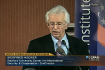
They ask that attendees read the Q&A with Siegfried Hecker and David Straub on the recent agreement.

Additional reading materials are linked at the end of this event announcement. 

About the event: The speakers will take questions regarding the February 29 agreement between the United States and North Korea that provided for the delivery of U.S. food aid, a moratorium on North Korean nuclear and missile tests, and the entrance of international inspectors into facilities at Yongbyon.


About the speakers:

Siegfried S. Hecker is co-director of the Stanford University Center for International Security and Cooperation, Senior Fellow of the Freeman Spogli Institute for International Studies, and Professor (Research) in the Department of Management Science and Engineering. He is also director emeritus at the Los Alamos National Laboratory, where he served as director from 1986-1997 and senior fellow until July 2005. He received his B.S., M.S., and PhD degrees in metallurgy from Case Western Reserve University. His current professional interests include plutonium research, cooperative nuclear threat reduction with the Russian nuclear complex, and global nonproliferation and counter terrorism. He is a fellow of numerous professional societies and received the Presidential Enrico Fermi Award.

John Lewis is the William Haas Professor of Chinese Politics, emeritus, and an FSI senior fellow by courtesy. He is an expert on Chinese politics, U.S.-China relations, China's nuclear weapons program, U.S. policy toward Korea and health security issues in northeast Asia. He founded and directed the Center for East Asian Studies, in 1969-1970; the Center for International Security and Arms Control (now the Center for International Security and Cooperation, or CISAC) from 1983 to 1991; and the Northeast Asia-United States Forum on International Policy (now APARC), from 1983 to 1990. He currently directs CISAC's Project on Peace and Cooperation in the Asian-Pacific Region.

David Straub was named associate director of the Korean Studies Program (KSP) at the Walter H. Shorenstein Asia-Pacific Research Center (Shorenstein APARC) on July 1, 2008. Prior to that he was a 2007–08 Pantech Fellow at the Center. Straub is currently writing a book on recent U.S.-South Korean relations. He is also a member of the New Beginnings policy research group on U.S.-South Korean relations, which is co-sponsored by Shorenstein APARC and the New York-based Korea Society. An educator and commentator on current Northeast Asian affairs, Straub retired in 2006 from his role as a U.S. Department of State senior foreign service officer after a 30-year career focused on Northeast Asian affairs. He worked over 12 years on Korean affairs, first arriving in Seoul in 1979.

Note: This event will follow a shortened science seminar by Dr. Len Weiss titled "The Mysterious Flash of 9/22/1979: The Case for an Israeli Nuclear Test"

CISAC Conference Room

CISAC
Stanford University
Encina Hall, C220
Stanford, CA 94305-6165

(650) 725-6468 (650) 723-0089
0
Senior Fellow, Freeman Spogli Institute for International Studies, Emeritus
Research Professor, Management Science and Engineering, Emeritus
hecker2.jpg PhD

Siegfried S. Hecker is a professor emeritus (research) in the Department of Management Science and Engineering and a senior fellow emeritus at the Freeman Spogli Institute for International Studies (FSI). He was co-director of CISAC from 2007-2012. From 1986 to 1997, Dr. Hecker served as the fifth Director of the Los Alamos National Laboratory. Dr. Hecker is an internationally recognized expert in plutonium science, global threat reduction, and nuclear security.

Dr. Hecker’s current research interests include nuclear nonproliferation and arms control, nuclear weapons policy, nuclear security, the safe and secure expansion of nuclear energy, and plutonium science. At the end of the Cold War, he has fostered cooperation with the Russian nuclear laboratories to secure and safeguard the vast stockpile of ex-Soviet fissile materials. In June 2016, the Los Alamos Historical Society published two volumes edited by Dr. Hecker. The works, titled Doomed to Cooperate, document the history of Russian-U.S. laboratory-to-laboratory cooperation since 1992.

Dr. Hecker’s research projects at CISAC focus on cooperation with young and senior nuclear professionals in Russia and China to reduce the risks of nuclear proliferation and nuclear terrorism worldwide, to avoid a return to a nuclear arms race, and to promote the safe and secure global expansion of nuclear power. He also continues to assess the technical and political challenges of nuclear North Korea and the nuclear aspirations of Iran.

Dr. Hecker joined Los Alamos National Laboratory as graduate research assistant and postdoctoral fellow before returning as technical staff member following a tenure at General Motors Research. He led the laboratory's Materials Science and Technology Division and Center for Materials Science before serving as laboratory director from 1986 through 1997, and senior fellow until July 2005.

Among his professional distinctions, Dr. Hecker is a member of the National Academy of Engineering; foreign member of the Russian Academy of Sciences; fellow of the TMS, or Minerals, Metallurgy and Materials Society; fellow of the American Society for Metals; fellow of the American Physical Society, honorary member of the American Ceramics Society; and fellow of the American Academy of Arts and Sciences.

His achievements have been recognized with the Presidential Enrico Fermi Award, the 2020 Building Bridges Award from the Pacific Century Institute, the 2018 National Engineering Award from the American Association of Engineering Societies, the 2017 American Nuclear Society Eisenhower Medal, the American Physical Society’s Leo Szilard Prize, the American Nuclear Society's Seaborg Medal, the Department of Energy's E.O. Lawrence Award, the Los Alamos National Laboratory Medal, among other awards including the Alumni Association Gold Medal and the Undergraduate Distinguished Alumni Award from Case Western Reserve University, where he earned his bachelor's, master's, and doctoral degrees in metallurgy.
Date Label
Siegfried S. Hecker Co-Director Speaker Center for International Security and Cooperation (CISAC)
John W. Lewis William Haas Professor of Chinese Politics (Emeritus) and Senior Fellow, Freeman Spogli Institute (FSI) Speaker
David Straub Associate Director, Korean Studies Program, Shorenstein Asia Pacific Research Center (APARC) Speaker
Conferences
Date Label
-

From the film’s website: ‘Human Terrain’ is two stories in one. The first exposes a new Pentagon effort to enlist the best and the brightest in a struggle for hearts and minds. Facing long wars in Iraq and Afghanistan, the U.S. military initiates ‘Human Terrain Systems’, a controversial program that seeks to make cultural awareness the centerpiece of the new counterinsurgency strategy. Designed to embed social scientists with combat troops, the program swiftly comes under attack as a misguided and unethical effort to gather intelligence and target enemies. Gaining rare access to wargames in the Mojave Desert and training exercises at Quantico and Fort Leavenworth, ‘Human Terrain’ takes the viewer into the heart of the war machine and a shadowy collaboration between American academics and the military.

The other story is about a brilliant young scholar who leaves the university to join a Human Terrain team. After working as a humanitarian activist in the Western Sahara, Balkans, East Timor and elsewhere, and winning a Marshall Scholarship to study at Oxford, Michael Bhatia returns to Brown University to take up a visiting fellowship. In the course of conducting research on military cultural awareness, he is recruited by the Human Terrain program and eventually embeds with the 82nd Airborne in eastern Afghanistan. On the way to mediate an intertribal dispute, Bhatia is killed when his humvee hits a roadside bomb.

War becomes academic, academics go to war, and the personal tragically merges with the political, raising new questions about the ethics, effectiveness, and high costs of counterinsurgency.

Following the screening, James Der Derian (the film's Co-Director and Executive Producer) will discuss the film with the audience.

For more information about the film, please visit the Human Terrain website. 

CISAC Conference Room

James Der Derian Co-Director and Executive Producer, “Human Terrain” Professor (Research), Watson Institute for International Studies, Brown University Speaker
Joseph Felter Senior Research Scholar, CISAC Speaker

CISAC
Stanford University
Encina Hall, C235
Stanford, CA 94305-6165

(650) 723-6927 (650) 725-0597
0
Senior Fellow, by courtesy, at the Freeman Spogli Institute for International Studies
Robert & Florence McDonnell Professor of East European Studies
Professor of History
Professor, by courtesy, of German Studies
Senior Fellow at the Hoover Institution
Naimark,_Norman.jpg MS, PhD

Norman M. Naimark is the Robert and Florence McDonnell Professor of East European Studies, a Professor of History and (by courtesy) of German Studies, and Senior Fellow of the Hoover Institution and (by courtesy) of the Freeman-Spogli Institute for International Studies. Norman formerly served as the Sakurako and William Fisher Family Director of the Stanford Global Studies Division, the Burke Family Director of the Bing Overseas Studies Program, the Convener of the European Forum (predecessor to The Europe Center), Chair of the History Department, and the Director of Stanford’s Center for Russian, East European, and Eurasian Studies.

Norman earned his Ph.D. in History from Stanford University in 1972 and before returning to join the faculty in 1988, he was a professor of history at Boston University and a fellow of the Russian Research Center at Harvard. He also held the visiting Catherine Wasserman Davis Chair of Slavic Studies at Wellesley College. He has been awarded the Officer's Cross of the Order of Merit of the Federal Republic of Germany (1996), the Richard W. Lyman Award for outstanding faculty volunteer service (1995), and the Dean's Teaching Award from Stanford University for 1991-92 and 2002-3.

Norman is interested in modern Eastern European and Russian history and his research focuses on Soviet policies and actions in Europe after World War II and on genocide and ethnic cleansing in the twentieth century. His published monographs on these topics include The History of the "Proletariat": The Emergence of Marxism in the Kingdom of Poland, 1870–1887 (1979, Columbia University Press), Terrorists and Social Democrats: The Russian Revolutionary Movement under Alexander III (1983, Harvard University Press), The Russians in Germany: The History of The Soviet Zone of Occupation, 1945–1949 (1995, Harvard University Press), The Establishment of Communist Regimes in Eastern Europe (1998, Westview Press), Fires of Hatred: Ethnic Cleansing In 20th Century Europe (2001, Harvard University Press), Stalin's Genocides (2010, Princeton University Press), and Genocide: A World History (2016, Oxford University Press). Naimark’s latest book, Stalin and the Fate of Europe: The Postwar Struggle for Sovereignty (Harvard 2019), explores seven case studies that illuminate Soviet policy in Europe and European attempts to build new, independent countries after World War II.


Affiliated faculty at The Europe Center
Affiliated faculty at the Center on Democracy, Development and the Rule of Law
Norman M. Naimark Professor of Eastern European Studies; Professor of History; CISAC Affiliated Faculty; Europe Center Research Affiliate and FSI Senior Fellow by courtesy Moderator
Conferences
-

In The Partnership: Five Cold Warriors and Their Quest to Ban the Bomb, Philip Taubman, a former editor and reporter at the New York Times, explores the lives of Henry Kissinger, George Shultz, Sam Nunn, William Perry, and Sidney Drell, and their attempt to reduce the nuclear threat. Taubman, a CISAC consulting professor, is also the author of Secret Empire: Eisenhower, the CIA, and the Hidden Story of America's Space Espionage.

Book signing and reception to follow.

Bechtel Conference Center

0
Affiliate
Taubman_Phil.jpg

Philip Taubman is affiliated with the Center for International Security and Cooperation at Stanford University. Before joining CISAC in 2008, Mr. Taubman worked at the New York Times as a reporter and editor for nearly 30 years, specializing in national security issues, including United States diplomacy, and intelligence and defense policy and operations. He served as Moscow bureau chief and Washington bureau chief, among other posts. He is author of Secret Empire: Eisenhower, the CIA, and the Hidden Story of America's Space Espionage (2003), The Partnership: Five Cold Warriors and Their Quest to Ban the Bomb (2012),  In the Nation's Service: The Life and Times of George P. Shultz (2023), as well as co-author (with his brother, William Taubman) of McNamara at War: A New History (2025).

Date Label
Philip Taubman Author, <i>The Partnership</i> and Consulting Professor, CISAC Speaker
Sidney Drell Professor (Emeritus), SLAC National Accelerator Laboratory Speaker
William Perry Michael and Barbara Berberian Professor, Management Science and Engineering, and Co-director of the Preventive Defense Project Speaker
George Shultz Thomas W. and Susan B. Ford Distinguished Fellow, Hoover Institution Speaker
Conferences
-

The Film's Mission

This film is meant to be a wakeup call for humanity, to help develop an understanding of the realities of the nuclear weapon, to explore ways of presenting the answers for “a way beyond” and to facilitate a dialogue moving towards resolution of this Gordian knot of nuclear weapons gripping the world.  The documentary’s characters are the narrative voices, interwoven with highly visual sequences of archival and contemporary footage and animation.  The story is a morality play, telling the struggle waged over the past six and half decades with the last act yet to be determined, of trying to find what is “the way beyond?”

Director's Statement

“In My Lifetime” takes on the complex realities of “the nuclear world”, and searches internationally for an answer to the question is there a Way Beyond?  This documentary is part wake up call, part challenge for people to engage with the issue of ridding the world of the most destructive weapon ever invented.

In February 2008, I began a journey to film and report on the story of the inner workings of the nuclear world.  There has been a re-emergence of the realization that a world with nuclear weapons, including a proliferation of fissile nuclear materials, is a very dangerous place.  Of course this realization has been known since the creation of the atomic bomb.  It continues to be a struggle which has not been resolved.

This is a very complex issue with many voices, speaking from many perspectives, representing the forces and entrenched institutions in the nuclear states, not to speak of the rest of the world’s nations some of them with nuclear power capable of producing their own fissile materials and now there is the danger of so called “non-state actors”, who want to get their hands on the nuclear fissile materials necessary to create nuclear weapons. Today the materials and technology to make nuclear weapons are more readily available than any government who possess them would like one to believe.

At this writing it there are new developments in this parallel nuclear world, with a new emergence of the debate as to what has to change and steps need to be taken to move away from nuclear weapons.  Since over the past year there definitely has been movement towards dealing with the reality, as a result this project has been able to record the changes taking place.

Following the screening, Robert Frye (the film's Director) will discuss the film with the audience.

For more information about the film, please visit the Nuclear World Project website. 

CISAC Conference Room

Robert Frye Director, "In My Lifetime" Commentator
Conferences

Stanford Law School is sponsoring a conference titled, "The Constitution and the World,on October 27-28, 2011. Scholars, many with experience in the State Department or other government posts, will address the reach of constitutional rights outside U.S. territory, the potential effect of treaties on constitutional structure and rights, and the effect of globalization and international institutions on sovereignty. (More details are provided below.)

During the conference, Professor Mariano-Florentino Cuéllar will also be moderating a panel discussion, "Does the Constitution Apply Abroad?," (on Friday, October 28th, from 1:15-3:30pm).

If you are interested in attending this event, please plan to register at the following website:


http://www.stanford.edu/dept/law/forms/conworld_participant.fb

Mariano-Florentino Cuéllar Moderator
Conferences

The conference will bring together a multidisciplinary group of political scientists, economists, and lawyers, together with policy makers and military experts in Mexico and the United States, seeking to provide better answers about how to confront drug-related violence and strengthen the rule of law and state capacity in Mexico.

While the focus is on Mexico, we believe that sharing research strategies and findings from other settings, notably Colombia, Brazil, and Afghanistan, will contribute to the debate on the current state and future trajectory of Mexico’s situation.

The conference seeks to foster an exchange of ideas based on the analysis of various actors in contentious environments, including, but not limited to, drug trafficking organizations. Examining the mechanisms behind the violence in Mexico from a comparative perspective will bring us closer to developing constructive policy recommendations to reduce violence in Mexico.

Mr. Karl Eikenberry will deliver a keynote address at the end of the day on Thurs., Oct. 3rd, and that part of the event will be open to the public.

Stanford University

Mr. Karl Eikenberry Former US Ambassador to Afghanistan Keynote Speaker
Mr. Arturo Sarukhán Ambassador of Mexico to the United States Keynote Speaker
Mr. Alejandro Poiré Secretario Técnico del Consejo de Seguridad Nacional and Government Spokesman for Security Issues Keynote Speaker Government of Mexico
Mr. José Mariano Beltrame Secretary of Security for the State of Rio de Janeiro Keynote Speaker
Mr. Alejandro Martí Mexican businessman Keynote Speaker
Conferences
  • -
  • -
  • -
  • -
  • -

On October 3-4, 2011, the Stanford University Program on Poverty and Governance at the Center on Democracy, Development, and the Rule of Law and the Center for International Security and Cooperation, in conjunction with the Center for Latin American Studies, the Stanford Law School, and the Bill Lane Center for the American West, hosted a conference to discuss the problem of violence, organized criminal activity, and governance. In particular, the conference focused on growing concerns about Mexican security. Participants examined the issue from a comparative perspective, drawing lessons from the experience of Afghanistan, Colombia, and other countries that have grappled with similar challenges.

Among other topics, the conference explored the root causes of the dramatic upswing in violence in Mexico in recent years, compared those problems to chronic violence and illicit activity in other countries, and considered potential solutions that could reduce the risk of violence in the future. The conference was held at Stanford University in the Bechtel Conference Center in Encina Hall. Participants included scholars and doctoral candidates from the United States, Mexico, Colombia, and Germany, representatives from the U.S. Departments of Justice and Treasury, and the Mexican Embassy.

Context of the Problem

Crime and violence pose a serious challenge to Mexico. According to one of the participants, between January 2007 and December 2010, official statistics confirm that approximately 40,000 homicides have occurred. The problem appears to be growing worse, with 2011 on pace to become the most violent year on record.

The rising violence in Mexico has resulted in a sharply heightened sense of fear among citizens, who now feel the presence of cartels in their every day lives. The use of extortion and kidnapping by cartels combined with a lack of trust in security forces terrorizes the population and makes them feel like they have no where to turn. Despite this fact, crime rates in Mexico remain lower than in other parts of Latin America. Venezuela, for example, has among the highest homicide rates in the world. Yet the pervasive infiltration of cartels into public life gives Mexicans a heightened sense of the severity of violent crime in their own country.

There are no simple answers explaining these developments. Some participants trace the violence back to the 1980s when the United States began working closely with the Colombian government to stem the flow of cocaine across the Caribbean, and to disrupt powerful Colombian criminal organizations. The scholars suggested that the crackdown on those illegal trafficking routes caused the drug trade to divert through Mexico on the way to markets in the United States. These trade routes strengthened Mexican drug trafficking organizations (DTOs), thereby altering the landscape and scale of illicit activity in the country.

Some participants also noted the importance of  attributing other factors to explain the growing violence in Mexico, citing four domestic factors. First, the efforts made by President Felipe Calderón of Mexico to crack down on drug-related violence after his inauguration in 2006; second, the fragmentation of Mexican cartels due to the capture or assassination of "kingpins" in the organizations; third, a diversification in the economic incentives of the DTOs; and fourth, the weak status of rule of law in Mexico.

These four explanations are by no means independent of each other, and the endogenous nature of these factors is exactly why it is so difficult to stop the increasing violence in Mexico. Indeed, examining these four factors a bit further makes it clear that they are closely linked. Following his inauguration, President Calderón made violence and drug trafficking top priorities. His strategy was to target and remove the cartel leadership, assuming that breaking the cartels up would make them easier to subdue. The effort had the opposite effect. Capturing and killing cartel kingpins created a power vacuum and splintered the cartels into many smaller, less organized, and more militant gangs. The smaller and less centralized gangs began fighting each other for control of routes and territory. Without centralized control, the groups also became less efficient as cocaine traffickers - a system that had previously thrived from economies of scale. As a result, they began diversifying their revenue streams. Extortion, human trafficking, money laundering, arms trading, and petty crime all became more economical relative to small-scale drug trafficking and dealing, which led the cartels to diversify further still. Though participants heavily debated the directionality of the link between this diversification and gang fractionalization, consensus emerged that dividing up the cartels led to increased violence in Mexico.

The persistent problems of the Mexican legal system have also exerted a huge impact on the ability of the Mexican government to subdue the violence. High rates of corruption within local police forces, due in part to low compensation, means that the police are unreliable as a means to enforce order in municipalities. This has prompted the government to deploy armed forces to try to restore order in some areas. Furthermore, the judicial system in Mexico is weak, with poor judges, a shortage of lawyers, and a backlog that makes due process nothing more than an idealized notion.

Participants also presented evidence that additional factors could have exacerbated the violence. Among them: the global recession, which has reduced economic opportunities, and democratization in the 1990s. But in general, participants concluded that the evidence that either of these factors affected the overall crime situation in Mexico was weak relative to the other factors discussed.

The overall consensus was that any policy initiative made to control violence in Mexico invariably must address the weak rule of law institutions, the economic incentives of the cartels, and the exploding intra- and inter-cartel violence. Successful strategies, moreover, must approach these topics differently than how they have been addressed thus far.

Lessons and Proposals

What can be done to rein in the rising violence? Participants examined a number of successful anti-gang and anti-drug policies in other countries for potential answers. For instance, the Unidades de Polícia Pacificadora (Pacifying Police Units or UPP) program in Rio de Janeiro, which started in 2008, consists of proximity policing, gaining the trust of and working with favela populations, and directly engaging with and helping favela children and youth. The program's main goal is to keep organized crime out of favelas, which have been their hideout for decades. The program helped restore law and order, participants said, because of the high effectiveness of proximity policing in high-risk communities, which combined policing with social and public services to increase legitimacy of the program. This dual security approach-using specialized forces during conflict and then proximity policing to maintain daily safety and security in the slums-has been highly successful at maintaining order and controlling police corruption in Rio.

In Colombia, because the violence of a few decades ago seemed to be more a result of a weak state than the presence of drugs, the situation improved when the state's capacity increased. Nevertheless, part of the solution found in the city of Medellín, where the local cartel proved too strong to destroy, was to allow one cartel to have a monopoly. Yet while this trade-off worked in the short-term, once the Medellín Cartel kingpin was captured and extradited with the help of U.S. military aid, violence started to increase again.

U.S. military aid to Colombia also had a drawback as some of the funding was leaked to paramilitary activities. Conference participants said one lesson from this experience is that it is important to invest more in drug interdiction than in eradication, because eradication programs increase the price of drugs, thereby improving trafficking incentives. The most important implication of this is that squeezing the traffickers will only cause them to re-route, not stop. When squeezed out of Colombia and the Caribbean, they re-routed through Mexico. If this occurs in Mexico, traffickers will most likely move into Central America. The issue of drug trafficking cannot be resolved if policymakers ignore Central American republics.

Several other proposals received attention during the conference. Among them was the suggestion that Mexican policy emulate aspects of the Colombian model by concentrating all efforts toward destroying the single-most violent cartel until it is entirely eliminated, and then progressing on to the next largest and so forth. Theoretically, doing so would systematically destroy the cartels while minimizing their fragmentation.

Participants also suggested that authorities focus on targeting extortion, kidnapping, and other non-drug related economically incentivized crimes committed by the gangs, which could help limit their ability to fragment and diversify. This approach could benefit from careful analysis of efforts to implement community policing strategies that some participants believe to have yielded results in the United States and Brazil. A third proposal with serious implications is to reform the judicial and penal system in Mexico to ensure that incarcerated "narcos" cannot continue operating from within Mexican prisons.

Finally, much discussion was given to the best way to address the demand-side of drug trafficking. While legalizing drugs in the United States was seen as highly unlikely option with very unclear potential results, a participant proposed that policymakers encourage the expansion of rigorous drug treatment programs, such as Hawaii's highly successful Opportunity Probation with Enforcement program. It requires convicted drug offenders on probation to undergo randomized drug tests one to seven times a week, with automatic incarceration for anyone who tests positive or is found to be in violation of their parole.

Conclusion

Daunting problems remain in understanding crime and governance in Latin America. But this conference, among other things, helped highlight areas where further research on drug trafficking, organized crime, violence, and issues of citizen security are still needed. There were also several highly actionable proposals put forth based on programs that have been implemented in other countries in the Western Hemisphere. These initiatives hold promise for helping Mexico deal with its own situation. This conference should serve as a launch pad to encourage and develop research and communication in this area with policy implications for the near future.


PDF 1

PDF 2

PDF 3

PDF 4

PDF 5

PDF 6

PDF 7

PDF 8

PDF 9

PDF 10

PDF 11

PDF 12

Bechtel Conference Center

Mariano-Florentino Cuéllar Co-Director Host Center for International Security and Cooperation

Dept. of Political Science
Encina Hall, Room 436
Stanford University,
Stanford, CA

(650) 724-5949
0
Senior Fellow at the Freeman Spogli Institute for International Studies
Graham H. Stuart Professor of International Relations
Professor of Political Science
beatriz_magaloni_2024.jpg MA, PhD

Beatriz Magaloni Magaloni is the Graham Stuart Professor of International Relations at the Department of Political Science. Magaloni is also a Senior Fellow at the Freeman Spogli Institute, where she holds affiliations with the Center on Democracy, Development and the Rule of Law (CDDRL) and the Center for International Security and Cooperation (CISAC). She is also a Stanford’s King Center for Global Development faculty affiliate. Magaloni has taught at Stanford University for over two decades.

She leads the Poverty, Violence, and Governance Lab (Povgov). Founded by Magaloni in 2010, Povgov is one of Stanford University’s leading impact-driven knowledge production laboratories in the social sciences. Under her leadership, Povgov has innovated and advanced a host of cutting-edge research agendas to reduce violence and poverty and promote peace, security, and human rights.

Magaloni’s work has contributed to the study of authoritarian politics, poverty alleviation, indigenous governance, and, more recently, violence, crime, security institutions, and human rights. Her first book, Voting for Autocracy: Hegemonic Party Survival and its Demise in Mexico (Cambridge University Press, 2006) is widely recognized as a seminal study in the field of comparative politics. It received the 2007 Leon Epstein Award for the Best Book published in the previous two years in the area of political parties and organizations, as well as the Best Book Award from the American Political Science Association’s Comparative Democratization Section. Her second book The Politics of Poverty Relief: Strategies of Vote Buying and Social Policies in Mexico (with Alberto Diaz-Cayeros and Federico Estevez) (Cambridge University Press, 2016) explores how politics shapes poverty alleviation.

Magaloni’s work was published in leading journals, including the American Political Science Review, American Journal of Political Science, Criminology & Public Policy, World Development, Comparative Political Studies, Annual Review of Political Science, Cambridge Journal of Evidence-Based Policing, Latin American Research Review, and others.

Magaloni received wide international acclaim for identifying innovative solutions for salient societal problems through impact-driven research. In 2023, she was named winner of the world-renowned Stockholm Prize in Criminology, considered an equivalent of the Nobel Prize in the field of criminology. The award recognized her extensive research on crime, policing, and human rights in Mexico and Brazil. Magaloni’s research production in this area was also recognized by the American Political Science Association, which named her recipient of the 2021 Heinz I. Eulau Award for the best article published in the American Political Science Review, the leading journal in the discipline.

She received her Ph.D. in political science from Duke University and holds a law degree from the Instituto Tecnológico Autónomo de México.

Director, Poverty, Violence, and Governance Lab
Co-director, Democracy Action Lab
CV
Date Label
Beatriz Magaloni Host Stanford University
Conferences
Date Label
-

The Battle of Chernobyl

(Russian/Ukraine/USA, 2006; dir. Thomas Johnson; 93 min.)

Wednesday, May 25, 2011

7:00 pm - 9:00 pm (*NEW TIME*)
Cubberly Auditorium


Free and open to the public 

On April 26, 1986, a reactor at the Chernobyl Nuclear Power Plant in the Ukrainian city of Pripyat exploded and began spewing radioactive smoke and gas. More than 40,000 residents in the immediate area were exposed to fallout a hundred times greater than that from the two atomic bombs dropped on Japan. Based on top-secret government documents that came to light only after the collapse of the Soviet Union in 1999, The Battle of Chernobyl reveals a systematic cover-up of the true scope of the disaster, including the possibility of a secondary explosion of the still-smoldering magma, whose radioactive clouds would have rendered Europe uninhabitable.

Co-sponsored by the School of Education, Crothers Global Citizenship, Stanford Continuing Studies, Center for Russian, East European and Eurasian Studies, Department of Slavic Languages and Literatures, and the Stanford Film Society


For more information, visit the CREEES Event Website.

Cubberley Auditorium

Jasmina Bojic Lecturer in International Relations and UNAFF Founder and Director Moderator
Masahiko Ichihara Japanese Visiting Scholar at Stanford Panelist
Herbert L. Abrams Professor Emeritus of Radiology, Stanford School of Medicine; Member-in-residence, CISAC Panelist
Thomas Johnson Filmmaker Panelist
Conferences

CISAC's Siegfried Hecker presented the findings of his recent trip to North Korea, where he was given a tour of a nuclear facility reportedly capable of enriching uranium. In his remarks he described two new nuclear facilities, a small light-water power reactor in early stages of construction, and a "modern, clean centrifuge plant" for uranium enrichment. Following his presentation he and Robert Carlin, a CISAC visiting professor, spoke about North Korean nuclear programs and the international reaction to North Korea's nuclear ambitions. This event occurred the day after North Korean military attacks on the South Korean island of Yeonpyeong.


Dr. Hecker's Nov. 23, 2010 Presentation at the Korea Economic Institute (C-Span video)


Korea Economic Institute

CISAC
Stanford University
Encina Hall, C220
Stanford, CA 94305-6165

(650) 725-6468 (650) 723-0089
0
Senior Fellow, Freeman Spogli Institute for International Studies, Emeritus
Research Professor, Management Science and Engineering, Emeritus
hecker2.jpg PhD

Siegfried S. Hecker is a professor emeritus (research) in the Department of Management Science and Engineering and a senior fellow emeritus at the Freeman Spogli Institute for International Studies (FSI). He was co-director of CISAC from 2007-2012. From 1986 to 1997, Dr. Hecker served as the fifth Director of the Los Alamos National Laboratory. Dr. Hecker is an internationally recognized expert in plutonium science, global threat reduction, and nuclear security.

Dr. Hecker’s current research interests include nuclear nonproliferation and arms control, nuclear weapons policy, nuclear security, the safe and secure expansion of nuclear energy, and plutonium science. At the end of the Cold War, he has fostered cooperation with the Russian nuclear laboratories to secure and safeguard the vast stockpile of ex-Soviet fissile materials. In June 2016, the Los Alamos Historical Society published two volumes edited by Dr. Hecker. The works, titled Doomed to Cooperate, document the history of Russian-U.S. laboratory-to-laboratory cooperation since 1992.

Dr. Hecker’s research projects at CISAC focus on cooperation with young and senior nuclear professionals in Russia and China to reduce the risks of nuclear proliferation and nuclear terrorism worldwide, to avoid a return to a nuclear arms race, and to promote the safe and secure global expansion of nuclear power. He also continues to assess the technical and political challenges of nuclear North Korea and the nuclear aspirations of Iran.

Dr. Hecker joined Los Alamos National Laboratory as graduate research assistant and postdoctoral fellow before returning as technical staff member following a tenure at General Motors Research. He led the laboratory's Materials Science and Technology Division and Center for Materials Science before serving as laboratory director from 1986 through 1997, and senior fellow until July 2005.

Among his professional distinctions, Dr. Hecker is a member of the National Academy of Engineering; foreign member of the Russian Academy of Sciences; fellow of the TMS, or Minerals, Metallurgy and Materials Society; fellow of the American Society for Metals; fellow of the American Physical Society, honorary member of the American Ceramics Society; and fellow of the American Academy of Arts and Sciences.

His achievements have been recognized with the Presidential Enrico Fermi Award, the 2020 Building Bridges Award from the Pacific Century Institute, the 2018 National Engineering Award from the American Association of Engineering Societies, the 2017 American Nuclear Society Eisenhower Medal, the American Physical Society’s Leo Szilard Prize, the American Nuclear Society's Seaborg Medal, the Department of Energy's E.O. Lawrence Award, the Los Alamos National Laboratory Medal, among other awards including the Alumni Association Gold Medal and the Undergraduate Distinguished Alumni Award from Case Western Reserve University, where he earned his bachelor's, master's, and doctoral degrees in metallurgy.

Date Label
Siegfried S. Hecker Speaker

CISAC
Stanford University
Encina Hall, C245 - Desk 2
Stanford, CA 94305-6165

(650) 736-0290
0
Carlin_Robert.jpg MA

Bob Carlin is a Visiting Scholar at CISAC. From both in and out of government, he has been following North Korea since 1974 and has made 25 trips there. He recently co-authored a lengthy paper to be published by the London International Institute of Strategic Studies, entitled "Politics, Economics and Security: Implications of North Korean Reform."

Carlin served as senior policy advisor at the Korean Peninsula Energy Development Organization (KEDO) from 2002-2006, leading numerous delegations to the North for talks and observing developments in-country during the long trips that entailed.

From 1989-2002, he was chief of the Northeast Asia Division in the Bureau of Intelligence and Research, U.S. Department of State. During much of that period, he also served as Senior Policy Advisor to the Special Ambassador for talks with North Korea, and took part in all phases of US-DPRK negotiations from 1992-2000. From 1971-1989, Carlin was an analyst at the Central Intelligence Agency, where he received the Exceptional Analyst Award from the Director of Central Intelligence.

Carlin received his AM in East Asian regional studies from Harvard University in 1971 and his BA in political science from Claremont Men's College.

Affiliate
Robert Carlin Speaker
Conferences
Subscribe to Conferences