-

For Fall Quarter 2021, FSI will be hosting hybrid events. Many events will be open to the public online via Zoom, and limited-capacity in-person attendance for Stanford affiliates may be available in accordance with Stanford’s health and safety guidelines.

                                                Register for Zoom                                                         Register for In-Person
                                                           (Open to all)                                                                    (Stanford affiliates only)              


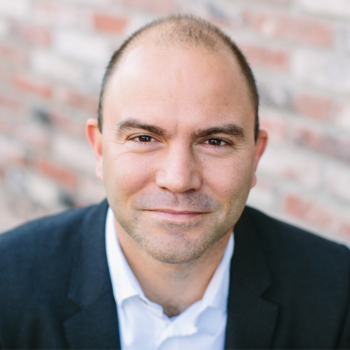
Why is democracy so threatened in America and around the world? And what can we do about it? Join Ben Rhodes to explore the answers to these questions and discuss his recent book, After the Fall.

Image
Ben Rhodes

In 2017, as Ben Rhodes was helping Barack Obama begin his next chapter, the legacy they had worked to build for eight years was being taken apart. To understand what was happening in America, Rhodes decided to look outward. Over the next three years, he traveled to dozens of countries, meeting with politicians, activists, and dissidents confronting the same nationalism and authoritarianism that was tearing America apart. Part memoir and part reportage, After the Fall investigates how much America’s fingerprints are on a world we helped to shape, through our post–Cold War embrace of unbridled capitalism and our post-9/11 nationalism and militarism; our mania for technology and social media; and the racism that fueled the backlash to America’s first Black president. At the same time, Rhodes learns from stories of a diverse set of characters—from Barack Obama himself to Cuban rebels to a rising generation of international leaders—that looking squarely at where America has gone wrong makes clear how essential it is to fight for what America is supposed to be, for our own country and the entire world.

Ben Rhodes is a writer, political commentator, and national security analyst. He is currently a contributor for NBC News and MSNBC; co-host of Pod Save the World; a senior advisor to former President Barack Obama; and chair of National Security Action, which he co-founded with Jake Sullivan in 2018. From 2009-2017, Ben served as a Deputy National Security Advisor to President Obama. In that capacity, he participated in all of President Obama’s key decisions, and oversaw the President’s national security communications, speechwriting, and public diplomacy.

Writer, political commentator, and national security analyst
Ben Rhodes | Writer, political commentator, and national security analyst
Seminars
-

For fall quarter 2021, CISAC will be hosting hybrid events. Many events will offer limited-capacity in-person attendance for Stanford faculty, staff, fellows, visiting scholars, and students in accordance with Stanford’s health and safety guidelines, and be open to the public online via Zoom. All CISAC events are scheduled using the Pacific Time Zone. 

REGISTRATION


About the Event: Nuclear nonproliferation has been a pressing societal need since the development of nuclear weapons. Preventing the further spread of nuclear capabilities that could lead to a nuclear weapons program is a crucial mission that requires both technical and policy advances. Several international treaties have been put into place to curb the expansion of nuclear capabilities. Nevertheless, there are states that may be pursuing elements of an overt or covert nuclear weapons program. New science and technology developments are needed to verify the existing or proposed treaties in this area and to ensure that nuclear weapons are never used again.

In this presentation, I will discuss these challenges and some of the recent advances in science and technology that contribute to solving them. I will present our Consortium for Monitoring, Technology, and Verification (MTV), a consortium of 14 universities and 13 national laboratories working together on these issues. I will highlight research projects including our studies on the fundamental emissions from nuclear fission and the development of new detection systems for nuclear materials detection, localization, and characterization. These systems were shown to aid the International Atomic Energy Agency in its nuclear safeguards and verification activities that have direct relevance to nuclear security. I will also talk about our efforts in furthering diversity, equity, and inclusion, which are crucial for building teams that can successfully address these societal issues.


About the Speaker: Professor Sara Pozzi earned her M.S. and Ph.D. in nuclear engineering at the Polytechnic of Milan, Italy in 1997 and 2001, respectively. She is a Professor of Nuclear Engineering and Radiological Sciences and a Professor of Physics at the University of Michigan where she has graduated 25 Ph. D. students as advisor or co-advisor. Her research interests include the development of new methods for nuclear materials detection, identification, and characterization for nuclear nonproliferation, safeguards, and national security programs. She is the founding Director of the Consortium for Verification Technology (CVT) 2014-2019 and the Consortium for Monitoring, Technology, and Verification (MTV) 2019-2024, two large consortia of multiple universities and national laboratories working together to develop new technologies needed for nuclear treaty verification.

In 2018, Professor Pozzi was named the inaugural Director of Diversity, Equity, and Inclusion (DEI) for the UM College of Engineering. In this capacity, she heads the DEI implementation committee and works to ensure that the students, faculty, and staff are increasingly diverse, everyone is treated equally, and everyone is included.

She is the recipient of many awards, including the Institute of Nuclear Materials Management (INMM) Vince J DeVito Distinguished Service Award and the Department of Energy Outstanding Mentor Award, and is a Fellow of the American Nuclear Society, the INMM, and the IEEE.

Only those with an active Stanford ID with access to William J Perry Conference Room in Encina Hall may attend in person. This event will not be livestreamed.

Sara Pozzi Professor University of Michigan
Seminars
-

*For fall quarter 2021, CISAC will be hosting hybrid events. Many events will offer limited-capacity in-person attendance for Stanford faculty, staff, fellows, visiting scholars, and students in accordance with Stanford’s health and safety guidelines, and be open to the public online via Zoom. All CISAC events are scheduled using the Pacific Time Zone.


REGISTRATION


Seminar Recording

About the Event: According to the Theory of the Nuclear Revolution (TNR), nuclear weapons have stabilized relations between great powers, making deterrence easier than compellence. This view is currently under attack. Recent work has documented Washington’s competitive approach to arms control agreements and the fragility of the nuclear stalemate. However, these critiques have not explained how policymakers could hope to extract coercive benefits from nuclear weapons. This paper revisits this question using a game-theoretic model. It shows that if the compellent state is able to bolster the credibility of its threat through standard techniques, i.e. burning bridges, probabilistic threats, or the rationality of irrationality, then compellence may succeed. However, greater military capabilities bolster coercion by increasing the risk of disaster, with first-strike capabilities being especially destabilizing. TNR was correct to warn about the risks of nuclear competition.

View paper


About the Speaker: 

Alexandre Debs is Associate Professor of Political Science at Yale University. 

His research focuses on the causes of war, nuclear proliferation, and democratization, and it has appeared in top journals such as the American Political Science Review, the American Journal of Political Science, the Journal of PoliticsInternational Organization, and International Security. He wrote with Nuno Monteiro the book Nuclear Politics: The Strategic Causes of Proliferation (2017, Cambridge University Press).

Alexandre received a Ph.d. in Economics from M.I.T., an M.Phil. in Economic and Social History from the University of Oxford as a Rhodes scholar, and a B.Sc. in Economics and Mathematics from Universite de Montreal.

Virtual Only. This event will not be held in person.

​Alexandre Debs Associate Professor Yale University
Seminars
-

* Please note all CISAC events are scheduled using the Pacific Time Zone.

This event is hosted by the Hoover Institution and co-sponsored by CISAC.

Registration required to attend in person.

Event and Registration Link: https://www.hoover.org/events/spies-lies-and-algorithms

About the Event: Spying has never been more ubiquitous―or less understood. The world is drowning in spy movies, TV shows, and novels, but universities offer more courses on rock and roll than on the CIA and there are more congressional experts on powdered milk than espionage. This crisis in intelligence education is distorting public opinion, fueling conspiracy theories, and hurting intelligence policy. In Spies, Lies, and Algorithms, Amy Zegart separates fact from fiction as she offers an engaging and enlightening account of the past, present, and future of American espionage as it faces a revolution driven by digital technology.

Drawing on decades of research and hundreds of interviews with intelligence officials, Zegart provides a history of U.S. espionage, from George Washington’s Revolutionary War spies to today’s spy satellites; examines how fictional spies are influencing real officials; gives an overview of intelligence basics and life inside America’s intelligence agencies; explains the deadly cognitive biases that can mislead analysts; and explores the vexed issues of traitors, covert action, and congressional oversight. Most of all, Zegart describes how technology is empowering new enemies and opportunities, and creating powerful new players, such as private citizens who are successfully tracking nuclear threats using little more than Google Earth. And she shows why cyberspace is, in many ways, the ultimate cloak-and-dagger battleground, where nefarious actors employ deception, subterfuge, and advanced technology for theft, espionage, and information warfare.

Order Now


About the Speaker: 

Amy Zegart is the Morris Arnold and Nona Jean Cox Senior Fellow at the Hoover Institution and Professor of Political Science (by courtesy) at Stanford University. She is also a Senior Fellow at Stanford’s Freeman Spogli Institute for International Studies, Chair of Stanford’s Artificial Intelligence and International Security Steering Committee, and a contributing writer at The Atlantic. She specializes in U.S. intelligence, emerging technologies and national security, grand strategy, and global political risk management.

In person at Hauck Auditorium Hoover Institution and Livestreamed at https://www.hoover.org/events/spies-lies-and-algorithms

Seminars
-

SEMINAR RECORDING


All CISAC events are scheduled using the Pacific Time Zone. This event is part of the year-long initiative on “Ethics & Political Violence” jointly organized by the Center for International Security and Cooperation (CISAC) and The McCoy Family Center for Ethics in Society. This event is hosted by CISAC and is co-sponsored by Society for International Affairs at Stanford, McCoy Family Center for Ethics in Society, Center for South Asia.


About the Event: The dramatic scenes the world witnessed during the fall of Kabul in 2021 following the withdrawal of US and allied forces from Afghanistan nearly coincided with the twentieth anniversary of the 9/11 attacks by Al Qaeda and the subsequent US and allied invasion of Afghanistan. The United States committed trillions of dollars, dispatched soldiers, diplomats and spies across the globe, and made dramatic alterations to domestic and international law to combat terrorism. The material, humanitarian and normative consequences of two decades of war have been significant, both globally and in Afghanistan specifically. In this panel, Dr. Felter, Dr. Mir and Professor Zegart will assess U.S. responses during the global war on terror, identify unexpected outcomes and lessons learned, and ultimately weigh the costs and benefits of this two-decade struggle against terrorism.


About the Speakers: 

Joe Felter is a William J. Perry Fellow at the Center for International Security and Cooperation and research fellow at the Hoover Institution.  From 2017 to 2019, Felter served as US deputy assistant secretary of defense for South Asia, Southeast Asia, and Oceania. There he was the principal advisor for all policy matters pertaining to development and implementation of defense strategies and plans in the region and responsible for managing bilateral security relationships and guiding Department of Defense (DoD) engagement with multilateral institutions.  


Asfandyar Mir is a senior expert in the Asia Center at USIP. Previously, heheld various fellowships at the Center for International Security and Cooperation at Stanford University. His research interests include the international relations of South Asia, U.S. counterterrorism policy and political violence — with a regional focus on Afghanistan and Pakistan. Asfandyar Mir’s research has appeared in peer-reviewed journals, such as International Security, International Studies Quarterly and Security Studies. He received his doctorate in political science from the University of Chicago and a master’s and bachelor’s from Stanford University.


Amy Zegart is the Morris Arnold and Nona Jean Cox Senior Fellow at the Hoover Institution and Professor of Political Science (by courtesy) at Stanford University. She is also a Senior Fellow at Stanford’s Freeman Spogli Institute for International Studies, Chair of Stanford’s Artificial Intelligence and International Security Steering Committee, and a contributing writer at The Atlantic. She specializes in U.S. intelligence, emerging technologies and national security, grand strategy, and global political risk management.

Virtual to Public. Only those with an active Stanford ID with access to William J Perry Conference Room in Encina Hall may attend in person. 

0
rsd19_072_0386a.jpg

Asfandyar Mir is an affiliate with the Center for International Security and Cooperation, Stanford University. Previously he has held predoctoral and postdoctoral fellowships at the center. His research interests are in the international relations of South Asia, US counterterrorism policy, and political violence, with a regional focus on Afghanistan and Pakistan. His research has appeared in peer-reviewed journals of International Relations, such as International Security, International Studies Quarterly and Security Studies, and his commentary has appeared in Foreign Affairs, Foreign Policy, H-Diplo, Lawfare, Modern War Institute, Political Violence at a Glance, Politico, and the Washington Post.

Asfandyar received his PhD in political science from the University of Chicago and a masters and bachelors from Stanford University.

Affiliate

CISAC
Stanford University
Encina Hall, E216
Stanford, CA 94305-6165

(650) 725-9754 (650) 723-0089
0
Senior Fellow at the Freeman Spogli Institute for International Studies
Morris Arnold and Nona Jean Cox Senior Fellow at the Hoover Institution
Senior Fellow at the Stanford Institute for Human-Centered AI
Professor, by courtesy, of Political Science
amyzegart-9.jpg PhD

Dr. Amy Zegart is the Morris Arnold and Nona Jean Cox Senior Fellow at the Hoover Institution. The author of five books, she specializes in U.S. intelligence, emerging technologies, and national security. At Hoover, she leads the Technology Policy Accelerator and the Oster National Security Affairs Fellows Program. She also is an associate director and senior fellow at the Stanford Institute for Human-Centered AI; a senior fellow at the Freeman Spogli Institute; and professor of political science by courtesy, teaching 100 students each year about how emerging technologies are transforming espionage.

Her award-winning research includes the leading academic study of intelligence failures before 9/11: Spying Blind: The CIA, the FBI, and the Origins of 9/11 (Princeton, 2007) and the bestseller Spies, Lies, and Algorithms: The History and Future of American Intelligence (Princeton, 2022), which was nominated by Princeton University Press for the Pulitzer Prize. She also coauthored Political Risk: How Businesses and Organizations Can Anticipate Global Insecurity, with Condoleezza Rice (Twelve, 2018). Her op-eds and essays have appeared in Foreign Affairs, Politico, the New York Times, the Washington Post, and the Wall Street Journal.

Zegart has advised senior officials about intelligence and foreign policy for more than two decades. She served on the National Security Council staff and as a presidential campaign foreign policy advisor and has testified before numerous congressional committees. Before her academic career, she spent several years as a McKinsey & Company consultant.

Zegart received an AB in East Asian studies from Harvard and an MA and a PhD in political science from Stanford. She serves on the boards of the Council on Foreign Relations, Kratos Defense & Security Solutions, and the American Funds/Capital Group.

Date Label
Seminars
-

* Please note all CISAC events are scheduled using the Pacific Time Zone.


Seminar Recording: https://youtu.be/Mip2dRr2w7o


About the Event: With the rapid rise of China, power transitions and the possibility of great power conflict are the focus of popular and scholarly attention. The discipline of International Relations offers many insights on why violent power transition conflicts occur, yet few substantive treatments exist on why and how peaceful change happen in world politics. The Oxford Handbook of Peaceful Change in International Relations (co-edited by T.V. Paul, Deborah Larson, Harold Trinkunas, Anders Wivel and Ralf Emmers) is the first comprehensive treatment of the subject of peaceful change in the field. It contains some 41 chapters, written by scholars from different theoretical and conceptual backgrounds examining the multi-faceted dimensions of this subject. Chapters in the volume examine this issue through the lens of different approaches in international relations theory, through a focus on key challenges in the international system, and from regional and state-level perspectives on the prospects for peaceful change. This panel with Handbook editors and contributors will discuss the conceptual framework, substantive contributions, and key findings of the project.


About the Speakers:


T.V. Paul is James McGill Professor of International Relations in the Department of Political Science at McGill University, Montreal, Canada and a Fellow of the Royal Society of Canada. He served as the President of International Studies Association (ISA) for 2016-17. He is the Founding Director of the Global Research Network on Peaceful Change (GRENPEC). Paul is the author or editor of 21 books and over 80 scholarly articles/book chapters including: Restraining Great Powers: Soft Balancing from Empires to the Global Era (Yale University Press, 2018); The Warrior State: Pakistan in the Contemporary World (Oxford University Press, 2013); Globalization and the National Security State (with N. Ripsman, Oxford University Press, 2010); The Tradition of Non-use of Nuclear Weapons (Stanford University Press, 2009); India in the World Order: Searching for Major Power Status (with B.R. Nayar Cambridge University Press, 2002). Paul currently serves as the editor of the Georgetown University Press book series: South Asia in World Affairs.


Deborah Welch Larson is professor of political science at the University of California, Los Angeles. She received her Ph.D. at Stanford University. Her publications include Origins of Containment: A Psychological Explanation (Princeton: Princeton University Press, 1985); Anatomy of Mistrust: US-Soviet Relations during the Cold War (Ithaca: Cornell University Press, 1997); and “Status Seekers: Chinese and Russian Responses to U.S. Primacy,” International Security 34, no. 4 (Spring 2010): 63-95 (with Alexei Shevchenko). She has most recently published Quest for Status: Chinese and Russian Foreign Policy (New Haven: Yale University Press, 2019), with Alexei Shevchenko.


Alexandra Gheciu is a Professor at the Graduate School of Public and International Affairs, and Associate Director of the Centre for International Policy Studies. Her research interests are in the fields of international security, international institutions, Euro-Atlantic relations, global governance and the liberal order, the Global Right, state (re)building, and International Relations theory.

Alexandra's publications include, in addition to articles in leading academic journals, several books: NATO in the ‘'New Europe': The Politics of International Socialization After the Cold War: (Stanford University Press, 2005); Securing Civilization? (Oxford University Press, 2008),  The Return of the Public in Global Governance (co-edited with Jacqueline Best, Cambridge University Press, 2014 and 2015);  and, more recently, Security Entrepreneurs: Performing Protection in Post-Cold War Europe (Oxford University Press, 2018); and  The Oxford Handbook of International Security (co-edited with William Wohlforth, Oxford University Press, 2018).


Virtual Seminar

T.V. Paul Professor McGill University
Deborah Welch Larson Professor UCLA
Alexandra Gheciu Professor Centre for International Policy Studies
Seminars
-

* Please note all CISAC events are scheduled using the Pacific Time Zone.


This event is co-sponsored by the Project on Russian Power and Purpose in the 21st Century and the Center for International Security and Cooperation.


Seminar Recording:  https://youtu.be/gDD68gqClt8


About the Event: Media and public discussions tend to understand Russian politics as a direct reflection of Vladimir Putin’s seeming omnipotence or Russia’s unique history and culture. Yet Russia is similar to other autocracies—and recognizing this illuminates the inherent limits to Putin’s power. Weak Strongman challenges the conventional wisdom about Putin’s Russia, highlighting the difficult trade-offs that confront the Kremlin on issues ranging from election fraud and repression to propaganda and foreign policy.

Drawing on three decades of his own on-the-ground experience and research as well as insights from a new generation of social scientists that have received little attention outside academia, Timothy Frye reveals how much we overlook about today’s Russia when we focus solely on Putin or Russian exceptionalism. Frye brings a new understanding to a host of crucial questions: How popular is Putin? Is Russian propaganda effective? Why are relations with the West so fraught? Can Russian cyber warriors really swing foreign elections? In answering these and other questions, Frye offers a highly accessible reassessment of Russian politics that highlights the challenges of governing Russia and the nature of modern autocracy.

Rich in personal anecdotes and cutting-edge social science, Weak Strongman offers the best evidence available about how Russia actually works.


Book Purchase: https://press.princeton.edu/books/hardcover/9780691212463/weak-strongman

Discount Code: FRYE 30%


About the Speaker: Timothy Frye is the Marshall D. Shulman Professor of Post-Soviet Foreign Policy at Columbia University and Co-Director of the International Center for the Study of Institutions and Development at the Higher School of Economics, Moscow. He is also the Editor of Post-Soviet Affairs.

Professor Frye received a B.A. in Russian language and literature from Middlebury College in 1986, an M.I.A. from Columbia's School of International and Public Affairs in 1992, and a Ph.D. from Columbia in 1997. He served as the Director of the Harriman Institute from 2009-2015 and as Chair of the Political Science Department from 2016-18.

Virtual Seminar

Timothy Frye Professor Columbia University
Seminars
-

* Please note all CISAC events are scheduled using the Pacific Time Zone.


This event is co-sponsored by the Freeman Spogli Institute for International Studies and the Center for International Security and Cooperation.


Seminar Recording: https://youtu.be/s3MMxYH6bfU


About the Event: Rose Gottemoeller served as the US chief negotiator of the New START treaty. The first woman to lead a major nuclear arms negotiation, she played a critical role in creating US policy on arms control and ensuring that a deeply divided Congress came together to ratify the treaty to safeguard the future of all Americans.  

In her new book, Negotiating the New START Treaty, Gottemoeller gives an insider’s account of the negotiations between the US and Russian delegations in Geneva in 2009 and 2010.  

On May 21, at 1p Pacific, Gottemoeller will discuss her book, her years of high-level experience and her analysis of the complicated relationship between the US and Russia with Michael McFaul, director of the Freeman Spogli Institute for International Studies and the former US Ambassador to Russia.  

Gottemoeller and McFaul were in the trenches together during the negotiations--he in the White House, she in Geneva. In this online event, they will discuss the New START treaty and the key role it played in President Obama's nuclear policies. 

McFaul will interview Gottemoeller and moderate a Q&A with the audience. This event is co-sponsored by the Freeman Spogli Institute for International Studies and the Center for International Security and Cooperation. 


About the Speaker: Rose Gottemoeller is the Frank E. and Arthur W. Payne Distinguished Lecturer at Stanford University's Freeman Spogli Institute for International Studies and its Center for International Security and Cooperation.

Before joining Stanford Gottemoeller was the Deputy Secretary General of NATO from 2016 to 2019, where she helped to drive forward NATO’s adaptation to new security challenges in Europe and in the fight against terrorism.  Prior to NATO, she served for nearly five years as the Under Secretary for Arms Control and International Security at the U.S. Department of State, advising the Secretary of State on arms control, nonproliferation and political-military affairs. While Assistant Secretary of State for Arms Control, Verification and Compliance in 2009 and 2010, she was the chief U.S. negotiator of the New Strategic Arms Reduction Treaty (New START) with the Russian Federation.

Prior to her government service, she was a senior associate with the Carnegie Endowment for International Peace, with joint appointments to the Nonproliferation and Russia programs. She served as the Director of the Carnegie Moscow Center from 2006 to 2008, and is currently a nonresident fellow in Carnegie's Nuclear Policy Program. She is also a research fellow at the Hoover Institution. 

At Stanford, Gottemoeller teaches and mentors students in the Ford Dorsey Master’s in International Policy program and the CISAC Honors program; contribute to policy research and outreach activities; and convene workshops, seminars and other events relating to her areas of expertise, including nuclear security, Russian relations, the NATO alliance, EU cooperation and non-proliferation.

Virtual Seminar

Center for International Security and Cooperation
Encina Hall
616 Jane Stanford Way
Stanford University
Stanford, CA 94305-6165

0
William J. Perry Lecturer, Freeman Spogli Institute for International Studies
Research Fellow at the Hoover Institution
dsg_gottemoeller.jpg

Rose Gottemoeller is the William J. Perry Lecturer at Stanford University's Freeman Spogli Institute for International Studies and Research Fellow at the Hoover Institute.

Before joining Stanford, Gottemoeller was the Deputy Secretary General of NATO from 2016 to 2019, where she helped to drive forward NATO’s adaptation to new security challenges in Europe and in the fight against terrorism.  Prior to NATO, she served for nearly five years as the Under Secretary for Arms Control and International Security at the U.S. Department of State, advising the Secretary of State on arms control, nonproliferation and political-military affairs. While Assistant Secretary of State for Arms Control, Verification and Compliance in 2009 and 2010, she was the chief U.S. negotiator of the New Strategic Arms Reduction Treaty (New START) with the Russian Federation.

Prior to her government service, she was a senior associate with the Carnegie Endowment for International Peace, with joint appointments to the Nonproliferation and Russia programs. She served as the Director of the Carnegie Moscow Center from 2006 to 2008, and is currently a nonresident fellow in Carnegie's Nuclear Policy Program.  

At Stanford, Gottemoeller teaches and mentors students in the Ford Dorsey Master’s in International Policy program and the CISAC Honors program; contributes to policy research and outreach activities; and convenes workshops, seminars and other events relating to her areas of expertise, including nuclear security, Russian relations, the NATO alliance, EU cooperation and non-proliferation. 

Date Label
Seminars
-

* Please note all CISAC events are scheduled using the Pacific Time Zone.


Seminar Recording: https://youtu.be/zXMKvurtEw0


About the Event: Dan Baer, Senior Fellow at the Carnegie Endowment for International Peace, will join Rose Gottemoeller in a fireside chat to speak about the OSCE’s important role as an inclusive platform for security dialogue between the West and Russia and as a valuable instrument for practical cooperation on the ground to address common security challenges on the basis of shared commitments. The OSCE seeks to promote security in the larger context of relations among the states of North America, Europe and Eurasia, including Russia and all the states of the former Soviet Union and those European states that are not members of NATO or the EU.In an era of increasing challenges to multilateralism, this unique element of the Euroatlantic/Eurasian security architecture should be better recognized and utilized. While the OSCE emerged from the Cold War, today's challenges invite a reinvigoration its role as a diplomatic and operational platform. The US has long seen the OSCE as an important vehicle within the European security scene, and with the new administration’s commitment to multilateralism, it will be interesting to observe what role the US will take within the Organization on topics ranging from conventional arms control and confidence- and security-building measures to the security challenges of climate change and human rights. At the same time, while what were once Russian hopes that the OSCE would become a kind of alternative to NATO have dissipated, it is an open question whether Russia will choose to leverage the OSCE as one of the few remaining forums where Russia's engagement and cooperation with European and North American partners can deliver positive impacts on shared challenges.


About the Speaker: Dan Baer is a Senior Fellow at the Carnegie Endowment for International Peace. He served in Governor John Hickenlooper’s cabinet as executive director of the Colorado Department of Higher Education from 2018-2019. He was U.S. ambassador to the Organization for Security and Cooperation in Europe (OSCE) from 2013 to 2017.  Previously, he was a Deputy Assistant Secretary of State for Democracy, Human Rights, and Labor from 2009-2013.

Before his government service, Baer was an assistant professor at Georgetown’s McDonough School of Business, a Faculty Fellow at Harvard’s Safra Center for Ethics, and a project leader at The Boston Consulting Group. He has appeared on CNN, Fox, MSNBC, BBC, PBS Frontline, Al Jazeera, Sky, and The Colbert Report and his writing has appeared in The Washington Post, The Wall Street Journal, USA Today, Foreign Affairs, Politico, The Christian Science Monitor, Foreign Policy, The Chronicle of Higher Education, Westword, The Denver Post, and other publications. He holds a doctorate in International Relations from Oxford and a degree in Social Studies and African American Studies from Harvard. He lives in Denver and is married to Brian Walsh, an economist at The World Bank.

Virtual Seminar

Dan Baer Senior Fellow Carnegie Endowment for International Peace
Seminars
-

* Please note all CISAC events are scheduled using the Pacific Time Zone.


Seminar Recording:  https://youtu.be/zTgJxOfgvNY


About the Event: In Bullets Not Ballots, Jacqueline L. Hazelton challenges the claim that winning "hearts and minds" is critical to successful counterinsurgency campaigns. Good governance, this conventional wisdom holds, gains the besieged government popular support, denies support to the insurgency, and enables military and political victory. Hazelton argues that major counterinsurgent successes since World War II have resulted not through democratic reforms but rather through the use of military force against civilians and the co-optation of rival elites.

Hazelton offers new analyses of five historical cases frequently held up as examples of the effectiveness of good governance in ending rebellions—the Malayan Emergency, the Greek Civil War, the Huk Rebellion in the Philippines, the Dhofar rebellion in Oman, and the Salvadoran Civil War—to show that, although unpalatable, it was really brutal repression and bribery that brought each conflict to an end. By showing how compellence works in intrastate conflicts, Bullets Not Ballots makes clear that whether or not the international community decides these human, moral, and material costs are acceptable, responsible policymaking requires recognizing the actual components of counterinsurgent success—and the limited influence that external powers have over the tactics of counterinsurgent elites.

Link to purchase: https://www.cornellpress.cornell.edu/book/9781501754784/bullets-not-bal…

Discount code: SAVE 30% WITH CODE 09FLYER United States Order online at cornellpress.cornell.edu or call 800 848 6224 Canada Email utpbooks@utpress.utoronto.ca or call 1-800-565-9523 UK, Europe, Asia, Middle East, Africa, Australia, New Zealand, Fiji, & Papua New Guinea Use code CS09FLYER at combinedacademic.co.uk


About the Speaker: Jacqueline L. Hazelton is is an assistant professor in the department of strategy and policy at the U.S. Naval War College. Hazelton specializes in international relations, specifically international security. Her research interests include compellence, the uses of force, military intervention, counterinsurgency, terrorism, and U.S. foreign and military policy. She received her Ph.D. from the Brandeis University Politics Department. Her BA and first MA are in English Literature from the University of Chicago. Her second MA, also from Chicago, is in international relations. Her book, Bullets Not Ballots: Success in Counterinsurgency Warfare, is published by the Cornell University Press Studies in Security Affairs series. Hazelton is at Stanford’s CISAC and the International Security Program at the Belfer Center, Harvard Kennedy School, this year writing her second book, explaining why Western great powers sometimes try to use ambitious liberalizing methods in military intervention.

Virtual Seminar

Jacqueline L. Hazelton Assistant Professor U.S. Naval War College
Seminars
Subscribe to Seminars