0
rsd25_073_0249a.jpg

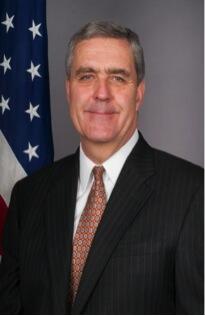
Steven Pifer is an affiliate of the Center for International Security and Cooperation as well as a non-resident senior fellow with the Brookings Institution.  He was a William J. Perry Fellow at the center from 2018-2022 and a fellow at the Robert Bosch Academy in Berlin from January-May 2021.

Pifer’s research focuses on nuclear arms control, Ukraine, Russia and European security. He has offered commentary on these issues on National Public Radio, PBS NewsHour, CNN and BBC, and his articles have been published in a wide variety of outlets.  He is the author of The Eagle and the Trident: U.S.-Ukraine Relations in Turbulent Times (Brookings Institution Press, 2017), and co-author of The Opportunity: Next Steps in Reducing Nuclear Arms (Brookings Institution Press, 2012).

A retired Foreign Service officer, Pifer’s more than 25 years with the State Department focused on U.S. relations with the former Soviet Union and Europe, as well as arms control and security issues.  He served as deputy assistant secretary of state in the Bureau of European and Eurasian Affairs with responsibilities for Russia and Ukraine, ambassador to Ukraine, and special assistant to the president and senior director for Russia, Ukraine and Eurasia on the National Security Council.  In addition to Ukraine, he served at the U.S. embassies in Warsaw, Moscow and London as well as with the U.S. delegation to the negotiation on intermediate-range nuclear forces in Geneva.  From 2000 to 2001, he was a visiting scholar at Stanford’s Institute for International Studies, and he was a resident scholar at the Brookings Institution from 2008 to 2017.

Pifer is a 1976 graduate of Stanford University with a bachelor’s in economics.


Affiliate, CISAC
Affiliate, The Europe Center
Date Label
Authors
News Type
News
Date
Paragraphs

When the Soviet Union collapsed in 1991, the worry in the West was what would happen to that country’s thousands of nuclear weapons. Would “loose” nukes fall into the hands of terrorists, rogue states, criminals – and plunge the world into a nuclear nightmare?

Fortunately, scientists and technical experts in both the U.S. and the former Soviet Union rolled up their sleeves to manage and contain the nuclear problem in the dissolving Communist country.

One of the leaders in this relationship was Stanford engineering professor Siegfried Hecker, who served as a director of the Los Alamos National Laboratory before coming to Stanford as a senior fellow at the Center for International Security and Cooperation. He is a world-renowned expert in plutonium science, global threat reduction and nuclear security.

Hecker cited one 1992 meeting with Russian scientists in Moscow who were clearly concerned about the risks. In his new book, Doomed to Cooperate: How American and Russian scientists joined forces to avert some of the greatest post-Cold War nuclear dangers, Hecker quoted one Russian expert as saying, “We now need to be concerned about terrorism.”

Earning both scientific and political trust was a key, said Hecker, also a senior fellow at Stanford’s Freeman Spogli Institute for International Studies. The Russians were proud of their scientific accomplishments and highly competent in the nuclear business – and they sought to show this to the Americans scientists, who became very confident in their Russian counterparts’ technical capabilities as they learned more about their nuclear complex and toured the labs.

Economic collapse, political turmoil

But the nuclear experts faced an immense problem. The Soviets had about 39,000 nuclear weapons in their country and in Eastern Europe and about 1.5 million kilograms of plutonium and highly enriched uranium (the fuel for nuclear bombs), Hecker said. Consider that the bomb that the U.S. dropped on the Japanese city of Nagasaki in 1945 was only six kilograms of plutonium, he added. Meanwhile, the U.S. had about 25,000 nuclear weapons in the early 1990s.

Hecker and the rest of the Americans were deeply concerned about the one million-plus Russians who worked in nuclear facilities. Many faced severe financial pressure in an imploding society and thus constituted a huge potential security risk.

“The challenge that Russia faced with its economy collapsing was enormous,” he said in an interview.

The Russian scientists, Hecker said, were motivated to act responsibly because they realized the awful destruction that a single nuclear bomb could wreak. Hecker noted that one Russian scientist told him, “We arrived in the nuclear century all in one boat, and a movement by anyone will affect everyone.” Hecker noted, “Therefore, you know, we were doomed to work together to cooperate.”

All of this depended on the two governments involved easing nuclear tensions while allowing the scientists to collaborate. In short order, the scientists developed mutual respect and trust to address the loose nukes scenario.

The George H.W. Bush administration launched nuclear initiatives to put the Russian government at ease. For example, it took the nuclear weapons off U.S. Navy surface ships and some of its nuclear weapons off alert to allow the Russians to do the same. The U.S. Congress passed the Nunn-Lugar Cooperative Threat Reduction legislation, which helped fund some of the loose nuke containment efforts.

While those were positive measures, Hecker said, it was ultimately the cooperation among scientists, what they called lab-to-lab-cooperation, that allowed the two former superpower enemies to “get past the sensitivity barriers” and make “the world a safer place.”

Since the end of the Cold War, no significant nuclear event has occurred as a result of the dissolution of the Soviet Union and its nuclear complex, Hecker noted.

Lesson: cooperation counts

One lesson from it all, Hecker said, is that government policymakers need to understand that scientists and engineers can work together and make progress toward solving difficult, dangerous problems.

“We don’t want to lose the next generation from understanding what can actually be done by working together,” he said.  “So, we want to demonstrate to them, Look, this is what was done when the scientists were interested and enthusiastic and when the government gave us enough room to be able to do that.”

Hecker said this scientific cooperation extended to several thousand scientists and engineers at the Russian sites and at U.S. nuclear labs – primarily the three defense labs: Lawrence Livermore, Los Alamos, and Sandia national laboratories. Many technical exchanges and visits between scientists in Russia and the United States took place.

He recalled visiting some of the nuclear sites in Russian cities shrouded by mystery. “These cities were so secret, they didn’t even appear on Soviet maps.”

Change of threat

When the Soviet Union collapsed, the nature of the nuclear threat changed, Hecker said. The threat before was one of mutual annihilation, but now the threat changed to what would happen if nuclear assets were lost, stolen or somehow evaded the control of the government.

“From an American perspective we referred to these as the ‘four loose nuclear dangers,'” he said.

This included securing the loose nukes in the Soviet Union and Eastern Europe; preventing nuclear materials or bomb fuel from getting into the wrong hands; the human element involving the people who worked in the Soviet nuclear complex; and finally, the “loose exports” problem of someone trying to sell nuclear materials or technical components to overseas groups like terrorists or rogue nations.

For Hecker, this is not just an American story. It is about a selfless reconciliation with a longtime enemy for the greater global good, a relationship not corrupted by ideological or nationalistic differences, but one reflective of mutual interests of the highest order.

“The primary reason,” he said, “why we didn’t have a nuclear catastrophe was the Russian nuclear workers and the Russian nuclear officials. Their dedication, their professionalism, their patriotism for their country was so strong that it carried them through these times in the 1990s when they often didn’t get paid for six months at a time … The nuclear complex did its job through the most trying times. And it was a time when the U.S. government took crucial conciliatory measures with the new Russian Federation and gave us scientists the support to help make the world a safer place.”


Hero Image
Siegfried Hecker (second from left) takes a tour of a secret Russian nuclear facility in the city of Sarov in February, 1992. Hecker was serving as director of the Los Alamos National Laboratory during his visit.
CISAC
All News button
1
-

At the NATO Summit in Wales in September 2014, NATO leaders were clear about the security challenges on the Alliance’s borders. In the East, Russia’s actions threaten our vision of a Europe that is whole, free and at peace.  On the Alliance’s southeastern border, ISIL’s campaign of terror poses a threat to the stability of the Middle East and beyond.  To the south, across the Mediterranean, Libya is becoming increasingly unstable. As the Alliance continues to confront theses current and emerging threats, one thing is clear as we prepare for the 2016 Summit in Warsaw: NATO will adapt, just as it has throughout its 65-year history.

Image
Douglas Lute, Ambassador of the United States to NATO


In August 2013, Douglas E. Lute was sworn-in as the Ambassador of the United States to the North Atlantic Treaty Organization (NATO).  From 2007 to 2013, Lute served at the White House under Presidents Bush and Obama, first as the Assistant to the President and Deputy National Security Advisor for Iraq and Afghanistan, and more recently as the Deputy Assistant to the President focusing on Afghanistan, Pakistan and India.  In 2010, AMB Lute retired from the U.S. Army as a Lieutenant General after 35 years on active duty.  Prior to the White House, he served as the Director of Operations on the Joint Staff, overseeing U.S. military operations worldwide. He served multiple tours in NATO commands including duty in Germany during the Cold War and commanding U.S. forces in Kosovo.  He holds degrees from the United States Military Academy and Harvard University.

A light lunch will be provided.  Please plan to arrive by 11:30am to allow time to check in at the registration desk, pick up your lunch and be seated by 12:00 noon.

Co-sponsored by The Europe Center, the Freeman Spogli Institute for International Studies, the Center for International Security and Cooperation and the Center for Russian, East European and Eurasian Studies.


Douglas Lute United States Ambassador to NATO Speaker
Lectures
News Type
News
Date
Paragraphs

In this Wall Street Journal commentary by William J. Perry and George P. Shultz, the Stanford scholars argue that Russia has completely ignored the Budapest Memorandums on Security Assurances of 1994. They say Russia has taken Crimea and is actively stirring trouble in the eastern part of that country, a blatant violation of solemn vows.

The commentary can be read here.


Hero Image
ukraine gun site Reuters
All News button
1
News Type
Commentary
Date
Paragraphs

In this week's Politico, David Remnick has written a lengthy piece about former U.S. Ambassador to Russia Michael McFaul's rocky tenure in Moscow, as Vladir Putin came back into power as president and U.S.-Russia relations began to deteriorate.

Michael A. McFaul, a FSI senior fellow and CISAC affiliated faculty member, writes in this Center on Democracy, Development, and the Rule of Law that while the U.S. and Europe maintain pressure on Putin through sanctions, the West also needs to get serious about strengthening Ukraine.

"So far, Ukrainians have done more to thwart Mr. Putin than any action by outside powers," says McFaul. "The West can likewise do more to help the Kiev government win hearts and minds in eastern Ukraine."

And in a Politico magazine piece by McFaul earlier this week, he argues that Putin today sees a path to glory that does not involve democratic governance and ignores international norms.

"Putin dreams of comparisons with Peter the Great or the Catherine the Great," writes McFaul, who was ambassador in Moscow from January 2012 until this February, when he returned to Stanford as a political science professor at FSI's New Yorker.

"But if we judge him by his ability to achieve even his own stated goals, his record is not so great. He has achieved some objectives aimed at restoring Russia to the position of global greatness he believes it deserves, but failed at achieving those most important to him. And the future looks even darker."


Hero Image
1 Putin May 2014 001
Russian President Vladimir Putin speaks during a session of the St. Petersburg International Economic Forum on May 24, 2014.
Reuters
All News button
1
Authors
News Type
News
Date
Paragraphs

The United States and Russia should keep working together to stop the spread of nuclear weapons even while disagreeing on issues like Ukraine, Stanford scholars say.

In a recent article in the Bulletin of the Atomic Scientists, Professor Siegfried Hecker and researcher Peter Davis advocate continued U.S.-Russia collaboration on nuclear weapon safety and security.

"The Ukraine crisis has exacerbated what had already become a strained nuclear relationship," Hecker said in an interview. "As one of our Russian colleagues told us, nuclear issues are global and accidents or mishaps in one region can affect the entire world."

Hecker is a professor in the Department of Management Science and Engineering and a senior fellow at CISAC and the Freeman Spogli Institute for International Studies. Over the past 20-plus years, he has worked with Russian scientists to help stop nuclear proliferation. He and Davis returned from a trip this spring to Russia, where they met with nuclear scientists.

"We agreed that we have made a lot of progress working together over the past 20-plus years, but that we are not done," they wrote in the journal essay.

Hecker and Davis described Moscow as a reluctant partner in talks on nuclear proliferation. As for the United States, it actually backed away from cooperation first. A House of Representatives committee recently approved legislation that would put nuclear security cooperation with Russia on hold. And though the White House has opposed this, the Energy Department has issued its own restrictions on scientific interchanges as part of the U.S. sanctions regime against Russia.

But, Hecker said, "Cooperation is needed to deal with some of the lingering nuclear safety and security issues in Russia and the rest of the world, with the threats of nuclear smuggling and nuclear terrorism, and to limit the spread of nuclear weapons."

Washington does not have to choose between the two. It still can pressure Moscow on Ukraine while cooperating on nuclear issues, Hecker and Davis wrote.

They called for further nuclear arms reductions between the two countries, rather than a resumption of the nuclear arms race that took place in the mid-20th century.

Changing relationship

Hecker and Davis acknowledged that the U.S.-Russian relationship overall is changing.

"We realize … that the nature of nuclear cooperation must change to reflect Russia's economic recovery and its political evolution over the past two decades," they wrote.

For example, due to the strained relationship, nuclear proliferation programs must change from U.S.-directed activities to more jointly sponsored collaborations that serve both countries' interests.

As they noted, one huge problem is that Russia still has no inventory or record of all the nuclear materials the Soviet Union produced – or where those materials might be today.

"Moreover, it has shown no interest in trying to discover just how much material is unaccounted for. Our Russian colleagues voice concern that progress on nuclear security in their country will not be sustained once American cooperation is terminated," Hecker and Davis said.

Iran is a flashpoint

America needs Russia to help in its effort to stop Iran from building a nuclear weapon, Hecker and Davis wrote. Russia is a close ally of Iran: "Much progress has been made toward a negotiated settlement of Iran's nuclear program since President Hassan Rouhani was elected in June, 2013. However, little would have been possible without U.S.-Russia cooperation."

In a June 2 interview in the Tehran Times, Hecker said that the only way forward for Iran's nuclear program is transparency and international cooperation. He suggested that the country follow the South Korean model of peaceful nuclear power.

"In my opinion, South Korea will not move in a direction of developing a nuclear weapon option because it simply has too much to lose commercially. That is the place I would like to see Tehran. In other words, it decides that a nuclear program that benefits its people does not include a nuclear weapons option," he told the interviewer.

Hecker said that it is not in Russia's interest to have nuclear weapons in Iran so close to its border.

"Washington, in turn, needs Moscow, especially if it is to develop more effective measures to prevent proliferation as Russia and other nuclear vendors support nuclear power expansion around the globe," Hecker said.

In February, the Iranian government republished an article by Hecker and Abbas Milani, the director of Iranian Studies at Stanford University. The story ran in Farsi on at least one official website, possibly indicating a genuine internal debate in Tehran on the nuclear subject. Hecker and Milani described such a "peaceful path" in another essay on Iranian nuclear power.

Hecker is working with Russian colleagues to write a book about how Russian and American nuclear scientists joined forces at the end of the Cold War to stymie nuclear risks in Russia.

Media Contact

Siegfried Hecker, Freeman Spogli Institute: (650) 725-6468, shecker@stanford.edu

Clifton B. Parker, Stanford News Service: (650) 725-0224, cbparker@stanford.edu

All News button
1
Authors
Siegfried S. Hecker
News Type
Commentary
Date
Paragraphs

In this commentary in the Bulletin of the Atomic Scientists, CISAC's Siegfried Hecker and Peter Davis argue that the United States should continue cooperating with the Russians on nuclear security despite worsening ties over Moscow's actions in Ukraine. The two countries hold the key to preventing the proliferation of nulcear weapons and global nuclear terrorism.

"And, if nuclear power is to provide clean electricity in more places around the world, Russia and the United States must share a common goal of making sure this spread happens safely and without exacerbating proliferation concerns," they write.

Early this month, Hecker answered questions about a recent trip to Russia for a nuclear security conference, in a CISAC story.

All News button
1
Authors
Siegfried S. Hecker
News Type
Commentary
Date
Paragraphs

In this commentary in the Bulletin of the Atomic Scientists, CISAC's Siegfried Hecker and Peter Davis argue that the United States should continue cooperating with the Russians on nuclear security despite worsening ties over Moscow's actions in Ukraine. They argue it is in the best interest of both countires to prevent the proliferation of nulcear weapons and global nuclear terrorism.

All News button
1
Authors
News Type
Q&As
Date
Paragraphs

CISAC Senior Fellow Siegfried Hecker and a delegation of American scientists traveled to Moscow last week to revitalize nuclear cooperation with Russia, despite diplomatic tensions between the United States and Russia over the crisis in Ukraine.

The delegation that traveled to Russia last week included former U.S. laboratory scientists Paul White, James Toevs, and K. David Nokes, as well as CISAC research assistants Peter Davis and Alla Kassianova and CISAC fellow Jason Reinhardt.

The team traveled to Russia to host a workshop and make the case that continued scientific cooperation in reducing nuclear risks – particularly to prevent nuclear proliferation and terrorism – should remain a top priority for both countries, even as U.S.-Russia relations continue to deteriorate.

The White House has implemented increasingly stricter sanctions against top Russian officials and has restricted official travel and scientific cooperation. Washington accuses Moscow of trying to destabilize the new government in Ukraine by backing pro-Russian separatists in the former Soviet state.

Hecker chaired a Track II workshop at the Moscow Engineering and Physics Institute (MEPhI) on April 24 on “Cooperation on Countering Nuclear Terrorism and Nonproliferation.” Presenters from Russian institutes and U.S. laboratories included Reinhardt, a national security systems analyst at Sandia National Laboratories who is pursuing a PhD at Stanford in Management Science & Engineering. He argued for expanded cooperation to counter nuclear terrorism and reduce the risk of global proliferation.

“It is paramount that American and Russian scientists continue to work together to deal with today’s nuclear risks despite the tension between our two nations,” says Hecker, a Stanford professor of management science and engineering. The former head of the Los Alamos National Laboratory made his first trip to the Russian nuclear complex in early 1992, shortly after the collapse of the Soviet Union to promote joint efforts to mitigate the threats posed by the huge Russian nuclear complex during a time of political and economic turmoil.

The threats have changed during the past 22 years, but have not gone away, Hecker says. Yet cooperation between Russian and American nuclear scientists has declined significantly during the past decade because Russia has recovered economically and has grown progressively more protective against external intervention. Now, the crisis in the Ukraine threatens to stop cooperation completely.

More than 200 students from MEPhI’s nuclear science and nonproliferation programs participated in the workshop, alongside prominent Russian scientists.

“The large audience indicates how seriously the nuclear specialists from both sides take the need to protect the world from the spread of nuclear weapons and materials to other states and non-state actors,” says Hecker, whose workshop grew from his Nuclear Risk Reduction Project (NRR), which is funded by the Carnegie Corporation and the MacArthur Foundation.

Hecker is also working with his former Russian counterparts at the Russian nuclear weapons laboratories on a book about the history of U.S.-Russia national laboratory cooperation, which is due out later this year. That book will tell the story of how the scientists worked together during difficult times to make the world a safer place.

Russian and American scientists discuss nuclear collaboration as students from the Moscow Engineering and Physics Institute look on.
Photo Credit: Peter Davis

We asked Hecker to answer several questions related to his trip to Moscow.

Why did you still travel to Moscow given the recent events in Ukraine?

I had to discuss the book with my Russian collaborators in order to meet our fall deadline for publication. We also wanted to reinforce the belief of scientists on both sides that we must continue to cooperate even, or perhaps especially, when our governments are at odds. That is why we organized the educational conference on nuclear cooperation.

Did the U.S. government try to stop you?

Since I went as a Stanford University professor, I did not need official approval. Key individuals in the government knew that I was going and did not try to stop me. However, colleagues from the Department of Energy’s nuclear laboratories were prohibited from attending a related conference and Washington canceled several official bilateral meetings and visits.

Were the Russians allowed to meet with your delegation?

Yes, we met with the key individuals on the Russian side and MEPhI organized a great conference. We did have to switch the venue of one of our side meetings from one of the Russian nuclear weapons laboratories to neutral ground. I think the Russian government did not want these meetings to look official after the U.S. government has canceled most interactions for the foreseeable future.

How do your Russian collaborators view the recent events in Ukraine?

Without exception, they viewed it with alarm and laid the blame squarely on the “fascists” who took over Kiev’s government illegally. They could not understand how the Americans could support what they see as an illegitimate regime. We got quite a lesson on the intertwined history of Russia and the Ukraine. They believe the Americans simply don’t understand the deep relations and commitment all Russians have for Ukraine. When we tried to give a Western point of view, some Russian colleagues told us that we have been brainwashed by Washington and the media.

How does the downturn in relations affect your views on the need for cooperation?

Despite their views on Ukraine, our Russian colleagues all said we must continue to work the nuclear issues together. So while we couldn’t agree on Ukraine, we agreed for the need to keep up our work – which for me has now spanned 49 visits to Russia during the past 22 years. 

What role has CISAC’s collaboration with the Moscow Engineering and Physics Institute (MEPhI) played in your work on nuclear cooperation?

MEPhI is a great counterpart for CISAC and a number of other American universities. It educates about one-third of the scientists and engineers that make up the Russian nuclear complex. It is with the next generation that we have the best chance of reducing the global nuclear risks that we face now and in the future.

All News button
1
Subscribe to Ukraine