Abstract: When President Obama approved the "Olympic Games'' cyber attacks on Iran, he told aides that he was worried about what would happen when nations around the world began to use destructive cyber attacks as a new weapon of disruption and coercion. Now, we've begun to find out. David Sanger, the national security correspondent of The New York Times and author of Confront and Conceal, the book that revealed the cyber program against Iran, will explore how offensive cyber operations have developed in the Obama administration -- and why they have been so little debated.
About the Speaker: David E. Sanger is National Security Correspondent and senior writer for The New York Times. He is the author of two bestsellers on foreign affairs: The Inheritance: The World Obama Confronts and the Challenges to American Power (2009) and Confront and Conceal: Obama’s Secret Wars and Surprising Use of American Power (2012). He served as the Times’ Tokyo Bureau Chief, Washington Economic Correspondent, White House correspondent during the Clinton and Bush Administrations and Chief Washington Correspondent.
Mr. Sanger has twice been a member of New York Times teams that won the Pulitzer Prize, first for the investigation into the causes of the Challenger disaster in 1986, and later for investigations into the struggles within the Clinton administration over technology exports to China. He teaches national security policy at Harvard's Kennedy School of Government.
This event is offered as a joint sponsorship with the Hoover Institution.
Encina Hall (2nd floor)
David Sanger
National Security Correspondent and senior writer for The New York Times
Speaker
New York Times
Participant youth, Wallace and Wellington, overlooking the city from their community.
CONFERENCE OVERVIEW
The heavy presence of youth and young adults in the world of criminality is an issue that has been gaining increasingly more attention in the agendas of policymakers and politicians in developing and developed nations. With scarce options for a quality education, prospects for gainful employment and the possibility for future economic sustainability, on a daily basis, young individuals from poor communities throughout Latin American and U.S. cities are exposed to a violent environment with easily accessed - and often attractive - gateways into the world of criminality. From casual affiliation to gangs in schools and neighborhoods in Southern California, to full-time armed participation in international drug cartels in Juarez and drug factions in Rio de Janeiro favelas, youth are the biggest target – and victims – of violence.
In attempts to shed light to this very complex and fundamental issue that is claiming thousand of lives every year and deteriorating the social fabric across cities, the Program on Poverty and Governance (PovGov) at Stanford Center on Democracy, Development, and the Rule of Law (CDDRL) in conjunction with the Center for Latin American Studies, The Bill Lane Center for the America West, The Mexico Initiative at FSI, and The Center on International Security and Cooperation, will hold a two-day conference to discuss the dimensions of youth and criminal violence in Latin American and U.S. cities and share pathways to hope.
Ranging from grassroots initiatives to widespread government policies, the conference will develop on various established development actions and programs aimed at providing educational, work, and entrepreneurial opportunities for youth in territories impacted by poverty, criminality and violence in the U.S. and Latin America. We will gather activists and practitioners from grassroots civil society organizations, community leaders, educators, professionals from international development platforms, policy-makers, politicians, scholars - as well as some of the very individuals participating in these programs - to discuss the many challenges faced by the youth population in these different locations and to share innovative and inspirational initiatives to generate opportunities and foster change.
At PovGov, we believe in the importance of creating an environment where actors with different backgrounds across sectors, disciplines, realities and environments can come together to share their first-hand experiences, challenges and aspirations. We hope this wide-reaching and multiplayer conference can enrich the discussion around the formulation of policies and development strategies to benefit the youth in places of violence and better inform the work moving forward.
· Brenda Jarillo, Post-Doctoral Fellow, PovGov, Stanford University.
· Monica Valdez González, Director of Research and Studies, IMJUVE, Mexico.
Discussant: Francis Fukuyama, Director, Program on Governance, Stanford University.
10:40 – 11:40
Keynote Speaker
The Agenda for Youth Violence Prevention in Brazil: Where We Are Now and Where We Are Heading
Angela Guimarães, Brazil’s Sub-Secretary of Youth and President of the National Council on Youth (CONJUVE)
11:50 – 12:50: Lunch
1:00 – 2:30
Panel 2. Initiatives for At-risk Youth in Rio Favelas
· Eliana de Sousa e Silva, Director, Redes de Desenvolvimento da Maré, Rio de Janeiro, Brazil.
· Jailson de Sousa e Silva, Director, Observatório de Favelas, Rio de Janeiro, Brazil.
· Ivana Bentes, National Secretary of Citizenship and Cultural Diversity, Brazil.
Discussant: Larry Diamond, Director, CDDRL, Stanford University.
(10-minute break)
2:40 – 4:10
Panel 3. Reducing Youth Gang Activity and Violence in the U.S.
· Amy Crawford, Deputy Director, Center for Crime Prevention and Control, John Jay College of Criminal Justice in New York.
· Lateefah Simon, Director, California’s Future Initiative at Rosenberg Foundation, San Francisco, California.
· Christa Gannon, Founder and Director, Fresh Lifelines for Youth, San Mateo and Santa Clara, California.
Discussant:Bruce Cain, Director, Bill Lane Institute for the American West, Stanford University.
4:15 – 5:00: Closing Event of the Day
Stanford International Crime and Violence Lab announcement; cooperation agreement ceremony; photography exposition from Observatório de Favelas (“People’s Images” project).
· Beatriz Magaloni, Stanford University.
· Alberto Diaz-Cayeros, Stanford University.
(Adjourn)
Wednesday, April 29th 2015
9:00- 10:30
Panel 4. Evaluating Effective Interventions for Youth
· Jorja Leap, Adjunct Professor, Department of Social Welfare; Director, Health and Social Justice Partnership, UCLA.
In an age of terrorism, where should a democratic society draw the line on government surveillance? Edward Snowden’s explosive disclosures about the National Security Agency’s intelligence-collection operations have ignited an intense debate about the appropriate balance between security and liberty in America. In a special series this year, nationally prominent experts will explore the critical issues raised by the NSA’s activities, including their impact on our security, privacy, and civil liberties. This timely series will address one of the most challenging questions the nation faces today as it tries to strike the right balance between safety and liberty.
The Security Conundrum will look behind and beyond the headlines, examining the history and implementation of the NSA operations, the legal questions generated by them, the media’s role in revealing them, and the responsibility of Congress to oversee them. It will also address the NSA’s uneasy and evolving relationship with Silicon Valley. Each session in the series is designed to explore these issues from a different vantage point. The guest speakers, in conversation with Stanford scholars, will probe the problems, explain the political, legal, and technological contours of the NSA actions, and outline ways to preserve the nation’s security without sacrificing our freedoms.
An Evening with Senator Mark Udall
Mark Udall was the senior US Senator from the state of Colorado from 2009–2015. During his tenure in the US Senate, Senator Udall held various national security committee assignments, both with the Senate Armed Services Committee and the Senate Select Committee on Intelligence. An active member of the Senate Intelligence Committee, Senator Udall gained notoriety for his vocal opposition to NSA surveillance programs in the wake of the Edward Snowden disclosures in June of 2013. However, as early as 2011, Senator Udall called on the Office of the Director of National Intelligence to declassify material related to US government surveillance. Following the Snowden revelations, Senator Udall advocated for adopting the recommendations from the President’s Review Group on Intelligence and Communications Technologies, as well as substantively reforming the NSA.
In a conversation with Amy Zegart, CISAC Co-Director and Davies Family Senior Fellow at the Hoover Institution, Senator Udall will provide a lawmaker’s perspective on the oversight of controversial NSA programs. He will discuss the divide between security and civil liberties, as well as his thoughts on reform of US intelligence collection activities.
Ticket information: Admission is free but advance registration is required. Doors open at 6:30 PM; no entry after 7:40 PM. Registration is limited to 1 ticket per person. A photo ID will be required at the door.
The Security Conundrum is co-sponsored by Stanford’s Freeman Spogli Institute for International Studies, the Center for International Security and Cooperation, the Hoover Institution, Stanford Continuing Studies, Stanford in Government, and the Stanford Law School.
CEMEX Auditorium
Knight Management Center
641 Knight Way, Stanford University
Mark Udall
Former US Senator, State of Colorado
Speaker
CISAC
Stanford University
Encina Hall, E216
Stanford, CA 94305-6165
(650) 725-9754
(650) 723-0089
0
zegart@stanford.edu
Senior Fellow at the Freeman Spogli Institute for International Studies
Morris Arnold and Nona Jean Cox Senior Fellow at the Hoover Institution
Senior Fellow at the Stanford Institute for Human-Centered AI
Professor, by courtesy, of Political Science
amy_zegart_headshot_2026.jpg
PhD
Dr. Amy Zegart is the Morris Arnold and Nona Jean Cox Senior Fellow at the Hoover Institution. The author of five books, she specializes in U.S. intelligence, emerging technologies, and national security. At Hoover, she leads the Technology Policy Accelerator and the Oster National Security Affairs Fellows Program. She also is an associate director and senior fellow at the Stanford Institute for Human-Centered AI; a senior fellow at the Freeman Spogli Institute; and professor of political science by courtesy, teaching 100 students each year about how emerging technologies are transforming espionage.
Her award-winning research includes the leading academic study of intelligence failures before 9/11: Spying Blind: The CIA, the FBI, and the Origins of 9/11 (Princeton, 2007) and the bestseller Spies, Lies, and Algorithms: The History and Future of American Intelligence (Princeton, 2022), which was nominated by Princeton University Press for the Pulitzer Prize. She also coauthored Political Risk: How Businesses and Organizations Can Anticipate Global Insecurity, with Condoleezza Rice (Twelve, 2018). Her op-eds and essays have appeared in Foreign Affairs, Politico, the New York Times, the Washington Post, and the Wall Street Journal.
Zegart has advised senior officials about intelligence and foreign policy for more than two decades. She served on the National Security Council staff and as a presidential campaign foreign policy advisor and has testified before numerous congressional committees. Before her academic career, she spent several years as a McKinsey & Company consultant.
Zegart received an AB in East Asian studies from Harvard and an MA and a PhD in political science from Stanford. She serves on the boards of the Council on Foreign Relations, Kratos Defense & Security Solutions, and the American Funds/Capital Group.
Hide publication sections
Off
Date Label
Amy Zegart
Co-Director, CISAC, Davies Family Senior Fellow at the Hoover Institution
Moderator
At the NATO Summit in Wales in September 2014, NATO leaders were clear about the security challenges on the Alliance’s borders. In the East, Russia’s actions threaten our vision of a Europe that is whole, free and at peace. On the Alliance’s southeastern border, ISIL’s campaign of terror poses a threat to the stability of the Middle East and beyond. To the south, across the Mediterranean, Libya is becoming increasingly unstable. As the Alliance continues to confront theses current and emerging threats, one thing is clear as we prepare for the 2016 Summit in Warsaw: NATO will adapt, just as it has throughout its 65-year history.
Image
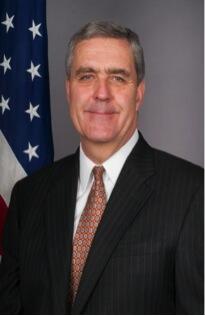
In August 2013, Douglas E. Lute was sworn-in as the Ambassador of the United States to the North Atlantic Treaty Organization (NATO). From 2007 to 2013, Lute served at the White House under Presidents Bush and Obama, first as the Assistant to the President and Deputy National Security Advisor for Iraq and Afghanistan, and more recently as the Deputy Assistant to the President focusing on Afghanistan, Pakistan and India. In 2010, AMB Lute retired from the U.S. Army as a Lieutenant General after 35 years on active duty. Prior to the White House, he served as the Director of Operations on the Joint Staff, overseeing U.S. military operations worldwide. He served multiple tours in NATO commands including duty in Germany during the Cold War and commanding U.S. forces in Kosovo. He holds degrees from the United States Military Academy and Harvard University.
A light lunch will be provided. Please plan to arrive by 11:30am to allow time to check in at the registration desk, pick up your lunch and be seated by 12:00 noon.
Co-sponsored by The Europe Center, the Freeman Spogli Institute for International Studies, the Center for International Security and Cooperation and the Center for Russian, East European and Eurasian Studies.
Douglas Lute
United States Ambassador to NATO
Speaker
Abstract: With the development of cyber capabilities by an increasing number of states, policymakers as well as scholars have been calling for the negotiation of a new international treaty to regulate cyber warfare. This paper provides an account and analysis of relevant debates in the United Nations with a focus on the position of four states – Russia, China, the US and the UK. Discussions have been concentrated in the First Committee of the General Assembly which has been seized with the issue since 1998 when the Russian Federation submitted a proposal for an international convention to govern the use of information and communication technologies for military purposes. While these efforts towards a wholesale international treaty have not materialized, Russia and China continue to advocate a change in the legal status through the promulgation of additional norms. In contrast, the US and the UK have been firm supporters of applying current legal regimes, including the UN Charter and the Geneva Conventions, to the use of cyber capabilities by states. In advancing these positions, two powerful narratives have emerged each emphasizing different aspects of the cybersecurity debate.
About the Speaker: Elaine Korzak is a postdoctoral cybersecurity fellow at CISAC. She earned her Ph.D from the Department of War Studies at King´s College London in 2014. Her thesis examined the applicability and adequacy of international legal frameworks to the emerging phenomenon of cyber attacks. Her analysis focused on two legal areas in particular: international law on the use of force and international humanitarian law. Elaine holds both an MA in International Peace and Security from King´s College London and an LL.M in Public International Law from the LSE. Her professional experience includes various governmental and non-governmental institutions, including NATO´s Cyber Defence Section as well as the European Commission´s Directorate-General on Information Society and Media.
Elaine Korzak is a research scholar focusing on international cybersecurity governance.
Her work covers international legal, policy, and governance aspects in cybersecurity, including norms and international law governing state conduct in cyberspace, cybersecurity negotiations at the United Nations, and the international regulation of commercial spyware. Her work has appeared in the Oxford Handbook of Cyber Security, the Routledge Handbook of International Cybersecurity, the Georgetown Journal of International Affairs, the Bulletin of the Atomic Scientists, and RUSI Journal.
Previously, Elaine has held positions at UC Berkeley, the Center for International Security and Cooperation (CISAC), the Hoover Institution (both at Stanford University), and the Middlebury Institute of International Studies at Monterey (MIIS). She holds a PhD in War Studies and an MA in International Peace and Security from King’s College London, as well as an LL.M. in Public International Law from the London School of Economics and Political Science (LSE).
Is Europe "elderly and haggard", and could France become "the crucible of Europe" (Jan. 10, 2015 NYTimes op-ed)?
On the one hand, Europe is warned by the US about an Asian "pivot", and is perceived here as less relevant and effective. Significantly, certainly as a wake up call, Pope Francis recently compared Europe to a "grandmother, no longer fertile and vibrant, increasingly a bystander in a world that has apparently become less and less Eurocentric”. France had been previously presented here as an eminent representative of an "Old Europe".
On the other hand, the US has been constantly, during the last decade, advocating for a stronger Europe and stressing a special French role in this endeavour. A few days ago, after the terrorist attacks in Paris, President Obama publicly stated that "France was the US oldest Ally".
At a time when we have to face common challenges in the Middle East and in Africa, to adapt to new emerged actors and a more assertive Russia, to deal with direct threats including in the field of proliferation and the cyber space, to define a multipolar world and organize our economic relation (TTIP), what can be the EU contribution? What can also be a special intellectual and diplomatic French input to this global realignment?
Co-sponsored by The Europe Center, the Center for International Security and Cooperation and the France-Stanford Center.
Image
Ambassador Eric Lebédel is a French diplomat, former ambassador to the OSCE and to Finland, with a deep experience in Transatlantic relationship (twice as Minister's advisor; in the French embassy in Washington DC) and in European affairs. He is also involved in crisis management (PMs office), international security (embassy in Moscow, consul general in Istanbul) and multilateral diplomacy ( NATO's Director for crisis management, OSCE). Presently working on Strategic Partnerships for the French MFA and interested in e.diplomacy, he also regularly lectures at Sciences-po and ENA (Ecole Nationale d'Administration) on crisis management and Europe.
In this article, Associate Fellow and author Benoit Pelopidas argues that memorialization of the Cuban missle crisis may lead to the misconception that we have learned all the lessons worth gleaning from the crisis. Ironically we run the risk of recreating the perilous mood of the day: "the overconfidence that the leadership at the time had about both their knowledge and the sufficiency of that knowledge to allow successful management of a nuclear crisis.."
The rise of China as a global and regional power has created areas where the interests of China and the United States overlap in competition, the senior U.S. military commander in the Pacific told a Stanford audience. But Admiral Samuel Locklear III, the commander of U.S. Pacific Command (USPACOM), rejected the traditional realpolitik argument, which predicts inevitable confrontation between the United States, a status quo power, and China, a rising power.
The United States and China have a “mutual skepticism of each other,” the Pacific Commander acknowledged, but he characterized the relationship as “collaborative, generally.”
He said the dangers of direct military confrontation between the two powers is low, but warned against Chinese tendencies to perceive the United States as engaged in an effort to ‘contain’ the expansion of China’s influence. Instead, Locklear urged China to work with the United States to build new security and economic structures in the region.
He said that China has also benefited from the security environment that the United States has helped shape and maintain in the region.
Locklear reminded the audience of the central importance of the vast area under his command, which stretches from the Indian subcontinent across the vast Pacific Ocean. More than nine out of 10 of the largest ports in the world are in the Asia-Pacific region, and over 70 percent of global trade passes through its waters. The U.S. rebalance to Asia, a policy pursued by the Obama administration as early as year 2009, largely happened because of the economic and political importance of that area.
The mutual interest in economic prosperity depends, however, on a stable security environment. Washington has an interest in maintaining the structure of security that has ensured peace for the last few decades. Beijing seeks to change the status quo, to build a regional system that reflects its growth as a power.
Locklear called on China to work with the United States and other nations in the region, such as Japan and Australia, as well as the countries of Southeast Asia, to take the current “patchwork quilt” of bilateral and multilateral alliances and build a basis to maintain economic interdependence and security. He pointed to the U.S.-led effort to form a Trans-Pacific Partnership as a 12-nation economic structure, which could eventually include China.
“We want China to be a net security contributor,” he said, “And my sense is that both the United States and the nations on the periphery of China are willing to allow China to do that – but with circumstances.” He said conditions for the United States included open access to shared domains in sea, air, space and cyberspace.
The Pacific Commander cautioned against the danger, however, of unintended conflict, fueled by territorial disputes and Chinese assertiveness that worries its neighbors. Locklear stressed the need for more dialogue, including among the militaries in the region, an effort that the U.S. Pacific Command is currently carrying out.
“There’s a trust deficit in Asia among the nations, as it relates in particular to China,” he said.
Relations have been so icy that the top political leaders of Japan and China didn’t meet for nearly two years, only breaking the divide for a 20-minute meeting at the Asia-Pacific Economic Summit (APEC) in Beijing last month.
Refusing to engage at the highest level has made it difficult for countries to work on solutions to shared problems. The region now sees a confluence of old and new challenges that could threaten global stability if ill-managed, said Locklear, who has led the U.S. military command in the Pacific since 2012.
For decades, China and Japan have been at odds about sovereignty claims over islands in the East China Sea. In the past, during the time of Deng Xiaoping’s rule in China, the two countries agreed to, as Deng reportedly put it, ‘kick the issue into the tall grass’ for future generations to deal with it. These disputes have resurfaced in recent years, threatening to trigger armed conflict between the air and naval forces of the two countries.
Locklear said he believed that China and Japan would avoid inadvertent escalation, thanks to improved communications and tight command and control over their forces. But he also warned that at least seven nations have conflicting claims in the South China Sea, which could easily escalate into direct conflict.
These situations, paired with an upsurge in Chinese military spending and the growing belief that the United States is a declining power, raise doubts about China’s intentions in the region. China’s Asian neighbors increasingly question the intensions of the world’s most populous nation, and second largest economy.
“Is it a return to the old days where you had basic tributary states? Is that the model that China is looking for? Or is it a 21st century model?”
Locklear said China and other nations in the Asia-Pacific, as well as the United States, need to work harder to form shared views and consensus, particularly among those who “own the guns.”
Dialogue and interactions among the militaries are crucial, especially those who are called upon to make quick decisions during a possible flashpoint, for instance an accidental clash of boats or planes.
“Trust really does fall in many ways to military leaders to get it right and to lead, to some degree, the politicians and the diplomats,” he said. Locklear spoke of a tangible example of collaboration in the Rim of the Pacific Exercise, also known as RIMPAC, hosted by USPACOM. Twenty-two countries participate in the world’s largest maritime warfare exercise in Hawaii, which this year included naval forces from China.
“Does it fix those friction points? No, it doesn’t.” But, Locklear concluded, “We hope that this kind of thing opens the door for future interaction.”
The audio file and transcript from the event can be accessed by clicking here.
Hero Image
Admiral Samuel Locklear III spoke about the future of the Asia-Pacific region at Stanford University. | Debbie Warren
Due to the overwhelming response to this event and our seating limitations, registration is now closed.
Admiral Cecil D. Haney, a native of Washington, D.C. is a 1978 graduate of the United States Naval Academy.
His career as a submariner includes assignments aboard USS John C. Calhoun (SSBN 630), USS Frank Cable (AS 40), USS Hyman G. Rickover (SSN 709), USS Asheville (SSN 758), and Submarine Squadron 8, culminating in command of USS Honolulu (SSN 718).
Subsequent fleet command assignments include Submarine Squadron 1 from June 2002 to July 2004, and Submarine Group 2 from October 2006 to March 2008.
Admiral Haney's shore duty tours include administrative assistant for enlisted affairs at Naval Reactors; congressional appropriations liaison officer for the Office of the Secretary of Defense (Comptroller); Deputy Chief of Staff of Plans, Policies and Requirements, U.S. Pacific Fleet (N5N8); Director, Submarine Warfare Division (N87); Director, Naval Warfare Integration Group (N00X); Deputy Commander, U.S. Strategic Command and recently Commander, U.S. Pacific Fleet.
Admiral Haney holds Master's degrees in Engineering Acoustics and System Technology from the Naval Post Graduate School, and a Master's degree in National Security Strategy from the National Defense University.
Admiral Haney's decorations include the Navy Distinguished Service Medal (two awards), Defense Superior Service Medal (two awards), Legion of Merit (four awards), Navy Commendation Medal (three awards), Navy Achievement Medal (two awards), and various campaign and unit awards. In addition, he was the 1998 Vice Admiral James Bond Stockdale Leadership Award recipient.
Encina Hall, 2nd floor
Admiral Cecil D. Haney
Commander
Speaker
USSTRATCOM

 Participant youth, Wallace and Wellington, overlooking the city from their community.