Authors
News Type
News
Date
Paragraphs

Stanford foreign policy experts discussed flashpoints around the world at an OpenXChange event this week.


Three of Stanford's most seasoned international affairs experts discussed foreign policy and diplomacy – and practiced a bit of it on stage, too – as they tackled the topics of refugees, Russia and other politically thorny issues at a campus forum March 1.

The event, "When the World Is Aflame," featured Condoleezza Rice, a Stanford political science professor and former U.S. secretary of state; Michael McFaul, director of Stanford's Freeman Spogli Institute for International Studies and former U.S. ambassador to Russia; and Jeremy Weinstein, a Stanford political science professor and former director for the National Security Council.

Janine Zacharia, a Stanford visiting lecturer in communication and former Jerusalem bureau chief and Middle East correspondent for the Washington Post, was the moderator.

The event was hosted by OpenXChange, a campus initiative to provide a forum for students and community members to focus on today's societal challenges.

"So you were resetting some of my policy?" Rice half-jokingly interjected, as McFaul discussed the objectives behind the U.S. trade talks with Russia a few years ago.

"It was not about making friends with the Russians – I want to make that clear," McFaul continued after the laughter in the audience died down. "And it wasn't that we needed to correct the wrongs from the previous period," he said, casting a quick glance over at Rice. "The Russians had an interest in giving the Iranians a nuclear weapon. Our answer was, no, and let's work with them to prevent that."

A series of trade sanctions with Russia were eventually accomplished, but as it turns out, McFaul noted, the political environment has since changed with Russia's aggression in Crimea, Ukraine and Syria.

Today's conflict in Syria was laid about four years ago, the panelists agreed, when the United States decided to aid the rebels and not overtly attack the current regime.

"There were reasons our president and others did not go down that path, but it was an invitation to others to play games in that environment," Weinstein said. "What their endgame is, we don't know."

Rice added that Russian President Vladimir Putin "does not mind countries that basically don't function." As such, "a stable, functioning Syria was never his definition of success."

Zacharia asked, "Are you saying we have yielded the endgame to the Russians in Syria? There is nothing we can do? And we're playing defense?"

"Yes," Rice answered.

"Wait, there is no endgame," McFaul said. "It's not that we yielded the endgame."

"Right," Rice replied.

Though the panelists' opinions differed at times, the trio of political science professors agreed on many points, including that international order is being tested, and that the refugee crisis is an overwhelming problem – one that the United States should help resolve.

"I'm a firm believer that America has a moral obligation to take [refugees]," Rice said. "But let's remember that we have to have a way to take them that is actually going to work within the system."

"We have a humanitarian architecture that simply isn't up to the task," Weinstein said. Securing congressional funding to reform the system will be a challenge.

What's more problematic, McFaul added, is that the current political rhetoric about how the United States should handle refugees is "based on fear."

"We're not having a rational debate about this in my opinion," McFaul said. "We have to fill the debate with empirical facts instead."

Public fears will continue as long as extreme Islamic State terrorist groups remain influential, "inspiring lone wolves like [those] in San Bernardino," Rice said, referring to the December 2015 terrorist attack there that killed 14 and injured 22 people.

"Somebody has got to defeat ISIS in its crib," Rice said. "They march in columns; they don't hide in caves like al-Qaeda. If CBS News can find them, then the American military can find them."

The tougher challenge, however, will be the task of influencing sectarian politics and creating a more stable state in the long term, Weinstein said.

Stanford – with its cache of expertise – should strive to shape the national dialogue with concrete facts and analyses, McFaul said. Inspiring students and giving them the foundational tools to become the new generation of policy leaders is also part of that, he said. Adding a course on Russian politics would also be an improvement, he said.

Weinstein is a senior fellow at the Freeman Spogli Institute. Rice, a former Stanford provost, is the Denning Professor in Global Business and the Economy at Stanford Graduate School of Business and the Thomas and Barbara Stephenson Senior Fellow at the Hoover Institution.

The panelists urged students to gain a deep knowledge of the areas and issues they care about.

"Know your facts," Rice emphasized.

"When you're making policy decisions at the table, the people who understand these places and understand the political dynamics – those are the people whose voices are second to none around the table," Weinstein said.

"And we need to get you prepared for that in a more robust way," McFaul said, inviting students to pass any ideas about this to him.

In terms of career choices, "there's nothing greater" than public service, he said. "Sometimes I would get goose pimples when I could stand in front of Russians with the American flag behind me, representing the United States of America."

Hero Image
16193 condi mike L.A. Cicero
All News button
1
Authors
News Type
News
Date
Paragraphs

A shadowy terror group smuggles a crude nuclear bomb into the United States, then detonates it right in the heart of Washington D.C., setting off a 15 kiloton explosion.

Eighty thousand Americans are killed instantly, including the president, vice president and most of the members of Congress, and more than a hundred thousand more are seriously wounded.

News outlets are soon broadcasting a message they’ve all received from a group claiming responsibility.

It says there are five more bombs hidden in five different cities across the America, and one bomb will be set off each week for the next five weeks unless all American troops based overseas are ordered to immediately return to the U.S. homeland.

The nation is thrown into chaos, as millions scramble to flee the cities, clogging roads and choking telecommunications systems.

The stock market crashes, before trading is halted altogether.

Martial law is declared, amid widespread looting and violence.

That was just one of the nightmare scenarios for a potential nuclear disaster that former U.S. Secretary of Defense William J. Perry vividly described as he delivered the Center for International Security and Cooperation’s annual Drell Lecture on Wednesday.

“My bottom line is that the likelihood of a nuclear catastrophe today is greater than it was during the Cold War,” Perry said.

Most people were “blissfully unaware” of the danger that simmering conflicts in geopolitical flash points around the globe – including Russia, China, North Korea, Iran and Pakistan – could easily turn nuclear, Perry told the Stanford audience.

A new nuclear arms race with Russia

Perry said he had tried to foster closer cooperation between the U.S. and Russia when he headed the Pentagon during the mid ‘90s and helped oversee the joint dismantling of four thousand nuclear weapons.

“When I left the Pentagon, I believed we were well on the way to ending forever that Cold War enmity, but that was not to be,” he said.


William J. Perry shares a video depicting the threat of nuclear terrorism with a Stanford audience. William J. Perry shares a video depicting the threat of nuclear terrorism with a Stanford audience.

Since then, relations between the West and Russia have soured badly, prompting Russia to modernize its nuclear arsenal and assume a more aggressive nuclear posture.


“They’re well advanced in rebuilding their Cold War nuclear arsenal, and it is Putin’s stated first priority,” Perry said.

“And they have dropped their former policy of no first use of nuclear weapons, and replaced it with a policy that says nuclear weapons will be their weapon of choice if they are threatened.”

While Perry said he believed Russian president Vladimir Putin did not want to engage in a military conflict with NATO forces, he said he was concerned about the possibility of Russia making a strategic miscalculation and stumbling into a conflict where they might resort to the use of tactical nuclear weapons.

“If they did that there’s no way of predicting or controlling the escalation that would follow thereafter,” Perry said.

Chinese economic problems increasing tensions

In Asia, a slowing Chinese economy could exacerbate domestic political tensions over issues such as wealth inequality and pollution, and encourage Chinese leaders to divert attention from problems at home by focusing on enemies abroad.

“China has had more than 10 percent growth now for almost three decades, but I think there’s trouble ahead,” Perry said.

“The time-proven safety valve for any government that’s in trouble is ultra-nationalism, which in the case of China translates into anti-Americanism and anti-Japanese.”

China has seen a major growth in military expenditures over the last decade, and it has used that investment to build a blue water navy and develop effective anti-ship missiles designed to drive the U.S. Navy hundreds of miles back from the Chinese coastline.

One potential flash point for a conflict between China and the U.S. are the artificial islands that China has been building in the disputed waters of the South China Sea.

“In a sense, China is regarding the South China Sea as a domestic lake, and we regard it and most other countries regard it as international waters, so their actions have been challenged by the U.S. Navy and will continue to be challenged,” Perry said.

North Korea’s growing nuclear threat

Meanwhile, China’s neighbor North Korea has continued to defy the international community and conducted another nuclear test in January.

“North Korea is today building a nuclear arsenal, and I would say clearly it’s of the highest priority in their government, and they have adopted outrageous rhetoric about how they might use those nuclear weapons,” Perry said.

William J. Perry delivers the Drell Lecture in an address entitled "A National Security Walk Around the World." William J. Perry delivers the Drell Lecture in an address entitled "A National Security Walk Around the World."
North Korea followed up its latest nuclear test with a satellite launch earlier this month – an important step towards developing an intercontinental ballistic missile that could threaten the United States mainland.

“These missiles today have only conventional warheads that are of no significant concern, but they are developing nuclear warheads,” Perry said.

“They already have developed a nuclear bomb, and the latest test, as well as tests to come, will be designed to perfect a bomb small enough and compact enough and durable enough to fit into a warhead. If they succeed in doing that, then the bluster will become a real threat.”

Perry said he hoped China and the United States could combine forces and adopt a “carrot and stick” diplomatic approach to force North Korea to abandon its nuclear weapons program – with the United States offering aid and international recognition, and China threatening to cut off supplies of food and aid.

He said he expected to see “more acting out” from the North Korean regime in the coming months, in the form of further nuclear and rocket tests.

Like it or not, the Iran deal is the only deal we’ll get

The landmark deal reached last year, where Iran agree to curtail its nuclear program in exchange for the lifting of economic sanctions, was a better resolution than Perry had expected to the negotiations, but it has met with significant resistance from groups he described as “strange bedfellows.”

“The opposition in Israel and the United States opposed the deal because they fear it will allow Iran to get a bomb,” Perry said.

“Whereas the opposition in Iran opposed the deal because they fear it will prevent Iran from getting a bomb. Both cannot be right.”

Many Republican presidential hopefuls have publicly stated on the campaign trail that they would withdraw from the deal if they got elected to the White House, but Perry said that would be a strategic mistake.

“The opposition in the United States has a simple formula – we should withdraw from the deal, we should reinstate sanctions, and we should renegotiate a better deal,” Perry said.

“Let me be as blunt as I can, this is a pure fantasy. There is not the remotest possibility that the sanction could be reapplied if the United States withdraws from this deal, because the day we withdraw from the deal, our allies are gone, the sanctions are gone, there will be no renegotiations without sanctions, so this deal, like it or not, is the only deal we will ever get.”

Another “Mumbai” attack could spark regional nuclear war

Nuclear rivals India and Pakistan have more than a hundred nuclear weapons on each side, as well as the missiles to deliver them, and a conventional military conflict between them could quickly escalate into a regional nuclear war, Perry said.

Another large-scale terror attack, like the coordinated assault in Mumbai that killed more than 163 people in 2008, could lead India to retaliate militarily against Pakistan (which India blames for encouraging the terror groups operating in Pakistani territory).

Perry said he was concerned that Pakistan would then use tactical nuclear weapons against invading Indian troops, and that India might then respond with a nuclear attack of its own on Pakistan.

“So this is the nightmare scenario of how a regional nuclear war could start,” Perry said.

“A nightmare that would involve literally tens of millions of deaths, along with the possibility of stimulating a nuclear winter that would cause widespread tragedies all over the planet.”

A ray of hope

Despite all the potential for nuclear disaster in the current geopolitical environment, Perry said he was still hopeful that nuclear catastrophe could be avoided.

"While much of my talk today has a doomsday ring to it, that truly is not who I am,” Perry said.

“I’m basically an optimist. When I see a cloud, I look for a ray to shine through that cloud.”

One important step toward reducing the nuclear threat would be improving relations between the U.S. and Russia, he said.

“My ray of sunshine, my hope, is I believe we can still reverse the slide in U.S. Russia relations, he said.

“We must begin that by restoring civil dialog. We must restore cooperation between the United States and Russia in areas where we have mutual interest…If we succeed in doing that, then we can work to stop and reverse the drift to a greater and greater dependence on nuclear weapons.”

Perry ended his speech by urging the audience to keep striving to rid the world of the threat of nuclear weapons.

“We must pursue our ideals in order to keep alive our hope – hope for a safer world for our children and for our grandchildren,” he said.


Hero Image
William J. Perry answers questions from the audience during the annual Drell Lecture at Stanford, as CISAC co-director David Relman (right) looks on.
Rod Searcey
All News button
1
Authors
News Type
News
Date
Paragraphs

U.S. Senator John McCain told a select group of Stanford undergraduate students that technological innovation had created both unparalleled opportunities for the United States as well as new national security risks, during a visit to Silicon Valley this week.

“This has changed the world,” Senator McCain told the students as he held up his smart phone.

“This is the biggest change in our ability to inform and educate than any invention since the printing press.”

However, McCain told students that he believed the United States needed to develop a clearer policy for responding to cyber attacks from foreign nations.

Image
img 3458
“You’ve got to accept a fundamental premise, that cyber attacks are an act of war…but that doesn’t mean you’re going to war in a conventional fashion,” he said.

“The people who are doing these cyber attacks have to realize that the costs will be higher than the benefits of the attack. Everybody has to know that there will be a price to pay for it.”

McCain called on the students, who included several computer science majors, to step up and defend the United States in cyber space.

“I would call on the people here to help us develop defensive capabilities, and frankly, offensive capabilities,” McCain said.

In the wide-ranging conversation, McCain fielded questions from students and shared his views on the conflict in Syria, the Iran nuclear deal, Russia’s imperial ambitions and the pullout of U.S. troops from Afghanistan.

“I study international security, and I feel that his dedication to national security and to veterans have been fundamental, and it was an honor to meet him and hear him talk about these issues,” said Chelsea Green.

The forty students who met with McCain were selected for their special interest in international affairs and politics, and included representatives from the Center for International Security and Cooperation’s honors program, Hoover Institution National Security Mentees and Stanford in Government student group.

International relations major Kayla Bonstrom said she was excited to meet the Senator from her home state of Arizona.

“He was very easy to talk to,” she said.

Bonstrom said McCain’s casual style, which included the occasional joke, helped put the students at ease.

“It was nice to see him in a different setting.”

Mathematical and computation science major Varun Gupta said he was touched by the empathy McCain showed when he shared his experiences visiting refugee camps in war zones.

[[{"fid":"220696","view_mode":"crop_870xauto","fields":{"format":"crop_870xauto","field_file_image_description[und][0][value]":"","field_file_image_alt_text[und][0][value]":"","field_file_image_title_text[und][0][value]":"U.S. Senator John McCain gives an impassioned presentation to students about American foreign policy, as CISAC faculty member Coit Blacker looks on.","field_credit[und][0][value]":"Rod Searcey","field_caption[und][0][value]":"","field_related_image_aspect[und][0][value]":"","thumbnails":"crop_870xauto"},"type":"media","attributes":{"title":"U.S. Senator John McCain gives an impassioned presentation to students about American foreign policy, as CISAC faculty member Coit Blacker looks on.","width":"870","style":"width: 400px; height: 267px; float: left; margin-right: 15px","class":"media-element file-crop-870xauto"}}]]“It was good to see his concern, his actual visceral concern for these issues,” Gupta said.

“It was really great to see the more human side.”

Other students were also impressed by McCain’s sincerity.

“He seems to sincerely believe in all of his views,” said Alexa Andaya, a political science major.

“You can tell when he says something he’s genuine about it.”

Matt Nussbaum, another political science major, said that while he disagreed with many of McCain’s hawkish positions on national security, he welcomed the opportunity to hear the opinions of such a seasoned veteran of foreign policy.

“A lot of times, we’re looking at the academic side of things, and I think that’s very interesting, but Senator McCain and other policy makers use the theory to create policy, so it’s useful to see what they think, how they think and why they think that way,” Nussbaum said.

McCain ended his talk by urging the students to get more involved in politics, whether they were “Democrat or Republican, libertarian or vegetarian.”

He told them that he believed the next presidential election was going to be the most important decision point for the country since 1980, when Republican Ronald Regan defeated Democratic incumbent Jimmy Carter.

“Pick the cause that you want to support, pick the candidate you want to support, and be engaged,” he said.

“It’s your future. You’re the ones that are going to live with the person that you choose to be president of the United States.”

Hero Image
img 3457 Rod Searcey
All News button
1
0
Affiliate
clark_rsd15_078_0514a.jpg PhD

David L. Clark is a retired Los Alamos National Laboratory (LANL) Fellow and Guest Scientist with the Laboratory’s Glenn T. Seaborg Institute for Actinide Science.  He was LANL’s Director of the National Security Education Center from 2013-2025.

His research interests are in the molecular and electronic structure of actinide materials, applications of synchrotron radiation to nuclear security, behavior of actinide and fission products in the environment, the aging effects in nuclear weapons materials, and the education of judges on the methods of science.  He is an international authority on the chemistry and physics of the actinides, and has published nearly 200 peer-reviewed publications, encyclopedia and book chapters. He is the co-Editor of the six volume Plutonium Handbook, portions of which were written while a CISAC Visiting Scholar in 2015.

Clark served as inaugural Director of the Los Alamos Glenn T. Seaborg Institute for Transactinium Science between 1997-2009. He has served the DOE as a technical advisor for environmental stewardship including the Rocky Flats cleanup and closure (1995-2005), closure of High-Level Waste tanks at the Savannah River Site (2011), and as a technical advisor to the DOE High Level Waste Corporate Board (2009-2011). He is a Fellow of the American Association for the Advancement of Science, and a Los Alamos Laboratory Fellow.  He is the recipient of two ACS national awards - the Nobel Laureate Signature Award (1988) and the Glenn Seaborg Award in Nuclear Chemistry (2017). He has also been honored with several Defense Programs Awards of Excellence.

He received a B.S. in chemistry in 1982 from the University of Washington, and a Ph.D. in 1986 from Indiana University. Clark was a postdoctoral fellow at the University of Oxford before joining Los Alamos National Laboratory as a J. Robert Oppenheimer Fellow in 1988. 

Laboratory Fellow Director, National Security Education Center Los Alamos National Laboratory
Date Label
Authors
News Type
News
Date
Paragraphs

Russian leaders are grappling with difficult and complex foreign policy choices on Afghanistan in the wake of the U.S. and NATO military exit, a Stanford expert says.

"Russian policy in Afghanistan is at a crossroads, with worsening relations with the West looming against the background of the Russian-Ukrainian conflict," wrote Kathryn Stoner, a Stanford political scientist and senior fellow at the Freeman Spogli Institute for International Studies, in a new article in the journal Asian Survey.

The Soviet experience in Afghanistan in the 1980s left haunting memories in the minds of Russian policymakers, "who have no interest in being trapped again in a war they can neither afford nor win," wrote Stoner in the article, titled "Russia’s 21st Century Interests in Afghanistan: Resetting the Bear Trap."

The Soviet-Afghan War from 1979 to 1989 was called a "Bear Trap" by some Western media, and thought to be a contributing factor to the fall of the Soviet Union.

Power vacuum perils

Stoner said that as the U.S. pullout deadline approached in December 2014, Russia was critical of the arguably hasty retreat of U.S. and NATO forces in Afghanistan. Some troops remained behind in an advisory role.

As she described it, Moscow's leaders thought a sudden power vacuum would leave a variety of threats within Afghanistan – weapons proliferation, corrupt police, a rising drug trade and radical Islamists, for example.

Of the latter, recent news reports indicate the Islamic State group has established a presence in Afghanistan; Russia has urged the United Nations Security Council to stop its expansion.

"On the ISIS vs. Taliban question," Stoner said in an interview, "it is a question of the lesser of two evils, of course, from a Russian perspective."

For Russia, she said, the Islamic State group may be more undesirable than the Taliban in Afghanistan because they are attempting to recruit young Russian Muslims to their cause, which could breed homegrown terrorists who return to Russia with the group's message and training.

"The other issue is that although Afghanistan was brutally ruled under the Taliban, it was more stable than it is currently. Still, neither group is pro-foreigner or pro-Russian especially," she added.

As Stoner wrote, in the interest of stability Russia has expressed possible support for moderate rank-and-file Taliban to be included in the Afghan government.

"Russian leaders point to the fact that heroin trafficking was less under the Taliban than in the past five years under the U.S./NATO coalition," noted Stoner, adding that narcotics were reaching the Russian population.

Meanwhile, Russia is exploring the possibility of moving additional troops to Kyrgyzstan and Tajikistan as well as re-equipping those countries' armies to provide a "defensive zone in Central Asia against Afghan radical or narcotics incursions into the Russian heartland," according to Stoner.

The ideal Russian scenario in Afghanistan would have been for President Hamid Karzai to stay in power and a government of national reconciliation formed with moderate Taliban, she said. That scenario, however, has failed, and Russia will have to cope with an Afghanistan without Karzai.

Choices and a crossroads

Stoner believes Russia is faced with three choices. One is to return to its 1990s policy and support an updated version of the Northern Alliance as a way to create a northern buffer zone that protects its Central Asian allies from any incursions from Afghanistan.

The second is to cooperate with the new Afghan president, Ashraf Ghani, and perhaps a moderate Taliban, in governing Afghanistan.

"The latter strategy could have the advantage of reducing narcotics trafficking, but it risks allowing Afghanistan to again become a haven for radical Islamic terrorists," said Stoner.

Russia clearly does not want another front to open in its war on radical Islam – the Chechen conflict has already produced enough grief for the Russian population and its leadership, she noted.

A third option for the Russians, according to Stoner, would be to continue some degree of cooperation with Western forces in creating a protective zone around Central Asia. The problem for the Russians is that this might bring about a "counterbalancing strategy on the part of China, which would not fit with Russia's strategy."

Besides, it's a long shot, she added, as Russia's renewed conflict with the West over Ukraine has deeply damaged its ability to  cooperate with Western powers in and around Afghanistan.

"There are few reliable indications of which path Russia is likely to choose," wrote Stoner. "One can discern elements of each scenario in Russian statements and actions in Afghanistan."

She explained that Russian leaders want to reassert their country's prominence on the global stage.

"In many ways, Russia is resurgent internationally. It has emerged from the ashes of the Soviet Union not as the superpower it was, but as a formidable regional power that cannot be discounted," said Stoner.

Under Vladimir Putin, Russia seeks to command the respect of the international community, though it can no longer rely on brute military force. Rather, it must today depend on adroit diplomatic or strategic moves to "act as facilitator or spoiler in many parts of the world," she wrote.

This Russian resurgence, she said, has played a role in its policy choices in Afghanistan since 2001. "It wants influence, but not ownership, in Central Asia, and ultimately in Afghanistan," she wrote.

As a result, Russia will act on the margins of the Afghanistan issue, leveraging its power to protect its own security interests in Central Asia.

"Russia has much to lose and little to gain by doing much more. For this reason, Russian policymakers are in the awkward position of not having wanted the Americans to come to Central Asia, but now, not wanting them to leave," she wrote.

Clifton B. Parker is a writer for the Stanford News Service.

Hero Image
shutterstock 212382937
All News button
1
Paragraphs

In the past years, different forms of non-democratic rule have expanded, associated with revamped attempts at controlling the media. New mechanisms, including legislative, commercial and technological tools have been used to contain, co-opt and silence critical voices. At the same time, bottom-up pursuits of pushing the boundaries of the permissible and redefining the space for creative critical discourse have intensified, with outspoken journalists and netizens creating new platforms to bypass complex political restrictions. This panel presents a unique discussion on how this cat and mouse game works across non-democratic contexts: in Russia, China, and Turkey. These cases present different degrees of separation from democracy, with China being the furthest, categorized as a full authoritarian regime, Turkey being in between an illiberal democracy and competitive authoritarianism, and Russia positioned in the middle of China and Turkey. Beyond illuminating the specific dynamics of each case, the panel will engage in drawing the parallels and distinctions in control and resistance mechanisms across the three cases. It will further explore and reflect on the recent tendencies of cross-authoritarian diffusion of information management, illustrating how the three regimes and the critical journalists in them may be learning from one another and what that means for our understanding of media in non-democratic contexts. Watch Jaclyn Kerr's discussion of the Russian case.

 
All Publications button
1
Publication Type
Testimonies
Publication Date
Journal Publisher
PARGC Panel
Authors
Jaclyn A. Kerr
-

At the NATO Summit in Wales in September 2014, NATO leaders were clear about the security challenges on the Alliance’s borders. In the East, Russia’s actions threaten our vision of a Europe that is whole, free and at peace.  On the Alliance’s southeastern border, ISIL’s campaign of terror poses a threat to the stability of the Middle East and beyond.  To the south, across the Mediterranean, Libya is becoming increasingly unstable. As the Alliance continues to confront theses current and emerging threats, one thing is clear as we prepare for the 2016 Summit in Warsaw: NATO will adapt, just as it has throughout its 65-year history.

Image
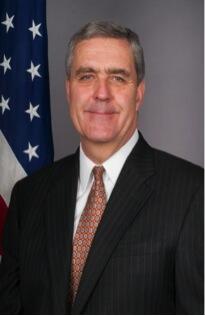
Douglas Lute, Ambassador of the United States to NATO


In August 2013, Douglas E. Lute was sworn-in as the Ambassador of the United States to the North Atlantic Treaty Organization (NATO).  From 2007 to 2013, Lute served at the White House under Presidents Bush and Obama, first as the Assistant to the President and Deputy National Security Advisor for Iraq and Afghanistan, and more recently as the Deputy Assistant to the President focusing on Afghanistan, Pakistan and India.  In 2010, AMB Lute retired from the U.S. Army as a Lieutenant General after 35 years on active duty.  Prior to the White House, he served as the Director of Operations on the Joint Staff, overseeing U.S. military operations worldwide. He served multiple tours in NATO commands including duty in Germany during the Cold War and commanding U.S. forces in Kosovo.  He holds degrees from the United States Military Academy and Harvard University.

A light lunch will be provided.  Please plan to arrive by 11:30am to allow time to check in at the registration desk, pick up your lunch and be seated by 12:00 noon.

Co-sponsored by The Europe Center, the Freeman Spogli Institute for International Studies, the Center for International Security and Cooperation and the Center for Russian, East European and Eurasian Studies.


Douglas Lute United States Ambassador to NATO Speaker
Lectures
News Type
Commentary
Date
Paragraphs


As the world reacts to the death of Boris Nemtsov, FSI Director Michael McFaul adds his thoughts and commentary on the slaying of the Russian opposition leader. McFaul, who served as Washington’s ambassador to Moscow, knew Nemtsov well and called him a “real patriot who believed in the possibility of Russia’s greatness.”

The outspoken opposition leader was shot dead Friday evening in central Moscow, on a bridge near Red Square. His death came several days before he was to lead a public protest of the war in Ukraine.

“He was my friend before he was my interlocutor as a government official,” McFaul said. “He was one of the most charismatic politicians that I’ve known in Russia for the last 30 years.”
 
 
Listen to and read more from McFaul:


Hero Image
nemtsov
A poster of Kremlin Boris Nemtsov is seen during a march to commemorate him near St. Basil's Cathedral in central Moscow March 1. Holding placards declaring "I am not afraid", thousands of Russians marched in Moscow on Sunday in memory of Nemtsov, whose murder has widened a split in society that some say could threaten Russia's future. The poster reads, "Heroes don't die".
Reuters
All News button
1
Subscribe to Russia and Eurasia