Authors
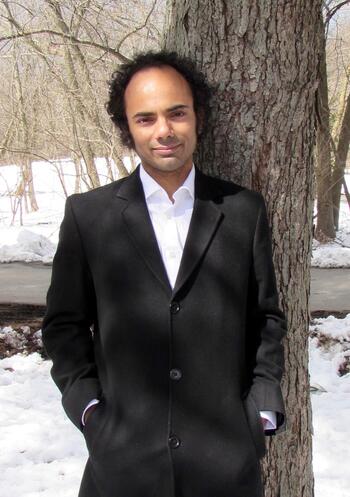
Herbert Lin
News Type
Commentary
Date
Paragraphs

On Feb. 12, White House National Security Adviser Robert O’Brien announced that the U.S. government has “evidence that Huawei has the capability secretly to access sensitive and personal information in systems it maintains and sells around the world.” This represents the latest attempt by the Trump administration to support an argument that allied governments—and the businesses they oversee—should purge certain telecommunications networks of Huawei equipment. The position reflects the preferred approach in the United States, which is to issue outright bans against select companies (including Huawei) that meet an as-yet-unknown threshold of risk to national security.


Read the rest at Lawfare Blog


Hero Image
lin herbert
All News button
1
-

CISAC will be canceling all public events and seminars until at least April 5th due to the ongoing developments associated with COVID-19.

------------------------------------------------------------------------------------------------------------------------------------------------------


About this Event: The Trump administration's National Security Strategy, released in December 2017, put the economic, military and political challenges posed by peer competitors--Russia and China--at the top of its list of national security concerns.  What was the process that led the Trump administration to this conclusion, particularly regarding Russia, and what policies did the National Security Strategy advocate that the United States accordingly pursue toward Russia?  Our speaker, Nadia Schadlow, served on the National Security Council from 2017 to 2018 and was the principal author of the National Security Strategy.


About the Speaker: Dr. Nadia Schadlow has served in leadership positions in government and the private sector for over 25 years. Dr. Schadlow’s U.S. government experience includes senior leadership positions at the National Security Council and the Department of Defense. She was the principal author of the Trump Administration’s National Security Strategy (NSS) which  identified the return of great power rivalry as a central feature of global geopolitics.

Prior to her most recent  government service,  Dr. Schadlow served as a Senior Program Officer at the Smith Richardson Foundation where she invested in  research and policy solutions to improve the security and strategic competitiveness of the United States. Dr. Schadlow has written frequently on national security matters.  Her 2017  book, War and the Art of Governance, addressed the problems of political and economic consolidation during and following war. Dr. Schadlow received a B.A. degree in Government and Soviet Studies from Cornell University, and M.A. and Ph.D. degrees from the John Hopkins School of Advanced International Studies (SAIS).


Nadia Schadlow Hoover Institution
Seminars
Authors
Herbert Lin
News Type
Commentary
Date
Paragraphs

While everyone was distracted with Justice Department controversies and the New Hampshire primary, a senior Huawei official has conceded that the company can clandestinely access users’ mobile networks. 

On Feb. 11, the Wall Street Journal ran a story citing U.S. officials who claimed that Huawei can “covertly access mobile-phone networks around the world through ‘back doors’ designed for use by law enforcement.” In other words, these officials claimed that Huawei can exploit backdoors intended for law enforcement in order to access user data without the permission of either users or the network operator. The Journal also quoted National Security Adviser Robert O’Brien as saying, “We have evidence that Huawei has the capability secretly to access sensitive and personal information in systems it maintains and sells around the world.”


Read the Rest at Lawfare


Hero Image
16103977343 d19ec9e8ac c1 Kārlis Dambrāns/https://flic.kr/p/qx46pM/CC BY 2.0/https://creativecommons.org/licenses/by/2.0/
All News button
1
-

Seminar Recording: https://youtu.be/qanfBvhmTQM


About this Event: In Do Morals Matter?, Joseph S. Nye, Jr., one of the world's leading scholars of international relations, provides a concise yet penetrating analysis of the role of ethics in US foreign policy during the post-1945 era.

Working through each presidency from Truman to Trump, Nye scores their foreign policy on three ethical dimensions: their intentions, the means they used, and the consequences of their decisions. Alongside this, he evaluates their leadership qualities, elaborating on which approaches work and which ones do not.

Since we so often apply moral reasoning to foreign policy, Nye suggests how to do it better. Crucially, presidents must factor in both the political context and the availability of resources when deciding how to implement an ethical policy--especially in a future international system that presents not only great power competition from China and Russia, but transnational threats as borders become porous to everything from drugs to infectious diseases to terrorism to cyber criminals and climate change.


About the Speaker: Joseph S. Nye, Jr. is University Distinguished Service Professor Emeritus and former Dean of Harvard’s Kennedy School of Government. He received his bachelor's degree summa cum laude from Princeton University, won a Rhodes Scholarship to Oxford, and earned a Ph.D. in political science from Harvard. He has served as Assistant Secretary of Defense for International Security Affairs, Chair of the National Intelligence Council, and a Deputy Under Secretary of State, and won distinguished service awards from all three agencies. His books include The Future of Power,  The Power Game: A Washington Novel, and (forthcoming) Do Morals Matter? He is a fellow of the American Academy of Arts and Sciences, the British Academy, and the American Academy of Diplomacy. In a recent survey of international relations scholars, he was ranked as the most influential scholar on American foreign policy, and in 2011, Foreign Policy named him one of the top 100 Global Thinkers. In 2014, Japan awarded him the Order of the Rising Sun.

Joseph S. Nye, Jr. University Distinguished Service Professor Emeritus Harvard’s Kennedy School
Seminars
-

CISAC will be canceling all public events and seminars until at least April 5th due to the ongoing developments associated with COVID-19.

------------------------------------------------------------------------------------------------------------------------------------------------------


About this Event: Just a few years ago, people spoke of the US as a hyperpower-a titan stalking the world stage with more relative power than any empire in history. Yet as early as 1993, newly-appointed CIA director James Woolsey pointed out that although Western powers had "slain a large dragon" by defeating the Soviet Union in the Cold War, they now faced a "bewildering variety of poisonous snakes."

In The Dragons and the Snakes, the eminent soldier-scholar David Kilcullen asks how, and what, opponents of the West have learned during the last quarter-century of conflict. Applying a combination of evolutionary theory and detailed field observation, he explains what happened to the "snakes"-non-state threats including terrorists and guerrillas-and the "dragons"-state-based competitors such as Russia and China. He explores how enemies learn under conditions of conflict, and examines how Western dominance over a very particular, narrowly-defined form of warfare since the Cold War has created a fitness landscape that forces adversaries to adapt in ways that present serious new challenges to America and its allies. Within the world's contemporary conflict zones, Kilcullen argues, state and non-state threats have increasingly come to resemble each other, with states adopting non-state techniques and non-state actors now able to access levels of precision and lethal weapon systems once only available to governments.

A counterintuitive look at this new, vastly more complex environment, The Dragons and the Snakes will not only reshape our understanding of the West's enemies' capabilities, but will also show how we can respond given the increasing limits on US power.


About the Speaker: 

David Kilcullen is a professor in the School of Humanities and Social Sciences of the University of New South Wales and a professor of practice in global security at Arizona State University. He heads the strategic research firm Cordillera Applications Group. A former soldier and diplomat, he served as a counterinsurgency advisor during the wars in Iraq and Afghanistan. In recent years he has supported aid agencies, non-government organizations, and local communities in conflict and disaster-affected regions, and developed new ways to think about highly networked urban environments. Dr. Kilcullen was named one of the Foreign Policy Top 100 Global Thinkers in 2009 and is the author of the highly acclaimed The Accidental GuerrillaOut of the Mountains, and Blood Year.

Dave Kilcullen University of New South Wales and Arizona State University
-

Livestream: Registration is required and will close 24 hours before the event. Click here to register.

This event is available only to CISAC faculty, fellows, staff, and honors students.


About this Event: Jeopardizing U.S. research enterprises, provoking regional nationalism, and building a technological panopticon to rate every citizen's behavior: these assumptions about China fuel US foreign policy shadow-boxing with misplaced concerns. Our panel challenges prevalent narratives on China, providing informed, nuanced investigations that cut across a range of research methods. Julien de Troullioud's argues that the rise of China in science and technology is not a threat to the US but instead an opportunity to jointly work to solve global issues. Data shows that the current policies to protect the US research enterprise in science is hurting American and international scientific research. Xinru Ma finds that nationalism in China and in Southeast Asia are not necessarily all anti-foreign, and is more of a liability rather than an asset for domestic regimes, according to evidences from formal modeling and social media data. Shazeda Ahmed's interviews with Chinese government officials, tech firm representatives, and legal scholars reveal that the Chinese social credit system is more limited in its data collection and fragmented in its on-the-ground implementation than the dystopic institution its foreign critics presume it to be. Our research presents new data and fresh perspectives for rethinking US-China dynamics.


About the Speakers:

Shazeda Ahmed is a Ph.D. student at the University of California, Berkeley who researches how tech firms and the Chinese government are collaboratively constructing the country's social credit system. She will be joining CISAC and the Stanford Institute for Human-Centered Artificial Intelligence in Fall 2019 as a pre-doctoral Fellow. Shazeda has worked as a researcher for the Citizen Lab, the Mercator Institute for China Studies, and the Ranking Digital Rights corporate transparency review by New America. In the 2018-19 academic year she was a Fulbright fellow at Peking University's law school.


Xinru Ma is currently a Ph.D. candidate at Political Science and International Relations (POIR) program at University of Southern California, and will join CISAC as a Postdoctoral Fellow for 2019-2020. Originally from China, Xinru is interested in combining formal modeling and computational social science with research on nationalist protests and maritime disputes, with a regional focus on East and Southeast Asia. Her research is informed by extensive field research in Vietnam, Philippines and China, during which she interviewed protestors, think tanks, diplomats, government officials, and foreign business owners that were impacted by nationalist protests. In addition to informing her of the complicated strategic interaction between mass mobilization, government repression and foreign policy-making, the field research further motivated her to focus on the methodological challenges for causal inference that stem from strategic conflict behavior. More broadly, Xinru is interested in public opinion and new methods of measuring it, foreign policy formation, alliance politics, East Asian security dynamics, and the historical relations of East Asia. 


Julien de Troullioud de Lanversin will be joining CISAC as a Stanton Postdoctoral Fellow. Julien is finishing his Ph.D. at Princeton University’s Program on Science and Global Security. He is interested in how to verify and reconstruct past fissile material production programs with scientific tools. To that end, he developed innovative methods that use isotopic analysis from nuclear reactors to gain information on their past operation (nuclear archeology) and designed an open source software that can compute the istopic composition of fissile materials from nuclear reactors. His current research looks at the various modalities of the production of plutonium and tritium in production reactors and how transparency on tritium could be used to improve estimates on plutonium stockpiles. Julien also studies security questions related to civil and military nuclear programs in Northeast Asia through the lens of fissile material, with a focus on China and North Korea. Julien visited the Institute of Nuclear and New Energy Technologies at Tsinghua University for one semester in 2018 to collaborate with Chinese experts on work related to nuclear engineering and arms control. Julien’s work on nuclear archaeology has been published in the Journal of Science and Global Security. He received his Diplôme d’Ingénieur (M.Sc. And B.Sc.Eng.) from Ecole Centrale de Marseille in 2014. The same year he also obtained a M.Sc. in Nuclear Science and Engineering from the University of Tsinghua where he was a recipient of the Chinese Government Scholarship. Julien speaks and uses Chinese in his research and is a native French speaker.

Virtual Seminar

Shazeda Ahmed, Xinru Ma, Julien de Troullioud de Lanversin
Seminars
Authors
News Type
Commentary
Date
Paragraphs

A group of more than 100 leading American Asia specialists, former U.S. officials and military officers, and foreign policy experts has signed an open letter calling on President Trump and Congress to develop a U.S. approach to China that is focused on creating enduring coalitions with other countries in support of economic and security objectives rather than on efforts to contain China’s engagement with the world.

The signatories include five FSI scholars: Shorenstein APARC Fellow Thomas Fingar, Oksenberg-Rohlen Fellow David M. Lampton, FSI Senior Fellow and APARC’s China Program Director Jean C. Oi, CISAC Senior Fellow Scott D. Sagan, and FSI Senior Fellow Andrew G. Walder.

In the letter, published in the Washington Post, the signatories express their concern about the growing deterioration in U.S.-China relations and outline several elements of what they describe as a more effective U.S. policy toward China.

China’s troubling behavior in recent years, the signatories write, presents serious challenges that require a firm U.S. response. The best American strategy “is to work with our allies and partners to create a more open and prosperous world in which China is offered the opportunity to participate.”

China’s engagement in the international system is essential to the system’s survival, argue the signatories, and “efforts to isolate China will simply weaken those Chinese intent on developing a more humane and tolerant society.”

Read the full letter in the Washington Post.


The views expressed by the signatories to the open letter are their own and are not opinion or information of Stanford University or of FSI.


Hero Image
Journalists watch a live broadcast of China's President Xi Jinping speaking during the first session of the G20 summit on June 28, 2019 in Osaka, Japan.
Journalists watch a live broadcast of China's President Xi Jinping speaking during the first session of the G20 summit on June 28, 2019 in Osaka, Japan. President Trump and Xi met at the G20 for the first time in seven months to discuss deteriorating ties between the world's two largest economies.
Tomohiro Ohsumi/Getty Images
All News button
1
Authors
Amy Zegart
News Type
Commentary
Date
Paragraphs

Thirty years ago this week, I watched the news from Beijing and started shredding my bedding. It was the night before my college graduation, I had been studying Chinese politics, and news had broken that college students just like us had been gunned down in Tiananmen Square after weeks of peaceful and exhilarating democracy protests—carried on international TV. In the iconic square where Mao Zedong had proclaimed the People’s Republic decades before, bespectacled students from China’s best universities had camped out, putting up posters with slogans of freedom in Chinese and English. A “goddess of democracy” figure modeled after the Statue of Liberty embodied their hopes—and ours—for political liberation in China.

On my campus back then were just a handful of students majoring in East Asian studies. Learning of the brutal crackdown in Beijing, we somehow found one another, gathered our friends, and stayed up making hundreds of white armbands for classmates to wear at commencement the next day. Grappling with the cold realities of the “real world” we were about to enter, we didn’t know what else to do. So we tore sheets and cried for what might have been.

The June 4, 1989, massacre was a horrifying spectacle that the Chinese government has sought to erase from national memory ever since. But, 30 years later, contemplating what might have been is more important than ever. In hindsight, Tiananmen Square serves as a continuing reminder about just how much China has defied, and continues to defy, the odds and predictions of experts. The fact is that generations of American policy makers, political scientists, and economists have gotten China wrong more often than they’ve gotten China right. In domestic politics, economic development, and foreign policy, China has charted a surprising path that flies in the face of professional prognostications, general theories about anything, and the experience of other nations.

Read the rest at The Atlantic

Hero Image
zegart amy cropped
All News button
1
News Type
Commentary
Date
Paragraphs

Karl Eikenberry, director of the U.S.-Asia Security Initiative, spoke with "Bloomberg Markets: Asia" about the ongoing trade disputes between the U.S. and China. Video of his interview—conducted on the sidelines of the Morgan Stanley China Summit in Beijing—is posted below.


Hero Image
Eikenberry on Bloomberg News
All News button
1
-

Seminar Recording: https://youtu.be/ZVHEqY1_3w8


Abstract: Before the CCP came to power, China lay broken. Today it is a force on the global stage, but its leaders remain haunted by the past. Sulmaan Khan will tell the story of the grand strategies pursued by China’s paramount leaders: the shrewd, dangerous Mao Zedong, who made the country whole and kept it so; the caustic, impatient Deng Xiaoping who dragged the country into the modern world; Jiang Zemin and Hu Jintao who served as cautious custodians of Deng’s legacy; and Xi Jinping who combines assertiveness with insecurity. For all their considerable costs, China’s grand strategies have been largely successful. But whether or not they can meet the challenges of the twenty-first century remains to be seen.   


Speaker's Biography:

Image
khan full length dust jacket3
Sulmaan Wasif Khan teaches international history and Chinese foreign relations at the Fletcher School, Tufts University, where he also directs the Water and Oceans Program at the Center for International Environment and Resource Policy. He is the author of Haunted by Chaos: China’s Grand Strategy from Mao Zedong to Xi Jinping (Harvard University Press: 2018), which was named a top book of 2018 by The American Interest, and Muslim, Trader, Nomad, Spy: China’s Cold War and the People of the Tibetan Borderlands (University of North Carolina Press: 2015). He has written for The Economist, Foreign Affairs, The American Interest, and YaleEnvironment360, among others, on topics ranging from Burmese Muslims to dolphin migration through the Bosphorus. He received his Ph.D. in History from Yale University in 2012.  


Sulmaan Khan Assistant Professor of International History and Chinese Foreign Relations Tufts University
Seminars
Subscribe to China