Venezuela is in the midst of an economic, social and political crisis, said Harold Trinkunas, the deputy director of FSI’s Center for International Security and Cooperation and an expert on Latin American politics.
“Venezuela is a major oil-producing company, and it experienced a boom between 2000 and 2012,” Trinkunas told FSI Director Michael McFaul on the World Class podcast. “Up until then, Venezuela seemed to be doing pretty well.”
But things have changed since former President Hugo Chavez’s death in 2013. Once one of Latin America’s wealthiest nations, Venezuela’s economy has collapsed by more than 50 percent in recent years, Trinkunas said. Meanwhile, a large majority of its population is living in poverty, millions have fled the country, and the government — led by President Nicolás Maduro — has become increasingly authoritarian and unpopular among citizens.
Forces Behind the Downturn
During his first five years in office, Maduro’s government politicized the military and the oil industry, Trinkunas said, noting that oil production in Venezuela has declined from 3 million barrels per day 20 years ago to fewer than 1 million barrels per day in recent years. After Maduro was re-elected in 2018 amongst reports of coercion, fraud and electoral rigging, about 50 countries — including the United States and many members of the European Union — denounced his election.
“The fact that there are 50 countries [that oppose Maduro] is really quite unusual,” Trinkunas said. “And this is the United States and many of its allies — many western democracies are in this camp.”
The Failed Uprising
Less than a year after the election, opposition leader Juan Guaidó invoked the country’s constitution to declare himself interim president. About three months later, on April 30, 2019, Guaidó called for an uprising against Maduro, but the response wasn’t what Guaidó had hoped for, Trinkunas said.
“Apparently there had been a process of negotiation in the weeks leading up to April 30, in which the armed forces, the Supreme Court, and other significant regime figures agreed to a transition plan which would ease Maduro out and call for new elections,” Trinkunas said. “But it looks like Juan Guaidó pulled the trigger too quickly — he claims the plot was discovered.”
What’s Next? Three Possible Scenarios
Trinkunas sees three possible scenarios for Venezuela going forward: one in which Maduro is able to retain his power and the state of country remains relatively unchanged; another in which the government collapses and the country is able to transition into a democracy; or the Venezuelan government may collapse and things could take a turn for the worse, he said.
“Venezuela has experienced prolonged electricity blackouts in the last couple of months, and food distribution is very uncertain — things are breaking down,” he said. “There’s a real [possibility] that some of the organized crime organizations could break down the social order. It might look like a much more complicated situation.”
Abstract: Did the Cold War of the 1980s nearly turn hot? Much has been made of NATO’s November 1983 Able Archer 83 command post exercise, which the literature typically casts as having nearly precipitated a nuclear war. Warsaw Pact policy-makers, according to the conventional wisdom, suspected that the exercise was more than just a rehearsal of nuclear escalation and concluded that a surprise nuclear attack was imminent, nearly launching a preemptive strike of their own. This article overturns this narrative using new, international evidence from the political, military, and intelligence archives of the Eastern bloc. First, it shows that the much-touted Warsaw Pact intelligence effort to assess Western intentions and capabilities, Project RIaN, which supposedly triggered Eastern fears of a surprise attack was nowhere near operational at the time of Able Archer 83. Second, it presents an account of the East’s sanguine observations of Able Archer 83 disproving accounts which allege that the exercise nearly escalated to nuclear war. In doing so, it advances debates not only in the historiography of the late Cold War, but also pertaining to the stability of the nuclear peace and the role of perception and misperception in policy-making.
Speaker's Biography:
Image
Simon Miles is Assistant Professor of Public Policy and Slavic and Eurasian Studies at Duke University’s Sanford School of Public Policy. He teaches and researches US grand strategy, nuclear weapons, and Cold War international history. Simon is the author of Engaging the ‘Evil Empire’: US-Soviet Relations, 1980–1985, forthcoming from Cornell University Press; and he is beginning a new monograph, On Guard for Peace and Socialism: The Warsaw Pact, 1955–1991, an international history of the Cold War–era military alliance.
Simon Miles
Assistant Professor of Public Policy and Slavic and Eurasian Studies
Duke University’s Sanford School of Public Policy
Abstract: President Trump may talk about the Middle East differently than Obama did. But the two seem to share the view that the United States is too involved in the region and should devote fewer resources and less time to it. The reduced appetite for U.S. engagement in the region reflects, not an ideological predilection or an idiosyncrasy of these two presidents, but a deeper change in both regional dynamics and broader U.S. interests. Despite this, the United States exists in a kind of Middle Eastern purgatory—too distracted by regional crises to pivot to other global priorities but not invested enough to move the region in a better direction. This worst-of-both-worlds approach exacts a heavy price. It sows uncertainty among Washington’s Middle Eastern partners, which encourages them to act in risky and aggressive ways. It deepens the American public’s frustration with the region’s endless turmoil, as well as with U.S. efforts to address it. It diverts resources that could otherwise be devoted to confronting a rising China and a revanchist Russia. And all the while, by remaining unclear about the limits of its commitments, the United States risks getting dragged into yet another Middle Eastern conflict.
It is time for Washington to put an end to wishful thinking about its ability to establish order on its own terms or to transform self-interested and shortsighted regional partners into reliable allies—at least without incurring enormous costs and long-term commitments. That means making some ugly choices to craft a strategy that will protect the most important U.S. interests in the region, without sending the United States back into purgatory. Karlin and Wittes will outline the choices before the next U.S. president and their view of a realistic, sustainable strategy for the United States in the Middle East.
Tamara Wittes' Biography: Tamara Cofman Wittes is a senior fellow in the Center for Middle East Policy at Brookings. Wittes served as deputy assistant secretary of state for Near Eastern affairs from November of 2009 to January 2012, coordinating U.S. policy on democracy and human rights in the Middle East during the Arab uprisings. Wittes also oversaw the Middle East Partnership Initiative and served as deputy special coordinator for Middle East transitions.
Wittes is a co-host of Rational Security, a weekly podcast on foreign policy and national security issues. She writes on U.S. Middle East policy, regional conflict and conflict resolution, the challenges of global democracy, and the future of Arab governance. Her current research is for a forthcoming book, Our SOBs, on the tangled history of America’s ties to autocratic allies.
Wittes joined Brookings in December of 2003. Previously, she served as a Middle East specialist at the U.S. Institute of Peace and director of programs at the Middle East Institute in Washington. She has also taught courses in international relations and security studies at Georgetown University. Wittes was one of the first recipients of the Rabin-Peres Peace Award, established by President Bill Clinton in 1997.
Wittes is the author of "Freedom’s Unsteady March: America’s Role in Building Arab Democracy" (Brookings Institution Press, 2008) and the editor of "How Israelis and Palestinians Negotiate: A Cross-Cultural Analysis of the Oslo Peace Process" (USIP, 2005). She holds a bachelor's in Judaic and Near Eastern studies from Oberlin College, and a master's and doctorate in government from Georgetown University. She serves on the board of the National Democratic Institute, as well as the advisory board of the Israel Institute, and is a member of the Council on Foreign Relations and Women in International Security.
Mara Karlin's Biography: Mara Karlin, PhD, is Director of Strategic Studies at Johns Hopkins University’s School of Advanced International Studies (SAIS). She is also an Associate Professor at SAIS and a nonresident senior fellow at The Brookings Institution. Karlin has served in national security roles for five U.S. secretaries of defense, advising on policies spanning strategic planning, defense budgeting, future wars and the evolving security environment, and regional affairs involving the Middle East, Europe, and Asia. Most recently, she served as the deputy assistant secretary of defense for strategy and force development. Karlin has been awarded Department of Defense Medals for Meritorious and Outstanding Public Service, among others. She is the author of Building Militaries in Fragile States: Challenges for the United States (University of Pennsylvania Press; 2018).
Tamara Wittes
Senior fellow, Center for Middle East Policy
Brookings
Mara Karlin
Senior fellow,Center for 21st Century Security and Intelligence
SAIS and Brookings
Militaries around the world are racing to build robotic systems with increasing autonomy. What will happen when a Predator drone has as much autonomy as a Google car? Should machines be given the power to make life and death decisions in war? Paul Scharre, a former Army Ranger and Pentagon official, will talk on his new book, Army of None: Autonomous Weapons and the Future of War. Army of None was named one of Bill Gates’ Top 5 Books of 2018. Scharre will explore the technology behind autonomous weapons and the legal, moral, ethical, and strategic dimensions of this evolving technology. Paul Scharre is a Senior Fellow and Director of the Technology and National Security Program at the Center for a New American Security.
Paul's Biography: Paul Scharre is a Senior Fellow and Director of the Technology and National Security Program at the Center for a New American Security. He is author of Army of None: Autonomous Weapons and the Future of War. Mr. Scharre formerly worked in the Office of the Secretary of Defense (OSD) where he played a leading role in establishing policies on emerging weapons technologies. He led the working group that drafted DOD Directive 3000.09, establishing DOD’s policy on autonomy in weapon systems. He is a former infantryman in the Army’s 75th Ranger Regiment and completed multiple tours to Iraq and Afghanistan.
Radha's Biography: Radha Iyengar is the head of Product Policy Research at Facebook and an adjunct economist at the RAND Corporation. Previously, she served in senior staff positions at the White House National Security Council, Department of Defense, and Department of Energy. Over the course of her government service, she was instrumental in executive actions on sexual assault and suicide prevention, budget and policy related to nuclear and energy infrastructure security and resilience, and security assistance and counterterrorism efforts in the the Middle East and North Africa. Her research has covered empirical evaluations of policies aimed at reducing violence including criminal violence, sexual assault, terrorist behavior, and sexual and intimate partner violence.
Jeremy's Biography: Jeremy is a Professor of Political Science and Senior Fellow at the Freeman Spogli Institute for International Studies. He is also a non-resident fellow at the Center for Global Development in Washington, D.C. His research focuses on civil wars and political violence; ethnic politics and the political economy of development; and democracy, accountability, and political change. He is the author of Inside Rebellion: The Politics of Insurgent Violence (Cambridge University Press), which received the William Riker Prize for the best book on political economy. He is also the co-author of Coethnicity: Diversity and the Dilemmas of Collective Action (Russell Sage Foundation), which received the Gregory Luebbert Award for the best book in comparative politics. He has published articles in the American Political Science Review, American Journal of Political Science, Annual Review of Political Science, Journal of Conflict Resolution, Foreign Affairs, Foreign Policy, Journal of Democracy, World Policy Journal, and the SAIS Review.
Stanford University CEMEX Auditorium (655 Knight Way, Stanford, CA 94305)
Paul Scharre
Senior Fellow and Director, Technology and National Security Program
Center for a New American Security
Abstract: To drastically reduce emissions of greenhouse gases and expand energy access, nuclear energy may play a significant role in decarbonizing electrical grids. To the extent that this expansion involves developing new and advanced nuclear fuel cycle technologies, concerns about nonproliferation concurrently grow. To address at least one nonproliferation concern, a safeguards assessment was conducted on a conceptual nuclear waste processing technology, called pyroprocessing, using a traditional safeguards technique, called the neutron balance method. The safeguards assessment revealed that the fundamental requirements needed for the neutron balance method to work were not always observed. The diversion scenario modeled resulted in the undetected diversion of several kilograms of plutonium. The assessment found that traditional safeguards assumptions and techniques might not be adequate to meet nuclear material accountancy requirements. New approaches developed from fundamental research are needed to ensure new facilities are only being used for peaceful purposes.
Speaker's Biography: Chantell Murphy is a Nuclear Security Postdoctoral Fellow at CISAC. Chantell Murphy earned her PhD in nuclear engineering from the University of New Mexico in 2018 and holds a MS in health physics from Georgetown University and a BS in physics from Florida State University.
Chantell Murphy worked as a graduate research assistant at Los Alamos National Laboratory supporting the nuclear engineering and nonproliferation division (NEN-5) and worked in the national security office (NSO). During her time at LANL Ms. Murphy investigated safeguards approaches for pyroprocessing facilities and helped develop an acquisition path analysis software tool called APAT for the International Atomic Energy Agency (IAEA). Ms. Murphy worked on safeguards approaches for advanced reactor designs like thorium fueled reactors, worked on knowledge retention issues for future warhead verification campaigns, and participated in and gave talks at several international safeguards and nuclear policy related workshops around the US and in Europe. Ms. Murphy also worked as a visiting scientist at the Forschungszentrum Jülich in Germany for three months developing the IAEA’s state level approach and acquisition path analysis with the Nuclear Waste Management and Reactor Safety group in the Institute of Energy and Climate Research.
Chantell Murphy’s previous experience also includes an internship at the Managing the Atom project at the Belfer Center for Science and International Affairs and work for the Congressional Commission on the Strategic Posture of the United States.
Chantell Murphy
Nuclear Security Postdoctoal Fellow
CISAC, Stanford University
Abstract: Existing international relations scholarship on human rights focuses on international law and transnational advocacy to the exclusion of "human rights diplomacy" (HRD)---efforts by government officials to engage publicly and privately with their foreign counterparts---because diplomacy is often not publicly observable. We exploit an opportunity to assess the effectiveness of HRD: a campaign coordinated by the U.S. government to free twenty female political prisoners called #Freethe20. Our analysis of release outcomes for #Freethe20 women compared to two control groups (a longer list of women considered by the State Department for the campaign and a list of women imprisoned simultaneously in the same target countries) suggests the campaign was highly effective. While #Freethe20 was public-facing, we find little evidence that "naming and shaming" alone drove releases. Drawing on in-depth interviews with U.S. officials, we argue that foreign governments were most responsive when public pressure was matched with private, coercive diplomacy.
Speaker Bio: Jeremy M. Weinstein is a Professor of Political Science and Senior Fellow at the Freeman Spogli Institute for International Studies. He is also a non-resident fellow at the Center for Global Development in Washington, D.C.
His research focuses on civil wars and political violence; ethnic politics and the political economy of development; and democracy, accountability, and political change. He is the author of Inside Rebellion: The Politics of Insurgent Violence (Cambridge University Press), which received the William Riker Prize for the best book on political economy. He is also the co-author of Coethnicity: Diversity and the Dilemmas of Collective Action (Russell Sage Foundation), which received the Gregory Luebbert Award for the best book in comparative politics. He has published articles in the American Political Science Review, American Journal of Political Science, Annual Review of Political Science, Journal of Conflict Resolution, Foreign Affairs, Foreign Policy, Journal of Democracy, World Policy Journal, and the SAIS Review.
Weinstein received the International Studies Association’s Karl Deutsch Award in 2013. The award is given to a scholar younger than 40 or within 10 years of earning a Ph.D. who has made the most significant contribution to the study of international relations. He also received the Dean’s Award for Distinguished Teaching at Stanford in 2007.
He has also worked at the highest levels of government on major foreign policy and national security challenges, engaging in both global diplomacy and national policy-making. Between 2013 and 2015, Weinstein served as the Deputy to the U.S. Ambassador to the United Nations and before that as the Chief of Staff at the U.S. Mission to the United Nations. As Deputy, Weinstein was a standing member of the National Security Council Deputies’ Committee – the sub-cabinet policy committee with primary responsibility for advising the National Security Council, the Cabinet, and the President on the full range of foreign policy issues, including global counterterrorism, nonproliferation, U.S. policy in the Middle East, the strategic rebalance to Asia, cyber threats, among a wide variety of other issues.
During President Obama’s first term, he served as Director for Development and Democracy on the National Security Council staff at the White House between 2009 and 2011. In this capacity, he played a key role in the National Security Council’s work on global development, democracy and human rights, and anti-corruption, with a global portfolio. Before joining the White House staff, Weinstein served as an advisor to the Obama campaign and, during the transition, as a member of the National Security Policy Working Group and the Foreign Assistance Agency Review Team.
Weinstein obtained a BA with high honors from Swarthmore College, and an MA and PhD in political economy and government from Harvard University. He is a member of the Council on Foreign Relations and serves on a number of non-profit boards and advisory groups.
Jeremy Weinstein
Senior Fellow at the Freeman Spogli Institute for International Studies Professor of Political Science
Stanford University
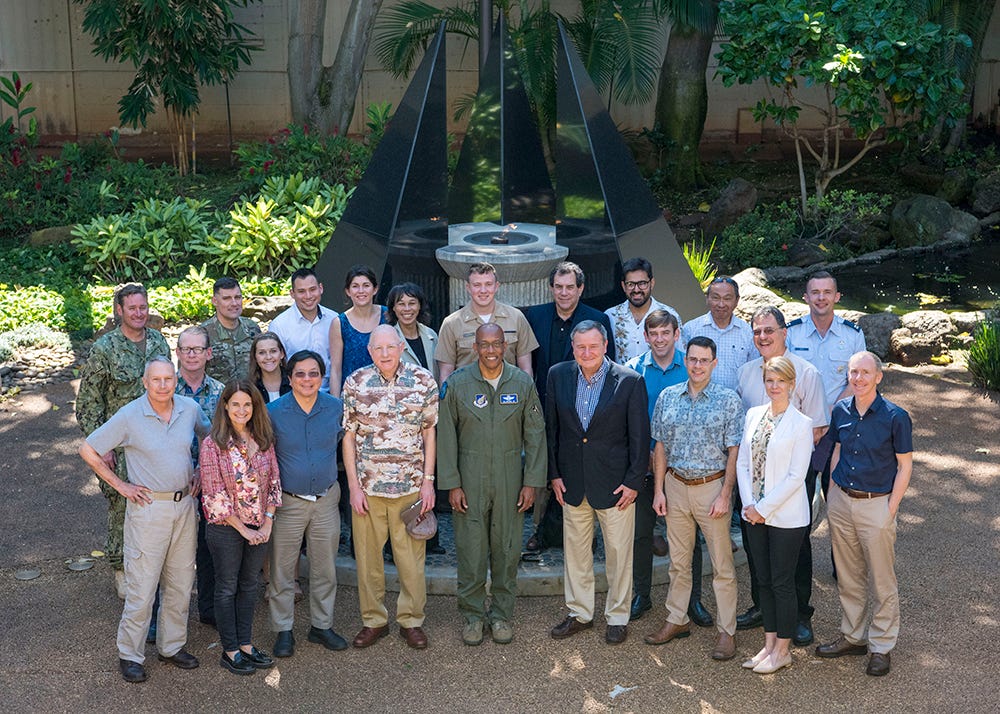
A group of 20 faculty and fellows participate in an orientation visit to Indo-Pacific Command headquarters, Honolulu, Hawaii, February 21–22, 2019, organized and sponsored by the U.S.-Asia Security Initiative. Photo courtesy of the U.S.-Asia Security Initiative
On February 21–22, faculty and fellows from Stanford University traveled to Oahu, Hawaii for an orientation visit at the United States Indo-Pacific Command (INDOPACOM), the U.S. military command responsible for the conduct of the U.S. military’s missions throughout the Indian and Pacific Oceans, and Asia.
The visit brought together scholars and researchers from Stanford, the Massachusetts Institute of Technology, the Council on Foreign Relations, and Macquarie University, Australia. Organized by the U.S.-Asia Security Initiative (USASI) and the Shorenstein Asia-Pacific Research Center at the Freeman Spogli Institute for International Studies (FSI), the visit included meetings with the commanders and staffs of INDOPACOM and five of its subordinate commands (U.S. Army Pacific, U.S. Pacific Fleet, U.S. Air Forces Pacific, U.S. Marine Forces Pacific, and U.S. Special Operations Command Pacific), and a tour of Arleigh Burke-class Aegis destroyer USS John Paul Jones (DDG-52).
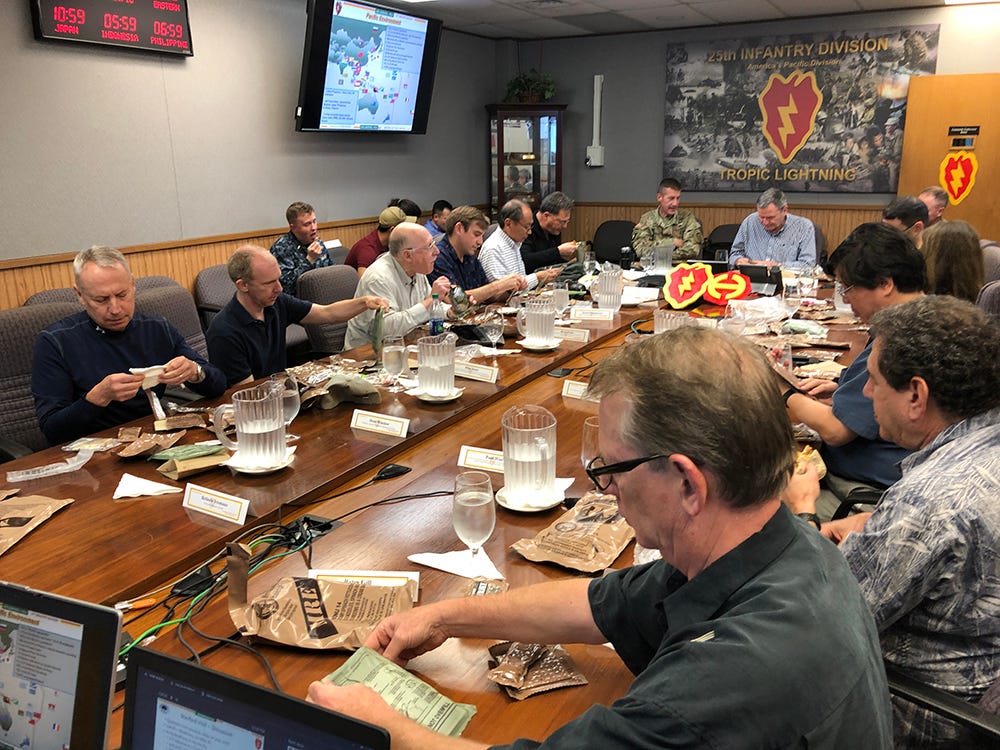
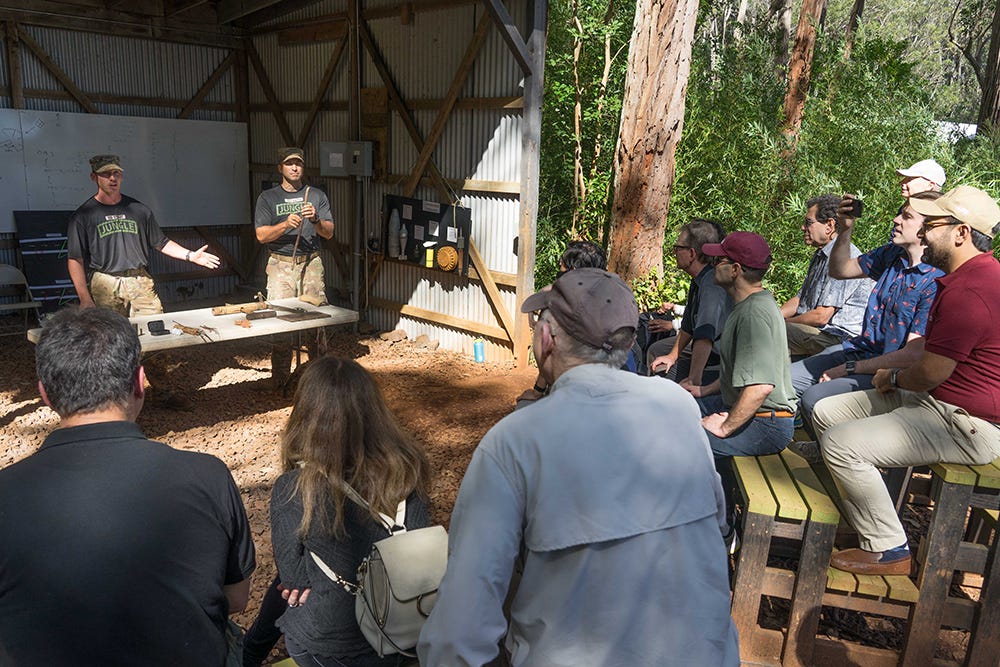
The visitors also interacted with the U.S. Army’s 25th Infantry Division’s leadership and the unit’s Jungle Training Center. The busy itinerary provided the group a superb opportunity to learn about INDOPACOM’s and its subordinate units’ threat assessments, capabilities, doctrine, regional partnerships, and readiness challenges.
These trips offer great access to America’s armed forces to those whose research focuses on or relates to national security issues, says Karl Eikenberry.
Karl Eikenberry, Director of the U.S.-Asia Security Initiative (USASI), a former U.S. ambassador to Afghanistan and himself a retired U.S. Army lieutenant general said: “USASI has over the past five years organized annual trips to U.S. military commands for Stanford FSI faculty and fellows. These trips offer great access to America’s armed forces to those whose research focuses on or relates to national security issues. The insights gained inform analysis, while the host organizations gain fresh perspectives different from those found within their commands.”
Photo courtesy of the U.S.-Asia Security Initiative
Discussions began on February 21st at Camp H.M. Smith, the Headquarters of INDOPACOM. Brigadier General Jonathan Braga, U.S. Army, SOCPAC Commander and his staff discussed his command’s unique capabilities and roles in both conventional and counterterrorist/counterinsurgency warfare operations. Major General Michael Minihan, U.S. Air Force, INDOPACOM Chief of Staff, then hosted a wide-ranging session on his organization’s implementation of the National Security Strategy and National Defense Strategy at a time of dynamic change within the region.
Photo courtesy of Timothy R. Mungie
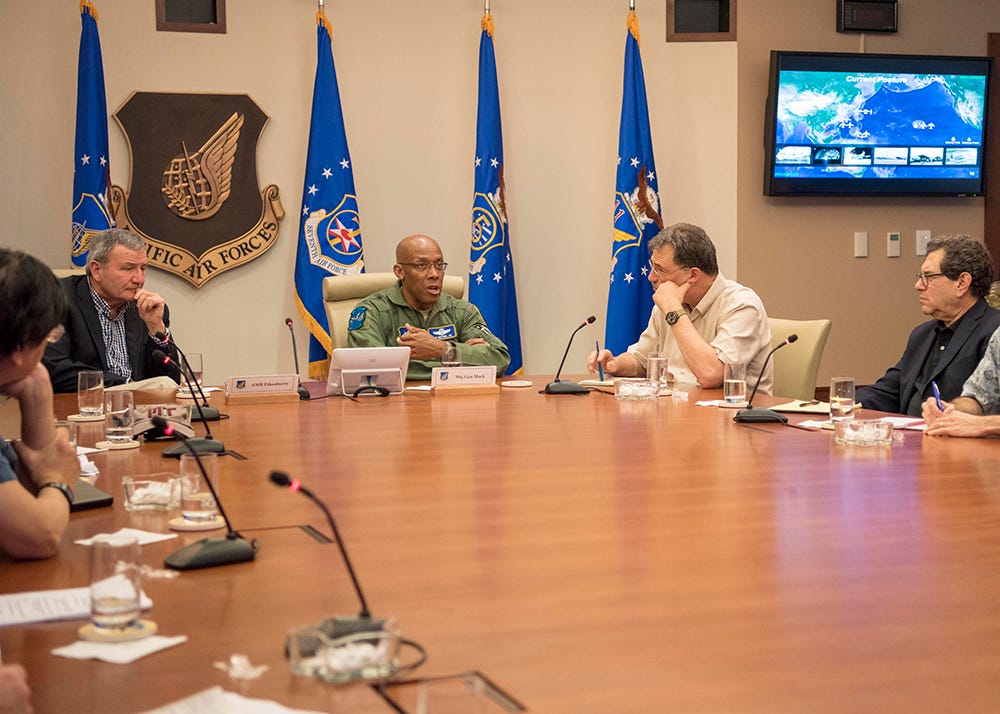
This was followed by a working lunch at the INDOPACOM Flag Mess with key staff members of MARFORPAC who explained U.S. Marine force posture and contingency missions throughout the Pacific Region. The Stanford group then proceeded to Hickam Field and met with General Charles Brown, Commander, PACAF, and his Deputy Commander, Major General Russell Mack. General Brown detailed the critical role played by airlift and airpower in the vast Indo-Pacific region, and the development of new concepts for the employment of U.S. Air Force capabilities in joint (inter-service) and combined (inter-allied) operations.
Photo courtesy of Timothy R. Mungie
The visiting faculty and fellows then transited to Pearl Harbor for a tour of USS John Paul Jones led by Commanding Officer, Commander Jesse Mink, United States Navy, and Executive Officer, Commander Robert Watts, USN. Noteworthy was the destroyer’s sophisticated integrated air, surface, and underseas warfare systems, and the emphasis placed on resilience in high-end combat situations. Following the ship tour, the group attended a PACFLT command briefing chaired by the Commander, Admiral John Aquilino.
The dialogue made clear PACFLT’s emphasis on a holistic approach to deterrence and decisive operations, with an eye on future requirements. The first day of the trip ended with a working reception at the historic “Nimitz House” hosted by Admiral Aquilino, offering the attendees a chance to engage in conversations with the Commander and his staff.
The second day of the trip began with an introduction to the Daniel K. Inouye Asia-Pacific Center for Security Studies (APCSS), followed by expert presentations and breakout sessions on select topics including the Chinese One Belt One Road plan, the security of Taiwan, pandemic threats in the Indo-Pacific region, and cyber operations. The Stanford team then traveled to Fort Shafter for a meeting with Brigadier General Pete Andrysiak, U.S. Army and Chief of Staff, USARPAC. BG Andrysiak and the USARPAC staff elaborated on the evolving U.S. Army’s regional doctrine and extensive partnership activities.
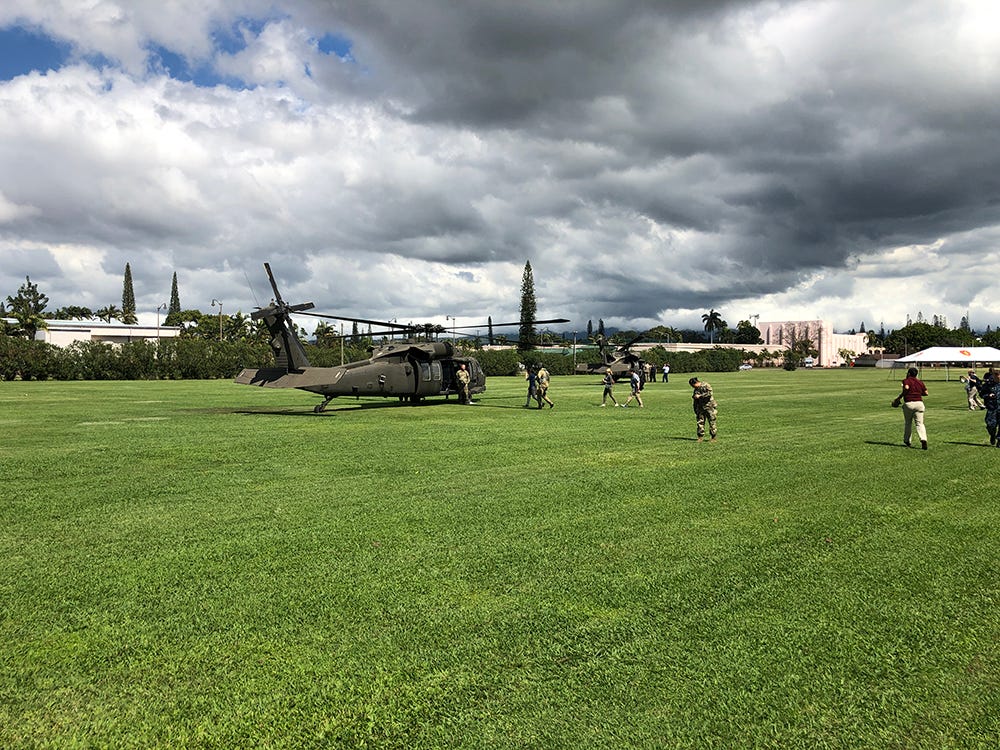
A highlight of the group’s time in Oahu came with a visit to the U.S. Army’s 25th Infantry Division at Schofield Barracks, and the 25th ID Jungle Training center via UH-60 Blackhawk Helicopters. There Brigadier General J.B. Vowell, Assistant Division Commander, 25th Infantry Division and U.S. Army Hawaii (himself a former FSI Senior Military Fellow), discussed the division’s extensive missions throughout the region, including in the Korean Peninsula.
Photo courtesy of Francis Fukuyama
Faculty and fellows were also able to “get their boots (or at least tennis shoes) muddy” in the U.S. Army’s rugged training area in northern Oahu, with highly skilled soldiers demonstrating jungle warfare tactics and techniques. The trip ended with the participants hosting a reception at the Hale Koa Hotel Warriors Lounge for their many hosts over the past two days.
The trip to INDOPACOM Headquarters provided a rare opportunity for participants to talk directly with senior U.S. military leaders in the most important region of the world and to gain a better understanding of their perspectives and the many challenges that they are addressing. Faculty and fellows interacted with junior leaders at the tactical level, helping them gain an appreciation of the ethos of those serving at the cutting edge. The hosts all commented on the benefit of learning the views of scholars, many of whom have spent their academic careers writing about national security issues.
The trip provided fascinating insights into how the U.S. military views the rapidly evolving national security challenges in the Indo-Pacific region, says Larry Diamond.
“The trip provided fascinating insights into how the U.S. military views the rapidly evolving national security challenges in the Indo-Pacific region, and how it is organized to defend against the threats. You can read about much of this in the media and the journals, but there is just no substitute for being there, seeing our facilities on the ground, and engaging directly with the remarkable men and women (and one thing that struck me is that there are quite a number of women) who are responsible for our defense,” said Larry Diamond, senior fellow at the Hoover Institution and at the Center on Democracy, Development & the Rule of Law (CDDRL) at FSI.
FSI scholars particularly valued the opportunity to connect one-on-one.
“It was invaluable to meet and hear directly from the individuals and organizations who are working so hard to ensure our security,” said Center for International Security and Cooperation (CISAC) Senior Research Scholar Megan Palmer. For CISAC Pre-doctoral Fellow Erik Lin-Greenberg, “the opportunity to interact with decision-makers from tactical to strategic levels was incredibly valuable and helped inform my own research.”
Abstract: Multilateral conferences are the bread-and-butter of international politics. In such settings, countries may pursue their interests individually, but most of the time they prefer to act through coalitions. Such coalitions are overlapping, creating a network structure. States build and utilize networks to get agenda items pushed through or to block unfavorable ones. While sometimes they are formed on the basis of formal institutions (such as the NAM or the EU), frequently their membership is based on either ad hoc cooperation, or existing informal bodies (such as the NSG, New Agenda Coalition, or Zangger Committee). The attention to such networks is, however, still in its infancy. This paper looks at how state networks within one of the most important recurring diplomatic conferences – the quinquennial NPT Review Conference – develop and transform over time. By doing so, the paper maps the existing networks, and explains their transformation as an instrument of global governance.
Speaker Bio: Michal Onderco is a Junior Faculty Fellow at CISAC (2018-2019), and his research focuses on politics of multilateral nuclear diplomacy. His current project tries to understand how states build coalitions in multilateral diplomacy, and why are some coalitions more successful than others.
Michal is currently on leave from Erasmus University Rotterdam, where he is Assistant Professor of International Relations. Previously, he was a Max Weber Fellow at the European University Institute, Fulbright Visiting Researcher at Columbia University in New York, and a short-term Stanton Fellow at Fundação Getúlio Vargas in São Paulo. He received his LLM in Law and Politics of International Security and PhD in Political Science from Vrije Universiteit Amsterdam. His earlier work was published in International Studies Quarterly, European Journal of Political Research, Cooperation & Conflict, The Nonproliferation Review, and European Political Science Review.
Michal Onderco
MacArthur Junior Faculty Fellow
CISAC, Stanford University
*This event is co-sponsored with the Hamid and Christina Moghadam Program in Iranian Studies.
Jason Rezaian discusses his new book, Prisoner: My 544 Days in an Iranian Prison, with Brett McGurk, the former Special Envoy to Defeat ISIS. Rezaian was the Washington Post’s Tehran bureau chief when he was imprisoned and McGurk led 14 months of secret negotiations with Iran that helped free him in 2016.
Jason Rezaian is one of the few Western journalists to have been based in Tehran in recent years. From 2009 until his arrest in 2014 he covered stories that tried to explain Iran to a general American audience, first as a freelancer for a variety of outlets and later as The Washington Post’s Tehran bureau chief.
He reported on two presidential elections, Iran’s nuclear negotiations with global powers, the effects of one of the most punitive sanctions regimes in modern times and environmental issues. In between those momentous topics he told the stories of everyday Iranians which sought to make them more accessible to readers, reporting on Iran’s small community of baseball players, the quest for the best high end hamburger in Tehran, and a clinic for female drug addicts.
In July of 2014 Rezaian and his wife were detained in their home and he went on to spend 545 in Tehran’s Evin prison, released on the same day that the historic nuclear deal between Iran and world powers was implemented.
Brett McGurk is joining Stanford University’s Freeman Spogli Institute for International Studies as the Frank E. and Arthur W. Payne Distinguished Lecturer.
McGurk recently served as special presidential envoy for the Global Coalition to Defeat ISIS at the U.S. Department of State. He helped build and then led the coalition of seventy-five countries and four international organizations and was responsible for coordinating all aspects of U.S. policy in the campaign against the Islamic State in Iraq, Syria, and globally.
McGurk previously served in senior positions in the George W. Bush and Barack Obama administrations, including as Special Assistant to President Bush and Senior Director for Iraq and Afghanistan, and then as Deputy Assistant Secretary of State for Iraq and Iran and Special Presidential Envoy for the U.S. campaign against the Islamic State under Obama.
McGurk has led some of the most sensitive diplomatic missions in the Middle East over the last decade, including negotiations with partners and adversaries to advance U.S. interests. In 2015 and 2016, McGurk led 14 months of secret negotiations with Iran to secure the release of Washington Post reporter Jason Rezain, U.S. Marine Amir Hekmati, and Pastor Saad Abadini, as well as three other American citizens.
Hauck Auditorium, David & Joan Traitel Building, Hoover Institution
Abstract: Many scholars and policymakers argue that drone proliferation will be destabilizing. By removing pilots from harm’s way, drones allow states to launch military operations without the political risks of sending troops into battle. Although these reduced risks may increase the likelihood of conflict onset, technology that removes warfighters from the battlefield may actually help states avoid escalatory spirals. To identify the effect of drones on escalation dynamics, I develop a theory of technology-enabled escalation control: when used as a substitute for manned assets, drones increase the frequency of conflict between actors, but limit the intensity of these disputes by decreasing pressures for retaliation. This restrained retaliation prevents crises from spiraling into more destabilizing conflicts. To test this argument, I develop a novel methodological approach – embedding experimental manipulations into wargames played by military personnel. The wargames demonstrate that drones can limit escalation and showcase wargaming as a tool for international relations research.
Speaker Bio: Erik Lin-Greenberg is a Predoctoral Fellow at CISAC and a PhD candidate in political science at Columbia University. His dissertation assesses the effects of emerging technology on military escalation. In other work, Erik examines alliance dynamics, the interaction of technology and international law, and the determinants of military force structure. His research has appeared or is forthcoming in a variety of outlets including Security Studies, International Peacekeeping, War on the Rocks, and The Washington Post. Erik previously served as an active duty U.S. Air Force officer, and he continues to serve as a reservist assigned to the Joint Staff.