-

The world is experiencing an unprecedented period of geopolitical change and technological disruption. How should we rethink U.S. national security and defense in an era of intensifying great power competition? What principles should guide US policy and presidents in the future?


Drell Lecture Recording: https://youtu.be/y8a307Sttjc


Drell Lecture Transcript: Click here to view


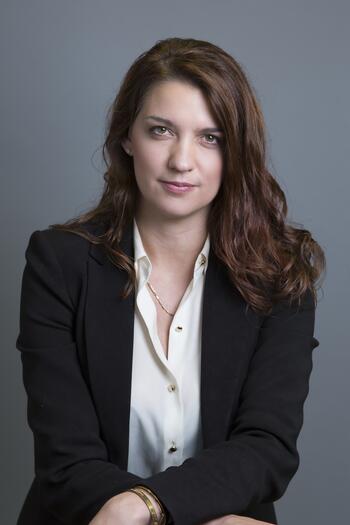
Speaker's Biography: Michèle Flournoy is Co-Founder and Managing Partner of WestExec Advisors, and former Co- Founder and Chief Executive Officer of the Center for a New American Security (CNAS), where she currently serves on the board.

Michèle served as the Under Secretary of Defense for Policy from February 2009 to February 2012. She was the principal advisor to the Secretary of Defense in the formulation of national security and defense policy, oversight of military plans and operations, and in National Security Council deliberations.

Michèle is a former member of the President’s Intelligence Advisory Board, the CIA Director’s External Advisory Board, and the Defense Policy Board. She’s currently a member of the Council on Foreign Relations and the Aspen Strategy Group, is a Senior Fellow at Harvard’s Belfer Center for Science and International Affairs, and sits on the Honorary Advisory Committee of The Leadership Council for Women in National Security. Michèle serves on the boards of Booz Allen Hamilton, Amida Technology Solutions, The Mission Continues, Spirit of America, CARE, the U.S. Naval Academy Foundation.


Hauck Auditorium, David and Joan Traitel Building of Hoover Institution435 Lasuen Mall, Stanford, CA, 94305
Michèle Flournoy Co-Founder and Managing Partner WestExec Advisors
-
Abstract: Russia is a major energy exporter and has used those exports to advance its geopolitical goals. Based on her book "The New Geopolitics of Natural Gas” (Harvard UP, 2017), Dr. Agnia Grigas will discuss the recent transformation in global energy markets and the resulting shift in the geopolitics of energy, specifically relations between key producing and competing states such as Russia and the United States, and key consuming regions such as Europe and developing Asia. Focusing on natural gas, Dr. Grigas will address Russia’s energy challenge to European security and steps the United States can and should take to mitigate this challenge.
 
Seminar Recording: https://youtu.be/EImxZfGJN9o
 
Speaker Biography: 
 
Image
Dr. Agnia Grigas is a strategic advisor on energy and geopolitical economy for US government institutions and multinational corporations. She is the author of three acclaimed books: "The New Geopolitics of Natural Gas,"​  "​Beyond Crimea: The New Russian Empire,"​ and "The Politics of Energy and Memory between the Baltic States and Russia."  She serves as nonresident Senior Fellow at the Atlantic Council, Associate at Argonne National Laboratory and advisory board member for the McKinnon Center for Global Affairs at Occidental College, the Vilnius Institute for Policy Analysis and LITGAS.  She holds a Master’s and Doctorate in International Relations from the University of Oxford and a BA in Economics and Political Science from Columbia University. Follow via: @AgniaGrigas & grigas.net


Agnia Grigas Strategic Advisor
-

Seminar Recording: https://youtu.be/X_0mm8UkVOc


Abstract:  In the movie WarGames, a 1980s teenager hacks into a U.S. nuclear control program, almost starting a nuclear war.  This movie has become a common illustration for the dangers of increasingly digitized nuclear arsenals and reflects what many scholars and practitioners see as the most perilous implication of the rise of cyberattacks--instability to states' nuclear command, control, and communications (NC3).  Research conducted during the Cold War suggested that even the threat of serious vulnerabilities to states' NC3 could incentivize preemptive launches of nuclear weapons.  Despite this widespread concern about the destabilizing effects of NC3 vulnerabilities, there is almost no empirical research to support these conclusions.  In order to test these theories, this paper uses an experimentally-designed war game to explore the role that vulnerabilities and exploits within a hypothetical NC3 architecture play in decisions to use nuclear weapons.  The game, which uses 4-6 players to simulate a national security cabinet, includes three treatment scenarios and one control scenario with no vulnerabilities or exploits.  Players are randomized into the scenario groups and games are played over the course of a year in seven different locations with a sample of elite players from the U.S. and other nations. Together, a longitudinal analysis of these games examines the role that culture, cognitive biases, and expertise play in the likelihood of thermonuclear cyber war with significant implications for both cyber strategy and nuclear modernization.


Speaker's Biography:

Image
jackie schneider photo
Dr. Schneider is a Hoover Fellow at the Hoover Institution and a non-resident fellow at the Naval War College’s Cyber and Innovation Policy Institute.  She researches the intersection of technology, national security, and political psychology with a special interest in cyber, unmanned technologies, and wargaming. Her work has appeared in a variety of outlets including Security Studies, Journal of Conflict Resolution, Journal of Strategic Studies, Foreign Affairs, Lawfare, War on the Rocks, Washington Post, and Bulletin of the Atomic Scientists.  She has a BA from Columbia University, a MA from Arizona State University, and a PhD from George Washington University.

Jacquelyn Schneider Non-resident Fellow Naval War College’s Cyber and Innovation Policy Institute
Authors
News Type
News
Date
Paragraphs

Professor Emeritus of Electrical Engineering MARTIN HELLMAN recently served as the Heidelberg Lecturer at the 69th Lindau Nobel Laureate Meeting (#LINO19).

The annual, week-long event occurs each summer on Germany’s Lindau Island. Nobel Laureates are invited to the meeting, along with selected young scientists. The Heidelberg Lecture is given by a Heidelberg Laureate—the winners of the top prizes in mathematics and computer science. Hellman became a Heidelberg Laureate when he received the ACM Turing Award in 2015 with fellow cybersecurity innovator WHITFIELD DIFFIE, a consulting scholar at the Center for International Security and Cooperation, for making critical contributions to modern cryptography.

Hellman’s lecture, “The Technological Imperative for Ethical Evolution,” called for scientists and laureates to accelerate the trend toward more ethical behavior. Hellman drew parallels between global and personal relationships as a foundation to build trust and security – regardless of past adversarial history. He shared eight lessons from his own personal and professional evolution.

Martin encouraged #LINO19 attendees to revisit the Mainau Declaration of 1955 and the Mainau Declaration of 2015, underscoring the efforts of prior attendees – and the responsibilities of today’s attendees – to consider global and future consequences when making decisions and to appeal to decision-makers to do the same.

Hellman’s Heidelberg Lecture is available online.

The 69th Lindau Nobel Laureate Meeting drew 39 laureates and 600 young scientists from 89 countries – the highest number to date. The meeting was dedicated to physics. The key topics were dark matter and cosmology, laser physics and gravitational waves.

Hellman’s recent work has focused on rethinking national security, including bringing a risk informed framework to a potential failure of nuclear deterrence and then using that approach to find surprising ways to reduce the risk. His earlier work included co-inventing public key cryptography, the technology that underlies the secure portion of the internet. Besides the ACM Turing Award, Hellman’s many honors include election to the National Academy of Engineering.

One of his recent projects is a book written with his wife, Dorothie Hellman, “A New Map for Relationships: Creating True Love at Home and Peace on the Planet,” that one reviewer said provides a “unified field theory” of peace by illuminating the connections between nuclear war, conventional war, interpersonal war and war within our own psyches.


Hero Image
picture1
Martin Hellman speaking at the Lindau Nobel Laureate Meetings.
Julia Nimke/Lindau Nobel Laureate Meetings
All News button
1
Paragraphs

Corruption of the information ecosystem is not just a multiplier of two long-acknowledged existential threats to the future of humanity—climate change and nuclear weapons. Cyber-enabled information warfare has also become an existential threat in its own right, its increased use posing the realistic possibility of a global information dystopia, in which the pillars of modern democratic self-government—logic, truth, and reality—are shattered, and anti-Enlightenment values undermine civilization around the world. 


View full article

All Publications button
1
Publication Type
Journal Articles
Publication Date
Journal Publisher
Bulletin of the Atomic Scientists
Authors
Herbert Lin
Number
4
Authors
Siegfried S. Hecker
News Type
News
Date
Paragraphs

As we witness the increasingly detrimental effects of global climate change, the role that nuclear power could play globally to mitigate its effects continues to be debated. The series of articles featured in the Bulletin in December 2016 aired a broad spectrum of opinions, ranging in assessment of the role of nuclear power from insignificant to mandatory. In this series, we present the perspective of a new crop of nuclear professionals who collectively represent two of the world leaders in nuclear power—the United States and Russia.

These young professionals work together to exchange views and ideas as part of the U.S.-Russia Young Professionals Nuclear Forum that we created in May 2016 to encourage dialogue on critical nuclear issues of concern to both countries. As most official avenues of US-Russia cooperation on nuclear issues were being shut down in pace with the deteriorating political relations between Washington and Moscow, our objective was to turn to the younger generation, because those in it will have to live with the consequences of a world in which their countries no longer cooperate to mitigate global nuclear dangers.

In the United States, our efforts are organized within the Center for International Security and Cooperation at Stanford University, although we reach out to universities and other organizations across the country. In Russia, we were fortunate to find the Moscow Engineering Physics Institute (MEPhI), Russia’s flagship research university in nuclear engineering, to be an enthusiastic partner. Its rector, Professor Mikhail Strikhanov, has an unwavering international outlook that stresses the need for cooperation, especially in higher education and research. The young professionals are students, postdoctoral fellows, and early career professionals.

Hecker has previously written in the Bulletin about the remarkable period of post-Cold War nuclear cooperation between Russian and American nuclear weapon scientists and how the termination of that cooperation by our governments threatens our collective security. We viewed engaging young professionals from the two countries as one of the few avenues of continued cooperation. It has the potential of being particularly effective because at the forum meetings, the young Russians and Americans interact in an educational and non-adversarial environment.

The first three forum meetings focused primarily on issues of nuclear non-proliferation and countering nuclear terrorism. They featured exercises in which the young professionals worked in small groups side by side to explore solutions to vexing nuclear problems. One was a simulation conducted at Stanford in May 2018 just a few weeks before the historic Trump-Kim Singapore Summit. The other was an exercise in Moscow in October 2018 to advise their governments on a hypothetical crisis related to the US withdrawal from the Iran nuclear deal.

At the Moscow forum, we also asked the young professionals to explore what the two countries could do to promote the benefits of nuclear energy around the globe, while cooperating to mitigate the associated risks.

Preparation for the forum included online lectures by senior mentors as well as lectures and discussion sessions in Moscow by both Russian and American specialists. In the nuclear power exercise, we assigned eight key questions to 24 young professionals. We divided them into eight teams, each composed of Russian and American participants. The central question was whether or not an expansion of global nuclear power is necessary to help mitigate the danger of global climate change. Individual groups examined issues of supply and demand around the globe and some of the big challenges posed by an expansion of nuclear power—those of economics, safety and security, potential proliferation of nuclear weapons, and the disposition of nuclear waste.

The young professionals conducted research prior to the meeting, deliberated and debated within their teams during the meeting, and presented their findings to the larger group and the panel of senior mentors at the end of the exercise. During the past six months they have captured the essence of their findings in the eight articles featured in this special presentation in the Bulletin.

Their findings are generally pro-nuclear, which is not surprising considering that most of them have strong educational and research backgrounds in either nuclear technologies or nuclear security. But we found that their views were primarily driven by their serious concerns about the dangers of global climate change and the urgent need to confront these dangers.

Their articles are of interest not so much in that they break new ground in these areas, particularly since many other  established experts have tried to tackle these issues for decades. They are of interest because they represent the views of some of the younger generation of professionals working together across cultural and disciplinary divides. We were struck by the following comment in one of the papers  that reflects on the perceived urgency of the task at hand: “We are the first generation that is experiencing the dramatic effects of global climate change and likely the last that can do something about it to avoid catastrophic consequences for the Earth and its people.”

We also note that the articles uniformly reveal that the young professionals across the board firmly believe that the benefits and risks of expanding nuclear power globally must be pursued and tackled in a concerted effort of major nuclear powers (especially the United States and Russia), other developed nations, the International Atomic Energy Agency, and all stakeholders. These younger voices stated: “The most important shift necessary to facilitate [nuclear power] expansion is an increase in international cooperation and multilateralization in the form of, for example, international reactor supply contracts, multinational enrichment conglomerates, nondiscriminatory fuel banks, and international waste repositories.”

We believe the readers will find the sentiments and opinions of the young Russian and American professionals interesting and encouraging. We certainly have found them eager and able to work together effectively—a lesson that the more senior professionals and the governments need to relearn.

Editor’s note: The Young Professionals Nuclear Forum cooperation is supported by the John D. and Catherine T. MacArthur Foundation and the Carnegie Corporation of New York.


Read the articles here:


Hero Image
rsd19 023 0010a Rod Searcey
All News button
1
Authors
News Type
News
Date
Paragraphs

In early May, CISAC convened the fifth Young Professional Nuclear Forum (YPNF), a program sponsored by the Center for International Security and Cooperation at Stanford University and the Moscow Engineering and Physics Institute (MEPhI). The program brought together a lively group of young Russians and Americans working on nuclear issues over three days.

Since 2016, the forum has alternated between Moscow and Stanford.  

By 2016, US and Russian governments closed almost every door on opportunities that previously allowed experienced nuclear professionals on both sides to cooperate with each other.  Stanford Professor Siegfried Hecker saw that at least one door - that of cooperation on the university level - was still open. He started the YPNF to foster interaction between the younger generation of Russians and Americans who study, do research, or start a career in the nuclear power or nonproliferation fields.

This year’s agenda focused on two major areas: US-Russian arms control and the future of nuclear power.

The American group included a new cohort of six incoming young professionals from Los Alamos National Laboratory, UC Berkeley, Center for Arms Control and Non-Proliferation, and Vienna Center for Disarmament and Non‑Proliferation. They were joined by CISAC research staff members Gaby Levikow and Elliot Serbin and current and former fellows Chantell Murphy, Kristin Ven Bruusgaard, and Cameron Tracy. The Russian group from MEPhI brought a team of 12 young professionals most of whom are pursuing their graduate degrees in nuclear physics and engineering and software engineering, along with junior professionals in international relations and nuclear fields.  The team of experts included Professor Hecker, Dr. James Toevs, Dr. Ning Li, Ambassador Steven Pifer, Professor David Holloway, Dr. Larry Brandt, Dr. Chaim Braun, Dr. Pavel Podvig, and Dr. Mona Dreicer, —all of whom provided advice and feedback during the exercise.

Participants come from loosely defined “technical” and “policy” fields, and the forum agenda has traditionally included one nuclear-power related and one policy-focused subject. Forum activities vary between lectures, expert briefings, discussions, and table-top exercises, but the small-group work during the exercises is the core form of interaction.

By design, this agenda exposes each participant to new fields, new counterparts, some fun interactive time off - and encourages a lot of cultural learning. Forum after forum, we hear back that the group work and social time are the most exciting aspects of the forum experience. Participants noted they learned, among other things, “general ideas and thoughts of American participants and their attitudes to the present American policy, new words and abbreviations … [and] a great deal about new reactor designs and their implications for nuclear energy and security policy.”  Still more participants enjoyed “learning to collaborate in groups of Americans and Russians but also between policy and technical experts on topics of both camps,” and some “got new friends.”

Encouragingly, participants requested more interaction between the bi-annual meetings and a variety of topics in yet untapped – or suspended - areas of cooperation between Russia and the US.

New work continues to emerge from the forum. Eight short articles written by the young professionals to showcase the results of the projects from the Moscow meeting in November 2017 was published in the Bulletin of the Atomic Scientists in June 2019. The next meeting will be held in Moscow this November.


Hero Image
rsd19 023 0010a Rod Searcey
All News button
1
Paragraphs

Click here to view article


Abstract: Ultrafast optical pump-probe studies of uranium dioxide (UO2) under pressure were performed in order to better understand the material's response to ionizing radiation. Photoexcitation generates oscillations in the time-resolved reflectivity at two distinct GHz-scale frequencies. The higher-frequency mode is attributed to a coherent longitudinal acoustic mode. The lower-frequency mode does not correspond to any known excitation under equilibrium conditions. The frequency and lifetime of the low-frequency mode are studied as a function of pressure. Abrupt changes in the pressure-dependent slopes of these attributes are observed at ∼10 GPa, which correlates with an electronic transition in UO2. Variation of probe wavelength reveals that the low-k dispersion of the low-frequency mode does not fit into either an optical or acoustic framework. Rather, we propose that this mode is related to the dynamical magnetic structure of UO2. The implications of these results help account for the anomalously small volume of damage known to be caused by ionizing radiation in UO2; we propose that the existence of the low-frequency mode enhances the material's transient thermal conductivity, while its long lifetime lengthens the timescale over which energy is dissipated. Both mechanisms enhance damage recovery.

All Publications button
1
Publication Type
Journal Articles
Publication Date
Journal Publisher
APS Physics
Authors
Rodney C. Ewing
Number
13
Authors
Amy Zegart
News Type
Commentary
Date
Paragraphs

Thirty years ago this week, I watched the news from Beijing and started shredding my bedding. It was the night before my college graduation, I had been studying Chinese politics, and news had broken that college students just like us had been gunned down in Tiananmen Square after weeks of peaceful and exhilarating democracy protests—carried on international TV. In the iconic square where Mao Zedong had proclaimed the People’s Republic decades before, bespectacled students from China’s best universities had camped out, putting up posters with slogans of freedom in Chinese and English. A “goddess of democracy” figure modeled after the Statue of Liberty embodied their hopes—and ours—for political liberation in China.

On my campus back then were just a handful of students majoring in East Asian studies. Learning of the brutal crackdown in Beijing, we somehow found one another, gathered our friends, and stayed up making hundreds of white armbands for classmates to wear at commencement the next day. Grappling with the cold realities of the “real world” we were about to enter, we didn’t know what else to do. So we tore sheets and cried for what might have been.

The June 4, 1989, massacre was a horrifying spectacle that the Chinese government has sought to erase from national memory ever since. But, 30 years later, contemplating what might have been is more important than ever. In hindsight, Tiananmen Square serves as a continuing reminder about just how much China has defied, and continues to defy, the odds and predictions of experts. The fact is that generations of American policy makers, political scientists, and economists have gotten China wrong more often than they’ve gotten China right. In domestic politics, economic development, and foreign policy, China has charted a surprising path that flies in the face of professional prognostications, general theories about anything, and the experience of other nations.

Read the rest at The Atlantic

Hero Image
zegart amy cropped
All News button
1
News Type
Commentary
Date
Paragraphs

Karl Eikenberry, director of the U.S.-Asia Security Initiative, spoke with "Bloomberg Markets: Asia" about the ongoing trade disputes between the U.S. and China. Video of his interview—conducted on the sidelines of the Morgan Stanley China Summit in Beijing—is posted below.


Hero Image
Eikenberry on Bloomberg News
All News button
1
Subscribe to The Americas