News Type
News
Date
Paragraphs

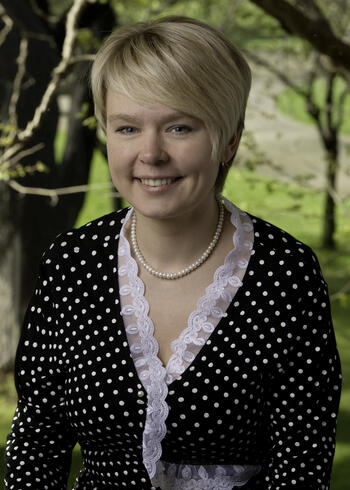
The Freeman Spogli Institute for International Studies (FSI) at Stanford University is pleased to announce that Rose Gottemoeller has been appointed the next Frank E. and Arthur W. Payne Distinguished Lecturer. She will spend the next three years at Stanford working with FSI’s Center for International Security and Cooperation (CISAC) and will simultaneously be a Research Fellow at the Hoover Institution.

Gottemoeller was the Deputy Secretary General of NATO from 2016 to 2019, where she helped to drive forward NATO’s adaptation to new security challenges in Europe and in the fight against terrorism.  Prior to NATO, she served for nearly five years as the Under Secretary for Arms Control and International Security at the U.S. Department of State, advising the Secretary of State on arms control, nonproliferation and political-military affairs. While Assistant Secretary of State for Arms Control, Verification and Compliance in 2009 and 2010, she was the chief U.S. negotiator of the New Strategic Arms Reduction Treaty (New START) with the Russian Federation.

Prior to her government service, she was a senior associate with the Carnegie Endowment for International Peace, with joint appointments to the Nonproliferation and Russia programs. She served as the Director of the Carnegie Moscow Center from 2006 to 2008.

“I am thrilled that Rose Gottemoeller will be joining FSI next year,” said FSI Director Michael McFaul. “In addition to her most recent senior appointment at NATO, Rose is one of the most experienced arms control experts in the country. Our students and research community will have a truly unique opportunity to learn from this most talented American diplomat.“

George P. Shultz, former Secretary of State and the Thomas W. and Susan B. Ford Distinguished Fellow at the Hoover Institution, added, “As the highest-ranking civilian woman in NATO’s history, Rose has built a career of service promoting peace and security around the world and will provide expertise to some of the most relevant global policy issues facing the world today. We welcome the wealth of knowledge and real-world experience in foreign relations, diplomacy and international affairs she will bring to the Hoover Institution."

At Stanford, Gottemoeller will teach and mentor students in the Ford Dorsey Master’s in International Policy program and the CISAC Honors program; contribute to policy research and outreach activities; and convene workshops, seminars and other events relating to her areas of expertise, including nuclear security, Russian relations, the NATO alliance, EU cooperation and non-proliferation.

"Since CISAC's inception, the Center has focused much of its research and teaching on the causes of great power conflict and strategies to avoid nuclear war,” said Colin Kahl, Co-director of CISAC. “Few people in the world have as much practical experience — or enjoy more widespread respect — tackling these existential challenges as Rose Gottemoeller. We are thrilled to welcome her to the CISAC community."

The Payne Lectureship is named for Frank E. Payne and Arthur W. Payne, brothers who gained an appreciation for global problems through their international business operations. The Payne Distinguished Lecturer is chosen for his or her international reputation as a leader, with an emphasis on visionary thinking; a broad, practical grasp of a given field; and the capacity to clearly articulate an important perspective on the global community and its challenges. 

“For me, this is an exciting opportunity,” Gottemoeller said.  “I love teaching and mentoring students, and I am itching to get some writing done.  It’s an honor to have the chance to dive into this work as the Payne Distinguished Lecturer, with great colleagues at both FSI and the Hoover Institution.”

All News button
1
Authors
News Type
News
Date
Paragraphs

When Colin Kahl came on board as Vice President Joe Biden’s National Security Advisor in 2014, the situation in Ukraine was one of a few “crisis issues” that Biden and his staff were tasked with ameliorating by former President Barack Obama, Kahl told Freeman Spogli Institute for International Studies (FSI) Director Michael McFaul on the World Class podcast.

Less than a year after Ukraine’s Revolution of Dignity, the annexation of Crimea by Russia and the ousting of Ukrainian President Viktor Yanukovych, Biden and his team were focused on curbing corruption, helping Ukraine’s new leaders with the governance of the country and ensuring that the 2014 Minsk agreements were resolved, said Kahl, who is now co-director of the Center for International Security and Cooperation.


“A lot has been made of the corruption piece because of the impeachment inquiry and the false allegations against Biden, but [corruption] was really only one of three major baskets of activity that were going on,” said Kahl of the recent allegations against Biden, which suggest that he had asked the Ukrainian government to fire its former prosecutor general Viktor Shokin because Shokin had been investigating a Ukrainian company on which his son, Hunter Biden, sat on the board.

The real problem with Shokin, Kahl explained, stemmed from the fact that there were people working within Ukraine’s Prosecutor General’s office who wanted to investigate corruption cases, but they were unable to do so because Shokin was marginalizing those people and pushing them out of the office. As a result, no one of significance was prosecuted for corruption during Shokin’s tenure as prosecutor general, Kahl said.

[Get stories like this delivered to your inbox by signing up for FSI email alerts]

“Shokin was clogging up the system such that corruption cases couldn’t go forward because they’d get stuck in a file in a drawer in his office,” Kahl said. “And so the sense was not only in the U.S. government, but also in the European Union and the International Monetary Fund (IMF), that Shokin had become a single point of failure. The notion of getting rid of Shokin didn’t emanate from Biden.”

Biden, Kahl and others on Biden’s staff traveled to Kiev in December 2015 to discuss the conditions for securing a $1 billion loan guarantee from the U.S. and the IMF with former Ukrainian President Petro Poroshenko. Several of the conditions of the loan had to do with deterring corruption in the country, and one of those conditions was the reform of the Prosecutor General’s office, Kahl said. Biden asked Poroshenko to dismiss Shokin during that trip; three months later, Shokin resigned, and Ukraine ultimately received the $1 billion in financial assistance.

“This is not a ‘he’ story, it’s a ‘we’ story,” Kahl explained. “That is, the State Department was all in on this, the White House was all in on this, and so were the Europeans, the IMF and Ukrainian reformers. This isn’t a Biden story — this is a U.S. story.”
 

Hero Image
colin drell cropped
Colin Kahl speaks at an event hosted by the Center for International Security and Cooperation at Stanford University in 2018. Photo: Josh Edelsen.
All News button
1
News Type
News
Date
Paragraphs

CISAC Co-Director Rodney Ewing was awarded the Distinguished Public Service Award from the Mineralogical Society of America (MSA), to honor his “important contributions to furthering the vitality of the geological sciences.”

“I don’t know anyone more deserving of this award than Rod,” wrote Kevin Crowley, National Academies of Sciences, Engineering, and Medicine (retired), in the citation for the award. “Rod is first and foremost an extraordinarily creative and productive scientist, having authored or coauthored over 750 research publications and established fruitful research collaborations with scientists in several countries. He is also a founding editor of Elements Magazine, co-published by 18 national and international scientific organizations, which focuses on current themes in the mineralogical and geochemical sciences.”

“He has been a major force in the application of science and technology to national and international public policy making on nuclear waste management and disposal... and appointed by President Barack Obama to serve on the U.S. Nuclear Waste Technical Review Board,” Crowley continued.

Among Ewing’s honors, he also is the past recipient of the MSA’s Dana Medal and Roebling Medal, the Russian Academy of Sciences’ Lomonosov Gold Medal, and was elected to the U.S. National Academy of Engineering.

Hero Image
rod ewing cisac director
All News button
1
Authors
News Type
News
Date
Paragraphs

Although the first in-person meeting between President Donald Trump and Ukrainian President Volodymyr Zelensky on September 25 at the United Nations General Assembly looked like a “normal first meeting,” the question of whether Trump was pushing Zelensky during a July 25 phone call to investigate former Vice President Joe Biden remains, former U.S. Ambassador to Ukraine Steven Pifer told Freeman Spogli Institute for International Studies (FSI) Director Michael McFaul on the World Class podcast.


It’s important to look at the context of what was happening between the U.S. and Ukraine on July 25, Pifer told McFaul. For one thing, Trump had put nearly $400 million in military aid for Ukraine on hold before the call took place. In addition, the two countries were in the midst of planning a meeting between the two leaders at the Oval Office at the time.

“Those are big things for Zelensky, particularly at the beginning of his term in office,” said Pifer, who is a William J. Perry fellow at the Center for International Security and Cooperation. “If he can show that he delivers on the assistance and also on the photo op with the American president — that looks really good at home. And it’s also a good message to send to the Russians: ‘I’ve got a relationship with the Americans.’”

[Get stories like this delivered to your inbox by signing up for FSI email alerts]

Pifer noted that Trump’s attorney, Rudy Giuliani, has played a peculiar role in this situation. For several months, according to Pifer, Giuliani has been talking about “a story that has long been debunked.” That story — which alleges that in 2015, Joe Biden asked the Ukrainian government to fire its prosecutor general who had at one point been investigating Burisma Holdings, a Ukrainian company on which his son, Hunter Biden, sat on the board  — has “zero evidence” of being true, said Pifer.

“If anything, the Ukrainian prosecutor general offices were hampering investigations into Burisma Holdings,” Pifer pointed out. “And everybody wanted to see [former prosecutor general] Viktor Shokin gone — he was not doing his job. Giuliani has taken these two pieces and has tried to create an appearance of some big scandal, but there really is nothing there.”

Pifer added that he could not recall another instance during the span of his career when a private individual has been so deeply involved in what appears to be a “diplomatic or national security matter.”

“I believe this is damaging to American diplomatic efforts with Ukraine because you have an embassy there that is trying to pursue American interests,” he said. “For example, we want Ukraine to do more on reform, and we want Ukraine to help put pressure on Iran. And you have Giuliani coming in with a very different agenda.”

Related: Read Pifer’s recent blog post for the Brookings Institution: "The Dueling U.S. Foreign Policy Approaches to Ukraine Pose a Risk for Kyiv.”

Hero Image
zelensky cropped
President of Ukraine Volodymyr Zelensky addresses the United Nations General Assembly at UN headquarters on Sept. 25, 2019. Photo: Drew Angerer/Getty Images.
All News button
1
Authors
Steven Pifer
News Type
Commentary
Date
Paragraphs

The Intermediate-Range Nuclear Forces (INF) Treaty came to an end in August. The United States and Russia no longer are barred from developing and deploying land-based, intermediate-range missiles, and the Pentagon apparently aims to deploy such missiles in Europe and Asia.

The INF Treaty, signed in 1987 by Ronald Reagan and Mikhail Gorbachev, prohibited the United States and Soviet Union (later Russia) from testing or possessing land-based ballistic or cruise missiles with ranges between five hundred and fifty-five hundred kilometers. Unfortunately, Russia violated the treaty by testing and deploying the 9M729, a prohibited land-based, intermediate-range cruise missile.


Read the Rest at The National Interest.

Hero Image
rtr1ixkv 2
All News button
1
-

CISAC will be canceling all public events and seminars until at least April 5th due to the ongoing developments associated with COVID-19.

------------------------------------------------------------------------------------------------------------------------------------------------------


About this Event: Somatic (i.e. non-heritable) genome editing is already in clinical trials for the treatment of diseases ranging from certain cancers to sickle cell anemia.  But public fascination has largely focused on germline editing, especially with the startling late 2018 announcement that human embryos had been edited and then used for a pregnancy resulting in two live-born girls.  This talk will highlight key scientific and political responses since that announcement, and offer insights into ongoing debates and ongoing work by international commissions looking at whether there are any conditions under which such experiments could be done responsibly in the future.


About the Speaker:

R. Alta Charo, J.D., is a 2019-2020 Berggruen Fellow at the Stanford Center for Advanced Study in the Behavioral Sciences and the Warren P. Knowles Professor of Law and Bioethics at the University of Wisconsin.  She was co-chair of the National Academies’ 2017 report on human genome editing, and a member of the organizing committee for the 2019 international summit on genome editing in Hong Kong.  At present, she serves on the  World Health Organization committee developing global governance standards for genome editing, and on the steering committee of the International Society for Stem Cell Research effort to revise and expand ethical guidelines for research and development of both heritable and non-heritable human genome editing.


Alta Charo Professor of Law University of Wisconsin, and Stanford Center for Advanced Study in the Behavioral Sciences
Seminars
-

Abstract: In 2013, the Obama Administration’s “Nuclear Employment Strategy” guidance announced that all war plans and operations would be “consistent with the fundamental principles of the Law of Armed Conflict” (LOAC). The Trump Administration’s 2018 Nuclear Posture Review repeated this commitment. The literature on nuclear strategy and deterrence in political science however, has either ignored these legal requirements or misunderstood them. The legal literature on nuclear weapons, however, has largely ignored the technical revolution regarding improved accuracy and lower-yield nuclear weapons and the different strategic contexts in which the U.S. might contemplate nuclear use. This paper analyzes how proper application of the Law of Armed Conflict should constrain U.S. nuclear doctrine and war planning and how knowledge of strategic considerations is fundamental to proper legal analysis. We argue that the principle of proportionality can permit “counter-force” targeting— most clearly when such attacks can prevent or significantly reduce the expected damage to U.S. and allied populations with lower foreign collateral damage. We also argue that the legal requirement to take “feasible precautions” to protect non-combatants means the U.S. must use conventional weapons or the lowest yield nuclear weapons possible in any counterforce attack. Finally, we contend that the prohibition against deliberate targeting of civilians has gained the status of customary international law and that the U.S. government should therefore reverse its traditional position and reject the doctrine of “belligerent reprisal” against foreign civilians. This prohibition means that it is illegal for the United States, contrary to what is implied in the 2018 NPR and explicitly maintained by prominent U.S. Air Force lawyers, to either intentionally target civilians in reprisal to a strike against U.S. or allied civilians, or launch attacks against legitimate military targets if the intent to is cause incidental civilian harm.


Speaker's Biography:

Image
sagan scott 2012 photo
Scott D. Sagan is the Caroline S.G. Munro Professor of Political Science, the Mimi and Peter Haas University Fellow in Undergraduate Education, and Senior Fellow at the Center for International Security and Cooperation and the Freeman Spogli Institute at Stanford University. He also serves as Chairman of the American Academy of Arts and Sciences’ Committee on International Security Studies. Before joining the Stanford faculty, Sagan was a lecturer in the Department of Government at Harvard University and served as special assistant to the director of the Organization of the Joint Chiefs of Staff in the Pentagon. Sagan has also served as a consultant to the office of the Secretary of Defense and at the Sandia National Laboratory and the Los Alamos National Laboratory. 

Sagan is the author of Moving Targets: Nuclear Strategy and National Security (Princeton University Press, 1989); The Limits of Safety: Organizations, Accidents, and Nuclear Weapons (Princeton University Press, 1993); and, with co-author Kenneth N. Waltz, The Spread of Nuclear Weapons: An Enduring Debate (W.W. Norton, 2012). He is the co-editor of Learning from a Disaster: Improving Nuclear Safety and Security after Fukushima (Stanford University Press, 2016) with Edward D. Blandford and co-editor of Insider Threats (Cornell University Press, 2017) with Matthew Bunn. Sagan was also the guest editor of a two-volume special issue of Daedalus: Ethics, Technology, and War (Fall 2016) and The Changing Rules of War (Winter 2017).

Recent publications include “Armed and Dangerous: When Dictators Get the Bomb” in Foreign Affairs (November/December 2018); “Not Just a War Theory: American Public Opinion on Ethics in Combat” with Benjamin A. Valentino in International Studies Quarterly (Fall 2018); The Korean Missile Crisis” in Foreign Affairs (November/December 2017); “Revisiting Hiroshima in Iran: What Americans Really Think About Using Nuclear Weapons and Killing Noncombatants” with Benjamin A. Valentino in International Security (Summer 2017); and “Atomic Aversion: Experimental Evidence on Taboos, Traditions, and the Non-Use of Nuclear Weapons” with Daryl G. Press and Benjamin A. Valentino in the American Political Science Review (February 2013).

In 2018, Sagan received the Andrew Carnegie Fellowship from the Carnegie Corporation of New York. In 2017, he received the International Studies Association’s Susan Strange Award which recognizes the scholar whose “singular intellect, assertiveness, and insight most challenge conventional wisdom and intellectual and organizational complacency" in the international studies community. Sagan was also the recipient of the National Academy of Sciences William and Katherine Estes Award in 2015, for his work addressing the risks of nuclear weapons and the causes of nuclear proliferation. The award, which is granted triennially, recognizes “research in any field of cognitive or behavioral science that advances understanding of issues relating to the risk of nuclear war.” In 2013, Sagan received the International Studies Association's International Security Studies Section Distinguished Scholar Award. He has also won four teaching awards: Stanford’s 1998-99 Dean’s Award for Distinguished Teaching; Stanford's 1996 Hoagland Prize for Undergraduate Teaching; the International Studies Association’s 2008 Innovative Teaching Award; and the Monterey Institute for International Studies’ Nonproliferation Education Award in 2009.


Image
weiner allen
Allen S. Weiner, JD ’89, is an international legal scholar with expertise in such wide-ranging fields as international and national security law, the law of war, international conflict resolution, and international criminal law (including transitional justice). His scholarship focuses on international law and the response to the contemporary security threats of international terrorism, the proliferation of weapons of mass destruction, and situations of widespread humanitarian atrocities. He also explores assertions by states of “war powers” under international law, domestic law, and just war theory in the context of asymmetric armed conflicts between states and nonstate armed groups and the response to terrorism. In the realm of international conflict resolution, his highly multidisciplinary work analyzes the barriers to resolving violent political conflicts, with a particular focus on the Israeli-Palestinian conflict. Weiner’s scholarship is deeply informed by experience; he practiced international law in the U.S. Department of State for more than a decade advising government policymakers, negotiating international agreements, and representing the United States in litigation before the International Criminal Tribunal for the former Yugoslavia, the International Court of Justice, and the Iran-United States Claims Tribunal.

Senior Lecturer Weiner is director of the Stanford Program in International and Comparative Law and co-director of the Stanford Center on International Conflict and Negotiation. Before joining the Stanford Law School faculty in 2003, Weiner served as legal counselor to the U.S. Embassy in The Hague and attorney adviser in the Office of the Legal Adviser of the U.S. Department of State. He was a law clerk to Judge John Steadman of the District of Columbia Court of Appeals.


Scott Sagan Professor of Political Science Stanford University
Allen Weiner Stanford University
Seminars
Paragraphs

About the Author: Marc Goodman has spent a career in law enforcement and technology. He was appointed futurist-in-residence with the FBI, worked as a senior adviser to Interpol, and served as a street police officer. As the founder of the Future Crimes Institute and the Chair for Policy, Law, and Ethics at Silicon Valley’s Singularity University, he continues to investigate the intriguing and often terrifying intersection of science and security, uncovering nascent threats and combating the darker sides of technology.

Read an Excerpt

CHAPTER 1
 
 
Connected, Dependent and Vulnerable


Technology…is a queer thing; it brings you great gifts with one hand and it stabs you in the back with the other.
-- CHARLES PERCY SNOW


Mat Honan’s life looked pretty good on-screen: in one tab of his browser were pictures of his new baby girl; in another streamed the tweets from his thousands of Twitter followers. As a reporter for Wired magazine in San Francisco, he was living an urbane and connected life and was as up-to-date on technology as anyone. Still, he had no idea his entire digital world could be erased in just a few keystrokes. Then, one August day, it was. His photographs, e-mails, and much more all fell into the hands of a hacker. Stolen in just minutes by a teenager halfway around the world. Honan was an easy target. We all are.
Honan recalls the afternoon when everything fell apart. He was play- ing on the floor with his infant daughter when suddenly his iPhone pow- ered down. Perhaps the battery had died. He was expecting an important call, so he plugged the phone into the outlet and rebooted. Rather than the usual start-up screen and apps, he saw a large white Apple logo and a mul- tilingual welcome screen inviting him to set up his new phone. How odd.
Honan wasn’t especially worried: he backed up his iPhone every night. His next step was perfectly obvious—log in to iCloud and restore the phone and its data. Upon logging in to his Apple account, he was informed that his password, the one he was sure was correct, had been deemed wrong by the iCloud gods. Honan, an astute reporter for the world’s preeminent technology magazine, had yet another trick up his sleeve. He would merely connect the iPhone to his laptop and restore his data from the hard drive on his local computer. What happened next made his heart sink.
As Honan powered up his Mac, he was greeted with a message from Apple’s calendar program advising him his Gmail password was incor- rect. Immediately thereafter, the face of his laptop—its beautiful screen— turned ashen gray and quit, as if it had died. The only thing visible on the screen was a prompt: please enter your four-digit password. Honan knew he had never set a password.
Honan ultimately learned that a hacker had gained access to his iCloud account, then used Apple’s handy “find my phone” feature to locate all of the electronic devices in Honan’s world. One by one, they were nuked. The hacker issued the “remote wipe” command, thereby erasing all of the data Honan had spent a lifetime accumulating. The first to fall was his iPhone, then his iPad. Last, but certainly not least, was his MacBook. In an instant, all of his data, including every baby picture he had taken during his daugh- ter’s first year of life, were destroyed. Gone too were the priceless photo- graphic memories of his relatives who had long since died, vanquished into the ether by parties unknown.
Next to be obliterated was Honan’s Google account. In the blink of an eye, the eight years of carefully curated Gmail messages were lost. Work conversations, notes, reminders, and memories wiped away with a click of a mouse. Finally, the hacker turned his intention to his ultimate target: Honan’s Twitter handle, @Mat. Not only was the account taken over, but the attacker used it to send racist and homophobic rants in Honan’s name to his thousands of followers.
In the aftermath of the online onslaught, Honan used his skills as an investigative reporter to piece together what had happened. He phoned Apple tech support in an effort to reclaim his iCloud account. After more than ninety minutes on the phone, Honan learned that “he” had just called thirty minutes prior to request his password be reset. As it turns out, the only information anybody needed to change Honan’s password was his billing address and the last four digits of his credit card number. Honan’s address was readily available on the Whois Internet domain record he had created when he built his personal Web site. Even if it hadn’t been, dozens of online services such as WhitePages.com and Spokeo would have pro- vided it for free.
To ascertain the last four digits of Honan’s credit card, the hacker guessed that Honan (like most of us) had an account on Amazon.com. He was correct. Armed with Honan’s full name and his e-mail and mailing addresses, the culprit contacted Amazon and successfully manipulated a customer service rep so as to gain access to the required last four credit card digits. Those simple steps and nothing more turned Honan’s life upside down. Although it didn’t happen in this case, the hacker could have just as easily used the very same information to access and pilfer Honan’s online bank and brokerage accounts.
The teenager who eventually came forward to take credit for the attack—Phobia, as he was known in hacking circles—claimed he was out to expose the vast security vulnerabilities of the Internet services we’ve come to rely on every day. Point made. Honan created a new Twitter account to communicate with his attacker. Phobia, using the @Mat account, agreed to follow Honan’s new account, and now the two could direct message each other. Honan asked Phobia the single question that was burning on his mind: Why? Why would you do this to me? As it turns out, the near decade of lost data and memories was merely collateral damage.
Phobia’s reply was chilling: “I honestly didn’t have any heat towards you . . . I just liked your [Twitter] username.” That was it. That’s all it was ever about—a prized three-letter Twitter handle. A hacker thousands of miles away liked it and simply wanted it for himself.
The thought that somebody with no “heat” toward you can obliterate your digital life in a few keystrokes is absurd. When Honan’s story appeared on the cover of Wired in December 2012, it garnered considerable atten- tion . . . for a minute or two. A debate on how to better secure our every- day technologie ensued but, like so many Internet discussions, ultimately flamed out. Precious little has changed since Honan’s trials and tribula- tions. We are still every bit as vulnerable as Honan was then—and even more so as we ratchet up our dependency on hackable mobile and cloud- based applications.
As with most of us, Honan’s various accounts were linked to one another in a self-referential web of purported digital trust: the same credit card number on an Apple profile and an Amazon account; an iCloud e-mail address that points back to Gmail. Each had information in common, including log-on credentials, credit card numbers, and passwords with all the data connected back to the same person. Honan’s security protections amounted to nothing more than a digital Maginot Line—an overlapping house of cards that came tumbling down with the slightest pressure. All or most of the information needed to destroy his digital life, or yours, is readily available online to anybody who is the least bit devious or creative.


Progress and Peril in a Connected World
 
In a few years’ time, with very little self-reflection, we’ve sprinted headlong from merely searching Google to relying on it for directions, calendars, address books, video, entertainment, voice mail, and telephone calls. One billion of us have posted our most intimate details on Facebook and will- ingly provided social networking graphs of our friends, family, and co- workers. We’ve downloaded billions of apps, and we rely on them to help us accomplish everything from banking and cooking to archiving baby pictures. We connect to the Internet via our laptops, mobile phones, iPads, TiVos, cable boxes, PS3s, Blu-rays, Nintendos, HDTVs, Rokus, Xboxes, and Apple TVs.
The positive aspects of this technological evolution are manifest. Over the past hundred years, rapid advances in medical science mean that the average human life span has more than doubled and child mortality has plummeted by a factor of ten. Average per capita income adjusted for infla- tion around the world has tripled. Access to a high-quality education, so elusive to many for so long, is free today via Web sites such as the Khan Academy. And the mobile phone is singularly credited with leading to bil- lions upon billions of dollars in direct economic development in nations around the globe.
The interconnectivity the Internet provides through its fundamental architecture means that disparate peoples from around the world can be brought together as never before. A woman in Chicago can play Words with Friends with a total stranger in the Netherlands. A physician in Bangalore, India, can remotely read and interpret the X-ray results of a patient in Boca Raton, Florida. A farmer in South Africa can use his mobile phone to access the same crop data as a PhD candidate at MIT. This interconnect- edness is one of the Internet’s greatest strengths, and as it grows in size, so too does the global network’s power and utility. There is much to celebrate in our modern technological world.
While the advantages of the online world are well documented and frequently highlighted by those in the tech industry, there is also a down- side to all of this interconnectivity.
Our electrical grids, air traffic control networks, fire department dis- patch systems, and even the elevators at work are all critically dependent on computers. Each day, we plug more and more of our daily lives into the global information grid without pausing to ask what it all means. Mat Honan found out the hard way, as have thousands of others. But what should happen if and when the technological trappings of our modern society—the foundational tools upon which we are utterly dependent—all go away? What is humanity’s backup plan? In fact, none exists.

All Publications button
1
Publication Type
Books
Publication Date
Journal Publisher
Penguin Random House LLC
Authors
-

Seminar Recording: https://youtu.be/qpUNQ9BgpPg


About this Event: There is growing alarm over how drugs empower terrorists, insurgents, militias, and gangs. But by looking back not just years and decades but centuries, Peter Andreas reveals that the drugs-conflict nexus is actually an old story, and that powerful states have been its biggest beneficiaries. In his new book, Killer High, Andreas shows how six psychoactive drugs-ranging from old to relatively new, mild to potent, licit to illicit, natural to synthetic-have proven to be particularly important war ingredients. This sweeping history tells the story of war from antiquity to the modern age through the lens of alcohol, tobacco, caffeine, opium, amphetamines, and cocaine. Beer and wine drenched ancient and medieval battlefields, and the distilling revolution lubricated the conquest and ethnic cleansing of the New World. Tobacco became globalized through soldiering, with soldiers hooked on smoking and governments hooked on taxing it. Caffeine and opium fueled imperial expansion and warfare. The commercialization of amphetamines in the twentieth century energized soldiers to fight harder, longer, and faster, while cocaine stimulated an increasingly militarized drug war that produced casualty numbers surpassing most civil wars. As Andreas demonstrates, armed conflict has become progressively more drugged with the introduction, mass production, and global spread of mind-altering substances. As a result, we cannot understand the history of war without including drugs, and we similarly cannot understand the history of drugs without including war. From ancient brews and battles to meth and modern warfare, drugs and war have grown up together and become addicted to each other.


Speaker's Biography: 

Peter Andreas is the John Hay Professor of International Studies at Brown University, where he holds a joint appointment between the Department of Political Science and the Watson Institute for International and Public Affairs. Andreas has published ten books, including Smuggler Nation: How Illicit Trade Made America. He has also written for publications such as Foreign Affairs, Foreign Policy, The Guardian, Harper's, The Nation, The New Republic, Slate, The New York Times, and The Washington Post.


Peter Andreas Professor of International Studies Brown University
Seminars
-

Livestream: This event will not be live-streamed or recorded.


Abstract: Despite a lull after the fall of the Soviet Union, grassroots activism in Russia is on the rise. The protests for free elections that swept across Russia in the summer of 2019 may have captured international headlines, but many other Russian grassroots groups have been actively organizing over the last decade. What types of civic movements exist in today’s Russia? What are the risks that civic activists face? How do they interact with the state or state-protected interest groups? Finally, what role could grassroots groups play in democratizing Russia? Russian activist Evgeniya Chirikova will shed light on these questions through her personal experience as an environmental activist and as a coordinator of Activatica.org, an online news platform covering grassroots activism across Russia.


Speaker's Biography:

Image
2012europe 111
Evgeniya Chirikova is a Russian environmental activist, primarily known for opposing the building of a motorway through the Khimki forest near Moscow. She also played a prominent role in the 2011-2012 Russian protests following disputed parliamentary elections in Russia. In March 2011, she received the Woman of Courage Award, handed over by US Vice President Joe Biden. In 2012, she was a winner of the Goldman Environmental Prize. In November 2012, Foren Policy named Chirikova one of its 2012 Top 100 Global Thinkers. In 2015 Chirikova organized the portal activatica.org, and she is currently organizing media support for grassroots groups.

Evgeniya Chirikova Russian Environmental Activist
Seminars
Subscribe to The Americas