Paragraphs

The protracted campaigns in Afghanistan and Iraq have diminished America’s appetite for waging wars to end tyranny or internal disorder in foreign lands. Military interventions have traditionally been a source of controversy in the United States. But America’s appetite for the dispatch of armed forces has been diminished greatly by factors that have primarily emerged in the twenty-first century. These include, most painfully, the protracted campaigns in Afghanistan and Iraq that have made US political and military leaders more cautious about waging wars to end tyranny or internal disorder in foreign lands. Read more here.

All Publications button
1
Publication Type
Journal Articles
Publication Date
Journal Publisher
Survival: Global Politics and Strategy
Authors
Number
56
Paragraphs

If there is one thing Americans should have learnt from their recent wars, it is that they do not have the wisdom, resources or staying power to dictate political outcomes. Not long ago Washington aspired to build prosperous democracies in Afghanistan and Iraq. Today it would be satisfied if they simply hung together as countries.President Barack Obama says the US should recognise that the world is “messy”. His strategy has been to avoid doing “stupid stuff”. And yet he is again trying to put a more ambitious face on American policy, asserting this month that the US would “degrade and ultimately destroy” the Islamic State of Iraq and the Levant, the al-Qaeda offshoot known as Isis. Air strikes quickly followed. Read more here.

All Publications button
1
Publication Type
Commentary
Publication Date
Journal Publisher
Financial Times
Authors
Paragraphs

What’s sometimes referred to as the global jihadist “movement” is actually extremely fractured, CISAC's terrorism expert Martha Crenshaw writes in this commentary in The Atlantic. It’s united by a general set of shared ideological beliefs, but divided organizationally and sometimes doctrinally. Whether to fight the “near enemy” (local regimes) or the “far enemy” (such as the United States and the West), for example, has been contentious since the 1990s, when Osama bin Laden declared war on the United States.

Crenshaw, who founded the Mapping Militant Organizations project at CISAC, says rivalry among like-minded militant groups is as common as cooperation. Identities and allegiances shift. Groups align and re-align according to changing expectations about the future of the conflicts they’re involved in, as well as a host of other factors, such as competition for resources, leadership transitions, and the defection of adherents to rival groups that appear to be on the ascendant.

All Publications button
1
Publication Type
Commentary
Publication Date
Journal Publisher
The Atlantic
Authors
Martha Crenshaw
-

At the NATO Summit in Wales in September 2014, NATO leaders were clear about the security challenges on the Alliance’s borders. In the East, Russia’s actions threaten our vision of a Europe that is whole, free and at peace.  On the Alliance’s southeastern border, ISIL’s campaign of terror poses a threat to the stability of the Middle East and beyond.  To the south, across the Mediterranean, Libya is becoming increasingly unstable. As the Alliance continues to confront theses current and emerging threats, one thing is clear as we prepare for the 2016 Summit in Warsaw: NATO will adapt, just as it has throughout its 65-year history.

Image
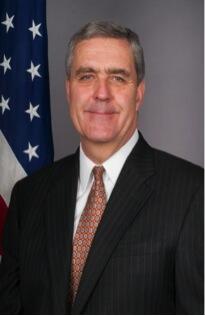
Douglas Lute, Ambassador of the United States to NATO


In August 2013, Douglas E. Lute was sworn-in as the Ambassador of the United States to the North Atlantic Treaty Organization (NATO).  From 2007 to 2013, Lute served at the White House under Presidents Bush and Obama, first as the Assistant to the President and Deputy National Security Advisor for Iraq and Afghanistan, and more recently as the Deputy Assistant to the President focusing on Afghanistan, Pakistan and India.  In 2010, AMB Lute retired from the U.S. Army as a Lieutenant General after 35 years on active duty.  Prior to the White House, he served as the Director of Operations on the Joint Staff, overseeing U.S. military operations worldwide. He served multiple tours in NATO commands including duty in Germany during the Cold War and commanding U.S. forces in Kosovo.  He holds degrees from the United States Military Academy and Harvard University.

A light lunch will be provided.  Please plan to arrive by 11:30am to allow time to check in at the registration desk, pick up your lunch and be seated by 12:00 noon.

Co-sponsored by The Europe Center, the Freeman Spogli Institute for International Studies, the Center for International Security and Cooperation and the Center for Russian, East European and Eurasian Studies.


Douglas Lute United States Ambassador to NATO Speaker
Lectures
Paragraphs

Every week, the Islamic State (ISIS) makes further headlines with its ruthless behavior. Beheadings, mass executions, burnings and extreme acts of brutality are the methods of a terrorist campaign intended to cow opponents and rally potential fighters. At the same time, the group is fighting a guerilla war against Iraqi forces while engaging in more conventional infantry battles against Kurdish Peshmerga and Free Syrian Army cadres. The many tactics of ISIS raises the question: Which type of war are we fighting against?

CISAC's Joe Felter and his Empirical Studies of Conflict colleagues Eli Berman and Jacob Shapiro ask those questions in this National Interest article.

All Publications button
1
Publication Type
Journal Articles
Publication Date
Journal Publisher
The National Interest
Authors
Paragraphs

For 25 years now, a weak-state fixation has transfixed U.S. foreign policy, Amy Zegart writes in this Foreign Policy piece. But Washington's paranoia over weak and failing states is distracting it from the real national security threats looming on the horizon.


All Publications button
1
Publication Type
Commentary
Publication Date
Journal Publisher
Foreign Policy
Authors
Amy Zegart
Paragraphs

The future of humanitarian assistance and security policy in chaotic places such as Syria and Iraq could rest on a single question: Does aid in conflict zones promote peace or war? It seems intuitive to assume that hunger and exposure push people to violence and that aid should, therefore, lead to peace. This idea has been the bedrock of scores of “hearts and minds” campaigns dating back to the Cold War, which have invested billions of dollars on the principle that assistance can buy compliance and, eventually, peace.

Yet recent evidence indicates that sending aid into conflict-affected regions can actually worsen violence in some cases. Over the past decade, our research collective, the Empirical Studies of Conflict Project (ESOC), has conducted a suite of studies in conflict zones to test this relationship. Among other countries, we studied the Philippines, a state riven by a variety of long-term conflicts in areas with limited governmental control. Our findings provide several lessons on how infusions of aid work in poorly governed spaces.

All Publications button
1
Publication Type
Journal Articles
Publication Date
Journal Publisher
Foreign Affairs
Authors
Authors
News Type
News
Date
Paragraphs


American deterrence, though traditionally centered on the nuclear triad, is becoming ever more integrated and dependent on other technologies in space and the cyber world, Admiral Cecil D. Haney, commander of the U.S. Strategic Command, told a Stanford audience.

Haney, appointed to lead USSTRATCOM by President Barack Obama last year, made a daylong visit to Stanford on Tuesday, holding seminars and private meetings with faculty, scholars and students at the Hoover Institution and the Center for International Security and Cooperation. His seminar at CISAC focused on strategic deterrence in the 21st century.

Admiral Haney has made it USSTRATCOM’s goal, in accordance with the Nuclear Nonproliferation Treaty (NPT) and the 2010 START Treaty, to reduce America’s nuclear weapons stockpile. But he sees a world where maintaining a deterrent is still necessary.

“As we work to continue our nation’s goal of reducing the role of our nation’s nuclear weapons, we find other nations not only modernizing their strategic capabilities but also promoting them,” he said. Russia, Iran, and China attracted particular concern. Haney declined to estimate how much the U.S. can reduce its stockpile without hurting its deterrent posture.

While the nuclear triad is still the foundation of American deterrence, space and cyberspace technology are now fully integrated with nuclear platforms, making cyber and space security indispensable.

“Deterrence is more than just the triad,” said Haney. “We are highly dependent on space capabilities, more so than ever before. Space is fully integrated in our joint military operations as well as in our commercial and civil infrastructure. But space today is contested, congested, and competitive.” 

Haney said there are more than 20,000 softball-sized objects orbiting Earth.


Image
dsc 9384


“Only about 1,000 of those objects are satellites, the rest is debris, increasing threats to our operational satellites as they travel at speeds exceeding 17,000 mph,” he said. The Joint Space Operation Center receives an average of 30 collision alerts per day.

Damage to some of our satellites could have devastating impacts on our economy, communications and infrastructure. Rival nations also pose space security challenges.

According to the U.S. government, China recently tested an anti-satellite missile. This follows a 2007 test when China successfully destroyed one of its satellites, and consequently created a cloud of debris that still poses a threat to international satellites.

“Keeping assured access to the space domain is a full-time job,” Haney said.

Likewise cybersecurity. America’s increasing reliance on cyberspace for both military and civilian purposes has created security vulnerabilities that can be exploited by both state and non-state actors. Haney cited the recent attacks on J.P. Morgan and Sony, Russia and China’s attacks on regional rivals, and non-state terror groups.

“We have benefited enormously from advanced computer capabilities, but it has opened up threat access to our critical infrastructure,“ Haney said. “As we confront terrorist groups we all know that they are not only using cyber for recruiting and messaging – but also to seek weapons of mass destruction.”

In a Q&A session after his talk during the CISAC seminar, a variety of concerns were raised about the USSTRACOM mission, including triad modernization, the ongoing personnel issues that have been in the news, and missile defense.

FSI Senior Fellow Scott Sagan asked about the recent spate of personnel problems at U.S. nuclear silos. Haney said a full review of personnel and procedures, ordered by Defense Secretary Chuck Hagel, was completed and changes have been enacted.

“We are trying to positively reinforce our workforce and I am getting a lot of positive feedback from operators,” Haney said. “We are having monthly conversations that include operational officers. When I visit sites I don’t just meet with commanders, I have meals with smaller groups of lower-ranking personnel.”

Haney previously served as commander of the Pacific Fleet. A graduate of the U.S. Naval Academy, he has personal experience with America’s nuclear deterrent as he served in submarines armed with nuclear ballistic missiles, which, in addition to land-based intercontinental ballistic missiles (ICBMs) and strategic bombers, make up part of the United States’ nuclear triad.

USSTRATCOM is one of nine unified commands that have control of forces from all four branches of the U.S. military. The command’s well-known responsibility is command and control of America’s nuclear arsenal, a role it inherited from the Cold War-era Strategic Air Command. Since its establishment in 1992, USSTRATCOM has been assigned additional responsibilities, most notably cyberspace and outer space.


You can listen to the audio of his presentation here.


Joshua Alvarez was a CISAC Honors Student during the 2011-2012 academic year.


Hero Image
dsc 9057 Rod Searcey
All News button
1
Subscribe to Middle East and North Africa