Conflict
Paragraphs

Nuclear weapons are so central to the history of the Cold War that it can be difficult to disentangle the two. Did nuclear weapons cause the Cold War? Did they contribute to its escalation? Did they help to keep the Cold War “cold”? We should also ask how the Cold War shaped the development of atomic energy. Was the nuclear-arms race a product of Cold War tension rather than its cause?

The atomic bomb and the origins of the Cold War:

The nuclear age began before the Cold War. During World War II, three countries decided to build the atomic bomb: Britain, the United States, and the Soviet Union. Britain put its own work aside and joined the Manhattan Project as a junior partner in 1943. The Soviet effort was small before August 1945. The British and American projects were driven by the fear of a German atomic bomb, but Germany decided in 1942 not to make a serious effort to build the bomb. In an extraordinary display of scientific and industrial might, the United States made two bombs ready for use by August 1945. Germany was defeated by then, but President Harry S. Truman decided to use the bomb against Japan.

The decision to use the atomic bomb has been a matter of intense controversy. Did Truman decide to bomb Hiroshima and Nagasaki in order, as he claimed, to end the war with Japan without further loss of American lives? Or did he drop the bombs in order to intimidate the Soviet Union, without really needing them to bring the war to an end? His primary purpose was surely to force Japan to surrender, but he also believed that the bomb would help him in his dealings with Iosif V. Stalin. That latter consideration was secondary, but it confirmed his decision. Whatever Truman’s motives, Stalin regarded the use of the bomb as an anti-Soviet move, designed to deprive the Soviet Union of strategic gains in the Far East and more generally to give the United States the upper hand in defining the postwar settlement. On August 20, 1945, two weeks to the day after Hiroshima, Stalin signed a decree setting up a Special Committee on the Atomic Bomb, under the chairmanship of Lavrentii P. Beriia. The Soviet project was now a crash program.

All Publications button
1
Publication Type
Books
Publication Date
Journal Publisher
Cambridge University Press
Authors
David Holloway
0
CISAC Honors Student
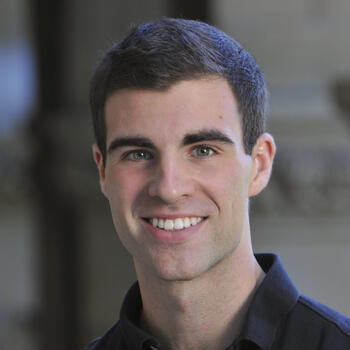
benmittelberger_rsd16_003_0098a.jpg Class of 2016

Ben Mittelberger is a senior in computer science concentrating in information systems design and implementation. He is a current student in the CISAC Honors Program. His thesis is titled: "In Data We Trust?: The Big Data Capabilities of the National Counterterrorism Center." It focuses on the increasing size and complexity of intelligence datasets and whether or not the center is structured properly to leverage them. He is advised by Dr. Martha Crenshaw

Authors
News Type
News
Date
Paragraphs

In a story published in the Wall Street Journal yesterday, Assad Chemical Threat Mounts, the author reveals that intelligence agencies are concerned that Syrian authorities might resort to large-scale chemical attacks if the regime feels threatened by ISIS or other anti-government militants.

As the risks escalate, the argument presented in Foreign Policy 18 months ago by Stanford scholars Scott Sagan and Ben Buch is particularly timely. In Our Red Lines and Theirs, Sagan, a professor of political science and Senior Fellow at FSI and at CISAC, and Buch, a PhD candidate in Political Science, laid out the reasons why Iraq did not resort to chemical attacks against US forces and used their findings  to draw lessons that could be applied to the Syrian regime, another dictatorial regime armed with chemical weapons. Read the December 2013 article in full here.

Hero Image
syria bags
All News button
1
Authors
News Type
News
Date
Paragraphs

This year marks both the 150th anniversary of the end of the Civil War and the 14th year that U.S. troops have been engaged in conflict since 9/11. How have American writers portrayed the face of battle? What lessons have they learned from their writings about how humans remember or forget the past, and how do the controversies about these wars continue to haunt us still?

Courtesy Stanford LiveNatasha Trethewey

Poet Natasha Trethewey will read from her Pulitzer Prize-winning Native Guard as part of the Writing About War program.

On Tuesday, June 30, award-winning authors Natasha Trethewey and Phil Klay – both known for their acclaimed war-related works – will explore these topics in an evening of readings and conversation. The free program, titled Writing About War, is co-presented by Stanford Live and the Center for International Security and Cooperation (CISAC) at Stanford, and is part of a workshop on New Dilemmas of Ethics, Technology and War sponsored by the American Academy of Arts and Sciences.

Writing About War begins at 6 p.m. in Bing Concert Hall, with opening remarks by Jonathan Fanton, president of the Academy.

"One of the traditions of the American Academy, from its earliest days in the 18th century, is to bring together scientists, social scientists and humanists to address pressing issues of national importance," says Stanford political science Professor Scott Sagan, a senior fellow at CISAC and at the Freeman Spogli Institute for International Studies. Sagan will moderate the discussion.

"Political scientists and historians often study how the evolution of military technology influences politicians and generals who decide to go to war," Sagan adds. "But it is the novelists, the poets and the short story writers whose work helps us better understand how changes in military technology influence the soldiers and the noncombatants on the battlefield and after wars end."

Courtesy Stanford LivePhil Klay

Veteran Phil Klay will read from his short story collection Redeployment, which won the 2014 National Book Award for fiction, at the event.

Klay, a U.S. Marine Corps veteran who Sagan calls "a remarkable new voice in American literature," will read from his 2014 National Book Award-winning Redeployment, a collection of short stories that portray war and its aftermath through the memories of ordinary soldiers and officers fighting in Iraq. The characters in these stories struggle to make meaning out of chaos in tales interwoven with themes of brutality and faith, guilt and fear, helplessness and survival.

Born in Gulfport, Mississippi, on April 26, Confederate Memorial Day, Trethewey could hardly have escaped learning about what the American Civil War represented. The 19th U.S. Poet Laureate will read from her 2007 Pulitzer Prize-winning book, Native Guard, which was inspired by a real diary of a Union Army officer. Trethewey's "haunting poems about the experiences of black Union soldiers," Sagan describes, "open our eyes to an important part of our nation's history that is too often forgotten."

The event on June 30 also speaks to the larger idea of using art to communicate veterans' trauma, loss and healing – one of the core themes that will be explored through Live Context: Art + Ideas during Stanford Live's 2015-16 season.

"As America's foreign military involvements stretch on seemingly without end, our country's returning veterans are in our consciousness more and more, as they are for the artists with whom Stanford Live has relationships," says Wiley Hausam, executive director of Stanford Live. "The War: Return and Recovery theme emerged from this convergence."

It's a theme that will be anchored by two new works planned by Hausam: the concert premiere of Stanford faculty composer Jonathan Berger's My Lai on Oct. 10, based on the tragic 1968 massacre during the Vietnam War; and a dance creation by choreographer Joe Goode titled to go again for the Oakland-based AXIS Dance Company on April 23, featuring the stories of several American veterans who have recently returned home from war told through a combination of movement, music and text. Additional related events will be announced in the fall.

Writing About War is free and open to the public. For more information or to make advance reservations, visit Stanford Live online.

Hero Image
US soldier in Afghanistan DoD photo by Staff Sgt. Joshua Gipe, U.S. Army.
All News button
1
Authors
News Type
News
Date
Paragraphs

CISAC's Honors Program in International Studies recently awarded three prizes to some of its students, instead of the traditional two. “At the end of the year we award prizes to three of the thesis writers. It’s always a hard decision to make because they are all really good,” said FSI Senior Fellow and Honors Co-director Martha Crenshaw.

Taylor Grossman, Patrick Cirenza, and Teo Lamiot were awarded the Firestone Medal for Excellence in Undergraduate Research, the William J. Perry Prize, and the John Holland Slusser World Peace Prize, respectively. They presented their work in front of faculty, advisors, and friends at a packed seminar in early June.

The Perry Prize, named after former Defense Secretary and current FSI Senior Fellow William Perry, is awarded to a student for excellence in policy-relevant research in international security studies. Cirenza’s thesis, “An Evaluation of the Analogy between Nuclear and Cyber Deterrence,” examined whether cyber weapons can be accurately understood by comparing them to nuclear weapons.

Image
Patrick Cirenza

“My thesis topic definitely evolved over time,” Cirenza said. “I really did not know that much about cyber weapons. I initially wanted to look at non-state actors in cyber space and I asked Professor Scott Sagan about that and he asked what I knew about cyber and the reality was I really did not know anything. But I still really wanted to study it and at the time I was in Condoleezza Rice’s seminar and she suggested examining the analogy between nuclear and cyber weapons, which was being used a lot at the time. I went through several different topics and ultimately landed on deterrence.”

Cirenza was advised by FSI Senior Fellow Coit Blacker, who co-directs the honors program with Crenshaw, and by consulting professor Phil Taubman. Next fall he will attend Cambridge for a one year M.Phil program in international relations. After that he hopes to join the Marine Corps infantry.

“I never wanted a desk job in my twenties and I think it’s the best way to serve my country at this time,” he said.

The newly created Slusser Prize goes to the thesis that best contributes to the development of “permanent world peace.” Lamiot’s thesis, “When Blue Helmets Do Battle: Civilian Protection in the Democratic Republic of the Congo” examined whether the use of force against rebel groups in the DRC by UN peacekeepers had any effect on atrocities committed against civilians. He was advised by FSI Senior Fellow Stephen Stedman, who formerly served as Assistant Secretary-General and Special Advisor to the Secretary-General of the United Nations.

Lamiot started formulating his thesis topic when he was working in the U.S. embassy in the DRC. “I worked in the unit that is tasked with monitoring the conflict in the eastern part of the country. Part of my work was investigating a massacre that had taken place in that region about a month before I arrived in country. The massacre was of interest to the U.S. government because the Congolese and U.N. peacekeeping forces stationed nearby did not respond to the massacre despite knowing that it was going on,” he recounted.

Image
Teo Lamiot

“This sparked my interest and, at first, I wanted to answer the question why do peacekeepers use force in some cases but not in others, but I ultimately decided on answering what happens when they do use force. I’m hoping that my argument that in some cases using force has positive effects and decreases rebel violence against civilians informs these decision-makers on the ground when they are choosing what to do.”

After graduation Lamiot will be on a Center for Democracy, Development, and Rule of Law fellowship in Uganda doing development work. “I’ll likely be working on democratic and political development. I’m trying to learn something about how outside actors can try to bring about these development outcomes in foreign countries.”

The Firestone Medal is a Stanford-wide prize awarded to the top ten percent of all honors theses in social science, science, and engineering. Grossman, who will also graduate with a B.A. Political Science, wrote hers on homeland security and the evolution of terrorism advisory systems. She was advised by CISAC Co-Director Amy Zegart.

“I really wanted to look at effectiveness of communication and intelligence sharing, but in a way that I could actually see government information. That led me to public warning systems for terrorism where there is a lot of public information available. Not a lot has been written on how effective they are, how they operate, or how they have evolved,” Grossman said.

Image
Taylor Grossman

After graduation she plans on joining the Hoover Institution as a research assistant.

“I feel like I majored in CISAC. Ever since I took the class ‘The Face of Battle’ with Professor Scott Sagan and Colonel Joe Felter, I’ve been hooked on international security and the issues CISAC focuses on. I think the honors program has been the defining part of my undergraduate career. It was really rewarding and challenging and I’m glad I did it.”

Grossman and Cirenza were also elected to the Phi Beta Kappa Society in May 2015, as was Geo Saba, a political science major. Phi Beta Kappa is a nationwide society honoring students for the excellence and breadth of their undergraduate scholarly accomplishments.

Additionally, the Stanford Alumni Association (SAA) selected Cirenza, Grossman, and Akshai Baskaran, who majored in chemical engineering, to receive an Award of Excellence. 

Congratulations to all graduates of the Class of 2015: Akshai Baskaran, Patrick Cirenza, Kelsey Dayton, Taylor Grossman, Sean Hiroshima, Annie Kapnick, Sarah Kunis, Teo Lamiot, Austin Lewis, Sam Rebo, Geo Saba, Eliza Thompson, and Adrienne von Schulthess.

Hero Image
Honors Class of 2015
Program co-directors Martha Crenshaw (front) and Coit Blacker (right), along with T.A. Shiri Krebs (far left) are on hand to congratulate the CISAC Honors Class of 2015
Rod Searcey
All News button
1
News Type
News
Date
Paragraphs

Stanford University’s Walter H. Shorenstein Asia-Pacific Research Center (APARC) is launching a U.S.-Asia Security Initiative spearheaded by a former top American diplomat to deepen dialogue on contemporary Asia-Pacific security issues and to further bridge American and Asian academics, government officials and industry leaders.

A new and uncertain multipolar system is emerging in Asia. The United States is and will remain a global power, but it is evident the post-Cold War international order is increasingly under strain. There is a pressing need for research about how developments in the Asia-Pacific region impact U.S. interests, and what the optimal strategies are to respond. Led by Karl Eikenberry, who served as U.S. ambassador to Afghanistan from 2009 to 2011, the initiative will look beyond simplistic notions of nations engaging harmoniously or competing against each other and explore a range of policy options.

Combining expertise from across Stanford University, the initiative will gather faculty and researchers from the Freeman Spogli Institute for International Studies (FSI), and take place under the auspices of Shorenstein APARC, a center focused on interdisciplinary research on contemporary issues of international cooperation, governance and security in the Asia-Pacific region.

Eikenberry, an Oksenberg-Rohlen Distinguished Fellow at Shorenstein APARC, retired from the U.S. Army as a lieutenant general after 35 years of service before taking the role as ambassador. At Stanford, he has returned to an early and longstanding interest in Asia, contributing to an urgent discussion about how the United States should respond regionally and globally to an increasingly strong China. The initiative is founded on the premise that there is a role for an institution that not only fosters groundbreaking research, but also serves to convene academic and governmental expertise from across the Asia-Pacific region in a dialogue aiming to inform policy and strategy.

“As China rises and Japan seeks a greater defense role in Asia, a number of questions are raised over the United States’ role in the region. This creates a great impetus for stakeholders to gather and develop an understanding of today’s perplexing security issues,” Eikenberry said.

“It’s an honor to lead this Stanford initiative and make possible opportunities for students, scholars, peers and leaders across the world.”

Before arriving at Stanford, Eikenberry’s Asia-related postings included assistant army, and later, defense attaché at the U.S. Embassy Beijing, operational assignments in the Republic of Korea and Hawaii, Director for Strategic Plans and Policy at U.S. Pacific Command, Senior Country Director for China at the Office of the Secretary of Defense, and two senior command tours in Afghanistan. He is a graduate of the U.S. Military Academy, holds master’s degrees from Harvard University and Stanford University, and has an advanced degree in Chinese history from Nanjing University.

The three-year initiative will build synergies with existing activities at Stanford, drawing scholars, government officials and industry leaders to engage at conferences and public seminars on important U.S.-Asia security themes. Understanding that inquiry is enlivened through interdisciplinary dialogue, participants will share best practices across multiple fields including diplomacy, military strategy and environmental risk.

“I can’t think of a better person to drive this initiative – Karl has a profound understanding of the economic, diplomatic and military complexities in the region. I have every confidence that it will develop into a robust, established project under his leadership,” said Gi-Wook Shin, director of Shorenstein APARC.

Launching July 1, 2015, the initiative aims to bolster local, national and global networks through several foundational components, including a core working group of experts from Stanford and peer institutions to provide new perspectives on U.S. policies in Asia; educational opportunities for Stanford students; and public programs that will bring intellectual and strategic leaders to Stanford to enrich the conversation on Asia-Pacific security.

The initiative seeks to operate as a focal point for academic scholarship on the west coast of the United States and offer practical steps that stakeholders can take to strengthen the security architecture and U.S. alliance commitments in the region. Outcomes from the initiative’s activities will include publications and policy reports, many of which will be offered open access online.

“As the Asia-Pacific region continues to rise, we see new threats but also greater opportunity to work together,” said Michael McFaul, director of FSI. “Stanford and FSI excel in offering practical solutions to policy challenges and can play a role in identifying strategies aimed at maintaining peace and stability in the region.”


Initiative inquires: Charlotte Lee, Shorenstein APARC, cplee@stanford.edu, (650) 725-6445

Media inquires: Lisa Griswold, Communications and Outreach Coordinator, Shorenstein APARC, lisagris@stanford.edu, (650) 736-0656

Hero Image
usnavy flickr uspacificfleet
In Sasebo, Japan, members from the maritime forces of India, Japan and the United States observe a trilateral naval field exercise in July 2014.
Flickr/U.S. Pacific Fleet
All News button
1

Writing About War - Award-winning writers in conversations about the ethics of war

This year marks both the 150th anniversary of the end of the Civil War and the 14th year that U.S. troops have been engaged in conflict since 9/11. How have American writers portrayed the face of battle, the ethical dilemmas of combat, and the memory of war? As a prelude to next season’s Live Context “War: Return and Recovery” theme, join us for an evening of readings and conversation with award-winning writersNatasha Tretheway and Phil Klay. 

Welcome remarks will be delivered by Jonathan Fanton, President of the American Academy of Arts and Sciences. 

Ms. Tretheway, the 19th Poet Laureate of the United States and Professor of English and Creative Writing at Emory University, will read from her 2007 Pulitzer Prize winning book, Native Guard, featuring poems written in the voice of a black soldier fighting for the Union army. 

Mr. Klay, a U.S. Marine Corps veteran of the war in Iraq, will read from Redeployment, his 2014 National Book Award winning collection of short stories, based on his service in Anbar Province during the 2007-2008 surge. 

Following the readings, both writers will engage in a candid conversation on writing about war with Stanford Political Scientist Scott Sagan.

This event is part of the Stanford Live 15-16 Season, Summer Series. It is co-sponsored by the Center for International Security and Cooperation and the American Academy of Arts and Sciences. 

Image
Writing About War


Bing Concert Hall

327 Lasuen Street

Stanford University

Phil Klay 2014 National Book Award winner Author U.S. Marine Corps veteran
Natasha Trethewey 19th Poet Laureate of the United States Author Emory University

CISAC
Stanford University
Encina Hall, E202
Stanford, CA 94305-6165

(650) 725-2715 (650) 723-0089
0
The Caroline S.G. Munro Professor of Political Science
The Bass University Fellow in Undergraduate Education  
Senior Fellow, Freeman Spogli Institute for International Studies
rsd25_073_1160a_1.jpg PhD

Scott D. Sagan is Co-Director and Senior Fellow at the Center for International Security and Cooperation, the Caroline S.G. Munro Professor of Political Science, and the Bass University Fellow in Undergraduate Education at Stanford University. He also serves as Co-Chair of the American Academy of Arts and Sciences’ Committee on International Security Studies. Before joining the Stanford faculty, Sagan was a lecturer in the Department of Government at Harvard University and served as special assistant to the director of the Organization of the Joint Chiefs of Staff in the Pentagon.

Sagan is the author of Moving Targets: Nuclear Strategy and National Security (Princeton University Press, 1989); The Limits of Safety: Organizations, Accidents, and Nuclear Weapons (Princeton University Press, 1993); and, with co-author Kenneth N. Waltz, The Spread of Nuclear Weapons: An Enduring Debate (W.W. Norton, 2012). He is the co-editor of Insider Threats (Cornell University Press, 2017) with Matthew Bunn; and co-editor of The Fragile Balance of Terror (Cornell University Press, 2022) with Vipin Narang. Sagan was also the guest editor of a two-volume special issue of DaedalusEthics, Technology, and War (Fall 2016) and The Changing Rules of War (Winter 2017).

Recent publications include “Creeds and Contestation: How US Nuclear and Legal Doctrine Influence Each Other,” with Janina Dill, in a special issue of Security Studies (December 2025); “Kettles of Hawks: Public Opinion on the Nuclear Taboo and Noncombatant Immunity in the United States, United Kingdom, France, and Israel”, with Janina Dill and Benjamin A. Valentino in Security Studies (February 2022); “The Rule of Law and the Role of Strategy in U.S. Nuclear Doctrine” with Allen S. Weiner in International Security (Spring 2021); “Does the Noncombatant Immunity Norm Have Stopping Power?” with Benjamin A. Valentino in International Security (Fall 2020); and “Just War and Unjust Soldiers: American Public Opinion on the Moral Equality of Combatants” and “On Reciprocity, Revenge, and Replication: A Rejoinder to Walzer, McMahan, and Keohane” with Benjamin A. Valentino in Ethics & International Affairs (Winter 2019).

In 2022, Sagan was awarded Thérèse Delpech Memorial Award from the Carnegie Endowment for International Peace at their International Nuclear Policy Conference. In 2017, he received the International Studies Association’s Susan Strange Award which recognizes the scholar whose “singular intellect, assertiveness, and insight most challenge conventional wisdom and intellectual and organizational complacency" in the international studies community. Sagan was also the recipient of the National Academy of Sciences William and Katherine Estes Award in 2015, for his work addressing the risks of nuclear weapons and the causes of nuclear proliferation. The award, which is granted triennially, recognizes “research in any field of cognitive or behavioral science that advances understanding of issues relating to the risk of nuclear war.” In 2013, Sagan received the International Studies Association's International Security Studies Section Distinguished Scholar Award. He has also won four teaching awards: Stanford’s 1998-99 Dean’s Award for Distinguished Teaching; Stanford's 1996 Hoagland Prize for Undergraduate Teaching; the International Studies Association’s 2008 Innovative Teaching Award; and the Monterey Institute for International Studies’ Nonproliferation Education Award in 2009.     

Co-director of the Center for International Security and Cooperation
CV
Date Label
Scott D. Sagan Professor of Political Science Panelist Stanford University
Jonathan Fanton President Speaker American Academy of Arts and Sciences
Panel Discussions
-

Abstract: Governments around the world have been targeting and killing individuals to prevent them from committing terror attacks or other atrocities. They use this method secretly, sometimes without even taking responsibility for such operations, and without making public most of the relevant information: who is being targeted and what are the criteria for targeting individuals, what evidence is used to make targeting decisions, and what procedures are adopted to identify mistakes or misuse of this method. Recently released documents, such as the U.S. Department of Justice Drone Memo (analyzing lethal operations against U.S. citizen Anwar Al-Aulaqi), the more general White Paper on targeted killings of US citizens, or the Report of the Israeli Special Investigatory Commission on the targeted killing of Salah Shehadeh, shed some light on otherwise highly secretive decision-making processes, thereby introducing to the public debate important information previously unavailable. At the same time, in revealing only a small amount of relevant information, they emphasize the thick veil of secrecy that still surrounds the discussions in this field. Moreover, the information that is available demonstrates the vague nature of the relevant rules; the security-oriented implementation of these rules; and the inadequacy of current oversight mechanisms of targeted killing operations. These challenges to a process designed to take human lives emphasize the need to develop effective and independent accountability mechanisms, with powers to investigate high-level policymakers as well as operational-level decision-makers. This policy-paper proposes concrete solutions to the main weaknesses of the current legal framework: it narrowly (and clearly) defines legal terms such as ‘imminent threat,’ ‘feasibility,’ and ‘last resort’; it develops an activity-based test for determinations on direct participation in hostilities; it designs an independent ex post review mechanism; and it calls for governmental transparency and meaningful oversight. Most importantly, it promotes a targeted killing policy that protects civilians from both terror and counter-terror attacks.

About the Speaker: Shiri Krebs is a JSD Candidate at Stanford Law School, specializing in international criminal and humanitarian law. She was recently awarded the Christiana Shi Stanford Interdisciplinary Graduate Fellowship in International Studies and is a Law and International Security Predoctoral Fellow at Stanford Center on International Security and Cooperation (CISAC).

Her doctoral dissertation focuses on war crimes investigations and fact-finding during armed conflicts. This interdisciplinary research project combines theories and methods from law, psychology, sociology and political science, including online survey experiments.

From 2005 to 2010 Shiri served as legal advisor on international law matters in the Chief-Justice's chambers, the Israeli Supreme Court. During that time she has taught public international law at the Hebrew University of Jerusalem, a teaching assistantship which granted her the Dean's award for excellent junior faculty members, as well as 'best teacher' award. After leaving the Supreme Court, Shiri joined the Israeli Democracy Institute as a researcher, working on 'Terrorism and Democracy' projects, and publishing frequent op-eds in various newspapers and blogs.

In September 2010 Shiri started her graduate studies at Stanford Law School. Her Masters thesis - an empirical analysis of preventive detention cases - was presented in several international conferences and has won the Steven M. Block Civil Liberties Award. 

In 2012, while working on her dissertation, Shiri was appointed as a Teaching Scholar at Santa Clara University School of Law, teaching international criminal law and international humanitarian law. She is currently serving as a Teaching Assistant for the Stanford Interschool Honors Program in International Security Studies. 

Encina Hall (2nd floor)

0
Affiliate
shirikrebs_headshot.jpg

Shiri Krebs is a Professor of Law at Deakin University and Director of the Centre for Law as Protection. She is also the Chair of the Lieber Society on the Law of Armed Conflict, an affiliate scholar at Stanford University Center for International Security and Cooperation (CISAC), and co-lead of the Australian Government Cyber Security Cooperative Research Centre (CSCRC) Law and Policy Theme. In 2024, she was appointed as a Visiting Legal Fellow at the Australian Government Department of Foreign Affairs and Trade (DFAT). Her research on drone warfare and predictive technologies in counterterrorism and armed conflict is currently funded by a 3-year Australian Research Council (ARC) DECRA fellowship and an Alexander von Humboldt Experienced Researcher Fellowship at the University of Hamburg.

Prof Krebs’ research projects on international fact-finding, biases in counterterrorism decision-making, and human-machine interaction in drone warfare, have influenced decision-making processes through invitations to brief high-level decision-makers, including at the United Nations (CTED, Office of the Secretary-General), the United States Department of Defense, and the Australian Defence Force.

Her recent research awards include the David Caron Prize (American Society of International Law, 2021), the ‘Researcher of the Year’ Award (Australian Women in Law Awards, 2022), the Australian Legal Research Awards (finalist, Article/Chapter (ECR), 2022), and the Vice-Chancellor’s Researcher Award for Career Excellence (Deakin, 2022).

Before joining Deakin University, Prof Krebs has taught in several law schools, including at Stanford University, University of Santa Clara, and the Hebrew University of Jerusalem, where she won the Dean’s award recognizing exceptional junior faculty members.

She earned her Doctorate and Master Degrees from Stanford Law School, as well as LL.B. and M.A., both magna cum laude, from the Hebrew University of Jerusalem.

CV
Date Label
Shiri Krebs JSD Candidate at Stanford Law School, CISAC Law and International Security Fellow Speaker Stanford University
Seminars
-

Abstract: When President Obama approved the "Olympic Games'' cyber attacks on Iran, he told aides that he was worried about what would happen when nations around the world began to use destructive cyber attacks as a new weapon of disruption and coercion. Now, we've begun to find out. David Sanger, the national security correspondent of The New York Times and author of Confront and Conceal, the book that revealed the cyber program against Iran, will explore how offensive cyber operations have developed in the Obama administration -- and why they have been so little debated.

About the Speaker: David E. Sanger is National Security Correspondent and senior writer for The New York Times. He is the author of two bestsellers on foreign affairs: The Inheritance: The World Obama Confronts and the Challenges to American Power (2009) and Confront and Conceal: Obama’s Secret Wars and Surprising Use of American Power (2012). He served as the Times’ Tokyo Bureau Chief, Washington Economic Correspondent, White House correspondent during the Clinton and Bush Administrations and Chief Washington Correspondent.

Mr. Sanger has twice been a member of New York Times teams that won the Pulitzer Prize, first for the investigation into the causes of the Challenger disaster in 1986, and later for investigations into the struggles within the Clinton administration over technology exports to China. He teaches national security policy at Harvard's Kennedy School of Government.

This event is offered as a joint sponsorship with the Hoover Institution.


Encina Hall (2nd floor)

David Sanger National Security Correspondent and senior writer for The New York Times Speaker New York Times
Seminars
Subscribe to Conflict