Abstract: When President Obama approved the "Olympic Games'' cyber attacks on Iran, he told aides that he was worried about what would happen when nations around the world began to use destructive cyber attacks as a new weapon of disruption and coercion. Now, we've begun to find out. David Sanger, the national security correspondent of The New York Times and author of Confront and Conceal, the book that revealed the cyber program against Iran, will explore how offensive cyber operations have developed in the Obama administration -- and why they have been so little debated.
About the Speaker: David E. Sanger is National Security Correspondent and senior writer for The New York Times. He is the author of two bestsellers on foreign affairs: The Inheritance: The World Obama Confronts and the Challenges to American Power (2009) and Confront and Conceal: Obama’s Secret Wars and Surprising Use of American Power (2012). He served as the Times’ Tokyo Bureau Chief, Washington Economic Correspondent, White House correspondent during the Clinton and Bush Administrations and Chief Washington Correspondent.
Mr. Sanger has twice been a member of New York Times teams that won the Pulitzer Prize, first for the investigation into the causes of the Challenger disaster in 1986, and later for investigations into the struggles within the Clinton administration over technology exports to China. He teaches national security policy at Harvard's Kennedy School of Government.
This event is offered as a joint sponsorship with the Hoover Institution.
Encina Hall (2nd floor)
David Sanger
National Security Correspondent and senior writer for The New York Times
Speaker
New York Times
Participant youth, Wallace and Wellington, overlooking the city from their community.
CONFERENCE OVERVIEW
The heavy presence of youth and young adults in the world of criminality is an issue that has been gaining increasingly more attention in the agendas of policymakers and politicians in developing and developed nations. With scarce options for a quality education, prospects for gainful employment and the possibility for future economic sustainability, on a daily basis, young individuals from poor communities throughout Latin American and U.S. cities are exposed to a violent environment with easily accessed - and often attractive - gateways into the world of criminality. From casual affiliation to gangs in schools and neighborhoods in Southern California, to full-time armed participation in international drug cartels in Juarez and drug factions in Rio de Janeiro favelas, youth are the biggest target – and victims – of violence.
In attempts to shed light to this very complex and fundamental issue that is claiming thousand of lives every year and deteriorating the social fabric across cities, the Program on Poverty and Governance (PovGov) at Stanford Center on Democracy, Development, and the Rule of Law (CDDRL) in conjunction with the Center for Latin American Studies, The Bill Lane Center for the America West, The Mexico Initiative at FSI, and The Center on International Security and Cooperation, will hold a two-day conference to discuss the dimensions of youth and criminal violence in Latin American and U.S. cities and share pathways to hope.
Ranging from grassroots initiatives to widespread government policies, the conference will develop on various established development actions and programs aimed at providing educational, work, and entrepreneurial opportunities for youth in territories impacted by poverty, criminality and violence in the U.S. and Latin America. We will gather activists and practitioners from grassroots civil society organizations, community leaders, educators, professionals from international development platforms, policy-makers, politicians, scholars - as well as some of the very individuals participating in these programs - to discuss the many challenges faced by the youth population in these different locations and to share innovative and inspirational initiatives to generate opportunities and foster change.
At PovGov, we believe in the importance of creating an environment where actors with different backgrounds across sectors, disciplines, realities and environments can come together to share their first-hand experiences, challenges and aspirations. We hope this wide-reaching and multiplayer conference can enrich the discussion around the formulation of policies and development strategies to benefit the youth in places of violence and better inform the work moving forward.
· Brenda Jarillo, Post-Doctoral Fellow, PovGov, Stanford University.
· Monica Valdez González, Director of Research and Studies, IMJUVE, Mexico.
Discussant: Francis Fukuyama, Director, Program on Governance, Stanford University.
10:40 – 11:40
Keynote Speaker
The Agenda for Youth Violence Prevention in Brazil: Where We Are Now and Where We Are Heading
Angela Guimarães, Brazil’s Sub-Secretary of Youth and President of the National Council on Youth (CONJUVE)
11:50 – 12:50: Lunch
1:00 – 2:30
Panel 2. Initiatives for At-risk Youth in Rio Favelas
· Eliana de Sousa e Silva, Director, Redes de Desenvolvimento da Maré, Rio de Janeiro, Brazil.
· Jailson de Sousa e Silva, Director, Observatório de Favelas, Rio de Janeiro, Brazil.
· Ivana Bentes, National Secretary of Citizenship and Cultural Diversity, Brazil.
Discussant: Larry Diamond, Director, CDDRL, Stanford University.
(10-minute break)
2:40 – 4:10
Panel 3. Reducing Youth Gang Activity and Violence in the U.S.
· Amy Crawford, Deputy Director, Center for Crime Prevention and Control, John Jay College of Criminal Justice in New York.
· Lateefah Simon, Director, California’s Future Initiative at Rosenberg Foundation, San Francisco, California.
· Christa Gannon, Founder and Director, Fresh Lifelines for Youth, San Mateo and Santa Clara, California.
Discussant:Bruce Cain, Director, Bill Lane Institute for the American West, Stanford University.
4:15 – 5:00: Closing Event of the Day
Stanford International Crime and Violence Lab announcement; cooperation agreement ceremony; photography exposition from Observatório de Favelas (“People’s Images” project).
· Beatriz Magaloni, Stanford University.
· Alberto Diaz-Cayeros, Stanford University.
(Adjourn)
Wednesday, April 29th 2015
9:00- 10:30
Panel 4. Evaluating Effective Interventions for Youth
· Jorja Leap, Adjunct Professor, Department of Social Welfare; Director, Health and Social Justice Partnership, UCLA.
About the Speaker: Lieutenant General (retired) Khalid Kidwai is advisor to Pakistan’s National Command Authority and pioneer Director General of Pakistan’s Strategic Plans Division, which he headed for an unprecedented 15 years. He is one of the most decorated generals in Pakistan and was awarded the highest civil award Nishan-i-Imtiaz, as well as Hilal-i-Imtiaz and Hilal-i-Imtiaz (Military). Winner of the Sword of Honor at Pakistan’s Military Academy, he later saw frontline combat action in erstwhile East Pakistan and was a prisoner of war in Pakistan’s 1971 war with India. General Kidwai conceived, articulated, and executed Pakistan’s nuclear policy and deterrence doctrines into a tangible and robust nuclear force structure. General Kidwai is also the architect of Pakistan’s civilian Nuclear Energy Program and National Space Program.
Encina Hall (2nd floor)
Khalid Kidwai
advisor to Pakistan’s National Command Authority
Speaker
At the NATO Summit in Wales in September 2014, NATO leaders were clear about the security challenges on the Alliance’s borders. In the East, Russia’s actions threaten our vision of a Europe that is whole, free and at peace. On the Alliance’s southeastern border, ISIL’s campaign of terror poses a threat to the stability of the Middle East and beyond. To the south, across the Mediterranean, Libya is becoming increasingly unstable. As the Alliance continues to confront theses current and emerging threats, one thing is clear as we prepare for the 2016 Summit in Warsaw: NATO will adapt, just as it has throughout its 65-year history.
Image
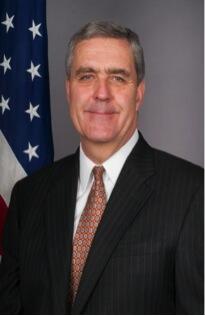
In August 2013, Douglas E. Lute was sworn-in as the Ambassador of the United States to the North Atlantic Treaty Organization (NATO). From 2007 to 2013, Lute served at the White House under Presidents Bush and Obama, first as the Assistant to the President and Deputy National Security Advisor for Iraq and Afghanistan, and more recently as the Deputy Assistant to the President focusing on Afghanistan, Pakistan and India. In 2010, AMB Lute retired from the U.S. Army as a Lieutenant General after 35 years on active duty. Prior to the White House, he served as the Director of Operations on the Joint Staff, overseeing U.S. military operations worldwide. He served multiple tours in NATO commands including duty in Germany during the Cold War and commanding U.S. forces in Kosovo. He holds degrees from the United States Military Academy and Harvard University.
A light lunch will be provided. Please plan to arrive by 11:30am to allow time to check in at the registration desk, pick up your lunch and be seated by 12:00 noon.
Co-sponsored by The Europe Center, the Freeman Spogli Institute for International Studies, the Center for International Security and Cooperation and the Center for Russian, East European and Eurasian Studies.
Douglas Lute
United States Ambassador to NATO
Speaker
Every week, the Islamic State (ISIS) makes further headlines with its ruthless behavior. Beheadings, mass executions, burnings and extreme acts of brutality are the methods of a terrorist campaign intended to cow opponents and rally potential fighters. At the same time, the group is fighting a guerilla war against Iraqi forces while engaging in more conventional infantry battles against Kurdish Peshmerga and Free Syrian Army cadres. The many tactics of ISIS raises the question: Which type of war are we fighting against?
“Sagan's work has become an integral part of the nuclear debate in the United States and overseas,” the NAS said in a statement. “He has shown, for example, that a government's decision to pursue nuclear weapons can be prompted not only by national security concerns but also because of domestic political interests, parochial bureaucratic infighting, or concerns about international prestige.”
The William and Katherine Estes Award recognizes research in any field of cognitive or behavioral science that advances the understanding of issues relating to the risk of nuclear war. Sagan and other NAS award winners will be honored in a ceremony on April 26 during the academy’s 152nd annual meeting.
The academy noted that Sagan has developed theories about why different types of political regimes behave differently once they acquire “the bomb.”
“Sagan and his colleagues have also investigated U.S. public attitudes about nuclear weapons and found that few Americans actually believe that there is a taboo against their use in conflicts,” the NAS said. “The possession of nuclear weapons also raises the risk of nuclear weapons accidents, and Sagan has shown that even though there has never been an accidental nuclear war, there have been many more close-calls and near-accidents than was previously known.”
Sagan and co-authors Daryl G. Press and Benjamin A. Valentino, examined the taboos, traditions and non-use of nuclear weapons in this article in the American Political Science Review. He continues to work on an original survey experiment that examines the public attitudes about the “unthinkable” use of the nuclear bomb.
Siegfried Hecker – one of the world’s leading experts on plutonium science and a senior fellow at FSI – said that he has learned greatly from Sagan over the years as colleagues and former co-directors of CISAC. The two represent the center’s foundational spirit of combing the social and hard sciences to build a safer world.
“The beauty of Scott’s work is that he has combined rigorous political science thinking with a practical knowledge of the limits of humans and organizations to deal with the complexities and dangers of nuclear weapons,” Hecker said. “Scott’s work has convinced me that there is real science in the political science of nuclear weapons. It is appropriate that this honor comes from the National Academy of Sciences.”
Sagan said he is honored to follow in the footsteps of previous recipients of the William and Katherine Estes Award, calling them “some of my intellectual heroes.”
Among those who have won the award are Thomas C. Schelling, Alexander L. George, Robert Jervis, Robert Powell and Graham Allison.
Allison, director of the Belfer Center for Science and International Affairs at Harvard University, called Sagan's honor a "well-deserved recognition of a scholar who has illuminated the intersection of organizational behavior and nuclear danger."
The National Academy of Sciences is a private, nonprofit institution that was established under a congressional charter signed by President Abraham Lincoln in 1863. It recognizes achievement in science and provides science, engineering, and health policy advice to the federal government and other organizations.
Understanding the nature of violent conflict in the world's most dangerous flashpoints may help find ways to peace and stability, according to a Stanford expert.
Once a soldier, now a scholar, Joe Felter knows better than most the intrinsic meaning of war and conflict – he served on the front lines in the U.S. Special Forces in places such as Iraq, Afghanistan and the Philippines.
Today, the senior research scholar at Stanford's Center for International Security and Cooperationand research fellow at the Hoover Institution is on a different kind of mission: building knowledge on the subject of politically motivated conflict.
For example, how are the most casualties suffered and under what conditions? Are there patterns to why rebels are surrendering? And how do armed battles affect development and education in local communities?
Answers to these and other questions are found in the Empirical Studies of Conflict project database, which is led by Felter and Jacob Shapiro, his former Stanford political science classmate, now a professor at Princeton University. The effort focuses on insurgency, civil war and other sources of politically motivated violence worldwide. Launched last year, it currently covers the Philippines, Afghanistan, Colombia, Iraq, Northern Ireland, Mexico, the Israeli-occupied territories, Pakistan and Vietnam. The site includes geospatial and tabular data as well as thousands of documents, archives and interviews.
Since 2009, Felter has collaborated with colleagues at Princeton, the University of California, San Diego, and other institutions in developing the database. Today, they are advising policymakers and military leaders on how best to curb conflict, reduce civilian casualties and promote prosperity. Felter and his colleagues have outlined some of their work in this Foreign Affairs article published in January 2015.
Felter's research on Filipino insurgencies, for instance, has produced significant results. The senior officials there have invited him to brief their military on battlefield trends and counterinsurgency strategy, as Felter and his colleagues have interviewed thousands of combatants as part of the project.
What do they learn about the insurgent mindset? One Islamic militant chief talked tactics with him, then revealed that his greatest tool was his men's belief that Allah was waiting for them on the other side. Others included a Roman Catholic nun who was running guns and money to help the poor and a young college freshman recruited with the promise of $40 a month to support her family.
Pathways to peace
In the case of the Philippines, Felter had access to more than 100,000 individual reports of conflict episodes dating back to 1975 and more than 13,000 interview transcripts from rebels who were captured or had surrendered over the last 30 years. That information was coded in detail and compiled as part of the Empirical Studies of Conflict Project database. The Philippines is home to some of the most protracted Muslim separatist and communist insurgencies in the world, and that is precisely why the government is interested in learning how to thwart it.
L.A. Cicero
Crystal Lee, a Stanford senior and history major, has been Joe Felter’s research assistant since her freshman year.
"For me, it's kind of validating all the thousands and thousands of hours that went into all our coding," said Felter, adding that the information will help the Philippines government find ways to ease the costs and human suffering in the conflicts it faces.
It has been a transformational journey for Felter, who retired in 2012 from the U.S. Army as a colonel following a career as a Special Forces and foreign area officer with missions and deployments across Asia, Panama, Iraq and Afghanistan. In 2010-11, he commanded the International Security and Assistance Force Counter Insurgency Advisory and Assistance Team in Afghanistan.
"I spent a long time in the military deployed to environments where you could appreciate that what you were doing was having an impact," Felter said.
In higher education now, his vantage point is different from what it was on the front lines. Today, both perspective and policy are two of his main goals.
"Since I transitioned to academia, I haven't lost my commitment to trying to help practitioners in the field to better understand conflict – by using data," Felter said.
Stanford senior Crystal Lee, a history major, has been working with Felter as a research assistant since her freshman year, helping him code and compile the datasets.
"It's been really interesting for me to think about the implications that this type of data analysis has on governments and broader policy work," said Lee, who also has analyzed and reconstructed hundreds of interviews with former rebels for Felter's upcoming book.
She said that a romantic notion exists in Silicon Valley that if one uses a huge database, one can wave a magic wand and believe that so-called "big data" will solve everything. "But it's a really messy field and we've had to use best practices to make sense of the increasingly complicated picture of counterinsurgency and terrorism," she said.
Study at the local level
Felter pointed out that to truly comprehend the nature of counterinsurgency in places like the Philippines, Iraq or Afghanistan, one must realize that its roots are in local communities.
"You need to study it at the local level to really understand it," Felter said. "And the Philippines is like a petri dish for studying both insurgency and counterinsurgency because you have multiple, long-running insurgencies, each with distinct characteristics, and with an array of government and military responses to address these threats over time."
The coders are now doubling back over the dataset from 1975 to 2012 to make sure it's accurate and cleaned of any potentially sensitive details before it goes public. The data are the basis for two of Felter's ongoing book projects and dozens of working papers and journal articles.
Roots of research
A Stanford alum, Felter was in the Philippines in 2004 conducting field research as part of his doctoral dissertation when he was first able to gain access to what would become a trove of detailed incident-level data on insurgency and counterinsurgency.
John Tronco
Stanford scholar Joe Felter with members of the First Scout Ranger Regiment, Philippine Army. His research in the Philippines helps inform the Empirical Studies of Conflict database.
After bringing back the data and meeting with his faculty advisers – Stanford political science Professors David Laitin and James Fearon– he realized the extensive incident-level data could be coded in a manner that would make it a tremendous resource for scholars studying civil wars, insurgencies and other forms of politically motivated violence.
"This comprehensive conflict dataset is going to be the holy grail of micro-level conflict data," Felter said. "It has the potential to drive a significant number of publications, reports and analyses, and enable conflict researchers to develop insights and test theories that they would not have been able to do before."
The network is expanding. A dozen young scholars who were supported by funding for the Empirical Studies of Conflict (ESOC) project as postdoctoral fellows have now been placed in tenure-track positions at universities.
"What's unique about ESOC is that we're trying hard to make it easier for others to study conflict by pulling together everything we can on the conflicts we've studied," said Jake Shapiro, an associate professor of politics and international affairs at Princeton University and the project's co-director.
On Iraq, for example, the website provides data on conflict outcomes, politics and demographics, in addition to maps, links to other useful information sources and other types of research on Iraq, he said.
Shapiro says researchers working for the Canadian Armed Forces, the World Bank and the U.S. military have already turned to the database for help. Insurgencies cost human lives and dollars, enough so that the United States and the international community are now focused on rebuilding social and political orders in those troubled countries.
As Felter put it, "We are devoted to learning from all those experiences and to making it easier for others to do so as well, so that we can all live more peacefully and safely in the future."
Research highlights
The Empirical Studies of Conflict project includes the following scholarly advances:
• Research on insurgent compensation paid during the U.S. Iraq conflict shows that pay was not based on risk factors. • Findings show rebel violence will decrease when projects are secure and valued by community members and when implementation is conditional on the behavior of non-combatants. • A journal article describes the preference for "certainty" in the relationship between violence and economic risk in wartime Afghanistan.
Media Contact
Beth Duff-Brown, Center for International Security and Cooperation: (650) 725-6488,bethduff@stanford.edu
CISAC Senior Research Scholar Joe Felter with members of the First Scout Ranger Regiment, Philippine Army. His research in the Philippines helps inform the Empirical Studies of Conflict Project database. | John Tronco
The threats, turmoil, and media circus surrounding the Hollywood satire "The Interview," in which bungling American journalists assassinate North Korean leader Kim Jong Un, have put the country in the international spotlight again. Often forgotten amid all this comedy, though, is the very unfunny fact that North Korea’s nuclear weapons program has been relentlessly expanding for a decade, and poses a real and deadly threat to the rest of Northeast Asia.
Senior Fellow Siegfried Hecker writes in this Bulletin of the Atomic Scientists piece that North Korea today may possess a nuclear arsenal of roughly 12 nuclear weapons, half likely fueled by plutonium and half by highly enriched uranium.
Former U.S. Ambassador to Afghanistan Karl Eikenberry also commanded the U.S.-led coalition forces there, as a three-star Army general during the height of the war in the mid-2000s. In this in-depth story by the National Journal, the consulting professor at FSI and William J. Perry Fellow in International Security at CISAC, tells that writer that as he lectures college students today, he recognizes that few of them will ever serve in the U.S. Armed Forces.
With the last troops now leaving Afghanistan – ending the longest war in American history – the former commander has deeply mixed feelings about the state of the all-volunteer military, since the draft of young American men ended in 1973.
He says thousands of young men and women, all of whom had volunteered to fight, lost their lives in Iraq and Afghanistan. Yet the American people don’t seem to know much – nor much care about – the wars fought over there, beyond thanking those soldiers for their service when they bump into them returning home from duty at airports and bus stations.
“Somehow, we have to find ways to reconnect the American people and their armed forces,” Eikenberry says, “so that there is a more direct and visceral understanding of the political, social, and economic costs of war.”
Abstract: In contemporary political science, many believe that normative restrictions on armed conflict are an outgrowth of Western culture and the Judeo-Christian just war tradition. Drawing on historical evidence that shows that political actors in Ancient China and the early Islamic empire endorsed civilian protection rules, I claim that such norms are more common than most IR theorists suppose. For IR theory, this raises an important puzzle: how can we explain why similar normative ideas emerged in human societies that are otherwise very different? Building on research in cognitive science, social psychology, and social neuroscience, I argue that most people have natural cognitive and emotional predispositions that bias the emergence and transmission of cultural norms that protect non-combatants. More specifically, capacities for perspective-taking and empathy shape how people interpret the limits of their moral commitments, and when these capacities are engaged, intuitional heuristics affect how they judge the morality of killing in war. What is more, I claim that three key contextual variables modulate the connection between innate moral intuitions and the development of civilian protection norms: (1) societal interdependence; (2) the dispersion of power in ways that increase the agency of potential non-combatants; and (3) the creation of norms in argumentative contexts that require more impartial moral reasoning. I argue that rationalist and constructivist theories of norm emergence will be able to better articulate the cross-cultural timing of emergence, the durability, and historical trajectory of the norms of war by incorporating this naturalistic theory of moral cognition.
About the Speaker: David Traven joined CISAC as a MacArthur Nuclear Security Fellow in July 2014. He received his PhD. in Political Science at Ohio State University in 2013. From January 2013 to June 2014 he was a Visiting Assistant Professor of Political Science at Kenyon College. His research examines the evolution of the law and ethics of war in international relations, and he is particularly interested in understanding how moral cognition and emotion shape the creation of norms that protect the victims of armed conflict, especially civilians. Dr. Traven is currently working on a book manuscript that examines how moral intuitions influence the creation and the effectiveness of the norms of war across cultures.
CISAC Stanford University Encina Hall, E210 Stanford CA 94305-6165
(650) 724-5687
614-961-9670
0
dtraven@stanford.edu
MacArthur Nuclear Security Postdoctoral Fellow
david_traven.jpg
PhD
David Traven joined CISAC as a MacArthur Nuclear Security Fellow in July 2014. He received his PhD. in Political Science at Ohio State University in 2013. From January 2013 to June 2014 he was a Visiting Assistant Professor of Political Science at Kenyon College. His research examines the evolution of the law and ethics of war in international relations, and he is particularly interested in understanding how moral cognition and emotion shape the creation of norms that protect the victims of armed conflict, especially civilians. Dr. Traven is currently working on a book manuscript that examines how moral intuitions influence the creation and the effectiveness of the norms of war across cultures.

 Participant youth, Wallace and Wellington, overlooking the city from their community.