Governance

FSI's research on the origins, character and consequences of government institutions spans continents and academic disciplines. The institute’s senior fellows and their colleagues across Stanford examine the principles of public administration and implementation. Their work focuses on how maternal health care is delivered in rural China, how public action can create wealth and eliminate poverty, and why U.S. immigration reform keeps stalling. 

FSI’s work includes comparative studies of how institutions help resolve policy and societal issues. Scholars aim to clearly define and make sense of the rule of law, examining how it is invoked and applied around the world. 

FSI researchers also investigate government services – trying to understand and measure how they work, whom they serve and how good they are. They assess energy services aimed at helping the poorest people around the world and explore public opinion on torture policies. The Children in Crisis project addresses how child health interventions interact with political reform. Specific research on governance, organizations and security capitalizes on FSI's longstanding interests and looks at how governance and organizational issues affect a nation’s ability to address security and international cooperation.

-

Seminar recording: https://youtu.be/A9ptoz_r0HY


Abstract:

Images of children on the battlefield or posing for a ‘last will and testament’ poster before a suicide operation suggest the extent to which ISIS has weaponized children. The use of children in terrorist propaganda has become a regular feature of their strategic messaging and has accelerated over time. While tasking children with a variety of support functions – scouts, drummers, or couriers is not new, the ways in which terrorist organizations have deployed children has evolved. The exploitation of children represents a relatively new development, both tactically and strategically. Attacks in Afghanistan, Iraq, Pakistan, and Syria show that the median age of suicide bombers is decreasing. This presentation will provide evidence that terrorist groups have increased their use of children on the front lines despite assertions to the contrary and that important variation exists across groups based on location, country of origin, and the gender of the children with a particular emphasis on ISIS in Syria and Iraq.


Speaker's Biography:

Image
mia
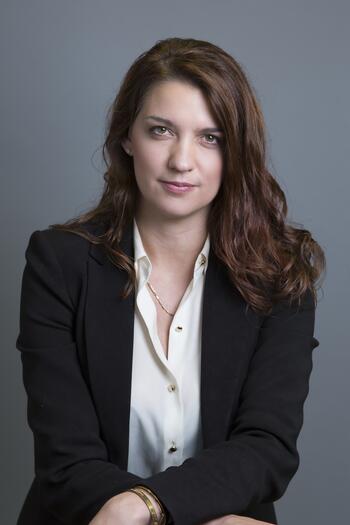
Mia Bloom is Professor of Communication at Georgia State University. She conducts ethnographic field research in Europe, the Middle East and South Asia and speaks eight languages. She has authored books and articles on terrorism and violent extremism including Dying to Kill: The Allure of Suicide Terror (2005), Living Together After Ethnic Killing (2007) and Bombshell: Women and Terror (2011). Bloom is a former term member of the Council on Foreign Relations and has held appointments at Princeton, Cornell, Harvard and McGill Universities. Bloom’s newest book is Small Arms: Children and Terror (2019). Bloom has a PhD in political science from Columbia University, a Masters in Arab Studies from Georgetown University and a Bachelor’s degree from McGill in Russian, Islamic and Middle Eastern Studies.

Mia Bloom Professor of Communication Georgia State University
-
Abstract: Russia is a major energy exporter and has used those exports to advance its geopolitical goals. Based on her book "The New Geopolitics of Natural Gas” (Harvard UP, 2017), Dr. Agnia Grigas will discuss the recent transformation in global energy markets and the resulting shift in the geopolitics of energy, specifically relations between key producing and competing states such as Russia and the United States, and key consuming regions such as Europe and developing Asia. Focusing on natural gas, Dr. Grigas will address Russia’s energy challenge to European security and steps the United States can and should take to mitigate this challenge.
 
Seminar Recording: https://youtu.be/EImxZfGJN9o
 
Speaker Biography: 
 
Image
Dr. Agnia Grigas is a strategic advisor on energy and geopolitical economy for US government institutions and multinational corporations. She is the author of three acclaimed books: "The New Geopolitics of Natural Gas,"​  "​Beyond Crimea: The New Russian Empire,"​ and "The Politics of Energy and Memory between the Baltic States and Russia."  She serves as nonresident Senior Fellow at the Atlantic Council, Associate at Argonne National Laboratory and advisory board member for the McKinnon Center for Global Affairs at Occidental College, the Vilnius Institute for Policy Analysis and LITGAS.  She holds a Master’s and Doctorate in International Relations from the University of Oxford and a BA in Economics and Political Science from Columbia University. Follow via: @AgniaGrigas & grigas.net


Agnia Grigas Strategic Advisor
-

Seminar Recording: https://youtu.be/X_0mm8UkVOc


Abstract:  In the movie WarGames, a 1980s teenager hacks into a U.S. nuclear control program, almost starting a nuclear war.  This movie has become a common illustration for the dangers of increasingly digitized nuclear arsenals and reflects what many scholars and practitioners see as the most perilous implication of the rise of cyberattacks--instability to states' nuclear command, control, and communications (NC3).  Research conducted during the Cold War suggested that even the threat of serious vulnerabilities to states' NC3 could incentivize preemptive launches of nuclear weapons.  Despite this widespread concern about the destabilizing effects of NC3 vulnerabilities, there is almost no empirical research to support these conclusions.  In order to test these theories, this paper uses an experimentally-designed war game to explore the role that vulnerabilities and exploits within a hypothetical NC3 architecture play in decisions to use nuclear weapons.  The game, which uses 4-6 players to simulate a national security cabinet, includes three treatment scenarios and one control scenario with no vulnerabilities or exploits.  Players are randomized into the scenario groups and games are played over the course of a year in seven different locations with a sample of elite players from the U.S. and other nations. Together, a longitudinal analysis of these games examines the role that culture, cognitive biases, and expertise play in the likelihood of thermonuclear cyber war with significant implications for both cyber strategy and nuclear modernization.


Speaker's Biography:

Image
jackie schneider photo
Dr. Schneider is a Hoover Fellow at the Hoover Institution and a non-resident fellow at the Naval War College’s Cyber and Innovation Policy Institute.  She researches the intersection of technology, national security, and political psychology with a special interest in cyber, unmanned technologies, and wargaming. Her work has appeared in a variety of outlets including Security Studies, Journal of Conflict Resolution, Journal of Strategic Studies, Foreign Affairs, Lawfare, War on the Rocks, Washington Post, and Bulletin of the Atomic Scientists.  She has a BA from Columbia University, a MA from Arizona State University, and a PhD from George Washington University.

Jacquelyn Schneider Non-resident Fellow Naval War College’s Cyber and Innovation Policy Institute
Authors
News Type
Q&As
Date
Paragraphs

Brett McGurk, the former Special Presidential Envoy for the Global Coalition to Counter ISIL, has had a busy summer. Between working on a new book contract, travelling to international security conferences on two continents and prepping for his upcoming class — “Presidential Decision-Making in Wartime” — which will be taught this fall at Stanford, the Payne Distinguished Lecturer at the Center for International Security and Cooperation sat down with the Freeman Spogli Institute to reflect on what he’s learned about Middle Eastern politics this summer.

FSI: You recently attended a number of conferences focused on international security. Tell us a little about where you’ve been and the conferences you participated in.

Sure. I was recently at a conference in Beijing sponsored by the Carnegie Foundation for International Peace that focused on China in the Middle East. This was a good opportunity to reconnect with former officials and experts on China and also to discuss with Chinese officials and academics how Beijing views its emerging role in the Middle East region. This is an important topic, and we intend to develop it further here at Stanford FSI through a combination program with CISAC and the Shorenstein Asia-Pacific Research Center. I recently published an article in the Atlantic on some of the themes from Beijing.

I also attended the Oslo Forum in Norway, which brings together top diplomats from around the world engaged in mediating the most difficult conflicts. UN envoys from Syria and Libya, for example, participate, as do leaders working on Yemen and other seemingly intractable crises. The main takeaway from that important conference was that there is a window of opportunity right now for active U.S. diplomacy to help de-escalate what are in effect proxy wars between regional powers. Libya is increasingly a conflict between long-time U.S. allies, with Turkey and Qatar on one side and UAE and Egypt on the other side. Yemen is a humanitarian catastrophe and UN mediation has opened the door to ceasefires and a path for winding down the war, which some of our key allies now support. 

Iran and extremists like al Qaeda and ISIS take advantage of proxy wars and vacuums – so it’s in our interests both from a humanitarian, geostrategic, and national security perspective to use diplomacy and other tools to end these conflicts. That was the focus of the Norway meetings.

In spectacular #Oslo today for the 2019 #OsloForum. Look forward to reconnecting with former counterparts and friends from around the globe, many trying largely on their own to mediate some of the world’s most intractable conflicts. @NorwayMFA pic.twitter.com/0DmTY7swW6

— Brett McGurk (@brett_mcgurk) June 18, 2019

To what extent did the U.S. participate in the Oslo Forum?

I was struck that the United States was largely absent. There were no U.S. officials at the Forum, for the first time as I can recall, and total lack of clarity on U.S. goals and objectives. On Syria, the top UN Envoy, Geir Pederson, attended as did a number of parties to the Syrian conflict, including from the Syrian Democratic Forces, which played a key role in defeating ISIS. 

There is some hope that Syria is approaching a stage for a meaningful political settlement; I’ve expressed some skepticism on that, again, due largely to questionable U.S. intent and commitment and the facts on the ground and in the region, which leave Washington with few good options. The sooner we acknowledge that reality the better because the situation can still get much worse. My recent article in Foreign Affairs delves into those issues in some detail.

You were at the Herzliya Conference in Israel. Did Iran’s nuclear program dominate the agenda? What else was top of mind for the conference organizers, presenters, and people in attendance?

Yes, I attended the annual security conference sponsored by Israel’s Institute for Policy and Strategy. It’s become a go-to event for assessing the direction of Middle East politics and Israeli policies in a difficult part of the world. I used to attend as a sitting official and it was great to be there as a private citizen.

Flying from San Francisco to Tel Aviv for the annual @HerzliyaConf which has become a go-to event for thinkers and practitioners on the Middle East. Look forward to reconnecting with former colleagues and new friends. @FSIStanford @CarnegieMEC pic.twitter.com/0se7WvGCG1

— Brett McGurk (@brett_mcgurk) June 28, 2019

Much of the focus this year, of course, was on Iran – but also on the internal situation inside Israel, President Donald Trump’s much-delayed Middle East peace plan, and the rift I mentioned earlier between Egypt, Saudi Arabia, and UAE on one side, with Turkey and Qatar on the other side. 

There was also an open question and significant discussion over whether current U.S. policies are worsening tensions in the region. Much of that will depend on whether the core White House assumption driving its Iran policy is correct. That assumption holds that maximum pressure against Iran will force Iran back to the negotiating table that Trump himself left and result in a better nuclear deal and more responsible Iranian behavior in the region. If that assumption is false, and Iran reacts to unilateral American pressure by forging stronger ties with China and Russia, restarting its illicit nuclear activities, and increasing its malign behavior in the region – then U.S. policy may have precisely the opposite effect than its stated intent. That would require Trump to either double down on pressure, to include military pressure, or back down from what is now a zero-sum bargaining position. 


For more on Brett McGurk’s policy recommendations on Iranian nuclear ambitions, read his Op-Ed in Bloomberg News.

On stated U.S. intent, there was also quite a bit of discussion about U.S. objectives, given that Trump says one thing and his national security team says something else, often within the same 24-hour time span.  This uncertainty, I would argue, is breeding more instability, not less.

There was an interesting “war game” conducted at the Herziliya Conference, which simulated direct negotiations between U.S. and Iranian officials. The game ended without producing an agreement. What do you make of that?

I participated in that war game. Having confronted the Iranians from the shadows and in direct face-to-face negotiations, I would say this simulation was fairly accurate and its findings important. My first conclusion was that it’s highly unlikely the Iranians are going to return to the table under the current circumstances and without some up-front concession (such as reinstating some waivers to allow limited export of oil) by the Trump administration.  Nobody likes that answer, but it’s a realistic assessment of Iranian decision-making and important if the U.S. objective is truly – as Trump says – to get back to the negotiating table for a better nuclear deal. 

I read recently that the Emir of Qatar, who visited Trump in the Oval Office in mid-July, told the president the same thing.  So even our close friends in the region have this assessment. It means, if you want to get back to the negotiating table, then you need to create a pretext with some up-front steps, to be taken both from Washington and from Tehran.  A creative package, for example, might offer some limited sanctions relief and also demand release of Americans held in Iranian prisons. Absent something like that, relying on pressure alone, there are unlikely to be any talks.

How did the simulated negotiations between the U.S. and Iran unfold?

Presuming you get to the stage of talks, which was the focus of the simulation, the position of the two sides are irreconcilable. Iran was willing to consider some amendments to the Joint Comprehensive Plan of Action – but from the U.S. side, that was insufficient. We demanded, as Secretary of State Mike Pompeo has demanded, a total abandonment of Iran’s enrichment program, defunding proxy militias throughout the region, cabining the ballistic missile program, and other measures. The talks totally broke down after a number of rounds, and risks of a conflict increased significantly. It’s better to have no talks than ill-prepared talks where the U.S. is not even clear on what it’s hoping to achieve or has demands that are known non-starters.

The only silver lining was that if the goal is a strengthened nuclear deal that truly blocks Iran’s path to a weapon in perpetuity, while allowing a civilian program, then it’s achievable. Trump has said that’s the goal. If so, there is a path. But that’s a far more limited goal than what has been discussed by his national security team. The more ambitious objectives are unlikely to be met, and without a realistic objective, the talks themselves are unlikely to get off the ground.

A more comprehensive approach for Iran: 1) Naval coalition to protect shipping; 2) On-ramp to strengthen nuke deal; 3) Diplomacy to de-escalate proxy wars; 4) Treat Iranian people as allies (end travel ban); 5) Keep focus on ISIS: don't leave Iraq/Syria. https://t.co/BBNVtbLEhn

— Brett McGurk (@brett_mcgurk) June 26, 2019

Have you participated in “war games” like this one before?

I don’t like the phrase “war game” because it suggests something trite like a game or reenactment; in fact, simulations like this are among the best tools we have to predict the future and prepare for contingencies in foreign policy. Even with all the tools and information available to a policy-maker at the most senior level, humans can’t predict the future. Well-run simulations alert you to policy adjustments that may be necessary. We used them quite a bit during the campaign to defeat ISIS and to good effect. A famous war game, SIGMA II, run out of the Pentagon in 1965 predicted perfectly what would happen if the U.S. pursued its graduated pressure campaign against North Vietnam – a quagmire that sucked in multiple U.S. divisions.

So these simulations are important. I hope the administration is conducting them on Iran, though I tend to doubt they are, at least not at the highest levels. Sound foreign policy depends on setting clear and achievable objectives, marshaling the resources for achieving them, and regularly testing assumptions to make adjustments as circumstances warrant.

I recently published an essay in Foreign Affairs on the misalignment of ends and means with respect to Trump’s foreign policies in Syria, Venezuela, and Iran. That’s generally a recipe for either a failed policy or unintended consequences that box presidents into decisions they don’t want to make: either double down on resources or ratchet back objectives.

Did you have a chance to reconnect with old friends from your many years as a U.S. diplomat in the Middle East?

I did, and I also caught up with a number of former colleagues still serving in the Trump administration. They are a dedicated group and doing all they can under difficult circumstances. I could not hide my enthusiasm for being out of Washington and out here at Stanford. Stanford is just an incredible place to think deeply and differently about the issues now confronting our nation and the world.

You start teaching in the Ford Dorsey Master’s in International Policy program in the fall quarter.  Can you tell us a bit about your course?

Sure. In the fall I will teach “Presidential Decision-Making in Wartime.” It’s a course about how the most consequential decisions – war and peace – are made in reality, particularly since 9/11. We will dive into the essential laws of strategy such as setting clear objectives, aligning ends, ways, and means, and what happens when those essential laws are ignored. I hope it will give students the tools to ask the right questions if they are ever in the Situation Room with a chance to influence the course of history for the better. 

Most debacles have this same basic flaw of ignoring what I call the iron law of strategy and alignment of ends, ways, and means. Even for students not heading towards a national security career, the tools and elements of strategic thinking are broadly applicable. 


Hero Image
brett
Former Special Presidential Envoy for the Global Coalition to Counter ISIL Brett McGurk at the 2019 Oslo Forum in Norway. Photo: Oslo Forum
All News button
1
-

Seminar Recording: https://youtu.be/W7EFBKGMXkI


Abstract: If before 2014 Russia was widely dismissed by the international community as a regional power whose global influence had died with the Soviet Union, its recent muscle flexing abroad has shown that reports of its death as a global power have been greatly exaggerated. From its seizure of the Crimean Peninsula from Ukraine in 2014 and military deployment in Syria in 2015 to cyber interventions in a number of democratic countries, most notably the alleged interference in the United States elections in 2016, Russia has reasserted itself as a major global power. This has taken many analysts and policy makers by surprise. But perhaps Russia’s status as a “phoenix state” should not have been unanticipated,

A common argument has been that Russia has a weak hand, but plays it well. The book on which this talk is based argues that Russia’s cards may not be as weak as we in the West think they are—that instead, the West might be playing bridge, while Russia plays poker.  Too great an emphasis has been placed on traditional, realist means of power (like the strength of Russia's economy, its population, and its military) and this has led scholars and policy makers to discount Russia’s ability to influence international politics. In important ways, Russia has reestablished itself on the global stage, doing so as a great disrupter rather than a great power. It doesn’t have as much by way of means in realist terms as the United States or China, but it does have the ability to exercise influence, to get other countries to do what they might not otherwise do. This is because Russia today is unencumbered by a domestic political system that might exercise a brake on the ambitions of the current regime. It doesn’t have to be a great power, but it can be good enough to do a great deal to alter the post war global order. Indeed, it already has.


Click

to read chapter one. 


Speaker's Biography:

Image
kswsfdd08pic
Kathryn Stoner is the Deputy Director at the Freeman Spogli Institute for International Studies at Stanford University and a Senior Fellow at the Center on Democracy, Development, and the Rule of Law, as well as the Deputy Director of the Ford Dorsey Master's in International Policy at Stanford University. She teaches in the Department of Political Science at Stanford, and in the Program on International Relations, as well as in the Ford Dorsey Program. Prior to coming to Stanford in 2004, she was on the faculty at Princeton University for nine years, jointly appointed to the Department of Politics and the Woodrow Wilson School for International and Public Affairs. At Princeton she received the Ralph O. Glendinning Preceptorship awarded to outstanding junior faculty. She also served as a Visiting Associate Professor of Political Science at Columbia University, and an Assistant Professor of Political Science at McGill University. She has held fellowships at Harvard University as well as the Woodrow Wilson Center in Washington, DC. 

In addition to many articles and book chapters on contemporary Russia, she is the author or co-editor of five books: Transitions to Democracy: A Comparative Perspective, written and edited with Michael A. McFaul (Johns Hopkins 2013);  Autocracy and Democracy in the Post-Communist World, co-edited with Valerie Bunce and Michael A. McFaul (Cambridge, 2010);  Resisting the State: Reform and Retrenchment in Post-Soviet Russia (Cambridge, 2006); After the Collapse of Communism: Comparative Lessons of Transitions (Cambridge, 2004), coedited with Michael McFaul; and Local Heroes: The Political Economy of Russian Regional Governance (Princeton, 1997). She is currently finishing a book project entitled Resurrected? The Domestic Determinants of Russia’s Return as a Global Power that will be published in 2017.

She received a BA (1988) and MA (1989) in Political Science from the University of Toronto, and a PhD in Government from Harvard University (1995). In 2016 she was awarded an honorary doctorate from Iliad State University, Tbilisi, Republic of Georgia. 

FSI
Stanford University
Encina Hall C140
Stanford, CA 94305-6055

(650) 736-1820 (650) 724-2996
0
Satre Family Senior Fellow, Freeman Spogli Institute for International Studies
kathryn_stoner_1_2022_v2.jpg MA, PhD

Kathryn Stoner is the Mosbacher Director of the Center on Democracy, Development, and the Rule of Law (CDDRL), and a Senior Fellow at CDDRL and the Center on International Security and Cooperation at FSI. From 2017 to 2021, she served as FSI's Deputy Director. She is Professor of Political Science (by courtesy) at Stanford and she teaches in the Department of Political Science, and in the Program on International Relations, as well as in the Ford Dorsey Master's in International Policy Program. She is also a Senior Fellow (by courtesy) at the Hoover Institution.

Prior to coming to Stanford in 2004, she was on the faculty at Princeton University for nine years, jointly appointed to the Department of Politics and the Princeton School for International and Public Affairs (formerly the Woodrow Wilson School). At Princeton she received the Ralph O. Glendinning Preceptorship awarded to outstanding junior faculty. She also served as a Visiting Associate Professor of Political Science at Columbia University, and an Assistant Professor of Political Science at McGill University. She has held fellowships at Harvard University as well as the Woodrow Wilson Center in Washington, DC. 

In addition to many articles and book chapters on contemporary Russia, she is the author or co-editor of six books: "Transitions to Democracy: A Comparative Perspective," written and edited with Michael A. McFaul (Johns Hopkins 2013);  "Autocracy and Democracy in the Post-Communist World," co-edited with Valerie Bunce and Michael A. McFaul (Cambridge, 2010);  "Resisting the State: Reform and Retrenchment in Post-Soviet Russia" (Cambridge, 2006); "After the Collapse of Communism: Comparative Lessons of Transitions" (Cambridge, 2004), coedited with Michael McFaul; and "Local Heroes: The Political Economy of Russian Regional" Governance (Princeton, 1997); and "Russia Resurrected: Its Power and Purpose in a New Global Order" (Oxford University Press, 2021).

She received a BA (1988) and MA (1989) in Political Science from the University of Toronto, and a PhD in Government from Harvard University (1995). In 2016 she was awarded an honorary doctorate from Iliad State University, Tbilisi, Republic of Georgia.

Download full-resolution headshot; photo credit: Rod Searcey.

Mosbacher Director, Center on Democracy, Development and the Rule of Law
Professor of Political Science (by courtesy), Stanford University
Senior Fellow (by courtesy), Hoover Institution
CV
Date Label
Kathryn Stoner Deputy Director at the Freeman Spogli Institute for International Studies Stanford University
Authors
Amy Zegart
News Type
Commentary
Date
Paragraphs

Viewers of the Democratic presidential debates learned quite a bit this week—from Joe Biden’s views of school busing to Marianne Williamson’s plan to defeat President Donald Trump with love. But I’d bet the next president will be consumed by an issue not a single person mentioned: cyber threats.

Sure, the moderators asked a few candidates what they thought the biggest foreign-policy threat was. There was a question about Iran, lots of talk about climate change, and some China bashing. But in four hours, with enough presidential candidates to play two basketball games and so many moderators they had to take turns sitting in chairs, the foreign-policy parts of the debate seemed truncated at best.

Read the rest at The Atlantic.

Hero Image
zegart amy cropped
All News button
1
Authors
Amy Zegart
News Type
Commentary
Date
Paragraphs

Thirty years ago this week, I watched the news from Beijing and started shredding my bedding. It was the night before my college graduation, I had been studying Chinese politics, and news had broken that college students just like us had been gunned down in Tiananmen Square after weeks of peaceful and exhilarating democracy protests—carried on international TV. In the iconic square where Mao Zedong had proclaimed the People’s Republic decades before, bespectacled students from China’s best universities had camped out, putting up posters with slogans of freedom in Chinese and English. A “goddess of democracy” figure modeled after the Statue of Liberty embodied their hopes—and ours—for political liberation in China.

On my campus back then were just a handful of students majoring in East Asian studies. Learning of the brutal crackdown in Beijing, we somehow found one another, gathered our friends, and stayed up making hundreds of white armbands for classmates to wear at commencement the next day. Grappling with the cold realities of the “real world” we were about to enter, we didn’t know what else to do. So we tore sheets and cried for what might have been.

The June 4, 1989, massacre was a horrifying spectacle that the Chinese government has sought to erase from national memory ever since. But, 30 years later, contemplating what might have been is more important than ever. In hindsight, Tiananmen Square serves as a continuing reminder about just how much China has defied, and continues to defy, the odds and predictions of experts. The fact is that generations of American policy makers, political scientists, and economists have gotten China wrong more often than they’ve gotten China right. In domestic politics, economic development, and foreign policy, China has charted a surprising path that flies in the face of professional prognostications, general theories about anything, and the experience of other nations.

Read the rest at The Atlantic

Hero Image
zegart amy cropped
All News button
1
Authors
News Type
News
Date
Paragraphs

Venezuela is in the midst of an economic, social and political crisis, said Harold Trinkunas, the deputy director of FSI’s Center for International Security and Cooperation and an expert on Latin American politics.


“Venezuela is a major oil-producing company, and it experienced a boom between 2000 and 2012,” Trinkunas told FSI Director Michael McFaul on the World Class podcast. “Up until then, Venezuela seemed to be doing pretty well.”


But things have changed since former President Hugo Chavez’s death in 2013. Once one of Latin America’s wealthiest nations, Venezuela’s economy has collapsed by more than 50 percent in recent years, Trinkunas said. Meanwhile, a large majority of its population is living in poverty, millions have fled the country, and the government — led by President Nicolás Maduro — has become increasingly authoritarian and unpopular among citizens.

Forces Behind the Downturn

During his first five years in office, Maduro’s government politicized the military and the oil industry, Trinkunas said, noting that oil production in Venezuela has declined from 3 million barrels per day 20 years ago to fewer than 1 million barrels per day in recent years. After Maduro was re-elected in 2018 amongst reports of coercion, fraud and electoral rigging, about 50 countries — including the United States and many members of the European Union — denounced his election.


Sign up for the FSI Newsletter to get stories like this delivered straight to your inbox.


“The fact that there are 50 countries [that oppose Maduro] is really quite unusual,” Trinkunas said. “And this is the United States and many of its allies — many western democracies are in this camp.”


The Failed Uprising

Less than a year after the election, opposition leader Juan Guaidó invoked the country’s constitution to declare himself interim president. About three months later, on April 30, 2019, Guaidó called for an uprising against Maduro, but the response wasn’t what Guaidó had hoped for, Trinkunas said.


“Apparently there had been a process of negotiation in the weeks leading up to April 30, in which the armed forces, the Supreme Court, and other significant regime figures agreed to a transition plan which would ease Maduro out and call for new elections,” Trinkunas said. “But it looks like Juan Guaidó pulled the trigger too quickly — he claims the plot was discovered.”


What’s Next? Three Possible Scenarios

Trinkunas sees three possible scenarios for Venezuela going forward: one in which Maduro is able to retain his power and the state of country remains relatively unchanged; another in which the government collapses and the country is able to transition into a democracy; or the Venezuelan government may collapse and things could take a turn for the worse, he said.


“Venezuela has experienced prolonged electricity blackouts in the last couple of months, and food distribution is very uncertain — things are breaking down,” he said. “There’s a real [possibility] that some of the organized crime organizations could break down the social order. It might look like a much more complicated situation.”


Related: Read a Q&A with Harold Trinkunas about Juan Guaidó’s claim to the Venezuelan presidency.


Hero Image
soundcloud notag 1
All News button
1
-

Seminar Recording: https://youtu.be/ZVHEqY1_3w8


Abstract: Before the CCP came to power, China lay broken. Today it is a force on the global stage, but its leaders remain haunted by the past. Sulmaan Khan will tell the story of the grand strategies pursued by China’s paramount leaders: the shrewd, dangerous Mao Zedong, who made the country whole and kept it so; the caustic, impatient Deng Xiaoping who dragged the country into the modern world; Jiang Zemin and Hu Jintao who served as cautious custodians of Deng’s legacy; and Xi Jinping who combines assertiveness with insecurity. For all their considerable costs, China’s grand strategies have been largely successful. But whether or not they can meet the challenges of the twenty-first century remains to be seen.   


Speaker's Biography:

Image
khan full length dust jacket3
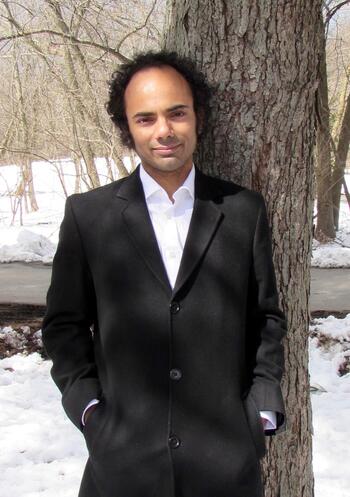
Sulmaan Wasif Khan teaches international history and Chinese foreign relations at the Fletcher School, Tufts University, where he also directs the Water and Oceans Program at the Center for International Environment and Resource Policy. He is the author of Haunted by Chaos: China’s Grand Strategy from Mao Zedong to Xi Jinping (Harvard University Press: 2018), which was named a top book of 2018 by The American Interest, and Muslim, Trader, Nomad, Spy: China’s Cold War and the People of the Tibetan Borderlands (University of North Carolina Press: 2015). He has written for The Economist, Foreign Affairs, The American Interest, and YaleEnvironment360, among others, on topics ranging from Burmese Muslims to dolphin migration through the Bosphorus. He received his Ph.D. in History from Yale University in 2012.  


Sulmaan Khan Assistant Professor of International History and Chinese Foreign Relations Tufts University
Seminars
Subscribe to Governance