International Development

FSI researchers consider international development from a variety of angles. They analyze ideas such as how public action and good governance are cornerstones of economic prosperity in Mexico and how investments in high school education will improve China’s economy.

They are looking at novel technological interventions to improve rural livelihoods, like the development implications of solar power-generated crop growing in Northern Benin.

FSI academics also assess which political processes yield better access to public services, particularly in developing countries. With a focus on health care, researchers have studied the political incentives to embrace UNICEF’s child survival efforts and how a well-run anti-alcohol policy in Russia affected mortality rates.

FSI’s work on international development also includes training the next generation of leaders through pre- and post-doctoral fellowships as well as the Draper Hills Summer Fellows Program.

-

Seminar Recording: https://youtu.be/HFZJj01vC3U


Abstract: By most accounts, the most important political space in the world's largest country is the four inches between Vladimir Putin’s ears. In a new book, Graeme Robertson and Sam Greene challenge the idea that Putin has shaped Russia in his own image, arguing instead that it his power flows from a particular relationship he has developed with his citizens -- and that his citizens have developed with one another. The result is a view of Russian politics as something much more fluid and fragile than we generally understand, a shifting landscape in which Putin's power -- and that of whoever succeeds him -- is continually negotiated and renegotiated between the Kremlin and the public, even in the confines of an increasingly authoritarian state. In this discussion, Greene and Robertson explore the social and political imperatives, challenges and dilemmas Putin and Russia face as he rounds out his fourth term and wonders about a fifth.


Speakers' Biography:


Sam Greene is reader in Russian politics and Director of the Russia Institute at King's College London. His research focuses on the relationships between citizens and the state in Russia, and in societies experiencing social, economic and political transformation more broadly. His first book, Moscow in Movement: Power and Opposition in Putin's Russia, was published by Stanford University Press in 2014. More recently, he is co-author with Graeme Robertson of Putin v the People: The Perilous Politics of a Divided Russia, published by Yale University Press in 2019. He also serves as Associate Fellow in the Russian and Eurasian Programme of the International Institute for Security Studies and a Visiting Professor at the UK Defence Academy.


Graeme Robertson is a Professor of Political Science at the University of North Carolina at Chapel Hill and Director of the Center for Slavic, Eurasian and East European Studies. His work focuses on political protest and regime support in authoritarian regimes.

Graeme’s new book (with Samuel A. Greene) is Putin v. The People, published by Yale University Press in June 2019. The book presents a fresh new look at the social bases of support for and opposition to authoritarian rule in Russia. Graeme is also the author of Revolution and Reform in Ukraine, published by PONARS Eurasia (with Silviya Nitsova and Grigore Pop-Eleches) and The Politics of Protest in Hybrid Regimes: Managing Dissent in Post-Communist Russia, published by Cambridge University Press. He has published articles in many academic journals including the American Political Science Review, the American Journal of Political Science, The Journal of Politics and the British Journal of Political Science, as well as contributing regularly to the media on Russia and Ukraine. Graeme currently serves as the Associate Editor for Comparative Politics for the American Journal of Political Science.

Sam Greene King's College London
Graeme Robertson University of North Carolina
Seminars
-

Seminar Recording: https://youtu.be/5c8Un2Y9-sw


Abstract: Over the last fifteen years, the Russian government has invested significantly in improving Russia’s education and health care systems and in reversing the health and demographic catastrophes of the 1990s. This discussion will assess the extent to which those investments have paid off and the continued challenges Putin faces in aligning Russia’s human capital resources with his political, economic, and foreign policy ambitions. It will also examine the ways that health and social policy have been used as political tools – not always successfully – by the Putin regime.


Speaker Biography: Judy Twigg is a professor of political science at Virginia Commonwealth University; senior associate (non-resident) with the Center for Strategic and International Studies; consultant for the evaluation units of the World Bank and the Inter-American Development Bank; and adjunct professor at the Walsh School of Foreign Service, Georgetown University. Twigg’s work focuses on issues of health, human capital, and health systems reform in Eurasia, as well as evaluations of human development and public sector management assistance projects globally. She has been a consultant for John Snow, Inc., UNICEF, USAID, the Eurasia Foundation, and the Social Science Research Council. Twigg was a 2005 recipient of the State Council on Higher Education in Virginia Outstanding Faculty Award. She holds a B.S. in physics from Carnegie Mellon University, an M.A. in political science and Soviet studies from the University of Pittsburgh, and a Ph.D. in political science and security studies from MIT.


Judy Twigg Professor of Political Science Virginia Commonwealth University
Seminars
-

Seminar Recording: https://youtu.be/q5g6fuAVG2w


About this Event: For over a decade, Russian officials have a championed a model of economic growth that draws inspiration from East Asian developmental states. The state’s role in economic decision making has been accentuated, setting in motion ambitious industrial and stimulus policies, import substitution, and as international sanctions have mounted, fierce protectionism. This memo explains how this shift in doctrine has contributed to economic stagnation and falling consumer welfare. Weak institutions have enabled a bureaucratic system that privileges loyalty over merit and consequently unproductive, corruption-riddled spending. Politically motivated concerns about keeping wealth and power concentrated among a small group of elites threaten to generate widespread discontent over economic exclusion. 

This event is co-sponsored with the European Security Initiative


Speaker's Biography: David Szakonyi is an Assistant Professor of Political Science at George Washington University, an Academy Scholar at Harvard University, and a Research Fellow at Higher School of Economics in Moscow, Russia. His research looks at political economy and corruption, with projects underway in Russia and the United States. His book Politics for Profit: Business, Elections, and Policymaking in Russia is forthcoming at Cambridge University Press, with other work published in the American Political Science Review, World Politics, and Journal of Politics, as well as popular publications such as Foreign Affairs, the Washington Post, and Newsweek. He received his PhD in political science from Columbia University and his BA from the University of Virginia


David Szakonyi George Washington University
Seminars
-

Seminar Recording: https://youtu.be/XFFT74SvaCM


Abstract: Pro-government militias have become a regular dimension of counterinsurgency operations, serving governments in fighting rebels locally. The level of violence employed by these irregulars, which often seems to exceed that of the regular army, but also the fascination with civilian fighters, have motivated students of counterinsurgency to pay more considerable attention to such actors in recent years. Much of this body of work has focused on the battlefield and tactical utilities of pro-government militias. However, these militias have other functions, which most of the studies tend to overlook, and that are socio-political in nature. Most notably, militias serve governments in their endeavors to divide societies, mainly by playing up parochial identities, such as tribalism and sectarianism, and playing up old rivalries. This function of militias has been particularly visible in cases of “defector militias,” namely militias composed of defectors from the rebel constituency to the government ranks. At least in some cases, these socio-political functions of militias have played no less significant role in governments’ decision to employ these forces than short-term battlefield needs. My study of pro-government defector militias uses two case studies: That of Iraq under the Ba‘th regime and its counterinsurgency efforts against Kurdish separatists in the north; and that of the Sudanese governments and their war against Southern rebels during the First Sudanese Civil War. Based on extensive archival, my work seeks to substantiate the argument about the strategic socio-political function of defector militias.


Speaker's Biography:

Image
yaniv voller
Yaniv Voller is a Lecturer (Assistant Professor) in the Politics of the Middle East at the School of Politics and International Relations, University of Kent. His research focuses on counterinsurgency, rebel governance and regional diplomacy in the Middle East. His book, The Kurdish Liberation Movement in Iraq: From Insurgency to Statehood, was published in 2014. His articles have appeared in International Affairs, Democratization, the Middle East Journal and the International Journal of Middle East studies, among others. He is currently working on projects relating to militia recruitment in counterinsurgency, ethnic defection, the impact of anti-colonial ideas in shaping post-colonial separatist strategies, and the role of diaspora communities as a transnational civil society. In 2018-2019 he was a Conflict Research Fellow at the LSE-based Conflict Research Programme, funded by the Department of International Development. Before moving to the University of Kent, he taught and held fellowships at the University of Edinburgh and the London School of Economics, where he obtained his PhD in International Relations.

Yaniv Voller University of Kent
Seminars
-

This event is co-sponsored with The Freeman Spogli Institute for International Studies


Seminar Recording: https://www.youtube.com/watch?v=-vHBvzWHcpw&feature=youtu.be


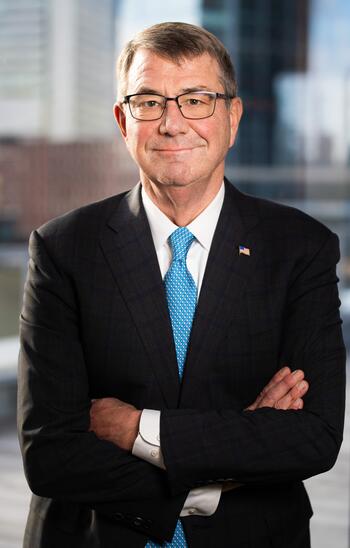
Abstract: The world’s largest organization is also one of its most mysterious. The Department of Defense (DOD) employs more men and women than Amazon, McDonald’s, FedEx, Target, and General Electric combined. Yet most Americans know little about it beyond its $700 billion budget and iconic five-sided headquarters. Now, the leader who knows the Pentagon best pulls back the curtain on an institution that many regard with a mix of awe and suspicion, revealing not just what it does but why, and why it matters. Former Secretary of Defense Ash Carter will offer an insider’s account of how America’s military works—and how it should work. It is also a timely reassessment of U.S. foreign policy and national security strategies in a rapidly changing world, and a timeless reflection on the leadership qualities essential to not only run but also reform a dauntingly complex organization. 


Speaker's Biography:

Image
2164204 carter ash1
For or over thirty-five years Ash Carter served in numerous jobs in the Department of Defense, mostly recently as the twenty-fifth Secretary of Defense under President Obama. He currently serves as the Director of the Belfer Center for Science and International Affairs at Harvard Kennedy School and an innovation fellow at MIT. He also is a Rhodes scholar with a PhD in nuclear physics.

Ash Carter 25th Secretary of Defense
Seminars
-

Click here to RSVP


Livestream: This event will not be live-streamed or recorded.


Abstract: The West’s sanctions regime on Russia is unprecedented. Russia is the largest economy ever to be subject to major sanctions. And for the first time, the West is now the major constraint on Russia’s participation in the global economy. This experience is driving adaptation and innovation in both Russian public policy and Western sanctions practice.

What do Russian sanctions reveal about both Russia and sanctions? What count as good and bad tests of sanctions’ efficacy? What implications do sanctions hold for Russia’s domestic evolution and its relationship with the West?


Speaker's Biography:

Image
headshot colour 04 19
Nigel Gould-Davies is an Associate Fellow at the Royal Institute of International Affairs (Chatham House). He teaches at Mahidol University International College in Thailand.

Nigel taught at Oxford University before joining the British Foreign Office, where his roles included Ambassador to Belarus. From 2010-14 he was Vice President, Policy and Corporate Affairs for BG Group in Asia.

He is the author of Tectonic Politics: Global Political Risk in an Age of Transformation (Brookings Institution, 2019). He received his B.A. and M.Phil. from Oxford and his Ph.D. from Harvard.


Nigel Gould-Davies Associate Fellow at the Royal Institute of International Affairs Chatham House
Seminars
-

Livestream: This event will not be live-streamed or recorded.


Abstract: This study brings together social identity theory and the literature on ontological security in international relations to highlight the role of leadership processes for group formation and authoritarian legitimation. Together, these theories allow for exploring the conditions that increase the potency of identity-based politics and the specific ways political entrepreneurs can mobilize this political tool. Ontological insecurity, as I argue and show, is a condition that political entrepreneurs use and manipulate to gain political support and legitimate their rule. I illustrate this argument by looking into ‘late Putinism’ as an example of collective identity-driven politics. This study relies on an original nationwide survey experiment conducted in November 2017 in Russia to demonstrate the extent of the Russian society’s vulnerability and receptivity to insecure identity narratives. The data also allows us to start a discussion on the potential factors responsible for societal differentiation on this issue.


Speaker's Biography:

Gulnaz Sharafutdinova Gulnaz Sharafutdinova
Gulnaz Sharafutdinova, a Reader in Russian Politics at King’s College London, is the author of Political Consequences of Crony Capitalism Inside Russia (University of Notre Dame Press, 2011) and the forthcoming monograph Through The Looking Glass: Putin’s Leadership and Russia’s Insecure Identity (Oxford University Press, 2020)Gulnaz has written numerous articles on Russian regional political economy, state-business relations, and corruption in Russia. She has published an edited volume, Soviet Society in the Era of Late Socialism, 1964-1985 (2012) and has been working on bringing social psychological approaches to understanding collective identity issues and the nature of Putinism in Russia.


Gulnaz Sharafutdinova Reader in Russian Politics King’s College London
Seminars
-

Abstract: We have learned a great deal about Iraq since the fateful decision to invade the country in 2003. Given academic research on Iraqi society and politics over the past 16 years and hard won lessons from U.S. intervention in Iraq, what what are the lessons learned for contemporary U.S. policymakers? And, crucially, what role should Iraq play in current U.S. foreign policy and its regional strategy toward the Middle East?


Seminar Recording: https://youtu.be/4OBQOshr-gs


Speakers:

Colin H. Kahl Co-director of the Center for International Security and Cooperation, the inaugural Steven C. Házy Senior Fellow at the Freeman Spogli Institute for International Studies, and a Professor, by courtesy, in the Department of Political Science at Stanford University.

Brett McGurk Frank E. and Arthur W. Payne Distinguished Lecturer at the Freeman Spogli Institute and Center for Security and Cooperation at Stanford University.

With moderator: Lisa Blaydes
Professor of Political Science at Stanford University and a Senior Fellow at the Freeman Spogli Institute for International Studies


Speaker's Biography: 

Image
colin kahl
Colin H. Kahl is co-director of the Center for International Security and Cooperation, the inaugural Steven C. Házy Senior Fellow at the Freeman Spogli Institute for International Studies, and a Professor, by courtesy, in the Department of Political Science at Stanford University. He is also a Strategic Consultant to the Penn Biden Center for Diplomacy and Global Engagement.

From October 2014 to January 2017, he was Deputy Assistant to the President and National Security Advisor to the Vice President. In that position, he served as a senior advisor to President Obama and Vice President Biden on all matters related to U.S. foreign policy and national security affairs, and represented the Office of the Vice President as a standing member of the National Security Council Deputies’ Committee. From February 2009 to December 2011, Dr. Kahl was the Deputy Assistant Secretary of Defense for the Middle East at the Pentagon. In this capacity, he served as the senior policy advisor to the Secretary of Defense for Egypt, Iran, Iraq, Israel and the Palestinian territories, Saudi Arabia, Syria, Yemen, and six other countries in the Levant and Persian Gulf region. In June 2011, he was awarded the Secretary of Defense Medal for Outstanding Public Service by Secretary Robert Gates. 

From 2007 to 2017 (when not serving in the U.S. government), Dr. Kahl was an assistant and associate professor in the Security Studies Program at Georgetown University's Edmund A. Walsh School of Foreign Service. From 2007 to 2009 and 2012 to 2014, he was also a Senior Fellow at the Center for a New American Security (CNAS), a nonpartisan Washington, DC-based think tank. From 2000 to 2007, he was an assistant professor of political science at the University of Minnesota. In 2005-2006, Dr. Kahl took leave from the University of Minnesota to serve as a Council on Foreign Relations International Affairs Fellow in the Office of the Secretary of Defense, where he worked on issues related to counterinsurgency, counterterrorism, and responses to failed states. In 1997-1998, he was a National Security Fellow at the John M. Olin Institute for Strategic Studies at Harvard University.

Current research projects include a book analyzing American grand strategy in the Middle East in the post-9/11 era. A second research project focuses on the implications of emerging technologies on strategic stability.

He has published numerous articles on international security and U.S. foreign and defense policy in Foreign Affairs, Foreign Policy, International Security, the Los Angeles Times, Middle East Policy, the National Interest, the New Republic, the New York Times, Politico, the Washington Post, and the Washington Quarterly, as well as several reports for CNAS.

His previous research analyzed the causes and consequences of violent civil and ethnic conflict in developing countries, focusing particular attention on the demographic and natural resource dimensions of these conflicts. His book on the subject, States, Scarcity, and Civil Strife in the Developing World, was published by Princeton University Press in 2006, and related articles and chapters have appeared in International Security, the Journal of International Affairs, and various edited volumes.

Dr. Kahl received his B.A. in political science from the University of Michigan (1993) and his Ph.D. in political science from Columbia University (2000).


Image
mcgurk brett holden   official dos photo copy
Brett McGurk is the Frank E. and Arthur W. Payne Distinguished Lecturer at the Freeman Spogli Institute and Center for Security and Cooperation at Stanford University.

McGurk’s research interests center on national security strategy, diplomacy, and decision-making in wartime.  He is particularly interested in the lessons learned over the presidencies of George W. Bush, Barack Obama, and Donald Trump regarding the importance of process in informing presidential decisions and the alignment of ends and means in national security doctrine and strategy.  At Stanford, he will be working on a book project incorporating these themes and teaching a graduate level seminar on presidential decision-making beginning in the fall of 2019.  He is also a frequent commentator on national security events in leading publications and as an NBC News Senior Foreign Affairs Analyst. 

Before coming to Stanford, McGurk served as Special Presidential Envoy for the Global Coalition to Defeat ISIS at the U.S. Department of State, helping to build and then lead the coalition of seventy-five countries and four international organizations in the global campaign against the ISIS terrorist network.  McGurk was also responsible for coordinating all aspects of U.S. policy in the campaign against ISIS in Iraq, Syria, and globally.

McGurk previously served in senior positions in the George W. Bush and Barack Obama administrations, including as Special Assistant to President Bush and Senior Director for Iraq and Afghanistan, and then as Deputy Assistant Secretary of State for Iraq and Iran and Special Presidential Envoy for the U.S. campaign against the Islamic State under Obama.

McGurk has led some of the most sensitive diplomatic missions in the Middle East over the last decade. His most recent assignment established one of the largest coalitions in history to prosecute the counter-ISIS campaign. He was a frequent visitor to the battlefields in both Iraq and Syria to help integrate military and civilian components of the war plan. He also led talks with Russia over the Syria conflict under both the Trump and Obama administrations, initiated back-channel diplomacy to reopen ties between Iraq and Saudi Arabia, and facilitated the formation of the last two Iraqi governments following contested elections in 2014 and 2018.

In 2015 and 2016, McGurk led fourteen months of secret negotiations with Iran to secure the release of Washington Post reporter Jason Rezain, U.S. Marine Amir Hekmati, and Pastor Saad Abadini, as well as three other American citizens.

During his time at the State Department, McGurk received multiple awards, including the Distinguished Honor Award and the Distinguished Service Award, the highest department awards for exceptional service in Washington and overseas assignments.

McGurk is also a nonresident senior fellow in the Middle East Program at the Carnegie Endowment for International Peace.

McGurk received his JD from Columbia University and his BA from the University of Connecticut Honors Program.  He served as a law clerk to Chief Justice William H. Rehnquist on the U.S. Supreme Court, Judge Denis Jacobs on the U.S. Court of Appeals for the 2d Circuit, and Judge Gerard E. Lynch on the U.S. District Court for the Southern District of New York.


Colin Kahl Stanford University
Brett McGurk Stanford University
Seminars
-

Abstract: Russia’s challenge to the West includes information operations (e.g., disinformation, political propaganda, and other forms of online manipulation) aimed at destabilizing the common ground that democratic societies in Europe and the United States need in order to govern themselves.  Kate Starbird will describe two case studies of online information operations connected to Russia’s media/intelligence apparatus:  interference in the 2016 U.S. election and the campaign against the “White Helmets” in Syria.  She argues that defending against Russian online information operations will require a more nuanced understanding of the problem, in particular, moving beyond focusing on “bots” and “trolls” to looking at the collaborative nature of disinformation campaigns that target, infiltrate, shape, and leverage online communities—communities which may not recognize their role in these campaigns. 


Seminar Recording: https://youtu.be/lF4M11FkEKY


Speaker's Biography:

Image
thumbnail new headshot tom reese small
Kate Starbird is an Associate Professor at the Department of Human Centered Design & Engineering (HCDE) at the University of Washington (UW). Starbird’s research is situated within human-computer interaction (HCI) and the emerging field of crisis informatics—the study of the how information-communication technologies (ICTs) are used during crisis events. One aspect of her research focuses on how online rumors spread during natural disasters and man-made crisis events. More recently, she has begun to focus on disinformation and other forms of strategic information operations online. Starbird earned her PhD from the University of Colorado at Boulder in Technology, Media and Society and holds a BS in Computer Science from Stanford University.

Kate Starbird University of Washington
Seminars
-

Seminar Recording: https://youtu.be/ZVHEqY1_3w8


Abstract: Before the CCP came to power, China lay broken. Today it is a force on the global stage, but its leaders remain haunted by the past. Sulmaan Khan will tell the story of the grand strategies pursued by China’s paramount leaders: the shrewd, dangerous Mao Zedong, who made the country whole and kept it so; the caustic, impatient Deng Xiaoping who dragged the country into the modern world; Jiang Zemin and Hu Jintao who served as cautious custodians of Deng’s legacy; and Xi Jinping who combines assertiveness with insecurity. For all their considerable costs, China’s grand strategies have been largely successful. But whether or not they can meet the challenges of the twenty-first century remains to be seen.   


Speaker's Biography:

Image
khan full length dust jacket3
Sulmaan Wasif Khan teaches international history and Chinese foreign relations at the Fletcher School, Tufts University, where he also directs the Water and Oceans Program at the Center for International Environment and Resource Policy. He is the author of Haunted by Chaos: China’s Grand Strategy from Mao Zedong to Xi Jinping (Harvard University Press: 2018), which was named a top book of 2018 by The American Interest, and Muslim, Trader, Nomad, Spy: China’s Cold War and the People of the Tibetan Borderlands (University of North Carolina Press: 2015). He has written for The Economist, Foreign Affairs, The American Interest, and YaleEnvironment360, among others, on topics ranging from Burmese Muslims to dolphin migration through the Bosphorus. He received his Ph.D. in History from Yale University in 2012.  


Sulmaan Khan Assistant Professor of International History and Chinese Foreign Relations Tufts University
Seminars
Subscribe to International Development