Security

FSI scholars produce research aimed at creating a safer world and examing the consequences of security policies on institutions and society. They look at longstanding issues including nuclear nonproliferation and the conflicts between countries like North and South Korea. But their research also examines new and emerging areas that transcend traditional borders – the drug war in Mexico and expanding terrorism networks. FSI researchers look at the changing methods of warfare with a focus on biosecurity and nuclear risk. They tackle cybersecurity with an eye toward privacy concerns and explore the implications of new actors like hackers.

Along with the changing face of conflict, terrorism and crime, FSI researchers study food security. They tackle the global problems of hunger, poverty and environmental degradation by generating knowledge and policy-relevant solutions. 

-

Abstract

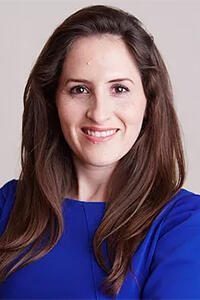
In How We Win: How Cutting-Edge Entrepreneurs, Political Visionaries, Enlightened Business Leaders, and Social Media Mavens Can Defeat the Extremist Threat, Farah Pandith, the former first-ever Special Representative to Muslim Communities argues that the solutions to the crisis of recruitment and radicalization are available and affordable. A pioneer in the war of ideas, her unprecedented experiences for Bush and Obama reveal information about Washington’s soft power challenge. She calls out the false claim that “ISIS is defeated” and focuses on the importance of defeating the ideology. The need is urgent as terrorist organizations continue to beat the current approach to this global threat. To win, she argues, we must go “all in” in order to extinguish this threat once and for all. She lays out a comprehensive strategy that is a call to action for policymakers, tech entrepreneurs, the media, business professionals, and anyone interested in fighting hate, and presents concrete solutions and recommendations for how we can stem the extremists’ toxic message. Drawing upon her experiences at the National Security Council, U.S. Department of State, and USAID, she makes the case that we have the resources right now to defeat the extremist threat. http://farahpandith.com/book/


Bio

FARAH PANDITH is an author, foreign policy strategist, and former diplomat. A world-leading expert and pioneer in countering violent extremism, she is a frequent media commentator and public speaker. She served as a political appointee under Presidents George H.W. Bush, George W. Bush, and Barack Obama, and most recently she was the first-ever Special Representative to Muslim Communities.  She has served on the National Security Council, at the U.S. Department of State, and the U.S. Agency for International Development (USAID) in various senior roles. She is a senior fellow with the Future of Diplomacy Project at the Belfer Center for Science and International Affairs at the Harvard Kennedy School as well as an adjunct senior fellow at the Council on Foreign Relations. Her book is How We Win: How Cutting-Edge Entrepreneurs, Political Visionaries, Enlightened Business Leaders and Social Medial Mavens Can Defeat the Extremist Threat.


Farah Pandith
Seminars
-

Click here to RSVP


Speaker Bio: Ms. Kirsti Kauppi became Ambassador of Finland to the United States in September 2015. Before that (2012-2015) she was Political Director (Director General for Political Affairs) and (2009-2012) Director General for Africa and the Middle East in the Ministry for Foreign Affairs in Helsinki.

2005 she was appointed Ambassador of Finland to Austria and Permanent Representative to the UN-related international organizations located in Vienna. Ambassador Kauppi has also served in the Finnish Embassy in Berlin (2003-2005) as Deputy Chief of Mission (Minister). Her other foreign posts include Washington (1997-2000), the Finnish Permanent Mission to the EU in Brussels (1993-1997) and Bangkok (1989-92).


Abstract: Pillars of European security show signs of strain. The question is what can be the building blocks for stability and security in Europe in the future. 

Finland is a Nordic country, amongst the most stable countries in the world, one of the most open economies, technologically advanced and the “happiest” country in the world.  A rules-based international order is vitally important for countries like Finland. Return of great power competition as the organizing principle of international relations is a bleak perspective for small nations.  How should Europe position itself and what should the Europeans do? How about the transatlantic community and the West as a whole?

Finland offers an interesting point of view.  A committed member of the European Union, Finland underlines the importance of European integration, including using EU methods to strengthen European security and defense.  Finland holds the transatlantic relationship and NATO an irreplaceable pillar of stability in Europe even if the country has not joined the Alliance.  Believer in cooperative security Finland promotes dialogue and confidence building, but at the same time possesses robust military capabilities.  Finland looks at Russia with clear eyes and concern, and has through history a unique perspective to what to make of Russia and how to manage the relationship with Russia.

At the talk, the different challenges to European security are discussed and also the elements through which Europe and the US could respond and reinforce the foundations of stability in Europe, as well as why it is important that the USA and Europe are on the same page in these issues. 

Kirsti Kauppi Ambassador of Finland to the United States
Seminars
-

Click here to RSVP

Please Note: The Trump, Russia and the Subversion of American Democracy seminar has been rescheduled from March 5th to March 20th (12:00pm-1:30pm). Please use the link above to register for the new event. If you signed up for the March 5th event date, you will need to sign up again using the link above.


Abstract: Greg Miller, Washington Post correspondent, winner of the Pulitzer Prize, and author of The Apprentice, will discuss Russia’s interference in U.S. domestic politics, the rising aggression and brazenness associated with Russian espionage in this era, and the fallout in the United States.  He will address the return on investment for Russia and how it has failed to achieve short-term objectives (removal of sanctions) but has achieved broader aims, including making Vladimir Putin seem more potent on the world stage and making the United States (and Western democracy) seem week and dysfunctional.

Speaker Bio: Greg Miller (MA Stanford 93) covers national security for The Washington Post, and is the author of "The Apprentice -- Trump, Russia and the Subversion of American Democracy," a book published in 2018 by the Washington Post and Harper Collins. Miller was among the Post reporters awarded the 2018 Pulitzer Prize for coverage of Russia's interference in the 2016 election and the fallout under the Trump administration. Miller was also part of the team awarded the 2014 Pulitzer Prize for Public Service for the paper's stories about U.S. surveillance programs exposed by former intelligence contractor Edward Snowden.


Greg Miller Correspondent Washington Post
Seminars
-


EMERGING ISSUES IN CONTEMPORARY ASIA

A Special Seminar Series


RSVP required by February 12, 2019 to: https://goo.gl/forms/h9RRcz4vR9Ybn5cQ2

VALID STANFORD ID CARD MUST BE PRESENTED UPON ARRIVAL


ABSTRACT: Diplomacy plays a critical role in the management and resolution of armed conflict in the international system. After a war breaks out, decision makers see the opening of talks as a constructive step in the conflict’s resolution — dialogue allows for belligerents to broker deals and coordinate the logistics of war termination. However, in modern warfare, states almost always fight initially for period of time without engaging in talks. What factors explain whether states are willing to talk to their enemy while fighting and when might their diplomatic postures change? “Talking to the Enemy” presents a framework to explain variation in countries’ approaches to wartime diplomacy, focusing on the costs of talks and how states mitigate these costs to get to the negotiating table. I test this framework with respect to Chinese decision making in the Korean and Sino-Indian Wars — one in which China was against talks for nine months before opening up and the latter in which China actively pursued talks throughout the whole conflict. The findings have significant implications for crisis management and conflict resolution in U.S.-China relations.  

Image
Oriana Mastro
PROFILE: Oriana Skylar Mastro is an assistant professor of security studies at the Edmund A. Walsh School of Foreign Service at Georgetown University where her research focuses on Chinese military and security policy, Asia-Pacific security issues, war termination, and coercive diplomacy. Dr. Mastro is also a 2017-2019 Jeane Kirkpatrick Scholar at the American Enterprise Institute (AEI) where she is working on a book about China’s challenge to U.S. primacy. Mastro continues to serve in the United States Air Force Reserve for which she works as a Senior China Analyst at the Pentagon. For her contributions to U.S. strategy in Asia, she won the Individual Reservist of the Year Award in 2016. She has published widely, including in Foreign Affairs, International Security, International Studies Review, Journal of Strategic Studies, The Washington Quarterly, The National Interest, Survival, and Asian Security, and is the author of The Costs of Conversation: Obstacles to Peace Talks in Wartime, (Cornell University Press, 2019). She holds a BA in East Asian Studies from Stanford University and an MA.and PhD in Politics from Princeton University. Her publications and other commentary can be found on twitter @osmastro and www.orianaskylarmastro.com.  


Oriana Mastro Assistant Professor of Security Studies Edmund A. Walsh School of Foreign Service, Georgetown University
Seminars
-

RSVP here


Abstract: Russian foreign and security policy are changing, both to shape and respond to what appears to be a rapidly shifting geostrategic environment. Olga Oliker will discuss the sources of Russian foreign and security policy, how they manifest in defense planning and strategy, Moscow's actions in Ukraine and Syria, and Russian interaction with the United States and European countries. She will then consider the implications of a more active Russia for global security and stability and for the interests and policies of the United States and its allies.

Bio: As Crisis Group's Program Director for Europe and Central Asia, Olga Oliker leads the organisation’s research, analysis, policy prescription and advocacy in and about Russia, Europe, Turkey, the Caucasus, and Central Asia. Oliker’s own research interests center on the foreign and security policies of Russia, Ukraine, and the Central Asian and Caucasian successor states to the Soviet Union, domesticpolitics in these countries, U.S. policy towards the region, and nuclear weapons and arms control. Prior to coming to Crisis Group, Oliker directed the Russia and Eurasia Program at the Center for Strategic and International Studies and held research and management roles at the RAND Corporation. Oliker holds a B.A. from Emory University in international studies, an M.P.P. from Harvard University’s John F. Kennedy School of Government, and a Ph.D. in political science from the Massachusetts Institute of Technology.

Olga Oliker Director, Europe and Central Asia Program Center for Strategic & International Studies
Seminars

The CISAC European Security Initiative features speakers addressing the challenges that a more assertive Russia presents to the European security order; Europe's ability to meet and defend against these challenges; and the security policies that the West should pursue to respond to Russia.  The talks are free and usually open to the public.

-

Abstract: Materials used in key components of nuclear power reactors, such as the fuel cladding and the pressure vessel, provide shields for the release of highly radioactive isotopes generated in the nuclear fuel to the environment, thus their reliability is an important issue in the safety evaluation.  The accident that occurred at the Fukushima Daiichi in 2011 demonstrated that materials that are considered reliable during normal operating conditions will fail in an extreme accident condition. Subsequently, there has been an international effort on developing materials for Accident Tolerant Fuels (ATF). In addition, the development of new generation of nuclear reactors also calls for new materials that may withstand higher temperatures, higher radiation doses and with better performance under severe corrosive conditions.  This talk will outline the challenges and status for such developments using recent data from the authors’ own research group as examples.  Also, since China is building the most nuclear reactors now and “a nuclear accident anywhere of the world will be an accident of everywhere of the world”, the importance and challenges of collaborating with the Chinese in this area will be discussed. 

Bio: Dr. Lumin Wang is a professor of nuclear engineering, and materials science & engineering at the University of Michigan-Ann Arbor (UM). He came to the US from China in 1982, and received his MS and PhD degrees in Material Science from the University of Wisconsin-Madison in 1984 and 1988, respectively. He worked as a post-doctoral fellow at Argonne National Laboratory and a research scientist at the University of New Mexico before joining the faculty of UM in 1997.  His research has focused on the study of radiation effects of materials using ion beams and transmission electron microscopy. He served as the director of Electron Microbeam Analysis Laboratory, a campus-wide material characterization center at UM between 2005 and 2010. Dr. Wang has published more than 400 papers in research journals and delivered more than 100 invited talks internationally. He has been a member of the International Committee of the American Nuclear Society and an adjunct chair professor of Xiamen University of China since 2011. He has taken more than 100 UM students to China to observe the construction of nuclear reactors during the last 8 summers.


Professor
Lumin Wang Professor, College of Engineering University of Michigan
0
painter.jpg

Christopher Painter is a globally recognized leader on cyber policy, cyber diplomacy, cybersecurity and combatting cybercrime. He has been at the vanguard of cyber issues for over 30 years, first as a federal prosecutor handling some of the most high-profile cyber cases in the U.S., then as a senior official at the U.S. Department of Justice, the FBI, the White House National Security Council and, finally, as the world’s first cyber diplomat at the U.S. Department of State. Among many other things, Chris is a founder of The Cyber Policy Group, has served as the President of the Global Forum on Cyber Expertise Foundation, serves on the board of the Center for Internet Security and the Public Sector Advisory Board for Palo Alto Networks and was a commissioner on the Global Commission for the Stability of Cyberspace. He is a frequent speaker on cyber issues, frequently is interviewed and quoted in the media and has testified on numerous occasions to U.S. Congressional committees. He has received a number of awards and honors including Japan’s Order of the Rising Sun, Estonia's Order of Terra Mariana, RSA Security Conference's Public Policy Award, the Attorney General’s Award for Exceptional Service and was named the Bartles World Affairs Fellow at Cornell University. He received his B.A. from Cornell University and J.D. from Stanford Law School.

Affiliate
Date Label
Authors
News Type
News
Date
Paragraphs

The Freeman Spogli Institute for International Studies at Stanford University is pleased to announce that Brett McGurk has been appointed the next Frank E. and Arthur W. Payne Distinguished Lecturer. He will spend the next two years at Stanford working with FSI’s Center for International Security and Cooperation.

McGurk served as a Special Assistant to the President and Senior Director for Iraq and Afghanistan under President George W. Bush, Deputy Assistant Secretary of State and Special Presidential Envoy under President Obama, and for the last two years as President Trump’s Special Envoy helping to oversee the Global Campaign to defeat ISIS and leading a Coalition of 75 countries and 4 international organizations, the largest of its kind in history. McGurk resigned from this most recent post in light of policy disagreements related to Syria.

He is the recipient of multiple awards, including the Distinguished Honor award, bestowed by Secretary of State Condoleezza Rice, and the Distinguished Service Award, bestowed by Secretary of State John Kerry, both the highest Department awards for exceptional service in Washington and overseas assignments.

“Brett McGurk brings nearly two decades of distinguished service and expeditionary diplomacy across Republican and Democratic administrations,” said FSI Director Michael McFaul. “His unique real-world and bipartisan experience, particularly in the Middle East, will be a tremendous asset to our global policy community.”

Condoleezza Rice, Denning Professor in Global Business and the Economy at the Stanford Graduate School of Business, and Senior Fellow by courtesy at FSI, added: “Brett McGurk is the consummate professional diplomat. He has served on the front lines across three administrations, and handled some of the most difficult assignments for me and President Bush in Iraq during the surge. We are thrilled to welcome Brett to Stanford.”

Before joining the Bush administration’s national security team, McGurk served as a law clerk to Chief Justice William H. Rehnquist on the Supreme Court of the United States. He was at the Supreme Court during the attacks of September 11, 2001, an experience that led to his practice of foreign affairs at the highest levels in Washington and on the front lines overseas.

“I am excited to join the Stanford community and work alongside the distinguished faculty at FSI,” McGurk said earlier today. “I hope to translate my experience in Washington and overseas into challenging courses to prepare a new generation of public servants, as well as enhance public understanding of the serious issues our nation confronts, and how we might better address them.”

As an experienced commentator on major news programs, such as Meet the Press, Face the Nation, PBS Newshour, and CBS This Morning, McGurk is well-suited to fulfill the Payne Lecturer’s goal of raising public understanding of global policy issues.

He and his wife, Gina, have an 1-year old daughter, Leia. We look forward to welcoming them to the Stanford community in March.


All News button
1
-

Click here to watch live


Abstract: What is the future of nuclear energy?

The answer to that question will be determined largely by how we answer another: How do we meet future energy needs while mitigating climate change?

If the goal is to decarbonize our power grid, manufacturing processes and transportation systems, while increasing the standard of living in the U.S. and providing power to the more than 1.3 billion people worldwide currently living without, nuclear energy must be part of a mix that includes renewables such as solar and wind.

The nuclear reactors of the future will be different, however, than those currently in operation in the U.S. and around the world.

Through private-public partnerships and cutting-edge research conducted at Idaho National Laboratory, the U.S. is working to develop reactors that are safer, smaller, cheaper to build and operate, and which produce less spent fuel.

But, questions remain:

Will the U.S. open a national repository for spent fuel and Cold War nuclear waste?

Can the public be convinced that nuclear energy’s disadvantages are outweighed by its contributions to the safety, reliability and stability of our power grid, as well as our economy, environment and national security?

Will policymakers continue to make the investments necessary to ensure that the commercial nuclear energy industry, an American creation that generates 19 percent of our electricity and more than half of our carbon-free electricity, continues to power U.S. prosperity well into the 21st century?

Dr. Mark Peters will address these questions, talk about the technical evolution of reactor designs, and detail growing bipartisan support for nuclear energy in Washington, D.C.

He also will discuss the research and development history that helped create the American nuclear energy industry, and the role INL and other national laboratories will play in developing and deploying the next generation of nuclear reactors.


Bio: Dr. Mark Peters is laboratory director at Idaho National Laboratory (INL). He is responsible for management and integration of a large, multipurpose national laboratory, with a mission focus in nuclear energy, national and homeland security, and energy and environmental science and technology. He manages an organization of 4,200 staff and multiple nuclear and non-nuclear experimental facilities, with an annual budget of more than $1 billion. Peters serves as a senior advisor to the U.S. Department of Energy on nuclear energy technologies and research and development programs, and nuclear waste policy. As a recognized expert in nuclear fuel cycle technologies and nuclear waste management, Peters is called upon frequently to provide expert testimony to Congress in formulation of policies for nuclear fuel cycles, nonproliferation and nuclear waste disposal. Peters was honored in 2015 as a Fellow of the American Nuclear Society for outstanding accomplishments in the area of nuclear science and technology. Peters serves as chairman of the National Laboratory Directors Council Executive Committee.


Mark Peters Director Idaho National Laboratory
Seminars
Subscribe to Security