
FSI scholars produce research aimed at creating a safer world and examing the consequences of security policies on institutions and society. They look at longstanding issues including nuclear nonproliferation and the conflicts between countries like North and South Korea. But their research also examines new and emerging areas that transcend traditional borders – the drug war in Mexico and expanding terrorism networks. FSI researchers look at the changing methods of warfare with a focus on biosecurity and nuclear risk. They tackle cybersecurity with an eye toward privacy concerns and explore the implications of new actors like hackers.
Along with the changing face of conflict, terrorism and crime, FSI researchers study food security. They tackle the global problems of hunger, poverty and environmental degradation by generating knowledge and policy-relevant solutions.


Refugees in International Relations
Paragraphs
" Refugees in International Relations shows that strategic and institutional thinking are essential to understand the causes of forced migration, its consequences, and appropriate policy responses. It has a valuable and important central theme: refugee issues are inherently political." --Robert O. Keohane, Professor of International Affairs, Woodrow Wilson School of Public and International Affairs, Princeton University
Refugees lie at the heart of world politics. The causes and consequences of, and responses to, human displacement are intertwined with many of the core concerns of International Relations. Yet, scholars of International Relations have generally bypassed the study of refugees, and Forced Migration Studies has generally bypassed insights from International Relations. Refugees in International Relations therefore represents an attempt to bridge the divide between these disciplines, and to place refugees within the mainstream of International Relations. Drawing together the work and ideas of a combination of the world's leading and emerging International Relations scholars, Refugees in International Relations considers what ideas from International Relations can offer our understanding of the international politics of forced migration. The insights draw from across the theoretical spectrum of International Relations from realism to critical theory to feminism, covering issues including international cooperation, security, and the international political economy. They engage with some of the most challenging political and practical questions in contemporary forced migration, including peacebuilding, post-conflict reconstruction, and statebuilding. The result is a set of highly original chapters, yielding not only new concepts of wider relevance to International Relations but also insights for academics, policy-makers, and practitioners working on forced migration in particular and humanitarianism in general.
Contents:
- "Refugees in International Relations", Alexander Betts and Gil Loescher
- "Realism, Refugees, and Strategies of Humanitarianism", Jack Snyder
- "International Cooperation in the Refugee Regime", Alexander Betts
- "Refugees, International Society, and Global Order", Andrew Hurrell
- "Humanitarianism, Paternalism, and the UNHCR", Michael Barnett
- "Beyond 'Bare Life': Refugees and the 'Right to Have Rights'", Patricia Owens
- "The Only Thinkable Figure? Ethical and Normative Approaches to Refugees in International Relations", Chris Brown
- "Feminist Geopolitics Meets Refugee Studies", Jennifer Hyndman
- "'Global' Governance of Forced Migration", Sophia Benz and Andreas Hasenclever
- "Refugees and Military Intervention", Adam Roberts
- "UNHCR and the Securitization of Forced Migration", Anne Hammerstad
- "Refugees, Peacebuilding, and the Regional Dynamics of Conflict", James Milner
- "Post-conflict Statebuilding and Forced Migration", Dominik Zaum
- "Forced Migration in the International Political Economy", Sarah Collinson
All Publications button
1
Publication Type
Books
Publication Date
Journal Publisher
Oxford University Press
Number
0199595623
Disciplining an Unruly Field: Terrorism Experts and Theories of Scientific/Intellectual Production
Paragraphs
“Terrorism” has proved to be a highly problematic object of expertise. Terrorism
studies fails to conform to the most common sociological notions of what a field of
intellectual production ought to look like, and has been described by participants and
observers alike as a failure. Yet the study of terrorism is a booming field, whether measured
in terms of funding, publications, or numbers of aspiring experts. This paper aims to
explain, first, the disjuncture between terrorism studies in practice and the sociological
literature on fields of intellectual production, and, second, the reasons for experts’ “rhetoric
of failure” about their field. I suggest that terrorism studies, rather than conforming to the
notion of an ideal-typical profession, discipline, or bounded “intellectual field,” instead
represents an interstitial space of knowledge production. I further argue that the “rhetoric of
failure” can be understood as a strategy through which terrorism researchers mobilize
sociological theories of scientific/cultural fields as both an interpretive resource in their
attempts to make sense of the apparent oddness of their field and their situation, and as
schemas, or models, in their attempts to reshape the field. I conclude that sociologists ought
to expand our vision to incorporate the many arenas of expertise that occupy interstitial
spaces, moving and travelling between multiple fields.
All Publications button
1
Publication Type
Journal Articles
Publication Date
Journal Publisher
Qualitative Sociology
North Korea's Yongbyon Nuclear Complex: A presentation by Siegfried S. Hecker at the Korea Economic Institute
CISAC's Siegfried Hecker presented the findings of his recent trip to North Korea, where he was given a tour of a nuclear facility reportedly capable of enriching uranium. In his remarks he described two new nuclear facilities, a small light-water power reactor in early stages of construction, and a "modern, clean centrifuge plant" for uranium enrichment. Following his presentation he and Robert Carlin, a CISAC visiting professor, spoke about North Korean nuclear programs and the international reaction to North Korea's nuclear ambitions. This event occurred the day after North Korean military attacks on the South Korean island of Yeonpyeong.
Image
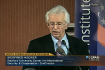
Dr. Hecker's Nov. 23, 2010 Presentation at the Korea Economic Institute (C-Span video)
Korea Economic Institute
Siegfried S. Hecker
CISAC
Stanford University
Encina Hall, C220
Stanford, CA 94305-6165
0
shecker@stanford.edu
Senior Fellow, Freeman Spogli Institute for International Studies, Emeritus
Research Professor, Management Science and Engineering, Emeritus
Siegfried S. Hecker is a professor emeritus (research) in the Department of Management Science and Engineering and a senior fellow emeritus at the Freeman Spogli Institute for International Studies (FSI). He was co-director of CISAC from 2007-2012. From 1986 to 1997, Dr. Hecker served as the fifth Director of the Los Alamos National Laboratory. Dr. Hecker is an internationally recognized expert in plutonium science, global threat reduction, and nuclear security.
Dr. Hecker’s current research interests include nuclear nonproliferation and arms control, nuclear weapons policy, nuclear security, the safe and secure expansion of nuclear energy, and plutonium science. At the end of the Cold War, he has fostered cooperation with the Russian nuclear laboratories to secure and safeguard the vast stockpile of ex-Soviet fissile materials. In June 2016, the Los Alamos Historical Society published two volumes edited by Dr. Hecker. The works, titled Doomed to Cooperate, document the history of Russian-U.S. laboratory-to-laboratory cooperation since 1992.
Dr. Hecker’s research projects at CISAC focus on cooperation with young and senior nuclear professionals in Russia and China to reduce the risks of nuclear proliferation and nuclear terrorism worldwide, to avoid a return to a nuclear arms race, and to promote the safe and secure global expansion of nuclear power. He also continues to assess the technical and political challenges of nuclear North Korea and the nuclear aspirations of Iran.
Dr. Hecker joined Los Alamos National Laboratory as graduate research assistant and postdoctoral fellow before returning as technical staff member following a tenure at General Motors Research. He led the laboratory's Materials Science and Technology Division and Center for Materials Science before serving as laboratory director from 1986 through 1997, and senior fellow until July 2005.
Among his professional distinctions, Dr. Hecker is a member of the National Academy of Engineering; foreign member of the Russian Academy of Sciences; fellow of the TMS, or Minerals, Metallurgy and Materials Society; fellow of the American Society for Metals; fellow of the American Physical Society, honorary member of the American Ceramics Society; and fellow of the American Academy of Arts and Sciences.
His achievements have been recognized with the Presidential Enrico Fermi Award, the 2020 Building Bridges Award from the Pacific Century Institute, the 2018 National Engineering Award from the American Association of Engineering Societies, the 2017 American Nuclear Society Eisenhower Medal, the American Physical Society’s Leo Szilard Prize, the American Nuclear Society's Seaborg Medal, the Department of Energy's E.O. Lawrence Award, the Los Alamos National Laboratory Medal, among other awards including the Alumni Association Gold Medal and the Undergraduate Distinguished Alumni Award from Case Western Reserve University, where he earned his bachelor's, master's, and doctoral degrees in metallurgy.
Hide publication sections
Off
Robert Carlin
CISAC
Stanford University
Encina Hall, C245 - Desk 2
Stanford, CA 94305-6165
0
rcarlin@stanford.edu
Carlin_Robert.jpg
MA
Bob Carlin is a Visiting Scholar at CISAC. From both in and out of government, he has been following North Korea since 1974 and has made 25 trips there. He recently co-authored a lengthy paper to be published by the London International Institute of Strategic Studies, entitled "Politics, Economics and Security: Implications of North Korean Reform."
Carlin served as senior policy advisor at the Korean Peninsula Energy Development Organization (KEDO) from 2002-2006, leading numerous delegations to the North for talks and observing developments in-country during the long trips that entailed.
From 1989-2002, he was chief of the Northeast Asia Division in the Bureau of Intelligence and Research, U.S. Department of State. During much of that period, he also served as Senior Policy Advisor to the Special Ambassador for talks with North Korea, and took part in all phases of US-DPRK negotiations from 1992-2000. From 1971-1989, Carlin was an analyst at the Central Intelligence Agency, where he received the Exceptional Analyst Award from the Director of Central Intelligence.
Carlin received his AM in East Asian regional studies from Harvard University in 1971 and his BA in political science from Claremont Men's College.
Affiliate
Conferences
North Korea's Yongbyon Nuclear Complex: A presentation by Siegfried S. Hecker at the Korea Economic Institute
Related Multimedia


North Korea's Yongbyon Nuclear Complex: A Report by Siegfried S. Hecker
Paragraphs
Excerpt: "On November 12, during my most recent visit to the Yongbyon Nuclear Complex with Stanford University colleagues John W. Lewis and Robert Carlin, we were shown a 25 to 30 megawatt-electric (MWe) experimental light-water reactor (LWR) in the early stages of construction. It is North Korea's first attempt at LWR technology and we were told it is proceeding with strictly indigenous resources and talent. The target date for operation was said to be 2012, which appears much too optimistic."
All Publications button
1
Publication Type
Policy Briefs
Publication Date
Journal Publisher
CISAC
The origin and ethics of violence
News Type
News
Date
Paragraphs
What can possibly explain the transformation that sometimes happens from non-violent civilian to combatant to criminal? Pulitzer Prize winning author and CISAC affiliate Richard Rhodes tackled this bedeviling question head-on in a recent lecture for Stanford's Ethics & War series, co-sponsored by the Center for International Security and Cooperation. Drawing heavily upon the work of Lonnie H. Athens, a Seton Hall University criminology professor, about whom Rhodes wrote a 1999 book entitled Why They Kill: The Discoveries of a Maverick Criminologist, Rhodes argued that all violent criminals go through a process that Athens called "violentization." The first stage, "brutalization," consists of witnessing abusive or violent behavior, often at a young age, and receiving encouragement to act in a similar way to resolve disputes. In the second stage, "belligerency," the individual takes stock of what has happened, examines his or her situation, and decides to begin to move to the third stage: using serious violence, if provoked, as a means of protection.
In Rhodes' view, this process is essentially identical to the training a military recruit undergoes. Both, he says, go through a period of re-socialization during which even lethal violence become acceptable, expected, and rewarded. Military recruits are "deliberately and systematically rebuked, scorned and punished for civilian behavior and coached and rewarded for military behavior including the controlled use of violence," he observes. "Violent domination, personal horrification and violent coaching are fundamental to basic military training." There is, however, a fundamental difference. The violent criminal moves on to a fourth stage, "virulence," in which the individual becomes willing to commit serious violence without provocation and embraces the sense of confidence and power created by the successful completion of these acts. The soldier, by contrast, is constrained within the third stage of violentization by the rule of law, by ethics, by codes of honor, and "implicitly," says Rhodes, "support from military leaders up the chain of command," who "are expected to limit their demands of violent action to appropriately defensive campaigns."
Within these constraints, the limitations of violence are clear. Self-defense is justifiable, and by extension so is the killing of an enemy combatant. Even the strategic bombing during World War II (and presumably more recently) can be justified with such arguments, Rhodes argues, "although that logic grew increasingly thin as the bombing expanded from military targets to military industrial targets and finally to the homes and neighborhoods of enemy civilians."
What, then, to make of My Lai, in which American soldiers killed babies and children, the Einsatzgruppen, who shot hundreds of thousands of innocent Jews with horrific efficiency, or the heinous war crimes committed in conflicts around the world? In these cases, the perpetrators have found themselves moving into virulence. The constraints that circumscribed their violent actions have broken down. Authorities in the chain of command either overlooked or ignored the need to enforce the limitations required to prevent criminal violence. In the eyes of the perpetrators, and in some cases those making the direct orders, the enemy became an omnipotent and ubiquitous presence, and the power that came with committing lethal violence was overwhelming. The line between self-defense and murder became so attenuated that it was essentially meaningless. Virtually the only possible outcome: unrestrained lethal violence.
Rhodes argues that the need to understand this dynamic has become increasingly urgent. The nuclear deterrent has largely foreclosed the prospect of conventional war, and "modern combat has strained the traditional limitations of violence on war to the breaking point and beyond." Modern weapons make it possible to do more lethal violence than the old days of single-shot rifles and hand grenades, he says, and the line between combatants and civilians can become difficult to define.
The quandary now is how to ensure that the process of violentization among members of the military does not extend to the fourth category. Even Heinrich Himmler, commander of the Einsatzgruppen, understood this on some level. He was horrified, Rhodes says, that members of his elite fighting squad had become such enthusiastic killers that they would take it upon themselves to find and shoot Jews. Others, in other wartime situations, unable to deal with the consequences of their actions as they meandered toward that fourth stage, killed themselves, suffered serious psychological problems, or committed acts of violence back at home. Now we are seeing similar consequences among the men and women who are forced to draw distinctions every day between civilian and enemy combatants. Indeed, he says, only the ethical and legal limitations put on soldiers, and enforced by their superiors in the chain of command, can protect them from becoming malevolently violent. Failing to maintain these restrictions has dire consequences. As Rhodes and many others before him have said, "as we sow, so shall we reap."
Hero Image

All News button
1
Law professor noted for public service to be appointed CISAC co-director
News Type
News
Date
Paragraphs
Mariano-Florentino Cuéllar (MA ’96, PhD ’00), a lawyer, scholar, and former official in the Clinton and Obama administrations, will assume the position of co-director of the Center for International Security and Cooperation (CISAC) at Stanford's Freeman Spogli Institute for International Studies (FSI) at the conclusion of the current academic year, FSI Director Coit D. Blacker and Law School Dean Larry Kramer have announced.
An expert in administrative law, international security, and public health and safety, Cuéllar is Professor and the Deane F. Johnson Faculty Scholar at Stanford Law School, and is also professor (by courtesy) of political science in the School of Humanities and Sciences. He is a longtime affiliated faculty member at CISAC, where he currently serves on the executive committee. He has collaborated with or served on the boards of several civil society organizations, including the Haas Center for Public Service, Asylum Access, and the American Constitution Society.
“I’m delighted that Tino has agreed to serve as co-director of FSI’s Center for International Security and Cooperation,” says Coit D. Blacker, FSI’s director and the Olivier Nomellini Professor in International Studies. “He will bring to the job just the right combination of skills, talents, and sensibilities to assure the Center’s continuing relevance and future success. Tino is an acclaimed scholar, an outstanding teacher, and an experienced policymaker who thinks hard and very creatively about the most pressing national and international security issues of our time – including problems of executive power and accountability, public health, and migration. Finding someone to take the reins at CISAC following Scott D. Sagan’s long and successful tenure as co-director was never going to be easy. But with Siegfried S. Hecker and now Tino Cuéllar at the helm, I think we’ve put together a winning team.”
Cuéllar has had an extensive record of public service since joining Stanford Law School faculty in 2001. Recently, he served in the Obama Administration as Special Assistant to the President for Justice and Regulatory Policy at the White House. In that role, he led the Domestic Policy Council’s work on criminal justice and drug policy, public health and food safety, regulatory reform, borders and immigration, civil rights, and rural and agricultural policy. Among other responsibilities, he represented the Domestic Policy Council in the development of the first-ever Quadrennial Homeland Security Review, and coordinated the President’s Food Safety Working Group.
"Tino's decision to become co-director of CISAC is good for everyone,” said Larry Kramer, Richard E. Lang Professor and Dean of Stanford Law School. “It's a great opportunity for him to pursue and build on his expertise in national security. It adds an innovative and forward-thinking mind and voice to CISAC. And it will generate tremendous new opportunities for collaboration between the Law School and CISAC, to the great benefit of our students and faculty."
In July 2010, when Cuéllar left the Obama administration to return to Stanford, he also accepted an appointment from the President of the United States to the Council of the Administrative Conference of the United States, a non-partisan agency charged with recommending improvements in the efficiency and fairness of federal regulatory programs. Before joining the White House staff, Cuéllar co-chaired the Obama-Biden Transition’s Immigration Policy Working Group. Earlier in his career, during the second term of the Clinton Administration, Cuéllar worked at the U.S. Department of the Treasury as Senior Advisor to the Under Secretary for Enforcement, focusing on countering financial crime, improving border coordination, and enhancing anti-corruption measures.
Cuéllar graduated from Calexico High School in rural Southern California, going on to receive a BA magna cum laude from Harvard University in 1993, a JD from Yale Law School in 1997, and a PhD in political science from Stanford University in 2000. Cuéllar clerked for Chief Judge Mary M. Schroeder of the U.S. Court of Appeals for the Ninth Circuit from 2000 to 2001.
Cuéllar will join current CISAC co-director Siegfried Hecker, professor (research) of management science and engineering and FSI senior fellow, in leading one of the country’s preeminent university-based research centers on international security and cooperation. He will succeed longtime co-director Scott Sagan, who has been leading the Center since 1998. “I am extremely pleased that Tino Cuéllar will be joining me,” said Hecker. “He will build on the extraordinary leadership that Scott Sagan has provided over the last 12 years, and his outstanding academic credentials and deep experience in Washington crafting security policy will be a tremendous asset to CISAC."
Sagan, the Caroline S.G. Munro Professor of Political Science and FSI senior fellow, will continue as an important presence at CISAC and FSI, with plans to focus on policy-related research for the American Academy of Arts and Science's Global Nuclear Future Initiative, where he serves as the co-chair with Harvard’s Steven Miller. Sagan has been instrumental in building CISAC’s capacity as an international leader in interdisciplinary university-based research and training aimed at tackling some of the world's most difficult security problems. “CISAC is a small national treasure inside this great university: a multidisciplinary research institution that consistently produces rigorous policy-relevant scholarship and creatively trains the next generation of international security specialists,” said Sagan. “I am proud to have helped lead the Center for the past 12 years, and am equally excited to be staying on at CISAC as a faculty member in residence."
"Tino Cuéllar will be a spectacular co-director for CISAC,” he added. “His joint legal and political science training brings new perspectives to international and national problems and his research on the security implications of U.S. immigration law, on efforts to combat terrorist financing, and on the politics of transnational law enforcement places new and important subjects directly onto the CISAC global policy agenda."
All News button
1