-

The Freeman Spogli Institute for International Studies, the Center for International Security & Cooperation, and the Hoover Institution are honored to co-sponsor the 2015 Drell Lecture with The Honorable Ashton B. Carter, 25th U.S. Secretary of Defense, who will speak on "Rewiring the Pentagon: Charting a New Path on Innovation and Cybersecurity." The event will include welcoming remarks by Stanford University President John Hennessy. The talk will be followed by a Q&A session with Carter moderated by Amy Zegart, co-director of the CISAC and senior fellow at Hoover. Questions will be collected from the audience as well as from Twitter, using the hashtag #SecDefAtStanford. 


Drell Lecture Recording: NA


Drell Lecture Transcript: NA


Speaker's Biography: Secretary Carter was the 2014-2015 Payne Distinguished Visitor at the Freeman-Spogli Institute for International Studies until he left upon his nomination by the White House. Ash Carter served in numerous jobs in the Department of Defense, and as the twenty-fifth Secretary of Defense under President Obama. 


Cemex Auditorium

655 Knight Way

Stanford University

Ashton Carter 25th United States Secretary of Defense Speaker United States Department of Defense
Lectures

Due to the large response we have received, registration for this event is for the wait list only.

This event will be livestreamed here when the event begins.

In an age of terrorism, where should a democratic society draw the line on government surveillance? Edward Snowden’s explosive disclosures about the National Security Agency’s intelligence-collection operations have ignited an intense debate about the appropriate balance between security and liberty in America. In a special series this year, nationally prominent experts will explore the critical issues raised by the NSA’s activities, including their impact on our security, privacy, and civil liberties. This timely series will address one of the most challenging questions the nation faces today as it tries to strike the right balance between safety and liberty.

The Security Conundrum will look behind and beyond the headlines, examining the history and implementation of the NSA operations, the legal questions generated by them, the media’s role in revealing them, and the responsibility of Congress to oversee them. It will also address the NSA’s uneasy and evolving relationship with Silicon Valley. Each session in the series is designed to explore these issues from a different vantage point. The guest speakers, in conversation with Stanford scholars, will probe the problems, explain the political, legal, and technological contours of the NSA actions, and outline ways to preserve the nation’s security without sacrificing our freedoms. 


An Evening with Senator Mark Udall

Mark Udall was the senior US Senator from the state of Colorado from 2009–2015. During his tenure in the US Senate, Senator Udall held various national security committee assignments, both with the Senate Armed Services Committee and the Senate Select Committee on Intelligence. An active member of the Senate Intelligence Committee, Senator Udall gained notoriety for his vocal opposition to NSA surveillance programs in the wake of the Edward Snowden disclosures in June of 2013. However, as early as 2011, Senator Udall called on the Office of the Director of National Intelligence to declassify material related to US government surveillance. Following the Snowden revelations, Senator Udall advocated for adopting the recommendations from the President’s Review Group on Intelligence and Communications Technologies, as well as substantively reforming the NSA. 

In a conversation with Amy Zegart, CISAC Co-Director and Davies Family Senior Fellow at the Hoover Institution, Senator Udall will provide a lawmaker’s perspective on the oversight of controversial NSA programs. He will discuss the divide between security and civil liberties, as well as his thoughts on reform of US intelligence collection activities.


Ticket information: Admission is free but advance registration is required. Doors open at 6:30 PM; no entry after 7:40 PM. Registration is limited to 1 ticket per person. A photo ID will be required at the door.


The Security Conundrum is co-sponsored by Stanford’s Freeman Spogli Institute for International Studies, the Center for International Security and Cooperation, the Hoover Institution, Stanford Continuing Studies, Stanford in Government, and the Stanford Law School.

CEMEX Auditorium

Knight Management Center

641 Knight Way, Stanford University

Mark Udall Former US Senator, State of Colorado Speaker

CISAC
Stanford University
Encina Hall, E216
Stanford, CA 94305-6165

(650) 725-9754 (650) 723-0089
0
Senior Fellow at the Freeman Spogli Institute for International Studies
Morris Arnold and Nona Jean Cox Senior Fellow at the Hoover Institution
Senior Fellow at the Stanford Institute for Human-Centered AI
Professor, by courtesy, of Political Science
amyzegart-9.jpg PhD

Dr. Amy Zegart is the Morris Arnold and Nona Jean Cox Senior Fellow at the Hoover Institution. The author of five books, she specializes in U.S. intelligence, emerging technologies, and national security. At Hoover, she leads the Technology Policy Accelerator and the Oster National Security Affairs Fellows Program. She also is an associate director and senior fellow at the Stanford Institute for Human-Centered AI; a senior fellow at the Freeman Spogli Institute; and professor of political science by courtesy, teaching 100 students each year about how emerging technologies are transforming espionage.

Her award-winning research includes the leading academic study of intelligence failures before 9/11: Spying Blind: The CIA, the FBI, and the Origins of 9/11 (Princeton, 2007) and the bestseller Spies, Lies, and Algorithms: The History and Future of American Intelligence (Princeton, 2022), which was nominated by Princeton University Press for the Pulitzer Prize. She also coauthored Political Risk: How Businesses and Organizations Can Anticipate Global Insecurity, with Condoleezza Rice (Twelve, 2018). Her op-eds and essays have appeared in Foreign Affairs, Politico, the New York Times, the Washington Post, and the Wall Street Journal.

Zegart has advised senior officials about intelligence and foreign policy for more than two decades. She served on the National Security Council staff and as a presidential campaign foreign policy advisor and has testified before numerous congressional committees. Before her academic career, she spent several years as a McKinsey & Company consultant.

Zegart received an AB in East Asian studies from Harvard and an MA and a PhD in political science from Stanford. She serves on the boards of the Council on Foreign Relations, Kratos Defense & Security Solutions, and the American Funds/Capital Group.

Date Label
Amy Zegart Co-Director, CISAC, Davies Family Senior Fellow at the Hoover Institution Moderator
Lectures
-

At the NATO Summit in Wales in September 2014, NATO leaders were clear about the security challenges on the Alliance’s borders. In the East, Russia’s actions threaten our vision of a Europe that is whole, free and at peace.  On the Alliance’s southeastern border, ISIL’s campaign of terror poses a threat to the stability of the Middle East and beyond.  To the south, across the Mediterranean, Libya is becoming increasingly unstable. As the Alliance continues to confront theses current and emerging threats, one thing is clear as we prepare for the 2016 Summit in Warsaw: NATO will adapt, just as it has throughout its 65-year history.

Image
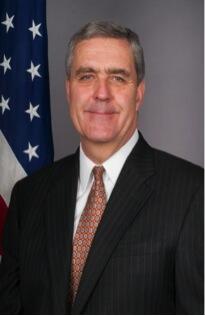
Douglas Lute, Ambassador of the United States to NATO


In August 2013, Douglas E. Lute was sworn-in as the Ambassador of the United States to the North Atlantic Treaty Organization (NATO).  From 2007 to 2013, Lute served at the White House under Presidents Bush and Obama, first as the Assistant to the President and Deputy National Security Advisor for Iraq and Afghanistan, and more recently as the Deputy Assistant to the President focusing on Afghanistan, Pakistan and India.  In 2010, AMB Lute retired from the U.S. Army as a Lieutenant General after 35 years on active duty.  Prior to the White House, he served as the Director of Operations on the Joint Staff, overseeing U.S. military operations worldwide. He served multiple tours in NATO commands including duty in Germany during the Cold War and commanding U.S. forces in Kosovo.  He holds degrees from the United States Military Academy and Harvard University.

A light lunch will be provided.  Please plan to arrive by 11:30am to allow time to check in at the registration desk, pick up your lunch and be seated by 12:00 noon.

Co-sponsored by The Europe Center, the Freeman Spogli Institute for International Studies, the Center for International Security and Cooperation and the Center for Russian, East European and Eurasian Studies.


Douglas Lute United States Ambassador to NATO Speaker
Lectures

In an age of terrorism, where should a democratic society draw the line on government surveillance? Edward Snowden’s explosive disclosures about the National Security Agency’s intelligence-collection operations have ignited an intense debate about the appropriate balance between security and liberty in America. In a special series this year, nationally prominent experts will explore the critical issues raised by the NSA’s activities, including their impact on our security, privacy, and civil liberties. This timely series will address one of the most challenging questions the nation faces today as it tries to strike the right balance between safety and liberty. The Security Conundrum will look behind and beyond the headlines, examining the history and implementation of the NSA operations, the legal questions generated by them, the media’s role in revealing them, and the responsibility of Congress to oversee them. It will also address the NSA’s uneasy and evolving relationship with Silicon Valley. Each session in the series is designed to explore these issues from a different vantage point. The guest speakers, in conversation with Stanford scholars, will probe the problems, explain the political, legal, and technological contours of the NSA actions, and outline ways to preserve the nation’s security without sacrificing our freedoms. 

Inside the Newsroom: The Media and Edward Snowden: An Evening with Barton Gellman 

When Edward Snowden decided in 2013 that the time had come to reveal the deepest secrets of the National Security Agency, one of the first journalists he approached was Barton Gellman of The Washington Post. Snowden gave Gellman a code name: BRASSBANNER. The name he chose for himself was VERAX, “truth teller” in Latin. So began one of the most dramatic chapters in the history of modern American journalism. In the ensuing months, Gellman received dozens of top-secret documents from Snowden, traveled to Moscow to meet him, and wrestled with tough questions about what, and what not, to publish. The Washington Post shared the 2014 Pulitzer Prize for Public Service, the nation’s highest journalism honor, for Gellman’s reporting about the Snowden materials and the NSA. 

In a conversation with Philip Taubman, Gellman will recount his dealings with Snowden and describe how he and his editors weighed how to handle the Snowden materials. Few questions are more difficult for American journalists than determining how far a free press can venture in disclosing national security secrets without imperiling the nation’s security. 

Barton Gellman
Journalist
Barton Gellman is a three-time Pulitzer Prize–winning journalist. In 2002, he was a member of the Washington Post team that received the Pulitzer Prize for National Reporting for its coverage of the 9/11 attacks. Gellman is a senior fellow at The Century Foundation and a visiting professional specialist and author-in-residence at Princeton’s Woodrow Wilson School of Public and International Affairs. He is the author of Angler: The Cheney Vice Presidency.

Philip Taubman
Consulting Professor, Center for International Security and Cooperation, Stanford; Former Moscow and Washington Bureau Chief, The New York Times
Philip Taubman served as a reporter and editor at The New York Times for nearly thirty years, specializing in national security coverage. He is author of Secret Empire: Eisenhower, the CIA, and the Hidden Story of America’s Space Espionage, and The Partnership: Five Cold Warriors and Their Quest to Ban the Bomb

The Security Conundrum is co-sponsored by Stanford’s Freeman Spogli Institute for International Studies, the Hoover Institution, Stanford Continuing Studies, Stanford in Government, and the Stanford Law School.

CEMEX Auditorium

Knight Management Center

641 Knight Way, Stanford University

Bart Gellman Senior Fellow Speaker The Century Foundation
0
Affiliate
Taubman_Phil.jpg

Philip Taubman is affiliated with the Center for International Security and Cooperation at Stanford University. Before joining CISAC in 2008, Mr. Taubman worked at the New York Times as a reporter and editor for nearly 30 years, specializing in national security issues, including United States diplomacy, and intelligence and defense policy and operations. He served as Moscow bureau chief and Washington bureau chief, among other posts. He is author of Secret Empire: Eisenhower, the CIA, and the Hidden Story of America's Space Espionage (2003), The Partnership: Five Cold Warriors and Their Quest to Ban the Bomb (2012),  In the Nation's Service: The Life and Times of George P. Shultz (2023), as well as co-author (with his brother, William Taubman) of McNamara at War: A New History (2025).

Date Label
Philip Taubman Consulting Professor, Center for International Security and Cooperation, Stanford; Former Moscow and Washington Bureau Chief, The New York Times Speaker CISAC
Lectures

In an age of terrorism, where should a democratic society draw the line on government surveillance? Edward Snowden’s explosive disclosures about the National Security Agency’s intelligence-collection operations have ignited an intense debate about the appropriate balance between security and liberty in America. In a special series this year, nationally prominent experts will explore the critical issues raised by the NSA’s activities, including their impact on our security, privacy, and civil liberties. This timely series will address one of the most challenging questions the nation faces today as it tries to strike the right balance between safety and liberty.

The Security Conundrum will look behind and beyond the headlines, examining the history and implementation of the NSA operations, the legal questions generated by them, the media’s role in revealing them, and the responsibility of Congress to oversee them. It will also address the NSA’s uneasy and evolving relationship with Silicon Valley. Each session in the series is designed to explore these issues from a different vantage point. The guest speakers, in conversation with Stanford scholars, will probe the problems, explain the political, legal, and technological contours of the NSA actions, and outline ways to preserve the nation’s security without sacrificing our freedoms. 

Inside the NSA: An Evening with General Michael Hayden 

General Michael Hayden was director of the National Security Agency on September 11, 2001. After the attacks, at the request of the White House, he intensified and expanded NSA wiretapping operations of various communications between Americans and terrorist suspects abroad in hopes of detecting and preventing another terrorist attack. These initial efforts were executed without a court order and after being revealed by The New York Times, were subsequently placed under judicial review. Over time, the NSA’s efforts grew into the multidimensional programs exposed by Edward Snowden, including the collection and storage of phone and email metadata covering billions of calls and messages between American citizens. 

In conversation with Amy Zegart, General Hayden will provide an insider’s account about the origins and development of the NSA programs. He will also discuss the directives and mechanisms to control them, and the disagreements within the Bush administration about the extent of the wiretapping. He will offer his views on the justification, legal status, scale, and effectiveness of the NSA monitoring.

Michael V. Hayden
Former Director of the CIA and the NSA
Michael V. Hayden served as Director of the CIA (2006–2009), First Principal Deputy Director of National Intelligence (2005–2006), and Director of the National Security Agency (1999–2005). He is a retired United States Air Force four-star general and is now a principal of The Chertoff Group.

Amy Zegart
Davies Family Senior Fellow and Associate Director, Hoover Institution; Professor, by courtesy, of Political Science; Co-Director, Stanford Center for International Security and Cooperation
Amy Zegart’s publications include Spying Blind: The CIA, the FBI, and the Origins of 9/11 and Eyes on Spies: Congress and the United States Intelligence Community. She has served on the National Research Council’s panel on improving intelligence analysis.

The Security Conundrum is co-sponsored by Stanford’s Freeman Spogli Institute for International Studies, the Center for International Security and Cooperation, the Hoover Institution, Stanford Continuing Studies, Stanford in Government, and the Stanford Law School.

CEMEX Auditorium

Knight Management Center

641 Knight Way, Stanford University

General Michael Hayden Former Director of the CIA and the NSA Speaker CIA, NSA

CISAC
Stanford University
Encina Hall, E216
Stanford, CA 94305-6165

(650) 725-9754 (650) 723-0089
0
Senior Fellow at the Freeman Spogli Institute for International Studies
Morris Arnold and Nona Jean Cox Senior Fellow at the Hoover Institution
Senior Fellow at the Stanford Institute for Human-Centered AI
Professor, by courtesy, of Political Science
amyzegart-9.jpg PhD

Dr. Amy Zegart is the Morris Arnold and Nona Jean Cox Senior Fellow at the Hoover Institution. The author of five books, she specializes in U.S. intelligence, emerging technologies, and national security. At Hoover, she leads the Technology Policy Accelerator and the Oster National Security Affairs Fellows Program. She also is an associate director and senior fellow at the Stanford Institute for Human-Centered AI; a senior fellow at the Freeman Spogli Institute; and professor of political science by courtesy, teaching 100 students each year about how emerging technologies are transforming espionage.

Her award-winning research includes the leading academic study of intelligence failures before 9/11: Spying Blind: The CIA, the FBI, and the Origins of 9/11 (Princeton, 2007) and the bestseller Spies, Lies, and Algorithms: The History and Future of American Intelligence (Princeton, 2022), which was nominated by Princeton University Press for the Pulitzer Prize. She also coauthored Political Risk: How Businesses and Organizations Can Anticipate Global Insecurity, with Condoleezza Rice (Twelve, 2018). Her op-eds and essays have appeared in Foreign Affairs, Politico, the New York Times, the Washington Post, and the Wall Street Journal.

Zegart has advised senior officials about intelligence and foreign policy for more than two decades. She served on the National Security Council staff and as a presidential campaign foreign policy advisor and has testified before numerous congressional committees. Before her academic career, she spent several years as a McKinsey & Company consultant.

Zegart received an AB in East Asian studies from Harvard and an MA and a PhD in political science from Stanford. She serves on the boards of the Council on Foreign Relations, Kratos Defense & Security Solutions, and the American Funds/Capital Group.

Date Label
Amy Zegart Co-director, CISAC; Senior Fellow, Hoover Institution Speaker FSI, CISAC, Hoover Insitution
Lectures

Karl Eikenberry, William J. Perry Fellow in International Security at the Center for International Security and Cooperation at Stanford University, Former U.S. Ambassador to Afghanistan, and member of the American Academy of Arts & Science's Commission on the Humanities & Social Sciences gives Luncheon Address at the 2013 NHA Annual Meeting on Monday, March 18.


Karl Eikenberry William J. Perry Fellow in International Security Speaker
Lectures

In this address at a symposium sponsored by the Columbia University Chinese Students and Scholars Association, Tom Fingar discusses how the US-led global system has facilitated China’s rise, argues that China’s participation in the global system has changed China far more than it has changed the system, and observes that most of the changes that have occurred in the global order did so despite, not because of China’s engagement and rise.

Freeman Spogli Institute for International Studies
Stanford University
Encina Hall, C-327
Stanford, CA 94305-6055

(650) 723-9149 (650) 723-6530
0
Shorenstein APARC Fellow
Affiliated Scholar at the Stanford Center on China's Economy and Institutions
tom_fingar_vert.jpg PhD

Thomas Fingar is a Shorenstein APARC Fellow in the Freeman Spogli Institute for International Studies at Stanford University. He was the inaugural Oksenberg-Rohlen Distinguished Fellow from 2010 through 2015 and the Payne Distinguished Lecturer at Stanford in 2009.

From 2005 through 2008, he served as the first deputy director of national intelligence for analysis and, concurrently, as chairman of the National Intelligence Council. Fingar served previously as assistant secretary of the State Department’s Bureau of Intelligence and Research (2000-01 and 2004-05), principal deputy assistant secretary (2001-03), deputy assistant secretary for analysis (1994-2000), director of the Office of Analysis for East Asia and the Pacific (1989-94), and chief of the China Division (1986-89). Between 1975 and 1986 he held a number of positions at Stanford University, including senior research associate in the Center for International Security and Arms Control.

Fingar is a graduate of Cornell University (A.B. in Government and History, 1968), and Stanford University (M.A., 1969 and Ph.D., 1977 both in political science). His most recent books are From Mandate to Blueprint: Lessons from Intelligence Reform (Stanford University Press, 2021), Reducing Uncertainty: Intelligence Analysis and National Security (Stanford University Press, 2011), The New Great Game: China and South and Central Asia in the Era of Reform, editor (Stanford University Press, 2016), Uneasy Partnerships: China and Japan, the Koreas, and Russia in the Era of Reform (Stanford, 2017), and Fateful Decisions: Choices that will Shape China’s Future, co-edited with Jean Oi (Stanford, 2020). His most recent article is, "The Role of Intelligence in Countering Illicit Nuclear-Related Procurement,” in Matthew Bunn, Martin B. Malin, William C. Potter, and Leonard S Spector, eds., Preventing Black Market Trade in Nuclear Technology (Cambridge, 2018)."

Selected Multimedia

CV
Date Label
Thomas Fingar Speaker
Lectures
-

Drell Lecture Recording: NA


Drell Lecture Transcript: NA


Speaker's Biography: Vinton G. Cerf has served as vice president and chief Internet evangelist for Google since October 2005. He is also an active public face for Google in the Internet world. Cerf was appointed by President Obama to serve on the National Science Board beginning in February 2013.    

Widely known as one of the "Fathers of the Internet," Cerf is the co-designer of the TCP/IP protocols and the architecture of the Internet. In December 1997, President Clinton presented the U.S. National Medal of Technology to Cerf and his colleague, Robert E. Kahn, for founding and developing the Internet. Kahn and Cerf were named the recipients of the ACM Alan M. Turing award in 2004 for their work on the Internet protocols. The Turing award is sometimes called the “Nobel Prize of Computer Science.” In November 2005, President George Bush awarded Cerf and Kahn the Presidential Medal of Freedom for their work.

Oak Lounge
Tresidder Memorial Union, 2nd Floor
Stanford

Vinton G. Cerf Vice President and Chief Internet Evangelist, Google Speaker
Lectures

CISAC Co-Director Tino Cuéllar talks about how borders shape our society and how they impacted a young boy who was born just a few blocks from the U.S. border-- himself.

Lectures
-

Ryan Crocker is the first Kissinger Senior Fellow at Yale University 2012-2013. Born in Spokane, Washington, he grew up in an Air Force family, attending schools in Morocco, Canada and Turkey, as well as the U.S. He received a B.A. in English in 1971 and an honorary Doctor of Laws degree in 2001 from Whitman College (Washington). He also holds an honorary Doctor of National Security Affairs from the National Defense University (2010) and honorary Doctor of Laws degrees from Gonzaga University (2009) and Seton Hall University (2012). He is a member of the Council on Foreign Relations, the American Academy of Diplomacy, and the Association of American Ambassadors.

He retired from the Foreign Service in April 2009 after a career of over 37 years but was recalled to active duty by President Obama to serve as U.S. Ambassador to Afghanistan in 2011. He has served as U.S. Ambassador six times: Afghanistan (2011-2012), Iraq (2007-2009), Pakistan (2004-2007), Syria (1998-2001), Kuwait (1994-1997), and Lebanon (1990-1993). He has also served as the International Affairs Advisor at the National War College, where he joined the faculty in 2003. From May to August 2003, he was in Baghdad as the first Director of Governance for the Coalition Provisional Authority and was Deputy Assistant Secretary of State for Near Eastern Affairs from August 2001 to May 2003. Since joining the Foreign Service in 1971, he also has had assignments in Iran, Qatar, Iraq and Egypt, as well as Washington. He was assigned to the American Embassy in Beirut during the Israeli invasion of Lebanon in 1982 and the bombings of the embassy and the Marine barracks in 1983.

Ambassador Crocker received the Presidential Medal of Freedom, the nation’s highest civilian award, in 2009. His other awards include the Presidential Distinguished and Meritorious Service Awards, the Secretary of State’s Distinguished Service Award (2008 and 2012), the Department of Defense Medal for Distinguished Civilian Service (1997 and 2008) and for Distinguished Public Service (2012), the Award for Valor and the American Foreign Service Association Rivkin Award for creative dissent. He received the National Clandestine Service’s Donovan Award in 2009 and the Director of Central Intelligence’s Director’s Award in 2012. In 2011, he was awarded the Marshall Medal by the Association of the United States Army. In January 2002, he was sent to Afghanistan to reopen the American Embassy in Kabul. He subsequently received the Robert C. Frasure Memorial Award for “exceptional courage and leadership” in Afghanistan. In September 2004, President Bush conferred on him the personal rank of Career Ambassador, the highest in the Foreign Service. In May 2009, Secretary of State Hillary Clinton announced the establishment of the Ryan C. Crocker Award for Outstanding Achievement in Expeditionary Diplomacy. In July 2012, he was named an Honorary Marine, the 75th civilian so honored in the 237 year history of the Corps.

[Co-sponsored by CISAC, CREEES, Center for South Asia, Stanford Humanities Center, and the Stanford Initiative for Religious and Ethnic Understanding and Coexistence, supported by the President's Fund, CCSRE, Religious Studies, and the Taube Center for Jewish Studies]

Bechtel Conference Center

Ryan Crocker 2012-2013 Kissinger Senior Fellow, Yale University; Former U.S. Ambassador to Afghanistan, Iraq, Pakistan, Syria, Kuwait and Lebanon Speaker
Lectures
Subscribe to Lectures