Authors
Michael A. McFaul
News Type
Commentary
Date
Paragraphs

In an opinion piece published on October 23, 2015 in the New York Time, FSI director and senior fellow Michael McFaul shares his latest comentary on Russian President Vladimir Putin.

Read Professor McFaul's Op Ed in the New York Times: http://www.nytimes.com/2015/10/23/opinion/the-myth-of-putins-strategic-….

Hero Image
nytlogobiggerbackground
All News button
1
-

Abstract: Two months after the breakup of the Soviet Union, I was in the Russian closed nuclear cities of Sarov and Snezhinsk, home of the Russian equivalent to the Los Alamos and Lawrence Livermore national laboratories. With our Russian counterparts, John Nuckolls, director of LLNL, and I developed a plan for scientific cooperation that would become a 20-plus year program, which began with fundamental science and then expanded to weapon safety and security, nuclear materials security, nonproliferation, and countering nuclear terrorism. Fundamental science collaboration resulted in professional respect, which, in turn, allowed us to develop the trust necessary to address the serious technical challenges resulting from the dissolution of the Soviet Union. I will describe some of the similarities and differences in how Russian and American laboratories tackled problems ranging from fundamental science to nuclear weapons stockpile stewardship. 

About the Speaker: Siegfried S. Hecker is a professor (research) in the Department of Management Science and Engineering and a senior fellow at the Freeman Spogli Institute for International Studies (FSI). He was co-director of CISAC from 2007-2012. From 1986 to 1997, Dr. Hecker served as the fifth Director of the Los Alamos National Laboratory. Dr. Hecker is an internationally recognized expert in plutonium science, global threat reduction, and nuclear security.

Dr. Hecker’s current research interests include plutonium science, nuclear weapons policy, nuclear security, and the safe and secure expansion of nuclear energy. Over the past 20 years, he has fostered cooperation with the Russian nuclear laboratories to secure and safeguard the vast stockpile of ex-Soviet fissile materials.

Dr. Hecker’s research projects at CISAC focus on reducing the risks of nuclear terrorism worldwide and the challenges of nuclear India, North Korea, Pakistan, and the nuclear aspirations of Iran. Dr. Hecker is also compiling and editing a book with two of his Russian colleagues on the history of Russian-U.S. laboratory-to-laboratory cooperation since 1992.

Dr. Hecker joined Los Alamos National Laboratory as graduate research assistant and postdoctoral fellow before returning as technical staff member following a tenure at General Motors Research. He led the laboratory's Materials Science and Technology Division and Center for Materials Science before serving as laboratory director from 1986 through 1997, and senior fellow until July 2005.

Among his professional distinctions, Dr. Hecker is a member of the National Academy of Engineering; foreign member of the Russian Academy of Sciences; fellow of the TMS, or Minerals, Metallurgy and Materials Society; fellow of the American Society for Metals; fellow of the American Physical Society, honorary member of the American Ceramics Society; and fellow of the American Academy of Arts and Sciences.

His achievements have been recognized with the Presidential Enrico Fermi Award, the American Physical Society’s Leo Szilard Prize, the American Nuclear Society's Seaborg Medal, the Department of Energy's E.O. Lawrence Award, the Los Alamos National Laboratory Medal, among other awards including the Alumni Association Gold Medal and the Undergraduate Distinguished Alumni Award from Case Western Reserve University, where he earned his bachelor's, master's, and doctoral degrees in metallurgy.

CISAC
Stanford University
Encina Hall, C220
Stanford, CA 94305-6165

(650) 725-6468 (650) 723-0089
0
Senior Fellow, Freeman Spogli Institute for International Studies, Emeritus
Research Professor, Management Science and Engineering, Emeritus
hecker2.jpg PhD

Siegfried S. Hecker is a professor emeritus (research) in the Department of Management Science and Engineering and a senior fellow emeritus at the Freeman Spogli Institute for International Studies (FSI). He was co-director of CISAC from 2007-2012. From 1986 to 1997, Dr. Hecker served as the fifth Director of the Los Alamos National Laboratory. Dr. Hecker is an internationally recognized expert in plutonium science, global threat reduction, and nuclear security.

Dr. Hecker’s current research interests include nuclear nonproliferation and arms control, nuclear weapons policy, nuclear security, the safe and secure expansion of nuclear energy, and plutonium science. At the end of the Cold War, he has fostered cooperation with the Russian nuclear laboratories to secure and safeguard the vast stockpile of ex-Soviet fissile materials. In June 2016, the Los Alamos Historical Society published two volumes edited by Dr. Hecker. The works, titled Doomed to Cooperate, document the history of Russian-U.S. laboratory-to-laboratory cooperation since 1992.

Dr. Hecker’s research projects at CISAC focus on cooperation with young and senior nuclear professionals in Russia and China to reduce the risks of nuclear proliferation and nuclear terrorism worldwide, to avoid a return to a nuclear arms race, and to promote the safe and secure global expansion of nuclear power. He also continues to assess the technical and political challenges of nuclear North Korea and the nuclear aspirations of Iran.

Dr. Hecker joined Los Alamos National Laboratory as graduate research assistant and postdoctoral fellow before returning as technical staff member following a tenure at General Motors Research. He led the laboratory's Materials Science and Technology Division and Center for Materials Science before serving as laboratory director from 1986 through 1997, and senior fellow until July 2005.

Among his professional distinctions, Dr. Hecker is a member of the National Academy of Engineering; foreign member of the Russian Academy of Sciences; fellow of the TMS, or Minerals, Metallurgy and Materials Society; fellow of the American Society for Metals; fellow of the American Physical Society, honorary member of the American Ceramics Society; and fellow of the American Academy of Arts and Sciences.

His achievements have been recognized with the Presidential Enrico Fermi Award, the 2020 Building Bridges Award from the Pacific Century Institute, the 2018 National Engineering Award from the American Association of Engineering Societies, the 2017 American Nuclear Society Eisenhower Medal, the American Physical Society’s Leo Szilard Prize, the American Nuclear Society's Seaborg Medal, the Department of Energy's E.O. Lawrence Award, the Los Alamos National Laboratory Medal, among other awards including the Alumni Association Gold Medal and the Undergraduate Distinguished Alumni Award from Case Western Reserve University, where he earned his bachelor's, master's, and doctoral degrees in metallurgy.

Date Label
FSI Senior Fellow, Research Professor of Management Science and Engineering Stanford University
Seminars
-

Abstract: Nuclear risks changed dramatically when the Soviet Union collapsed at the end of 1991. Suddenly the world was threatened more by Russia’s weakness than its strength. Never before had a country with the capacity to destroy the world experienced such dramatic political, economic and cultural turmoil. The United States and much of the world was concerned about loose nukes, loose nuclear materials, loose nuclear expert knowledge, and loose nuclear exports. I will describe how scientists and engineers at the U.S. nuclear weapons laboratories joined forces with counterparts in the Russian nuclear weapons complex for more than 20 years to avoid what looked like the perfect nuclear storm. I will also reflect on how today’s strained political relations between Washington and Moscow have curtailed that cooperation to the detriment of a safer and more secure world. 

About the Speaker: Siegfried S. Hecker is a professor (research) in the Department of Management Science and Engineering and a senior fellow at the Freeman Spogli Institute for International Studies (FSI). He was co-director of CISAC from 2007-2012. From 1986 to 1997, Dr. Hecker served as the fifth Director of the Los Alamos National Laboratory. Dr. Hecker is an internationally recognized expert in plutonium science, global threat reduction, and nuclear security.

Dr. Hecker’s current research interests include plutonium science, nuclear weapons policy, nuclear security, and the safe and secure expansion of nuclear energy. Over the past 20 years, he has fostered cooperation with the Russian nuclear laboratories to secure and safeguard the vast stockpile of ex-Soviet fissile materials.

Dr. Hecker’s research projects at CISAC focus on reducing the risks of nuclear terrorism worldwide and the challenges of nuclear India, North Korea, Pakistan, and the nuclear aspirations of Iran. Dr. Hecker is also compiling and editing a book with two of his Russian colleagues on the history of Russian-U.S. laboratory-to-laboratory cooperation since 1992.

Dr. Hecker joined Los Alamos National Laboratory as graduate research assistant and postdoctoral fellow before returning as technical staff member following a tenure at General Motors Research. He led the laboratory's Materials Science and Technology Division and Center for Materials Science before serving as laboratory director from 1986 through 1997, and senior fellow until July 2005.

Among his professional distinctions, Dr. Hecker is a member of the National Academy of Engineering; foreign member of the Russian Academy of Sciences; fellow of the TMS, or Minerals, Metallurgy and Materials Society; fellow of the American Society for Metals; fellow of the American Physical Society, honorary member of the American Ceramics Society; and fellow of the American Academy of Arts and Sciences.

His achievements have been recognized with the Presidential Enrico Fermi Award, the American Physical Society’s Leo Szilard Prize, the American Nuclear Society's Seaborg Medal, the Department of Energy's E.O. Lawrence Award, the Los Alamos National Laboratory Medal, among other awards including the Alumni Association Gold Medal and the Undergraduate Distinguished Alumni Award from Case Western Reserve University, where he earned his bachelor's, master's, and doctoral degrees in metallurgy.

CISAC
Stanford University
Encina Hall, C220
Stanford, CA 94305-6165

(650) 725-6468 (650) 723-0089
0
Senior Fellow, Freeman Spogli Institute for International Studies, Emeritus
Research Professor, Management Science and Engineering, Emeritus
hecker2.jpg PhD

Siegfried S. Hecker is a professor emeritus (research) in the Department of Management Science and Engineering and a senior fellow emeritus at the Freeman Spogli Institute for International Studies (FSI). He was co-director of CISAC from 2007-2012. From 1986 to 1997, Dr. Hecker served as the fifth Director of the Los Alamos National Laboratory. Dr. Hecker is an internationally recognized expert in plutonium science, global threat reduction, and nuclear security.

Dr. Hecker’s current research interests include nuclear nonproliferation and arms control, nuclear weapons policy, nuclear security, the safe and secure expansion of nuclear energy, and plutonium science. At the end of the Cold War, he has fostered cooperation with the Russian nuclear laboratories to secure and safeguard the vast stockpile of ex-Soviet fissile materials. In June 2016, the Los Alamos Historical Society published two volumes edited by Dr. Hecker. The works, titled Doomed to Cooperate, document the history of Russian-U.S. laboratory-to-laboratory cooperation since 1992.

Dr. Hecker’s research projects at CISAC focus on cooperation with young and senior nuclear professionals in Russia and China to reduce the risks of nuclear proliferation and nuclear terrorism worldwide, to avoid a return to a nuclear arms race, and to promote the safe and secure global expansion of nuclear power. He also continues to assess the technical and political challenges of nuclear North Korea and the nuclear aspirations of Iran.

Dr. Hecker joined Los Alamos National Laboratory as graduate research assistant and postdoctoral fellow before returning as technical staff member following a tenure at General Motors Research. He led the laboratory's Materials Science and Technology Division and Center for Materials Science before serving as laboratory director from 1986 through 1997, and senior fellow until July 2005.

Among his professional distinctions, Dr. Hecker is a member of the National Academy of Engineering; foreign member of the Russian Academy of Sciences; fellow of the TMS, or Minerals, Metallurgy and Materials Society; fellow of the American Society for Metals; fellow of the American Physical Society, honorary member of the American Ceramics Society; and fellow of the American Academy of Arts and Sciences.

His achievements have been recognized with the Presidential Enrico Fermi Award, the 2020 Building Bridges Award from the Pacific Century Institute, the 2018 National Engineering Award from the American Association of Engineering Societies, the 2017 American Nuclear Society Eisenhower Medal, the American Physical Society’s Leo Szilard Prize, the American Nuclear Society's Seaborg Medal, the Department of Energy's E.O. Lawrence Award, the Los Alamos National Laboratory Medal, among other awards including the Alumni Association Gold Medal and the Undergraduate Distinguished Alumni Award from Case Western Reserve University, where he earned his bachelor's, master's, and doctoral degrees in metallurgy.

Date Label
FSI Senior Fellow, Research Professor of Management Science and Engineering Stanford University
Seminars
Paragraphs

In an unusually well-documented contribution on Russian secret intelligence, David Holloway posits reasons for Stalin’s unpreparedness in 1940-1941. This, it is fair to say, has long been an obsessive object of interest and study in Russia, because it made all the difference to the course of the war that followed from June 1941. Rather than rushing into moral judgments about the régime, Holloway instead takes a cool look at what information came in to Stalin and allows for the fact that not all the incoming intelligence data were consistent. And in respect of revelations about U.S. construction of the atomic bomb, Holloway shows that Stalin once again consciously distanced himself from the findings of the intelligence services in reaching a final judgment. Whereas in the former case, it nearly led to disaster; in respect of the latter, Stalin was undoubtedly correct.

All Publications button
1
Publication Type
Books
Publication Date
Journal Publisher
Stanford University Press
Authors
David Holloway
Paragraphs

Nuclear weapons are so central to the history of the Cold War that it can be difficult to disentangle the two. Did nuclear weapons cause the Cold War? Did they contribute to its escalation? Did they help to keep the Cold War “cold”? We should also ask how the Cold War shaped the development of atomic energy. Was the nuclear-arms race a product of Cold War tension rather than its cause?

The atomic bomb and the origins of the Cold War:

The nuclear age began before the Cold War. During World War II, three countries decided to build the atomic bomb: Britain, the United States, and the Soviet Union. Britain put its own work aside and joined the Manhattan Project as a junior partner in 1943. The Soviet effort was small before August 1945. The British and American projects were driven by the fear of a German atomic bomb, but Germany decided in 1942 not to make a serious effort to build the bomb. In an extraordinary display of scientific and industrial might, the United States made two bombs ready for use by August 1945. Germany was defeated by then, but President Harry S. Truman decided to use the bomb against Japan.

The decision to use the atomic bomb has been a matter of intense controversy. Did Truman decide to bomb Hiroshima and Nagasaki in order, as he claimed, to end the war with Japan without further loss of American lives? Or did he drop the bombs in order to intimidate the Soviet Union, without really needing them to bring the war to an end? His primary purpose was surely to force Japan to surrender, but he also believed that the bomb would help him in his dealings with Iosif V. Stalin. That latter consideration was secondary, but it confirmed his decision. Whatever Truman’s motives, Stalin regarded the use of the bomb as an anti-Soviet move, designed to deprive the Soviet Union of strategic gains in the Far East and more generally to give the United States the upper hand in defining the postwar settlement. On August 20, 1945, two weeks to the day after Hiroshima, Stalin signed a decree setting up a Special Committee on the Atomic Bomb, under the chairmanship of Lavrentii P. Beriia. The Soviet project was now a crash program.

All Publications button
1
Publication Type
Books
Publication Date
Journal Publisher
Cambridge University Press
Authors
David Holloway
Authors
News Type
News
Date
Paragraphs

Today’s landmark deal between six world powers and Iran, which would limit Iran’s nuclear program in exchange for lifting economic sanctions, was an important step toward stopping Iran from building a nuclear bomb.

However, the key challenge for the international community will be making sure Iran keeps its part of the bargain, according to Stanford experts.

“Both sides have made a series of compromises that will help Iran’s economy in exchange for constraining its nuclear capabilities – and that’s a deal worth making, in my view,” said Scott Sagan, the Caroline S.G. Munro professor of political science and senior fellow at the Center for International Security and Cooperation.

“Iran will still have a technical capability to develop nuclear weapons, given the technology and materials that they have, but under this deal it will both take them a much longer period of time and would require them to take actions that would be easily discerned by the International Atomic Energy Agency, so it constrains their break-out capabilities in important ways.”

[[{"fid":"219719","view_mode":"crop_870xauto","fields":{"format":"crop_870xauto","field_file_image_description[und][0][value]":"","field_file_image_alt_text[und][0][value]":"","field_file_image_title_text[und][0][value]":"Final plenary session at the United Nations Office in Vienna, Austria. Photo credit: U.S. State Department","field_credit[und][0][value]":"","field_caption[und][0][value]":"","field_related_image_aspect[und][0][value]":"","thumbnails":"crop_870xauto","pp_lightbox":false,"pp_description":false},"type":"media","attributes":{"title":"Final plenary session at the United Nations Office in Vienna, Austria. Photo credit: U.S. State Department","width":"870","style":"width: 400px; height: 266px; float: right; margin-left: 15px","class":"media-element file-crop-870xauto"}}]]The U.S.-led negotiations also included fellow United Nations Security Council members Britain, China, France, and Russia, as well as Germany – a group known collectively as as the "P5+1."

Sig Hecker, former Los Alamos National Laboratory director and senior fellow at Stanford’s Center for International Security and Cooperation, said the nuclear deal was “hard-won and is better than any other reasonably achievable alternative.”

“Iran agreed to considerably greater restrictions on its program than what I thought was possible before the Joint Plan of Action was signed in November 2013,” said Hecker.

Abbas Milani, director of Iranian studies at Stanford and an affiliate at the Center for Democracy Development and the Rule of Law, called it the “least bad deal” for both Iran and the international community.

“Nobody gets everything they want,” Milani said. “Every side gets some of what they want.”

Under the deal, Iran would be allowed to continue to enrich uranium for peaceful purposes in its energy and health industries.

But it would have to reduce the number of its centrifuges from 19,000 to 6,000, and cut its stockpile of low enriched uranium down from more than 20 thousand pounds to about 660 pounds.

“Reducing that stockpile actually lengthens the breakout time more than any other measure,” said Hecker.

These limits were designed to increase the “breakout time” it would take for Iran to produce enough fissile material to make a nuclear weapon from the current two to three months, to one year over a period of the next 10 years.

The agreement still faces a series of political hurdles before it gets implemented, and will face tough scrutiny from a Republican-controlled U.S. Congress, as well as the parliaments of European countries that were parties to the talks.

“I think it’s going to be hard for the U.S. Congress and [European] parliaments to kill the deal and be perceived as the ones who would rather have a war than give diplomacy a chance,” said Thomas Fingar, distinguished fellow at the Freeman Spogli Institute for International Studies.

[[{"fid":"219720","view_mode":"crop_870xauto","fields":{"format":"crop_870xauto","field_file_image_description[und][0][value]":"","field_file_image_alt_text[und][0][value]":"","field_file_image_title_text[und][0][value]":"The Iranian delegation attend the final plenary session in Vienna, Austria. Photo credit: U.S. State Department","field_credit[und][0][value]":"","field_caption[und][0][value]":"","field_related_image_aspect[und][0][value]":"","thumbnails":"crop_870xauto","pp_lightbox":false,"pp_description":false},"type":"media","attributes":{"title":"The Iranian delegation attend the final plenary session in Vienna, Austria. Photo credit: U.S. State Department","width":"870","style":"width: 400px; height: 268px; float: right; margin-left: 15px","class":"media-element file-crop-870xauto"}}]]If the deal survives the inevitable political challenges, inspectors from the International Atomic Energy Agency will be responsible for confirming that Iran is living up to its obligations.

“The key is going to be the effectiveness of the verification procedures and IAEA access,” Fingar said.

“There’s an element of trust, but a far more important part is the rigorous verification protocols.”

As soon as the IAEA confirms that Iran is abiding by the terms of the agreement, economic sanctions can be lifted.

Sagan warned that the international community should not be surprised if Iran pushed the limits of the agreement, and should be ready to reimpose economic sanctions if Iran violated the deal.

“We should anticipate that Iranian opponents to the agreement will try to stretch it and do things that are potential violations and that we have to call them on that, and not treat every problem that we see as unexpected,” said Sagan.

“We should anticipate such problems and be ready, if necessary, to reimpose sanctions. Having the ability to reimpose sanctions is the best way to deter the Iranians from engaging in such violations.”

But Hecker said the international community should focus on incentivizing Iran.

“The best hope is to make the civilian nuclear path so appealing – and then successful – that Tehran will not want to risk the political and economic consequences of that success by pursuing the bomb option,” he said.

Image
19067549804 85591212aa o
The negotiations were a diplomatic balancing act, with serious consequences for both sides of the negotiations if they failed to reach an agreement.

Iran faced the threat of military action if it continued to press forward with its nuclear program.

While Russia and China had both signaled that they were likely to abandon the sanctions regime if talks fell apart.

One of the key challenges to reaching an agreement was “finding a language that would allow both parties to declare victory”, according to Milani.

“Iran has clearly made some very substantive concessions, but Iran has also been allowed to keep enough of its infrastructure so that it can declare at least partial victory for the domestic political audience."

Now the scramble is on in Tehran to claim credit for the deal.

Reformists, led by current Iranian President Hassan Rouhani and former president Akbar Hashemi Rafsanjani, hope it will strengthen their hand as they head into the next election.

On the other side of the political spectrum, conservatives believe it could give them the edge in the battle to succeed Ayatollah Ali Khamenei as Iran’s Supreme Leader.

“They understand that whoever gets the credit for this will be in a much better position to determine the future leadership and future direction of Iran’s foreign policy,” said Milani.

It’s too early to tell what impact the agreement might have on Iran’s foreign policy, which is often at odds with U.S. interests in hot spots like Iraq, Syria, Yemen and Afghanistan. But Sagan said today’s deal was an important step in making sure that future conflicts with Iran don’t go nuclear.

“Hopefully those disagreements will be played out without the shadow of nuclear weapons hanging over the future, and that’s a good thing.”

Hero Image
19663913956 8ed26a22fe o
U.S. Secretary of State John Kerry speaks with Hossein Fereydoun, the brother of Iranian President Hassan Rouhani, and Iranian Foreign Minister Javad Zarif before announcing a historic nuclear agreement to reporters in Vienna, Austria.
U.S. State Department
All News button
1
Authors
News Type
News
Date
Paragraphs

It’s been 29 years since the Chernobyl nuclear disaster, but two nuclear security experts affiliated with the Center for International Security and Cooperation (CISAC) say there are still lessons to be learned from the worst nuclear accident of the 20th century.

In a new book by Sonja Schmid, the former CISAC science fellow argues that the consensus in the West about the cause of the disaster – that it was an inevitable result of a deeply flawed, backward Soviet system –  has precluded Western nuclear industries and policymakers from meaningfully incorporating the Soviet experience into their own practices.

The book, “Producing Power: The Pre-Chernobyl History of the Soviet Nuclear Industry”, is being praised by leading experts in the nuclear security field, including Freeman-Spogli Institute (FSI) Senior Fellow David Holloway who wrote: "[Schmid's] argument that the Soviet experience has to be incorporated into our broader understanding of the nuclear industry is both convincing and important."

Schmid was a social science research associate at Stanford University, a science fellow at CISAC, and a lecturer in the Program in Science, Technology and Society (STS) at Stanford from 2005-2007. She is now an assistant professor in Virginia Tech’s STS Department.

Schmid credits CISAC with providing resources crucial to the conception, research, and completion of “Producing Power,” including multiple travel grants to conduct research for the book, help with editing preliminary drafts, and a final book edit.

Schmid also tapped CISAC’s stable of nuclear experts. Along with Holloway, CISAC Associate Director for Research Lynn Eden mentored and supported her project. Siegfried Hecker, an FSI senior fellow, connected her with multiple Russian interviewees.

“Mentoring Sonja was a great pleasure. She came to CISAC with deep insight about the close connection between Soviet state bureaucracies and the reactor design choices that those bureaucrats made. It was an amazingly interesting and ambitious project,” Eden said.

“CISAC is a scholarly community that encourages and supports outstanding research and writing that is in some way policy-relevant,” she said. “For our pre- and post-doctoral fellows especially, we want to encourage them and help them to think deeply and/or broadly about a question that affects people’s lives, and to write clearly about it.”

Edward Geist, a MacArthur Nuclear Security Fellow at CISAC, said Schmid’s book is the first to grapple with the institutional history of Soviet nuclear power.

“The traditional accounts have tended to organize events around a ‘what went wrong’ narrative,” said Geist, whose article “Political Fallout: The Failure of the Emergency Management at Chernobyl”, appeared in the spring issue of Slavic Review. ”There’s a school of thought that emerged in the Soviet Union and was readily picked up abroad that says the Chernobyl disaster was the ultimate example of everything that was wrong with the Soviet Union,” Geist said.

This worries Geist, who specializes in nuclear power, Soviet history, and emergency management.

“As a result of having lived through the worst, Russian and Ukrainian nuclear energy industry leaders, to my mind, actually have a more realistic mindset regarding the hazards of nuclear energy than their Western counterparts,” Geist said.  “While a catastrophic nuclear accident in the United States is really unlikely, the nuclear industry claims to have made nuclear power safe through superior methods and procedures–and that attitude can forestall effective emergency planning.”

The Chernobyl disaster hurt popular trust in nuclear energy, including in the United States. The still-popular narrative that Chernobyl was a problem purely of Soviet making was spun by representatives of nuclear industries in other countries to protect their interests from popular backlash.

By detailing the decision processes and procedures behind the Soviet Union’s nuclear reactor choice, design and commercialization, Schmid aims to show that the Soviet process was rational and the product of expert input rather than an irrational byproduct of the Communist regime. Chernobyl, in short, was an accident of history rather than a byproduct of an illegitimate system and should therefore be studied by members of the Western nuclear industry and policymakers.

“The Western nuclear field has more to learn from the Soviet experience than they care to admit. The bureaucratic practices of the Soviets are not really that unique to them and can be repeated by our bureaucracies,” said Geist.

The 2011 Fukushima nuclear disaster in Japan was a case in point. Fukushima’s reactors were designed and built by Americans.

It’s Schmid’s hope that by putting Chernobyl in the context of what was a sophisticated nuclear energy bureaucracy that had many more successes than failures, much like its American counterpart, that lessons of caution can be drawn by the latter.

“What Chernobyl has demonstrated (and Fukushima has only confirmed),” writes Schmid, “is that organizing a civilian nuclear industry remains at best a high-stakes process of trial and error.”

Geist, with an eye on his field of emergency management, agrees.

“The lesson from Chernobyl and Fukushima is accidents happen no matter what procedures or levels of sophistication, but accidents need not be catastrophes if you’re willing to learn from others’ errors and incorporate them into planning.”

Hero Image
chornobyl dsc 0181 26
All News button
1
Paragraphs

What determined Russia's national interests and grand strategy in the first decade after the Cold War? This article uses aspirational constructivism, which combines social psychology with constructivism, to answer this question. Central to aspirational constructivism are the roles that the past self and in-groups, and their perceived effectiveness play in the selection of a national identity and the definition of national interests. This article explains why Russian political elites settled on a statist national identity that focused on retaining Russia's historical status as a Western great power and hegemon in the former Soviet Union and in engaging the country in bounded status competition with the United States.

All Publications button
1
Publication Type
Journal Articles
Publication Date
Journal Publisher
Communist and Post-Communist Studies
Authors
Anne Clunan
-

At the NATO Summit in Wales in September 2014, NATO leaders were clear about the security challenges on the Alliance’s borders. In the East, Russia’s actions threaten our vision of a Europe that is whole, free and at peace.  On the Alliance’s southeastern border, ISIL’s campaign of terror poses a threat to the stability of the Middle East and beyond.  To the south, across the Mediterranean, Libya is becoming increasingly unstable. As the Alliance continues to confront theses current and emerging threats, one thing is clear as we prepare for the 2016 Summit in Warsaw: NATO will adapt, just as it has throughout its 65-year history.

Image
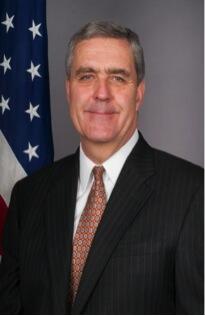
Douglas Lute, Ambassador of the United States to NATO


In August 2013, Douglas E. Lute was sworn-in as the Ambassador of the United States to the North Atlantic Treaty Organization (NATO).  From 2007 to 2013, Lute served at the White House under Presidents Bush and Obama, first as the Assistant to the President and Deputy National Security Advisor for Iraq and Afghanistan, and more recently as the Deputy Assistant to the President focusing on Afghanistan, Pakistan and India.  In 2010, AMB Lute retired from the U.S. Army as a Lieutenant General after 35 years on active duty.  Prior to the White House, he served as the Director of Operations on the Joint Staff, overseeing U.S. military operations worldwide. He served multiple tours in NATO commands including duty in Germany during the Cold War and commanding U.S. forces in Kosovo.  He holds degrees from the United States Military Academy and Harvard University.

A light lunch will be provided.  Please plan to arrive by 11:30am to allow time to check in at the registration desk, pick up your lunch and be seated by 12:00 noon.

Co-sponsored by The Europe Center, the Freeman Spogli Institute for International Studies, the Center for International Security and Cooperation and the Center for Russian, East European and Eurasian Studies.


Douglas Lute United States Ambassador to NATO Speaker
Lectures
-

Abstract: Chevaline was the codename given to a highly-secret program begun in 1970 to improve the performance of the UK's force of Polaris submarine-launched ballistic missiles in order to give them the capability to overcome Soviet ABM defenses deployed around Moscow. After much technical difficulty, delays in project timescale and cost escalation the new system was finally introduced in 1982, but it had already attracted major criticism for the expenditure involved, claims of project mismanagement, the rationale that underpinned its development, and its concealment from proper parliamentary scrutiny. This lecture will explore the background to the program, why it ran into so many problems, and how it became one of the most controversial episodes in post-war British defense policy. An understanding of the problems confronted by the attempt to improve Polaris illuminates a number of key themes and issues that are of relevance to policymakers concerned with strategic weapons programs and project management.

About the Speaker: Matthew Jones’ current research focuses on British nuclear history during the Cold War. He has also written on many different aspects of US and British foreign and defense policy in the 20th century, and has a long-standing interest in empire and decolonization in South East Asia. Jones’ first book, Britain, the United States and the Mediterranean War, 1942-44 (Macmillan, 1996), examined strains in the Anglo-American relationship by strategic issues and command problems in the Mediterranean theater. His book, Conflict and Confrontation in South East Asia, 1961-1965: Britain, the United States, Indonesia, and the Creation of Malaysia (Cambridge University Press, 2002), looks at the federation of Malaysia during British decolonization in the early 1960s. After Hiroshima: The United States, Race, and Nuclear Weapons in Asia, 1945-1965 (Cambridge University Press, 2010) addresses US nuclear policies in Asia in the period of the Korean War, confrontation with China, and early engagement in Vietnam. His current project on UK nuclear policy encompasses the development of nuclear strategy within NATO, the Anglo-American nuclear relationship, and European responses to strategic arms control. In 2008, Jones was appointed by the Prime Minister to become the Cabinet Office official historian of the UK strategic nuclear deterrent and the Chevaline program, a commission that will lead to the publication of a two-volume official history exploring British nuclear policy between 1945 and 1982. Jones’s journal articles have appeared in Diplomatic History, Historical Journal, Journal of Cold War Studies, and English Historical Review. He gained his DPhil in Modern History at St. Antony’s College, Oxford, in 1992.

Encina Hall (2nd floor)

Matthew Jones Professor of International History Speaker London School of Economics and Political Science
Seminars
Subscribe to Russia