Authors
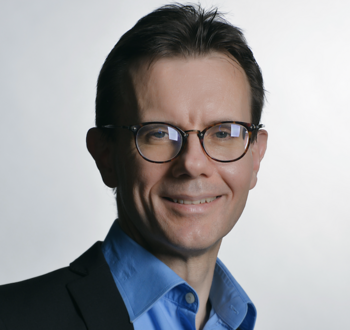
David Relman
News Type
News
Date
Paragraphs

On 9 December, 1979, health officials declared smallpox as the first and only human disease to be eradicated in what is considered the greatest achievement of modern medicine. Four decades on, the U.S. and Russia still maintain samples of the potentially deadly virus, and the debate on whether they should be kept or destroyed rages on....To this day, only two remaining stocks of the variola virus are known to exist. They are kept under high-security conditions at a U.S. Centers for Disease Control and Prevention laboratory in Atlanta, and at Russia's State Research Centre of Virology and Biotechnology (Vector) in the Siberian city of Novosibirsk. Everything known about their location is in the public domain— except for the exact rooms and freezers where the samples are kept, David Relman, professor of microbiology and immunology at Stanford University, told Newsweek.


Read the Rest at Newsweek

Hero Image
screen shot 2019 12 18 at 8 23 05 am
All News button
1
-

Seminar Recording: https://youtu.be/i-Oaa0yiSjA


About this Event: In the last 50 years, the United States and Soviet Union/Russia have pursued arms control negotiations and signed numerous treaties in an effort to restrain and reduce the number and capabilities of their nuclear weapons. However, the recent collapse of the 1987 Intermediate-range Nuclear Forces (INF) Treaty and the possible expiration of the 2010 New Strategic Arms Reduction Treaty (New START) in 2021 may signal the end to treaty-based limits. This raises questions about the future form and content of bilateral nuclear arms control. While near-term questions focus on whether the United States and Russia can salvage the benefits of these two treaties and, possibly, expand them to include more types of weapons and additional countries, longer-term questions are less specific. Does the past bilateral arms control process represent more than just an effort to negotiate legally binding treaties that limit or reduce nuclear weapons? Can the United States and Russia pursue agreements and cooperate in reducing weapons if they cannot conclude the process by signing formal agreements? Can they maintain stability, exhibit restraint, and reduce the risk of war if the era of arms control treaties has ended? Can this new era of arms control expand to address concerns about new types of weapons and the risks posed by a greater number of countries?


Speaker's Biography: Amy F. Woolf is a Specialist in Nuclear Weapons Policy in the Foreign Affairs, Defense, and Trade Division of the Congressional Research Service at the Library of Congress.  She provides Congress with information and expert analysis on issues related to U.S. and Russian nuclear forces and arms control. She has authored many studies on these issues and has spoken often, outside Capitol Hill, about Congressional views on arms control and U.S. nuclear weapons policy. Ms. Woolf received a Masters in Public Policy from the Kennedy School of Government at Harvard University and a BA in Political Science from Stanford University.

Amy Woolf Library of Congress
Seminars
-

Seminar Recording: https://youtu.be/HFZJj01vC3U


Abstract: By most accounts, the most important political space in the world's largest country is the four inches between Vladimir Putin’s ears. In a new book, Graeme Robertson and Sam Greene challenge the idea that Putin has shaped Russia in his own image, arguing instead that it his power flows from a particular relationship he has developed with his citizens -- and that his citizens have developed with one another. The result is a view of Russian politics as something much more fluid and fragile than we generally understand, a shifting landscape in which Putin's power -- and that of whoever succeeds him -- is continually negotiated and renegotiated between the Kremlin and the public, even in the confines of an increasingly authoritarian state. In this discussion, Greene and Robertson explore the social and political imperatives, challenges and dilemmas Putin and Russia face as he rounds out his fourth term and wonders about a fifth.


Speakers' Biography:


Sam Greene is reader in Russian politics and Director of the Russia Institute at King's College London. His research focuses on the relationships between citizens and the state in Russia, and in societies experiencing social, economic and political transformation more broadly. His first book, Moscow in Movement: Power and Opposition in Putin's Russia, was published by Stanford University Press in 2014. More recently, he is co-author with Graeme Robertson of Putin v the People: The Perilous Politics of a Divided Russia, published by Yale University Press in 2019. He also serves as Associate Fellow in the Russian and Eurasian Programme of the International Institute for Security Studies and a Visiting Professor at the UK Defence Academy.


Graeme Robertson is a Professor of Political Science at the University of North Carolina at Chapel Hill and Director of the Center for Slavic, Eurasian and East European Studies. His work focuses on political protest and regime support in authoritarian regimes.

Graeme’s new book (with Samuel A. Greene) is Putin v. The People, published by Yale University Press in June 2019. The book presents a fresh new look at the social bases of support for and opposition to authoritarian rule in Russia. Graeme is also the author of Revolution and Reform in Ukraine, published by PONARS Eurasia (with Silviya Nitsova and Grigore Pop-Eleches) and The Politics of Protest in Hybrid Regimes: Managing Dissent in Post-Communist Russia, published by Cambridge University Press. He has published articles in many academic journals including the American Political Science Review, the American Journal of Political Science, The Journal of Politics and the British Journal of Political Science, as well as contributing regularly to the media on Russia and Ukraine. Graeme currently serves as the Associate Editor for Comparative Politics for the American Journal of Political Science.

Sam Greene King's College London
Graeme Robertson University of North Carolina
Seminars
-

Seminar Recording: https://youtu.be/5c8Un2Y9-sw


Abstract: Over the last fifteen years, the Russian government has invested significantly in improving Russia’s education and health care systems and in reversing the health and demographic catastrophes of the 1990s. This discussion will assess the extent to which those investments have paid off and the continued challenges Putin faces in aligning Russia’s human capital resources with his political, economic, and foreign policy ambitions. It will also examine the ways that health and social policy have been used as political tools – not always successfully – by the Putin regime.


Speaker Biography: Judy Twigg is a professor of political science at Virginia Commonwealth University; senior associate (non-resident) with the Center for Strategic and International Studies; consultant for the evaluation units of the World Bank and the Inter-American Development Bank; and adjunct professor at the Walsh School of Foreign Service, Georgetown University. Twigg’s work focuses on issues of health, human capital, and health systems reform in Eurasia, as well as evaluations of human development and public sector management assistance projects globally. She has been a consultant for John Snow, Inc., UNICEF, USAID, the Eurasia Foundation, and the Social Science Research Council. Twigg was a 2005 recipient of the State Council on Higher Education in Virginia Outstanding Faculty Award. She holds a B.S. in physics from Carnegie Mellon University, an M.A. in political science and Soviet studies from the University of Pittsburgh, and a Ph.D. in political science and security studies from MIT.


Judy Twigg Professor of Political Science Virginia Commonwealth University
Seminars
Authors
Norman M. Naimark
News Type
News
Date
Paragraphs

The Financial Times named Norman Naimark's latest book, Stalin and the Fate of Europe: The Postwar Struggle for Sovereignty, one of the best history books in 2019. The Financial Times writes "Naimark has few peers as a scholar of Stalinism, the Soviet Union and mid-20th-century Europe. Here he selects seven case studies, from Denmark and Finland to Austria and Albania, to illustrate the complexity of Stalin’s objectives after the second world war as European leaders on both sides of the emerging Iron Curtain strove to reclaim national sovereignty."


Read the rest at Financial Times

Hero Image
512hbpwjkgl  sx329 bo1204203200
All News button
1
-

Seminar Recording: https://youtu.be/q5g6fuAVG2w


About this Event: For over a decade, Russian officials have a championed a model of economic growth that draws inspiration from East Asian developmental states. The state’s role in economic decision making has been accentuated, setting in motion ambitious industrial and stimulus policies, import substitution, and as international sanctions have mounted, fierce protectionism. This memo explains how this shift in doctrine has contributed to economic stagnation and falling consumer welfare. Weak institutions have enabled a bureaucratic system that privileges loyalty over merit and consequently unproductive, corruption-riddled spending. Politically motivated concerns about keeping wealth and power concentrated among a small group of elites threaten to generate widespread discontent over economic exclusion. 

This event is co-sponsored with the European Security Initiative


Speaker's Biography: David Szakonyi is an Assistant Professor of Political Science at George Washington University, an Academy Scholar at Harvard University, and a Research Fellow at Higher School of Economics in Moscow, Russia. His research looks at political economy and corruption, with projects underway in Russia and the United States. His book Politics for Profit: Business, Elections, and Policymaking in Russia is forthcoming at Cambridge University Press, with other work published in the American Political Science Review, World Politics, and Journal of Politics, as well as popular publications such as Foreign Affairs, the Washington Post, and Newsweek. He received his PhD in political science from Columbia University and his BA from the University of Virginia


David Szakonyi George Washington University
Seminars
Authors
Steven Pifer
News Type
Commentary
Date
Paragraphs

Brookings Editor's Note: This piece is part of a series remembering the life, career, and legacy of Helmut (Hal) Sonnenfeldt — a member of the National Security Council, counselor at the Department of State, scholar at the Johns Hopkins School of Advanced International Studies (SAIS), and Brookings expert.


Serving as a senior member on the National Security Council at the Nixon White House from 1969-1974, Hal Sonnenfeldt was Henry Kissinger’s primary advisor on the Soviet Union and Europe. After Sonnenfeldt’s passing, Kissinger told the New York Times that Sonnenfeldt was “my closest associate” on U.S.-Soviet relations and “at my right hand on all the negotiations that I conducted with the Soviets,” including on arms control. THIRD PARAGRAPH Sonnenfeldt brought a practical approach to U.S.-Soviet relations, realistic about the Soviet Union — its strengths, its weaknesses, and the challenges it presented to the West — and creative in trying to address those challenges. He was likewise realistic about the contribution that arms control could make to a safer and more stable bilateral relationship. As he noted in a 1978 article for Foreign Affairs, military and arms control issues were a fundamental part of the relationship, but “the problem [of dealing with Soviet power] does not end or begin with military measures alone.” Other factors — political, economic, ideological, and even cultural — mattered.


Read the Rest on Brookings

Hero Image
gettyimages 632782096
CISAC fellow Anna Péczeli suggests that the Trump Administration conduct a broad Nuclear Posture Review that includes the State Department, which in the last such review in 2009 emphasized a number of policies that supported non-proliferation objectives and strengthened U.S. negotiating positions at global arms control forums.
Getty Images/Win McNamee
All News button
1
Authors
Steven Pifer
News Type
Commentary
Date
Paragraphs

The Intermediate-Range Nuclear Forces (INF) Treaty came to an end in August. The United States and Russia no longer are barred from developing and deploying land-based, intermediate-range missiles, and the Pentagon apparently aims to deploy such missiles in Europe and Asia.

The INF Treaty, signed in 1987 by Ronald Reagan and Mikhail Gorbachev, prohibited the United States and Soviet Union (later Russia) from testing or possessing land-based ballistic or cruise missiles with ranges between five hundred and fifty-five hundred kilometers. Unfortunately, Russia violated the treaty by testing and deploying the 9M729, a prohibited land-based, intermediate-range cruise missile.


Read the Rest at The National Interest.

Hero Image
rtr1ixkv 2
All News button
1
-

Click here to RSVP


Livestream: This event will not be live-streamed or recorded.


Abstract: The West’s sanctions regime on Russia is unprecedented. Russia is the largest economy ever to be subject to major sanctions. And for the first time, the West is now the major constraint on Russia’s participation in the global economy. This experience is driving adaptation and innovation in both Russian public policy and Western sanctions practice.

What do Russian sanctions reveal about both Russia and sanctions? What count as good and bad tests of sanctions’ efficacy? What implications do sanctions hold for Russia’s domestic evolution and its relationship with the West?


Speaker's Biography:

Image
headshot colour 04 19
Nigel Gould-Davies is an Associate Fellow at the Royal Institute of International Affairs (Chatham House). He teaches at Mahidol University International College in Thailand.

Nigel taught at Oxford University before joining the British Foreign Office, where his roles included Ambassador to Belarus. From 2010-14 he was Vice President, Policy and Corporate Affairs for BG Group in Asia.

He is the author of Tectonic Politics: Global Political Risk in an Age of Transformation (Brookings Institution, 2019). He received his B.A. and M.Phil. from Oxford and his Ph.D. from Harvard.


Nigel Gould-Davies Associate Fellow at the Royal Institute of International Affairs Chatham House
Seminars
-

Livestream: This event will not be live-streamed or recorded.


Abstract: This study brings together social identity theory and the literature on ontological security in international relations to highlight the role of leadership processes for group formation and authoritarian legitimation. Together, these theories allow for exploring the conditions that increase the potency of identity-based politics and the specific ways political entrepreneurs can mobilize this political tool. Ontological insecurity, as I argue and show, is a condition that political entrepreneurs use and manipulate to gain political support and legitimate their rule. I illustrate this argument by looking into ‘late Putinism’ as an example of collective identity-driven politics. This study relies on an original nationwide survey experiment conducted in November 2017 in Russia to demonstrate the extent of the Russian society’s vulnerability and receptivity to insecure identity narratives. The data also allows us to start a discussion on the potential factors responsible for societal differentiation on this issue.


Speaker's Biography:

Gulnaz Sharafutdinova Gulnaz Sharafutdinova
Gulnaz Sharafutdinova, a Reader in Russian Politics at King’s College London, is the author of Political Consequences of Crony Capitalism Inside Russia (University of Notre Dame Press, 2011) and the forthcoming monograph Through The Looking Glass: Putin’s Leadership and Russia’s Insecure Identity (Oxford University Press, 2020)Gulnaz has written numerous articles on Russian regional political economy, state-business relations, and corruption in Russia. She has published an edited volume, Soviet Society in the Era of Late Socialism, 1964-1985 (2012) and has been working on bringing social psychological approaches to understanding collective identity issues and the nature of Putinism in Russia.


Gulnaz Sharafutdinova Reader in Russian Politics King’s College London
Seminars
Subscribe to Russia