Authors
News Type
News
Date
Paragraphs

Rodney Ewing, senior CISAC fellow and Frank Stanton professor in nuclear security, has been honored with three prestigious awards in the geological and mineralogical sciences.

Ewing will receive two medals at the Geological Society of America’s next annual meeting in Baltimore at the end of this month: the Ian Campbell Medal for Superlative Service to the Geosciences from the American Institute of Geosciences, and the Roebling Medal of the Mineralogical Society of America for scientific eminence.

He is being recognized for his groundbreaking research on nuclear materials and his contributions to nuclear waste management.

“Rod Ewing is a modern mineral scientist at the top of his field who has excelled in both science and service,” according to the citation for the Campbell Medal.

“Dr. Ewing has made seminal contributions to our knowledge of radiation damage in minerals and the design of waste forms for high-level nuclear waste. And he continues to have a major impact on the policies underlying nuclear waste management in the United States.”

The international impact of professor Ewing’s research into nuclear waste storage is also being recognized with the IMA Medal of Excellence in Mineralogical Sciences from the International Mineralogical Association, which will be awarded at a meeting in Rimini, Italy next September.

Hero Image
rod ewing cisac headshot
Rodney Ewing, Frank Stanton professor in nuclear security at Stanford's Center for International Security and Cooperation.
Rod Searcey
All News button
1
0
Affiliate
clark_rsd15_078_0514a.jpg PhD

David L. Clark is a retired Los Alamos National Laboratory (LANL) Fellow and Guest Scientist with the Laboratory’s Glenn T. Seaborg Institute for Actinide Science.  He was LANL’s Director of the National Security Education Center from 2013-2025.

His research interests are in the molecular and electronic structure of actinide materials, applications of synchrotron radiation to nuclear security, behavior of actinide and fission products in the environment, the aging effects in nuclear weapons materials, and the education of judges on the methods of science.  He is an international authority on the chemistry and physics of the actinides, and has published nearly 200 peer-reviewed publications, encyclopedia and book chapters. He is the co-Editor of the six volume Plutonium Handbook, portions of which were written while a CISAC Visiting Scholar in 2015.

Clark served as inaugural Director of the Los Alamos Glenn T. Seaborg Institute for Transactinium Science between 1997-2009. He has served the DOE as a technical advisor for environmental stewardship including the Rocky Flats cleanup and closure (1995-2005), closure of High-Level Waste tanks at the Savannah River Site (2011), and as a technical advisor to the DOE High Level Waste Corporate Board (2009-2011). He is a Fellow of the American Association for the Advancement of Science, and a Los Alamos Laboratory Fellow.  He is the recipient of two ACS national awards - the Nobel Laureate Signature Award (1988) and the Glenn Seaborg Award in Nuclear Chemistry (2017). He has also been honored with several Defense Programs Awards of Excellence.

He received a B.S. in chemistry in 1982 from the University of Washington, and a Ph.D. in 1986 from Indiana University. Clark was a postdoctoral fellow at the University of Oxford before joining Los Alamos National Laboratory as a J. Robert Oppenheimer Fellow in 1988. 

Laboratory Fellow Director, National Security Education Center Los Alamos National Laboratory
Date Label
Paragraphs

Nuclear weapons are so central to the history of the Cold War that it can be difficult to disentangle the two. Did nuclear weapons cause the Cold War? Did they contribute to its escalation? Did they help to keep the Cold War “cold”? We should also ask how the Cold War shaped the development of atomic energy. Was the nuclear-arms race a product of Cold War tension rather than its cause?

The atomic bomb and the origins of the Cold War:

The nuclear age began before the Cold War. During World War II, three countries decided to build the atomic bomb: Britain, the United States, and the Soviet Union. Britain put its own work aside and joined the Manhattan Project as a junior partner in 1943. The Soviet effort was small before August 1945. The British and American projects were driven by the fear of a German atomic bomb, but Germany decided in 1942 not to make a serious effort to build the bomb. In an extraordinary display of scientific and industrial might, the United States made two bombs ready for use by August 1945. Germany was defeated by then, but President Harry S. Truman decided to use the bomb against Japan.

The decision to use the atomic bomb has been a matter of intense controversy. Did Truman decide to bomb Hiroshima and Nagasaki in order, as he claimed, to end the war with Japan without further loss of American lives? Or did he drop the bombs in order to intimidate the Soviet Union, without really needing them to bring the war to an end? His primary purpose was surely to force Japan to surrender, but he also believed that the bomb would help him in his dealings with Iosif V. Stalin. That latter consideration was secondary, but it confirmed his decision. Whatever Truman’s motives, Stalin regarded the use of the bomb as an anti-Soviet move, designed to deprive the Soviet Union of strategic gains in the Far East and more generally to give the United States the upper hand in defining the postwar settlement. On August 20, 1945, two weeks to the day after Hiroshima, Stalin signed a decree setting up a Special Committee on the Atomic Bomb, under the chairmanship of Lavrentii P. Beriia. The Soviet project was now a crash program.

All Publications button
1
Publication Type
Books
Publication Date
Journal Publisher
Cambridge University Press
Authors
David Holloway
Authors
News Type
News
Date
Paragraphs

Today’s landmark deal between six world powers and Iran, which would limit Iran’s nuclear program in exchange for lifting economic sanctions, was an important step toward stopping Iran from building a nuclear bomb.

However, the key challenge for the international community will be making sure Iran keeps its part of the bargain, according to Stanford experts.

“Both sides have made a series of compromises that will help Iran’s economy in exchange for constraining its nuclear capabilities – and that’s a deal worth making, in my view,” said Scott Sagan, the Caroline S.G. Munro professor of political science and senior fellow at the Center for International Security and Cooperation.

“Iran will still have a technical capability to develop nuclear weapons, given the technology and materials that they have, but under this deal it will both take them a much longer period of time and would require them to take actions that would be easily discerned by the International Atomic Energy Agency, so it constrains their break-out capabilities in important ways.”

[[{"fid":"219719","view_mode":"crop_870xauto","fields":{"format":"crop_870xauto","field_file_image_description[und][0][value]":"","field_file_image_alt_text[und][0][value]":"","field_file_image_title_text[und][0][value]":"Final plenary session at the United Nations Office in Vienna, Austria. Photo credit: U.S. State Department","field_credit[und][0][value]":"","field_caption[und][0][value]":"","field_related_image_aspect[und][0][value]":"","thumbnails":"crop_870xauto","pp_lightbox":false,"pp_description":false},"type":"media","attributes":{"title":"Final plenary session at the United Nations Office in Vienna, Austria. Photo credit: U.S. State Department","width":"870","style":"width: 400px; height: 266px; float: right; margin-left: 15px","class":"media-element file-crop-870xauto"}}]]The U.S.-led negotiations also included fellow United Nations Security Council members Britain, China, France, and Russia, as well as Germany – a group known collectively as as the "P5+1."

Sig Hecker, former Los Alamos National Laboratory director and senior fellow at Stanford’s Center for International Security and Cooperation, said the nuclear deal was “hard-won and is better than any other reasonably achievable alternative.”

“Iran agreed to considerably greater restrictions on its program than what I thought was possible before the Joint Plan of Action was signed in November 2013,” said Hecker.

Abbas Milani, director of Iranian studies at Stanford and an affiliate at the Center for Democracy Development and the Rule of Law, called it the “least bad deal” for both Iran and the international community.

“Nobody gets everything they want,” Milani said. “Every side gets some of what they want.”

Under the deal, Iran would be allowed to continue to enrich uranium for peaceful purposes in its energy and health industries.

But it would have to reduce the number of its centrifuges from 19,000 to 6,000, and cut its stockpile of low enriched uranium down from more than 20 thousand pounds to about 660 pounds.

“Reducing that stockpile actually lengthens the breakout time more than any other measure,” said Hecker.

These limits were designed to increase the “breakout time” it would take for Iran to produce enough fissile material to make a nuclear weapon from the current two to three months, to one year over a period of the next 10 years.

The agreement still faces a series of political hurdles before it gets implemented, and will face tough scrutiny from a Republican-controlled U.S. Congress, as well as the parliaments of European countries that were parties to the talks.

“I think it’s going to be hard for the U.S. Congress and [European] parliaments to kill the deal and be perceived as the ones who would rather have a war than give diplomacy a chance,” said Thomas Fingar, distinguished fellow at the Freeman Spogli Institute for International Studies.

[[{"fid":"219720","view_mode":"crop_870xauto","fields":{"format":"crop_870xauto","field_file_image_description[und][0][value]":"","field_file_image_alt_text[und][0][value]":"","field_file_image_title_text[und][0][value]":"The Iranian delegation attend the final plenary session in Vienna, Austria. Photo credit: U.S. State Department","field_credit[und][0][value]":"","field_caption[und][0][value]":"","field_related_image_aspect[und][0][value]":"","thumbnails":"crop_870xauto","pp_lightbox":false,"pp_description":false},"type":"media","attributes":{"title":"The Iranian delegation attend the final plenary session in Vienna, Austria. Photo credit: U.S. State Department","width":"870","style":"width: 400px; height: 268px; float: right; margin-left: 15px","class":"media-element file-crop-870xauto"}}]]If the deal survives the inevitable political challenges, inspectors from the International Atomic Energy Agency will be responsible for confirming that Iran is living up to its obligations.

“The key is going to be the effectiveness of the verification procedures and IAEA access,” Fingar said.

“There’s an element of trust, but a far more important part is the rigorous verification protocols.”

As soon as the IAEA confirms that Iran is abiding by the terms of the agreement, economic sanctions can be lifted.

Sagan warned that the international community should not be surprised if Iran pushed the limits of the agreement, and should be ready to reimpose economic sanctions if Iran violated the deal.

“We should anticipate that Iranian opponents to the agreement will try to stretch it and do things that are potential violations and that we have to call them on that, and not treat every problem that we see as unexpected,” said Sagan.

“We should anticipate such problems and be ready, if necessary, to reimpose sanctions. Having the ability to reimpose sanctions is the best way to deter the Iranians from engaging in such violations.”

But Hecker said the international community should focus on incentivizing Iran.

“The best hope is to make the civilian nuclear path so appealing – and then successful – that Tehran will not want to risk the political and economic consequences of that success by pursuing the bomb option,” he said.

Image
19067549804 85591212aa o
The negotiations were a diplomatic balancing act, with serious consequences for both sides of the negotiations if they failed to reach an agreement.

Iran faced the threat of military action if it continued to press forward with its nuclear program.

While Russia and China had both signaled that they were likely to abandon the sanctions regime if talks fell apart.

One of the key challenges to reaching an agreement was “finding a language that would allow both parties to declare victory”, according to Milani.

“Iran has clearly made some very substantive concessions, but Iran has also been allowed to keep enough of its infrastructure so that it can declare at least partial victory for the domestic political audience."

Now the scramble is on in Tehran to claim credit for the deal.

Reformists, led by current Iranian President Hassan Rouhani and former president Akbar Hashemi Rafsanjani, hope it will strengthen their hand as they head into the next election.

On the other side of the political spectrum, conservatives believe it could give them the edge in the battle to succeed Ayatollah Ali Khamenei as Iran’s Supreme Leader.

“They understand that whoever gets the credit for this will be in a much better position to determine the future leadership and future direction of Iran’s foreign policy,” said Milani.

It’s too early to tell what impact the agreement might have on Iran’s foreign policy, which is often at odds with U.S. interests in hot spots like Iraq, Syria, Yemen and Afghanistan. But Sagan said today’s deal was an important step in making sure that future conflicts with Iran don’t go nuclear.

“Hopefully those disagreements will be played out without the shadow of nuclear weapons hanging over the future, and that’s a good thing.”

Hero Image
19663913956 8ed26a22fe o
U.S. Secretary of State John Kerry speaks with Hossein Fereydoun, the brother of Iranian President Hassan Rouhani, and Iranian Foreign Minister Javad Zarif before announcing a historic nuclear agreement to reporters in Vienna, Austria.
U.S. State Department
All News button
1
Paragraphs

This paper examines UK national (security and nuclear) interests in relation to Trident and the recent putative shift in conceptions of UK national interests from a discourse of ‘security’ to one of ‘resilience’. We discuss the rise of resilience in the discourse of UK national interests and reflect upon its possible articulations with the concept and goal of security, in order to make sense of what a shift from security to resilience would entail. We then assess the practices of UK nuclear weapons policy, and Trident in particular, in relation to the requirements with which a resilient nuclear weapons policy would need to comply. We conclude that the perceived requirements of deterrence as a communicative practice in large part explain missed opportunities to acknowledge the risk of a nuclear accident and the possibility of a consistent shift towards resilience as a national priority. Purchase the book here.

All Publications button
1
Publication Type
Books
Publication Date
Journal Publisher
British Foreign Policy and the National Interest
Authors
Benoît Pelopidas
-

At the NATO Summit in Wales in September 2014, NATO leaders were clear about the security challenges on the Alliance’s borders. In the East, Russia’s actions threaten our vision of a Europe that is whole, free and at peace.  On the Alliance’s southeastern border, ISIL’s campaign of terror poses a threat to the stability of the Middle East and beyond.  To the south, across the Mediterranean, Libya is becoming increasingly unstable. As the Alliance continues to confront theses current and emerging threats, one thing is clear as we prepare for the 2016 Summit in Warsaw: NATO will adapt, just as it has throughout its 65-year history.

Image
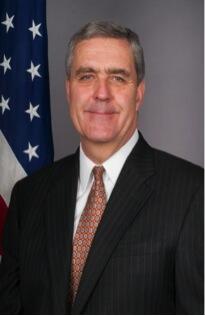
Douglas Lute, Ambassador of the United States to NATO


In August 2013, Douglas E. Lute was sworn-in as the Ambassador of the United States to the North Atlantic Treaty Organization (NATO).  From 2007 to 2013, Lute served at the White House under Presidents Bush and Obama, first as the Assistant to the President and Deputy National Security Advisor for Iraq and Afghanistan, and more recently as the Deputy Assistant to the President focusing on Afghanistan, Pakistan and India.  In 2010, AMB Lute retired from the U.S. Army as a Lieutenant General after 35 years on active duty.  Prior to the White House, he served as the Director of Operations on the Joint Staff, overseeing U.S. military operations worldwide. He served multiple tours in NATO commands including duty in Germany during the Cold War and commanding U.S. forces in Kosovo.  He holds degrees from the United States Military Academy and Harvard University.

A light lunch will be provided.  Please plan to arrive by 11:30am to allow time to check in at the registration desk, pick up your lunch and be seated by 12:00 noon.

Co-sponsored by The Europe Center, the Freeman Spogli Institute for International Studies, the Center for International Security and Cooperation and the Center for Russian, East European and Eurasian Studies.


Douglas Lute United States Ambassador to NATO Speaker
Lectures
-

Is Europe "elderly and haggard", and could France become "the crucible of  Europe" (Jan. 10, 2015 NYTimes op-ed)?

On the one hand, Europe is warned by the US about an Asian "pivot", and is perceived here as less relevant and effective. Significantly, certainly as a wake up call, Pope Francis recently compared Europe to  a "grandmother, no longer fertile and vibrant, increasingly a bystander in a world that has apparently become less and less Eurocentric”. France had been previously presented here as an eminent representative of an "Old Europe".

On the other hand,  the US has been constantly, during the last decade, advocating for a stronger Europe  and stressing a special French role in this endeavour. A few days ago, after the terrorist attacks in Paris, President Obama publicly stated that "France was the US oldest Ally". 

At a time when we have to face common challenges in the Middle East and in Africa, to adapt to new emerged actors and a more assertive Russia, to deal with direct threats including in the field of proliferation and the cyber space, to define a multipolar world and organize our economic relation (TTIP), what can be the EU contribution? What can also be a special intellectual and diplomatic French input to this global realignment?

Co-sponsored by The Europe Center, the Center for International Security and Cooperation and the France-Stanford Center.

Image
Ambassador Eric Lebédel of France


Ambassador Eric Lebédel is a French diplomat, former ambassador to the OSCE and to Finland, with a deep experience in Transatlantic relationship (twice as Minister's advisor;  in the French embassy in Washington DC) and in European affairs. He is also involved in crisis management (PMs office), international security (embassy in Moscow, consul general in Istanbul) and multilateral diplomacy ( NATO's Director for crisis management, OSCE). Presently working on Strategic Partnerships for the French MFA and interested in e.diplomacy, he also regularly lectures  at Sciences-po and ENA (Ecole Nationale d'Administration) on crisis management and Europe.


Ambassador Eric Lebédel French Diplomat Speaker
Seminars
Subscribe to Europe