0
painter.jpg

Christopher Painter is a globally recognized leader on cyber policy, cyber diplomacy, cybersecurity and combatting cybercrime. He has been at the vanguard of cyber issues for over 30 years, first as a federal prosecutor handling some of the most high-profile cyber cases in the U.S., then as a senior official at the U.S. Department of Justice, the FBI, the White House National Security Council and, finally, as the world’s first cyber diplomat at the U.S. Department of State. Among many other things, Chris is a founder of The Cyber Policy Group, has served as the President of the Global Forum on Cyber Expertise Foundation, serves on the board of the Center for Internet Security and the Public Sector Advisory Board for Palo Alto Networks and was a commissioner on the Global Commission for the Stability of Cyberspace. He is a frequent speaker on cyber issues, frequently is interviewed and quoted in the media and has testified on numerous occasions to U.S. Congressional committees. He has received a number of awards and honors including Japan’s Order of the Rising Sun, Estonia's Order of Terra Mariana, RSA Security Conference's Public Policy Award, the Attorney General’s Award for Exceptional Service and was named the Bartles World Affairs Fellow at Cornell University. He received his B.A. from Cornell University and J.D. from Stanford Law School.

Affiliate
Date Label
Authors
News Type
News
Date
Paragraphs


The two-day forum, part of a project of the American Academy of Arts and Sciences, led by the Freeman Spogli Institute’s Karl Eikenberry and Stephen Krasner, gathered experts to examine trends in civil wars and solutions moving forward.   


Image
Attendees at a two-day forum, part of a project of the American Academy of Arts and Sciences

The Council on Foreign Relations presently tracks six countries in a state of civil war, including three (South Sudan, Afghanistan, and Yemen) where the situation is currently worsening. Furthermore, three states (Central African Republic, Myanmar, and Nigeria) are experiencing sectarian violence with the potential to become larger conflicts. With two months still remaining in 2018, the combined fatalities in Afghanistan, Syria, and Yemen alone is fast approaching 100,000 for the year.

It was against this backdrop that Shorenstein APARC’s U.S.-Asia Security Initiative (USASI), the American Academy of Arts and Sciences (AAAS), and the School for International Studies at Peking University recently co-hosted the security workshop “Civil Wars, Intrastate Violence, and International Responses.” Held in Beijing, on October 22-23, the workshop brought together thirty-five U.S. and international experts to gain a wider perspective on intrastate violence and consider the possibilities for, and limits of, intervention. The workshop is the latest activity of the AAAS project on Civil Wars, Violence, and International Responses, chaired by Ambassador Karl Eikenberry, director of USASI, and by Stephen Krasner, senior fellow at the Freeman Spogli Institute for International Studies (FSI) and professor of international relations.

“Some of the major discussion topics included the appropriate political and economic development models to apply to fragile states recovering from internal conflict, justifications for intervention, and the likely impact of great power competition on the future treatment of civil wars." - Karl Eikenberry

Workshop participants included academics and professionals with expertise in political science, global health, diplomacy, refugee field work, United Nations, and the military. Countries represented at the table included the United States, Ethiopia, France, and China. Throughout the two-day session, they examined three crucial questions: What is the scope of intrastate conflicts and civil wars, and to what extent is it attributable to domestic or international factors? What types of threats to global security emanate from state civil wars? What policy options are available to regional powers and the international community to deal with such threats?


Image
USASI Director Karl Eikenberry addresses one of the sessions

USASI Director Karl Eikenberry addresses one of the sessions

China’s Emerging Role in Addressing Intrastate Violence

The workshop’s timing and location was prescient. Over the past two decades, China’s global exposure–through trade, investment, and financing–has increased dramatically. Coupled with a growing number of its citizens living abroad, China’s equity in other states has reached the point where it has a direct interest in those experiencing or are at risk of political instability and internal violence. Indeed, through its ambitious Belt and Road Initiative, China has the opportunity to help stabilize fragile states by stimulating economic development.

“The workshop revealed, at least for me, that China is backing away from its absolute defense of sovereignty and non-intervention,” said Stephen Krasner. “As Chinese interests have expanded around the world, and as both its investments and the number of its citizens living abroad have increased, the Chinese have become more concerned with political conditions in weakly governed countries.”

With China’s growing policy and academic interests in addressing civil wars and intrastate violence, as well as its higher international profile in places like United Nations peacekeeping operations, the Beijing event provided an excellent opportunity for Chinese experts to exchange views with their international colleagues.

Paul H. Wise, MD, MPH; Senior Fellow at Stanford Health Policy

Paul H. Wise, MD, MPH; Senior Fellow at Stanford Health Policy

Where We are Today, Where We Go Tomorrow

The Beijing workshop was arranged into four sessions, with themes focusing on trends in intrastate violence, the threats it poses to international security, the limits of intervention, and advice to policymakers.

Each panel included presentations of prepared papers, moderator comments, and an open discussion by all participants. A fifth and final session provided an opportunity to summarize the preceding discussions. The workshop then closed out with an open conversation, where participants offered insight and policy recommendations developed over the preceding two days of dialogue.

Image
Martha Crenshaw seated at round table
“The workshop,” observed Martha Crenshaw (shown above), a Senior Fellow at FSI, “was a unique opportunity to exchange views with Chinese colleagues on the subject of civil conflict in the contemporary world. A valuable learning experience for all of us."

The "Civil Wars, Intrastate Violence, and International Responses” workshop marks the second phase of the AAAS project by the same name that launched in 2015. The first phase of the project culminated in the publication of 28 essays across two volumes of the AAAS quarterly journal Dædalus. The ongoing second phase consists of a series of roundtables and workshops in which project participants engage with academics and with government and international organization officials to build a larger conceptual understanding of the threats posed by the collapse of state authority associated with civil wars, and to contribute to current policymaking. Project activities have included meetings with the United Nations leadership and staff; academic activities in the United States; sessions with the U.S. executive and legislative branches; and a visit to Nigeria.

Throughout the workshop, Chatham House Rule of non-attribution applied to all dialogue. A workshop report will be published by the co-hosts in early 2019.

The U.S.-Asia Security Initiative is part of Stanford University’s Walter H. Shorenstein Asia-Pacific Research Center (APARC). Led by former U.S. Ambassador and Lieutenant General (Retired) Karl Eikenberry, USASI seeks to further research, education, and policy relevant dialogues at Stanford University on contemporary Asia-Pacific security issues.

March 1, 2019 update: the workshop report is now available online. Download the report >> 
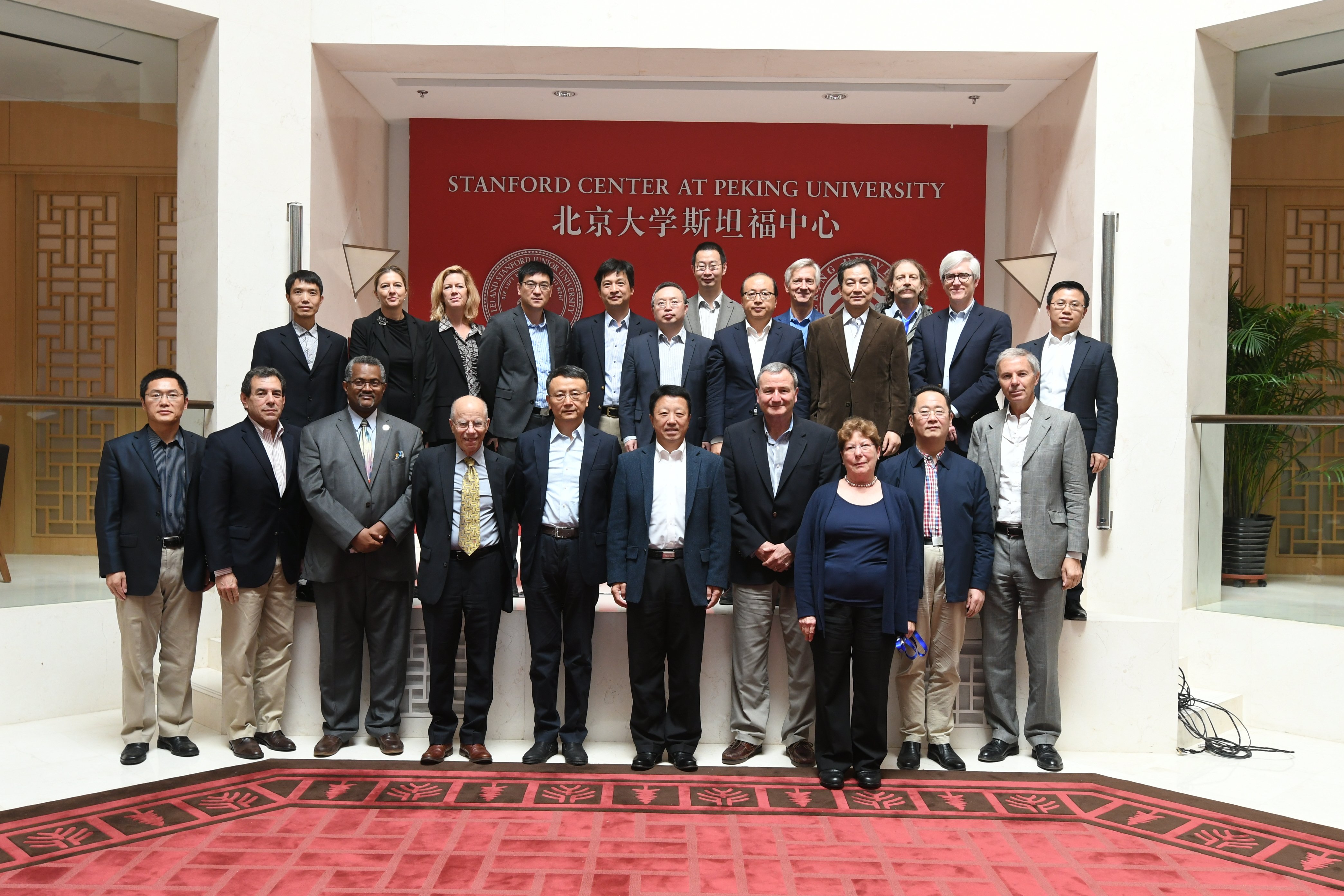
Group photo of Participants in the “Civil Wars, Intrastate Violence, and International Responses” workshop

Participants in the “Civil Wars, Intrastate Violence, and International Responses” workshop

Hero Image
Karl Eikeberry at Civil Wars, Intrastate Violence, and International Response Workshop
All News button
1
0
jeffrey_knopf.jpg

Jeff Knopf is a professor at the Middlebury Institute of International Studies (MIIS) in Monterey, California, where he serves as chair of the M.A. program in Nonproliferation and Terrorism Studies and a senior research associate with the Center for Nonproliferation Studies (CNS). While on sabbatical for the 2018-19 academic year he spent the year as a visiting scholar at CISAC. Dr. Knopf received his Ph.D. in Political Science from Stanford and was previously a pre-doctoral fellow at CISAC. His most recently completed project is a book volume he co-edited on Behavioral Economics and Nuclear Weapons. Dr. Knopf current research primarily involves a project titled “Coercing Syria on Chemical Weapons.” This project examines efforts by the United States and other countries to apply deterrent and compellent strategies in attempts to stop the Syrian government from using chemical weapons and to force it to dismantle its chemical arsenal.

Affiliate at the Center for International Security and Cooperation
CV
Date Label
0
chantell_murphy.jpg PhD

Chantell Murphy is a Program Manager and Technical Specialist at the Y-12 National Security Complex, where she works at the intersection of nuclear technology and nonproliferation. Her work examines the responsible integration of artificial intelligence into sensitive fields such as nuclear safeguards, with an emphasis on ethics, transparency, and governance. She has contributed to international discussions at the International Atomic Energy Agency (IAEA), influencing long-term objectives for the ethical adoption of AI in safeguards. In addition, Chantell founded Atomsphere, a community engagement lab designed to foster public dialogue on the societal impacts of emerging technologies.

Affiliate
Date Label
Authors
News Type
News
Date
Paragraphs

Colin H. Kahl will serve as co-director of the social sciences for Stanford’s Center for International Security and Cooperation (CISAC).

Kahl, a top international security expert and veteran White House advisor, is the Steven C. Házy Senior Fellow at Stanford’s Freeman Spogli Institute (FSI) for International Studies. He begins his new position on September 1, following Amy Zegart, the previous co-director for the social sciences. Rodney Ewing is the CISAC co-director for science and engineering.

Prior to Stanford, Kahl was an associate professor in the Security Studies Program at Georgetown University’s Edmund A. Walsh School of Foreign Service. From 2014 to 2017, he was deputy assistant to the U.S. president and national security advisor to the vice president. In that position, he served as a senior advisor to President Obama and Vice President Biden on all matters related to U.S. foreign policy and national security affairs, and represented the Office of the Vice President as a standing member of the National Security Council Deputies’ Committee.

Kahl’s research is focused on American grand strategy and a range of contemporary international security challenges, particularly digital and nuclear security, which are core CISAC research areas.  He also leads the Middle East Initiative at FSI. The Initiative seeks to improve understanding of how developments in the Middle East impact people in the region and security around the globe.

In the Winter Quarter, Kahl will teach a course, “Decision Making and U.S. Foreign Policy,” in the Ford Dorsey Master’s in International Policy program; he will also co-teach CISAC’s introductory class, “International Security in a Changing World.”

“For more than three decades, CISAC has been one of the nation’s premier centers for interdisciplinary research on international affairs,” Kahl said. “The Center has a long tradition of bringing together social scientists and hard scientists to conduct cutting edge, policy-relevant research on some of the most pressing security challenges we face,” Kahl said. “I look forward to working with Rod Ewing and my other CISAC colleagues to continue and expand upon this tradition of excellence.”

“Colin Kahl, who has both academic and extensive policy experience through his work in government and think tanks, will be a terrific co-director and asset to CISAC,” said Ewing.

“We are thrilled that Colin will be leading CISAC with Rod Ewing. Colin’s extensive experience in both theory and policy will enhance CISAC’s work in all areas,” said FSI Director and Senior Fellow Michael McFaul.

Kahl received his B.A. in political science from the University of Michigan (1993) and his Ph.D. in political science from Columbia University (2000).


MEDIA CONTACTS:

Colin H. Kahl, Center for International Security and Cooperation: ckahl@stanford.edu
Katy Gabel, Center for International Security and Cooperation: (650) 725-6488, kgabel@stanford.edu


Hero Image
colin kahl
All News button
1
0
erik_lin_greenberg_031_.jpeg

Erik Lin-Greenberg is an Associate Professor of Political Science at the Massachusetts Institute of Technology. Erik’s research examines how emerging military technology affects conflict dynamics and the use of force. His work has appeared or is forthcoming in academic and policy outlets including Journal of Politics, International Studies QuarterlyEuropean Journal of International RelationsJournal of Conflict Resolution, Security StudiesJournal of Peace ResearchForeign AffairsForeign Policy, and The Washington Post. Erik has held fellowships at Stanford University, the University of Pennsylvania, and Dartmouth College. He received the 2020 American Political Science Association Merze Tate Prize for best dissertation in international relations, law, and politics. Erik completed his PhD at Columbia University and an MS and BS at the Massachusetts Institute of Technology. Prior to graduate school, Erik was an active duty officer in the United States Air Force and he continues to serve as a member of the Air Force Reserve.

Affiliate
CV
Date Label
Authors
Amy Zegart
News Type
Q&As
Date
Paragraphs

In a world complicated by terrorism, cyber threats and political instability, the private sector has to prepare for the unexpected. Amy Zegart, CISAC co-director, the Hoover Institution’s Davies Family Senior Fellow, and co-author (along with Condoleezza Rice) of Political Risk: How Businesses And Organizations Can Anticipate Global Insecurity, explains lessons learned in keeping cargo planes moving, hotel guests protected – and possibly coffee customers better served.  

Hero Image
Radio mic
All News button
1
Paragraphs

From New York Times bestselling author and former U.S. secretary of state Condoleezza Rice and Stanford University professor Amy B. Zegart comes an examination of the rapidly evolving state of political risk, and how to navigate it.
The world is changing fast. Political risk-the probability that a political action could significantly impact a company's business-is affecting more businesses in more ways than ever before. A generation ago, political risk mostly involved a handful of industries dealing with governments in a few frontier markets. Today, political risk stems from a widening array of actors, including Twitter users, local officials, activists, terrorists, hackers, and more. The very institutions and laws that were supposed to reduce business uncertainty and risk are often having the opposite effect. In today's globalized world, there are no "safe" bets.


POLITICAL RISK investigates and analyzes this evolving landscape, what businesses can do to navigate it, and what all of us can learn about how to better understand and grapple with these rapidly changing global political dynamics. Drawing on lessons from the successes and failures of companies across multiple industries as well as examples from aircraft carrier operations, NASA missions, and other unusual places, POLITICAL RISK offers a first-of-its-kind framework that can be deployed in any organization, from startups to Fortune 500 companies.

Organizations that take a serious, systematic approach to political risk management are likely to be surprised less often and recover better. Companies that don't get these basics right are more likely to get blindsided.
All Publications button
1
Publication Type
Books
Publication Date
Authors
Amy Zegart
Authors
Eric Min
News Type
Blogs
Date
Paragraphs

On May 14 and 15, 2018, many of the CISAC fellows were lucky enough to visit the United States Strategic Command (USSTRATCOM) at Offutt Air Force Base near Omaha, Nebraska. USSTRATCOM oversees strategic deterrence on multiple fronts, including nuclear weapons, missile defense, and, until recently, cyber-attacks. This trip was only the latest iteration of a longstanding relationship between CISAC and USSTRATCOM to foster research and debate on deterrence, assurance, and nuclear security

Our visit involved several highlights. General John Hyten, Commander of USSTRATCOM, took time out of his schedule to speak with us during breakfast on the first day. We were briefed on the global mission and history of USSTRATCOM, strategic planning, laws of armed conflict, nuclear modernization, and cybersecurity. The fellows were also able to visit the Global Operations Center and Battle Deck, where many of USSTRATCOM’s most important day-to-day functions take place. Several CISAC fellows (including me) had the opportunity to brief both military and civilian members of USSTRATCOM on a range of issues spanning from nuclear terrorism to the proliferation of offensive cyber capabilities to the domestic politics of American citizens’ growing perception (now at a historic high) of national decline.

I walked away from the experience with three strong impressions.

First, USSTRATCOM is populated with thoughtful individuals who have deeply sober attitudes about the devastating impact of using nuclear weapons. Each person we met was committed to ensuring the nation’s security but emphasized how seriously they took the notion of nuclear conflict and how they all sought never to prevent conflicts from reaching that point.

Second, I was struck by how everyone at USSTRATCOM was open to discussing new or provocative ideas. During our breakfast, General Hyten called upon one of the fellows working on Russian nuclear doctrine. It was clear that he was aware of the fellow’s work and disputed its conclusion. The two conversed about their differing views for several minutes before agreeing to disagree. Another one of our fellow’s briefings focused on the origins of the recent United Nations treaty on the prohibition of nuclear weapons. Her talk drew some skepticism, but also many questions and generated a very civil discussion. USSTRATCOM invited us to speak, took our arguments seriously, and sought to understand any viewpoint that they felt could be valuable.

Third, and lastly, there is enormous need and potential to continue building connections between the military (or government more broadly) and the academic community. Visiting USSTRATCOM highlighted how scholars who study security may not fully grasp the realities behind how to effect and maintain it. This might lead to academic work that tends to be unrealistic or too reductive. Conversely, both military and civilian members of USSTRATCOM may be so engrossed in addressing specific problems that they sometimes miss the forest for the trees or overlook fallacies in their strategic logic. This could result in policies that have unintended and, given USSTRATCOM’s purview, severe consequences. Collaboration between these two worlds is perhaps the best tool we have for solving both problems simultaneously. The potential ramifications are too important not to do so.

Eric Min is a Zukerman Postdoctoral Fellow in Social Sciences at the Center for International Security and Cooperation at Stanford University, where he also obtained his Ph.D. in Political Science. His research focuses on the application of text analysis, machine learning, and statistical methods to analyze the dynamics of conflict and diplomacy. Starting in the fall of 2018, he will be an Assistant Professor in Political Science at the University of California, Los Angeles. He can also be found on Twitter

Hero Image
Eric Min Rod Searcey
All News button
1
Authors
Bradley L. Boyd
News Type
News
Date
Paragraphs

The U.S. Army invited scholars and researchers from Stanford University’s FSI to visit the National Training Center, Fort Irwin, California from 11-13 February 2018 to build relationships, share insight, and develop a shared understanding. National Training Center leaders familiarized Stanford participants with the Army’s training and learning philosophies and techniques. Stanford participants provided expert research and context on the Korean Peninsula, Eastern Europe, and emerging technology to National Training Center leaders.

 U.S. Army soldiers and Stanford scholars spent two full days together learning about how the Army prepares its Brigade Combat Teams for war as part of a Joint Force. The scholars and soldiers crossed the desert, ate together, and learned together while observing the 3rd Cavalry Regiment operate against the U.S. Army’s professional Opposing Force, the 11th Armored Cavalry Regiment. 

Stanford scholars provided Army leaders with strategic policy perspectives and research while the soldiers shared their experience, outlook, and vision. Senior Army leaders from the NTC, the 11th ACR, and 3rd CR shared insight about the nature of evolving threats, challenges to preparing for those threats, and ideas for turning theory into practice. Stanford scholars shared their research and perspective.


All News button
1
Subscribe to Sub-Saharan Africa