Nuclear policy
-

Seminar Recording: https://youtu.be/8JDHuY0HMCM


Abstract: The motivation to develop nuclear energy waned in the latter part of the twentieth century. Technologies such as very-high-temperature gas-cooled reactors and fast-neutron liquid-metal reactors had been pursued for the purpose of recycling used nuclear fuel from water-cooled reactors, or for the purpose of supplying high-temperature process heat to the chemical industry or for hydrogen production. While both worthwhile causes, one could argue that the important missing element of all of these advanced nuclear reactor technologies was a business case: how were nuclear power plants to be profitable? With the more widely recognized need for decarbonizing energy production, the new driver for developing nuclear energy became cost. Can nuclear power be economically competitive with natural gas and coal, in order to provide an economic driver for the displacement of fossil fuel? This became the new motivation for nuclear energy development in the twenty-first century, and over the last decade the unthinkable happened: a growing and striving ecosystem of nuclear energy start-up companies. Many of these start-up companies pursue the development of liquid-fuel molten salt reactors, fueled by thorium or uranium fuel. Other start-up companies develop solid-fuel reactors cooled by salt, or even fusion reactors cooled by salt. The common feature of nuclear reactors that utilize molten salt is the operation at high-temperature and atmospheric pressure. The high temperature leads to doubled power efficiencies, compared to conventional water-cooled reactors. The atmospheric pressure leads to a safety case that is arguably easier to demonstrate, and hence that would enable a faster commercialization time.  On the other hand, there remain many technical risks and time-line uncertainties for the development of salt nuclear technologies. There remain also questions of policy, licensing, and compatibility with local industry and local culture, necessary elements for the global development of such nuclear reactors. This talk will explore some of the challenges faced by the global deployment of molten-salt and salt-cooled reactors, and some of the challenges faced by nuclear start-up companies in order to change the innovation cycle for nuclear energy technology from thirty years to a much shorter time frame.


Speaker's Biography:

Image
screen shot 2019 10 03 at 1 23 12 pm
Raluca Scarlat is an assistant professor at UC Berkeley, in the Department of Nuclear Engineering. Raluca Scarlat’s research focuses on chemistry, electrochemistry and physical chemistry of high-temperature inorganic fluids and their application to energy systems. Her research includes safety analysis, licensing and design of nuclear reactors and engineering ethics, and she has extensive experience in design and  safety analysis of fluoride-salt-cooled high-temperature reactors (FHRs) and Molten Salt Reactors (MSRs). Professor Scarlat has a Ph.D. in Nuclear Engineering from UC Berkeley, a certificate in Management of Technology from the Hass School of Business, and a B.S. in Chemical and Biomolecular Engineering from Cornell University. Scarlat has published articles in Electrochemical Society Journal, Journal of Fluorine Chemistry, Journal of Nuclear Materials, Nuclear Engineering and Design, Nuclear Instruments and Methods, Journal of Engineering for Gas Turbines and Power, Nuclear Technology, and Progress in Nuclear Energy.

Raluca Scarlat UC Berkeley
Seminars
Authors
Steven Pifer
News Type
Commentary
Date
Paragraphs

The Intermediate-Range Nuclear Forces (INF) Treaty came to an end in August. The United States and Russia no longer are barred from developing and deploying land-based, intermediate-range missiles, and the Pentagon apparently aims to deploy such missiles in Europe and Asia.

The INF Treaty, signed in 1987 by Ronald Reagan and Mikhail Gorbachev, prohibited the United States and Soviet Union (later Russia) from testing or possessing land-based ballistic or cruise missiles with ranges between five hundred and fifty-five hundred kilometers. Unfortunately, Russia violated the treaty by testing and deploying the 9M729, a prohibited land-based, intermediate-range cruise missile.


Read the Rest at The National Interest.

Hero Image
rtr1ixkv 2
All News button
1
-

Abstract: In 2013, the Obama Administration’s “Nuclear Employment Strategy” guidance announced that all war plans and operations would be “consistent with the fundamental principles of the Law of Armed Conflict” (LOAC). The Trump Administration’s 2018 Nuclear Posture Review repeated this commitment. The literature on nuclear strategy and deterrence in political science however, has either ignored these legal requirements or misunderstood them. The legal literature on nuclear weapons, however, has largely ignored the technical revolution regarding improved accuracy and lower-yield nuclear weapons and the different strategic contexts in which the U.S. might contemplate nuclear use. This paper analyzes how proper application of the Law of Armed Conflict should constrain U.S. nuclear doctrine and war planning and how knowledge of strategic considerations is fundamental to proper legal analysis. We argue that the principle of proportionality can permit “counter-force” targeting— most clearly when such attacks can prevent or significantly reduce the expected damage to U.S. and allied populations with lower foreign collateral damage. We also argue that the legal requirement to take “feasible precautions” to protect non-combatants means the U.S. must use conventional weapons or the lowest yield nuclear weapons possible in any counterforce attack. Finally, we contend that the prohibition against deliberate targeting of civilians has gained the status of customary international law and that the U.S. government should therefore reverse its traditional position and reject the doctrine of “belligerent reprisal” against foreign civilians. This prohibition means that it is illegal for the United States, contrary to what is implied in the 2018 NPR and explicitly maintained by prominent U.S. Air Force lawyers, to either intentionally target civilians in reprisal to a strike against U.S. or allied civilians, or launch attacks against legitimate military targets if the intent to is cause incidental civilian harm.


Speaker's Biography:

Image
sagan scott 2012 photo
Scott D. Sagan is the Caroline S.G. Munro Professor of Political Science, the Mimi and Peter Haas University Fellow in Undergraduate Education, and Senior Fellow at the Center for International Security and Cooperation and the Freeman Spogli Institute at Stanford University. He also serves as Chairman of the American Academy of Arts and Sciences’ Committee on International Security Studies. Before joining the Stanford faculty, Sagan was a lecturer in the Department of Government at Harvard University and served as special assistant to the director of the Organization of the Joint Chiefs of Staff in the Pentagon. Sagan has also served as a consultant to the office of the Secretary of Defense and at the Sandia National Laboratory and the Los Alamos National Laboratory. 

Sagan is the author of Moving Targets: Nuclear Strategy and National Security (Princeton University Press, 1989); The Limits of Safety: Organizations, Accidents, and Nuclear Weapons (Princeton University Press, 1993); and, with co-author Kenneth N. Waltz, The Spread of Nuclear Weapons: An Enduring Debate (W.W. Norton, 2012). He is the co-editor of Learning from a Disaster: Improving Nuclear Safety and Security after Fukushima (Stanford University Press, 2016) with Edward D. Blandford and co-editor of Insider Threats (Cornell University Press, 2017) with Matthew Bunn. Sagan was also the guest editor of a two-volume special issue of Daedalus: Ethics, Technology, and War (Fall 2016) and The Changing Rules of War (Winter 2017).

Recent publications include “Armed and Dangerous: When Dictators Get the Bomb” in Foreign Affairs (November/December 2018); “Not Just a War Theory: American Public Opinion on Ethics in Combat” with Benjamin A. Valentino in International Studies Quarterly (Fall 2018); The Korean Missile Crisis” in Foreign Affairs (November/December 2017); “Revisiting Hiroshima in Iran: What Americans Really Think About Using Nuclear Weapons and Killing Noncombatants” with Benjamin A. Valentino in International Security (Summer 2017); and “Atomic Aversion: Experimental Evidence on Taboos, Traditions, and the Non-Use of Nuclear Weapons” with Daryl G. Press and Benjamin A. Valentino in the American Political Science Review (February 2013).

In 2018, Sagan received the Andrew Carnegie Fellowship from the Carnegie Corporation of New York. In 2017, he received the International Studies Association’s Susan Strange Award which recognizes the scholar whose “singular intellect, assertiveness, and insight most challenge conventional wisdom and intellectual and organizational complacency" in the international studies community. Sagan was also the recipient of the National Academy of Sciences William and Katherine Estes Award in 2015, for his work addressing the risks of nuclear weapons and the causes of nuclear proliferation. The award, which is granted triennially, recognizes “research in any field of cognitive or behavioral science that advances understanding of issues relating to the risk of nuclear war.” In 2013, Sagan received the International Studies Association's International Security Studies Section Distinguished Scholar Award. He has also won four teaching awards: Stanford’s 1998-99 Dean’s Award for Distinguished Teaching; Stanford's 1996 Hoagland Prize for Undergraduate Teaching; the International Studies Association’s 2008 Innovative Teaching Award; and the Monterey Institute for International Studies’ Nonproliferation Education Award in 2009.


Image
weiner allen
Allen S. Weiner, JD ’89, is an international legal scholar with expertise in such wide-ranging fields as international and national security law, the law of war, international conflict resolution, and international criminal law (including transitional justice). His scholarship focuses on international law and the response to the contemporary security threats of international terrorism, the proliferation of weapons of mass destruction, and situations of widespread humanitarian atrocities. He also explores assertions by states of “war powers” under international law, domestic law, and just war theory in the context of asymmetric armed conflicts between states and nonstate armed groups and the response to terrorism. In the realm of international conflict resolution, his highly multidisciplinary work analyzes the barriers to resolving violent political conflicts, with a particular focus on the Israeli-Palestinian conflict. Weiner’s scholarship is deeply informed by experience; he practiced international law in the U.S. Department of State for more than a decade advising government policymakers, negotiating international agreements, and representing the United States in litigation before the International Criminal Tribunal for the former Yugoslavia, the International Court of Justice, and the Iran-United States Claims Tribunal.

Senior Lecturer Weiner is director of the Stanford Program in International and Comparative Law and co-director of the Stanford Center on International Conflict and Negotiation. Before joining the Stanford Law School faculty in 2003, Weiner served as legal counselor to the U.S. Embassy in The Hague and attorney adviser in the Office of the Legal Adviser of the U.S. Department of State. He was a law clerk to Judge John Steadman of the District of Columbia Court of Appeals.


Scott Sagan Professor of Political Science Stanford University
Allen Weiner Stanford University
Seminars
Authors
News Type
Q&As
Date
Paragraphs

North Korea currently has only one publicly known uranium mine—the Pyongsăn uranium mining and milling complex—that serves as a first step in the country’s pathway towards nuclear weapons.

Using a combination of multispectral imagery sourced from the European Space Agency’s Copernicus Sentinel-2 satellite and a review of geological analyses dating back to 1955, a new study from Stanford’s Center for International Security and Cooperation (CISAC) in Jane’s Intelligence Review by geological sciences postdoctoral fellow Sulgiye Park (PhD ’17) and CISAC honors student Federico Derby (BS ’19) looks for evidence of uranium mining in North Korea, going beyond what is currently available in open sources in order to estimate the uranium resources and their locations in North Korea.

The peer-reviewed CISAC study has identified around 18 additional sites in North Korea where the hyperspectral signatures and geological profile combine to suggest the possibility of uranium mining. Nevertheless, CISAC and Jane’s stress that the presence of these ‘hotspots’ does not imply the presence of an active uranium mine or related facility, but rather a site that warrants further analysis.

In this Q&A with Katy Gabel Chui, researchers Sulgiye Park and Federico Derby discuss their work on the project:

How did you land on this project? What made you think to look for more mining sites?

Sulgiye Park (SP) and Federico Derby (FD): Very little is known about the front-end of North Korea’s nuclear fuel cycle, particularly when it comes to the mining and milling processes of uranium production pathway. To date, assessments of this portion of North Korea’s nuclear fuel cycle have been mostly conducted through traditional (electro-optical) satellite imagery observations---the type of imagery that you can access through Google Earth, for instance.

We wanted to get a more complete grasp of North Korea's uranium mining and processing capacity by conducting a multi-disciplinary approach that combines both the visible signatures from multi-spectral satellite imagery and a geological dataset that contains information such as mineralogy and geochemistry. The two individual methods come together at the end to provide information that encapsulates the potential regions likely to host uranium deposits and mines.

What is multispectral imaging? How would it ordinarily be used, and how did you use it for this project?

SP and FD: Traditional electro-optical satellite imagery exploits only three portions of the electromagnetic spectrum; namely, the blue, green and red bands. In general, when using the term “multispectral” within the satellite imagery community, we are usually referring to a satellite system that covers a few to tens of different bands in the electromagnetic spectrum.

Multispectral imagery is used in a wide variety of industries, to measure things like water turbidity, crop healthiness, vegetation quality, etc. For this project, we focused on using spectral fingerprints. Basically, every object – whether it be a mineral, a living thing, water, etc. – has a(n in theory unique) spectral fingerprint. Spectral fingerprints are measured as the intensity of the object’s reflectance of light at a specific wavelength. Varying across wavelengths – hence the importance of having a multispectral system that can give you access to different ranges of the electromagnetic spectrum – you ultimately get a spectral curve that is unique to the item you are studying.

The spectral fingerprints you collect on a specific image can be compared to previously collected fingerprints stored in what is usually termed a spectral library, for classification purposes. Basically, if my spectral curve of a given pixel (or set of pixels) looks super similar to that of gold (for which I obtained a reference spectral curve from a spectral library), then it is probably gold. Obviously, this matching is performed in a more rigorous manner, but you get the idea of how the process works.

In this project, we used the Pyongsan uranium mine in North Korea (arguably the only well-identified uranium mine in the country) as my reference spectral curve. Essentially, using various imaging techniques, we traversed North Korea looking for pixels whose spectral curves are similar to that of the Pyongsan uranium mine. Those are the ‘hotspots’ we identified.

What most surprised you in both your work and your findings?

SP and FD: The fascinating match between the 'hotspots' identified through satellite imagery analysis and the geologic information available in maps and reports. The majority of the 'hotspots' appeared adjacent to the limestone formation from the Ordovician period (circa 445-485 Ma) that are in contact with a specific sedimentary rocks of upper Proterozoic group. Part of the geologic characteristics of the 'hotspots' regions were similar to what had been observed in the Pyongsan (the most well-known) uranium mine of North Korea.

What was most surprising in the work itself? What was difficult in doing the work?

SP and FD: It was surprising to see how much we still don't know about North Korea despite the amount of effort that had been invested. There is no consensus reached regarding the location and the total number of uranium mines in North Korea.

One of the bigger difficulties we had was finding credible geological data and information.

What is the one thing you think someone should take away from your study?

SP and FD: That there are still many unknowns. While our study identified multiple regions with spectral signatures similar to the uranium tailing piles at Pyongsan, verification of uranium presence is still needed.

What are you working on next?

SP: I am still working on using a geologic approach to glean information on the uranium mines of North Korea. The further evaluation aims to identify a qualitative upper limit of uranium ore grade (quality) and quantity pertaining to all the suspected uranium mines in North Korea.

FD: I co-founded a startup focused on developing deep learning models for credit risk analytics (in Latin America). However, I will still keep in touch with my CISAC peers!


Hero Image
satellite
All News button
1
Authors
News Type
Q&As
Date
Paragraphs

This piece originally appeared at Safecast.

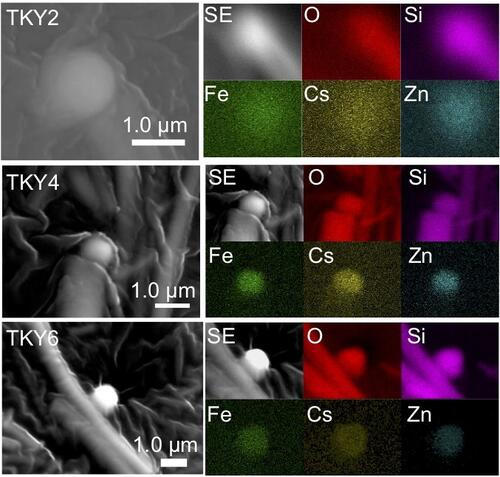
Image
csmp 01 2

Image above: Secondary electron images from Utsunomiya et al. 2019, of CsMPs discovered in atmospheric particles trapped on a Tokyo air filter from March 15, 2011, with major constituent elements displayed. Via Safecast


An interesting paper  was recently published by a team headed by Dr. Satoshi Utsunomiya of Kyushu University on the subject of Fukushima-derived cesium-enriched microparticles (CsMPs). As many readers will know, several researchers have located and analyzed these microparticles, in which the cesium is often bonded within glass-like silicates and therefore generally significantly less soluble than other Cs chemical species in water, though technically not actually “insoluble.” After an accident like Fukushima, it is much more common to find cesium in water-soluble compounds like cesium hydroxide (CsOH), and predictions about how quickly the cesium will be dispersed through the environment, in soil, in watersheds, taken up by plants and animals, etc, are based primarily on this assumption. The discovery of sparingly-soluble Fukushima-derived cesium microparticles, first documented by Adachi et al in 2013, and since then confirmed by many others, has raised a number of questions. How abundant are they? Does their presence increase health risk to humans? How much do they reveal about the process of the accident itself? From the standpoint of researchers the microparticles are very intriguing.

Utsunomiya et al.’s paper is titled “Caesium fallout in Tokyo on 15th March, 2011 is dominated by highly radioactive, caesium-rich microparticles,” and as noted in a recent Scientific American article, it was originally accepted for publication in 2017 by Scientific Reports journal. Weeks before publication, however, Tokyo Metropolitan Industrial Technology Research Institute (TIRI), operated by the Tokyo Metropolitan Government, raised objections with Scientific Reports. However no questions about the quality of the science or the validity of the paper’s findings appear to have been brought forward. This in itself was highly irregular. Two years elapsed without resolution, and in March of this year Scientific Reports took the highly unusual step of withdrawing its offer to publish the paper, despite the lack of confirmed evidence that would warrant it. Utsunomiya and several co-authors decided that the best course of action was to place the study in the public domain by publishing it via arXiv, a highly respected pre-print website. The paper is now open and free to download

This study makes a valuable contribution to the body of scientific literature regarding the consequences of the Fukushima disaster in general and CsMPs in particular. I think it was a mistake for Scientific Reports not to publish it two years ago, especially considering the rapid pace of research into these particles and the tremendous interest in them. To summarize the findings briefly, the researchers analyzed air filter samples from March 15, 2011, in Setagaya, Tokyo, when the radioactive plume from Fukushima caused a noticeable peak in airborne radioactivity in the city. The researchers used radiographic imaging (placing the filters on a photographic plate) to identify any highly radioactive spots. Using these images as a guide they were able to isolate seven CsMPs, which they subjected to atomic-scale analysis using high-resolution electron microscopy (HRTEM) to identify their nano-scale structure and chemical composition. Based on these detailed measurements and quantitative analysis, the researchers concluded that 80-89% of the total cesium fallout in Tokyo that day was in the form of highly radioactive microparticles. The second half of the paper is devoted to estimates of how long such particles might be retained in the human lungs if inhaled, based on previous studies that reported the effects of inhalation of non-radioactive atmospheric particles, and some possible physical consequences. The paper is valuable for the quantitative analysis of the Tokyo particles alone, since it is one of few studies that deal with the issue for Tokyo specifically. Research into possible health consequences of the particles, meanwhile, has gained momentum while the paper remained unpublished, using approaches such as stochastic biokinetics, and DNA damage studies.  In a recent paper, Utsunomiya and colleagues produced estimates of the rate of dissolution of the particles inside the human lung, in pure water, and in seawater. A working group at the Japan Health Physics Society has also devoted attention to the issue, noting the need for further study of the risk from intake of these particles, particularly to the lung.  Likewise, others have been studying the particles to learn about the accident progression and possible consequences for decommissioning.

Why did Tokyo Metropolitan Industrial Technology Research Institute object to the paper’s publication? When we first heard that publication of the paper was being held up by Tokyo Metropolitan Government, we thought politically-motivated suppression was a likely explanation. Since then the public has learned that the actual complaint given to Scientific Reports stems from a chain of custody issue of the original air filter samples. We don’t want to speculate further about Tokyo’s motivation, because we have seen no direct evidence yet of political suppression in this case. But based on past occurrences with other government institutions, we would find it plausible. We will let readers know if TIRI responds to our inquiries.

We spoke with Dr. Utsunomiya and co-author Dr. Rodney Ewing recently. I was aware of their co-authorship of several strong papers on CsMPs, including Utsunomiya’s plenary talk at the Goldschmidt Conference in Yokohama in 2016, which I attended. I asked how this new arXiv paper fits in with their other papers, and where they think this research is heading next:


Satoshi Utsunomiya:

Thank you for asking. The Tokyo paper was actually our first paper regarding CsMPs. As I mentioned, the paper was accepted two years ago. There were no previous papers of ours on CsMPs that time. Currently we are working on several topics on CsMPs. I cannot reveal the content yet, as we are thinking about a press release for the next paper. But I think it is important to continue this kind of research, providing some insights for decommissioning at Fukushima Daiichi Nuclear Power Plant.

Azby Brown:

I didn’t realize that this was your first paper on the subject.  How does it relate to the one presented at the Goldschmidt Conference in Yokohama in 2016? “Cesium-Rich Micro-Particles Unveil the Explosive Events in the Fukushima Daiichi Nuclear Power Plant.” Didn’t that paper receive a prize?

SU:

My talk at Goldschmidt briefly covered the story described in the two papers that were accepted for publication at the same time. One was published in Scientific Reports. The other one was not published. There was no prize. It was a plenary talk.

AB:

I see. I recall that it received a lot of attention. Now it makes more sense to me.

Can you tell me a little bit about the specific characteristics and focus of your research, and how it differs from papers like Adachi 2013Abe 2014, etc? Generally speaking, that is. I’d like to help people understand the different aspects of the field.

SU:

Adachi reported the discovery of CsMPs. Abe demonstrated X-ray absorption analysis on the CsMPs. We focused on the nanotexture inside CsMPs. We are particularly interested in the detailed evidence remaining within the microparticle, which can provide useful information on the development of the chemical reactions during the meltdowns, because it is still difficult to directly analyze the materials inside the reactors. We, for the first time, succeeded in performing isotopic analysis on individual CsMPs. More specifically, the occurrence of uranium can directly tell the story of how the fuel melted. Our research has two directions: one is to understand the environmental impact of CsMPs, and the other is to provide useful information on the debris properties to help decommissioning at FDNPP. We are also interested in the implications for health.

AB:

Can you tell me a little bit about your working relationship? Satoshi went to the US to work in your lab, right Rod? When was that, and what were you working on?

Rod Ewing:

Satoshi and I have known each other since 2000, when he joined my research group as a post-doctoral fellow at the University of Michigan. He was a member of the research group until 2007. We collaborated on a wide range of topics that had to do with radioactive materials, such as the transport of plutonium at the Mayak site in Russia to the identification of uranium phases within C60 cages, so called buckyballs, that were formed and released from coal power plants. Once Satoshi returned to Japan to take his position at Kyushu University, we continued to collaborate, particularly on topics related to Fukushima Daiichi.

AB:

How did you both get interested in CsMPs?

RE:

Once discovered, CsMPs were clearly of high interest. They had not been noted in earlier reactor accidents. Satoshi is a master with the transmission electron microscope – exactly the tool/technique needed to study these particles.

AB:

For people who aren’t familiar with what’s involved in a research experiment like yours, can you describe the overall process? What were the technical challenges?

RE:

I would just emphasize that it is very difficult to find and characterize these particles. Considering the full literature and efforts by others as well as our team – the results are impressive. It is rare to have both the TEM characterization and the isotopic data.

SU:

As Rod mentioned, it is difficult to obtain both TEM and isotopic data from a few micron-sized spots. The isolation of CsMPs from soils is a time consuming process. But to date, many scientists have found and isolated CsMPs. The important thing is what information we can obtain from the analysis of CsMPs. We have been taking various approaches to elucidate the properties, environmental impact, and the role in releasing fissile actinides to the environment.    


As described above, many papers examining various aspects of Fukushima-derived cesium microparticles have been published since they were first identified in 2013. Even so, important aspects remain only partially documented and understood to date. Below is a partial list of relevant publications.

Papers mentioned in this article:

Caesium fallout in Tokyo on 15th March, 2011 is dominated by highly radioactive, caesium-rich microparticles

Utsunomiya, et al., 2019

https://arxiv.org/abs/1906.00212

—————————————————————-

Emission of spherical cesium-bearing particles from an early stage of the Fukushima nuclear accident

Adachi et al., 2013

http://www.nature.com/articles/srep02554

—————————————————————-

Detection of Uranium and Chemical State Analysis of Individual Radioactive Microparticles Emitted from the Fukushima Nuclear Accident Using Multiple Synchrotron Radiation X-ray Analyses

Abe et al., 2014

http://pubs.acs.org/doi/abs/10.1021/ac501998d

—————————————————————-

Dissolution of radioactive, cesium-rich microparticles released from the Fukushima Daiichi Nuclear Power Plant in simulated lung fluid, pure-water, and seawater

Suetake et al., 2019

https://doi.org/10.1016/j.chemosphere.2019.05.248

—————————————————————-

Development of a stochastic biokinetic method and its application to internal dose estimation for insoluble cesium-bearing particles

Manabe & Matsumoto, 2019

https://doi.org/10.1080/00223131.2018.1523756

—————————————————————-

DNA damage induction during localized chronic exposure to an insoluble radioactive microparticle

Matsuya et al., 2019

https://doi.org/10.1038/s41598-019-46874-6

—————————————————————-

Provenance of uranium particulate contained within Fukushima Daiichi Nuclear Power Plant Unit 1 ejecta material

Martin et al., 2019

https://www.nature.com/articles/s41467-019-10937-z

—————————————————————-

Internal doses from radionuclides and their health effects following the Fukushima accident

Ishikawa et al., 2018

https://iopscience.iop.org/article/10.1088/1361-6498/aadb4c


Related papers (by year of publication):

Characteristics Of Spherical Cs-Bearing Particles Collected During The Early Stage Of FDNPP Accident

Igarashi et al., 2014

http://www-pub.iaea.org/iaeameetings/cn224p/Session3/Igarashi.pdf

—————————————————————-

Radioactive Cs in the severely contaminated soils near the Fukushima Daiichi nuclear power plant

Kaneko et al., 2015

https://www.frontiersin.org/articles/10.3389/fenrg.2015.00037

—————————————————————-

First successful isolation of radioactive particles from soil near the Fukushima Daiichi Nuclear Power Plant

Satou et al., 2016

http://www.sciencedirect.com/science/article/pii/S2213305416300340

—————————————————————-

Internal structure of cesium-bearing radioactive microparticles released from Fukushima nuclear power plant

Yamaguchi et al., 2016

http://www.nature.com/articles/srep20548

—————————————————————-

Three-Year Retention Of Radioactive Caesium In The Body Of Tepco Workers Involved In The Fukushima Daiichi Nuclear Power Station Accident

Nakano et al., 2016

http://rpd.oxfordjournals.org/content/early/2016/03/14/rpd.ncw036

—————————————————————-

Monte Carlo Evaluation of Internal Dose and Distribution Imaging Due to Insoluble Radioactive Cs-Bearing Particles of Water Deposited Inside Lungs via Pulmonary Inhalation Using PHITS Code Combined with Voxel Phantom Data

Sakama, M. et al., 2016

https://link.springer.com/chapter/10.1007/978-4-431-55848-4_19

—————————————————————-

Radioactively-hot particles detected in dusts and soils from Northern Japan by combination of gamma spectrometry, autoradiography, and SEM/EDS analysis and implications in radiation risk assessment

Kaltofen & Gundersen, 2017

https://www.sciencedirect.com/science/article/pii/S0048969717317953?via%3Dihub

—————————————————————-

Caesium-rich micro-particles: A window into the meltdown events at the Fukushima Daiichi Nuclear Power Plant

Furuki et al., 2017

https://www.nature.com/articles/srep42731

—————————————————————-

Isotopic signature and nano-texture of cesium-rich micro-particles: Release of uranium and fission products from the Fukushima Daiichi Nuclear Power Plant

Imoto et al., 2017

https://www.nature.com/articles/s41598-017-05910-z

—————————————————————-

Uranium dioxides and debris fragments released to the environment with cesium-rich microparticles from the Fukushima Daiichi Nuclear Power Plant

Ochiai et al., 2018

https://pubs.acs.org/doi/abs/10.1021/acs.est.7b06309

—————————————————————-

Novel method of quantifying radioactive cesium-rich microparticles (CsMPs) in the environment from the Fukushima Daiichi nuclear power plant

Ikehara et al., 2018

https://pubs.acs.org/doi/full/10.1021/acs.est.7b06693

—————————————————————-

Formation of radioactive cesium microparticles originating from the Fukushima Daiichi Nuclear Power Plant accident: characteristics and perspectives

Ohnuki, Satou, and Utsunomiya, 2019

https://www.tandfonline.com/doi/abs/10.1080/00223131.2019.1595767


Hero Image
csmp 01 2
All News button
1
-

The world is experiencing an unprecedented period of geopolitical change and technological disruption. How should we rethink U.S. national security and defense in an era of intensifying great power competition? What principles should guide US policy and presidents in the future?


Drell Lecture Recording: https://youtu.be/y8a307Sttjc


Drell Lecture Transcript: Click here to view


Speaker's Biography: Michèle Flournoy is Co-Founder and Managing Partner of WestExec Advisors, and former Co- Founder and Chief Executive Officer of the Center for a New American Security (CNAS), where she currently serves on the board.

Michèle served as the Under Secretary of Defense for Policy from February 2009 to February 2012. She was the principal advisor to the Secretary of Defense in the formulation of national security and defense policy, oversight of military plans and operations, and in National Security Council deliberations.

Michèle is a former member of the President’s Intelligence Advisory Board, the CIA Director’s External Advisory Board, and the Defense Policy Board. She’s currently a member of the Council on Foreign Relations and the Aspen Strategy Group, is a Senior Fellow at Harvard’s Belfer Center for Science and International Affairs, and sits on the Honorary Advisory Committee of The Leadership Council for Women in National Security. Michèle serves on the boards of Booz Allen Hamilton, Amida Technology Solutions, The Mission Continues, Spirit of America, CARE, the U.S. Naval Academy Foundation.


Hauck Auditorium, David and Joan Traitel Building of Hoover Institution435 Lasuen Mall, Stanford, CA, 94305
Michèle Flournoy Co-Founder and Managing Partner WestExec Advisors
Paragraphs

Within a 10-day period in February 2014, two accidents happened at the Waste Isolation Pilot Plant (WIPP) in New Mexico – the United States’ only underground repository for nuclear waste. First, a truck fire deep in the mine spread soot over key equipment and disabled the repository’s air monitoring system. Then a chemical reaction breached a waste drum, causing a radiological release that contaminated large areas of the repository. Two Accident Investigation Boards and a Technical Assessment Team identified the immediate causes of the accidents and recommended remedial actions. The author, who served as the Deputy Under Secretary of the Energy Department at the time of the accidents and during the three years WIPP was closed, examines the larger problems within the Energy Department and its contractors that set the stage for the accidents. He places the blame on mismanagement at the Los Alamos National Laboratory; structural problems created by a statutory “fence” between the National Nuclear Security Administration and the rest of the Energy Department, including the Office of Environmental Management, which is responsible for disposing of the waste from more than 60 years of nuclear weapons production; and a breakdown of the “nuclear culture.”


A deep look at larger problems with the Energy Department and its contractors.


All Publications button
1
Publication Type
Journal Articles
Publication Date
Journal Publisher
Bulletin of the Atomic Scientists
Number
Volume 75 Issue 4
Authors
Siegfried S. Hecker
News Type
News
Date
Paragraphs

As we witness the increasingly detrimental effects of global climate change, the role that nuclear power could play globally to mitigate its effects continues to be debated. The series of articles featured in the Bulletin in December 2016 aired a broad spectrum of opinions, ranging in assessment of the role of nuclear power from insignificant to mandatory. In this series, we present the perspective of a new crop of nuclear professionals who collectively represent two of the world leaders in nuclear power—the United States and Russia.

These young professionals work together to exchange views and ideas as part of the U.S.-Russia Young Professionals Nuclear Forum that we created in May 2016 to encourage dialogue on critical nuclear issues of concern to both countries. As most official avenues of US-Russia cooperation on nuclear issues were being shut down in pace with the deteriorating political relations between Washington and Moscow, our objective was to turn to the younger generation, because those in it will have to live with the consequences of a world in which their countries no longer cooperate to mitigate global nuclear dangers.

In the United States, our efforts are organized within the Center for International Security and Cooperation at Stanford University, although we reach out to universities and other organizations across the country. In Russia, we were fortunate to find the Moscow Engineering Physics Institute (MEPhI), Russia’s flagship research university in nuclear engineering, to be an enthusiastic partner. Its rector, Professor Mikhail Strikhanov, has an unwavering international outlook that stresses the need for cooperation, especially in higher education and research. The young professionals are students, postdoctoral fellows, and early career professionals.

Hecker has previously written in the Bulletin about the remarkable period of post-Cold War nuclear cooperation between Russian and American nuclear weapon scientists and how the termination of that cooperation by our governments threatens our collective security. We viewed engaging young professionals from the two countries as one of the few avenues of continued cooperation. It has the potential of being particularly effective because at the forum meetings, the young Russians and Americans interact in an educational and non-adversarial environment.

The first three forum meetings focused primarily on issues of nuclear non-proliferation and countering nuclear terrorism. They featured exercises in which the young professionals worked in small groups side by side to explore solutions to vexing nuclear problems. One was a simulation conducted at Stanford in May 2018 just a few weeks before the historic Trump-Kim Singapore Summit. The other was an exercise in Moscow in October 2018 to advise their governments on a hypothetical crisis related to the US withdrawal from the Iran nuclear deal.

At the Moscow forum, we also asked the young professionals to explore what the two countries could do to promote the benefits of nuclear energy around the globe, while cooperating to mitigate the associated risks.

Preparation for the forum included online lectures by senior mentors as well as lectures and discussion sessions in Moscow by both Russian and American specialists. In the nuclear power exercise, we assigned eight key questions to 24 young professionals. We divided them into eight teams, each composed of Russian and American participants. The central question was whether or not an expansion of global nuclear power is necessary to help mitigate the danger of global climate change. Individual groups examined issues of supply and demand around the globe and some of the big challenges posed by an expansion of nuclear power—those of economics, safety and security, potential proliferation of nuclear weapons, and the disposition of nuclear waste.

The young professionals conducted research prior to the meeting, deliberated and debated within their teams during the meeting, and presented their findings to the larger group and the panel of senior mentors at the end of the exercise. During the past six months they have captured the essence of their findings in the eight articles featured in this special presentation in the Bulletin.

Their findings are generally pro-nuclear, which is not surprising considering that most of them have strong educational and research backgrounds in either nuclear technologies or nuclear security. But we found that their views were primarily driven by their serious concerns about the dangers of global climate change and the urgent need to confront these dangers.

Their articles are of interest not so much in that they break new ground in these areas, particularly since many other  established experts have tried to tackle these issues for decades. They are of interest because they represent the views of some of the younger generation of professionals working together across cultural and disciplinary divides. We were struck by the following comment in one of the papers  that reflects on the perceived urgency of the task at hand: “We are the first generation that is experiencing the dramatic effects of global climate change and likely the last that can do something about it to avoid catastrophic consequences for the Earth and its people.”

We also note that the articles uniformly reveal that the young professionals across the board firmly believe that the benefits and risks of expanding nuclear power globally must be pursued and tackled in a concerted effort of major nuclear powers (especially the United States and Russia), other developed nations, the International Atomic Energy Agency, and all stakeholders. These younger voices stated: “The most important shift necessary to facilitate [nuclear power] expansion is an increase in international cooperation and multilateralization in the form of, for example, international reactor supply contracts, multinational enrichment conglomerates, nondiscriminatory fuel banks, and international waste repositories.”

We believe the readers will find the sentiments and opinions of the young Russian and American professionals interesting and encouraging. We certainly have found them eager and able to work together effectively—a lesson that the more senior professionals and the governments need to relearn.

Editor’s note: The Young Professionals Nuclear Forum cooperation is supported by the John D. and Catherine T. MacArthur Foundation and the Carnegie Corporation of New York.


Read the articles here:


Hero Image
rsd19 023 0010a Rod Searcey
All News button
1
Authors
News Type
News
Date
Paragraphs

In early May, CISAC convened the fifth Young Professional Nuclear Forum (YPNF), a program sponsored by the Center for International Security and Cooperation at Stanford University and the Moscow Engineering and Physics Institute (MEPhI). The program brought together a lively group of young Russians and Americans working on nuclear issues over three days.

Since 2016, the forum has alternated between Moscow and Stanford.  

By 2016, US and Russian governments closed almost every door on opportunities that previously allowed experienced nuclear professionals on both sides to cooperate with each other.  Stanford Professor Siegfried Hecker saw that at least one door - that of cooperation on the university level - was still open. He started the YPNF to foster interaction between the younger generation of Russians and Americans who study, do research, or start a career in the nuclear power or nonproliferation fields.

This year’s agenda focused on two major areas: US-Russian arms control and the future of nuclear power.

The American group included a new cohort of six incoming young professionals from Los Alamos National Laboratory, UC Berkeley, Center for Arms Control and Non-Proliferation, and Vienna Center for Disarmament and Non‑Proliferation. They were joined by CISAC research staff members Gaby Levikow and Elliot Serbin and current and former fellows Chantell Murphy, Kristin Ven Bruusgaard, and Cameron Tracy. The Russian group from MEPhI brought a team of 12 young professionals most of whom are pursuing their graduate degrees in nuclear physics and engineering and software engineering, along with junior professionals in international relations and nuclear fields.  The team of experts included Professor Hecker, Dr. James Toevs, Dr. Ning Li, Ambassador Steven Pifer, Professor David Holloway, Dr. Larry Brandt, Dr. Chaim Braun, Dr. Pavel Podvig, and Dr. Mona Dreicer, —all of whom provided advice and feedback during the exercise.

Participants come from loosely defined “technical” and “policy” fields, and the forum agenda has traditionally included one nuclear-power related and one policy-focused subject. Forum activities vary between lectures, expert briefings, discussions, and table-top exercises, but the small-group work during the exercises is the core form of interaction.

By design, this agenda exposes each participant to new fields, new counterparts, some fun interactive time off - and encourages a lot of cultural learning. Forum after forum, we hear back that the group work and social time are the most exciting aspects of the forum experience. Participants noted they learned, among other things, “general ideas and thoughts of American participants and their attitudes to the present American policy, new words and abbreviations … [and] a great deal about new reactor designs and their implications for nuclear energy and security policy.”  Still more participants enjoyed “learning to collaborate in groups of Americans and Russians but also between policy and technical experts on topics of both camps,” and some “got new friends.”

Encouragingly, participants requested more interaction between the bi-annual meetings and a variety of topics in yet untapped – or suspended - areas of cooperation between Russia and the US.

New work continues to emerge from the forum. Eight short articles written by the young professionals to showcase the results of the projects from the Moscow meeting in November 2017 was published in the Bulletin of the Atomic Scientists in June 2019. The next meeting will be held in Moscow this November.


Hero Image
rsd19 023 0010a Rod Searcey
All News button
1
Authors
Rodney C. Ewing
News Type
Q&As
Date
Paragraphs

Q&A with Professor Rodney C. Ewing, Frank Stanton Professor in Nuclear Security and co-director at the Center for International Security and Cooperation (CISAC) in the Freeman Spogli Institute for International Studies (FSI). Interview with Katy Gabel Chui.

Your previous research with this team helped identify the types of radioactive particles that can become airborne and were transported away from Fukushima during the 2011 nuclear disaster.

This most recent paper goes further to show how these Cesium (Cs)-rich silica particles behave in several types of fluids, including simulated human lung fluid, concluding that the particles are fully dissolved in the latter after more than 35 years. What might that mean for human health in the Fukushima area and beyond?

The first breakthrough was the recognition that such particles, a few microns in diameter, existed, a discovery by Japanese scientists at the Meteorological Research Institute, Tsukuba, in 2013. The particles are important because they were dispersed over distances of tens of kilometers and were “carriers” of highly radioactive Cs. Our team’s previous work, led by Professor Satoshi Utsunomiya, mainly focused on the characterization of the particles and their constituents at the atomic-scale and surveyed their distribution in the area away from the Fukushima Daiichi nuclear power plants. Our earliest work from 2016 can be found online. A good summary of the history of the work on these cesium-rich microparticles was recently published in Scientific American.

This latest paper published in Chemosphere is the 6th in a series of papers on the Cs-rich microparticles. We describe the behavior of these particles when exposed to different types of fluids: ultra-pure water, artificial sea water and simulated lung fluid. The microparticles dissolve in all three fluids, reaching a long-term but a continuing, slow rate of release after just three days. Essentially, the calculated release rate of cesium depends on the rate of dissolution of the silica glass matrix and the initial size of the particles. In the simulated lung fluid, the particles are modelled to fully dissolve after more than 35 years.

What is the simulated lung fluid made of, and how does it work in simulation? How do you estimate 35 years?

The constituents of typical lung fluid were simply mixed to simulate its composition based on a recipe reported by previous studies. The lung fluid is different from the other solutions because it contains organic compounds and has a different chemistry, i.e., higher sodium and chlorine content. The estimates of residence time in the body assumes that the particles are inhaled and find their way to the pulmonary system. The calculation of residence time is based on assumptions about the size and composition of the microparticles, and we used the long-term release rate from the experiments. We assumed a spherical shape and a constant decrease in size as the leaching process continued. The rate can vary depending on the actual shape, internal texture, composition (such as occurrence of intrinsic Cs-phase inclusions), and precipitation of secondary phases that may form a “protective” coating on the cesium-rich microparticles (CsMPs). The rate of release was fastest in the simulated lung fluid.

The important result is to realize that the Cs-rich silica particles dissolve slowly in the environment and in the body. Essentially, the release extends for several decades.

How can nuclear energy experts and policy makers use this research to avoid future risk?

Understanding the form and composition of materials that host and disperse radionuclides is the first step in completing a careful dose calculation. Based on these results, the fraction of Cs contained in the silica particles will not be rapidly “flushed” through the environment or the body, but rather will be released over several decades.


Hero Image
rodewingheadshot2014
All News button
1
Subscribe to Nuclear policy