Nuclear Safety
-
Livestream: This event will not be live-streamed or recorded.
 
Abstract: Seventy-five years after the introduction of nuclear weapons, it is no longer clear that these tools of security remain the most effective means of holding an adversary at risk.  This talk will examine whether there are alternatives to nuclear weapons for missions like deterrence, and asks whether policy attention ought to be rebalanced in view of a more modern understanding of risk. 
 
Speaker's Biography: 
R. Scott Kemp is the MIT Class of '43 Associate Professor of Nuclear Science and Engineering, and director of the MIT Laboratory for Nuclear Security and Policy.  His research combines physics, politics, and history to identify options for addressing societal problems in the areas of nuclear weapons and energy.  Scott received his undergraduate degree in physics from the University of California, Santa Barbara, and his Ph.D. in Public Policy from Princeton University. He is the recipient of the Sloan Research Fellowship in Physics, and is a Fellow of the American Physical Society
Scott Kemp Associate Professor of Nuclear Science and Engineering MIT
Seminars
Authors
Steven Pifer
News Type
Commentary
Date
Paragraphs

Brookings Editor's Note: This piece is part of a series remembering the life, career, and legacy of Helmut (Hal) Sonnenfeldt — a member of the National Security Council, counselor at the Department of State, scholar at the Johns Hopkins School of Advanced International Studies (SAIS), and Brookings expert.


Serving as a senior member on the National Security Council at the Nixon White House from 1969-1974, Hal Sonnenfeldt was Henry Kissinger’s primary advisor on the Soviet Union and Europe. After Sonnenfeldt’s passing, Kissinger told the New York Times that Sonnenfeldt was “my closest associate” on U.S.-Soviet relations and “at my right hand on all the negotiations that I conducted with the Soviets,” including on arms control. THIRD PARAGRAPH Sonnenfeldt brought a practical approach to U.S.-Soviet relations, realistic about the Soviet Union — its strengths, its weaknesses, and the challenges it presented to the West — and creative in trying to address those challenges. He was likewise realistic about the contribution that arms control could make to a safer and more stable bilateral relationship. As he noted in a 1978 article for Foreign Affairs, military and arms control issues were a fundamental part of the relationship, but “the problem [of dealing with Soviet power] does not end or begin with military measures alone.” Other factors — political, economic, ideological, and even cultural — mattered.


Read the Rest on Brookings

Hero Image
gettyimages 632782096
CISAC fellow Anna Péczeli suggests that the Trump Administration conduct a broad Nuclear Posture Review that includes the State Department, which in the last such review in 2009 emphasized a number of policies that supported non-proliferation objectives and strengthened U.S. negotiating positions at global arms control forums.
Getty Images/Win McNamee
All News button
1
News Type
Commentary
Date
Paragraphs

Debak Das, CISAC’s MacArthur Nuclear Security Pre-doctoral Fellow, and his roundtable contributors examine the rising tensions between Pakistan and India and look at what the future might hold for the region. “Political relations in South Asia have hit rough weather,” writes Das. “So where does the nuclear relationship between India and Pakistan stand? Where do the key threats to peace in the region come from?” 


Read the rest at Texas National Security Review

Hero Image
screen shot 2019 10 08 at 9 46 12 am
All News button
1
-

Seminar Recording: https://youtu.be/8JDHuY0HMCM


Abstract: The motivation to develop nuclear energy waned in the latter part of the twentieth century. Technologies such as very-high-temperature gas-cooled reactors and fast-neutron liquid-metal reactors had been pursued for the purpose of recycling used nuclear fuel from water-cooled reactors, or for the purpose of supplying high-temperature process heat to the chemical industry or for hydrogen production. While both worthwhile causes, one could argue that the important missing element of all of these advanced nuclear reactor technologies was a business case: how were nuclear power plants to be profitable? With the more widely recognized need for decarbonizing energy production, the new driver for developing nuclear energy became cost. Can nuclear power be economically competitive with natural gas and coal, in order to provide an economic driver for the displacement of fossil fuel? This became the new motivation for nuclear energy development in the twenty-first century, and over the last decade the unthinkable happened: a growing and striving ecosystem of nuclear energy start-up companies. Many of these start-up companies pursue the development of liquid-fuel molten salt reactors, fueled by thorium or uranium fuel. Other start-up companies develop solid-fuel reactors cooled by salt, or even fusion reactors cooled by salt. The common feature of nuclear reactors that utilize molten salt is the operation at high-temperature and atmospheric pressure. The high temperature leads to doubled power efficiencies, compared to conventional water-cooled reactors. The atmospheric pressure leads to a safety case that is arguably easier to demonstrate, and hence that would enable a faster commercialization time.  On the other hand, there remain many technical risks and time-line uncertainties for the development of salt nuclear technologies. There remain also questions of policy, licensing, and compatibility with local industry and local culture, necessary elements for the global development of such nuclear reactors. This talk will explore some of the challenges faced by the global deployment of molten-salt and salt-cooled reactors, and some of the challenges faced by nuclear start-up companies in order to change the innovation cycle for nuclear energy technology from thirty years to a much shorter time frame.


Speaker's Biography:

Image
screen shot 2019 10 03 at 1 23 12 pm
Raluca Scarlat is an assistant professor at UC Berkeley, in the Department of Nuclear Engineering. Raluca Scarlat’s research focuses on chemistry, electrochemistry and physical chemistry of high-temperature inorganic fluids and their application to energy systems. Her research includes safety analysis, licensing and design of nuclear reactors and engineering ethics, and she has extensive experience in design and  safety analysis of fluoride-salt-cooled high-temperature reactors (FHRs) and Molten Salt Reactors (MSRs). Professor Scarlat has a Ph.D. in Nuclear Engineering from UC Berkeley, a certificate in Management of Technology from the Hass School of Business, and a B.S. in Chemical and Biomolecular Engineering from Cornell University. Scarlat has published articles in Electrochemical Society Journal, Journal of Fluorine Chemistry, Journal of Nuclear Materials, Nuclear Engineering and Design, Nuclear Instruments and Methods, Journal of Engineering for Gas Turbines and Power, Nuclear Technology, and Progress in Nuclear Energy.

Raluca Scarlat UC Berkeley
Seminars
News Type
News
Date
Paragraphs

CISAC Co-Director Rodney Ewing was awarded the Distinguished Public Service Award from the Mineralogical Society of America (MSA), to honor his “important contributions to furthering the vitality of the geological sciences.”

“I don’t know anyone more deserving of this award than Rod,” wrote Kevin Crowley, National Academies of Sciences, Engineering, and Medicine (retired), in the citation for the award. “Rod is first and foremost an extraordinarily creative and productive scientist, having authored or coauthored over 750 research publications and established fruitful research collaborations with scientists in several countries. He is also a founding editor of Elements Magazine, co-published by 18 national and international scientific organizations, which focuses on current themes in the mineralogical and geochemical sciences.”

“He has been a major force in the application of science and technology to national and international public policy making on nuclear waste management and disposal... and appointed by President Barack Obama to serve on the U.S. Nuclear Waste Technical Review Board,” Crowley continued.

Among Ewing’s honors, he also is the past recipient of the MSA’s Dana Medal and Roebling Medal, the Russian Academy of Sciences’ Lomonosov Gold Medal, and was elected to the U.S. National Academy of Engineering.

Hero Image
rod ewing cisac director
All News button
1
Authors
News Type
Q&As
Date
Paragraphs

North Korea currently has only one publicly known uranium mine—the Pyongsăn uranium mining and milling complex—that serves as a first step in the country’s pathway towards nuclear weapons.

Using a combination of multispectral imagery sourced from the European Space Agency’s Copernicus Sentinel-2 satellite and a review of geological analyses dating back to 1955, a new study from Stanford’s Center for International Security and Cooperation (CISAC) in Jane’s Intelligence Review by geological sciences postdoctoral fellow Sulgiye Park (PhD ’17) and CISAC honors student Federico Derby (BS ’19) looks for evidence of uranium mining in North Korea, going beyond what is currently available in open sources in order to estimate the uranium resources and their locations in North Korea.

The peer-reviewed CISAC study has identified around 18 additional sites in North Korea where the hyperspectral signatures and geological profile combine to suggest the possibility of uranium mining. Nevertheless, CISAC and Jane’s stress that the presence of these ‘hotspots’ does not imply the presence of an active uranium mine or related facility, but rather a site that warrants further analysis.

In this Q&A with Katy Gabel Chui, researchers Sulgiye Park and Federico Derby discuss their work on the project:

How did you land on this project? What made you think to look for more mining sites?

Sulgiye Park (SP) and Federico Derby (FD): Very little is known about the front-end of North Korea’s nuclear fuel cycle, particularly when it comes to the mining and milling processes of uranium production pathway. To date, assessments of this portion of North Korea’s nuclear fuel cycle have been mostly conducted through traditional (electro-optical) satellite imagery observations---the type of imagery that you can access through Google Earth, for instance.

We wanted to get a more complete grasp of North Korea's uranium mining and processing capacity by conducting a multi-disciplinary approach that combines both the visible signatures from multi-spectral satellite imagery and a geological dataset that contains information such as mineralogy and geochemistry. The two individual methods come together at the end to provide information that encapsulates the potential regions likely to host uranium deposits and mines.

What is multispectral imaging? How would it ordinarily be used, and how did you use it for this project?

SP and FD: Traditional electro-optical satellite imagery exploits only three portions of the electromagnetic spectrum; namely, the blue, green and red bands. In general, when using the term “multispectral” within the satellite imagery community, we are usually referring to a satellite system that covers a few to tens of different bands in the electromagnetic spectrum.

Multispectral imagery is used in a wide variety of industries, to measure things like water turbidity, crop healthiness, vegetation quality, etc. For this project, we focused on using spectral fingerprints. Basically, every object – whether it be a mineral, a living thing, water, etc. – has a(n in theory unique) spectral fingerprint. Spectral fingerprints are measured as the intensity of the object’s reflectance of light at a specific wavelength. Varying across wavelengths – hence the importance of having a multispectral system that can give you access to different ranges of the electromagnetic spectrum – you ultimately get a spectral curve that is unique to the item you are studying.

The spectral fingerprints you collect on a specific image can be compared to previously collected fingerprints stored in what is usually termed a spectral library, for classification purposes. Basically, if my spectral curve of a given pixel (or set of pixels) looks super similar to that of gold (for which I obtained a reference spectral curve from a spectral library), then it is probably gold. Obviously, this matching is performed in a more rigorous manner, but you get the idea of how the process works.

In this project, we used the Pyongsan uranium mine in North Korea (arguably the only well-identified uranium mine in the country) as my reference spectral curve. Essentially, using various imaging techniques, we traversed North Korea looking for pixels whose spectral curves are similar to that of the Pyongsan uranium mine. Those are the ‘hotspots’ we identified.

What most surprised you in both your work and your findings?

SP and FD: The fascinating match between the 'hotspots' identified through satellite imagery analysis and the geologic information available in maps and reports. The majority of the 'hotspots' appeared adjacent to the limestone formation from the Ordovician period (circa 445-485 Ma) that are in contact with a specific sedimentary rocks of upper Proterozoic group. Part of the geologic characteristics of the 'hotspots' regions were similar to what had been observed in the Pyongsan (the most well-known) uranium mine of North Korea.

What was most surprising in the work itself? What was difficult in doing the work?

SP and FD: It was surprising to see how much we still don't know about North Korea despite the amount of effort that had been invested. There is no consensus reached regarding the location and the total number of uranium mines in North Korea.

One of the bigger difficulties we had was finding credible geological data and information.

What is the one thing you think someone should take away from your study?

SP and FD: That there are still many unknowns. While our study identified multiple regions with spectral signatures similar to the uranium tailing piles at Pyongsan, verification of uranium presence is still needed.

What are you working on next?

SP: I am still working on using a geologic approach to glean information on the uranium mines of North Korea. The further evaluation aims to identify a qualitative upper limit of uranium ore grade (quality) and quantity pertaining to all the suspected uranium mines in North Korea.

FD: I co-founded a startup focused on developing deep learning models for credit risk analytics (in Latin America). However, I will still keep in touch with my CISAC peers!


Hero Image
satellite
All News button
1
Authors
News Type
Q&As
Date
Paragraphs

This piece originally appeared at Safecast.

Image
csmp 01 2

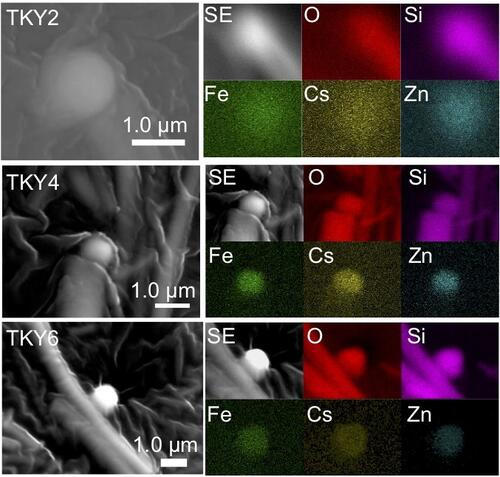
Image above: Secondary electron images from Utsunomiya et al. 2019, of CsMPs discovered in atmospheric particles trapped on a Tokyo air filter from March 15, 2011, with major constituent elements displayed. Via Safecast


An interesting paper  was recently published by a team headed by Dr. Satoshi Utsunomiya of Kyushu University on the subject of Fukushima-derived cesium-enriched microparticles (CsMPs). As many readers will know, several researchers have located and analyzed these microparticles, in which the cesium is often bonded within glass-like silicates and therefore generally significantly less soluble than other Cs chemical species in water, though technically not actually “insoluble.” After an accident like Fukushima, it is much more common to find cesium in water-soluble compounds like cesium hydroxide (CsOH), and predictions about how quickly the cesium will be dispersed through the environment, in soil, in watersheds, taken up by plants and animals, etc, are based primarily on this assumption. The discovery of sparingly-soluble Fukushima-derived cesium microparticles, first documented by Adachi et al in 2013, and since then confirmed by many others, has raised a number of questions. How abundant are they? Does their presence increase health risk to humans? How much do they reveal about the process of the accident itself? From the standpoint of researchers the microparticles are very intriguing.

Utsunomiya et al.’s paper is titled “Caesium fallout in Tokyo on 15th March, 2011 is dominated by highly radioactive, caesium-rich microparticles,” and as noted in a recent Scientific American article, it was originally accepted for publication in 2017 by Scientific Reports journal. Weeks before publication, however, Tokyo Metropolitan Industrial Technology Research Institute (TIRI), operated by the Tokyo Metropolitan Government, raised objections with Scientific Reports. However no questions about the quality of the science or the validity of the paper’s findings appear to have been brought forward. This in itself was highly irregular. Two years elapsed without resolution, and in March of this year Scientific Reports took the highly unusual step of withdrawing its offer to publish the paper, despite the lack of confirmed evidence that would warrant it. Utsunomiya and several co-authors decided that the best course of action was to place the study in the public domain by publishing it via arXiv, a highly respected pre-print website. The paper is now open and free to download

This study makes a valuable contribution to the body of scientific literature regarding the consequences of the Fukushima disaster in general and CsMPs in particular. I think it was a mistake for Scientific Reports not to publish it two years ago, especially considering the rapid pace of research into these particles and the tremendous interest in them. To summarize the findings briefly, the researchers analyzed air filter samples from March 15, 2011, in Setagaya, Tokyo, when the radioactive plume from Fukushima caused a noticeable peak in airborne radioactivity in the city. The researchers used radiographic imaging (placing the filters on a photographic plate) to identify any highly radioactive spots. Using these images as a guide they were able to isolate seven CsMPs, which they subjected to atomic-scale analysis using high-resolution electron microscopy (HRTEM) to identify their nano-scale structure and chemical composition. Based on these detailed measurements and quantitative analysis, the researchers concluded that 80-89% of the total cesium fallout in Tokyo that day was in the form of highly radioactive microparticles. The second half of the paper is devoted to estimates of how long such particles might be retained in the human lungs if inhaled, based on previous studies that reported the effects of inhalation of non-radioactive atmospheric particles, and some possible physical consequences. The paper is valuable for the quantitative analysis of the Tokyo particles alone, since it is one of few studies that deal with the issue for Tokyo specifically. Research into possible health consequences of the particles, meanwhile, has gained momentum while the paper remained unpublished, using approaches such as stochastic biokinetics, and DNA damage studies.  In a recent paper, Utsunomiya and colleagues produced estimates of the rate of dissolution of the particles inside the human lung, in pure water, and in seawater. A working group at the Japan Health Physics Society has also devoted attention to the issue, noting the need for further study of the risk from intake of these particles, particularly to the lung.  Likewise, others have been studying the particles to learn about the accident progression and possible consequences for decommissioning.

Why did Tokyo Metropolitan Industrial Technology Research Institute object to the paper’s publication? When we first heard that publication of the paper was being held up by Tokyo Metropolitan Government, we thought politically-motivated suppression was a likely explanation. Since then the public has learned that the actual complaint given to Scientific Reports stems from a chain of custody issue of the original air filter samples. We don’t want to speculate further about Tokyo’s motivation, because we have seen no direct evidence yet of political suppression in this case. But based on past occurrences with other government institutions, we would find it plausible. We will let readers know if TIRI responds to our inquiries.

We spoke with Dr. Utsunomiya and co-author Dr. Rodney Ewing recently. I was aware of their co-authorship of several strong papers on CsMPs, including Utsunomiya’s plenary talk at the Goldschmidt Conference in Yokohama in 2016, which I attended. I asked how this new arXiv paper fits in with their other papers, and where they think this research is heading next:


Satoshi Utsunomiya:

Thank you for asking. The Tokyo paper was actually our first paper regarding CsMPs. As I mentioned, the paper was accepted two years ago. There were no previous papers of ours on CsMPs that time. Currently we are working on several topics on CsMPs. I cannot reveal the content yet, as we are thinking about a press release for the next paper. But I think it is important to continue this kind of research, providing some insights for decommissioning at Fukushima Daiichi Nuclear Power Plant.

Azby Brown:

I didn’t realize that this was your first paper on the subject.  How does it relate to the one presented at the Goldschmidt Conference in Yokohama in 2016? “Cesium-Rich Micro-Particles Unveil the Explosive Events in the Fukushima Daiichi Nuclear Power Plant.” Didn’t that paper receive a prize?

SU:

My talk at Goldschmidt briefly covered the story described in the two papers that were accepted for publication at the same time. One was published in Scientific Reports. The other one was not published. There was no prize. It was a plenary talk.

AB:

I see. I recall that it received a lot of attention. Now it makes more sense to me.

Can you tell me a little bit about the specific characteristics and focus of your research, and how it differs from papers like Adachi 2013Abe 2014, etc? Generally speaking, that is. I’d like to help people understand the different aspects of the field.

SU:

Adachi reported the discovery of CsMPs. Abe demonstrated X-ray absorption analysis on the CsMPs. We focused on the nanotexture inside CsMPs. We are particularly interested in the detailed evidence remaining within the microparticle, which can provide useful information on the development of the chemical reactions during the meltdowns, because it is still difficult to directly analyze the materials inside the reactors. We, for the first time, succeeded in performing isotopic analysis on individual CsMPs. More specifically, the occurrence of uranium can directly tell the story of how the fuel melted. Our research has two directions: one is to understand the environmental impact of CsMPs, and the other is to provide useful information on the debris properties to help decommissioning at FDNPP. We are also interested in the implications for health.

AB:

Can you tell me a little bit about your working relationship? Satoshi went to the US to work in your lab, right Rod? When was that, and what were you working on?

Rod Ewing:

Satoshi and I have known each other since 2000, when he joined my research group as a post-doctoral fellow at the University of Michigan. He was a member of the research group until 2007. We collaborated on a wide range of topics that had to do with radioactive materials, such as the transport of plutonium at the Mayak site in Russia to the identification of uranium phases within C60 cages, so called buckyballs, that were formed and released from coal power plants. Once Satoshi returned to Japan to take his position at Kyushu University, we continued to collaborate, particularly on topics related to Fukushima Daiichi.

AB:

How did you both get interested in CsMPs?

RE:

Once discovered, CsMPs were clearly of high interest. They had not been noted in earlier reactor accidents. Satoshi is a master with the transmission electron microscope – exactly the tool/technique needed to study these particles.

AB:

For people who aren’t familiar with what’s involved in a research experiment like yours, can you describe the overall process? What were the technical challenges?

RE:

I would just emphasize that it is very difficult to find and characterize these particles. Considering the full literature and efforts by others as well as our team – the results are impressive. It is rare to have both the TEM characterization and the isotopic data.

SU:

As Rod mentioned, it is difficult to obtain both TEM and isotopic data from a few micron-sized spots. The isolation of CsMPs from soils is a time consuming process. But to date, many scientists have found and isolated CsMPs. The important thing is what information we can obtain from the analysis of CsMPs. We have been taking various approaches to elucidate the properties, environmental impact, and the role in releasing fissile actinides to the environment.    


As described above, many papers examining various aspects of Fukushima-derived cesium microparticles have been published since they were first identified in 2013. Even so, important aspects remain only partially documented and understood to date. Below is a partial list of relevant publications.

Papers mentioned in this article:

Caesium fallout in Tokyo on 15th March, 2011 is dominated by highly radioactive, caesium-rich microparticles

Utsunomiya, et al., 2019

https://arxiv.org/abs/1906.00212

—————————————————————-

Emission of spherical cesium-bearing particles from an early stage of the Fukushima nuclear accident

Adachi et al., 2013

http://www.nature.com/articles/srep02554

—————————————————————-

Detection of Uranium and Chemical State Analysis of Individual Radioactive Microparticles Emitted from the Fukushima Nuclear Accident Using Multiple Synchrotron Radiation X-ray Analyses

Abe et al., 2014

http://pubs.acs.org/doi/abs/10.1021/ac501998d

—————————————————————-

Dissolution of radioactive, cesium-rich microparticles released from the Fukushima Daiichi Nuclear Power Plant in simulated lung fluid, pure-water, and seawater

Suetake et al., 2019

https://doi.org/10.1016/j.chemosphere.2019.05.248

—————————————————————-

Development of a stochastic biokinetic method and its application to internal dose estimation for insoluble cesium-bearing particles

Manabe & Matsumoto, 2019

https://doi.org/10.1080/00223131.2018.1523756

—————————————————————-

DNA damage induction during localized chronic exposure to an insoluble radioactive microparticle

Matsuya et al., 2019

https://doi.org/10.1038/s41598-019-46874-6

—————————————————————-

Provenance of uranium particulate contained within Fukushima Daiichi Nuclear Power Plant Unit 1 ejecta material

Martin et al., 2019

https://www.nature.com/articles/s41467-019-10937-z

—————————————————————-

Internal doses from radionuclides and their health effects following the Fukushima accident

Ishikawa et al., 2018

https://iopscience.iop.org/article/10.1088/1361-6498/aadb4c


Related papers (by year of publication):

Characteristics Of Spherical Cs-Bearing Particles Collected During The Early Stage Of FDNPP Accident

Igarashi et al., 2014

http://www-pub.iaea.org/iaeameetings/cn224p/Session3/Igarashi.pdf

—————————————————————-

Radioactive Cs in the severely contaminated soils near the Fukushima Daiichi nuclear power plant

Kaneko et al., 2015

https://www.frontiersin.org/articles/10.3389/fenrg.2015.00037

—————————————————————-

First successful isolation of radioactive particles from soil near the Fukushima Daiichi Nuclear Power Plant

Satou et al., 2016

http://www.sciencedirect.com/science/article/pii/S2213305416300340

—————————————————————-

Internal structure of cesium-bearing radioactive microparticles released from Fukushima nuclear power plant

Yamaguchi et al., 2016

http://www.nature.com/articles/srep20548

—————————————————————-

Three-Year Retention Of Radioactive Caesium In The Body Of Tepco Workers Involved In The Fukushima Daiichi Nuclear Power Station Accident

Nakano et al., 2016

http://rpd.oxfordjournals.org/content/early/2016/03/14/rpd.ncw036

—————————————————————-

Monte Carlo Evaluation of Internal Dose and Distribution Imaging Due to Insoluble Radioactive Cs-Bearing Particles of Water Deposited Inside Lungs via Pulmonary Inhalation Using PHITS Code Combined with Voxel Phantom Data

Sakama, M. et al., 2016

https://link.springer.com/chapter/10.1007/978-4-431-55848-4_19

—————————————————————-

Radioactively-hot particles detected in dusts and soils from Northern Japan by combination of gamma spectrometry, autoradiography, and SEM/EDS analysis and implications in radiation risk assessment

Kaltofen & Gundersen, 2017

https://www.sciencedirect.com/science/article/pii/S0048969717317953?via%3Dihub

—————————————————————-

Caesium-rich micro-particles: A window into the meltdown events at the Fukushima Daiichi Nuclear Power Plant

Furuki et al., 2017

https://www.nature.com/articles/srep42731

—————————————————————-

Isotopic signature and nano-texture of cesium-rich micro-particles: Release of uranium and fission products from the Fukushima Daiichi Nuclear Power Plant

Imoto et al., 2017

https://www.nature.com/articles/s41598-017-05910-z

—————————————————————-

Uranium dioxides and debris fragments released to the environment with cesium-rich microparticles from the Fukushima Daiichi Nuclear Power Plant

Ochiai et al., 2018

https://pubs.acs.org/doi/abs/10.1021/acs.est.7b06309

—————————————————————-

Novel method of quantifying radioactive cesium-rich microparticles (CsMPs) in the environment from the Fukushima Daiichi nuclear power plant

Ikehara et al., 2018

https://pubs.acs.org/doi/full/10.1021/acs.est.7b06693

—————————————————————-

Formation of radioactive cesium microparticles originating from the Fukushima Daiichi Nuclear Power Plant accident: characteristics and perspectives

Ohnuki, Satou, and Utsunomiya, 2019

https://www.tandfonline.com/doi/abs/10.1080/00223131.2019.1595767


Hero Image
csmp 01 2
All News button
1
Paragraphs

Recent discoveries in psychology and neuroscience have improved our understanding of why our decision making processes fail to match standard social science assumptions about rationality. As researchers such as Daniel Kahneman, Amos Tversky, and Richard Thaler have shown, people often depart in systematic ways from the predictions of the rational actor model of classic economic thought because of the influence of emotions, cognitive biases, an aversion to loss, and other strong motivations and values. These findings about the limits of rationality have formed the basis of behavioral economics, an approach that has attracted enormous attention in recent years.

This collection of essays applies the insights of behavioral economics to the study of nuclear weapons policy. Behavioral economics gives us a more accurate picture of how people think and, as a consequence, of how they make decisions about whether to acquire or use nuclear arms. Such decisions are made in real-world circumstances in which rational calculations about cost and benefit are intertwined with complicated emotions and subject to human limitations. Strategies for pursuing nuclear deterrence and nonproliferation should therefore, argue the contributors, account for these dynamics in a systematic way. The contributors to this collection examine how a behavioral approach might inform our understanding of topics such as deterrence, economic sanctions, the nuclear nonproliferation regime, and U.S. domestic debates about ballistic missile defense. The essays also take note of the limitations of a behavioral approach for dealing with situations in which even a single deviation from the predictions of any model can have dire consequences.

All Publications button
1
Publication Type
Books
Publication Date
Journal Publisher
Athens : The University of Georgia Press, [2019]
Authors
Jeffrey Knopf
-

Seminar Recording: https://youtu.be/X_0mm8UkVOc


Abstract:  In the movie WarGames, a 1980s teenager hacks into a U.S. nuclear control program, almost starting a nuclear war.  This movie has become a common illustration for the dangers of increasingly digitized nuclear arsenals and reflects what many scholars and practitioners see as the most perilous implication of the rise of cyberattacks--instability to states' nuclear command, control, and communications (NC3).  Research conducted during the Cold War suggested that even the threat of serious vulnerabilities to states' NC3 could incentivize preemptive launches of nuclear weapons.  Despite this widespread concern about the destabilizing effects of NC3 vulnerabilities, there is almost no empirical research to support these conclusions.  In order to test these theories, this paper uses an experimentally-designed war game to explore the role that vulnerabilities and exploits within a hypothetical NC3 architecture play in decisions to use nuclear weapons.  The game, which uses 4-6 players to simulate a national security cabinet, includes three treatment scenarios and one control scenario with no vulnerabilities or exploits.  Players are randomized into the scenario groups and games are played over the course of a year in seven different locations with a sample of elite players from the U.S. and other nations. Together, a longitudinal analysis of these games examines the role that culture, cognitive biases, and expertise play in the likelihood of thermonuclear cyber war with significant implications for both cyber strategy and nuclear modernization.


Speaker's Biography:

Image
jackie schneider photo
Dr. Schneider is a Hoover Fellow at the Hoover Institution and a non-resident fellow at the Naval War College’s Cyber and Innovation Policy Institute.  She researches the intersection of technology, national security, and political psychology with a special interest in cyber, unmanned technologies, and wargaming. Her work has appeared in a variety of outlets including Security Studies, Journal of Conflict Resolution, Journal of Strategic Studies, Foreign Affairs, Lawfare, War on the Rocks, Washington Post, and Bulletin of the Atomic Scientists.  She has a BA from Columbia University, a MA from Arizona State University, and a PhD from George Washington University.

Jacquelyn Schneider Non-resident Fellow Naval War College’s Cyber and Innovation Policy Institute
Paragraphs

Within a 10-day period in February 2014, two accidents happened at the Waste Isolation Pilot Plant (WIPP) in New Mexico – the United States’ only underground repository for nuclear waste. First, a truck fire deep in the mine spread soot over key equipment and disabled the repository’s air monitoring system. Then a chemical reaction breached a waste drum, causing a radiological release that contaminated large areas of the repository. Two Accident Investigation Boards and a Technical Assessment Team identified the immediate causes of the accidents and recommended remedial actions. The author, who served as the Deputy Under Secretary of the Energy Department at the time of the accidents and during the three years WIPP was closed, examines the larger problems within the Energy Department and its contractors that set the stage for the accidents. He places the blame on mismanagement at the Los Alamos National Laboratory; structural problems created by a statutory “fence” between the National Nuclear Security Administration and the rest of the Energy Department, including the Office of Environmental Management, which is responsible for disposing of the waste from more than 60 years of nuclear weapons production; and a breakdown of the “nuclear culture.”


A deep look at larger problems with the Energy Department and its contractors.


All Publications button
1
Publication Type
Journal Articles
Publication Date
Journal Publisher
Bulletin of the Atomic Scientists
Number
Volume 75 Issue 4
Subscribe to Nuclear Safety