Nuclear Safety
-

Seminar Recording

About the Event: In this talk, Dr. Kassenova will share highlights from her recently released book Atomic Steppe: How Kazakhstan Gave Up the Bomb. She will share the history of Soviet nuclear tests in the Kazakh steppe, their harm to the people and the environment, and the story of the public anti-nuclear movement that led to the closure of the nuclear testing site. She will also explain why Kazakhstan decided to give up its nuclear inheritance, including more than a thousand nuclear weapons, more than a hundred intercontinental ballistic missiles, tons of nuclear materials, and critical nuclear infrastructure. 

About the Speaker: Dr. Togzhan Kassenova is a Washington, DC-based senior fellow at the Center for Policy Research, SUNY-Albany and a nonresident fellow in the Nuclear Policy Program at the Carnegie Endowment for International Peace. She is an expert on nuclear politics, WMD nonproliferation, and financial crime prevention. She currently works on issues related to proliferation financing controls, exploring ways to minimize access of proliferators to the global financial system. Kassenova holds a Ph.D. in Politics from the University of Leeds and is a Certified Anti-Money Laundering Specialist (CAMS). From 2011 to 2015 Kassenova served on the UN Secretary-General’s Advisory Board on Disarmament Matters.

 All CISAC events are scheduled using the Pacific Time Zone.

William J. Perry Conference Room

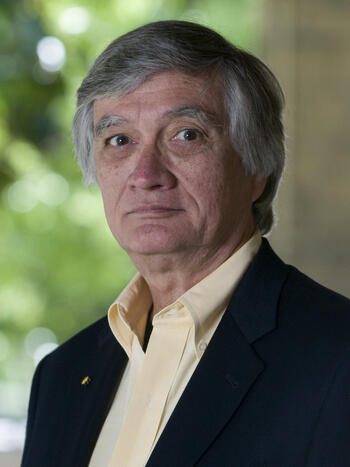
Togzhan Kassenova Center for Policy Research, SUNY-Albany
Seminars
News Feed Image
headshot_togzhan_kassenova.jpeg
Authors
J. Luis Rodriguez
News Type
Commentary
Date
Paragraphs

The United Nations kicks off the 10th Review Conference of the Treaty on the Non-Proliferation of Nuclear Weapons (NPT) on Monday, gathering 191 treaty members in New York. It’s an NPT review that typically takes place every five years, though the pandemic pushed the date back two years.

Read more at The Washington Post.

Hero Image
Missle test
All News button
1
Subtitle

Latin American countries will push again for nuclear disarmament at this month’s review conference

Authors
Siegfried S. Hecker
News Type
Q&As
Date
Paragraphs

One of the world’s foremost nuclear security and policy experts, Sig Hecker has spent much of an illustrious career working to enhance cooperation among US and Russian scientists and their governments in hopes of reducing nuclear risk. In fact, Hecker has literally edited the book on the subject, Doomed to Cooperate: How American and Russian scientists joined forces to avert some of the greatest post-Cold War nuclear dangers.

Read the rest at the Bulletin of the Atomic Scientists

Hero Image
Siegfried Hecker (second from right) visits the secret Russian nuclear city of Sarov in February 1992.
All News button
1
Subtitle

One of the world’s foremost nuclear security and policy experts, Sig Hecker has spent much of an illustrious career working to enhance cooperation among US and Russian scientists and their governments in hopes of reducing nuclear risk.

Authors
Rodney C. Ewing
News Type
Commentary
Date
Paragraphs

As the tragedy in Ukraine unfolds before the world with each day darker than the next, Russian saber rattling with nuclear weapons is only a part of the nuclear concern. Reported increases in radiation levels at Chernobyl and fires at the Zaporizhzhia Nuclear Power Plant, the largest in Europe, with six VVER Russian reactors, are in the headlines. In fact, Ukraine has 15 reactors at four nuclear power plants, which provided about half of its electricity. As war spreads, each of these plants is at risk.

Read the rest at the Bulletin of the Atomic Scientists

Hero Image
Man's picture
All News button
1
Subtitle

As the tragedy in Ukraine unfolds before the world with each day darker than the next, Russian saber rattling with nuclear weapons is only a part of the nuclear concern.

News Type
News
Date
Paragraphs

Highly radioactive fuel debris remains in the reactors

More than a decade after the Fukushima Daiichi Nuclear Power Plant (FDNPP) disaster, an international team of researchers uncovered critical new information related to the retrieval and management of fuel debris, the solidified mixture of melted nuclear fuel and other materials that lie at the base of the damaged reactors.

The material is highly radioactive and has potential to generate enough neutrons to trigger successive nuclear fission reactions (uranium-235 breaks into two elements after capturing neutrons, emitting enormous amounts of energy, radiation, and more neutrons), presenting a safety and material management risk.

One of the materials in nuclear reactors that can lower the number of neutrons interacting with uranium-235 is boron carbide (B4C), which was used as the control rod material in the FDNPP reactors and may remain within the fuel debris. If so, it may limit fission events within the fuel debris.

Can the fuel debris be safely removed?

On March 11, 2011, the control rods were inserted into the FDNPP reactors to stop the fission reactions immediately after the earthquake, but the later tsunami destroyed the reactor cooling systems. Fuel temperatures soon became high enough (greater than 2000 °C) to cause reactor meltdowns.

Currently, the fuel debris material from each reactor is cooled and stable; however, careful assessment of these materials is needed to ascertain if successive fission reactions and associated neutron flux could occur in the fuel debris during its removal. More information is needed to understand the inventories of radioactive elements as well their boron content, a neutron absorber. And many important questions remain: was boron from the control rods lost at high temperature during the meltdown? If so, does enough boron remain in the fuel debris to limit successive fission reactions within this material? These questions must be answered to support safe decommissioning.

Study shows direct evidence of volatilization of control rods during the accident.

A team of scientists from Japan, Finland, France, and the USA has published new research in The Journal of Hazardous Materials that indicates that most of the control rod boron remains in at least two of the damaged FDNPP reactors (Units 2 and/or 3).

Image
Rod Ewing

CISAC Co-Director Rod Ewing, who is the Frank Stanton Professor in Nuclear Security, acknowledged the importance of these new findings but highlighted that the team’s measurements now need to beextended in follow-up studies, where the occurrence and distribution of boron species should be characterized across a wide range of debris fragments.” 

Dr. Satoshi Utsunomiya and graduate student Kazuki Fueda of Kyushu University led the study. Using electron microscopy and secondary ion mass spectrometry (SIMS), the team has been able to report the first-ever measurements of boron and lithium chemistry from radioactive Cs-rich microparticles (CsMPs). CsMPs formed inside FDNPP reactor units 2 and/or 3 during the meltdowns. These microscopic particles were then emitted into the environment, and the particles hold vital clues about the extent and types of meltdown processes. The team’s new results on boron-11/boron-10 isotopic ratios (~4.2) clearly indicate that most of the boron inside the CsMPs is derived from the FDNPP control rods and not from other sources (e.g., boron from the seawater that was used to cool the reactors). Dr Utsunomiya states that the presence of boron in the CsMPs “provides direct evidence of volatilization of the control rods, indicating that they were severely damaged during the meltdowns.”

Ample boron likely remains in the reactors, but more research is needed

The team combined their new data with past knowledge on CsMP emissions to estimate that the total amount of boron released from the FDNPP reactors was likely small: 0.024–62 g.

Prof. Gareth Law, a co-author from the University of Helsinki emphasized that this “is a tiny fraction of the reactor’s overall boron inventory, and this may mean that essentially all of the control rod boron remains inside the reactors.”

Utsunomiya stresses that “FDNPP decommissioning, and specifically fuel debris removal must be planned so that the extensive fission reactions do not occur. Our international team has successfully provided the first direct evidence of volatilization of B4C during the FDNPP meltdowns, but critically, our new data indicated that large quantities of boron, which adsorbs neutrons, likely remains within fuel debris.”

Prof. emeritus Bernd Grambow, a study co-author from SUBATECH, Nantes, France, highlights that the work “paves the way for improving the safety assessment of debris retrieval during decommissioning at FDNPP,” with the team’s methods “providing a template for further studies.” Utsunomiya concludes that “it is nearly 11 years since the FDNPP disaster. In addition to tireless efforts from engineers at the FDNPP, scientific contributions are becoming more and more important as tools to address the major difficulties that will be faced during decommissioning.”

Hero Image
The crippled Fukushima Daiichi Nuclear Power Plant is seen on March 7, 2021 in Namie, Japan.
Yuichi Yamazaki / Stringer / GettyImages
All News button
1
Subtitle

More than a decade after the Fukushima Daiichi Nuclear Power Plant (FDNPP) disaster, an international team of researchers uncovered critical new information related to the retrieval and management of fuel debris, the solidified mixture of melted nuclear fuel and other materials that lie at the base of the damaged reactors.

Authors
News Type
News
Date
Paragraphs

Taiwan. Hypersonic missiles. The South China Sea. In the last few months, China’s activities have grabbed headlines and fueled speculation about its intentions. But how much of this action is posturing, and how much should U.S. policymakers and strategists take seriously?

To help explain what’s going on with our biggest competitor, FSI Center Fellow Oriana Skylar Mastro, a specialist on China’s military and an active member of the United States Air Force Reserves, joins Michael McFaul on World Class to debunk some of the myths that persist about China’s capabilities and reframe how the U.S. needs to think about strategic competition with Beijing. Listen to their full episode and read highlights from the conversation below.

Click here for a transcript of “We Need To Rethink Our Assumptions about China’s Strategic Goals”

Where China Was in the 1990s


Twenty years ago, the Chinese-Taiwan invasion plan was to take a couple of fishing vessels and paddle their way across the strait. In the 1990s, China had very limited, and often no ability to fly over water, or at night, or in weather, and their ships had no defenses.

For many, many years we knew that China was willing to fight if Taiwan declared independence. Fighting a war in any country that is big and resolved is problematic. But it was never the case that the United States was going to lose that war; it was always a matter of, “How many days?” How many days is it going to take us to win?

Where China Is Now


In the intervening years, China's military has changed both quantitatively and qualitatively. Now they have the largest navy in the world, and those ships are some of the most advanced surface ships that can be comparable to those of the United States. Same with their fighters; they have fifth generation airplanes and the largest airforce in the region. They’ve put all these capabilities online, and at the same time, they [have also] started developing capabilities to reach out and touch the United States with.

They developed the capability to hit moving ships at sea, which is something the United States doesn’t have the capability to do. They have a huge cruise and ballistic missile program that basically can take out a U.S. base like Kadena  in the region in a matter of hours, should they ever be willing to make a direct hit on the U.S.

This doesn't mean that China is more powerful than the United States; China still can’t project power outside the Indo-Pacific region, and even there it’s mostly through space, cyber, and nuclear weapons. But most of the contingencies we're talking about are really close to China, so it doesn’t really matter that they can’t project power. So, on the conventional side, I’m very concerned.

Why Taiwan Matters


The whole goal of the Communist Party, since its founding in 1949, has been to resolve this Taiwan issue.

Now they have the ships, the aircraft, and they’ve reorganized their whole military so that they can do joint operations, so that the navy and the air force can do an invasion of Taiwan. And a lot of those efforts came to a successful conclusion at the end of 2020. And that's why people like myself, not because of  the capabilities, but because when I was in Beijing and talked to the Chinese military and government officials, they said, “We could do this now, and maybe we should think about it.”

We know from behavioral economics that countries and people are much more willing to take risks to not lose something that they think is theirs, versus when they are trying to get something which they don't think is theirs. In the Chinese mindset, Taiwan, the South China Sea, East China Sea, etc. is already theirs, and the United States is trying to take it from them. That makes the situation even more problematic. 

What the United States Should Do


The Biden administration is doing a lot of political maneuvering to show that the United States is willing to defend Taiwan. And I think it’s just upsetting Beijing, because they think we’re changing the political status quo. It also does nothing to enhance our deterrence, because it doesn't signal anything about our capability to defend Taiwan.

The Chinese basically assume the United States will intervene. Their big question is, can they still win? We need to show China that they cannot win, and that’s about showing out capabilities in the region. It’s about aggressively negotiating new host arrangements, more access for the U.S. military, and new international institutions and treaties that constrain the ways China leverages power.

I'm a military person, but I'm totally on board with leading with diplomacy. But I don't see those types of efforts coming out of the Biden administration. They seem to want to double down and do the same things, just with more allies and partners.  I'm supportive of it, but I just don't think it's enough.

Read More

An Island that lies inside Taiwan's territory is seen with the Chinese city of Xiamen in the background.
Commentary

The Taiwan Temptation

Why Beijing Might Resort to Force
The Taiwan Temptation
Oriana Skylar Mastro testifies to the U.S.-China Economic and Security Review Commission on Taiwan deterrence.
News

Oriana Skylar Mastro Testifies on Deterring PRC Aggression Toward Taiwan to Congressional Review Commission

China may now be able to prevail in cross-strait contingencies even if the United States intervenes in Taiwan’s defense, Chinese security expert Oriana Skylar Mastro tells the U.S.-China Economic and Security Review Commission. Changes must be made to U.S. military capabilities, not U.S. policy, she argues.
Oriana Skylar Mastro Testifies on Deterring PRC Aggression Toward Taiwan to Congressional Review Commission
Hero Image
Chinese military propaganda depicting the Second Taiwan Strait Crisis of 1958.
Getty Images
All News button
1
Subtitle

On the World Class podcast, Oriana Skylar Mastro argues that in order to set effective policy toward China, the United States needs to better understand how and why China is projecting power.

Authors
News Type
Commentary
Date
Paragraphs

Listen on the BBC The Inquiry

Hero Image
BEIJING, CHINA - OCTOBER 01: Chinese rocket launchers are seen at a parade to celebrate the 70th Anniversary of the founding of the People's Republic of China in 1949 , at Tiananmen Square on October 1, 2019 in Beijing, China.
Kevin Frayer / Getty Images
All News button
1
Subtitle

Following a recent test in China, Cameron Tracy talks to the BBC about a new breed of hypersonic missiles and whether they will make the world a more dangerous place.

Authors
Sanne Verschuren
News Type
Commentary
Date
Paragraphs

This summer, China conducted a series of tests with nuclear-capable hypersonic weapons systems that have clearly gotten the attention of officials across the U.S. government. The tests included a hypersonic glide vehicle — a delivery mechanism that can maneuver through the Earth’s atmosphere towards its target — and also incorporated a fractional orbital bombardment system. Because a fractional orbital bombardment system can deliver its payload by entering into lower orbit and then “dropping” it on the target, it could reach the U.S. homeland via the South Pole, bypassing U.S. early warning systems and missile defenses, which are primarily geared towards the interception of ballistic missiles from the north.

Read the rest at War on the Rocks

Hero Image
Rocket blasting Missile Defense Agency
All News button
1
Subtitle

China conducted a series of tests with nuclear-capable hypersonic weapons systems that have gotten the attention of officials across the U.S. government. The tests included a hypersonic glide vehicle — a delivery mechanism that can maneuver through the Earth’s atmosphere towards its target — and incorporated a fractional orbital bombardment system.

Authors
Rose Gottemoeller
News Type
Commentary
Date
Paragraphs

Emerging and disruptive technologies spell an uncertain future for second-strike retaliatory forces. New sensors and big data analysis may render mobile missiles and submarines vulnerable to detection. I call this development the “standstill conundrum”: States will no longer be able to assure a nuclear response should they be hit by a nuclear first strike. If the nuclear weapons states can manage this vulnerability, however, they might be able to escape its worst effects. “Managing” could mean shoring up nuclear deterrence; it could mean focusing more on defenses; or it could mean negotiating to ensure continued viability of second-strike deterrent forces.

Read the rest at Texas National Security Review

Hero Image
rocket launched over the ocean defense.gov
All News button
1
Subtitle

Emerging and disruptive technologies spell an uncertain future for second-strike retaliatory forces. New sensors and big data analysis may render mobile missiles and submarines vulnerable to detection. I call this development the “standstill conundrum”: States will no longer be able to assure a nuclear response should they be hit by a nuclear first strike.

Authors
Siegfried S. Hecker
News Type
Commentary
Date
Paragraphs

What we know for sure is that North Korea can build the bomb because the tremors from deep inside the Punggye-ri nuclear test-site tunnels have been detected around the world six times. The most recent blast in September 2017 was more than 10 times the size of the Hiroshima and Nagasaki nuclear explosions. With these explosions, North Korea joined seven other countries known to have detonated nuclear devices.

Read the rest at Global Asia

Hero Image
man in blue suit smiling
All News button
1
Subtitle

Facts are difficult to come by, myths are deeply ingrained, and uncertainties lurk everywhere — that, in short, is the nature of North Korea’s nuclear program.

Subscribe to Nuclear Safety