Military
News Type
News
Date
Paragraphs

Stanford University’s Walter H. Shorenstein Asia-Pacific Research Center (APARC) is launching a U.S.-Asia Security Initiative spearheaded by a former top American diplomat to deepen dialogue on contemporary Asia-Pacific security issues and to further bridge American and Asian academics, government officials and industry leaders.

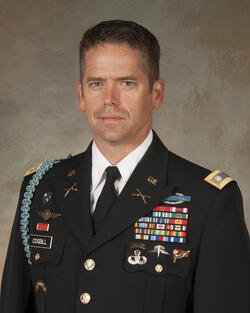
A new and uncertain multipolar system is emerging in Asia. The United States is and will remain a global power, but it is evident the post-Cold War international order is increasingly under strain. There is a pressing need for research about how developments in the Asia-Pacific region impact U.S. interests, and what the optimal strategies are to respond. Led by Karl Eikenberry, who served as U.S. ambassador to Afghanistan from 2009 to 2011, the initiative will look beyond simplistic notions of nations engaging harmoniously or competing against each other and explore a range of policy options.

Combining expertise from across Stanford University, the initiative will gather faculty and researchers from the Freeman Spogli Institute for International Studies (FSI), and take place under the auspices of Shorenstein APARC, a center focused on interdisciplinary research on contemporary issues of international cooperation, governance and security in the Asia-Pacific region.

Eikenberry, an Oksenberg-Rohlen Distinguished Fellow at Shorenstein APARC, retired from the U.S. Army as a lieutenant general after 35 years of service before taking the role as ambassador. At Stanford, he has returned to an early and longstanding interest in Asia, contributing to an urgent discussion about how the United States should respond regionally and globally to an increasingly strong China. The initiative is founded on the premise that there is a role for an institution that not only fosters groundbreaking research, but also serves to convene academic and governmental expertise from across the Asia-Pacific region in a dialogue aiming to inform policy and strategy.

“As China rises and Japan seeks a greater defense role in Asia, a number of questions are raised over the United States’ role in the region. This creates a great impetus for stakeholders to gather and develop an understanding of today’s perplexing security issues,” Eikenberry said.

“It’s an honor to lead this Stanford initiative and make possible opportunities for students, scholars, peers and leaders across the world.”

Before arriving at Stanford, Eikenberry’s Asia-related postings included assistant army, and later, defense attaché at the U.S. Embassy Beijing, operational assignments in the Republic of Korea and Hawaii, Director for Strategic Plans and Policy at U.S. Pacific Command, Senior Country Director for China at the Office of the Secretary of Defense, and two senior command tours in Afghanistan. He is a graduate of the U.S. Military Academy, holds master’s degrees from Harvard University and Stanford University, and has an advanced degree in Chinese history from Nanjing University.

The three-year initiative will build synergies with existing activities at Stanford, drawing scholars, government officials and industry leaders to engage at conferences and public seminars on important U.S.-Asia security themes. Understanding that inquiry is enlivened through interdisciplinary dialogue, participants will share best practices across multiple fields including diplomacy, military strategy and environmental risk.

“I can’t think of a better person to drive this initiative – Karl has a profound understanding of the economic, diplomatic and military complexities in the region. I have every confidence that it will develop into a robust, established project under his leadership,” said Gi-Wook Shin, director of Shorenstein APARC.

Launching July 1, 2015, the initiative aims to bolster local, national and global networks through several foundational components, including a core working group of experts from Stanford and peer institutions to provide new perspectives on U.S. policies in Asia; educational opportunities for Stanford students; and public programs that will bring intellectual and strategic leaders to Stanford to enrich the conversation on Asia-Pacific security.

The initiative seeks to operate as a focal point for academic scholarship on the west coast of the United States and offer practical steps that stakeholders can take to strengthen the security architecture and U.S. alliance commitments in the region. Outcomes from the initiative’s activities will include publications and policy reports, many of which will be offered open access online.

“As the Asia-Pacific region continues to rise, we see new threats but also greater opportunity to work together,” said Michael McFaul, director of FSI. “Stanford and FSI excel in offering practical solutions to policy challenges and can play a role in identifying strategies aimed at maintaining peace and stability in the region.”


Initiative inquires: Charlotte Lee, Shorenstein APARC, cplee@stanford.edu, (650) 725-6445

Media inquires: Lisa Griswold, Communications and Outreach Coordinator, Shorenstein APARC, lisagris@stanford.edu, (650) 736-0656

Hero Image
usnavy flickr uspacificfleet
In Sasebo, Japan, members from the maritime forces of India, Japan and the United States observe a trilateral naval field exercise in July 2014.
Flickr/U.S. Pacific Fleet
All News button
1

Writing About War - Award-winning writers in conversations about the ethics of war

This year marks both the 150th anniversary of the end of the Civil War and the 14th year that U.S. troops have been engaged in conflict since 9/11. How have American writers portrayed the face of battle, the ethical dilemmas of combat, and the memory of war? As a prelude to next season’s Live Context “War: Return and Recovery” theme, join us for an evening of readings and conversation with award-winning writersNatasha Tretheway and Phil Klay. 

Welcome remarks will be delivered by Jonathan Fanton, President of the American Academy of Arts and Sciences. 

Ms. Tretheway, the 19th Poet Laureate of the United States and Professor of English and Creative Writing at Emory University, will read from her 2007 Pulitzer Prize winning book, Native Guard, featuring poems written in the voice of a black soldier fighting for the Union army. 

Mr. Klay, a U.S. Marine Corps veteran of the war in Iraq, will read from Redeployment, his 2014 National Book Award winning collection of short stories, based on his service in Anbar Province during the 2007-2008 surge. 

Following the readings, both writers will engage in a candid conversation on writing about war with Stanford Political Scientist Scott Sagan.

This event is part of the Stanford Live 15-16 Season, Summer Series. It is co-sponsored by the Center for International Security and Cooperation and the American Academy of Arts and Sciences. 

Image
Writing About War


Bing Concert Hall

327 Lasuen Street

Stanford University

Phil Klay 2014 National Book Award winner Author U.S. Marine Corps veteran
Natasha Trethewey 19th Poet Laureate of the United States Author Emory University

CISAC
Stanford University
Encina Hall, E202
Stanford, CA 94305-6165

(650) 725-2715 (650) 723-0089
0
The Caroline S.G. Munro Professor of Political Science
The Bass University Fellow in Undergraduate Education  
Senior Fellow, Freeman Spogli Institute for International Studies
rsd25_073_1160a_1.jpg PhD

Scott D. Sagan is Co-Director and Senior Fellow at the Center for International Security and Cooperation, the Caroline S.G. Munro Professor of Political Science, and the Bass University Fellow in Undergraduate Education at Stanford University. He also serves as Co-Chair of the American Academy of Arts and Sciences’ Committee on International Security Studies. Before joining the Stanford faculty, Sagan was a lecturer in the Department of Government at Harvard University and served as special assistant to the director of the Organization of the Joint Chiefs of Staff in the Pentagon.

Sagan is the author of Moving Targets: Nuclear Strategy and National Security (Princeton University Press, 1989); The Limits of Safety: Organizations, Accidents, and Nuclear Weapons (Princeton University Press, 1993); and, with co-author Kenneth N. Waltz, The Spread of Nuclear Weapons: An Enduring Debate (W.W. Norton, 2012). He is the co-editor of Insider Threats (Cornell University Press, 2017) with Matthew Bunn; and co-editor of The Fragile Balance of Terror (Cornell University Press, 2022) with Vipin Narang. Sagan was also the guest editor of a two-volume special issue of DaedalusEthics, Technology, and War (Fall 2016) and The Changing Rules of War (Winter 2017).

Recent publications include “Creeds and Contestation: How US Nuclear and Legal Doctrine Influence Each Other,” with Janina Dill, in a special issue of Security Studies (December 2025); “Kettles of Hawks: Public Opinion on the Nuclear Taboo and Noncombatant Immunity in the United States, United Kingdom, France, and Israel”, with Janina Dill and Benjamin A. Valentino in Security Studies (February 2022); “The Rule of Law and the Role of Strategy in U.S. Nuclear Doctrine” with Allen S. Weiner in International Security (Spring 2021); “Does the Noncombatant Immunity Norm Have Stopping Power?” with Benjamin A. Valentino in International Security (Fall 2020); and “Just War and Unjust Soldiers: American Public Opinion on the Moral Equality of Combatants” and “On Reciprocity, Revenge, and Replication: A Rejoinder to Walzer, McMahan, and Keohane” with Benjamin A. Valentino in Ethics & International Affairs (Winter 2019).

In 2022, Sagan was awarded Thérèse Delpech Memorial Award from the Carnegie Endowment for International Peace at their International Nuclear Policy Conference. In 2017, he received the International Studies Association’s Susan Strange Award which recognizes the scholar whose “singular intellect, assertiveness, and insight most challenge conventional wisdom and intellectual and organizational complacency" in the international studies community. Sagan was also the recipient of the National Academy of Sciences William and Katherine Estes Award in 2015, for his work addressing the risks of nuclear weapons and the causes of nuclear proliferation. The award, which is granted triennially, recognizes “research in any field of cognitive or behavioral science that advances understanding of issues relating to the risk of nuclear war.” In 2013, Sagan received the International Studies Association's International Security Studies Section Distinguished Scholar Award. He has also won four teaching awards: Stanford’s 1998-99 Dean’s Award for Distinguished Teaching; Stanford's 1996 Hoagland Prize for Undergraduate Teaching; the International Studies Association’s 2008 Innovative Teaching Award; and the Monterey Institute for International Studies’ Nonproliferation Education Award in 2009.     

Co-director of the Center for International Security and Cooperation
CV
Date Label
Scott D. Sagan Professor of Political Science Panelist Stanford University
Jonathan Fanton President Speaker American Academy of Arts and Sciences
Panel Discussions
News Type
News
Date
Paragraphs


U.S. Navy Adm. Cecil D. Haney, the U.S. Strategic Command commander, hosted CISAC Co-Directors David Relman and Amy Zegart as well as CISAC faculty and fellows at Offutt Air Force Base in Nebraska on March 30-31, 2015, to promote military-to-university cooperation and innovation, and provide a better understanding of USSTRATCOM’s global missions.

The visit follows Haney’s trip to Stanford last year, during which he held seminars and private meetings with faculty, scholars and students to discuss strategic deterrence in the 21st century. Those discussions focused on reducing the U.S. nuclear weapons stockpile while maintaining an effective deterrent, the integration of space and cyberspace in nuclear platforms and the congested, contested and competitive operating environment in space.

“Developing and maintaining partnerships with security experts from the private sector and academic institutions like CISAC enables USSTRATCOM to view the strategic environment from a different perspective and adjust our decision calculous accordingly,” Haney said. “We are excited about this unique opportunity to exchange ideas and share information with this prestigious organization.” 

Haney opened the discussions by presenting a command mission brief, in which he described USSTRATCOM’s nine Unified Command Plan-assigned missions, his priorities as commander and his ongoing effort to build enduring relationships with partner organizations to exchange ideas and confront the broad range of global strategic challenges.

Zegart, who is also a senior fellow at Stanford’s Hoover Institution, said getting to see and experience how USSTRATCOM operates first-hand was “an eye opener.”

“It’s one thing to think about deterrence, it’s another to live it,” she said. “When you go to each other’s neighborhoods, you gain a better understanding of where each side is coming from … and that’s enormously important to us in how we think about deterrence and what we can do to help USSTRATCOM and its mission.”

“These kinds of exchanges have cascade effects on young people; how they think about civil-military relations [and] how they understand what our military is doing,” she added.

Image
stratcomm group

The delegation also received a tour of USSTRATCOM’s global operations center and held discussions with subject matter experts on strategic deterrence, cyber responsibility and nuclear modernization.

“As a cybersecurity fellow, it was fascinating to visit the global operations center and the battle deck to see the role that cybersecurity and information technology plays in the strategic deterrence mission,” said Andreas Kuehn, a CISAC pre-doctoral cybersecurity fellow from Switzerland. “At CISAC, we often discuss deterrence from a theoretical perspective, so it was very insightful to hear from people who work in [this field] and see how they deal with deterrence in an operational manner.”

The two-day visit concluded with an open discussion, during which CISAC and USSTRATCOM members discussed the most effective means to share information, plan future engagements and continue working to build on the mutually beneficial relationship between the two organizations.

“Sometimes people talk [about strategic issues] in the abstract and it becomes difficult to understand what is happening on the ground and in the real world,” Kuehn said. “I think [USSTRATCOM] took extra steps to keep the conversations open and concrete.”

USSTRATCOM is one of nine Department of Defense unified combatant commands charged with strategic deterrence, space operations, cyberspace operations, joint electronic warfare, global strike, missile defense, intelligence, surveillance and reconnaissance, combating weapons of mass destruction, and analysis and targeting.


Hero Image
stratcomm haney
U.S. Navy Adm. Cecil D. Haney (center), U.S. Strategic Command commander, presents a USSTRATCOM mission briefing to the leadership, faculty members and fellows from Stanford University’s Center for International Security and Cooperation, during their visit to Offutt Air Force Base, Neb., March 30, 2015.
USSTRATCOM Photo by U.S. Air Force Staff Sgt. Jonathan Lovelady
All News button
1
News Type
News
Date
Paragraphs


In this talk sponsored by the Stanford Institute for Economic Policy Research, three CISAC scholars discuss the Islamic State, Iran and the Taliban and the threats they impose to American security. The talk is moderated by Brad Kapnick, a Partner at Katten & Temple, LLP, and SIEPR Advisory Board member. Joining him are Martha Crenshaw, a senior fellow at CISAC and the Freeman Spogli Institute for International Studies and professor, by courtesy, of political science; CISAC Senior Fellow Scott Sagan, the Caroline S.G. Munro Professor of Political Science; former U.S. Ambassador to Afghanistan Karl Eikenberry, the William J. Perry Fellow at CISAC and a consulting professor at the Freeman Spogli Institute.

This is an abbreviated version of the talk below. The full talk can be found here.


Hero Image
isis
Hashid Shaabi (Popular Mobilization) forces allied with Iraqi forces chant slogans against the Islamic State in Tikrit, March 30, 2015.
Reuters
All News button
1
-

Abstract: Scholars know quite a lot about U.S. nuclear war planning from the end of World War II to the end of the Cold War. We know a great deal about how nuclear deterrence was and is supposed to work. We know much less about how officers and others understood the circumstances and consequences if deterrence had failed and these plans had been used in war. What was it like to make very specific and workable plans for a war that, in President Ronald Reagan’s words, “cannot be won and must never be fought”—but nonetheless—might have been fought? This is a problem of understanding how organizations build complex technical and logistical routines, and how people in these organizations understood and made sense of the possibility that in some circumstances, nuclear weapons would be used. How did war planners imagine the circumstances? The scenarios of what might ensue? The consequences? It is one thing to say the whole situation was a paradox, or a conundrum; it is another to understand the many meanings of this situation for those involved. Explanation hinges on how people in organizations make plans, develop scenarios, and tell stories.

About the Speaker: Lynn Eden is Associate Director for Research at the Center for International Security and Cooperation, Freeman Spogli Institute for International Studies, Stanford University. Eden received her Ph.D. in sociology from the University of Michigan, held several pre- and post-doctoral fellowships, and taught in the history department at Carnegie Mellon before coming to Stanford.

In the area of international security, Eden has focused on U.S. foreign and military policy, arms control, the social construction of science and technology, and organizational issues regarding nuclear policy and homeland security. She co-edited, with Steven E. Miller, Nuclear Arguments: Understanding the Strategic Nuclear Arms and Arms Control Debates (Ithaca, N.Y.: Cornell University Press, 1989). She was an editor of The Oxford Companion to American Military History (New York: Oxford University Press, 2000), which takes a social and cultural perspective on war and peace in U.S. history. That volume was chosen as a Main Selection of the History Book Club.

Eden's book Whole World on Fire: Organizations, Knowledge, and Nuclear Weapons Devastation (Ithaca: Cornell University Press, 2004; New Delhi: Manas Publications, 2004) explores how and why the U.S. government--from World War II to the present--has greatly underestimated the damage caused by nuclear weapons by failing to predict damage from firestorms. It shows how well-funded and highly professional organizations, by focusing on what they do well and systematically excluding what they don't, may build a poor representation of the world--a self-reinforcing fallacy that can have serious consequences, from the sinking of the Titanic to not predicting the vulnerability of the World Trade Center to burning jet fuel. Whole World on Fire won the American Sociological Association's 2004 Robert K. Merton Award for best book in science, knowledge, and technology.

Eden has also written on life in small-town America. Her first book, Crisis in Watertown (Ann Arbor: University of Michigan Press, 1972), was her college senior thesis; it was a finalist for a National Book Award in 1973. Her second book, Witness in Philadelphia, with Florence Mars (Baton Rouge: Louisiana State University Press, 1977), about the murders of civil rights workers Schwerner, Chaney, and Goodman in the summer of 1964, was a Book of the Month Club Alternate Selection.

Encina Hall (2nd floor)

Not in residence

0
Affiliate
rsd15_078_0365a.jpg PhD

Lynn Eden is a Senior Research Scholar Emeritus. She was a Senior Research Scholar at Stanford University's Center for International Security and Cooperation until January 2016, as well as was Associate Director for Research. Eden received her Ph.D. in sociology from the University of Michigan, held several pre- and post-doctoral fellowships, and taught in the history department at Carnegie Mellon before coming to Stanford.

In the area of international security, Eden has focused on U.S. foreign and military policy, arms control, the social construction of science and technology, and organizational issues regarding nuclear policy and homeland security. She co-edited, with Steven E. Miller, Nuclear Arguments: Understanding the Strategic Nuclear Arms and Arms Control Debates (Ithaca, N.Y.: Cornell University Press, 1989). She was an editor of The Oxford Companion to American Military History (New York: Oxford University Press, 2000), which takes a social and cultural perspective on war and peace in U.S. history. That volume was chosen as a Main Selection of the History Book Club.

Eden's book Whole World on Fire: Organizations, Knowledge, and Nuclear Weapons Devastation (Ithaca: Cornell University Press, 2004; New Delhi: Manas Publications, 2004) explores how and why the U.S. government--from World War II to the present--has greatly underestimated the damage caused by nuclear weapons by failing to predict damage from firestorms. It shows how well-funded and highly professional organizations, by focusing on what they do well and systematically excluding what they don't, may build a poor representation of the world--a self-reinforcing fallacy that can have serious consequences, from the sinking of the Titanic to not predicting the vulnerability of the World Trade Center to burning jet fuel. Whole World on Fire won the American Sociological Association's 2004 Robert K. Merton Award for best book in science, knowledge, and technology.

Eden has also written on life in small-town America. Her first book, Crisis in Watertown (Ann Arbor: University of Michigan Press, 1972), was her college senior thesis; it was a finalist for a National Book Award in 1973. Her second book, Witness in Philadelphia, with Florence Mars (Baton Rouge: Louisiana State University Press, 1977), about the murders of civil rights workers Schwerner, Chaney, and Goodman in the summer of 1964, was a Book of the Month Club Alternate Selection.

CV
Lynn Eden Associate Director for Research at CISAC; Senior Research Scholar Speaker Stanford University
Seminars
-

Abstract: In the early morning hours of March 28, 1979, began a series of events that led to a partial meltdown of the reactor core at Unit 2 of the Three Mile Island nuclear plant and the worst accident in the history of the commercial nuclear power industry in the United States. Catalyzed by this event, the industry leadership formed an independent oversight entity, the Institute of Nuclear Power Operations, resourced its technical staffing, and ceded significant authorities to it in the areas of operational oversight, training and accreditation, the sharing of operational experience and provision of assistance to plants in need. As the former President and CEO of INPO, Admiral Ellis will discuss the requirements for effective self-regulation, specifically, and consider the issues surrounding broader employment of the concept.

About the Speaker: James O. Ellis Jr. is an Annenberg Distinguished Visiting Fellow at the Hoover Institution and a CISAC Affiliate. He retired as president and chief executive officer of the Institute of Nuclear Power Operations (INPO), a self-regulatory nonprofit located in Atlanta, Georgia, on May 18, 2012. In 2004, Admiral Ellis completed a thirty-nine-year US Navy career as commander of the United States Strategic Command. In this role, he was responsible for the global command and control of US strategic and space forces. 

His sea service included carrier-based tours with three fighter squadrons and command of the USS Abraham Lincoln, a nuclear-powered aircraft carrier. His shore assignments included commander in chief, US Naval Forces, Europe, and Allied Forces, Southern Europe, where he led United States and NATO forces in combat and humanitarian operations during the 1999 Kosovo crisis. 

Ellis holds two masters’ degrees in aerospace engineering and is a member of the National Academy of Engineering.


Self-regulation in the US Commercial Nuclear Power: Why Does It Work And Why Can’t It Be Replicated?
Download pdf

Encina Hall (2nd floor)

Not in residence

0
CISAC Affiliate
Annenberg Distinguished Visiting Fellow, Hoover Institution
ellis_james_2021_hr.jpeg

Admiral James O. Ellis Jr. is the Annenberg Distinguished Visiting Fellow at the Hoover Institution, where he oversees both the Global Policy and Strategy Initiative and the George P. Shultz Energy Policy Working Group. He retired from a 39-year career with the US Navy in 2004. He has also served in the private and nonprofit sectors in areas of energy and nuclear security.

A 1969 graduate of the US Naval Academy, Ellis was designated a naval aviator in 1971. His service as a navy fighter pilot included tours with two carrier-based fighter squadrons and assignment as commanding officer of an F/A-18 strike fighter squadron. In 1991, he assumed command of the USS Abraham Lincoln, a nuclear-powered aircraft carrier. After selection to rear admiral, in 1996, he served as a carrier battle group commander, leading contingency response operations in the Taiwan Strait.

His shore assignments included numerous senior military staff tours. Senior command positions included commander in chief, US Naval Forces, Europe, and commander in chief, Allied Forces, Southern Europe, during a time of historic NATO expansion. He led US and NATO forces in combat and humanitarian operations during the 1999 Kosovo crisis.

Ellis’s final assignment in the navy was as commander of the US Strategic Command during a time of challenge and change. In this role, he was responsible for the global command and control of US strategic and space forces, reporting directly to the secretary of defense.

After his naval career, he joined the Institute of Nuclear Power Operations (INPO) as president and chief executive officer. INPO, sponsored by the commercial nuclear industry, is an independent, nonprofit organization whose mission is to promote the highest levels of safety and reliability in the operation of commercial nuclear electric generating plants. He retired from INPO in 2012.

Ellis is also the former board chair of Level 3 Communications and served on the board of Lockheed Martin Corporation and Dominion Energy. In 2006, he became a member of the Military Advisory Panel to the Iraq Study Group. In 2009, he completed three years of service on the President’s Intelligence Advisory Board. A former board chair of the nonprofit Space Foundation, in 2018 he was appointed chairman of the Users’ Advisory Group to the Vice President’s National Space Council, where he served until 2022.

Ellis holds a master’s degree in aerospace engineering from the Georgia Institute of Technology. He was inducted into the school’s Engineering Hall of Fame in 2005. He completed US Navy Nuclear Power Training and was qualified in the operation and maintenance of naval nuclear propulsion plants. He is a graduate of the Navy Test Pilot School and the Navy Fighter Weapons School (Top Gun). In 2013, Ellis was elected to the National Academy of Engineering for “contributions to global nuclear safety.”

Date Label
James O. Ellis Jr Annenberg Distinguished Visiting Fellow at the Hoover Institution and CISAC Affiliate Speaker Hoover Institution, CISAC
Seminars
Paragraphs

Every week, the Islamic State (ISIS) makes further headlines with its ruthless behavior. Beheadings, mass executions, burnings and extreme acts of brutality are the methods of a terrorist campaign intended to cow opponents and rally potential fighters. At the same time, the group is fighting a guerilla war against Iraqi forces while engaging in more conventional infantry battles against Kurdish Peshmerga and Free Syrian Army cadres. The many tactics of ISIS raises the question: Which type of war are we fighting against?

CISAC's Joe Felter and his Empirical Studies of Conflict colleagues Eli Berman and Jacob Shapiro ask those questions in this National Interest article.

All Publications button
1
Publication Type
Journal Articles
Publication Date
Journal Publisher
The National Interest
Authors
Authors
News Type
News
Date
Paragraphs

Understanding the nature of violent conflict in the world's most dangerous flashpoints may help find ways to peace and stability, according to a Stanford expert.

Once a soldier, now a scholar, Joe Felter knows better than most the intrinsic meaning of war and conflict – he served on the front lines in the U.S. Special Forces in places such as Iraq, Afghanistan and the Philippines.

Today, the senior research scholar at Stanford's Center for International Security and Cooperationand research fellow at the Hoover Institution is on a different kind of mission: building knowledge on the subject of politically motivated conflict.

For example, how are the most casualties suffered and under what conditions? Are there patterns to why rebels are surrendering? And how do armed battles affect development and education in local communities?

Answers to these and other questions are found in the Empirical Studies of Conflict project database, which is led by Felter and Jacob Shapiro, his former Stanford political science classmate, now a professor at Princeton University. The effort focuses on insurgency, civil war and other sources of politically motivated violence worldwide. Launched last year, it currently covers the Philippines, Afghanistan, Colombia, Iraq, Northern Ireland, Mexico, the Israeli-occupied territories, Pakistan and Vietnam. The site includes geospatial and tabular data as well as thousands of documents, archives and interviews.

Since 2009, Felter has collaborated with colleagues at Princeton, the University of California, San Diego, and other institutions in developing the database. Today, they are advising policymakers and military leaders on how best to curb conflict, reduce civilian casualties and promote prosperity. Felter and his colleagues have outlined some of their work in this Foreign Affairs article published in January 2015.

Felter's research on Filipino insurgencies, for instance, has produced significant results. The senior officials there have invited him to brief their military on battlefield trends and counterinsurgency strategy, as Felter and his colleagues have interviewed thousands of combatants as part of the project.

What do they learn about the insurgent mindset? One Islamic militant chief talked tactics with him, then revealed that his greatest tool was his men's belief that Allah was waiting for them on the other side. Others included a Roman Catholic nun who was running guns and money to help the poor and a young college freshman recruited with the promise of $40 a month to support her family.

Pathways to peace

In the case of the Philippines, Felter had access to more than 100,000 individual reports of conflict episodes dating back to 1975 and more than 13,000 interview transcripts from rebels who were captured or had surrendered over the last 30 years. That information was coded in detail and compiled as part of the Empirical Studies of Conflict Project database. The Philippines is home to some of the most protracted Muslim separatist and communist insurgencies in the world, and that is precisely why the government is interested in learning how to thwart it.

L.A. Ciceroscholar Joe Felter and student research assistant Crystal Lee

Crystal Lee, a Stanford senior and history major, has been Joe Felter’s research assistant since her freshman year.

"For me, it's kind of validating all the thousands and thousands of hours that went into all our coding," said Felter, adding that the information will help the Philippines government find ways to ease the costs and human suffering in the conflicts it faces.

It has been a transformational journey for Felter, who retired in 2012 from the U.S. Army as a colonel following a career as a Special Forces and foreign area officer with missions and deployments across Asia, Panama, Iraq and Afghanistan. In 2010-11, he commanded the International Security and Assistance Force Counter Insurgency Advisory and Assistance Team in Afghanistan.

"I spent a long time in the military deployed to environments where you could appreciate that what you were doing was having an impact," Felter said.

In higher education now, his vantage point is different from what it was on the front lines. Today, both perspective and policy are two of his main goals.

"Since I transitioned to academia, I haven't lost my commitment to trying to help practitioners in the field to better understand conflict – by using data," Felter said.

Stanford senior Crystal Lee, a history major, has been working with Felter as a research assistant since her freshman year, helping him code and compile the datasets.

"It's been really interesting for me to think about the implications that this type of data analysis has on governments and broader policy work," said Lee, who also has analyzed and reconstructed hundreds of interviews with former rebels for Felter's upcoming book.

She said that a romantic notion exists in Silicon Valley that if one uses a huge database, one can wave a magic wand and believe that so-called "big data" will solve everything. "But it's a really messy field and we've had to use best practices to make sense of the increasingly complicated picture of counterinsurgency and terrorism," she said.

Study at the local level

Felter pointed out that to truly comprehend the nature of counterinsurgency in places like the Philippines, Iraq or Afghanistan, one must realize that its roots are in local communities.

"You need to study it at the local level to really understand it," Felter said. "And the Philippines is like a petri dish for studying both insurgency and counterinsurgency because you have multiple, long-running insurgencies, each with distinct characteristics, and with an array of government and military responses to address these threats over time."

The coders are now doubling back over the dataset from 1975 to 2012 to make sure it's accurate and cleaned of any potentially sensitive details before it goes public. The data are the basis for two of Felter's ongoing book projects and dozens of working papers and journal articles.

Roots of research

A Stanford alum, Felter was in the Philippines in 2004 conducting field research as part of his doctoral dissertation when he was first able to gain access to what would become a trove of detailed incident-level data on insurgency and counterinsurgency.

John Troncoscholar Joe Felter with members of the First Scout Ranger Regiment, Philippine Army

Stanford scholar Joe Felter with members of the First Scout Ranger Regiment, Philippine Army. His research in the Philippines helps inform the Empirical Studies of Conflict database.

After bringing back the data and meeting with his faculty advisers – Stanford political science Professors David Laitin and James Fearon – he realized the extensive incident-level data could be coded in a manner that would make it a tremendous resource for scholars studying civil wars, insurgencies and other forms of politically motivated violence.

"This comprehensive conflict dataset is going to be the holy grail of micro-level conflict data," Felter said. "It has the potential to drive a significant number of publications, reports and analyses, and enable conflict researchers to develop insights and test theories that they would not have been able to do before."

The network is expanding. A dozen young scholars who were supported by funding for the Empirical Studies of Conflict (ESOC) project as postdoctoral fellows have now been placed in tenure-track positions at universities.

"What's unique about ESOC is that we're trying hard to make it easier for others to study conflict by pulling together everything we can on the conflicts we've studied," said Jake Shapiro, an associate professor of politics and international affairs at Princeton University and the project's co-director.

On Iraq, for example, the website provides data on conflict outcomes, politics and demographics, in addition to maps, links to other useful information sources and other types of research on Iraq, he said.

Shapiro says researchers working for the Canadian Armed Forces, the World Bank and the U.S. military have already turned to the database for help. Insurgencies cost human lives and dollars, enough so that the United States and the international community are now focused on rebuilding social and political orders in those troubled countries.

As Felter put it, "We are devoted to learning from all those experiences and to making it easier for others to do so as well, so that we can all live more peacefully and safely in the future."

Research highlights

The Empirical Studies of Conflict project includes the following scholarly advances:

• Research on insurgent compensation paid during the U.S. Iraq conflict shows that pay was not based on risk factors.
• Findings show rebel violence will decrease when projects are secure and valued by community members and when implementation is conditional on the behavior of non-combatants.
• A journal article describes the preference for "certainty" in the relationship between violence and economic risk in wartime Afghanistan.

Media Contact

Beth Duff-Brown, Center for International Security and Cooperation: (650) 725-6488,bethduff@stanford.edu

Clifton B. Parker, Stanford News Service: (650) 725-0224, cbparker@stanford.edu

Hero Image
conflict joe
CISAC Senior Research Scholar Joe Felter with members of the First Scout Ranger Regiment, Philippine Army. His research in the Philippines helps inform the Empirical Studies of Conflict Project database.
John Tronco
All News button
1
-

Due to the combination of a great response and our space constraints, this event is now full. We regret that we cannot accept any more RSVPs.

Lunch and seating are reserved for our registered guests.


Abstract: On April 5, 2009, President Obama stated his intent to seek "...the peace and security of a world without nuclear weapons". He is not the first US President to state such a desire (President Reagan, among others), and he acknowledged that the goal "will not be reached quickly--perhaps not in my lifetime". President Obama proposed reducing the number and role of nuclear weapons in US national security strategy as key steps toward achieving this goal.

While such a world is appealing, nuclear weapons remain woven into the fabric of US national security strategy as the ultimate guarantor of US and Allied security. Originally constructed by the US to end a war, the unique physical and psychological power of nuclear weapons rapidly made them a political tool to prevent or constrain conflict in the ensuing decades of the Cold War. United States foreign policy was underpinned by deterrence and assurance concepts that were both based on nuclear weapons and that defined their primary roles.

To be sure, the strategic context for nuclear weapons has changed since the end of the Cold War and the threat of sudden massive nuclear attack has receded. Significant reductions have been made to the deployed US nuclear force, the weapon stockpile, and the very specialized industrial base that supports it. Modifications have been made to employment concepts. New concepts of tailored deterrence have emerged that include highly capable US conventional forces, limited missile defenses, and space and cyberspace capabilities. 

But nuclear weapons continue to influence the security relationships and behaviors between major nations, and the primary deterrence and assurance role of US nuclear weapons remains at the foundation of US national security. Recent global events remind us that other nations continue to value the influence their nuclear weapons provide and, absent a viable replacement, US nuclear weapons will be needed for a very long time to come. Sustaining a safe, secure, and effective nuclear deterrent will be a challenge that has to be met.   


About the Speaker: General C. Robert "Bob" Kehler is the 2014-2015 Lee Lecturer at CISAC.

Prior to his retirement in December 2013, he was the Commander of United States Strategic Command at Offutt Air Force Base, Nebraska.  In that role he was directly responsible to the Secretary of Defense and President for the plans and operations of all U. S. forces conducting global strategic deterrence, nuclear alert, global strike, space, cyberspace and associated operations.  While in command, he crafted and implemented critical elements of policies and plans to deter strategic attacks against the U.S. and its key allies, and led a joint team of over 60,000 military and civilians to 100% mission success in multiple, high-stakes global operations.  He also integrated Department of Defense (DOD) activities for global missile defense, combating weapons of mass destruction, and intelligence, surveillance, and reconnaissance.  His forces directly supported combat operations in Southwest Asia and North Africa.

General Kehler’s military career spanned almost 39 years of service that included important operational and staff assignments.  He was one of a very few officers to command at the squadron, group, wing, major command, and combatant command levels, and he had a broad range of operational experience in Intercontinental Ballistic Missile (ICBM), space launch, space control, space surveillance and missile warning units.  Before taking command of Strategic Command, General Kehler commanded Air Force Space Command where he organized, trained, and equipped over 46,000 professionals conducting mission-ready nuclear missile, space, and cyberspace operations.  In that role, he designed the Air Force’s inaugural blueprint, operating concept, organizational structure, and personnel program to meet rapidly growing cyberspace challenges. 

His staff assignments included tours with the Air Staff, Strategic Air Command, Air Force Space Command, and the Joint Staff.  He was also assigned to the Secretary of the Air Force’s Office of Legislative Liaison where he was the point man on Capitol Hill for matters regarding the President’s ICBM Modernization Program.  As Director of the National Security Space Office, General Kehler integrated the activities of a number of DOD and Intelligence Community organizations on behalf of the Undersecretary of the Air Force and Director, National Reconnaissance Office. 

He entered the Air Force in 1975 as a Distinguished Graduate of the Pennsylvania State University R.O.T.C. program, has master’s degrees from the University of Oklahoma in Public Administration and the Naval War College in National Security and Strategic Studies, and completed executive level programs at Carnegie-Mellon University, Syracuse University, and Harvard University.

General Kehler’s military awards include the Defense Distinguished and Superior Service Medals, the Distinguished Service Medal (2 awards), Legion of Merit (3 awards), and the French Legion of Honor (Officer).  He wears Command Space and ICBM Operations Badges.  His other honors include the Thomas D. White Space Award (recognizing outstanding contributions to space) and the H. H. Arnold Award (for the most significant contribution by a military member for national defense), both presented by the Air Force Association. 

General Kehler serves as a Trustee of the Mitre Corporation, is on the Board of Directors of the Inmarsat Corporation, and is Chairman of the Board of BEI Precision Systems and Space Company.  He is a Distinguished Alumnus of the Pennsylvania State University, where he also serves as a member of the Advisory Board for Outreach and Online Education.  A Senior Fellow of the National Defense University and an Associate Fellow of the American Institute of Aeronautics and Astronautics, he has testified before numerous Congressional Committees and has spoken widely on matters of national security.  His articles have appeared in The Naval War College Review and Joint Forces Quarterly.  Time permitting; he enjoys playing the guitar, golf, and target shooting.

Encina Hall (2nd floor)

0
Affiliate
robert_kehler.png

*Please contact Tracy Hines (tmhines23@stanford.edu) for any inquires regarding General Kehler.

Prior to his retirement on January 1, 2014, General Kehler was the Commander of United States Strategic Command at Offutt Air Force Base, Nebraska.  In that role he was directly responsible to the Secretary of Defense and President for the plans and operations of all U. S. forces conducting global strategic deterrence, nuclear alert, global strike, space, cyberspace and associated operations.  While in command, he crafted and implemented critical elements of policies and plans to deter strategic attacks against the U.S. and its key allies and led a joint team of military members and civilians to 100% mission success in multiple, high-stakes global operations.  He also integrated Department of Defense (DOD) activities for global missile defense, combating weapons of mass destruction, and intelligence, surveillance, and reconnaissance.  His forces directly supported combat operations in Southwest Asia and North Africa.

General Kehler’s military career spanned almost thirty-nine years of service that included progressively important operational and staff assignments.  He commanded units at the squadron, group, wing, major command, and combatant command levels, and had a broad range of operational experience in Intercontinental Ballistic Missiles, space launch, space control, space surveillance and missile warning.  Before taking command of Strategic Command, General Kehler commanded Air Force Space Command (predecessor to U.S. Space Force) where he organized, trained, and equipped airmen conducting mission-ready nuclear missile, space, and cyberspace operations.  His command designed the Air Force’s inaugural blueprint, operating concept, organizational structure, and personnel program to meet emerging cyberspace challenges. 

His staff assignments included tours with the Air Staff, Strategic Air Command, Air Force Space Command, and the Joint Staff.  He was also assigned to the Secretary of the Air Force’s Office of Legislative Liaison where he was the point man on Capitol Hill for matters regarding the President’s ICBM Modernization Program.  As Director of the National Security Space Office, General Kehler integrated the activities of a number of DOD and Intelligence Community organizations on behalf of the Undersecretary of the Air Force and Director, National Reconnaissance Office. 

General Kehler entered the Air Force in 1975 as a Distinguished Graduate of the Pennsylvania State University R.O.T.C. program, has master’s degrees from the University of Oklahoma in Public Administration and the Naval War College in National Security and Strategic Studies, and completed executive level programs at Carnegie-Mellon University, Syracuse University, and Harvard University.

Since his retirement, General Kehler has continued to apply his expertise as a consultant, corporate director and trustee, and senior advisor and fellow to a number of prominent public, private, and educational institutions. He writes and speaks on matters of national security. Bob and his late wife have two adult sons and two grandsons. Time permitting, he enjoys playing the guitar and golf.

General C. Robert Kehler USAF (ret.), Lee Lecturer Speaker
Seminars
News Type
News
Date
Paragraphs


The threats, turmoil, and media circus surrounding the Hollywood satire "The Interview," in which bungling American journalists assassinate North Korean leader Kim Jong Un, have put the country in the international spotlight again. Often forgotten amid all this comedy, though, is the very unfunny fact that North Korea’s nuclear weapons program has been relentlessly expanding for a decade, and poses a real and deadly threat to the rest of Northeast Asia.

Senior Fellow Siegfried Hecker writes in this Bulletin of the Atomic Scientists piece that North Korea today may possess a nuclear arsenal of roughly 12 nuclear weapons, half likely fueled by plutonium and half by highly enriched uranium.

And in this related Q&A, David Straub, a Korea expert at FSI's Walter Shorenstein Asia-Pacific Research Center, answers questions about the Sony hacking after North Korea condemned "The Interivew."
Hero Image
interview
All News button
1
Subscribe to Military