
 FSI researchers work to understand continuity and change in societies as they confront their problems and opportunities. This includes the implications of migration and human trafficking. What happens to a society when young girls exit the sex trade? How do groups moving between locations impact societies, economies, self-identity and citizenship? What are the ethnic challenges faced by an increasingly diverse European Union? From a policy perspective, scholars also work to investigate the consequences of security-related measures for society and its values.
The Europe Center reflects much of FSI’s agenda of investigating societies, serving as a forum for experts to research the cultures, religions and people of Europe. The Center sponsors several seminars and lectures, as well as visiting scholars.
Societal research also addresses issues of demography and aging, such as the social and economic challenges of providing health care for an aging population. How do older adults make decisions, and what societal tools need to be in place to ensure the resulting decisions are well-informed? FSI regularly brings in international scholars to look at these issues. They discuss how adults care for their older parents in rural China as well as the economic aspects of aging populations in China and India.


Refugees in International Relations
Paragraphs
" Refugees in International Relations shows that strategic and institutional thinking are essential to understand the causes of forced migration, its consequences, and appropriate policy responses. It has a valuable and important central theme: refugee issues are inherently political." --Robert O. Keohane, Professor of International Affairs, Woodrow Wilson School of Public and International Affairs, Princeton University
Refugees lie at the heart of world politics. The causes and consequences of, and responses to, human displacement are intertwined with many of the core concerns of International Relations. Yet, scholars of International Relations have generally bypassed the study of refugees, and Forced Migration Studies has generally bypassed insights from International Relations. Refugees in International Relations therefore represents an attempt to bridge the divide between these disciplines, and to place refugees within the mainstream of International Relations. Drawing together the work and ideas of a combination of the world's leading and emerging International Relations scholars, Refugees in International Relations considers what ideas from International Relations can offer our understanding of the international politics of forced migration. The insights draw from across the theoretical spectrum of International Relations from realism to critical theory to feminism, covering issues including international cooperation, security, and the international political economy. They engage with some of the most challenging political and practical questions in contemporary forced migration, including peacebuilding, post-conflict reconstruction, and statebuilding. The result is a set of highly original chapters, yielding not only new concepts of wider relevance to International Relations but also insights for academics, policy-makers, and practitioners working on forced migration in particular and humanitarianism in general.
Contents:
- "Refugees in International Relations", Alexander Betts and Gil Loescher
- "Realism, Refugees, and Strategies of Humanitarianism", Jack Snyder
- "International Cooperation in the Refugee Regime", Alexander Betts
- "Refugees, International Society, and Global Order", Andrew Hurrell
- "Humanitarianism, Paternalism, and the UNHCR", Michael Barnett
- "Beyond 'Bare Life': Refugees and the 'Right to Have Rights'", Patricia Owens
- "The Only Thinkable Figure? Ethical and Normative Approaches to Refugees in International Relations", Chris Brown
- "Feminist Geopolitics Meets Refugee Studies", Jennifer Hyndman
- "'Global' Governance of Forced Migration", Sophia Benz and Andreas Hasenclever
- "Refugees and Military Intervention", Adam Roberts
- "UNHCR and the Securitization of Forced Migration", Anne Hammerstad
- "Refugees, Peacebuilding, and the Regional Dynamics of Conflict", James Milner
- "Post-conflict Statebuilding and Forced Migration", Dominik Zaum
- "Forced Migration in the International Political Economy", Sarah Collinson
All Publications button
1
Publication Type
Books
Publication Date
Journal Publisher
Oxford University Press
Number
0199595623
North Korea's Yongbyon Nuclear Complex: A presentation by Siegfried S. Hecker at the Korea Economic Institute
CISAC's Siegfried Hecker presented the findings of his recent trip to North Korea, where he was given a tour of a nuclear facility reportedly capable of enriching uranium. In his remarks he described two new nuclear facilities, a small light-water power reactor in early stages of construction, and a "modern, clean centrifuge plant" for uranium enrichment. Following his presentation he and Robert Carlin, a CISAC visiting professor, spoke about North Korean nuclear programs and the international reaction to North Korea's nuclear ambitions. This event occurred the day after North Korean military attacks on the South Korean island of Yeonpyeong.
Image
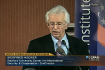
Dr. Hecker's Nov. 23, 2010 Presentation at the Korea Economic Institute (C-Span video)
Korea Economic Institute
Siegfried S. Hecker
CISAC
Stanford University
Encina Hall, C220
Stanford, CA 94305-6165
0
shecker@stanford.edu
Senior Fellow, Freeman Spogli Institute for International Studies, Emeritus
Research Professor, Management Science and Engineering, Emeritus
Siegfried S. Hecker is a professor emeritus (research) in the Department of Management Science and Engineering and a senior fellow emeritus at the Freeman Spogli Institute for International Studies (FSI). He was co-director of CISAC from 2007-2012. From 1986 to 1997, Dr. Hecker served as the fifth Director of the Los Alamos National Laboratory. Dr. Hecker is an internationally recognized expert in plutonium science, global threat reduction, and nuclear security.
Dr. Hecker’s current research interests include nuclear nonproliferation and arms control, nuclear weapons policy, nuclear security, the safe and secure expansion of nuclear energy, and plutonium science. At the end of the Cold War, he has fostered cooperation with the Russian nuclear laboratories to secure and safeguard the vast stockpile of ex-Soviet fissile materials. In June 2016, the Los Alamos Historical Society published two volumes edited by Dr. Hecker. The works, titled Doomed to Cooperate, document the history of Russian-U.S. laboratory-to-laboratory cooperation since 1992.
Dr. Hecker’s research projects at CISAC focus on cooperation with young and senior nuclear professionals in Russia and China to reduce the risks of nuclear proliferation and nuclear terrorism worldwide, to avoid a return to a nuclear arms race, and to promote the safe and secure global expansion of nuclear power. He also continues to assess the technical and political challenges of nuclear North Korea and the nuclear aspirations of Iran.
Dr. Hecker joined Los Alamos National Laboratory as graduate research assistant and postdoctoral fellow before returning as technical staff member following a tenure at General Motors Research. He led the laboratory's Materials Science and Technology Division and Center for Materials Science before serving as laboratory director from 1986 through 1997, and senior fellow until July 2005.
Among his professional distinctions, Dr. Hecker is a member of the National Academy of Engineering; foreign member of the Russian Academy of Sciences; fellow of the TMS, or Minerals, Metallurgy and Materials Society; fellow of the American Society for Metals; fellow of the American Physical Society, honorary member of the American Ceramics Society; and fellow of the American Academy of Arts and Sciences.
His achievements have been recognized with the Presidential Enrico Fermi Award, the 2020 Building Bridges Award from the Pacific Century Institute, the 2018 National Engineering Award from the American Association of Engineering Societies, the 2017 American Nuclear Society Eisenhower Medal, the American Physical Society’s Leo Szilard Prize, the American Nuclear Society's Seaborg Medal, the Department of Energy's E.O. Lawrence Award, the Los Alamos National Laboratory Medal, among other awards including the Alumni Association Gold Medal and the Undergraduate Distinguished Alumni Award from Case Western Reserve University, where he earned his bachelor's, master's, and doctoral degrees in metallurgy.
Hide publication sections
Off
Robert Carlin
CISAC
Stanford University
Encina Hall, C245 - Desk 2
Stanford, CA 94305-6165
0
rcarlin@stanford.edu
Carlin_Robert.jpg
MA
Bob Carlin is a Visiting Scholar at CISAC. From both in and out of government, he has been following North Korea since 1974 and has made 25 trips there. He recently co-authored a lengthy paper to be published by the London International Institute of Strategic Studies, entitled "Politics, Economics and Security: Implications of North Korean Reform."
Carlin served as senior policy advisor at the Korean Peninsula Energy Development Organization (KEDO) from 2002-2006, leading numerous delegations to the North for talks and observing developments in-country during the long trips that entailed.
From 1989-2002, he was chief of the Northeast Asia Division in the Bureau of Intelligence and Research, U.S. Department of State. During much of that period, he also served as Senior Policy Advisor to the Special Ambassador for talks with North Korea, and took part in all phases of US-DPRK negotiations from 1992-2000. From 1971-1989, Carlin was an analyst at the Central Intelligence Agency, where he received the Exceptional Analyst Award from the Director of Central Intelligence.
Carlin received his AM in East Asian regional studies from Harvard University in 1971 and his BA in political science from Claremont Men's College.
Affiliate
Conferences
North Korea's Yongbyon Nuclear Complex: A presentation by Siegfried S. Hecker at the Korea Economic Institute
Related Multimedia


How Wars End: Why We Always Fight the Last Battle
-
Foreign Affairs editor Gideon Rose will describe how the United States has failed in the aftermaths of every major 20th-century war-from WWI to Afghanistan-routinely ignoring the need to create a stable postwar environment. He will argue that Iraq and Afghanistan are only the most prominent examples of such bunging, not the exceptions to the rule. Rose will draw upon historic lessons of American military engagement and explain how to effectively end our wars.
Gideon Rose is the editor of Foreign Affairs. He served as managing editor of the magazine from 2000 to 2010 . From 1995 to December 2000 he was Olin senior fellow and deputy director of national security studies at the Council on Foreign Relations (CFR), during which time he served as chairman of CFR's Roundtable on Terrorism and director of numerous CFR study groups. He has taught American foreign policy at Columbia and Princeton Universities. From 1994 to 1995 Rose served as associate director for Near East and South Asian affairs on the staff of the National Security Council. From 1986 to 1987, he was assistant editor at the foreign policy quarterly The National Interest, and from 1985 to 1986 held the same position at the domestic policy quarterly The Public Interest. Rose received his BA from Yale University and his PhD from Harvard University.
Oksenberg Conference Room
Gideon Rose
Editor, Foreign Affairs
Speaker
Seminars
Analyzing Evacuation Versus Shelter-in-Place Strategies After a Terrorist Nuclear Detonation
-
Professor Wein received his PhD in Operations Research from Stanford in 1988 and has taught core MBA courses in operations management throughout his entire career, both at MIT's Sloan School of Management from 1988 to 2002 and, since 2002, at Stanford's Graduate School of Business, where he is currently Paul E. Holden Professor of Management Science. He has also been a Senior Fellow (by courtesy) at FSI since 2003.
Since 2001, Wein has analyzed a variety of homeland security problems. His homeland security work includes four papers in the Proceedings of the National Academy of Sciences: one on an emergency response to a smallpox attack, a second on an emergency response to an anthrax attack, a third presenting a biometric analysis of the US-VISIT Program, and a fourth analyzing a bioterror attack on the milk supply. He has also published the Washington Post op-ed "Unready for Anthrax" (2003) and the New York Times op-ed "Got Toxic Milk?" (2005) and has written papers on port security, indoor remediation after an anthrax attack, and the detention and removal of illegal aliens. He was also Editor-in-Chief of Operations Research from 2000 to 2005. Wein has won several awards, including the 1993 Erlang Prize for the outstanding applied probabilist under 35 years of age and the 2002 Koopman Prize for the best paper in military operations research.
Rebecca Slayton
Affiliated Faculty at CISAC, and Lecturer in Science, Technology, and Society
Commentator
Lawrence M. Wein
Graduate School of Business
Stanford University
Stanford, CA 94305-5015
0
lwein@stanford.edu
Jeffrey S. Skoll Professor of Management Science
CISAC Affiliated Faculty Member
Lawrence Wein is the Jeffrey S. Skoll Professor of Management Science at the Graduate School of Business, Stanford University, and an affiliated faculty member at CISAC. After getting a PhD in Operations Research from Stanford University in 1988, he spent 14 years at the Sloan School of Management at MIT, where he was the DEC Leaders for Manufacturing Professor of Management Science. His research interests include mathematical models in operations management, medicine and biology.
Since 2001, he has analyzed a variety of homeland security problems. His homeland security work includes four papers in Proceedings of the National Academy of Sciences, on an emergency response to a smallpox attack, an emergency response to an anthrax attack, a biometric analysis of the US-VISIT Program, and an analysis of a bioterror attack on the milk supply. He has also published the Washington Post op-ed "Unready for Anthrax" (2003) and the New York Times op-ed "Got Toxic Milk?", and has written papers on port security, indoor remediation after an anthrax attack, and the detention and removal of illegal aliens.
For his homeland security research, Wein has received several awards from the International Federation of Operations Research and Management Science (INFORMS), including the Koopman Prize for the best paper in military operations research, the INFORMS Expository Writing Award, the INFORMS President’s Award for contributions to society, the Philip McCord Morse Lectureship, the Frederick W. Lanchester Prize for best research publication, and the George E. Kimball Medal. He was Editor-in-Chief of Operations Research from 2000 to 2005, and was elected to the National Academy of Engineering in 2009.
CV
Document
Lawrence_Wein-CV.pdf
(114.67 KB)
File title
Lawrence_Wein-CV.pdf
Seminars
The Twilight of the Bombs
-
Richard Rhodes is the author or editor of twenty-three books including The Making of the Atomic Bomb, which won a Pulitzer Prize in Nonfiction, a National Book Award and a National Book Critics Circle Award; Dark Sun: The Making of the Hydrogen Bomb, which was shortlisted for a Pulitzer Prize in History; an investigation of the roots of private violence, Why They Kill; a personal memoir, A Hole in the World; a biography, John James Audubon; and four novels. He has received numerous fellowships for research and writing, including grants from the Ford Foundation, the Guggenheim Foundation, the MacArthur Foundation Program in International Peace and Security and the Alfred P. Sloan Foundation. He has been a visiting scholar at Harvard and MIT and a host and correspondent for documentaries on public television's Frontline and American Experience series.
He is an affiliate of the Center for International Security and Cooperation at Stanford University. A third volume of nuclear history, Arsenals of Folly: The Making of the Nuclear Arms Race, was published in October 2007 by Alfred A. Knopf. It examines the international politics of nuclear weapons thoughout the Cold War. A fourth and final volume, The Twilight of the Bomb, is currently in bookstores. Rhodes lectures frequently to audiences in the United States and abroad (see Lecturing tab, above). With his wife Ginger Rhodes, a clinical psychologist in private practice in San Francisco, he lives near Half Moon Bay, California.
Reuben W. Hills Conference Room
Richard Rhodes
Author, 1988 Pulitzer Prize
Speaker
Seminars
Why Do Terrorists Kill Civilians Versus Soldiers?
-
Risa Brooks holds her Ph.D. in Political Science from the University of California at San Diego and is currently Assistant Professor of Political Science at Marquette University. Brooks has also served as a post-doctoral fellow at CISAC, a Research Associate at the International Institute for Strategic Studies, and an affiliate at Harvard University’s Olin Institute for Strategic Studies. Brooks’s research focuses on civil-military relations, military effectiveness, Middle East politics, and terrorist organizations. In her most recent work, she has begun to apply her broad expertise in these areas to examining the determinants of terrorist groups’ strategic choices. In addition to the many articles and book chapters she has published, Brooks authored Shaping Strategy: The Civil-Military Politics of Strategic Assessment (Princeton University Press, 2008) and Political-Military Relations and the Stability of Arab Regimes (Adelphi paper 324, Oxford University Press, 1998), and served as editor (with Elizabeth Stanley) of Creating Military Power: the Sources of Military Effectiveness (Stanford University Press, 2007).
Reuben W. Hills Conference Room
Risa Brooks
Assistant Professor of Political Science
Speaker
Marquette University
Seminars